REVIEW · KINKAKUJI (GOLDEN PAVILION) TOURS
Golden Pavilion, Nijo Castle, & Nishiki Market Half day tour
Book on GetYourGuide →Operated by Kyoto Guide · Bookable on GetYourGuide
Four hours, two UNESCO temples, one Kyoto market. I like that the guide uses a self-made iPad with clear visuals to explain what you’re seeing, and I also love the way the Edo Period story lands right inside the buildings, including the nightingale floors at Nijo Castle. The one thing to plan for: entrance fees at Kinkaku-ji and Nijo Castle aren’t included, and some temple areas limit photos.
This tour is a smart hit of “why Kyoto looks this way,” not just “what to photograph.” You start at Kyoto Station, ride public transit together, and get guided time at each major stop before you’re dropped back at Nishiki Market for lunch choices.
If you’re hoping for a totally effortless, no-walking morning, note that it’s a walking tour on public bus/train/subway and it’s rain or shine. You’ll want comfortable shoes, and people with back issues or mobility limits should take a hard look before booking.
In This Review
- Key things that make this tour worth your morning
- Start at Kyoto Station and get oriented fast
- Golden Pavilion (Kinkaku-ji): gold leaf with context, not just photos
- Nijo Castle: the Edo power struggle you can walk through
- Nishiki Market: pick lunch from Kyoto’s kitchen street
- Price and value: what $90 buys you (and what it doesn’t)
- Who this Kyoto half-day fits best (and who should skip it)
- Tips to get the most from your morning
- Should you book the Golden Pavilion, Nijo Castle, and Nishiki Market tour?
- FAQ
- How long is the Golden Pavilion, Nijo Castle, & Nishiki Market half-day tour?
- Where do we meet the guide?
- Are entrance fees included for Kinkaku-ji and Nijo Castle?
- What languages are available for the live guide?
- What should I bring and wear?
- Is the tour canceled if it rains?
Key things that make this tour worth your morning
- Kyoto City Certified Tourist Guide: official local knowledge in English or Spanish
- Self-made iPad explanations: fast context while you’re standing in front of the real sites
- Edo Period power stories in real places: shogun politics tied to architecture
- Nijo Castle’s security detail: the chirping “nightingale floors” concept explained
- UNESCO stops, guided time, then Nishiki Market: history first, lunch second
- Photo support: the guide can take as many pictures as you want
Start at Kyoto Station and get oriented fast
The meeting point is easy to find: in front of the door of the 7-Eleven Heart-In at JR Kyoto Station (Building 1F). Use the Kyoto Tower side exit, and you’ll spot the guide holding an iPad and a red card marked RBRT. This matters more than people think—Kyoto mornings can feel like a maze, and losing 15 minutes to “where is the group?” is the fastest way to start the day annoyed.
You’ll be in a private group, which usually means the pace feels practical rather than rushed. The tour runs from 8:30 AM to 12:30 PM, so you’re done before the late-morning crowds turn the big sights into a slow-moving line.
Getting from stop to stop is handled with public transit. The plan includes a bus ride first, then subway/metro links between the sites, and finally a short walk to Nishiki Market. That’s a good sign for value: you’re paying for guide time and coordination, not paying for a charter vehicle.
And because it’s rain or shine, you’re not stuck waiting for “better weather to think about temples.” If you’re coming in wet season, I’d just bring a compact rain layer and treat the morning as a steady indoor-outdoor day.
You can also read our reviews of more shopping tours in Kyoto

Golden Pavilion (Kinkaku-ji): gold leaf with context, not just photos
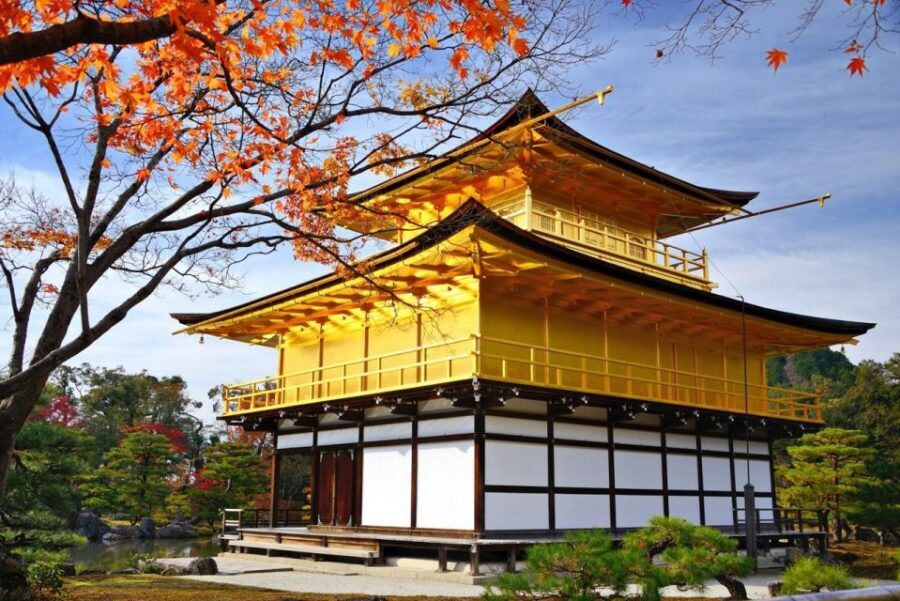
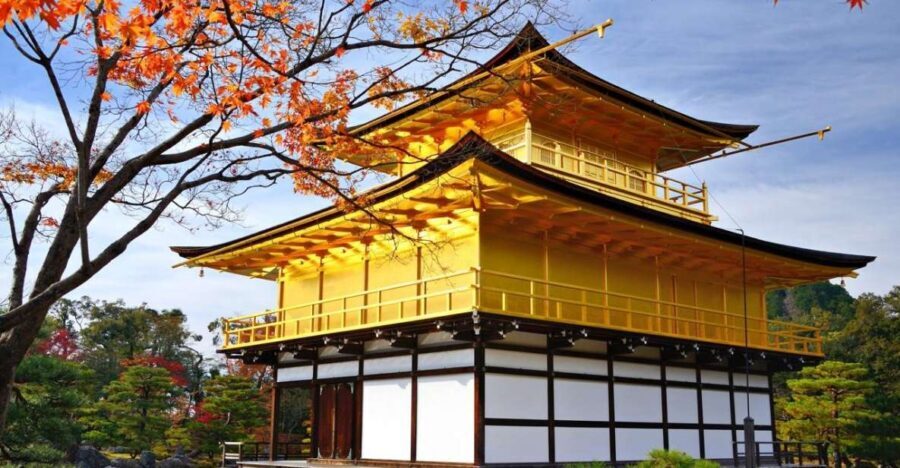
Kinkaku-ji, the Golden Pavilion, is one of those Kyoto icons that can feel over-photographed. The difference on this tour is that you’re given the story of why the building looks the way it does, not only how to frame it.
You’ll spend about 1.5 hours guided at Kinkaku-ji. The temple started life as a villa built for Ashikaga Yoshimitsu, a powerful 14th-century shogun figure. Then, later on, the site became a Zen Buddhist temple—so what you see mixes politics, religion, and aesthetics in the same visual package.
A key detail I love here is the gold leaf. The top two floors are covered with real gold leaf, and it’s specifically designed to communicate wealth, power, and devotion. When you add the pond reflection, the pavilion becomes part mirror, part message.
The guide’s explanations are designed for people who want understanding while their feet still work. With the iPad visuals, you get quick context on terms like shogun, Zen temple roles, and how the site fits into the broader Edo-era (and earlier shogunate) mindset. Instead of guessing, you know what you’re looking at.
Two practical notes to keep your expectations realistic:
- Some areas inside temples may restrict photos, so don’t plan your entire morning around one perfect shot.
- You’re seeing a major site, so quiet moments tend to come in short windows. Being prepared with the story helps those windows feel meaningful rather than chaotic.
Nijo Castle: the Edo power struggle you can walk through
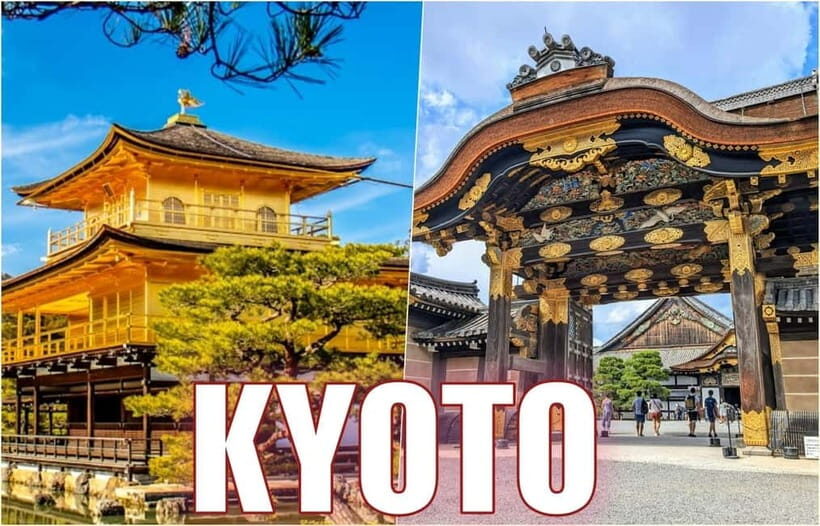
If Kinkaku-ji is the “wow” building, Nijo Castle is the “how power works” lesson. You’ll get about 95 minutes here with a focused explanation of the struggles between samurai, feudal lords, and shogun control.
Nijo Castle is also UNESCO-listed, and the most satisfying part is how the castle’s design supports the story. You’ll notice the Edo period architecture: strong, elegant woodwork and careful, intricate details. It’s not just decorative. In this place, design is part of governance.
One of the most memorable elements is the so-called nightingale floors—boards that can chirp when walked on. The idea is an early security system: if someone entered where they shouldn’t, the floors would make noise and give warning. Once you understand it, you’ll start listening with your feet, which is weirdly fun.
This stop also connects the samurai era to Japan’s shift toward modernization. You’re not just learning “samurai existed.” You’re seeing how authority was maintained, how houses and spaces reflected that control, and what it meant for daily life.
The guide also ties the political context to what you see, so you’re not stuck with a lecture while standing in silence. It’s more like walking through an illustrated timeline in real wood and stone.
Nishiki Market: pick lunch from Kyoto’s kitchen street
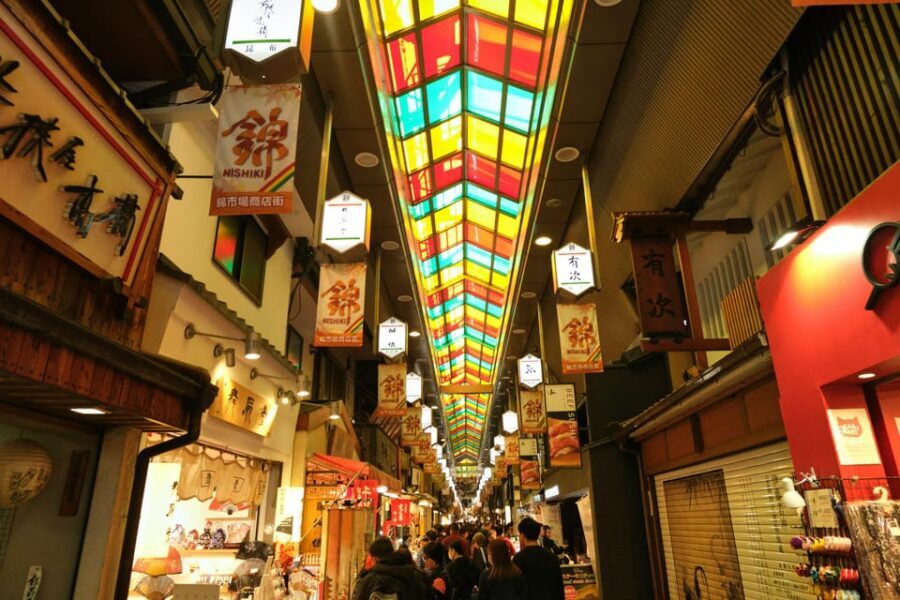
By the time you finish, it’s 12:30 PM, and the tour wraps at the entrance of Nishiki Market. This is a smart landing point because it turns your morning learning into an easy next step: lunch.
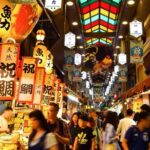
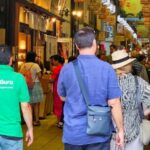
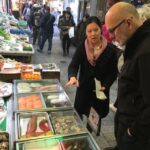
Nishiki Market is a narrow shopping street about five blocks long, with over a hundred shops and restaurants selling food-related items. Think fresh produce, seafood, kitchen tools, and cookware. It’s often called Kyoto’s kitchen, and the nickname makes sense once you see how many stalls focus on ingredients and practical food gear—not just souvenirs.
The guide explains the market’s origins, then you choose what you want to eat. That’s one of the best parts of this format. Instead of being locked into a set meal you may not like, you get to react to what looks good and what sounds good in your budget.
Also helpful: the tour explanations are in English for the market portion, which keeps things moving even if you don’t read Japanese. If you’re the type who likes to snack your way through a city, Nishiki is a great place to do it. If you prefer a proper sit-down lunch, you’ll usually find options close by.
Practical tip: wear shoes you can stand in for a while. The market is active, and you’ll want to browse without feeling like your feet are filing a complaint.
Price and value: what $90 buys you (and what it doesn’t)
The price is $90 per person for roughly four hours of guided sightseeing. For Kyoto’s two UNESCO stops plus the market handoff, that can be very reasonable—especially because you’re paying for interpretation, not just transportation.
Here’s what’s included in a way that affects your experience:
- You get a Kyoto City official certified guide
- You get guided time with iPad visual explanations
- You don’t have to worry about paying separate guide entrance/transport costs
- The guide can take pictures for you
- Private group format (your day tends to feel smoother)
What’s not included:
- Golden Pavilion entrance fee: 500 yen (about US$3.10)
- Nijo Castle entrance fee: 1,300 yen (about US$8.15)
- Food and drinks
- Transportation fee (though the tour uses public transit as part of the day plan)
So the “real” cost isn’t only the $90, because you’ll still budget about those entrance fees. But even with that, you’re paying for guided access to major sites where context makes the difference. If you tried to do this on your own, you’d spend time figuring out routes and then you’d still be missing the Edo Period layer that gives these places meaning.
The other value lever is time. This is a morning window. You’re not stuck planning your day around deciding what to cut. You get a coherent sequence, guided at each stop, then you’re free to eat.
You can also read our reviews of more tours and experiences in Kyoto


Who this Kyoto half-day fits best (and who should skip it)
This tour is a strong match if you:
- Want Edo Period context without booking multiple separate tours
- Like seeing big landmarks with explanations that help you understand shogun and samurai-era thinking
- Prefer a morning plan that ends with a food option (Nishiki Market)
- Value a guide who can speak English or Spanish and uses visual aids for clarity
It’s not the best fit if you:
- Need wheelchair access (the tour is not set up for that)
- Have back problems or low fitness for walking and stairs
- Are pregnant (listed as not suitable)
- Get motion sickness easily (listed as not suitable)
- Travel with large luggage or strollers (not allowed)
One more real-world note: there are places where photos aren’t allowed inside temples. If you’re someone who relies on pictures for memory, I’d plan to take photos where allowed, but also be okay with a few “look, listen, remember” minutes.
Tips to get the most from your morning
A few practical choices can make this tour feel easy:
- Bring comfortable shoes. You’ll be walking at multiple points, including the market portion.
- Take advantage of the iPad explanations. If something sounds confusing, it’s the moment to ask. The guide’s material is meant to clear up the story while you’re still there.
- Use the picture offer. If you want a clean photo where you’re not guessing angles, ask the guide. It’s one of those small services that saves time and stress.
- Plan your lunch style at Nishiki. Some people want a snack crawl; others want one main meal. You’ll have plenty of choice, so decide based on hunger level, not sightseeing energy.
If you’re visiting Kyoto for the first time, this is also the kind of tour that helps the rest of your trip click. Once you understand the Edo-era power framework and the role of places like Nijo Castle, other sites start making more sense.
Should you book the Golden Pavilion, Nijo Castle, and Nishiki Market tour?
I think this tour is a good booking when you want a high-impact Kyoto morning: two UNESCO sites, Edo Period context that actually explains what you’re seeing, and a finish at Nishiki Market so lunch feels effortless.
Book it if you’ll appreciate history tied to architecture (and if you’re comfortable with a moderate walking schedule). Skip it if mobility is an issue for you, if you’re sensitive to transit, or if you’re expecting all entrance fees and lunch to be included in the base price.
If your goal is to come away understanding Kyoto’s shogun-era logic—and still enjoy a practical market lunch—this combo is one of the most straightforward ways to do it.
FAQ
How long is the Golden Pavilion, Nijo Castle, & Nishiki Market half-day tour?
The tour runs for about 4 hours, from 8:30 AM to 12:30 PM.
Where do we meet the guide?
You meet in front of the door of 7-Eleven Heart-In at JR Kyoto Station Building 1F, using the Kyoto Tower side exit.
Are entrance fees included for Kinkaku-ji and Nijo Castle?
No. The Nijo Castle entrance fee is 1,300 yen (about US$8.15), and the Golden Pavilion entrance fee is 500 yen (about US$3.10).
What languages are available for the live guide?
The live tour guide is available in English and Spanish.
What should I bring and wear?
Bring comfortable shoes. The tour includes walking and time at temples.
Is the tour canceled if it rains?
No. The tour takes place rain or shine.