REVIEW · CONCERTS
Concerts Played with Traditional Instruments in Kyoto
Book on Viator →Operated by Gen · Bookable on Viator
A concert in someone’s Kyoto living room. You’ll start with a clear koto and shamisen introduction, then get a live performance that turns a home into a stage. I love that the music comes with context before you hear a note, and I also love the Q&A and photo-taking that make it feel personal instead of distant. One thing to think about: coffee/tea isn’t included, and private transportation isn’t part of the price.
The whole show is about 50 minutes, and it runs multiple times during the day so you can pick a slot that fits your pace. You’ll get a mobile ticket, and the venue is near public transportation, so you’re not stuck planning a complicated route.
In This Review
- Key Points You’ll Want to Know
- Entering Gen Home Saiin and Hearing Kyoto Up Close
- The Pre-Show Lesson That Makes the Concert Click
- The 50-Minute Concert: What You’ll Hear (and How to Listen)
- Q&A and Photo-Taking: Turning a Performance Into a Conversation
- Upgrade: Hands-On Koto Session (If You Want to Try, Not Just Watch)
- Price and Value: Is $39.63 Worth It in Kyoto?
- Timing It Right: Multiple Daily Options and a 50-Minute Commitment
- Who Should Book This Kyoto Koto and Shamisen Concert?
- Should You Book This? My Honest Take
- FAQ
- How long is the concert?
- Where does the concert take place?
- What is included in the ticket price?
- Is there an option to try playing the koto?
- Will there be a Q&A and time for photos?
- What pieces will be performed?
- Is private transportation included?
- Can I cancel for a full refund?
- Is the ticket a mobile ticket?
Key Points You’ll Want to Know
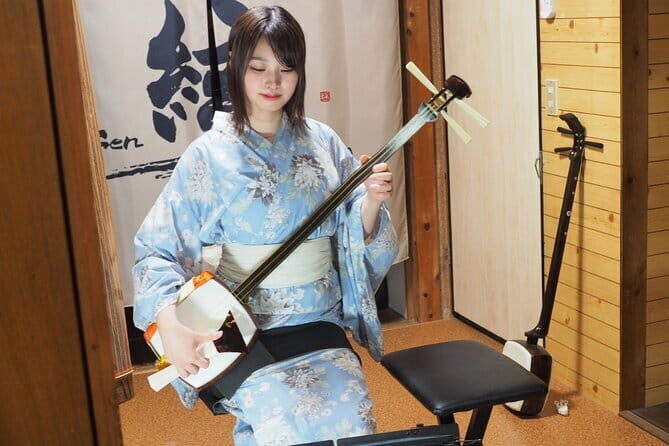
- Pre-concert instrument intro so the sounds make sense before the first piece starts
- Classical and modern programming, including recognizable titles like Chidori no Kyoku
- Q&A plus photo time with the musicians, which helps you connect fast
- Optional upgrade to a hands-on koto try, where you play a simple piece
- Intimate home setting in Gen Home Saiin, not a large hall experience
- Short and focused at ~50 minutes, good for fitting into a busy Kyoto day
Entering Gen Home Saiin and Hearing Kyoto Up Close
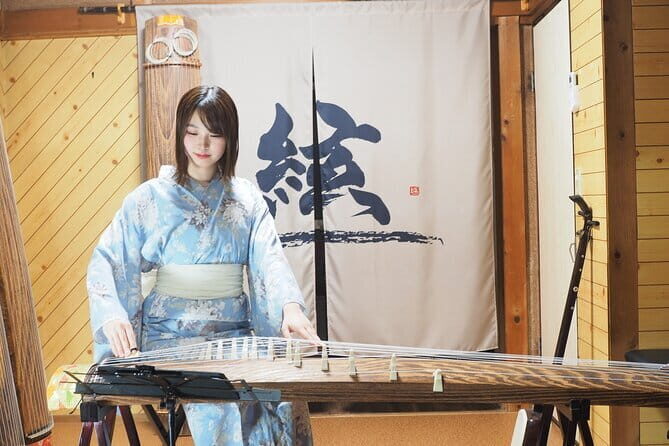
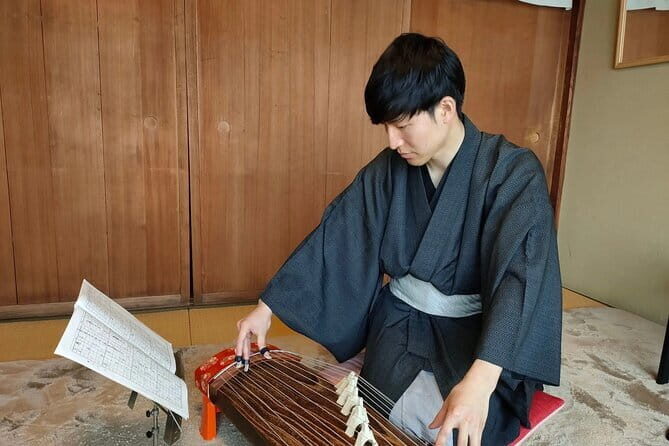
This is the kind of Kyoto experience I really look for: traditional music, but in a space that feels lived-in rather than staged for tourists. Gen Home Saiin is a traditional Japanese home that’s temporarily transformed into a performance space, which changes how you listen.
Instead of watching from far away, you’re close enough to notice how the performance unfolds in real time. And since it’s set in a home, the mood tends to feel quieter and more attentive than a typical venue. That matters because koto and shamisen music can be subtle—context helps you catch details instead of just letting it pass by.
Also, you get a small-group or private style setup. That’s part of the value here: you’re not waiting your turn in a crowd, and the Q&A later actually feels usable.
You can also read our reviews of more tours and experiences in Kyoto

The Pre-Show Lesson That Makes the Concert Click
One of the best parts is the built-in learning moment before the performance begins. You’ll be taught about the koto and shamisen instruments before the music starts, so you’re not just hearing sounds—you understand what you’re hearing.
I like this approach because it turns the concert into something active. You can focus on things like phrasing, mood shifts, and how different pieces feel rather than trying to guess what instrument is doing what. And since you’ll also get explanations during the experience (including a Q&A), you have a way to clarify anything that’s confusing in the moment.
The experience is presented in a structured way, with an English explanation style that keeps it organized and easy to follow. If you’re the type who likes to know the “why” behind what you’re experiencing, this is the right setup.
The 50-Minute Concert: What You’ll Hear (and How to Listen)
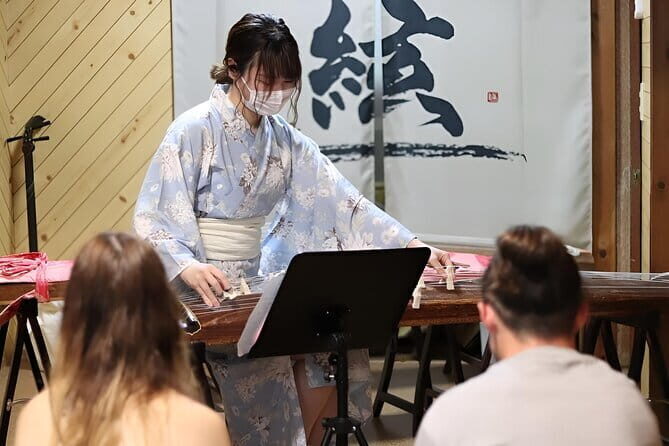
The performance portion lasts about 50 minutes, which is a smart length for a day of sightseeing. You get enough time for multiple pieces, but it doesn’t drain your energy or force you to sit forever.
You’ll hear a mix of pieces that include both classical and more modern or original compositions. That variety is a big deal. Traditional Japanese instruments can sometimes get pigeonholed as old-world only, but here you’ll also hear interpretations that don’t feel stuck in the past.
Specific pieces you can expect to hear include:
- Chidori no Kyoku
- Rokudan no Shirabe
- Kajimakura
There’s also a strong tradition behind the music selections. The experience highlights works connected to legendary figures such as Yoshizawa Kengyo, Yatsuhashi Kengyo, and Kikuoka Kengyo. Even if you don’t know these names ahead of time, you’ll leave with a better sense that this isn’t random music—it’s connected to real creators and lineages.
How to listen in a way that actually works:
- First, pay attention after the intro. The lesson gives you a framework, and the first piece is when that clicks.
- During changes in pieces, watch for shifts in mood and pace, not just volume.
- If a tune feels familiar, hold onto that thought. This concert is designed so you might recognize patterns or melodies as they move through different selections.
One note from the experience’s audience reactions: people often connect emotionally with at least one specific piece. In particular, Chidori no Kyoku has landed very strongly for some guests—so if you like music that can hit you quietly but powerfully, this is a good bet.
Q&A and Photo-Taking: Turning a Performance Into a Conversation

After the live performance, you’ll have a Q&A session and time for photo-taking. This is where the experience becomes more than just a show.
The Q&A is valuable because it lets you ask what you’re curious about—especially since you’ve already had an intro. You’re not starting from zero, which makes your questions more meaningful, and it helps the musicians tailor their explanations to real interest in the room.
The photo-taking component may sound small, but it changes the vibe. You’re not just filing out with your thoughts. You get a moment to connect visually and remember the people behind the sound.
If you’re nervous about speaking up, you don’t need to be. Even listening to other questions helps you pick up details you might miss when reading from a guidebook later.
Upgrade: Hands-On Koto Session (If You Want to Try, Not Just Watch)
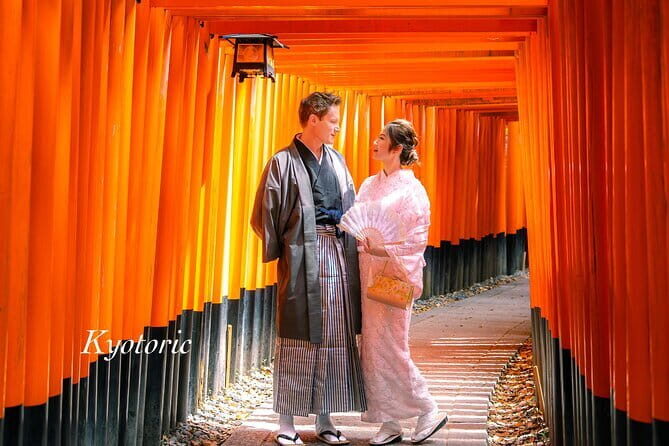
You can add an upgrade to participate in a hands-on koto session. If you’re the kind of traveler who learns by doing, this is one of the best add-ons you can choose in Kyoto because it turns passive listening into active learning.
The experience includes trying to play a simple piece. That phrase matters: the goal isn’t to make you a performer. It’s to give you a taste of how the instrument feels under your hands and how practice shapes what you hear in the concert.
You’ll get the chance to try within a guided setup, and it fits naturally after you’ve already learned about the instrument. That sequence is smart: you hear how it works first, then you physically experience a basic version of it.
If you skip the upgrade, you’ll still enjoy the main concert and Q&A. But if you do upgrade, you’ll likely leave with a different kind of memory—one that sticks to your body, not only your ears.






Price and Value: Is $39.63 Worth It in Kyoto?
At $39.63 per person, you’re paying for something pretty specific: a guided intro, a live concert in a traditional home setting, and a follow-up Q&A plus photos. You’re also paying for the fact that this is not a huge hall show—you’re getting access to the musicians in a format that feels more personal.
Here’s what’s included:
- The concert itself, with brief introduction and explanation
- Landing and facility fees
- WiFi on board
- Participation in the koto and shamisen concert experience
What’s not included:
- Coffee and/or tea
- Private transportation
So the value comes down to this: do you want a Kyoto musical experience that feels close and interactive, rather than just another ticket you clip and forget? If yes, this price makes sense for what you get—especially because it’s not long, and it doesn’t require extra add-ons to enjoy the core show.
One practical money-saver: since drinks aren’t included, plan to grab a snack or tea before you go. Then you can focus on the music instead of searching for a café mid-show.
Timing It Right: Multiple Daily Options and a 50-Minute Commitment
This experience runs with multiple tour options throughout the day, so you can choose a time that fits your itinerary. That flexibility matters in Kyoto, where afternoons can turn into either a perfect window or a slog, depending on your day’s walking plan.
Since the concert is about 50 minutes, it’s easy to pair with other nearby activities without feeling rushed. It’s also a good choice if you want a break from the big shrine-and-temple rhythm.
The venue is described as near public transportation, which helps a lot. You can plan your route with transit rather than paying for private transport.
Tip for planning: pick a time when you’re not arriving stressed. A home concert works best when you can walk in calm, settle down, and let the pre-show intro do its job.
Who Should Book This Kyoto Koto and Shamisen Concert?
This experience fits best if you want one or more of these:
- You like traditional arts, but you also want explanation so you’re not guessing
- You prefer intimate, smaller settings over big venues
- You enjoy Q&A and want to meet the experience halfway
- You’re curious about how traditional instruments are interpreted, including modern or original pieces
If your travel style is mostly “wander fast, keep moving,” you might still enjoy it, but you’ll get more from it when you slow down enough to listen carefully. It’s not a long night event; it’s a focused performance.
Also, you should feel comfortable if you’re a typical tourist: the experience notes that most travelers can participate. If you’re unsure, it’s still the kind of activity where you can sit back, listen, and learn without needing special skills.
Should You Book This? My Honest Take
Book it if you want a Kyoto musical experience with real structure and a human feel. The combination of instrument learning up front, a live performance in a home, and the Q&A plus photo time is what makes this better than a standard ticketed show.
Skip it only if you strongly prefer large-audience venues, or if you’re looking for something that lasts much longer than an hour. This is short on purpose, and it focuses on quality and connection, not marathon entertainment.
If you’re even slightly interested in koto and shamisen music, this is the kind of experience you’ll still talk about when you’re back in your hotel room—because it gives you both sound and context, with a chance to ask questions when it matters.
FAQ
How long is the concert?
The concert experience lasts about 50 minutes.
Where does the concert take place?
It takes place in Kyoto at Gen Home Saiin.
What is included in the ticket price?
The ticket includes the koto and shamisen concert, a brief introduction and explanation, landing and facility fees, and WiFi on board.
Is there an option to try playing the koto?
Yes. You can upgrade to participate in a hands-on koto session where you’ll try playing a simple piece.
Will there be a Q&A and time for photos?
Yes. After the live performance, there is a Q&A session and time for photo-taking.
What pieces will be performed?
The experience includes performances such as Chidori no Kyoku, Rokudan no Shirabe, and Kajimakura, along with other classical pieces and modern or original compositions.
Is private transportation included?
No. Private transportation is not included, but the venue is near public transportation.
Can I cancel for a full refund?
Yes. There is free cancellation, and you can cancel up to 24 hours in advance for a full refund.
Is the ticket a mobile ticket?
Yes. The experience uses a mobile ticket.