REVIEW · KYOTO
Treasures of Kyoto: Geishas & Traditions Private Tour
Book on Viator →Operated by Withlocals · Bookable on Viator
Geisha culture makes Kyoto feel personal. This private 2.5-hour walk links Gion backstreets with temples and shrines, with a local guide keeping the story straight as you move. I especially like that it’s just your party, so the pace stays calm, and I also like how the guide ties geiko and religion into real, understandable context.
You’ll walk fewer “checklist” steps and more street level moments—exactly what you want in Higashiyama when time is tight. Names that show up in the guides who run this kind of tour include Ted, Ahmed, Shohei, Maha, and Kako, and the common theme is the same: clear explanations, respectful tone, and lots of room for questions (even from kids).
One thing to keep in mind: there’s no hotel pick-up or drop-off, and it does involve walking on a route suited to moderate physical fitness. Plan your start location and get ready for a concentrated stroll.
In This Review
- Quick hits before you go
- Why this Gion-focused tour makes sense when time is short
- Price and what you’re really paying for
- Stop-by-stop: what to expect along the route
- Izumo no Okuni Statue: kabuki origins in a quick first stop
- Minamiza Theatre: Edo-period roots, no ticket stress
- Gion and Shinbashi street atmosphere: the geisha district without the confusion
- Tatsumi Daimyojin Shrine: Shinto–Buddhist blending in real space
- Shinbashi Dori: learning the geisha culture behind the banqueting buildings
- Chion-in Temple: staircase views and a garden moment
- Maruyama Park: transition from temple viewpoints to neighborhood flow
- Yasaka Shrine (Gion Shrine): legends and the famous neighborhood setting
- Shijo Dori: the ancient capital road name you’ll never forget
- Nene-no-Michi: a street tied to Kodaiji and Nene
- The second Yasaka Shrine moment: pagoda views and a cafe finish
- How the guide experience shows up in real life
- Practical tips so you enjoy the walk (and not just survive it)
- Should you book this Kyoto Geisha and Traditions private tour?
- FAQ
- How long is the Treasures of Kyoto: Geishas & Traditions private tour?
- Is this tour private?
- What’s included in the price?
- Are admission fees included?
- Are meals or drinks included?
- Where do we meet and where does the tour end?
- Is hotel pick-up or drop-off included?
- Does the tour use a mobile ticket?
- Is the tour suitable for people with limited mobility?
- Can I cancel for a full refund?
- Are service animals allowed?
Quick hits before you go
- Private, exclusively for your group: no mixing, no waiting for slow walkers.
- Geisha culture explained where it actually lives in Gion and Shinbashi areas.
- Kabuki roots and theatre history at Minamiza and the Izumo no Okuni connection.
- Shinto and Buddhism connections you can see and understand at Tatsumi Daimyojin and Chion-in.
- Crowd-smart pacing: the guide can steer you away from the worst bottlenecks.
- A gentle finish near Yasaka with a nearby local cafe stop.
Why this Gion-focused tour makes sense when time is short
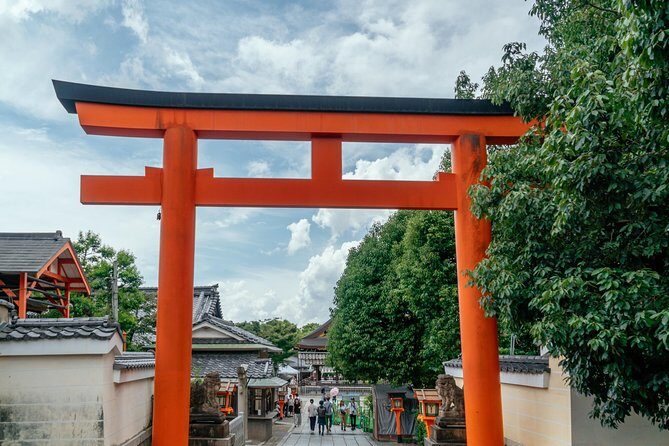
Kyoto can feel like a menu with 200 items and only a few hours. This tour is built for the moment when you want the big themes—geisha culture, shrines, and old Kyoto streets—without spending your day planning how to connect them.
The route stays concentrated in Higashiyama. That matters because it turns “I saw a shrine” into “I get how these places fit together.” You’re not bouncing across the city. You’re walking through a neighborhood where tradition is still part of daily life.
Also, the private format changes everything. You’re not stuck with a rigid group tempo. If you want a photo, a stop for a question, or a slower look at a garden or staircase, you can do it without negotiating with a crowd.
You can also read our reviews of more private tours in Kyoto
Price and what you’re really paying for
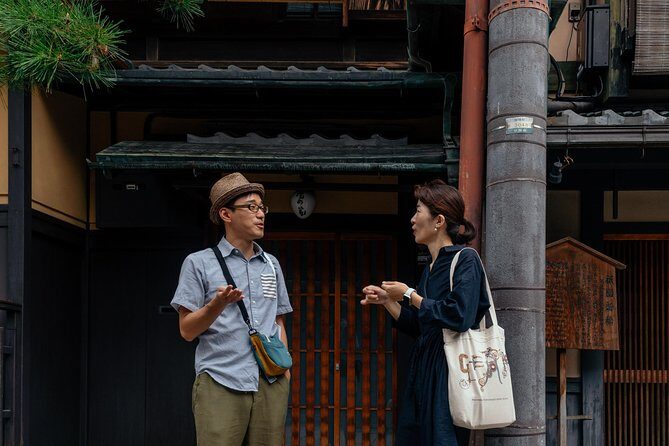
At $135.45 per person for about 2 hours 30 minutes, this isn’t a budget bus tour. But it also isn’t just paying for walking—you’re paying for translation of culture into something you can actually use.
Here’s what adds up in value:
- Private local guide for your group only (not shared).
- All listed stops show free admission, which helps keep costs controlled once you’re there.
- Mobile ticket makes it easier to show up and move.
- The tour is listed as carbon neutral, which is a nice bonus if that matters to you.
- You get a guide who focuses on respect and context, not just names and dates.
The one cost-side reality: because there’s no hotel pick-up, you’re responsible for getting to the start point on your own. If you’re already staying in or near Higashiyama, that’s painless. If you’re far away, budget a little extra time for transit.
Stop-by-stop: what to expect along the route
This is a walking route through layers of Kyoto: performance roots, geisha-era streets, religion you can feel in the architecture, then classic views around Yasaka.
I like the order because it tells a story. You start with theatre origins, then move into the Gion/Shinbashi atmosphere, and only after that do you slow down for the shrines and temple spaces.
Izumo no Okuni Statue: kabuki origins in a quick first stop
Your tour starts at the Statue of Izumo no Okuni, with kabuki as the hook. Okuni is described here as the originator of kabuki theater, and this first stop works as a tone-setter: Kyoto isn’t only about temples—it’s also about performance and public tradition.
At about 20 minutes and free entry, it’s an easy opener. You can treat it like a brief cultural warm-up before you step into Gion’s atmosphere.
If you’re the type who likes context, this is a smart way to begin. If you’re expecting a long scenic moment, don’t—this is short and story-focused.
Minamiza Theatre: Edo-period roots, no ticket stress
Next is Minamiza Theatre, with its roots traced back to the early Edo period (1596–1615). This stop keeps the performance thread going and helps explain why Kyoto’s arts culture isn’t random. It connects to the kinds of entertainments associated with traditional districts.
It’s another short, about-20-minute stop with free admission. That “short and useful” style continues through the tour, which is exactly why it works for time-tight schedules.
If you don’t care about theatre history, you’ll still get value from the guide’s framing—because you’ll see how the same neighborhood energy supported different forms of entertainment.


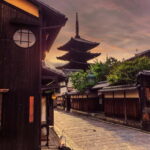
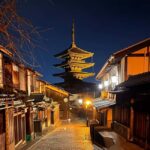
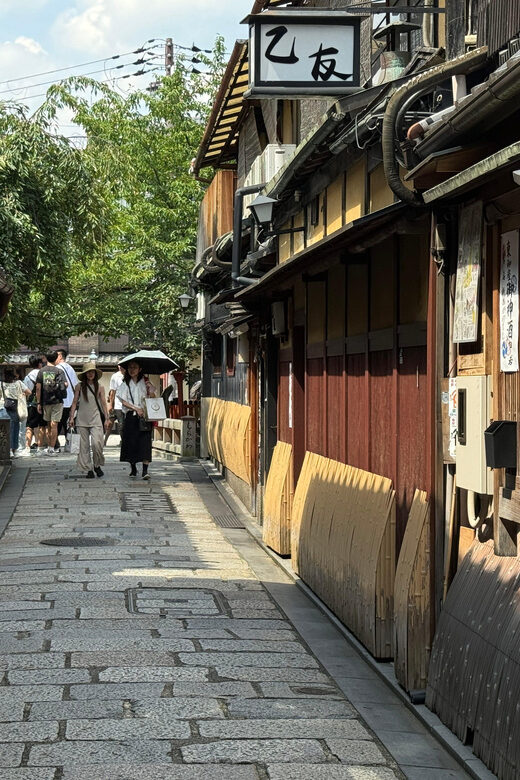
Gion and Shinbashi street atmosphere: the geisha district without the confusion
Then you enter Gion, including the Shinbashi area described as a traditional business preservation zone, plus the historic scenery preservation zone south of Shijo Street. You’re not just walking through pretty streets—you’re learning how preservation and history affect what you see today.
In the Shinbashi area, you get the sense of old Kyoto entertainment patterns. That’s also where you’ll have a chance to notice details like old banquet-style buildings and the kinds of settings where geisha would have entertained clients.
This stop is brief, but it sets you up for the most focused geisha explanation on the route.
Tatsumi Daimyojin Shrine: Shinto–Buddhist blending in real space
At Tatsumi Daimyojin Shrine, the guide brings religion into plain language. It’s described as a mixture of Shinto and Buddhism, and that blend is the point.
This is around 20 minutes and free entry, but it’s not “pass through and move on.” When a guide can connect what you’re seeing to how people historically understood the world, the shrine stops start to feel personal and not like background scenery.
If religion isn’t your thing, you might still appreciate the explanation—especially if you want to understand why certain places in Kyoto feel both spiritual and everyday at the same time.
Shinbashi Dori: learning the geisha culture behind the banqueting buildings
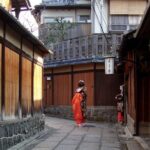
Outside the traditional banquet buildings, Shinbashi Dori is where the tour turns into the geisha-culture lesson you came for. It’s specifically framed as a place to learn more in-depth about geisha culture and what the entertainment setup looked like.
You’re given time here to stand outside and connect the street layout to how entertainment worked. In some experiences, people even report spotting women in geisha-style outfits depending on timing, which can make this street feel alive rather than historical.
Still, treat it as cultural learning first, sightseeing second. The guide’s job here is to help you read what you’re looking at.
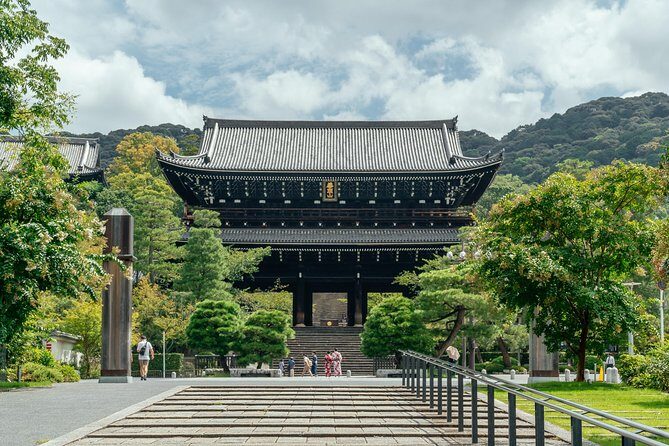
Chion-in Temple: staircase views and a garden moment
After the shrine stop, you move to Chion-in Temple. Expect steps—literally walk up for a better view—and then a look at the garden area.
This stop is short (about 10 minutes), but Chion-in tends to leave a stronger impression than the time suggests because the architecture and the viewpoint do a lot of work. The guide’s explanations help you notice things you’d miss if you were just rushing through.
If you’re traveling with kids, shorter stops like this can be helpful. People also mention guides adapting to younger questioners, and this is the kind of location where curiosity comes easily.
Maruyama Park: transition from temple viewpoints to neighborhood flow
Next is Maruyama Park, reached by walking from Chion-in toward the park area. It’s about 20 minutes and free.
This is a breather in the route. You’re shifting from shrine/temple concentration into something more open and neighborhood-linked. Even if you only have a short time, parks in Kyoto are great because they help you reset your senses between major sights.
Use this time for photos and for questions. It’s also a good moment to ask the guide to explain what you’ve already seen in one simple timeline.
Yasaka Shrine (Gion Shrine): legends and the famous neighborhood setting
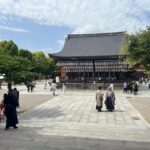
Yasaka Shrine—noted here as the legend-linked Gion Shrine—is a highlight. The tour description mentions the shrine’s history may go back as far as around 150 years before the Heian era.
This stop is around 10 minutes and free. The point isn’t a long, slow wander—it’s to arrive at the place, understand the legend angle, and feel why this shrine is so tied to the Gion atmosphere.
In a short stop, the guide’s explanations matter a lot. Without them, Yasaka can feel like another shrine. With them, it becomes a key piece of the story the rest of your walk is building.
Shijo Dori: the ancient capital road name you’ll never forget
Walking along Shijō Dori (described as meaning Fourth Avenue of Heian-kyō) turns the day into “how Kyoto used to be planned.” This is another short stop at about 10 minutes.
What I like here is how a street name becomes a time machine. The guide helps you translate a simple walk into a layout of old Kyoto, and that can make everything else feel more coherent.
If you like urban planning and history details, this is one of the best value seconds in the itinerary.
Nene-no-Michi: a street tied to Kodaiji and Nene
Then you reach Nene-no-Michi, with the connection explained: Kodaiji Temple was built in 1605 at the behest of Nene, and the street later took its name.
This stop is short (about 10 minutes), but it gives you a specific historical anchor. Instead of generic “Kyoto is old,” you get a named person and a known time.
It’s also a nice change of pace: you’re still in the old-city texture, but the focus shifts to a person-driven story rather than only architecture.
The second Yasaka Shrine moment: pagoda views and a cafe finish
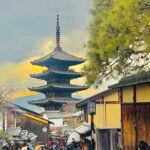
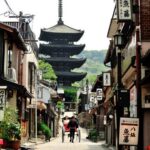
The tour’s final stretch brings you back to Yasaka Shrine again, this time tied to the picture of a 5-story Buddhist pagoda temple and the sweeping views from the top.
The stop is around 10 minutes and free for the listing. The guide gets you to the right place to understand what you’re seeing and why the viewpoint matters.
Then the experience ends with a finish in a local cafe nearby. You don’t have to keep chasing the next sight right away—you can sit, refuel, and digest what you learned.
How the guide experience shows up in real life
What makes this tour feel different isn’t just the sights. It’s the way the guide handles the human side of Kyoto.
From the way guides are described, you can expect:
- Clear cultural explanations, especially around geiko traditions and the difference between Shinto and Buddhism.
- A respectful approach to the geisha community, with a tone that doesn’t treat it like a show you’re entitled to.
- A pacing style that can help you avoid crowds rather than fight them.
- The ability to handle questions, including from kids (people mention guides adapting for children around ages 10 to 14).
That last point is surprisingly important. If you’re traveling as a family, a tour can either turn into constant “Are we done yet?” or it can become a real learning moment. This route seems built for the second option.
Practical tips so you enjoy the walk (and not just survive it)
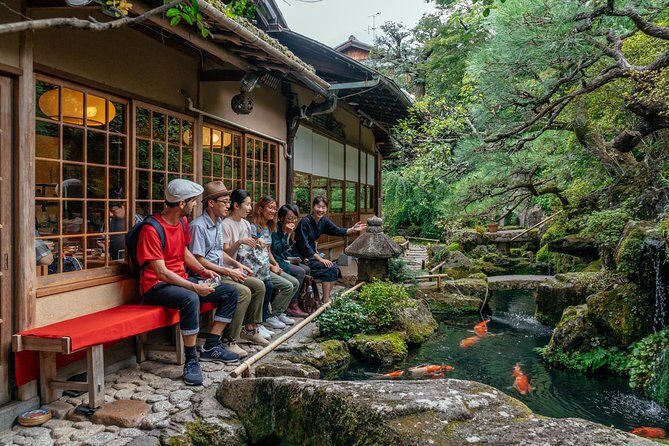
- Bring comfortable walking shoes. This is a short itinerary with lots of stepping stones, stairs, and quick transitions.
- Use the start point well. Starting in Kawabatacho means you’re in the Higashiyama zone right away. Plan your transit so you arrive a few minutes early.
- Expect a concentrated 2.5 hours. It’s not a slow amble. The time windows on stops are short, so the guide’s commentary is a big part of the value.
- Think about your end. You finish at Yasaka Kamimachi, then head to a nearby cafe. If your plan is to go somewhere later, map your route from that area rather than from your hotel.
- If religion topics are your thing, lean in. The shrine and temple stops are the backbone of the Shinto–Buddhist lessons.
Should you book this Kyoto Geisha and Traditions private tour?
I’d book this if:
- You want a private, time-efficient walk focused on Gion and the surrounding spiritual sights.
- You like learning culture in context, not just ticking names off a list.
- You care about geisha traditions and want a respectful, story-led explanation from a local guide.
I might skip it if:
- You’re only interested in big scenic landmarks and prefer long independent exploring.
- You need hotel pick-up to make your day work smoothly.
- You’re not comfortable with walking that fits a moderate fitness level.
If your schedule is tight and you want Kyoto with meaning—this is a strong choice.
FAQ
How long is the Treasures of Kyoto: Geishas & Traditions private tour?
It runs for about 2 hours 30 minutes.
Is this tour private?
Yes. It’s a private tour/activity exclusively for your party.
What’s included in the price?
The tour includes a private tour, a local guide, and it is listed as carbon neutral.
Are admission fees included?
The stops listed in the tour show free admission tickets.
Are meals or drinks included?
Food and beverages are not listed as inclusions.
Where do we meet and where does the tour end?
The start is in Kawabatacho, Higashiyama Ward, Kyoto. The end is in Yasaka Kamimachi, Higashiyama Ward, Kyoto, with a finish in a local cafe nearby.
Is hotel pick-up or drop-off included?
No. Hotel pick-up and drop-off are not included.
Does the tour use a mobile ticket?
Yes, it includes a mobile ticket.
Is the tour suitable for people with limited mobility?
The tour notes a moderate physical fitness level. It also says it’s near public transportation, but the walking route may not suit everyone with mobility limits.
Can I cancel for a full refund?
Yes, free cancellation is offered. You must cancel at least 24 hours in advance for a full refund.
Are service animals allowed?
The tour notes that service animals are allowed.