REVIEW · FULL-DAY
Full-Day Kyoto Walking Tour: Most Iconic Landmarks & Monkeys
Book on GetYourGuide →Operated by Japan Tour Adventure · Bookable on GetYourGuide
Kyoto hits different when you move with a plan. This full-day walk stitches together Fushimi Inari torii photo time, Arashiyama’s calm, and big-name temples with the help of a real guide. I like that it uses public transit so you spend less time crossing town, and I especially like that the stops are timed so you’re not just rushing through crowds. One heads-up: it’s a long day on foot, and the Iwatayama Monkey Park climb includes a short, steep hike.
What really makes this day work is the rhythm. You start at a shrine that makes you feel like you’re walking through a landmark, then shift into bamboo-forest quiet, then end with the gold that looks best when the light hits it. You’ll also get practical help along the way, and the guides I’ve seen praised for this trip (people like Tom, Agustin, and Rémi) are the type to answer questions clearly across languages and keep the group organized.
In This Review
- Key things I’d plan around
- How this 8-hour Kyoto walk keeps the day from falling apart
- Fushimi Inari Taisha: the torii photo run and how to enjoy the climb
- Train hop to Arashiyama: why the public transit plan is actually smart
- Arashiyama Bamboo Grove: peace, photos, and a pace that doesn’t exhaust you early
- Tenryuji Temple: what makes this Zen stop worth your time
- Arashiyama free time and lunch choices: keep it flexible
- Iwatayama Monkey Park: short steep hike, big payoff (but not for everyone)
- Randen tram connection and Kinkakuji: the Golden Pavilion loop that works best later
- What the guided format adds (especially if you like photos)
- Price and value: is $96 worth it for a full-day highlights plan?
- Who this tour suits best
- Should you book this Kyoto highlights walking tour?
- FAQ
- Where do I meet the guide?
- Is this a private tour or a group tour?
- How long is the tour?
- What’s included in the price?
- What is not included?
- Does the tour include tickets for the major temples?
- What should I bring?
Key things I’d plan around
- Torii gate photo time at Fushimi Inari without wasting your whole morning.
- Arashiyama Bamboo Grove walking with built-in pacing so you can actually enjoy it.
- Tenryuji Temple with its UNESCO-level garden focus and guided stops.
- Iwatayama Monkey Park rewards: small climb, big city views, monkey-feeding moment.
- Kinkakuji Golden Pavilion in a photo-friendly loop around the pond.
- Guides that handle questions and pictures across English/French/Spanish/German (examples: Tom, Agustin, Rémi).
How this 8-hour Kyoto walk keeps the day from falling apart
This is a shared group tour (up to 10 people) that runs about 8 hours, give or take around 30 minutes. You’ll be walking a lot, plus you’ll use trains, a local tram, and a bus to connect the areas. Because the route is planned, you’re not spending your precious vacation time figuring out which station to use and how to get back to where you started.
The value is in what’s included versus what you’d normally buy yourself:
- Temple entrance tickets for Tenryuji, Monkey Park, and Kinkakuji
- A live English/Japanese guide (and confirmation for French, Spanish, German)
- Skip the ticket line
- Downloadable souvenir pictures after the tour
At $96 per person, it’s not the cheapest option in Kyoto. But when you factor in three paid entries, a guide for the full day, and the photo service, it starts to look fair—especially if you want a structured highlights day without turning it into a logistics project.
One practical note: you meet in front of Kitsunezo, a fox Kitsune statue across the street from the JR Inari Train Station. Show up about 10 minutes early. This one starts on time, and being late means you can’t join. That’s typical for group tours, but it matters here because the day depends on keeping the transit connections tight.
You can also read our reviews of more walking tours in Kyoto
Fushimi Inari Taisha: the torii photo run and how to enjoy the climb
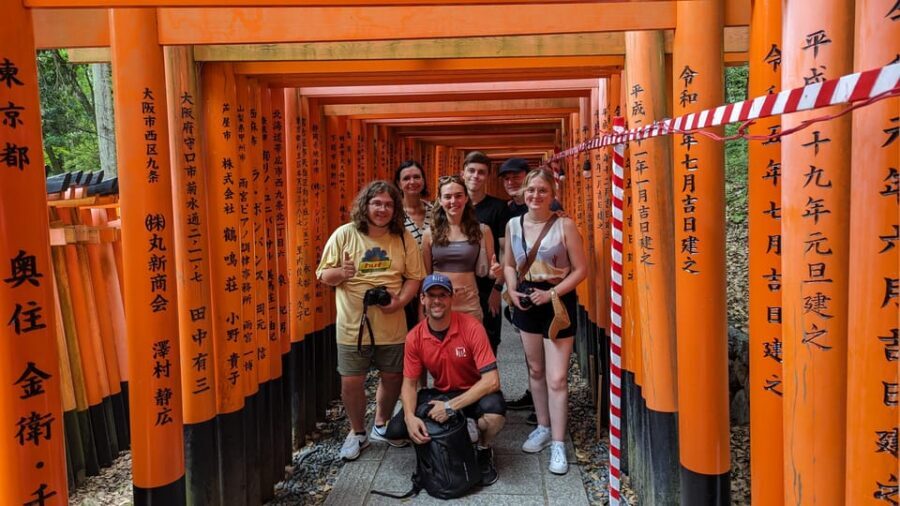
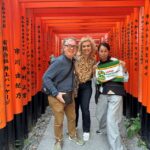
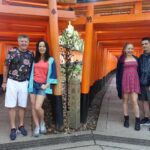
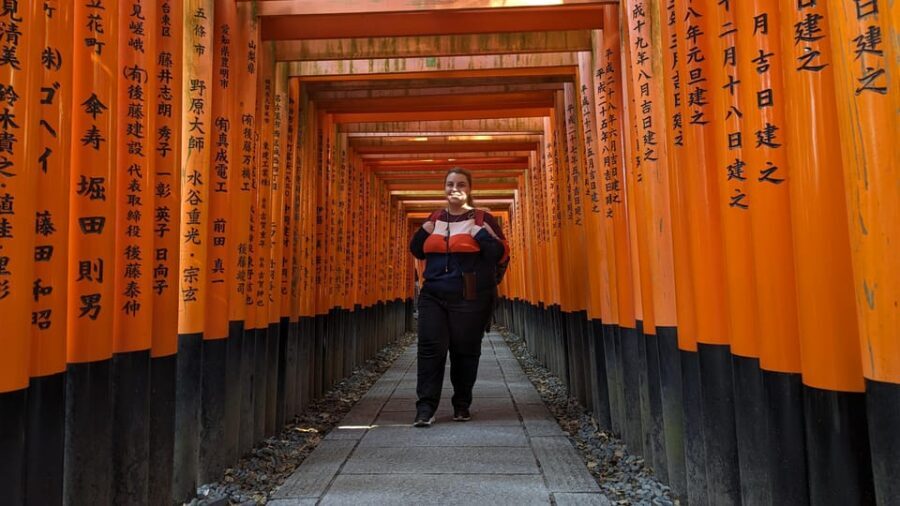
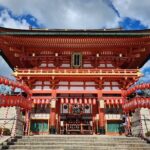
You begin at Fushimi Inari Taisha, the famous shrine where thousands of red torii gates march up Mount Inari. The guide typically gives you the story behind the place, then you walk through the corridors of gates at a relaxed pace with photo stops.
Here’s what I love about this part: the tour gives you time to do the iconic photo right, not just snap one and move on. You’ll pause for pictures of the vermilion pillars and the tunnel effect that makes this shrine so recognizable.
It’s also a good mental warm-up for the day. After the torii walk, you’re ready to shift from shrine energy into Arashiyama’s slower pace.
Possible drawback: it’s popular. If you don’t like crowds, treat this as a morning moment. Go with the mindset that you’re here for the specific torii experience, not for solitude.
Train hop to Arashiyama: why the public transit plan is actually smart
After the Fushimi Inari portion, you take the JR Nara Line to Kyoto Station, then transfer to the JR Sagano Line and get off at Saga-Arashiyama Station. You’ll have a short break, then a short walk into the Arashiyama area.
This transit approach matters because it protects your time. A bus-only plan often gets stuck, while the rail sections keep things moving. Also, walking segments are part of why you get the right atmosphere in each neighborhood.
If you’re using this tour as your first big day in Kyoto, the transit structure helps you learn your way around. Even if you don’t memorize every line, you’ll come away with a sense of how the city connects.
Tip: bring a Suica or Icoca card if you have one, since transportation isn’t included.
Arashiyama Bamboo Grove: peace, photos, and a pace that doesn’t exhaust you early
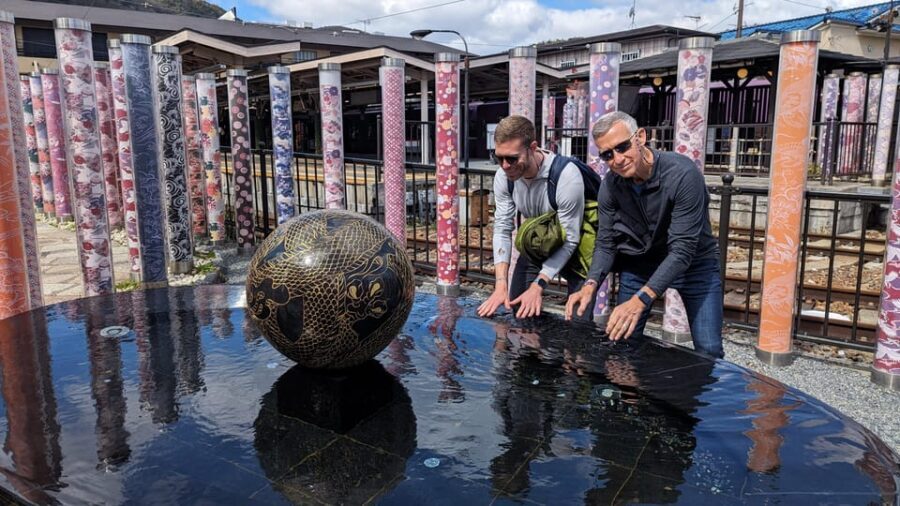
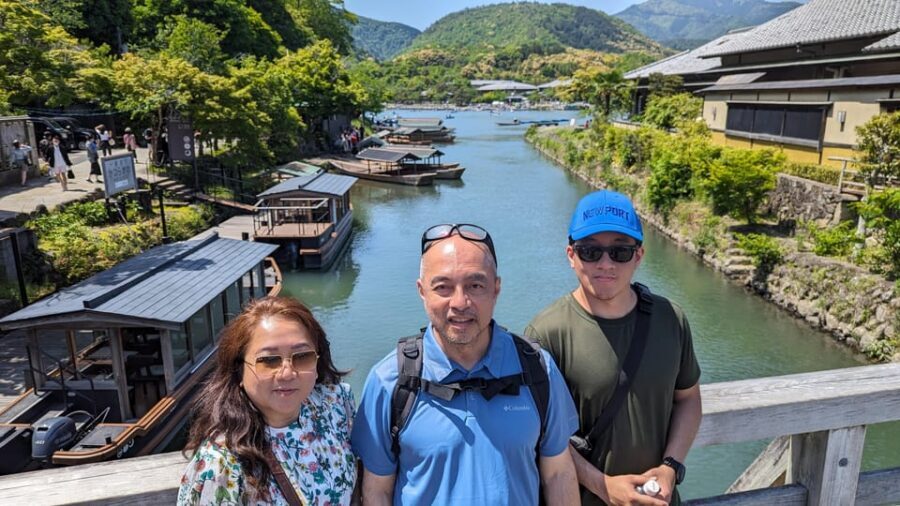
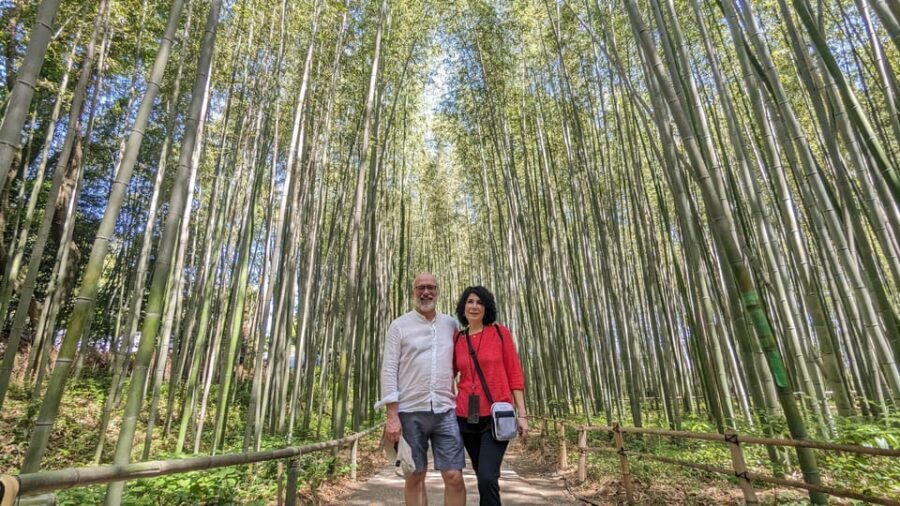
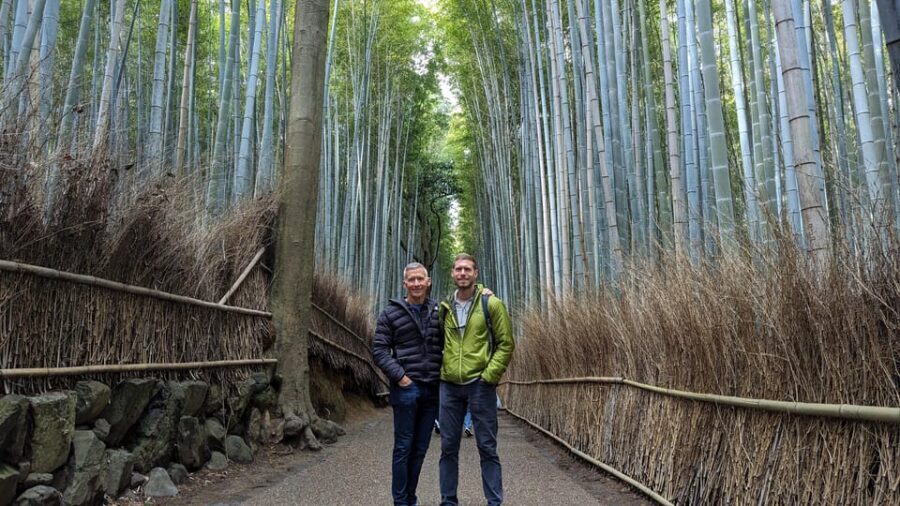
The Arashiyama Bamboo Forest is one of those places that people either love instantly or find hard to enjoy. The tour helps you get the best version of it by slowing you down. You’ll spend about 45 minutes here, including photo time, guided context, and free time.
You’ll walk through the grove at a leisurely pace. That matters because bamboo can feel like a blur if you move too fast. With the right timing, you can actually notice the quiet and the way light filters between stalks.
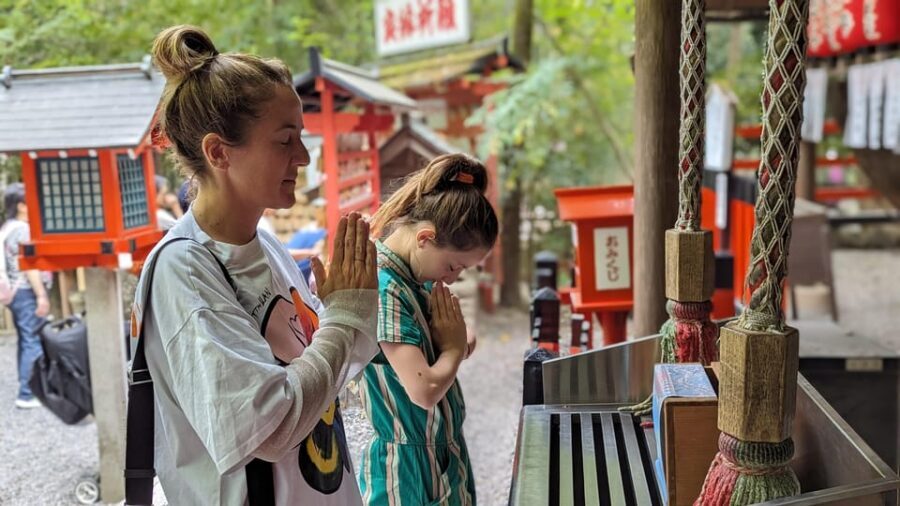
Right near the grove you’ll also stop at Nonomiya Shrine. This is short, but it adds variety and gives you another small shrine moment without turning the day into endless religious stops.
One consideration: if it’s hot, this part can feel long simply because you’re outdoors and walking. Wear comfortable clothes and shoes you trust.
Tenryuji Temple: what makes this Zen stop worth your time
Tenryuji is a UNESCO World Heritage site and one of Kyoto’s major Zen temples. On this tour, you get entrance included and guided time with a focus on the gardens.
I like that the guide doesn’t just say the name and point at buildings. You’re encouraged to slow down and look at the garden design—an intentional mix of architecture and greenery that reflects how Japanese landscape design works.
You’ll typically get about 30 minutes here. That’s enough to see the key areas and take in the overall composition without feeling stuck in a long line.
What you should do:
- Plan to walk a bit slower than you normally would.
- Look for the relationship between structures and the garden spaces around them.
- Use your guide’s prompts to decide where to stand for the best views.
This stop gives the day a mental reset after the walking and photo time. If you only do one temple garden today, this is the one that fits the schedule well.
You can also read our reviews of more tours and experiences in Kyoto
Arashiyama free time and lunch choices: keep it flexible
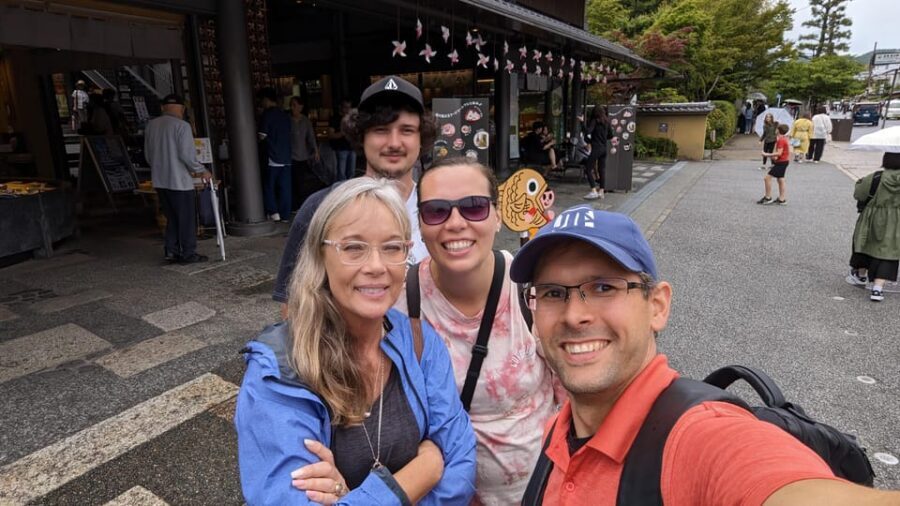
You’ll have free time along Arashiyama’s main street, around 40 minutes for lunch. Lunch isn’t included, and you’ll usually have options for different kinds of meals, including vegetarian choices for kids.
This is your moment to pick something simple and fast or to find a place you’d enjoy sitting down in. If you like calm meals, this is your chance. If you prefer to stay moving, you can grab something quick and rejoin the group spirit for the next stop.
A small but important tip: decide early whether you want to eat near the main street or if you’ll wait for a place closer to your next leg. The tour schedule is built, so trying to wander too far can make you feel rushed later.
Iwatayama Monkey Park: short steep hike, big payoff (but not for everyone)
Next comes one of Kyoto’s most memorable wildlife moments: Iwatayama Monkey Park. The walk starts from the Arashiyama area, and then you hike up the hill from near the bamboo grove.
The climb is short—about 20 minutes for most people—but it’s steep. The tour notes it can take longer depending on physical condition. It’s also specifically not recommended if you have leg or knee injuries.
At the top, you get a payoff:
- A view over Kyoto
- A fun encounter with Japanese macaques
- Time to feed the monkeys (when allowed by the flow there)
I think this stop is worth planning for because it adds a different kind of Kyoto memory. You’re not just looking at buildings or gardens—you’re watching living animals in a setting that feels part nature, part city viewpoint.
If you’re fit and comfortable on steep stairs, you’ll probably enjoy it a lot. If not, consider skipping the hike and taking it more slowly with your guide’s guidance, if the operator allows that—because the tour itself flags it as a limitation.
Randen tram connection and Kinkakuji: the Golden Pavilion loop that works best later
After the Monkey Park, you head toward the tram line area (Randen Arashiyama Station is the local tram reference) and ride to get near the Golden Temple. The pacing then shifts to Kinkakuji itself.
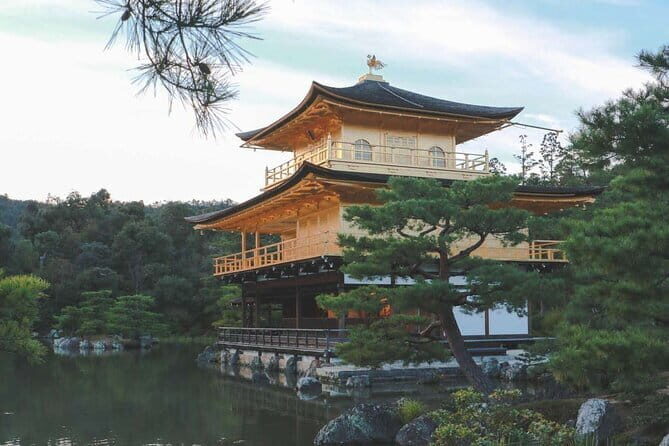
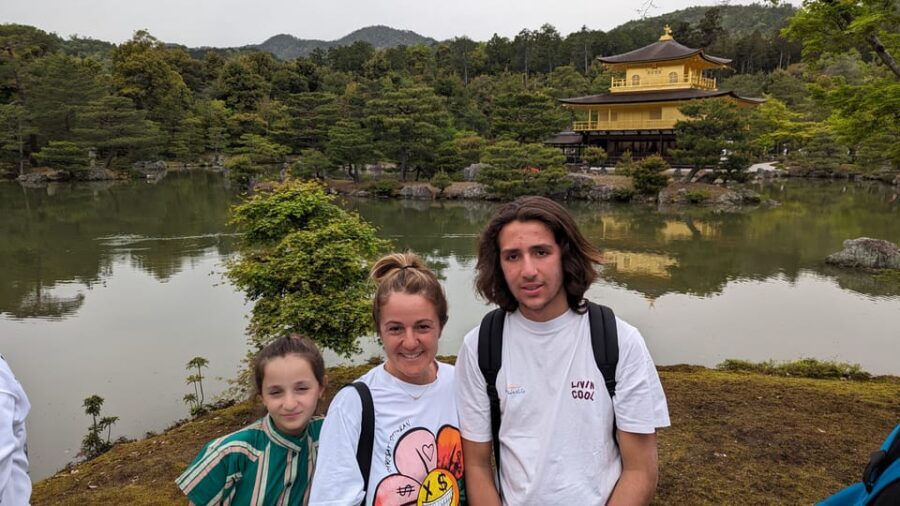
Kinkakuji, the Golden Pavilion, is a Zen temple famous for its top floors covered in gold leaf. You’ll have about 45 minutes at the site, including photo time, guided highlights, and free time. You can also shop around afterward.
Here’s what I’d aim for at Kinkakuji: the pond reflection. The reflection is especially striking when light changes later in the day, so staying for the loop around the pavilion and pond is the move. The tour includes time for that walking path, which matters because the best angles aren’t always the closest ones.
Possible drawback: Kinkakuji is one of Kyoto’s headline attractions, so expect crowds. The guide helps you stay oriented and not get stuck in the wrong spot at the wrong moment.
What the guided format adds (especially if you like photos)
Some guided tours feel like a checklist with someone holding a microphone. This one feels closer to a guided day where the guide helps you make sense of what you’re seeing and then gives you time to actually enjoy it.
You’ll likely get:
- Explanation at each major site so the place isn’t just a name
- Help with timing so you don’t lose your whole day waiting
- Organization across train, tram, walking, and bus segments
- Picture support, and downloadable souvenir photos afterward
In the feedback I’ve seen tied to this experience, guides like Tom, Agustin, and Rémi are credited with being easy to understand in English and other languages, answering questions well, and even taking great photos in crowded areas where that’s usually hard.
And yes, the day includes walking and transit. But the guide’s job is to keep the flow controlled, so you can focus on the sights and not the route.
Price and value: is $96 worth it for a full-day highlights plan?
Let’s talk value plainly. You’re paying $96 for:
- An English/Japanese guide plus other confirmed languages
- Entrance tickets to three major paid sites (Tenryuji, Monkey Park, Kinkakuji)
- Skip-the-ticket-line convenience
- A full day of structured highlights across multiple Kyoto areas
- Souvenir pictures downloadable after the tour
What’s not included is transportation (Suica/Icoca recommended), lunch, and shopping/souvenirs.
So the key question is your style:
- If you want to do Kyoto’s biggest hits in one day and you’d rather not coordinate tickets and routes, this is a strong fit.
- If you love planning independently and don’t mind paying ticket costs on your own, you might do it cheaper solo.
- If you get overwhelmed by long days, this is still a lot—because it’s a walking tour with a steep hike included.
For most people who want a clean, guided highlights day, the included tickets and guide time make the price feel reasonable.
Who this tour suits best
This works well if you:
- Want to cover major Kyoto icons in one day (Inari, Arashiyama, Tenryuji, monkeys, Kinkakuji)
- Prefer public transit over a bus-only format
- Like having a guide to answer questions and help with timing
- Would enjoy a long day with several different kinds of sights
It may be less ideal if you:
- Have leg or knee issues that make the Iwatayama climb difficult
- Don’t handle heat well during outdoor walking
- Want a slower, more relaxed pace with fewer scheduled stops
Should you book this Kyoto highlights walking tour?
I’d book it if you want a well-structured day that delivers the big visual Kyoto memories: red torii gates, bamboo calm, Zen garden time, a monkey park viewpoint, and the gold pavilion pond reflection. The guide format, included tickets, and photo download add real convenience, and the group size keeps it from turning into a chaotic stampede.
I wouldn’t book it if you need a gentle day. This is long, it’s walking-focused, and the Monkey Park hill is steep even though it’s short. If you’re unsure about the climb, check your comfort level carefully before committing.
In short: if you want maximum Kyoto icons with minimum route stress, this is a smart pick.
FAQ
Where do I meet the guide?
Meet your guide in front of KITSUNEZO, a fox statue just across the street from the JR Inari Train Station.
Is this a private tour or a group tour?
It’s primarily a group tour, with up to 10 people. A private group option is available.
How long is the tour?
The duration is approximately 8 hours, with the timing able to vary by about 30 minutes.
What’s included in the price?
Included are an English/Japanese guide (and other languages when confirmed), entrance tickets for Tenryuji Temple, Monkey Park, and Kinkakuji, and downloadable souvenir pictures.
What is not included?
Transportation (Suica or Icoca Card recommended), lunch, food and drinks, and shopping/souvenirs are not included.
Does the tour include tickets for the major temples?
Yes. Entrance tickets for Tenryuji Temple, Monkey Park, and Kinkakuji are included, and you skip the ticket line.
What should I bring?
Bring a passport, comfortable shoes, comfortable clothes, and cash.