REVIEW · GEISHA & MAIKO TOURS
The Art of Geisha: Exclusive Show & Gion Walking Tour
Book on Viator →Operated by GuideMe Japan · Bookable on Viator
A maiko in front of you changes everything. This Kyoto experience keeps you close to maiko culture through a small-group show in Gion, paired with tea and snacks and time to chat and ask questions.
I especially like the format: maximum six people, so your questions don’t get swallowed by a crowd. I also like that you’re not just watching quietly; there’s an interactive moment that turns the show into an experience you can actually talk about later. One thing to plan for is timing: the tour starts at 3:00 pm, and it’s built around a specific show window in Gion.
In This Review
- Key things to know before you go
- Why a Gion maiko performance feels different
- Gion at 3:00 pm: the walk that sets the mood
- The tea and snacks break: comfort with context
- Watching the maiko perform: what to focus on
- Conversation time and respectful questions
- The traditional game: where the show gets personal
- Price and value: is $124 fair for this format?
- Where the tour ends: how to keep your evening easy
- Who this is best for (and who should skip it)
- Should you book the Art of Geisha show and Gion walk?
- FAQ
- What is the duration of The Art of Geisha: Exclusive Show & Gion Walking Tour?
- How many people are in the group?
- What time does the tour start?
- Where is the meeting point?
- Where does the tour end?
- What’s included in the price?
- Is a mobile ticket provided?
- Can children under 6 join?
- Is free cancellation available?
Key things to know before you go
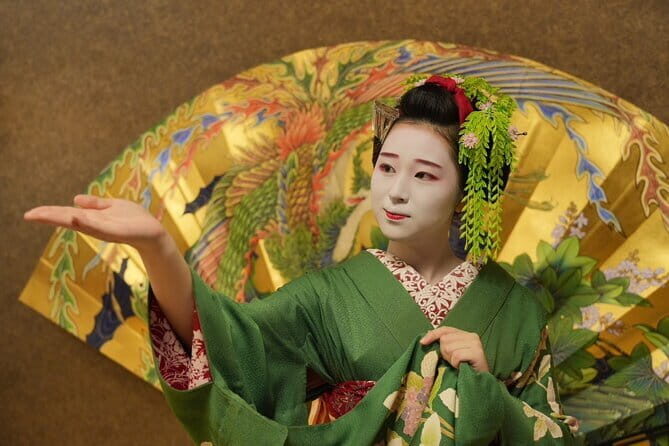
- Max six people means a calmer, more personal feel than most Kyoto evening activities
- Maiko performance + tea and snacks gives you both culture and comfort, not just a quick peek
- Time for questions helps you leave with real context instead of vague impressions
- A traditional game makes the interaction playful and memorable
- Mobile ticket plus clear meeting points helps you get there with less stress
Why a Gion maiko performance feels different
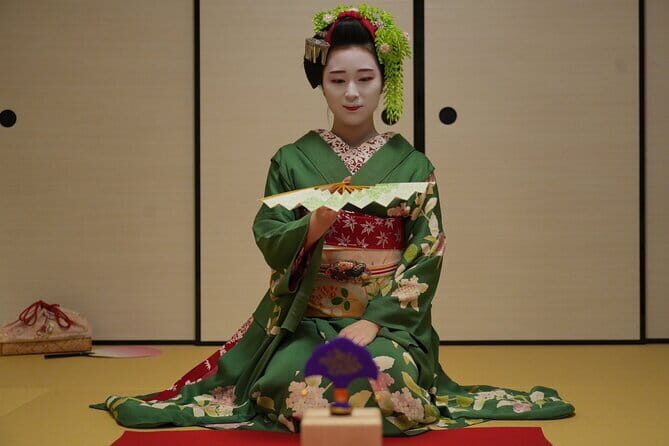
Kyoto’s Gion district has a reputation for being hard to “crack.” Even when you’re looking in the right places, the people you want to see often stay out of sight. That’s exactly why a small, guided program like this matters: it brings you into the normally hidden world of geisha arts in a controlled, respectful setting.
What I like about this kind of show is the balance. You’re not just watching a performance; you’re getting the background that helps the movements and traditions make sense. And because the group is limited to six, you can actually ask practical questions and get answers that land.
One more thing: this isn’t positioned as a long lecture. It’s short and focused, with a clear arc—Gion orientation, a maiko performance, tea and snacks, conversation, and a traditional game.
You can also read our reviews of more walking tours in Kyoto



Gion at 3:00 pm: the walk that sets the mood
The tour meets at Statue of Izumo-no-Okuni, Kawabatacho, Higashiyama Ward, Kyoto with a 3:00 pm start. That timing is useful because you’re catching Gion in the afternoon-to-early-evening shift, when the streets feel lived-in rather than like a morning postcard.
This first stretch is about getting your bearings fast. You’ll learn about the district and how geisha culture fits into Gion’s rhythm. It’s also where conversation starts: your English-speaking guide will set expectations for what you’ll see and why it matters.
If you’re the type who likes to understand where you are before the big moment arrives, you’ll likely appreciate this part. If you only want the performance and nothing else, it may feel like a warm-up—but it’s a warm-up that helps the main event click.
The tea and snacks break: comfort with context
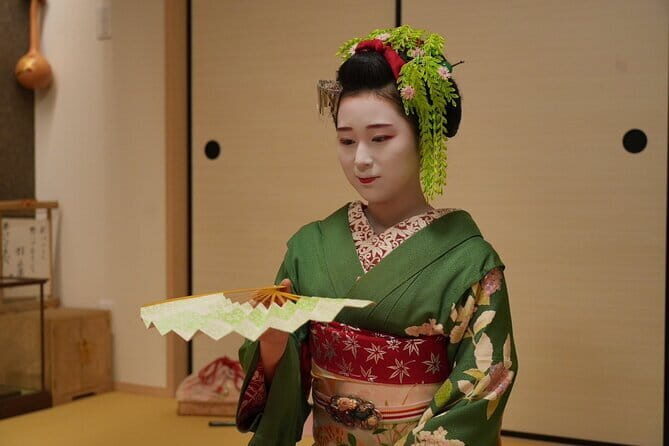
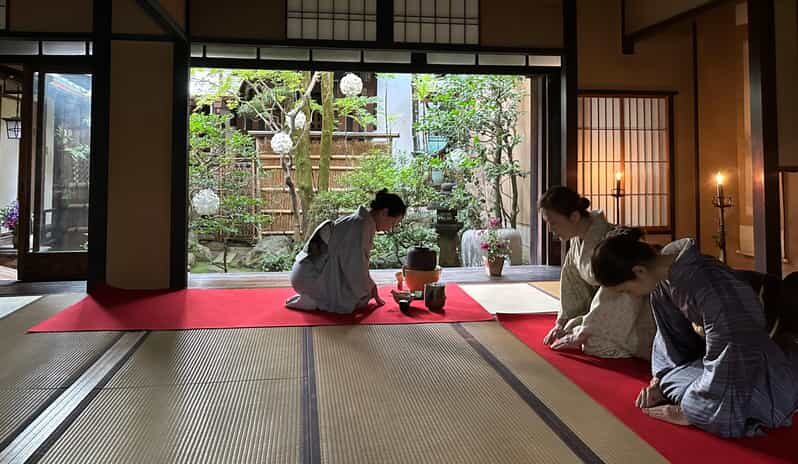
After the Gion intro, you’ll settle into the performance setting and enjoy Japanese tea and snacks. This matters more than it sounds. Tea gives you a natural pause, and it also signals that the cultural side isn’t just “show and go.” You’re being treated like a participant, not a spectator in a line.
Think of it as a reset button. You can slow down, take a breath, and focus on what comes next: the maiko performance. Snacks also help if you’ve been on the move all day around Kyoto, since this tour is only about 1 to 2 hours total.
A small practical tip: tea and snacks are included, so you don’t need to plan a full meal around this exact time. Just don’t assume it’s a substitute for dinner.
Watching the maiko perform: what to focus on
The headline moment is the maiko performance—a chance to see a geisha apprentice perform traditional arts. The tone here is intimate. With a maximum group size of six, you’re close enough that you can see details, not just silhouettes.
This is the part where the dedication theme really lands. Even without you chasing facts on your own, the show makes clear that becoming a maiko involves years of training and disciplined practice. You’ll likely notice that the performance feels controlled and precise, the kind of skill that doesn’t show up overnight.
When you watch, try this mindset: don’t just look for entertainment. Look for craft. Watch how the performance flows, how the routine is structured, and how the traditional setting supports the art.
If you’ve spent days trying to spot geisha or maiko from the street, this is the opposite of that experience. Instead of guessing, you get a clear, intentional view of the art.
Conversation time and respectful questions
One of the best parts of this tour is that it’s not a one-way show. You’ll have a chance to chat with the apprentice and ask questions. This turns the cultural learning from “interesting” into “understandable.”
I like question time because it helps you confirm what you’ve heard while you travel. Maybe you’ve learned some terms already. Maybe you’ve picked up misconceptions. Either way, talking directly is the fastest path to clarity.
Some past groups have been guided by people named Ai or Yoshino, and the apprentice has been identified in at least one case as Karun. You won’t necessarily get the same team, but it’s a sign that the guides and apprentices involved can handle conversation and interpretation smoothly.
Practical note: keep questions focused and polite. Think along the lines of training, traditional arts, daily practice, or what the experience means culturally.
You can also read our reviews of more tours and experiences in Kyoto



The traditional game: where the show gets personal
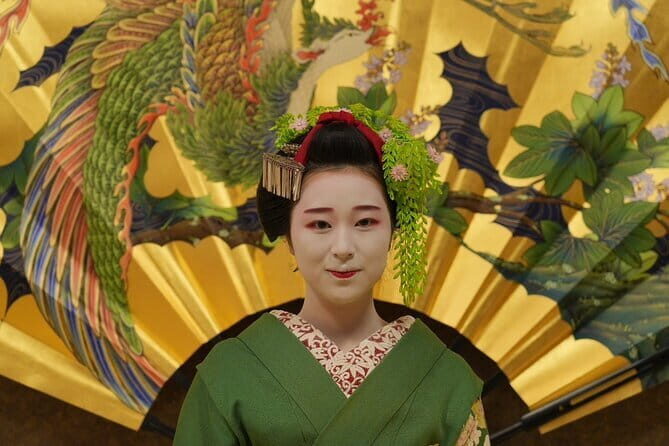
After the performance and conversation, you’ll take part in a traditional Japanese game with the maiko. The key detail is that it’s not framed as a gimmick. It’s a playful challenge meant to get you into the spirit of the interaction.
This is where the group size pays off again. In a bigger setting, interactive moments can feel rushed. Here, you’re more likely to get a real back-and-forth rather than a quick “do this and move on.”
One review highlight in the provided info describes people getting the chance to play, and the interaction stands out because it’s not just watching. If you enjoy experiences with a little friendly pressure and laughter, this is one of the parts most worth showing up for.
Also, if you’re a bit nervous about cultural etiquette, the game can actually help. It gives you a clear, guided way to participate rather than forcing you to improvise.
Price and value: is $124 fair for this format?

At $124.21 per person, this isn’t a cheap Kyoto add-on. But the value comes from what’s included and what’s limited.
You’re paying for:
- A maiko/geisha-style show (not just a talk)
- Japanese tea and snacks
- An English-speaking guide
- A maximum group size of six
In other words, you’re covering a cultural performance and structured interaction, plus guided context to help it land. For Kyoto, that can be a fair deal when the program is short, focused, and intimate.
The biggest “value multiplier” is the group size. When the ceiling is six, you’re far more likely to remember names, answers, and details. That’s the difference between a show you watched and a show you understood.
If you’re trying to fit everything into a tight schedule, remember this tour is about 1 to 2 hours and starts at 3:00 pm. It’s priced like an experience block, not like a wandering activity.
Where the tour ends: how to keep your evening easy
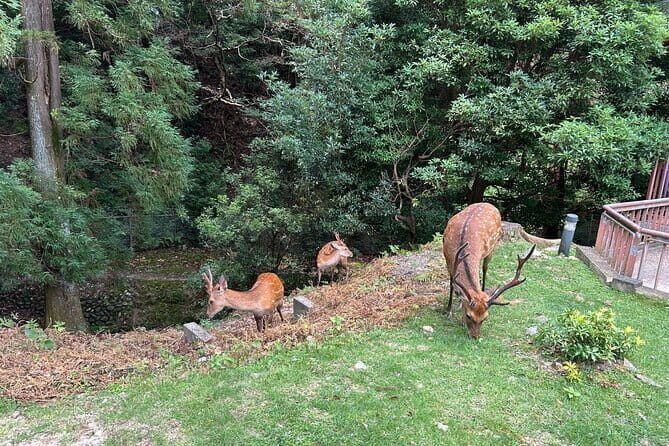
The tour ends at Hangesho, 535 Morishitachō, Higashiyama Ward, Kyoto. Since it’s in the same general Kyoto area, you can usually keep your evening simple: pick a nearby dinner spot and continue exploring Gion on foot.
Because meeting points are clearly listed, you won’t be stuck playing guessing games with Kyoto directions. That’s a big deal when you’re spending your limited time in Gion.
Also, the tour is described as near public transportation, which helps if you’re mixing it with other stops around Higashiyama.
Who this is best for (and who should skip it)
This tour is a strong fit if you:
- Want a structured Kyoto geisha show rather than relying on street spotting
- Like small groups and real conversation time
- Enjoy cultural performance with a hands-on element (the game)
It may be less ideal if you:
- Hate scheduled time blocks and prefer wandering without appointments
- Want a longer, museum-style explanation (this experience is short and performance-centered)
If you’re traveling with someone who finds “traditional culture” interesting but abstract, this format can help. You get the art, the context, and the interaction in one sitting.
Should you book the Art of Geisha show and Gion walk?
I’d book it if you want a high-signal Kyoto experience. This tour is built for people who are tired of walking the right streets without seeing the right art, and it gives you a clear moment to witness a maiko performance in a respectful, intimate setting.
Given the program design—maximum six people, tea and snacks included, Q&A time, and a traditional game—it’s also a good choice if you care about value through access, not just scenery. The strong overall satisfaction numbers provided for this tour suggest many people feel the interaction and show are worth the cost.
If your schedule can handle a 3:00 pm start, and you’re open to a short, guided experience in Gion rather than self-guided wandering, this is an easy yes.
FAQ
What is the duration of The Art of Geisha: Exclusive Show & Gion Walking Tour?
The tour runs about 1 to 2 hours (the itinerary indicates around 1 hour for the main tour segment).
How many people are in the group?
It’s limited to a maximum of 6 travelers.
What time does the tour start?
The start time is 3:00 pm.
Where is the meeting point?
You meet at the Statue of Izumo-no-Okuni, Kawabatacho, Higashiyama Ward, Kyoto, 605-0076, Japan.
Where does the tour end?
The tour ends at Hangesho, 535 Morishitachō, Higashiyama Ward, Kyoto, 605-0836, Japan.
What’s included in the price?
The tour includes the geisha show, Japanese tea and snacks, and an English-speaking tour guide.
Is a mobile ticket provided?
Yes, the tour uses a mobile ticket.
Can children under 6 join?
No. Children age 6 and below cannot join.
Is free cancellation available?
Yes, you can cancel for free up to 24 hours before the experience’s start time for a full refund.