REVIEW · KYOTO
Ikebana Traditional Japanese Art of Flower Arranging
Book on Viator →Operated by Kaeribana · Bookable on Viator
Ikebana turns simple stems into quiet art. This Kyoto class is a hands-on intro to traditional Japanese flower arranging, with a strong mindfulness angle and a wabi-sabi minimalist mindset. Ikebana is often described as giving freshly cut flowers a new life, using each stem’s natural shape to create balance.
I especially like two things about this experience. First, you get practical guidance from an English-speaking Ikebana expert, including a clear demonstration before you start. Second, you learn how to care for your arrangement so the flowers can last up to two weeks, which actually matters when you’re traveling.
One consideration: the session is about 90 minutes, so you’ll get a focused starter experience rather than a deep survey of every Ikebana school and rule. If you’re craving a long history lecture, you might feel the time limit.
In This Review
- Key highlights to know before you go
- Ikebana in Kyoto: living flowers and wabi-sabi balance
- Where you meet in Kamigyo Ward (and how to avoid stress)
- What happens in the first part of class (before you start arranging)
- Two beginner styles: Nageire and Moribana (what each teaches you)
- Hands-on time with seasonal stems: building your own composition
- Mindfulness you can feel in your hands (not just in theory)
- Getting your flowers to last: practical care tips for up to two weeks
- Time, group size, and what 90 minutes really means
- Price and value: is $72.26 worth 90 minutes?
- Who should book this Ikebana class in Kyoto
- Should you book: my quick decision guide
- FAQ
- How long is the Ikebana class in Kyoto?
- Where does the class meet?
- What is the price per person?
- Is this class taught in English?
- How many people are in the group?
- Will I receive a ticket for the activity?
- Is the course near public transportation?
- What arrangements/styles will I learn?
- Do they provide tips for keeping flowers fresh?
- What is the cancellation policy?
Key highlights to know before you go
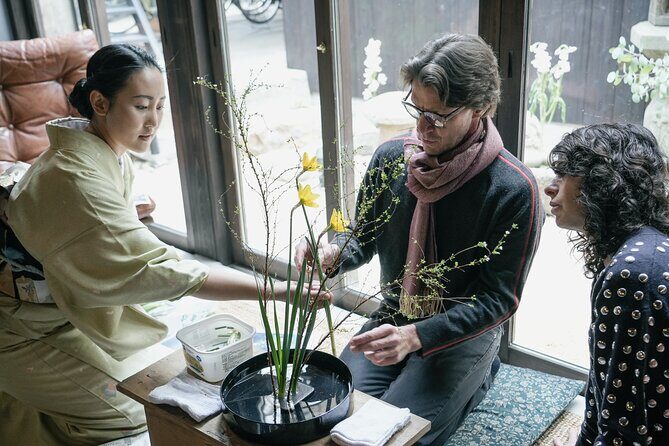
- Two beginner styles in one class: Nageire and Moribana
- Small group size: max 6 people, so you’re not lost in the crowd
- Seasonal flowers on hand: you work with what’s fresh and in season
- Mindfulness practice, not just craft: you’re taught to observe as you build
- Practical freshness tips: aimed at keeping flowers looking good for up to two weeks
Ikebana in Kyoto: living flowers and wabi-sabi balance
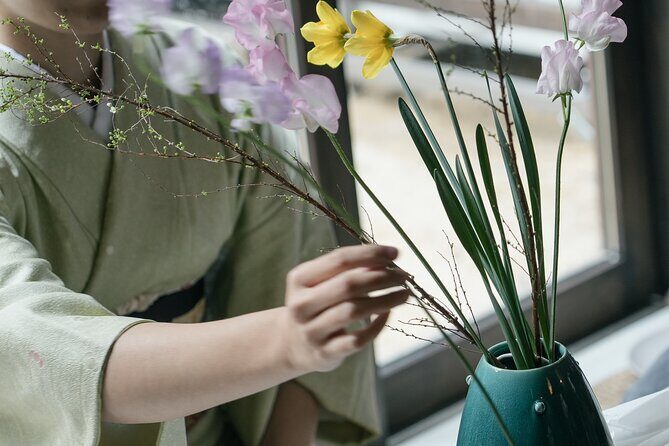
In Japanese, ikebana is often explained as living flowers—not just decoration. The core idea is that flowers are living things, so the arrangement tries to respond to their natural character instead of fighting it. That shift changes how you look at every stem in your hands.
This class leans into wabi-sabi too. That means less flash, more attention to form, imperfection, and restraint. You’re learning to create harmony and balance using minimal, intentional choices, which feels very Kyoto.
And yes, it’s artistic. Still, it’s also practical. You’ll learn ways to keep your materials fresh, plus how to think through spacing, line, and balance so the result feels intentional rather than random.
You can also read our reviews of more tours and experiences in Kyoto.



Where you meet in Kamigyo Ward (and how to avoid stress)
You’ll meet at a specific address in Kyoto’s Kamigyo Ward: Tanbayachō, 3481, シンフォニー北野東 (Japan 602-8287). The class ends right back there, so you won’t be bouncing around the city.
It’s near public transportation, which helps if you’re pairing this with other Kyoto plans. Also, you get a mobile ticket, so you won’t be scrambling for paper.
Because the meeting point is an actual street address, show up a little early and take a moment to confirm you’re at the right building. With small classes, being a few minutes late can throw off the whole flow.
What happens in the first part of class (before you start arranging)
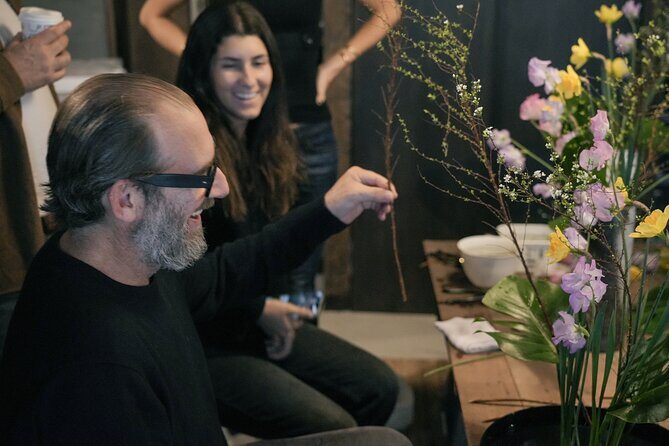
The experience is designed to get you oriented fast. You’ll start with a short overview of Ikebana principles and what the instructor wants you to notice. Expect talk about harmony, balance, and how an arrangement should feel like it belongs together.
Then you’ll see demonstration(s). One standout from the experience feedback: the instructor’s demos are described as clear and easy to follow, with enough structure that you don’t feel overwhelmed. You’ll get a sense of how the instructor thinks about placement—especially the logic behind the lines and angles.
This first phase is valuable because it turns ikebana from a vague concept into repeatable actions. Instead of just copying a picture, you learn what to look for.
Two beginner styles: Nageire and Moribana (what each teaches you)
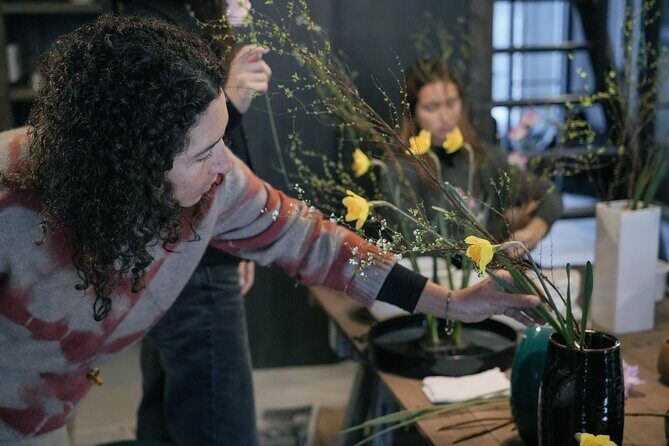
A major reason this class works well for first-timers is that it teaches two foundational styles: Nageire and Moribana.
Nageire is often associated with more free, vertical movement. It tends to emphasize natural lines and a sense of flow. When you’re learning ikebana for the first time, that freedom can be refreshing because you’re not stuck in a rigid grid.
Moribana usually brings a different kind of structure. It’s designed around defined spacing and balance, often with an arrangement that feels carefully staged. It’s a great counterpoint to Nageire because it shows you that Ikebana can be both strict and expressive.
Even if you don’t remember every detail afterward, learning both styles in one short session gives you a framework. You start to see that ikebana isn’t just a single method—it’s a way of thinking.
Hands-on time with seasonal stems: building your own composition
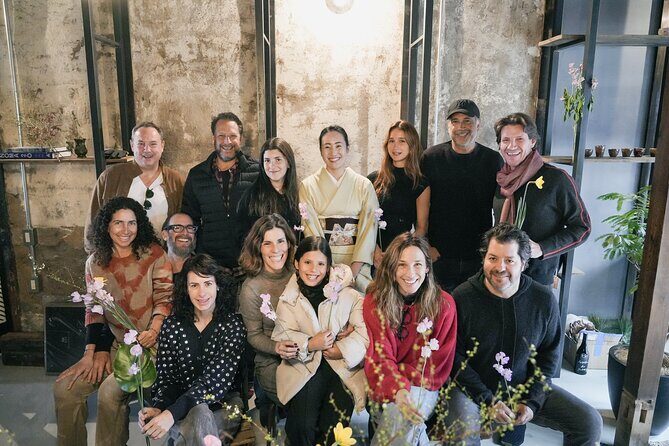
After the demonstrations, you create your own arrangement. You’ll work with seasonal flowers, which matters more than it sounds. Seasonal stems tend to come with their own character—shape, color range, and natural growth patterns—so the design feels connected to the time of year.
The instructor uses traditional methods unique to Ikebana, but the teaching style stays approachable. One repeated theme in the feedback: there’s a balance of philosophy and technique, with practical tips delivered in time for you to use them.
As you work, you’ll be guided to look at each stem as a living element. That means you pay attention to where the stem wants to go, not just how you want it to look. It also means you’re making choices with purpose: height, angle, and spacing should all serve the harmony of the arrangement.
Also, the group size is capped at 6, which helps a lot. You’re more likely to get quick corrections when something feels off.




Mindfulness you can feel in your hands (not just in theory)
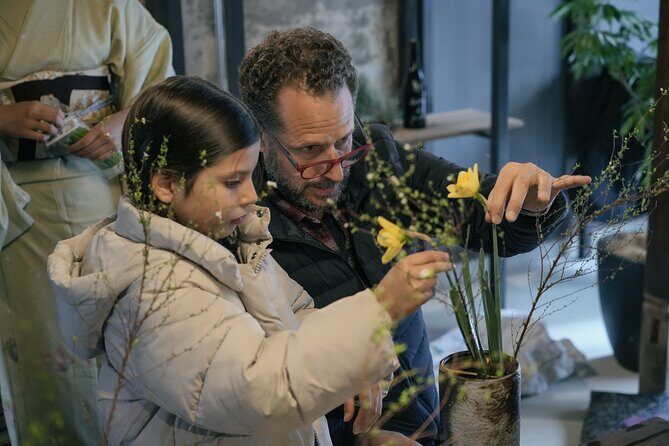
Ikebana gets marketed as mindfulness, but here it’s treated like something you practice through doing. You’re taught to pause, notice, and adjust—because that’s the rhythm of building a composition.
This is where the class can surprise you. You start with flowers, yes. But the real activity is attention. As you place a stem and watch how it changes the overall balance, your brain shifts from sightseeing mode to focus mode.
That’s also why the wabi-sabi angle lands. When you’re paying attention to small aspects—slight asymmetry, natural curve, the negative space between stems—you stop chasing perfection. The arrangement becomes calmer, even if you’re still learning.
If you like crafts with a quiet mental payoff, this part is the reason to book.
Getting your flowers to last: practical care tips for up to two weeks

One of the most useful parts of the experience is the instruction aimed at keeping fresh flowers looking good. The class specifically includes tips for maintaining freshness so flowers can last up to two weeks.
Even without details here on the exact steps, the value is clear: most people take photos and then the flowers fade quickly. A class that tells you how to handle cut stems responsibly helps your arrangement survive your trip plans and still look presentable later.
This is also one of the ways the course feels “real.” It’s not only about making an arrangement; it’s about understanding it as something living, and planning for its needs.
When you get home, those care habits can also make regular flower purchases feel more intentional.
Time, group size, and what 90 minutes really means

The class runs about 1 hour 30 minutes. That’s a sweet spot for a first workshop: long enough to learn core ideas and make something, short enough to fit into a day of Kyoto walking.
With only up to 6 people, you’ll get attention without delays. You’re less likely to feel like you’re working alone while the instructor jumps between groups. That matters in ikebana, where tiny placement differences change the whole balance.
Still, remember the drawback mentioned earlier: you won’t cover every school, every rule set, or every variation of classic forms. Think of this as a confident beginning, not an exhaustive certification.
Price and value: is $72.26 worth 90 minutes?
At $72.26 per person for roughly 90 minutes, you’re paying for a small-group, instructor-led skill lesson with materials and focused coaching. The value comes from three things:
- Expert instruction in English (not just a self-guided activity).
- Hands-on time with seasonal flowers instead of watching only.
- Actionable care tips to help your flowers last up to two weeks.
If you’ve ever done a bargain craft class that gives you a template and tells you to follow along, this is different. You’re learning the thinking behind the arrangement—especially balance and line—so your outcome feels more personal.
If you already know a lot about Japanese flower arranging and want a deep dive into advanced forms, you might find the time short. For most first-timers, the structure feels fair.
Who should book this Ikebana class in Kyoto
This class is a strong fit if you want a calmer Kyoto experience that’s still hands-on. It’s ideal for:
- People who like minimalist design and thoughtful craft
- Anyone curious about Japanese culture beyond temples and streets
- Couples or small groups who want shared focus and a skill they can carry home
- Travelers who appreciate practical tips, not only aesthetics
It may be less ideal if you’re expecting a big lecture about the full history of Ikebana and every school name. The session is structured for beginners, with Nageire and Moribana as the core.
Should you book: my quick decision guide
Book it if you want an organized introduction to traditional Ikebana in Kyoto, with real coaching, seasonal materials, and freshness tips you can use immediately after class. The small group size and the two-style approach (Nageire plus Moribana) make it feel efficient without rushing.
Consider skipping or pairing with a longer program if you’re mainly after a deep academic breakdown of Ikebana schools and detailed rules. This experience prioritizes doing and learning the essentials fast.
If you like learning by making—while practicing a little quiet mindfulness—this is an easy yes.
FAQ
How long is the Ikebana class in Kyoto?
It’s approximately 1 hour 30 minutes.
Where does the class meet?
The meeting point is in Kamigyo Ward, Kyoto (Tanbayachō, 3481, シンフォニー北野東, 602-8287).
What is the price per person?
The price is $72.26 per person.
Is this class taught in English?
Yes, it’s led by an English-speaking Ikebana expert.
How many people are in the group?
The class has a maximum of 6 travelers.
Will I receive a ticket for the activity?
Yes, you get a mobile ticket.
Is the course near public transportation?
Yes, the meeting point is near public transportation.
What arrangements/styles will I learn?
The class covers two traditional beginner styles: Nageire and Moribana.
Do they provide tips for keeping flowers fresh?
Yes. You’ll learn tips to help maintain freshness so flowers can last up to two weeks.
What is the cancellation policy?
You can cancel for free up to 24 hours in advance for a full refund.