REVIEW · SAMURAI EXPERIENCES
Kyoto: Samurai Kenbu Traditional Sword Dancing Show
Book on GetYourGuide →Operated by Ginbu Co. · Bookable on GetYourGuide
A samurai sword-dance in Kyoto can feel unreal. This Kenbu show turns feudal-era discipline into an easy-to-follow stage story, with English narration and hands-on time at the end.
I love that it teaches the meaning behind the movements, not just the moves themselves. I also like the built-in chance to try basic sword handling—slow at first, then more confidently—so the show sticks in your mind.
One thing to consider: photos and videos are off-limits during the performance, so you’ll have to wait for the post-show photo window.
Quick hits before you go
- Shoes off, then sit down: you’ll start with local theater etiquette and a clear intro before the dancing begins
- English narration for the stories: each segment is explained so the poems, techniques, and samurai themes land
- Traditional and newer Kenbu styles: you’ll see different takes on the same sword-dance art
- Folding fan work is part of the program: not just swords, but samurai-style fan techniques too
- A short sword lesson you actually participate in: you can grasp, draw, and swing a sword briefly
- Photos after the show: camera time happens when the performers return, with extra help available
In This Review
- Kenbu in Kyoto: sword dancing as samurai storytelling
- Finding Samurai Kembu Theater and arriving at the right moment
- Inside the theater: shoes off, rules in place, and how the show starts
- Kenbu demonstrations: samurai culture, poems, fan techniques, and stage tales
- The end of the show: post-performance photos and the photo window
- The mini sword lesson: what you can try (and how it feels)
- Price and value: why $32 can make sense in Kyoto
- Who this show is best for (and who may want to skip)
- Should you book the Kyoto Samurai Kenbu sword-dancing show?
- FAQ
- Where is the meeting point for Samurai Kenbu Theater?
- How long is the show?
- What does the price include?
- Are hotel pickup or drop-off services included?
- What languages is the instruction or narration available in?
- Is the show wheelchair accessible?
- Is photography allowed during the show?
- Can I try holding or swinging a sword?
- Is there space for large luggage or travel bags?
- Should you book the Kyoto Samurai Kenbu sword-dancing show?
Kenbu in Kyoto: sword dancing as samurai storytelling
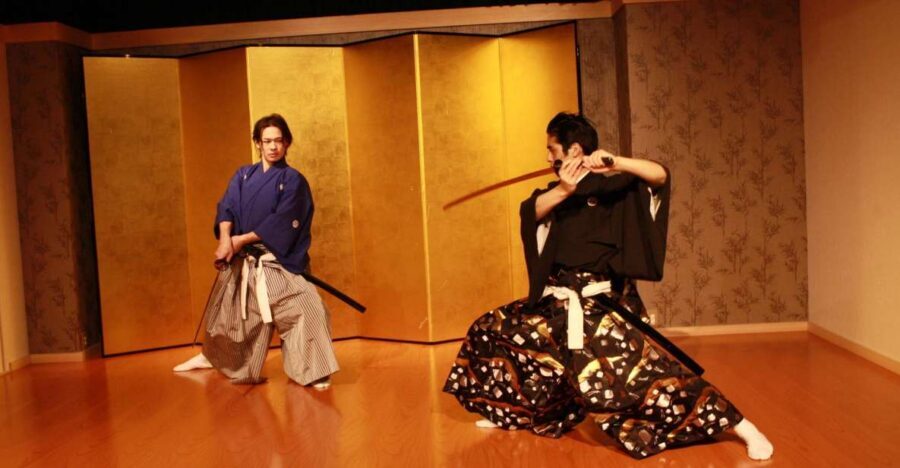
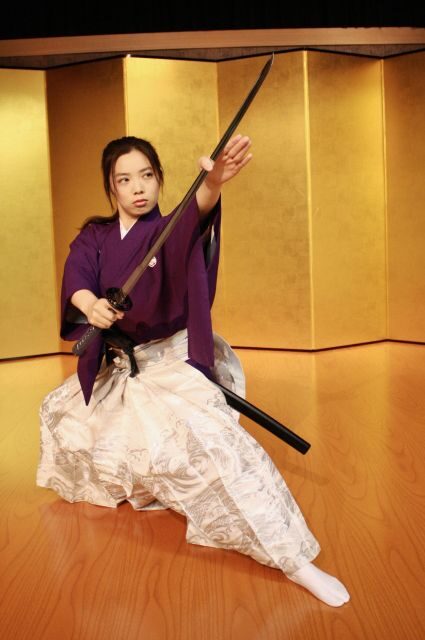
Kenbu is not kendo sparring and it’s not swordfighting like you see in action movies. Think of it more like choreography with rules, rhythm, and story. In Kyoto, this show frames Kenbu as an art of controlled motion—where responsibility and respect come through as clearly as the blade.
What makes it interesting is how the performance keeps connecting the visuals to meaning. You get an opening introduction to Kenbu history and techniques, then the dancers move through staged stories tied to samurai culture across Japan’s feudal era (the program references the 12th–19th centuries). The result is that you’re not just watching pretty sword flourishes—you’re learning what those motions are trying to communicate.
I also like the pace. The whole experience is about an hour, but it doesn’t feel rushed. It moves from explanation to multiple demonstration segments, then lands with a hands-on mini lesson that gives you a real sense of what sword handling involves.
Finding Samurai Kembu Theater and arriving at the right moment
You’ll meet at Samurai Kenbu Theater in Kyoto. It’s a short walk from transit—about 4 minutes from Subway Sanjo Keihan Station (Kyoto City Subway) and about 5 minutes from Sanjo Station on the Keihan Main Line. That’s convenient if you’re already hopping around central Kyoto.
Plan to arrive 5–15 minutes early. The theater notes there’s no waiting room, so showing up late can put you in an awkward spot. Once you’re inside, expect a smooth start: shoes off, then take your seat for the intro narration.
Practical tip: go light. The show allows no room for large luggage or travel bags, so if you’re bouncing between sights, keep your bag small and easy to carry.
You can also read our reviews of more tours and experiences in Kyoto
Inside the theater: shoes off, rules in place, and how the show starts
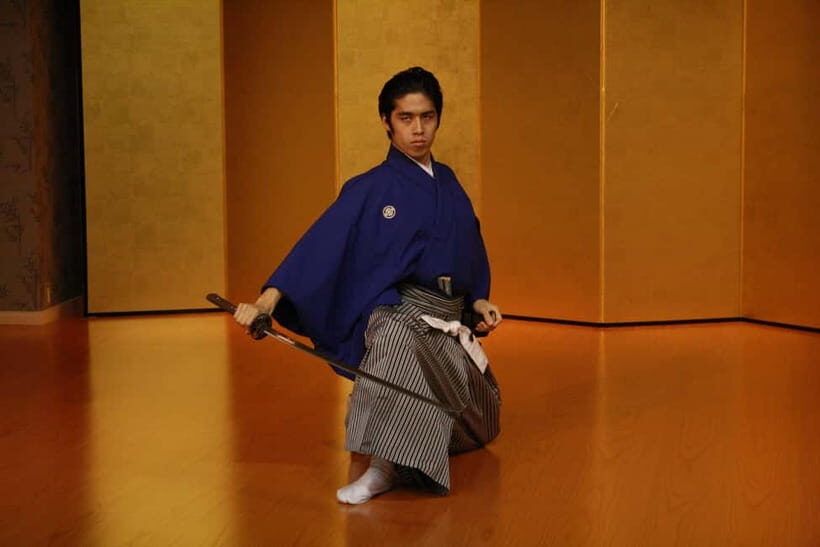
The experience begins the way many small traditional venues do: you remove your shoes and settle in according to local tradition. Then you’ll listen to a performer narrate an introduction that sets up what you’re about to see—Kenbu history plus core techniques.
That intro matters because it changes how you watch. Without it, sword dance can look like a series of impressive swings. With it, you start picking up why the performers emphasize certain angles, pauses, and transitions. You’re basically getting a quick guide to the language of the choreography.
Also note the camera rule up front. No photos or videos during the show. The theater clearly asks you not to record while the performance is happening. If you’re the type who likes to document everything, this is the one constraint you should mentally prepare for.
Kenbu demonstrations: samurai culture, poems, fan techniques, and stage tales
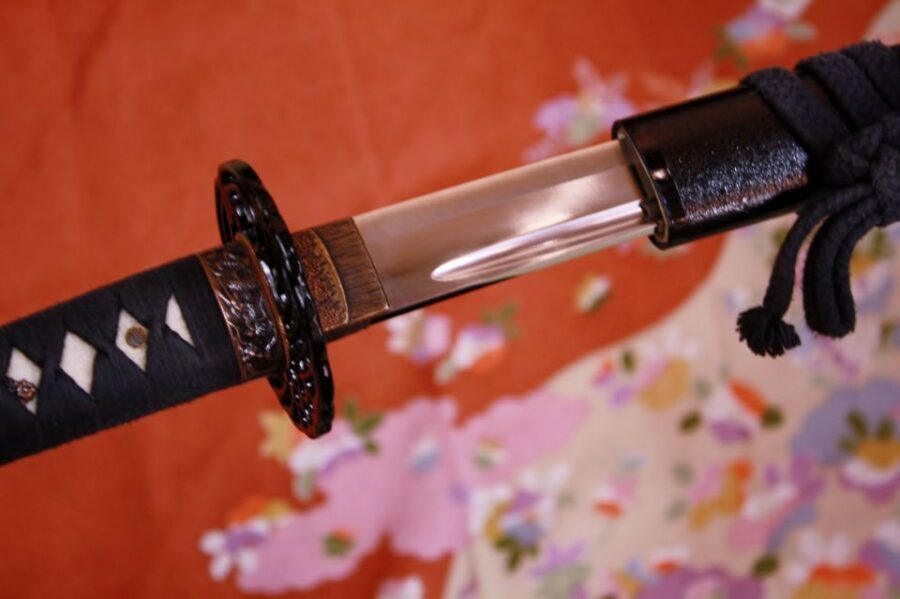
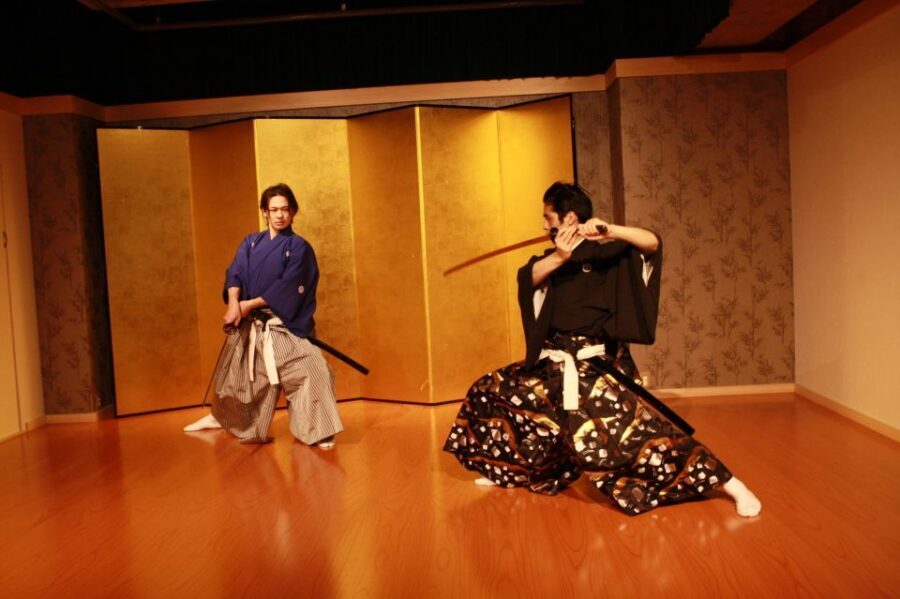
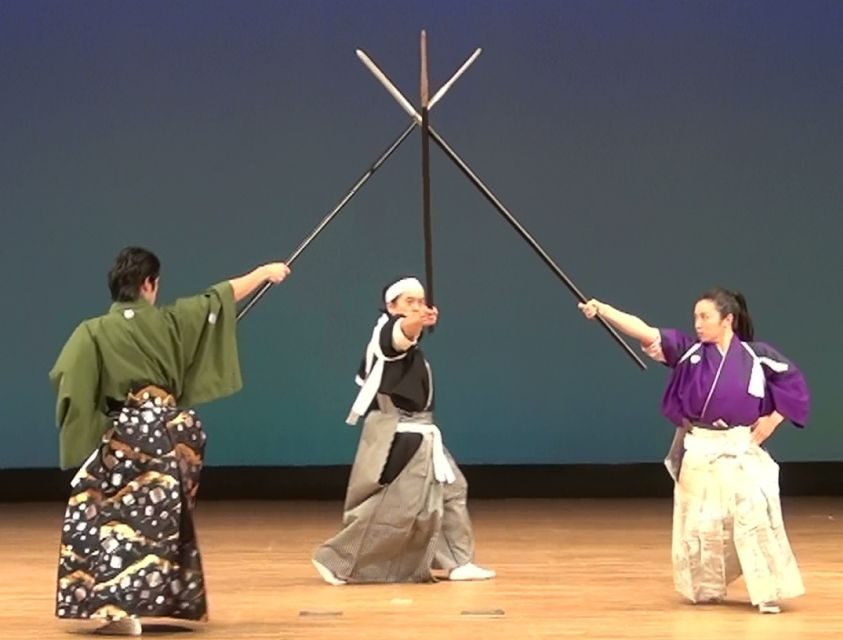
After the introduction, the show becomes a sequence of demonstrations. Each one includes a short history or explanation of the samurai culture behind the scene. In other words, you’re not just getting one long dance. You’re getting several mini chapters.
Here’s what stands out about the content:
1) Stories with English narration
The program uses English narration to frame traditional tales and samurai themes on stage. That helps if you don’t read Japanese and still want to understand what the choreography is portraying.
2) Different Kenbu approaches
You’ll see traditional style and new-style Kenbu. That’s a smart choice for a one-hour experience because it shows how Kenbu can be both rooted in tradition and adapted over time.
3) Poems tied to battle readiness
The show references samurai poems recited before heading toward the battlefield. You’ll notice the choreography feels more like formal ritual than casual performance, which is exactly the point: these movements are about readiness, discipline, and mental focus.
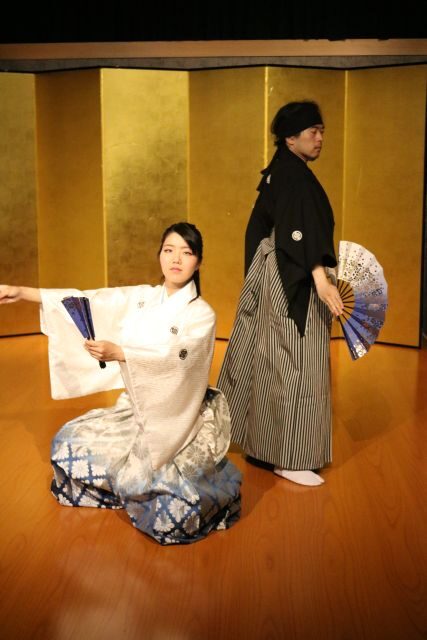
4) Folding fan technique
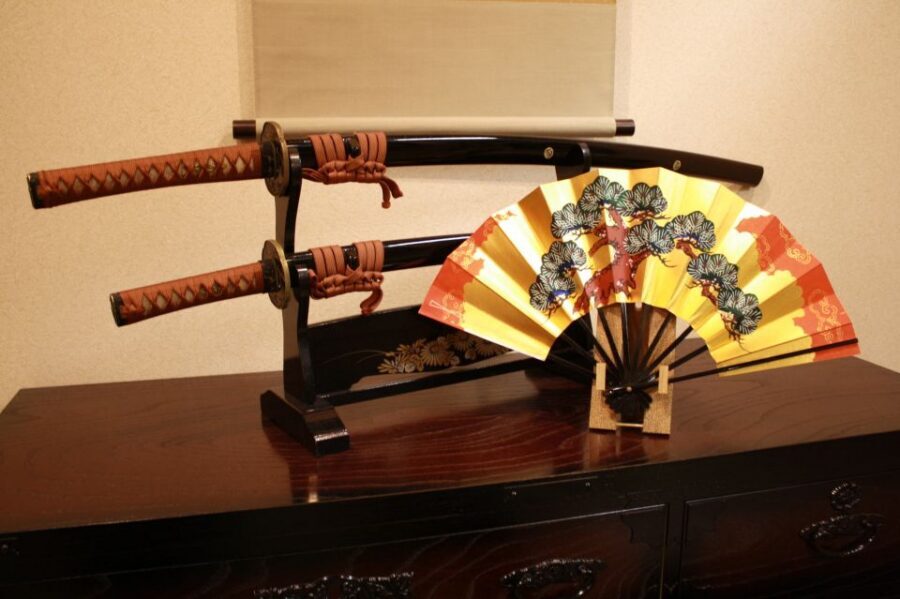
A lot of people expect only swords. This show also includes the folding fan, presented as a technique used in the samurai world. The fan segments add variety and keep you watching for more than just weapon work.
The end of the show: post-performance photos and the photo window
After the demonstrations, the performers return and you get a post-show photo moment. People often love this part because it’s the first time you can focus on cameras without interrupting the performance.
Even better, the program notes you’ll get time to capture the heroic feeling on camera, and some sessions include extra photo help. So if you’re traveling with a friend and you usually struggle to get a good shot, this format can be a lifesaver.
Bottom line: treat the show itself as something to watch fully. Then plan to document afterward.
The mini sword lesson: what you can try (and how it feels)
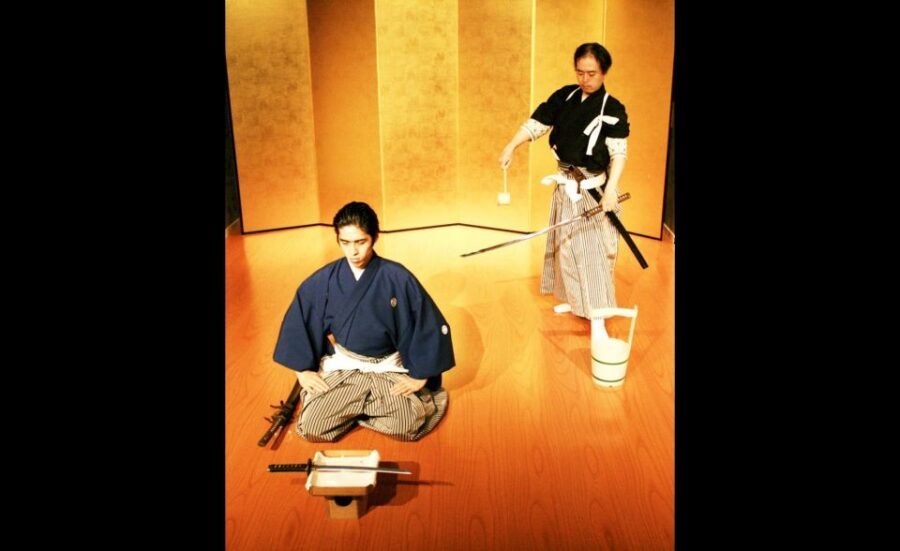
This is where the experience becomes more than a performance. During the mini-experience, you can try holding a sword briefly and follow instructor commands.
The structure is simple and safety-minded:
- You’ll pick up the sword.
- You’ll slowly pull out the scabbard and grasp the blade.
- With the instructor’s command, you’ll start with gentle swings, then increase force gradually.
Even if you’ve watched plenty of sword videos, the handling part tends to surprise people. The moves look smooth on stage, but once you’re holding the sword yourself, you understand how much control and balance are required. That moment of realizing how non-trivial it is tends to be one of the most memorable takeaways.
If there’s time, you may also get the chance to learn basic fan use, described as a necessity for a samurai. So the hands-on portion can feel like a fast introduction to both weapon and ceremonial movement.
A small note on expectations: this isn’t a full training class. It’s a short lesson designed to give you a taste of Kenbu discipline—enough to feel the logic behind the choreography.




Price and value: why $32 can make sense in Kyoto
At $32 per person for about one hour, the value depends on what you want from Kyoto.
If you’re after a cultural performance only, you could find other shows. But this one adds value because it combines:
- narration that explains the meaning behind the choreography,
- multiple demonstration segments (so you get variety),
- and a short interactive sword lesson at the end.
That last piece is the deal-maker. Watching Kenbu is engaging, but trying basic handling makes the art feel more real. It turns the show into a small experience you carry home, not just something you remember as a photo.
Also consider scheduling. One hour is a tidy block of time, especially if you’re juggling temples, markets, and day trips. You don’t need a whole afternoon to add Kenbu to your plan.
Who this show is best for (and who may want to skip)
I think this works best for:
- history and culture lovers who want samurai themes explained in plain English,
- people who like performance art but also want a practical element,
- families and groups who can handle a short, structured activity,
- anyone curious about swords and sword ceremony without committing to full training.
You might like it less if you’re expecting a big “fight demo” style show. Kenbu is graceful and ritual-like by design. Some people also find parts of the narration a bit challenging depending on their comfort with spoken English during a fast-paced stage program, but the overall explanations and demonstrations aim to keep it understandable.
If you hate being told no photos during the performance, that camera rule is your main barrier. Luckily, the post-show photo window helps.
Should you book the Kyoto Samurai Kenbu sword-dancing show?
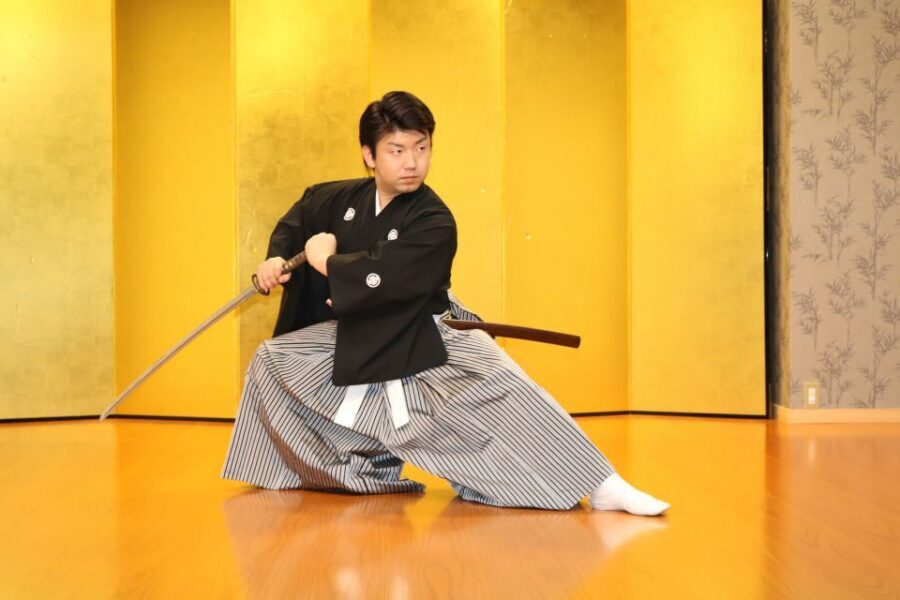
If you want a one-hour Kyoto activity that blends story, technique, and a chance to try simple sword handling, I’d book it. The show’s format is built for comprehension: intro narration, multiple themed demonstrations (including folding fan work), then a structured mini lesson that makes the art feel tangible.
Book it especially if you like the idea of learning the responsibility and discipline behind samurai sword culture, not just watching action. And if you’re okay waiting for photos until the performers finish, you’ll leave with both memories and a real sense of how controlled Kenbu movements are.
FAQ
Where is the meeting point for Samurai Kenbu Theater?
Meet at Samurai Kenbu Theater, Kyoto.
How long is the show?
The duration is 1 hour.
What does the price include?
The price includes Samurai Kenbu Theater entry, the Kenbu show, and a short sword lesson.
Are hotel pickup or drop-off services included?
No. Hotel pickup and drop-off are not included.
What languages is the instruction or narration available in?
English and Japanese.
Is the show wheelchair accessible?
Yes, the activity is wheelchair accessible.
Is photography allowed during the show?
No. You are asked to refrain from taking photos or videos during the show.
Can I try holding or swinging a sword?
Yes. In the mini-experience, you can try holding and grasping the sword and swing it gently at first, then more forcefully if you have time.
Is there space for large luggage or travel bags?
No. There is no room for large luggage or travel bags, and there is no waiting room.
Should you book the Kyoto Samurai Kenbu sword-dancing show?
Yes, if you want a short, high-impact cultural experience. The mix of English narration, staged Kenbu demonstrations (including folding fan technique), and the hands-on sword mini lesson makes it good value for the time. If you strictly need to film during the performance or you’re bringing large bags, then it’s worth reconsidering.