REVIEW · COOKING CLASSES
Ramen Gyoza Onigiri Japanese Cooking Class in Kyoto
Book on Viator →Operated by Friendship Adventures · Bookable on Viator
One-and-a-half hours for three Japanese staples. I love the ramen broth focus and the max 8 people setup that keeps Chef Nori and the team close. The only drawback: your options are limited to regular or vegetarian with a tofu swap, and the class can’t cater to many other diets.
This is a practical, hands-on Kyoto Japanese cooking class built around skills you can actually use at home. You’ll learn techniques for ramen broth (they do not make noodles), gyoza, and onigiri, then eat everything you make as a proper lunch. If you like being fed and learning at the same time, this one is hard to beat.
In This Review
- Key Points at a Glance
- Why This Kyoto Class Starts With Ramen Broth
- Cooking With Chef Nori: Clear Teaching and Real Access
- Gyoza Wrapping: The Skill That Makes It Taste Like It Should
- Onigiri Forming: Simple Steps, Better Results at Home
- What You Actually Eat: Lunch Included, No Waiting Forever
- Vegetarian Option: Tofu Swap Only, Same Core Dishes
- Duration, Location, and Getting There Without Stress
- Price and Value: Is $92.47 Worth It?
- Who This Class Suits Best (and Who Might Want Something Else)
- Final Verdict: Should You Book This Kyoto Ramen Gyoza Onigiri Class?
- FAQ
- What dishes do you learn to make in this class?
- Is there a vegetarian option?
- Can the class accommodate vegan, gluten-free, or other special diets?
- How many people are in each class?
- What’s included, and do I eat after cooking?
- Where is the meeting point in Kyoto?
Key Points at a Glance
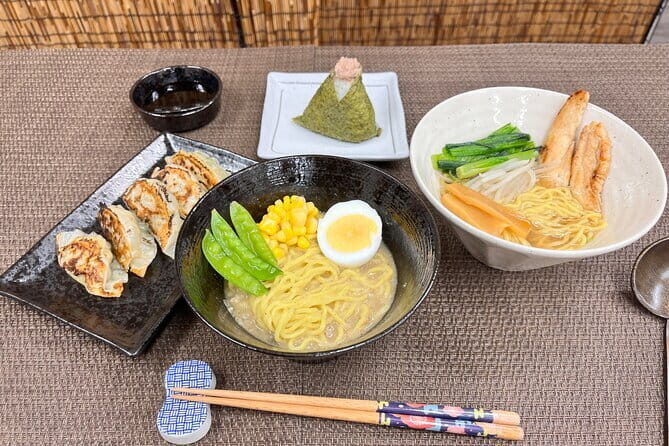
- Ramen broth first, noodles not included (you learn soup, not just “how to cook noodles”)
- Small group size (8 max) for real instructor access
- Hands-on practice for gyoza wrapping and onigiri forming
- Vegetarian menu available with tofu replacing pork
- Lunch included right after cooking, with plenty of food
- English-speaking instructors who explain clearly (and bring humor without losing clarity)
Why This Kyoto Class Starts With Ramen Broth
Most ramen experiences in Kyoto feel like a restaurant day. This one flips it. The big idea is simple: noodles are easy to find, but the broth is the hard part. Here, you learn how to make that flavor base using ingredients and seasonings you can prepare back home.
What I like about this approach is that it teaches you the logic behind the taste. Instead of memorizing a vague recipe, you learn technique: how to build depth, how ingredients contribute, and what to look for so your broth doesn’t end up flat. One of the standout themes from the class format is that it’s very structured. In plain terms, they keep things moving so you get through a lot in 1 hour 30 minutes without feeling rushed.
Important detail: you won’t make noodles here. The class focuses on broth and the two companion dishes—gyoza and onigiri—so you still leave with a complete meal plan, just not the noodle-making step.
You can also read our reviews of more cooking classes in Kyoto

Cooking With Chef Nori: Clear Teaching and Real Access
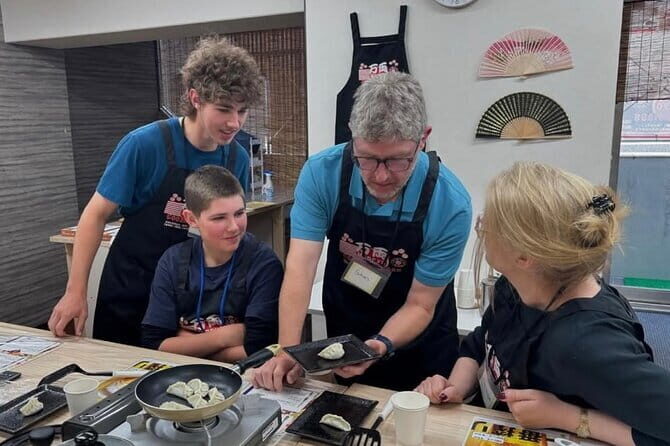
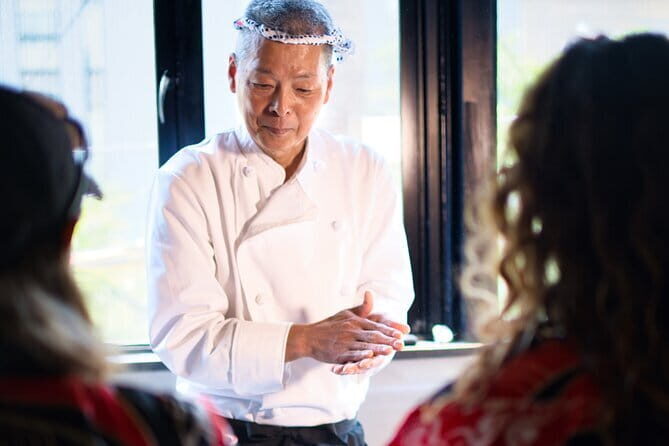
The teaching style is one of the reasons this class earns top marks. Chef Nori runs the experience, and the support team helps keep you on track. Names you may see in the process include Ryho and Minori, and they’re the type of helpers who notice when something is going slightly off and correct it before you spiral.
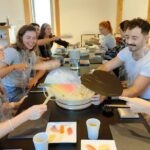
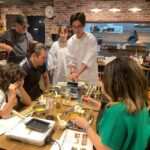
Because the group max is 8 travelers, you’re not stuck watching from the edge of the room. That matters for cooking classes. If you only have vague instructions, mistakes pile up fast. With smaller groups, you can get adjustments on the details that usually get lost—like how to handle ingredients, how to time steps, and how to get the right texture and shape.
Expect a class that’s organized and easy to follow, with friendly energy. You’ll also get a short primer on ramen before you start cooking, which helps you understand why the broth matters so much.
Gyoza Wrapping: The Skill That Makes It Taste Like It Should
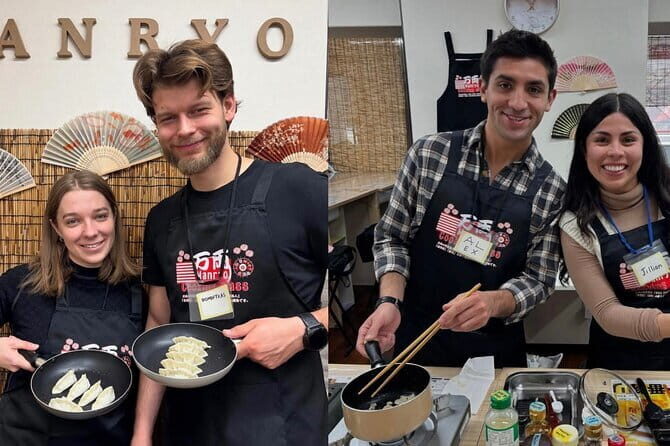
Gyoza is where a lot of home cooks struggle. You can buy dumplings at the store, but the magic is in the method—how thinly the wrappers are handled, how fillings are portioned, and how the pleats and seal come together. In this class, you’ll practice gyoza wrapping with instructor guidance.
Here’s what’s valuable: they don’t treat it like a one-time demonstration. You learn the wrapping technique with enough coaching that you can repeat it later. And because gyoza is part of the same meal plan as your broth and onigiri, it doesn’t feel like a random cooking detour. It all ties together into a Kyoto-style comfort-food spread you can replicate.
If you’re the kind of person who hates cooking classes where you do almost nothing, this one is the opposite. You’ll be hands-on, and you’ll end up with food that looks like you made it—because you did.
Onigiri Forming: Simple Steps, Better Results at Home
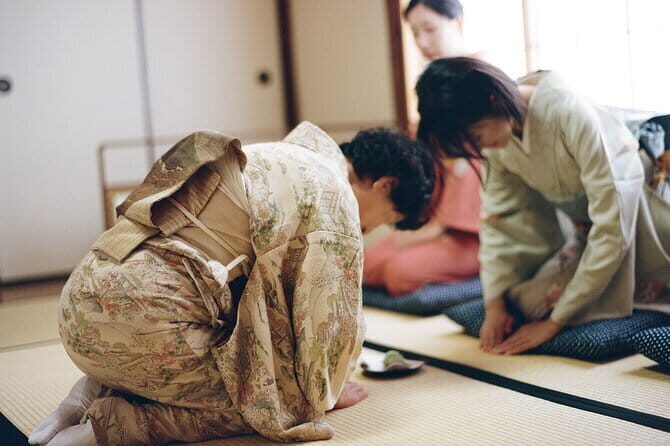
Onigiri is deceptively fun. It looks casual, but getting rice shaped the way you want takes practice—especially if you’re trying to avoid clumsy, sticky messes. In this class, you learn onigiri wrapping/handling technique, with guidance so you can build confidence fast.
The big takeaway isn’t just the final shape. It’s learning how to manage rice during forming—how to handle texture, how to shape without compressing it into something weird, and how to make it presentable enough to serve.
This is also one of those “bring it home” skills. Even if you never master ramen like a shop, onigiri is the kind of dish you can realistically do in your own kitchen on a normal day. You’ll get there because the class focuses on technique, not theory.
What You Actually Eat: Lunch Included, No Waiting Forever
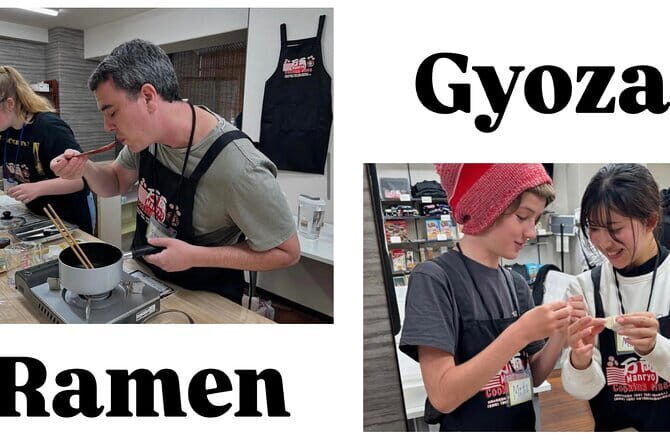
After cooking, you eat what you made. There’s no awkward moment where you finish and then sit quietly while someone else enjoys the meal. The class is designed so you’re hungry at the right time, then you get a real feast at the end.
Several details show up again and again in how people describe the experience:
- A lot of food, not just a tiny tasting portion
- Delicious results after clear instructions and good pacing
- A “feels like a meal you earned” vibe, because you assembled it yourself
And one practical note: the room is described as clean, and the class runs like it’s well planned. That combination matters. When tools are laid out and steps are coordinated, you spend less time figuring out logistics and more time cooking.
You can also read our reviews of more tours and experiences in Kyoto
Vegetarian Option: Tofu Swap Only, Same Core Dishes
If you eat vegetarian, this class does offer a specific option: Vegetarian Menu. The change is straightforward—only pork is replaced with tofu, while other ingredients stay the same.
That clarity is helpful. You won’t get vague “maybe we can adjust” promises. You’ll know what’s changing before you decide.
At the same time, it’s important to know what the class cannot accommodate. It cannot cater to vegan, pescatarian, gluten-free, halal, kosher, or other special diets. Also, there’s no option for under 13. So if your diet is strict, double-check before booking—this is not the right fit if you need allergy-level tailoring.
Duration, Location, and Getting There Without Stress
The class lasts about 1 hour 30 minutes. That’s long enough to learn techniques and eat, but short enough that it won’t steal your whole day in Kyoto.
You’ll start at:
Manryo Japanese Cooking Class
Kyoto, Sakyo Ward, Chōshōji Monzenchō, 841 Life Building B1
606-8366, Japan
It’s near public transportation, and the activity ends back at the meeting point. You’ll use a mobile ticket, which is handy if you’re already living off your phone for directions and reservations.
One small practical reality: because you’re cooking and handling ingredients, arrive on time and come with a bit of patience for the learning curve. The class moves quickly, and that’s part of the value.
Price and Value: Is $92.47 Worth It?
At $92.47 per person, you’re paying for more than “someone shows you recipes.” You’re paying for:
- Instructor time and live coaching (Chef Nori plus assistants)
- A small group setup so you’re not lost in the crowd
- Ingredients and seasonings provided
- Lunch included after cooking
- Technique you can repeat at home: broth building, gyoza wrapping, and onigiri forming
- Recipes you can use later to recreate what you learned
When you look at it this way, the price starts to make sense. Restaurant ramen plus gyoza plus rice balls would cost more, and you’d still lack the actual cooking skills behind the flavor. This class is expensive compared to a supermarket shopping trip, but it’s good value compared to paying for a meal and guessing how to recreate it later.
If your goal is to leave Kyoto with food memories you can cook—not just photos—this fits the bill.
Who This Class Suits Best (and Who Might Want Something Else)
This is a great fit if you:
- Want a focused Japanese cooking experience in a short time
- Like hands-on learning with clear instructions
- Want ramen, gyoza, and onigiri in one session
- Prefer a small group where instructors can correct details
- Enjoy eating what you make, not just sampling
It may not be the best fit if you:
- Need a broader set of diet accommodations (the class is limited to regular or vegetarian tofu swap)
- Are younger than the minimum age rule (under 13 can’t be accommodated)
- Expect noodle-making, because the class teaches broth instead
Final Verdict: Should You Book This Kyoto Ramen Gyoza Onigiri Class?
If you’re in Kyoto and you want more than another meal out, I think this is an easy yes. The combination—ramen broth technique, gyoza wrapping practice, and onigiri forming, finished with lunch you made—is exactly the kind of value that turns a day into a real skill.
Book it if you can eat standard ingredients (or choose the vegetarian menu). Skip it if your diet is strict beyond the two offered options. If that’s you, it’s still a well-run class, but the limitations are real.
FAQ
What dishes do you learn to make in this class?
You learn how to make ramen broth, gyoza, and onigiri. The class focuses on broth preparation and does not make noodles.
Is there a vegetarian option?
Yes. There are only two menu options: Regular Menu and Vegetarian Menu. In the vegetarian version, pork is replaced with tofu, and other ingredients remain the same.
Can the class accommodate vegan, gluten-free, or other special diets?
No. The class cannot accommodate vegan, pescatarian, gluten-free, halal, kosher, or other special diets.
How many people are in each class?
The experience has a maximum of 8 travelers, which helps you get access to the instructor.
What’s included, and do I eat after cooking?
Lunch is included. After cooking, you enjoy what you made at the end of the class.
Where is the meeting point in Kyoto?
You meet at Manryo Japanese Cooking Class, 606-8366 Kyoto, Sakyo Ward, Chōshōji Monzenchō, 841 Life Building B1. The activity ends back at the meeting point.