REVIEW · NARA DAY TRIPS
Kyoto & Nara Private Tour from Osaka Kyoto Hotel Pick-up
Book on Viator →Operated by Japan with Christine · Bookable on Viator
Kyoto and Nara in one day can feel like a magic trick. This private tour is built for checklists, with door-to-door pickup from Osaka or Kyoto plus included entrance tickets for major stops like Todai-ji and Kinkaku-ji. You get an English guide to explain what you’re seeing, not just point at it, and you’ll move faster than you would on your own when trains and crowds start stacking up.
Two things I like a lot: the included transport time (round-trip from Osaka, with time to reach Kyoto and Nara) and the way the day mixes big-name icons with smaller, fun photo moments like Arashiyama’s Kimono Forest. The main drawback to consider is that it’s an 8–10 hour sprint, so if you want long, slow visits or tons of stops you didn’t plan, this style may feel a bit compressed.
In This Review
- Key reasons this tour scores high
- Why a private Kyoto-and-Nara day makes sense from Osaka
- Pickup, ride comfort, and how the schedule actually feels
- Todai-ji Temple: seeing the Great Buddha in real scale
- Nara Park and the deer: a short stop you can still enjoy
- Kinkaku-ji (Golden Pavilion): the pond reflection payoff
- Arashiyama Kimono Forest: a fast color stop that works
- Arashiyama bamboo: where you slow down even if the day doesn’t
- Fushimi Inari-taisha: torii gates for prosperity and perspective
- Guide styles and why names like Ben and Christine matter
- What’s included, what you’ll likely pay later, and real value
- Practical details that help you have a smoother day
- Should you book this Kyoto & Nara private day trip from Osaka?
- FAQ
- How long is the Kyoto & Nara private tour from Osaka?
- Do I get picked up from Osaka or Kyoto?
- Is this tour private or shared?
- What entrance fees are included?
- Are there any places with free admission stops?
- Will the guide be in English?
- What is not included in the price?
- Does the tour depend on weather?
- Is the experience suitable for someone with moderate mobility?
Key reasons this tour scores high
- Private van + pickup from Osaka or Kyoto saves you from complicated transfers
- Included tickets for Todai-ji (800 yen) and Kinkaku-ji (500 yen) cut decision-making
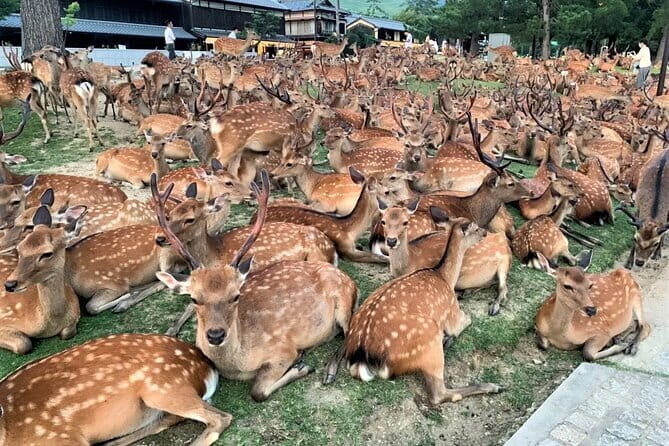
- Nara Park deer time fits perfectly into a short stop, with plenty of chances to feed them
- Arashiyama plan makes sense: Kimono Forest first, then bamboo area after
- Fushimi Inari timing gives you a chance to enjoy the torii gates without rushing between train lines
Why a private Kyoto-and-Nara day makes sense from Osaka
If you’re basing yourself in Osaka, Kyoto and Nara can be a logistics headache. Trains are doable, sure, but you still face transfer time, ticket lines, and the slow grind of moving as a crowd. A private setup solves that. You spend your energy on the sights, not the route planning.
This day trip is also a good match for first-timers who want the greatest hits. You’ll hit Todai-ji in Nara, Kinkaku-ji in Kyoto, then layer in Arashiyama and Fushimi Inari. It’s a smart “see the must-dos” plan, not a random grab bag.
And the private van matters more than it sounds. One family told me the difference was how easy it felt with kids in tow. When you’re moving all day, comfort plus fewer transitions can turn a tiring day into a smooth one.
You can also read our reviews of more private tours in Kyoto

Pickup, ride comfort, and how the schedule actually feels
You’ll ride in an air-conditioned vehicle and you’re covered for things like parking fees and fuel surcharge. The tour runs about 8 to 10 hours, and that includes the travel time from Osaka to Kyoto and Nara and back to Osaka.
That time block is important. It means the stops are planned to fit the day, not stretched into multiple days. For most people, that’s a win: you can stack Kyoto and Nara into one vacation day without losing an entire day to travel.
The one thing to keep in mind: during longer driving stretches, you’ll want to be okay with a more relaxed pace. If you’re the kind of person who expects non-stop commentary in the car, ask your guide what to expect in terms of stories during transit. Some guides are very chatty, and some keep the focus on the sites.
Todai-ji Temple: seeing the Great Buddha in real scale
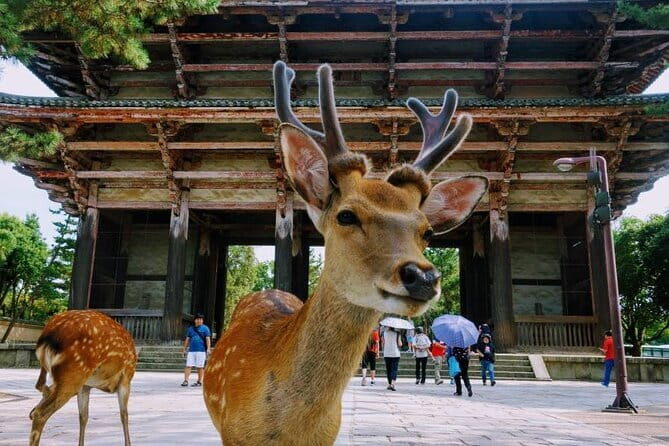
Todai-ji is the kind of place where your brain needs a second to accept the size. You’re going into Nara’s famous complex, and the big draw is the world’s largest bronze Buddha statue housed in the Daibutsuden Hall. This is the 8th-century landmark that anchors why Todai-ji matters.
Your visit is about one hour, and the entrance ticket is included. That’s enough time to get oriented, step into the main hall, and take in the details without feeling like you’re racing.
What I love about this stop is that it’s not just a photo op. The guide can connect what you’re seeing—hall scale, religious purpose, and the cultural setting—to the wider story of Japan. Even if you only catch a few moments of explanation, it helps everything click.
Practical tip: wear comfortable shoes. You’ll be walking inside temple grounds, and the surfaces can be uneven in places.
Nara Park and the deer: a short stop you can still enjoy
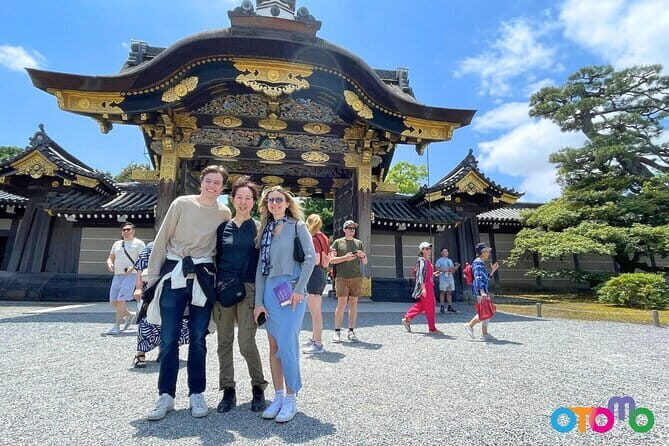
Nara Park is where your day turns from temples-only to something playful. You’ll have about 20 minutes, and the highlight is feeding the deer with special deer crackers that you can buy on site.
These deer are used to people and are often calm, so it doesn’t feel like a risky “petting zoo” style. You’re more likely to feel charmed, especially if you like casual interactions.
The key is that 20 minutes can go two ways:
- If you want photos and calm feeding, it’s plenty.
- If you want long lingering time, it will feel short because the day keeps moving.
So treat this like a quick “make a memory” moment. Get the crackers, enjoy the interaction, and then head back into the next temple stop without stressing your timeline.
Kinkaku-ji (Golden Pavilion): the pond reflection payoff
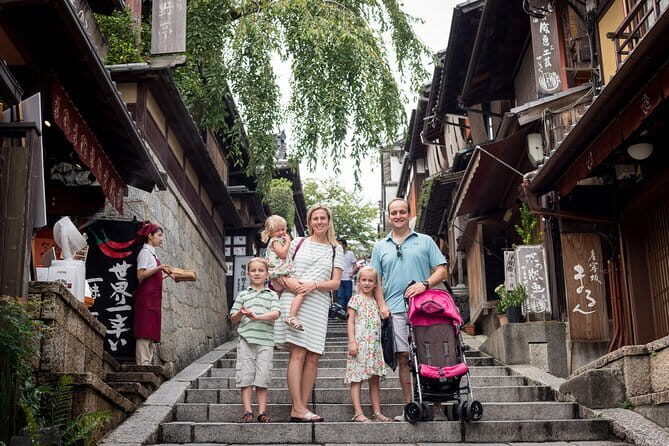
Kinkaku-ji, the Golden Pavilion, is one of those places where people don’t just come to look—they come to recognize. The building’s gold look is famous, and it sits among Kyoto gardens with Zen-style surroundings and a pond reflection you’ll want to see from more than one angle.
You’ll have about one hour, and the entrance ticket is included. That gives you time to experience the main pavilion area and still step back for the classic view.
The tradeoff with a one-day tour is that you won’t have hours for wandering through every garden corner. Still, one hour is a solid window for first-time visitors. You’ll leave with the iconic image in your head and the feeling that you “got it,” not just passed by.
If crowds feel heavy that day, don’t fight for every viewpoint. Stand where you can breathe, let your eyes adjust, and enjoy the texture and contrast rather than trying to chase the perfect picture.


Arashiyama Kimono Forest: a fast color stop that works
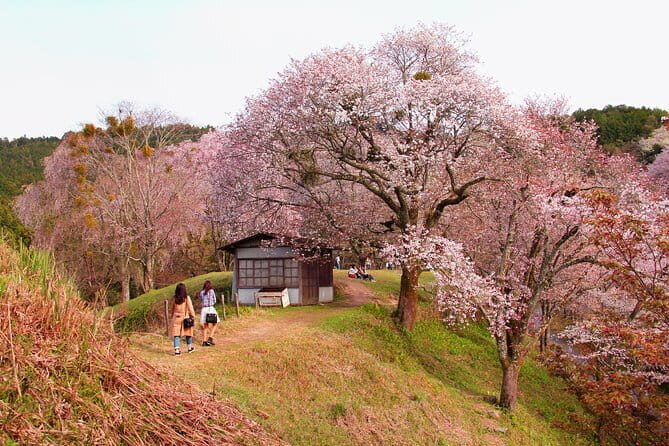
Arashiyama’s Kimono Forest is the kind of spot that makes your camera happy. It’s a set of cylindrical pillars decorated with colorful kimono fabric designs, located near Arashiyama Station.
You’ll spend about 20 minutes, and admission is free.
This stop is valuable because it breaks up the heavy “temple rhythm” with something modern and playful. It also helps the day pacing. Instead of jumping from one major site into a long bamboo walk immediately, you get a quick reset moment.
If you’re sensitive to photo lines, plan for this: treat it like a quick walkthrough. Don’t assume you’ll linger here for long, because you want the best light and time for the bamboo portion next.
Arashiyama bamboo: where you slow down even if the day doesn’t
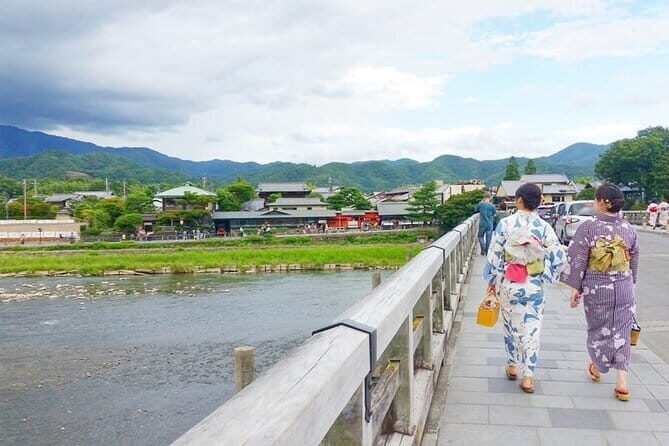
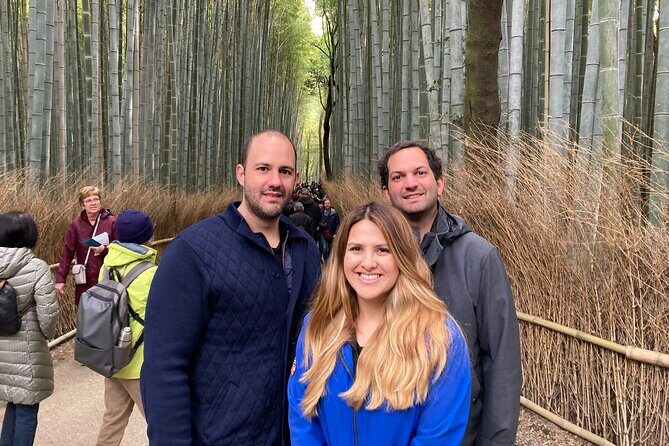
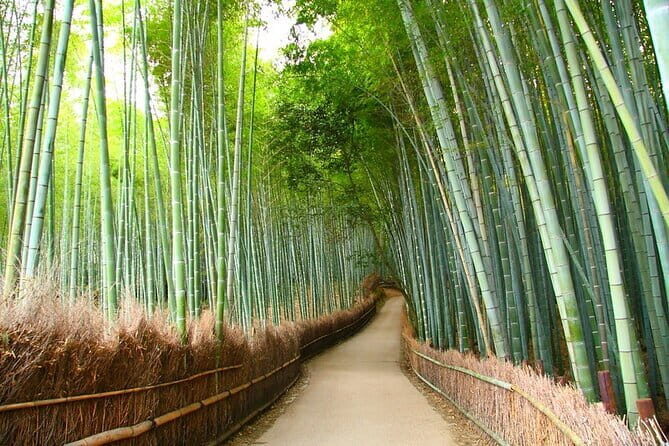
After Kimono Forest, you’ll head to Arashiyama itself, with about two hours to enjoy the bamboo area. This is where the tall bamboo stalks create that familiar vertical tunnel effect, with narrow paths guiding your feet through the grove.
Two hours sounds long until you’re actually there. The trick is to pace yourself. Stop when the view makes you stop, then walk again. The bamboo experience is partly visual and partly sensory—air, shade, sound, and that feeling of being under a ceiling made of stalks.
The area is free to enter (in the sense that no special ticket is listed), which helps. Still, it’s popular, so be ready for crowds at peak times.
If you want a calmer feel, focus on side paths and in-between moments rather than always aiming for the most photographed point.
Fushimi Inari-taisha: torii gates for prosperity and perspective
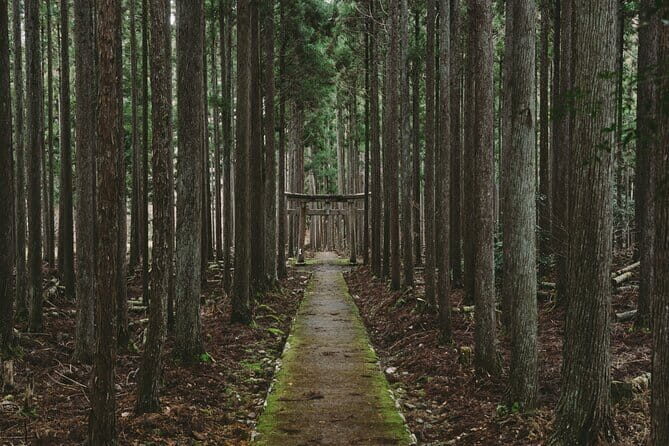
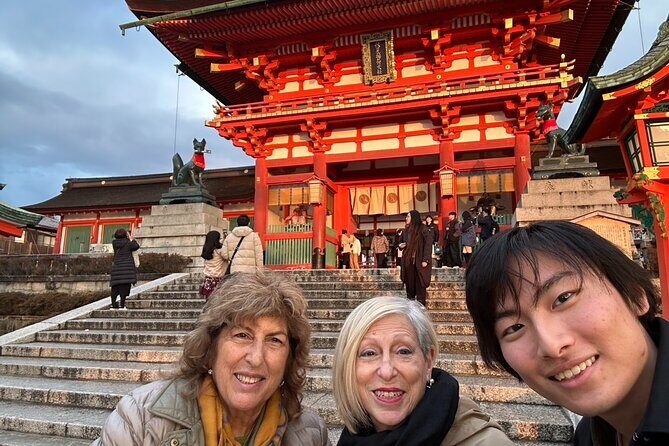
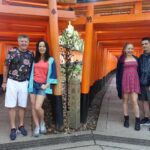
Fushimi Inari-taisha is famous for its thousands of vermilion torii gates, forming paths that feel like you’re walking through a red corridor. The shrine is dedicated to Inari, the Shinto god associated with rice and prosperity, and it traces back to 711 AD.
You’ll have about one hour, and it’s free to enter (no ticket is listed).
This is a great final stop because it shifts the tone of the day. You’ve already seen the big halls in Nara, the golden pavilion in Kyoto, and the bamboo grove in Arashiyama. Inari gives you a different kind of wonder: repeated structures, changing viewpoints, and a sense of movement upward and deeper into the grounds.
One consideration: torii gate areas can be busy. In a tight day, don’t try to do the entire hike to every last viewpoint. Instead, go far enough to feel the “thousands of gates” effect, then turn back while you still enjoy it.
Guide styles and why names like Ben and Christine matter
A private tour lives or dies by the guide. The good news: this one is built around an English guide, and the day is designed for commentary that helps you understand what you’re looking at.
Some guides are especially people-focused. One guide name you’ll see associated with this tour is Ben (also referenced as Yujiro). Another is Christine. People mention them for passing along shrine and temple customs, explaining cultural meaning, and making the day feel personal rather than robotic.
You’ll also notice practical touches in the way guides handle the flow. Several accounts mention a well-timed plan even during peak season, plus extras like umbrellas, water, and snacks. Those details aren’t the headline, but they change how you feel after hours on your feet.
Still, there can be day-to-day variation in how talkative the ride feels, and that’s worth keeping in mind if you want nonstop story mode.
What’s included, what you’ll likely pay later, and real value
Price here is $266.85 per person for a private day trip covering two regions. At first glance, it can sound steep, and private tours often do. But your value math isn’t just about tickets—it’s about time, ease, and the included admission for two major sites.
Included:
- Air-conditioned vehicle
- Parking fees and fuel surcharge
- Travel time from Osaka to Kyoto/Nara and back
- English tour guide
- Entrance fee to Todai-ji (800 yen)
- Entrance fee to Kinkaku-ji (500 yen)
Not included:
- Gratuities/tipping
There’s also likely to be small personal spending that isn’t listed as included:
- Deer crackers at Nara Park (you can buy them)
- Food and drinks at lunch and breaks
One useful real-world tip: if you stop for ramen during the day, ask ahead if it’s cash-only. Some guides can steer you toward an authentic lunch place, but cash rules can vary from shop to shop.
So is it good value? If you want to cover Kyoto and Nara in one shot with private transport and two paid attractions handled, it often makes sense—especially for families or small groups who would otherwise spend time wrestling with transit and crowd flow.
Practical details that help you have a smoother day
A few things to plan around:
- Physical pace: The tour notes moderate physical fitness. That means you’ll be walking around temple grounds and shrine areas, likely on uneven surfaces.
- Weather matters: This experience requires good weather, and if it’s canceled for weather you’ll be offered a different date or a full refund.
- Mobile ticket: A mobile ticket is listed, which can simplify entry for the included attractions.
- Service animals: Service animals are allowed.
- No extra group sorting: It’s private—only your group participates—so you aren’t waiting for other people to finish photos.
Also, think about timing preferences. With this route, you’re balancing top sights rather than deep exploration of one area. If you love one specific theme—architecture, gardens, Shinto shrines, Buddhist temples—this can still work, but you’ll get the greatest-hit version rather than a slow, academic tour.
Should you book this Kyoto & Nara private day trip from Osaka?
I’d book it if you want the simplest path to a high-impact day. This tour is especially attractive if:
- You’re short on time and want to hit both Kyoto and Nara
- You’d rather sit back in a comfortable van than plan transfers all day
- You like having an English guide explain the meaning behind the sights, not just the location
- You value included entry for Todai-ji and Kinkaku-ji, plus a tight route that keeps you moving
I might skip it if:
- You’re hoping for lots of unscheduled detours or long stays in only one neighborhood
- You dislike a schedule that keeps the pace up across multiple regions
- You expect constant storytelling during long drives and every moment structured around talk-time
If you fall in the first group, this is a practical, efficient way to experience iconic Kyoto and Nara without burning your vacation day on logistics.
FAQ
How long is the Kyoto & Nara private tour from Osaka?
The tour is about 8 to 10 hours, including travel time from Osaka to Kyoto and Nara and back to Osaka.
Do I get picked up from Osaka or Kyoto?
Yes. Private pickup is offered, with pickup from Osaka or Kyoto.
Is this tour private or shared?
It’s a private tour/activity, so only your group participates.
What entrance fees are included?
Entrance to Todai-ji Temple (800 yen) and Kinkaku-ji Temple (500 yen) is included.
Are there any places with free admission stops?
Yes. Nara Park, Arashiyama Kimono Forest, Arashiyama, and Fushimi Inari-taisha Shrine are listed as free (no entrance fee noted).
Will the guide be in English?
Yes, the tour includes an English tour guide.
What is not included in the price?
Gratuities or tipping are not included.
Does the tour depend on weather?
Yes. The experience requires good weather. If it’s canceled due to poor weather, you’ll be offered another date or a full refund.
Is the experience suitable for someone with moderate mobility?
The tour notes a moderate physical fitness level. You should be prepared for walking at multiple temple and shrine stops.