REVIEW · FUSHIMI INARI TOURS
Kyoto Guided Walking Tour Highlight of Kiyomizu & Fushimi Inari
Book on Viator →Operated by Japan Wonder Travel · Bookable on Viator
Kiyomizu-dera to Fushimi Inari in one morning is a good kind of chaos. This small-group tour (max 8) strings together three major spiritual and cultural stops in about four hours, with a guide who shares stories and keeps the walk feeling light. I love the views from Kiyomizu-dera’s wooden stage, and I love how Naomi-san (and the guides) keep answering questions in a way that makes the sites click.
Your main trade-off is simple: there’s a moderate amount of walking, plus a train ride where the fare is not included. Bring comfortable shoes, accept that it’s rain or shine, and budget for the short transfer to Fushimi Inari.
In This Review
- Key highlights to look for
- Why this Kiyomizu–Sanjūsangendō–Fushimi Inari route fits 4 hours
- Getting started at Kyoto Ceramic Center and meeting your guide
- Kiyomizu-dera’s wooden stage: views, crowds, and what to focus on
- Sanjūsangendō: the 1,001 statues of Kannon and why a short visit works
- Shichijō Station transfer: the ¥170 train fee you shouldn’t forget
- Fushimi Inari: torii gates as a walking experience (not a checklist)
- Photography and timing: how to get better shots without racing
- Price and what you’re really paying for ($78.18)
- Who should book this Kyoto half-day walking tour
- Should you book this guided tour?
- FAQ
- How long is the Kyoto Guided Walking Tour?
- What is the price per person?
- Which attractions are included?
- Is admission included?
- Do I need to pay for the train?
- Where do we meet, and when?
- What if it rains?
Key highlights to look for
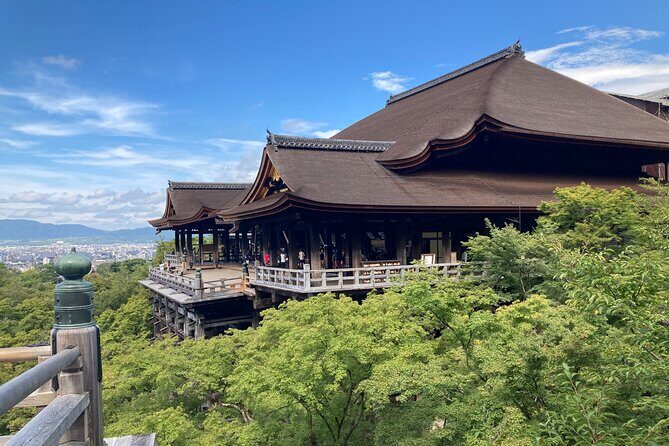
- Kiyomizu-dera’s iconic wooden stage with sweeping views (and enough time to soak it in)
- Sanjūsangendō’s hall of 1,001 statues of the Thousand Armed Kannon, with guided context
- Fushimi Inari’s torii gate walk built for both photos and spiritual pacing
- Small group size (up to 8), so you’re not lost in a crowd
- A train hop you must pay separately (¥170), using an IC card or coins
- Mobile ticket for smoother check-in
Why this Kiyomizu–Sanjūsangendō–Fushimi Inari route fits 4 hours
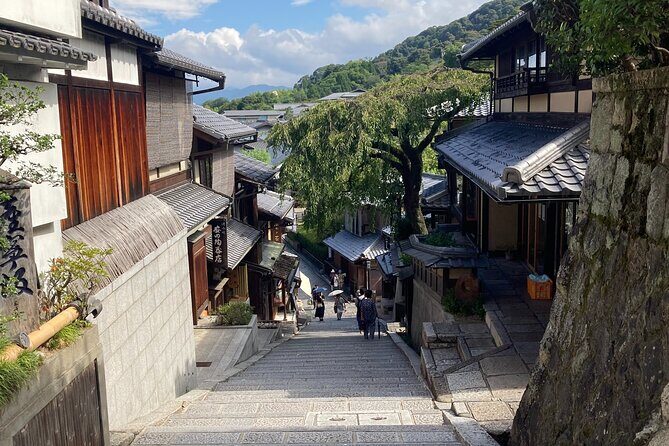
Kyoto can feel like a puzzle if you try to plan everything alone. This tour avoids that headache by grouping three top sights into one clean morning loop, then getting you off to Fushimi Inari at the end.
The best part is the pacing. You’re not rushing through all three stops back-to-back in a blur. Kiyomizu-dera gets a full hour, Sanjūsangendō gets 30 minutes, and Fushimi Inari gets 45 minutes. That split matters because it matches how long you actually need to see things. Temples don’t run on your schedule. They run on your eyes.
Also, this is structured for a real walking experience. You’ll move between sights, but the day is short enough that you’ll still have energy left after.
You can also read our reviews of more walking tours in Kyoto

Getting started at Kyoto Ceramic Center and meeting your guide
You meet at the Kyoto Ceramic Center (Kyoto Ceramic Art Association Official Shop and Gallery), at 583-1 Yūgyōmaechō, Higashiyama Ward, Kyoto. Tours start around 8:30 am.
I like this meeting point because it’s easy to find, and it’s not buried inside a giant transport hub. You can show up, get oriented, and then you’re off. The tour uses a mobile ticket, so you don’t need to fuss with printing anything.
A small-group format (up to 8 travelers) also changes the vibe. You can hear your guide. You can ask questions without repeating yourself. And if you want to pause for a photo, you’re not constantly being herded like a moving queue.
One more practical note: the tour runs rain or shine. That’s actually useful in Kyoto, where weather can shift fast. Bring a compact umbrella or light rain gear and treat the day like a flexible photoshoot.
Kiyomizu-dera’s wooden stage: views, crowds, and what to focus on
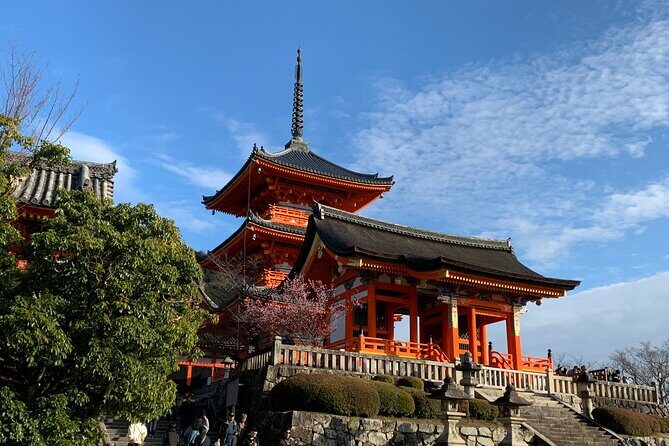
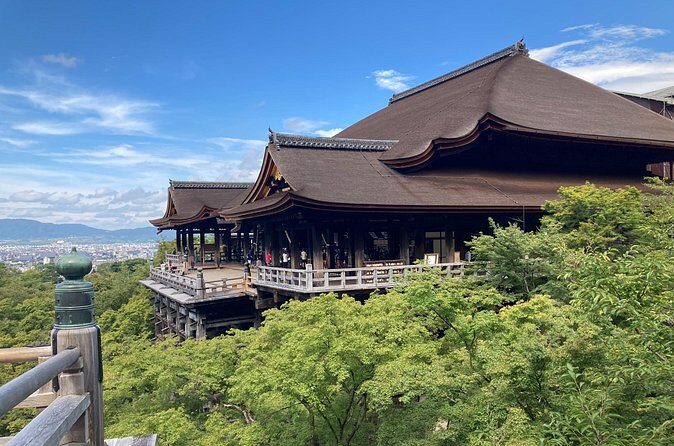
Kiyomizu-dera is one of Kyoto’s most famous Buddhist temples, founded in the late 8th century. The headline is its large wooden stage, designed for wide-open viewing. From there, you get a look out over the surrounding area—tourists often think of cherry trees first, but even outside peak bloom, the sightlines still feel dramatic.
This stop lasts about 1 hour, and that’s a good amount of time for a few reasons:
- You can walk through at a pace that isn’t frantic.
- You can linger at view points without feeling like you’re stealing time.
- You can read the smaller details your guide points out instead of sprinting to the big postcard moment.
What I’d recommend you do here: don’t just aim for the widest view right away. Take one quick look to register where you are, then move slightly—sometimes a small change in angle gives you a completely different sense of depth and spacing. Your guide will help you understand what you’re seeing, which makes the place feel less like scenery and more like a designed viewpoint.
Also, since Kiyomizu-dera is popular, you should expect busy sections. That’s normal. You’ll still enjoy it if you keep your expectations realistic: you’re coming for the combination of architecture, setting, and the feeling of standing somewhere historic.
Sanjūsangendō: the 1,001 statues of Kannon and why a short visit works
Next is Sanjūsangendō, the Buddhist temple known for its hall housing 1,001 statues of the Thousand Armed Kannon (the Goddess of Mercy). The name itself refers to the hall length concept, but the real draw is the sculpture field—thousands of sightlines, repeated forms, and a sense of devotion that hits even if you don’t read every plaque.
You’ll spend about 30 minutes here, with admission included. That time window is smarter than it sounds. Sanjūsangendō can overwhelm you if you try to process everything at once. Thirty minutes gives you enough time to:
- Get oriented in the hall
- Notice patterns across the statues
- Let your guide’s explanation give your eyes a plan
This is the kind of stop where a guide helps a lot. Without context, you can end up thinking, OK, it’s statues—nice. With context, it becomes a story about belief, protection, and how art communicates mercy at scale.
If you want to get the most out of your 30 minutes, go with one goal: decide what kind of detail you want to notice—hands, posture, repetition, or the way your eye travels down the hall. Then stick to that goal for the first half, and you’ll leave feeling like you actually saw something, not just passed through.
Shichijō Station transfer: the ¥170 train fee you shouldn’t forget
After Sanjūsangendō, you’ll head toward Fushimi Inari using a train from Shichijō Station. This is a short step—only about 5 minutes on the schedule.
Here’s the key logistics point: the train fee is not included. You’ll need an IC card or coins (¥170 per person).
I like that the tour calls this out clearly. It’s better than arriving at the station realizing you’re short on cash or your IC card isn’t ready. Bring what you need before you get on the train so you can stay focused on the fun part: the shrine walk that follows.
If you’re planning to spend the rest of the day around Fushimi Inari, this transfer timing also helps. You don’t lose half a morning commuting; you get there while the area still feels manageable.
You can also read our reviews of more guided tours in Kyoto





Fushimi Inari: torii gates as a walking experience (not a checklist)
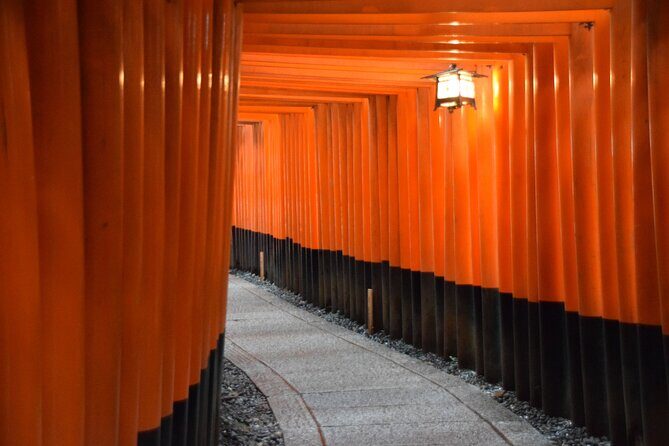
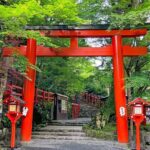
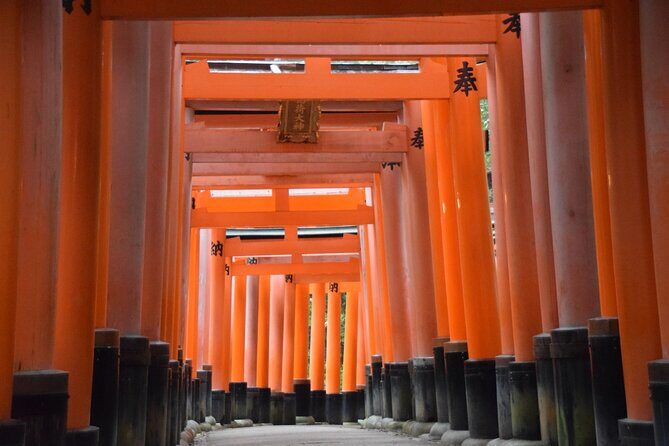
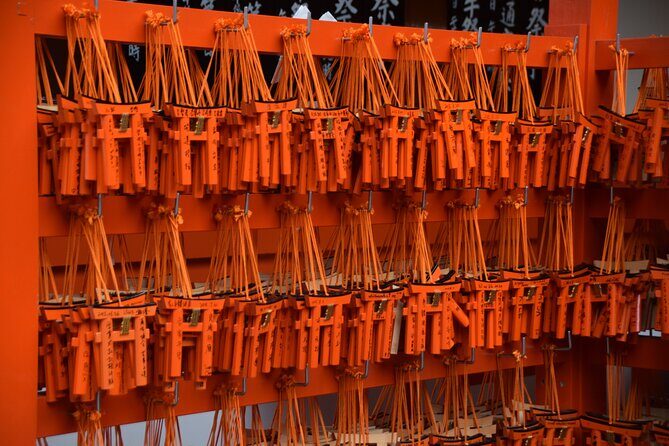
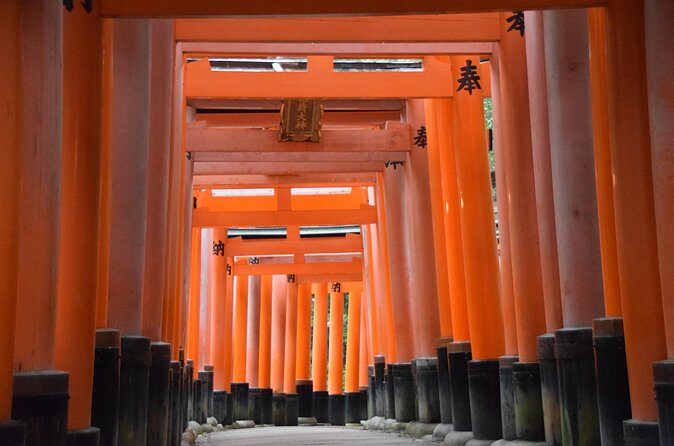
Fushimi Inari Taisha is a Shinto shrine dedicated to Inari, the god associated with rice, agriculture, and prosperity. The signature feature is the thousands of vibrant red torii gates. The big takeaway is that this isn’t just a place to stand and take one photo. It’s built for walking.
You’ll have about 45 minutes here, and shrine admission is free. That amount of time is ideal for doing two things at once:
- Seeing the gate path and soaking up the atmosphere
- Going far enough along the walkway to feel like you’re actually part of the route, not just orbiting the entrance
From what I’ve learned watching how the tour works in practice, you’ll also have a chance to experience more peaceful sections of the shrine walk—there’s mention of a calmer path through the torii area. That matters because the main path near the entrance can be crowded. Getting even a bit away from the busiest lines makes the whole place feel more spiritual and less like a film set.
Photo tip that’s practical, not fancy: move slowly and let people pass. The torii gates repeat, so if you rush, you end up with lots of similar shots. If you pause and take a second to frame depth—one gate leading into the next—you’ll get photos that look like Kyoto, not like any temple walkway anywhere.
At the end, the tour finishes at the Fushimi Inari Taisha Honden (Sanctuary) area, so you’re not left far from the heart of the site.
Photography and timing: how to get better shots without racing
Kyoto is a photography magnet, and this tour hits two places people photograph like crazy. That can feel stressful if you think you need to capture everything. You don’t.
What I suggest instead is a simple rhythm:
- Take a wide shot once, just to lock in the setting.
- Then focus on a few details that show scale—depth between torii gates, the layered temple views, and any framed moments your guide points out.
- When the crowd thickens, don’t fight it. Step to the side or let traffic pass.
Your tour length helps here. Because you’re not spending all day at one site, you can keep moving and still get good images at each stop. The walking is part of the experience, and it also gives you natural opportunities to change your angles.
Also, since the tour runs rain or shine, consider that wet surfaces can change reflections and contrast. If it rains, you might get moodier lighting and sharper textures—just prioritize safety and watch your footing on slippery paths.
Price and what you’re really paying for ($78.18)
At $78.18 per person, this is priced for a half-day guided experience that’s still realistic for a first-time visit. The value comes from a few concrete things:
- Two admission tickets included: Kiyomizu-dera and Sanjūsangendō
- A guided interpretation that helps you connect what you see with what it means
- A short, planned route that limits wasted time and reduces decision fatigue
- A small group size (max 8), which tends to make the tour feel more personal and less chaotic
The one extra cost you should mentally add is the train fare (¥170), since it’s explicitly not included.
When I look at value, I ask: would I pay to save myself the planning and get explanations along the way? For Kyoto icons, where you’re surrounded by crowds and signage, that’s usually yes. You’re not just buying access. You’re buying time saved and context delivered in a time window that fits a short stay.
Who should book this Kyoto half-day walking tour
This tour makes sense if you:
- Want to cover Kiyomizu-dera, Sanjūsangendō, and Fushimi Inari without spending your whole morning figuring out logistics
- Like learning from a guide who shares stories, trivia, and answers as you go
- Are comfortable with moderate walking and want a short day that still feels substantial
- Prefer a small-group pace where you can ask questions
It might not be the best fit if you:
- Hate walking between stops
- Need a fully seated, zero-step tour format
- Are extremely sensitive to crowds at major Kyoto sights
The good news: the total time is short enough that even if Kyoto wears you out fast, you’ll still have a workable rest of day after.
Should you book this guided tour?
If it’s your first time in Kyoto and you want a smart hit of three major spiritual sites, I’d lean yes. The admission included for two of the stops and the small-group feel do real work here. You end in the most famous area at Fushimi Inari, so the tour doesn’t just drop you off—it places you where you’ll want to keep exploring.
I’d book this one especially if you value explanation as much as sightseeing. Kiyomizu-dera’s stage views are great, but they become more meaningful when you understand what you’re looking at. Sanjūsangendō’s 1,001 statues are impressive, yet easier to appreciate when your guide helps you notice the right things.
Just remember the practical bits: wear comfortable walking shoes, bring a way to pay the ¥170 train fare, and expect the day to run rain or shine. If that matches your style, this is a very efficient way to experience Kyoto.
FAQ
How long is the Kyoto Guided Walking Tour?
It runs for about 4 hours.
What is the price per person?
The price is $78.18 per person.
Which attractions are included?
You’ll visit Kiyomizu-dera Temple, Sanjūsangendō Temple, and Fushimi Inari-taisha Shrine.
Is admission included?
Admission tickets are included for Kiyomizu-dera Temple and Sanjūsangendō Temple. Fushimi Inari-taisha Shrine is free.
Do I need to pay for the train?
Yes. The train fee is not included. You should prepare an IC card or coins for ¥170 per person.
Where do we meet, and when?
You meet at Kyoto Ceramic Center (583-1 Yūgyōmaechō, Higashiyama Ward, Kyoto). The start time is 8:30 am.
What if it rains?
The tour runs rain or shine, so plan for weather changes.