REVIEW · MORNING
Kyoto East Early Morning Walking Tour
Book on Viator →Operated by Oh! Ohkini Tours · Bookable on Viator
7:30am beats Kyoto crowds. I love the early start and the way a local English-speaking guide helps you connect the dots between the sights and everyday life in Kyoto. It’s an easy way to get your bearings fast without feeling like you’re racing from one photo to the next.
The walk is about 2.3 km (1.45 miles) over roughly 2 hours, and the stop list includes Minamiza Theater, Yasaka Shrine, Yasakanoto, and Kiyomizu-dera, with admissions listed as free. You also get local tips on where to eat and where to wander right after the tour ends.
One trade-off: this is a true morning walking tour, and it finishes at Kiyomizu-dera—so if you want a super long temple stay or a leisurely breakfast right afterward, you’ll need to plan your schedule around that.
In This Review
- Key highlights worth waking up for
- Why this 7:30am Higashiyama walk feels smarter than a later tour
- Meeting point and timing: what 2 hours really means on foot
- Minamiza Theater: Kabuki’s Kyoto roots to start your morning
- Yasaka Shrine and the local festival angle
- Yasakanoto: the five-story pagoda photo stop that actually helps
- Kiyomizu-dera: panoramic views, then explore at your pace
- Sannenzaka: slope lanes, traditional shops, and name legends
- Price and value: is $50.73 worth it?
- What you’ll actually do, stop by stop
- Who this Kyoto East Early Morning Walking Tour suits best
- Should you book Oh! Ohkini Tours for this morning walk?
- FAQ
- What time does the tour start?
- How long is the tour?
- Where does the tour start and end?
- Is this a walking tour with transportation included?
- Are entrance fees included?
- What language is the guide?
- Can I cancel for free?
Key highlights worth waking up for
- 7:30am start in Higashiyama: see classic streets before the day crowds stack up
- Free admissions at every listed stop: you pay for the guide, not entry fees
- Minamiza Theater (Kabuki origins): a cultural anchor before the shrine and temple scenes
- Yasakanoto photo pause: quick stop for that five-story pagoda view
- Kiyomizu-dera viewpoints: you get panoramic city views and time to explore afterward
- Sannenzaka slope storytelling: old shop lanes with legends behind the name
Why this 7:30am Higashiyama walk feels smarter than a later tour
Kyoto’s famous areas can go from calm to packed faster than you’d expect. Starting at 7:30am is the big advantage here. You get softer light, easier walking, and a better chance to actually hear your guide instead of shouting over shoulder-to-shoulder crowds.
I also like that the tour is built around the flow of the district. You’re not just hitting monuments; you’re walking the kinds of lanes people remember and talk about—then finishing where you can keep exploring. That gives you momentum for the rest of your day.
And because cafes tend to open around 9:00am, the tour setup is clear: have breakfast first. If you’re hungry right when you arrive, you’ll feel it during the walk, especially with that early start.
You can also read our reviews of more walking tours in Kyoto


Meeting point and timing: what 2 hours really means on foot
The tour meets at 208 Nakanochō, Higashiyama Ward, Kyoto (7:30am) and ends at Kiyomizu-dera1-chōme-294 Kiyomizu, Higashiyama Ward. There’s no hotel pickup, and it’s explicitly a walking tour, so you should plan to arrive on time under your own steam.
The route covers about 2.3 km (1.45 miles) in roughly 2 hours. That’s not a hike, but it’s also not a “stand and pose for ten minutes” tour. You’ll be moving, and you’ll have a couple of short stops where you can slow down and take photos.
Also note the tour is private for your group. That’s a meaningful quality-of-experience factor: you’re more likely to get questions answered and recommendations tailored to you, instead of being herded through as part of a huge crowd.
Minamiza Theater: Kabuki’s Kyoto roots to start your morning
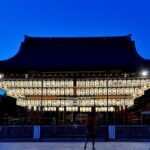
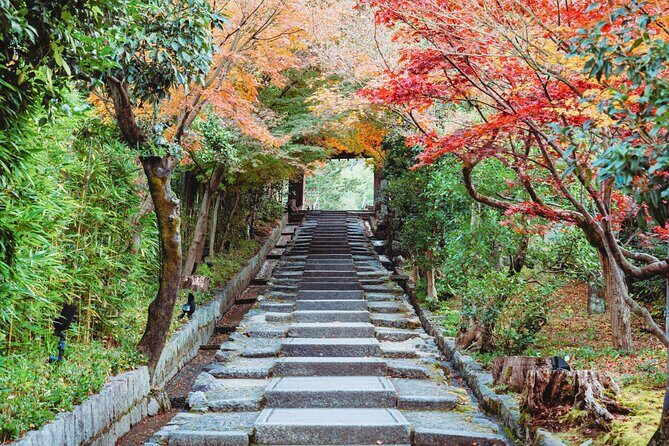
You begin at Minamiza Theater, described as the birthplace of Kabuki in Kyoto. Even if you’re not a theater nerd, this is a great first stop because it sets a cultural baseline. Before you reach the shrine and temple scenes, you learn how Kyoto’s arts and traditions grew and why they still matter.
This stop is about 15 minutes, and admission is free. The short time works well at the start of the walk—by the time you leave, you’re ready to keep moving instead of feeling like the tour is already running long.
The practical upside: when your guide later talks about traditions you see around Higashiyama, you’ll have an easier time understanding how Kyoto’s identity connects art, ritual, and community life.
Yasaka Shrine and the local festival angle
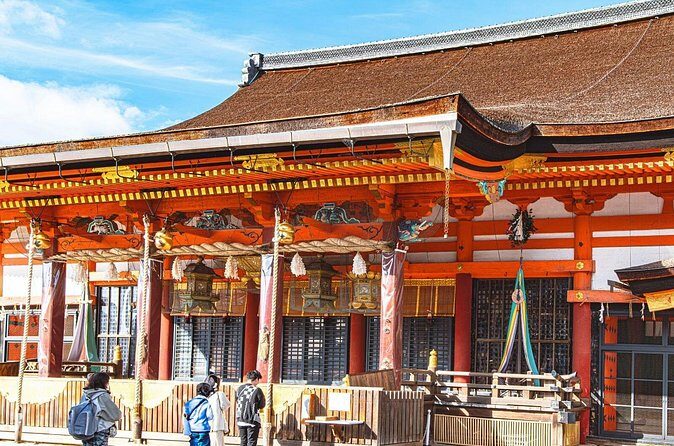
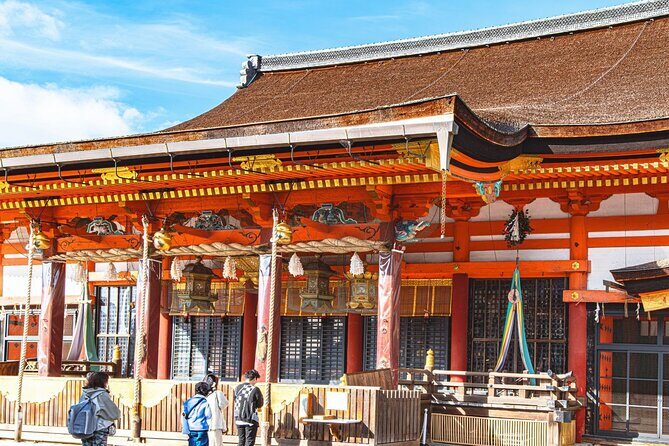
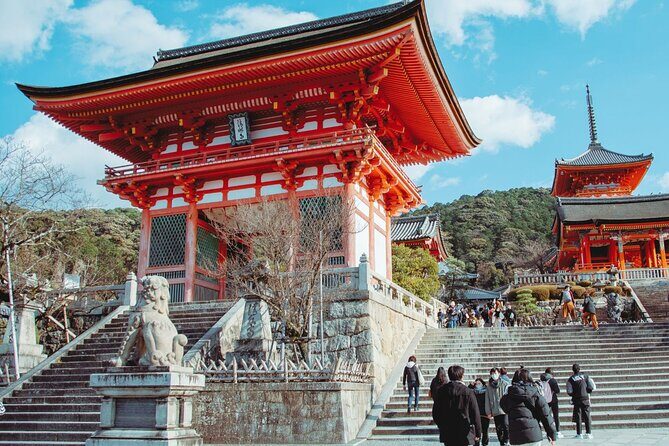
Next you head to Yasaka Shrine, another 15-minute free stop. The focus here is how the shrine fits into Shinto traditions and local festivals. This kind of context matters. Without it, a shrine visit can feel like a photo stop. With it, you start noticing patterns: what people do, how they move through the space, and what symbols they’re likely to care about.
If you’re the type who enjoys learning what you’re looking at, this stop pays off. Your guide is English-speaking, and the tour is set up to share explanations plus practical local tips.
A small consideration: shrines can be visually busy even early in the morning. Give your eyes a moment to settle before you snap photos. It makes your guide’s explanations easier to follow, and your pictures come out better because you’ll know where to focus.
Yasakanoto: the five-story pagoda photo stop that actually helps
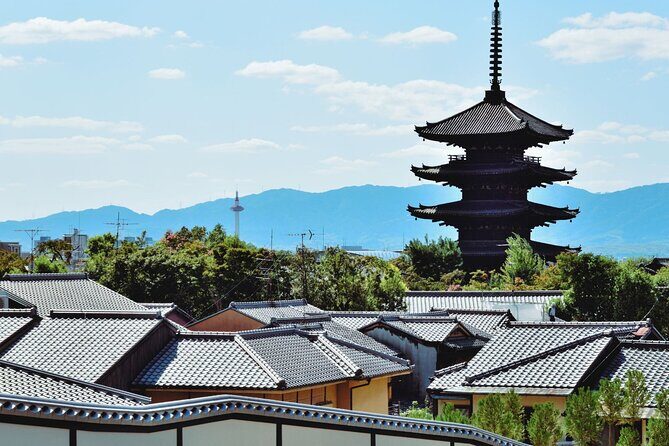
After the shrine area, you get to Yasakanoto, featuring the striking five-story pagoda often associated with Higashiyama. This is a short 5-minute stop, with no admission needed.
If you want a “take your time” moment, this isn’t that stop—but it’s still valuable because it gives you a clear landmark to recognize across the district. When you see it again later on your own, you’ll remember why it’s there and what it symbolizes.
My suggestion: bring your camera settings to match early light. Pagodas and stone structures can look flat if you just shoot in auto mode. A couple of test shots beats one hundred identical photos you’ll never keep.
You can also read our reviews of more tours and experiences in Kyoto


Kiyomizu-dera: panoramic views, then explore at your pace
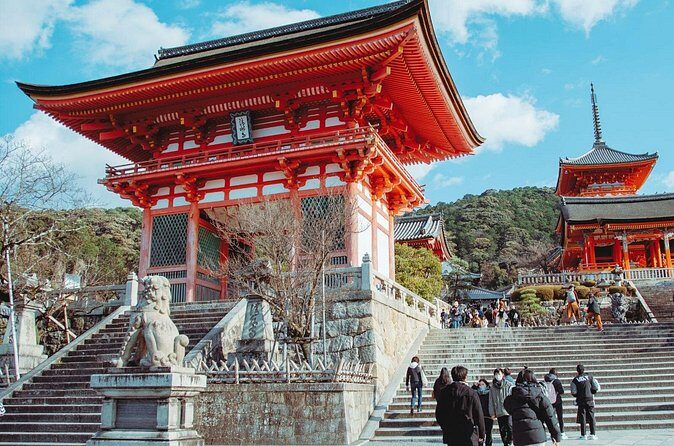
You wrap up at Kiyomizu-dera, one of Kyoto’s best-known UNESCO World Heritage Sites. This is listed as a 10-minute guided finish, with free admission. The big “why” is the panoramic city view from the wooden stage area, plus the chance to explore the sacred grounds after the tour ends.
That structure is smart. You get a guided highlight to point your attention in the right direction, and then you can slow down based on your interests—whether that’s the view, the atmosphere, or simply wandering and taking your time.
One consideration: 10 minutes guided time is short by temple standards. If Kiyomizu-dera is the main event for you, treat the guided part like a lead-in, not the full experience. The real value comes from what you do with that post-tour window.
Also, because the tour ends at Kiyomizu-dera, plan your next step: you’re finishing in a prime area, and that’s helpful for lunch or a follow-on walk, but you’ll want to decide your route before you get pulled in too many directions.
Sannenzaka: slope lanes, traditional shops, and name legends
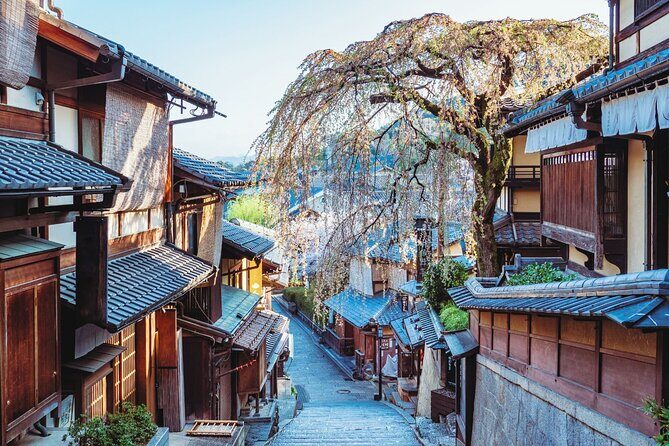
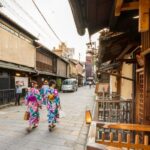
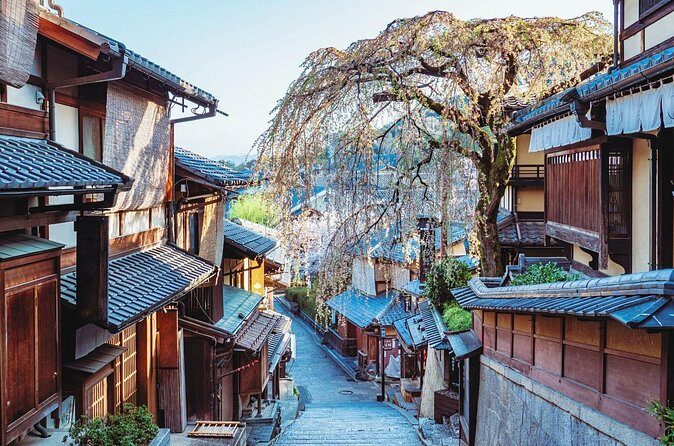
Between the main sights, the route includes Sannenzaka, described as a charming sloped street lined with traditional shops. This part is less about ticking boxes and more about atmosphere and story.
Your guide shares legends behind the name Sannenzaka, which is exactly the kind of detail that turns a street you might otherwise zip past into a place you actually remember. When you hear the meaning tied to the name, you tend to notice more—signs, stone steps, street angles, and the way the lane feels designed for slow walking.
If you’re sensitive to steep uneven ground, the slope is something to consider. It’s part of why the district feels old and photogenic. It’s also why comfortable shoes matter more here than in flatter areas.
Price and value: is $50.73 worth it?
At $50.73 per person, this tour sits in the “worth it if you use it well” category. The price isn’t paying for temple entries—those are free at the listed stops. What you’re really buying is:
- an English guided walking experience
- local insights and tips on where to eat, shop, and explore afterward
- an early start that helps you experience Higashiyama before the crush
The value gets stronger if you’re a first-timer in Kyoto or you want a plan that makes the rest of the day easier. Early guided walks are also one of the best ways to avoid spending your limited vacation time figuring things out alone.
One more practical point: the tour is booked about 30 days in advance on average, so if you’re traveling during a popular season, lock it in earlier rather than waiting for the last minute. Early time slots disappear first.
What you’ll actually do, stop by stop
Here’s how the day plays in real time based on the schedule you’re given:
- Minamiza Theater (~15 min): start with Kabuki origins in Kyoto; free entry
- Yasaka Shrine (~15 min): Shinto and festival context; free entry
- Yasakanoto (~5 min): five-story pagoda photo and landmark moment; free entry
- Sannenzaka slope (walking + storytelling): legends behind the name; traditional shop lanes
- Kiyomizu-dera (~10 min guided finish): UNESCO site highlight and panoramic views; then self-paced exploring after
That’s a lot of recognizable “greatest hits” for a morning that stays under 2 hours. It’s also not a “sit down and watch a show” kind of tour, so if you prefer minimal walking, you may want to choose something with fewer lanes and more stops done from one spot.
Who this Kyoto East Early Morning Walking Tour suits best
This is a great fit if:
- you want to beat crowds and start sightseeing with a clear plan
- you enjoy walking at a steady pace and learning what you’re seeing
- you like getting a local guide’s suggestions for the rest of your day
- you’re visiting Higashiyama for the first time and want a structured intro
It may not be ideal if:
- you need a slow start and struggle with early mornings
- you expect a long, guided deep dive at Kiyomizu-dera (the guided time is short, but you can explore after)
- you hate slopes or uneven old-street walking
If you’re traveling solo, this kind of guided route can be especially helpful. And since the tour is private for your group, it tends to feel more personal than the mass-group style of sightseeing.
Should you book Oh! Ohkini Tours for this morning walk?
If you’re planning one “get oriented fast” experience in Kyoto, this is a solid choice. The combination of 7:30am timing, a clear Higashiyama route, and free admissions at every listed stop makes it good value for the time you spend.
Book it if you want: a calm start, a guided explanation of shrine/temple meaning, and practical suggestions you can use immediately after—especially around Kiyomizu-dera and the Sannenzaka area.
Skip it or pair it differently if you’re hoping for a longer sit-down style tour or you’re not ready for a real morning walk. For everything else, this is the kind of morning that makes the rest of Kyoto feel easier.
FAQ
What time does the tour start?
The Kyoto East Early Morning Walking Tour starts at 7:30am.
How long is the tour?
The tour runs for about 2 hours.
Where does the tour start and end?
It starts at 208 Nakanochō, Higashiyama Ward, Kyoto (605-0075) and ends at Kiyomizu-dera1-chōme-294 Kiyomizu, Higashiyama Ward, Kyoto (605-0862).
Is this a walking tour with transportation included?
No. It’s a walking tour, so there is no hotel pickup and no transportation to or from the meeting point.
Are entrance fees included?
Entrance fees for the listed stops are noted as free, and the tour includes the English guided walking portion plus local tips. Food and drinks are not included.
What language is the guide?
The tour includes an English guided experience.
Can I cancel for free?
Yes. You can cancel for a full refund if you cancel at least 24 hours before the experience’s start time.