REVIEW · 1-DAY TOURS
Kyoto Day Trip to Nara with a Local – Private & Personalized
Book on Viator →Operated by City Unscripted · Bookable on Viator
Nara feels like another world from Kyoto. This private day trip puts you in Nara with a local guide who helps you move quickly and see it at your pace, with stress-free train planning handled for you and a flexible itinerary that can shift to match your interests.
I especially liked how guides bring the sites to life in plain, human ways. In past groups, guides like Taiga and Alex were funny, patient (even with kids), and easy to follow, which makes the day feel smooth even when you’re hopping between major temples. One real trade-off: the price is steep for a single day, so it makes the most sense if you value privacy, included tickets, and not having to sort out logistics yourself.
In This Review
- Key things to know before you go
- Kyoto to Nara, with your host doing the hard parts
- Getting started at JR Kyoto Station (where the day actually begins)
- Stop 1: Todai-ji and the Daibutsu in Daibutsuden
- Stop 2: Nara Park deer time (and how to handle it)
- Stop 3: Isui-en Garden for a real breather
- Stop 4: Kasuga Taisha Shrine and the Fujiwara connection
- Stop 5: Kofuku-ji pagodas, including Japan’s second-tallest wooden pagoda
- How walking and timing work during the 9-hour day
- What you’re really paying for (and when it’s worth it)
- Best fit: who should book this Nara day trip from Kyoto
- Final verdict: should you book it?
- FAQ
- How long is the Kyoto to Nara private tour?
- Is this tour private?
- Where does the tour start in Kyoto?
- Is hotel pickup included?
- Which sites have tickets included?
- Does the host handle train tickets?
- Are food and drinks included?
- Are transportation costs included?
- Does the itinerary change based on my interests?
- Can I cancel for free?
- Is a mobile ticket used?
- Are service animals allowed?
Key things to know before you go
- Private and personalized: your schedule can adjust based on what you want to see
- Train support included: your host organizes train tickets so you don’t wrestle with timetables
- Major Nara landmarks, not just one temple: Todai-ji, Kasuga Taisha, Kofuku-ji, plus calmer spots
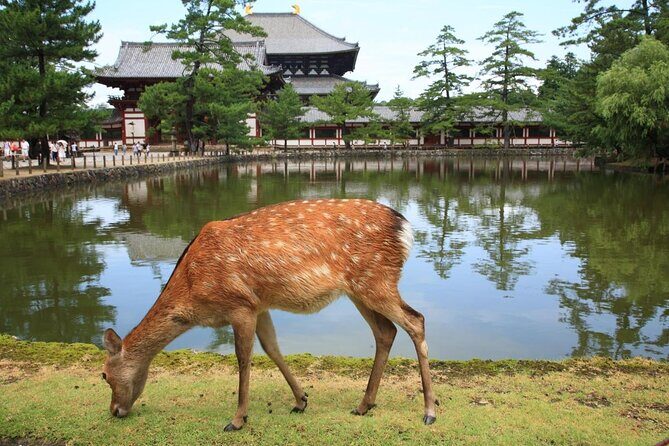
- Deer at Nara Park: you’ll see the famous deer roaming in the city and parks
- Quiet break in the middle: Isui-en Garden gives you a breather between big highlights
- Tickets included for key sites: entry to multiple temples/shrines and other listed admissions
Kyoto to Nara, with your host doing the hard parts
A Nara day trip sounds simple on paper: you take a train, see the big sights, go home. The difference here is that you’re not doing the tricky parts alone. You meet in Kyoto near JR Kyoto Station, then travel with your host who organizes the train tickets for your group. That alone saves time and stress because you’re not stuck cross-checking stations, platforms, and schedules while you’re on holiday.
The day runs about 9 hours, including travel time. That’s long enough that it feels like a full outing, not a quick taste of Nara, but short enough that you still return to Kyoto the same day. Your itinerary is built to be walkable once you’re in Nara, though the tour notes that other transportation can be arranged if you want it.
If you’re the kind of person who wants to spend more time looking around and less time figuring things out, this format fits well. It’s also a strong choice for families: guides in this tour have been described as patient with kids, and when everyone’s moving on the same schedule, it reduces friction.
You can also read our reviews of more private tours in Kyoto


Getting started at JR Kyoto Station (where the day actually begins)
The official start is at Mister Donut – JR Kyoto Station Building Shop901, 901 Higashishiokōjichō, Shimogyo Ward, Kyoto, 600-8216. The tour also mentions hassle-free pickup from a central Kyoto hotel, so depending on how your booking is set up, you may meet your host at your hotel or at the station meeting point. If you like clarity, check your confirmation message before the day arrives so you know the exact start plan for your group.
Either way, the early part matters. Show up a little ahead of the meeting time so you can meet your host, get oriented, and start moving. With this tour, your host’s job isn’t just to lead you at the temples—it’s also to keep the transit phase smooth, including ticket handling.
You’ll also get a mobile ticket, which is handy for showings at admissions points. In a place where signage can be a mix of languages, having the tickets already sorted can help you keep your momentum.
Stop 1: Todai-ji and the Daibutsu in Daibutsuden
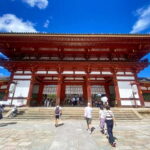
Todai-ji is the kind of stop that sets the tone for the whole day. This is the head temple of provincial Buddhist temples, and the main hall—Daibutsuden—holds one of Japan’s largest bronze statues of Buddha (Daibutsu), standing 15 meters tall. Even if you’ve seen photos, the scale is the point. This is where you start to understand why Nara mattered so much in the early spread of Buddhism.
There’s also a fun, very doable detail: a pillar with a hole. It’s the sort of thing you can use to break up the time standing still and keep your eyes active even when you’re surrounded by big architecture and crowds.
What I like about seeing Todai-ji with a guide is that the place isn’t just a checklist. Your host can help you connect what you’re looking at—statue scale, temple role, and the overall layout—so the buildings don’t blur together.
Practical tip: give yourself enough time here to see it from different angles. The hall and the surrounding complex can feel imposing, but your view improves as you slow down and reposition.
Stop 2: Nara Park deer time (and how to handle it)
Then you shift from major temple space to the streets-and-parks reality of Nara. You’ll see the iconic deer roaming through the city and parks, especially around Nara-koen Park.
This is one of those experiences that’s both charming and practical. Deer are part of the scenery, but you’ll want to act like they’re wild animals in a busy public area. Keep your personal space and don’t try to rush them for photos.
With a guide, the advantage is timing and walking flow. If you go on your own, it’s easy to get stuck in the “everyone is looking at the deer” loop and burn time. Here, your host can help you move through the deer area while staying on schedule for the next shrine and temple stops.
Stop 3: Isui-en Garden for a real breather

After the energy of the deer and the large temple complex, Isui-en Garden offers something different. The garden stretches between Todai-ji and Kofuku-ji, and it’s described as so quiet you feel almost outside the world in a bubble of peace.
This is the stop that makes your day feel balanced. Without a break like this, a temple day can become a long march from one highlight to the next. Isui-en gives you a slower moment—less spectacle, more atmosphere.
For me, that kind of quiet pause matters. It lets your brain reset between big-ticket sights, so when you move to Kasuga Taisha and Kofuku-ji later, you’re not running on autopilot. If your group includes people who get temple-fatigue, this garden stop is often the one they remember most fondly.
You can also read our reviews of more tours and experiences in Kyoto


Stop 4: Kasuga Taisha Shrine and the Fujiwara connection
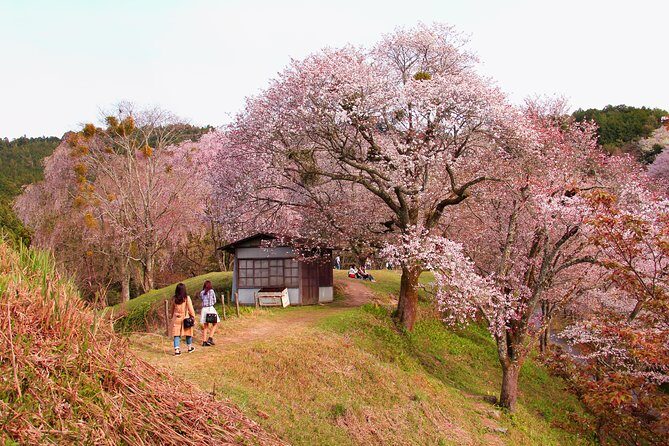
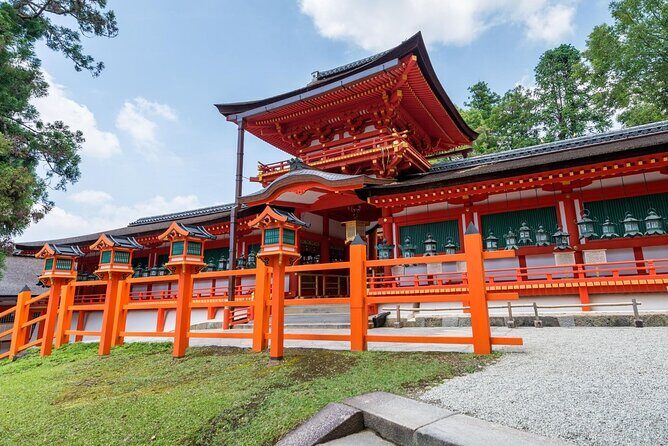
Kasuga Taisha is Nara’s celebrated shrine and also a story-heavy one. It served as the tutelary shrine of the Fujiwara, one of Japan’s most powerful family clans.
Even better: this shrine had a tradition of rebuilding periodically for many centuries, with intervals of every 20 years until the Edo period. That detail is useful because it explains why you’ll feel layers here—this isn’t a one-time monument. It’s a site shaped by ongoing care over time.
When you see Kasuga Taisha with a guide, it’s easier to connect the dots between the shrine’s long-term importance and what you’re looking at in the grounds. Otherwise, it can feel like you’re walking through beautiful structures without a sense of how they got that way.
If you’re into cultural context, this is one of the best stops on the itinerary.
Stop 5: Kofuku-ji pagodas, including Japan’s second-tallest wooden pagoda
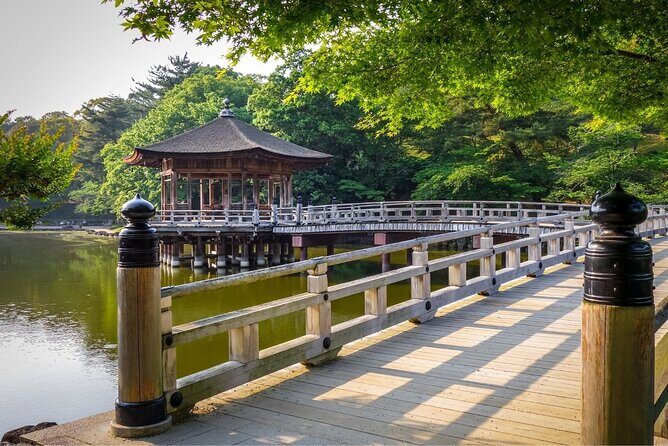
Next up: Kofuku-ji, a temple complex where the architecture is the headline. Don’t miss the astonishing pagodas—especially the five-storied pagoda, described as Japan’s second tallest wooden pagoda, plus three-storied pagodas.
This is one of the reasons Nara hits differently than Kyoto on a day trip. Kyoto often feels like refined elegance; Nara can feel more monumental and grounded. The pagodas at Kofuku-ji give you a big visual anchor and help you “read” the temple landscape from far away.
With a private guide, you can also spend a little extra time at the angles that help you understand height and structure. If you’re trying to photograph, you’ll appreciate not feeling rushed while everyone funnels toward the same spot.
How walking and timing work during the 9-hour day
This tour is a walking experience once in Nara, with notes that other transportation can be arranged. That tells you something important: you’ll likely be on foot for temple-to-shrine movement, but the route isn’t meant to be a punishment march.
Still, plan for a full day of walking. Comfortable shoes are non-negotiable here. If you have mobility limits, tell your host early on so they can think through pacing. Because the itinerary is customized and flexible, your guide can adjust the order or time you spend at each stop, as long as it still fits the day.
The bigger schedule win is that you don’t have to guess transit times between sites. Your host coordinates the flow, and your energy stays focused on what you’re seeing instead of what you’ll do next.
What you’re really paying for (and when it’s worth it)
At $378.76 per person, this isn’t a budget-style day trip. The value comes from a few concrete things that add up:
- Private guide time for about 9 hours, including travel time
- Tickets included for major sites like Isui-en Garden, Todai-ji, Kasuga Taisha, and Kofuku-ji, plus other listed admissions
- Train ticket organization so you can skip the planning effort
- Flexibility to tailor the day to your interests
If you were to DIY this, you’d still pay for train transport and you’d still need entrance tickets. The main difference is your time and stress. When you’re in Japan, those “small” frictions pile up fast: station navigation, ticket counters, where to enter, and which route makes the least walking sense.
This is the kind of tour that pays off when you want a smooth day with minimal friction and a guide who can explain what you’re looking at. Past feedback on this experience highlights that guides like Taiga, Alex, Kenya, and Milos made the day feel special through humor, professionalism, and patience—especially with families. That kind of guiding is hard to replace if you’re going solo.
Best fit: who should book this Nara day trip from Kyoto
This tour is a good match if you:
- Want a private, slower-feeling day with personal pacing
- Appreciate context while you’re seeing big temples and shrines
- Prefer having tickets and transit handled instead of hunting down details
- Travel with kids or a group that benefits from patience and clear guidance
It may be less ideal if you:
- Want the cheapest possible day trip (this is built for private service)
- Plan to eat whenever and wherever without any structure (food and drinks aren’t included, so you’ll still need to manage lunch)
Final verdict: should you book it?
If you care about getting the logistics right and maximizing a full day in Nara, I think this is a strong booking. The combination of a private guide, included admissions, and train ticket handling turns Nara from a complex self-planned outing into a straightforward day of sightseeing.
I’d book it especially if you like the idea of pairing the big hits—Todai-ji, Kasuga Taisha, Kofuku-ji—with a quieter stop like Isui-en Garden. That mix keeps the day from turning into one long temple line.
If you’re budget-first, you might compare DIY costs and decide whether the saved planning time is worth the premium. But for most people who want a confident, guided day, this tour checks the boxes.
FAQ
How long is the Kyoto to Nara private tour?
It runs for about 9 hours, including travel time from Kyoto.
Is this tour private?
Yes. It’s a private tour, so only your group participates.
Where does the tour start in Kyoto?
The start point is Mister Donut at JR Kyoto Station Building Shop901, 901 Higashishiokōjichō, Shimogyo Ward, Kyoto.
Is hotel pickup included?
The tour overview says there is hassle-free pickup from a central Kyoto hotel, but the start point listed is at Mister Donut near JR Kyoto Station. Your confirmation should clarify your exact meeting arrangement.
Which sites have tickets included?
Tickets are included for Isui-en Garden, Todai-ji Temple, Kasuga-Taisha Shrine, Kofuku-ji Temple, and other listed attractions.
Does the host handle train tickets?
Yes. Your host organizes the train tickets so you can avoid dealing with timetables.
Are food and drinks included?
No. Food and drinks are not included.
Are transportation costs included?
Transportation costs are not included. The info notes that Japan Rail Pass holders can travel free on the JR.
Does the itinerary change based on my interests?
Yes. The tour says your customized itinerary is fully flexible.
Can I cancel for free?
Yes. Free cancellation is available if you cancel up to 24 hours in advance for a full refund.
Is a mobile ticket used?
Yes. The tour includes a mobile ticket.
Are service animals allowed?
Yes, service animals are allowed.