REVIEW · TRAIN EXPERIENCES
Train Katana with Real Dojo Students in Kyoto
Book on Viator →Operated by Yushinkan Co., Ltd. (株式会社勇進舘) SETO Yushin · Bookable on Viator
Kyoto is famous for temples. This is for the sword.
What makes this experience stand out is that it is not a tourist show. You train inside Yushinkan Kyoto with a headmaster who has 20+ years of experience, alongside dedicated local students.
I like that you get hands-on with real instruction: you dress in proper training gear, then learn iai (katana drawing) and practice kenjutsu (katana fighting basics). You also see the dojo’s skill clearly, including students cutting rolled tatami mats and the master’s katana performance.
One consideration: it is a dojo class, not a casual cultural photo op. Video recording is not allowed, and you should be ready for a training-focused pace and moderate physical fitness demands.
In This Review
- Key Things I’d Remember Before You Go
- Why This Kyoto Katana Class Feels Like the Real Thing
- Yushinkan Kyoto and the Training Rhythm You’ll Observe
- Before You Train: Gear, Etiquette, and Getting Set
- Learning Iai: The Drawing Skills That Start Everything
- Practicing Kenjutsu With a Training-Focused Pace
- Watching Students Cut Rolled Tatami Mats
- The Big Question: Will You Do Test Cutting?
- Price and Value: What $195.09 Really Buys You
- Small Group Means You’ll Learn Faster (and Wait Less)
- Getting There: The Meeting Point and How It Fits Into Kyoto
- Practical Tips to Make the Most of Your 3 Hours
- Who Should Book This Katana Training in Kyoto
- Should You Book Train Katana With Real Dojo Students in Kyoto?
- FAQ
- How long does the katana training session last?
- Where is the meeting point in Kyoto?
- What do I do during the 3 hours?
- Is video recording allowed during the experience?
- What is the minimum age to participate?
- Is there a limit on group size?
Key Things I’d Remember Before You Go
- Real dojo students, not actors: You train alongside people who are already in the rhythm of practice.
- Proper training gear: You’ll dress in dōgi, obi, and hakama before training.
- Two skills taught in one session: You learn iai and then practice kenjutsu techniques.
- Tatami mat cutting is a real demonstration: Students cut rolled tatami mats with a real katana.
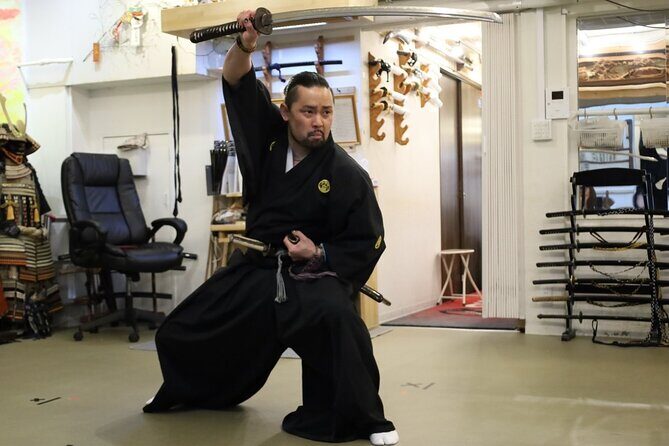
- Master’s performance includes two-katana moments: You’ll watch the headmaster with a powerful two-katana sequence.
- No test cutting for participants: You’ll observe the cutting, but test cutting isn’t offered.
Why This Kyoto Katana Class Feels Like the Real Thing
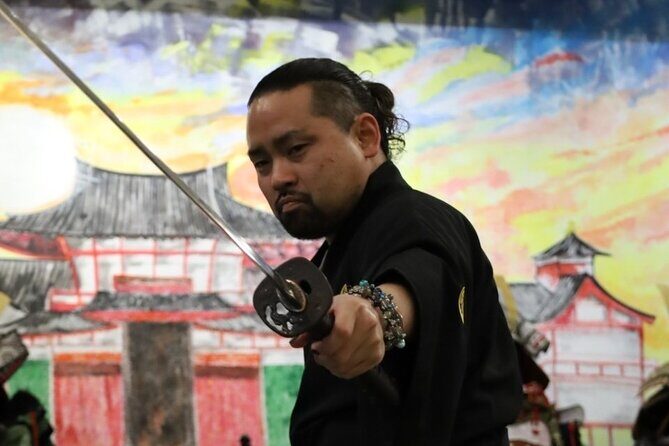
If you’ve ever done a “samurai experience,” you might remember the vibe: a script, a quick demo, and not much actual technique. This one is different because it centers the dojo itself. You are joining a session built for training, with the structure and rules that come with real practice.
I also like the clarity of what you’ll do. You know you’ll dress for training, learn iai, practice kenjutsu, and then watch technique from the people who live and breathe this art. That makes the time feel focused, not like you’re paying just to stand around.
The value here is not that you’ll leave as a swordsman. It’s that you’ll leave with a real sense of how a dojo teaches. Even if you’re new, you’ll understand the flow from warm-up to technique to controlled performance.
You can also read our reviews of more tours and experiences in Kyoto.



Yushinkan Kyoto and the Training Rhythm You’ll Observe
The session is run at Yushinkan Kyoto, led by the headmaster with 20+ years of experience. That matters because dojo instruction isn’t just about moves. It’s about timing, form, and how students correct each other.
You’ll be in a room with students rigorously training. That means your attention naturally shifts from entertainment to technique. When the master and students demonstrate, it lands in a practical way because you’ve already been working through the same core categories.
A small but important detail: the class is built for small groups, with a maximum of 3 travelers. That typically means you’ll get more direct attention and less waiting around, which is what you want when learning something as technical as iai and kenjutsu.
Before You Train: Gear, Etiquette, and Getting Set
Your first step is dressing for class. You’ll get into training gear: a dōgi, an obi, and a hakama. It’s more than costume. Wearing the proper uniform helps you understand the formality and physical positioning used in training.
Once you’re dressed, the dojo setup becomes your guide. Expect the session to move in an orderly way, starting with foundational learning and moving into practice. If you’ve never worn hakama before, the first few minutes will feel a bit new, but that’s part of getting a real dojo experience.
You’ll also want to follow dojo rules closely. Video recording is not allowed. Observing without paying isn’t permitted. These rules aren’t there to be strict for fun; they keep the training space respectful and controlled.
Learning Iai: The Drawing Skills That Start Everything
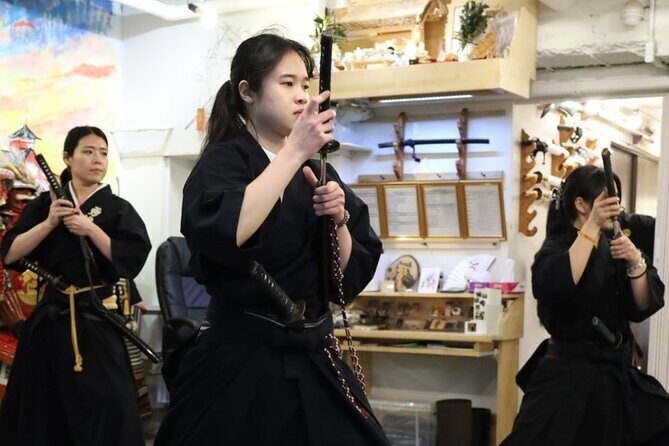
The instruction begins with iai. In plain terms, iai focuses on the controlled act of drawing the katana and moving with precision. In a dojo setting, that means you’ll learn how beginners are guided into the basics without skipping the fundamentals.
What I like about including iai in this session is that it gives you a strong foundation quickly. Even if you only grasp a few movements, iai is one of the best entry points because it emphasizes discipline and correct body alignment.
During the class, you’ll practice the technique taught by the dojo. Since you’re training alongside real students, your learning will feel anchored. You are not guessing what matters. You’re following the same lesson structure the students follow.
Practicing Kenjutsu With a Training-Focused Pace
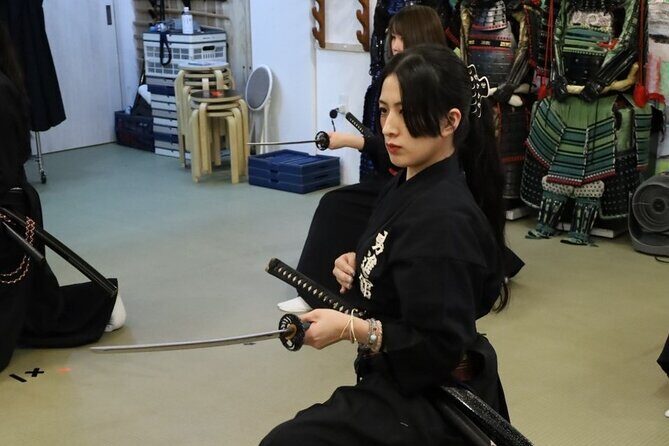
After iai, the session moves into kenjutsu practice. Kenjutsu is about using the katana in fighting-oriented techniques. Here, you’re not just watching from the sidelines; you’ll practice methods as part of the class flow.
The big benefit for you is that you’ll connect drawing skills to what comes next. Iai is controlled and deliberate. Kenjutsu adds interaction and timing. Together, they give you a clearer picture of why sword arts build in stages rather than throwing everything at you at once.
One practical note: the experience lists moderate physical fitness as a requirement. That makes sense for training gear movement and stance work. You don’t need to be an athlete, but you should be comfortable standing, moving with control, and staying focused for a few hours.





Watching Students Cut Rolled Tatami Mats
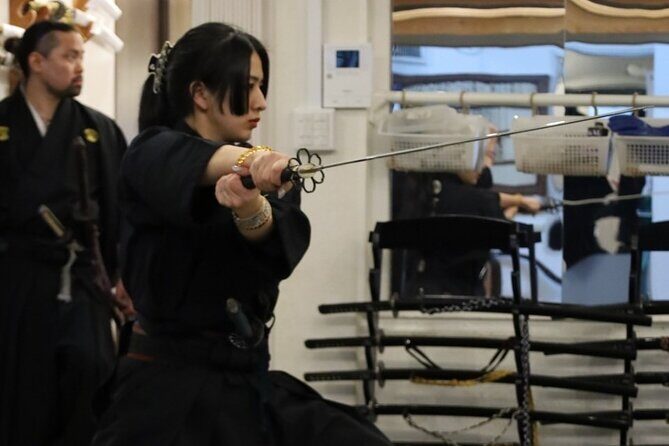
After you learn and practice, you’ll shift into observation for key parts. You’ll watch students cut rolled tatami mats with a real katana. This is where the dojo’s standard becomes very visible.
Seeing cutting in a dojo is different from watching a staged clip online. You notice control, spacing, and how the action fits into the training environment. It’s not just impact for show. It’s technique.
The class also includes a master’s performance with a katana. And it’s not limited to one style. The master’s two-katana performance is described as something you won’t see anywhere else. Even if you don’t understand every detail, you’ll recognize that this is advanced skill set, performed with confidence.
The Big Question: Will You Do Test Cutting?
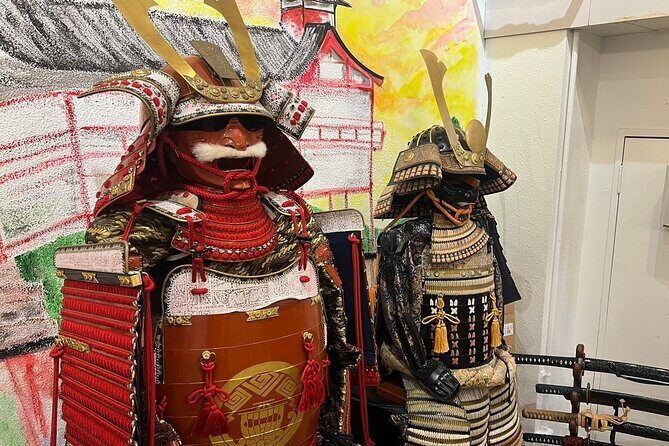
This is a common expectation for sword experiences, so let’s be direct: test cutting with a real katana is not offered.
That means you should treat this as instruction and demonstration rather than a “try-and-slice” activity. You’ll learn iai and practice kenjutsu, and you’ll observe real cutting and performance by the dojo’s headmaster and students.
If what you want is specifically hands-on cutting, this may feel like a mismatch. But if you want instruction in a real dojo setting and a clear view of how professionals train, the structure makes sense. It keeps the class focused on safety and correct technique.
Price and Value: What $195.09 Really Buys You
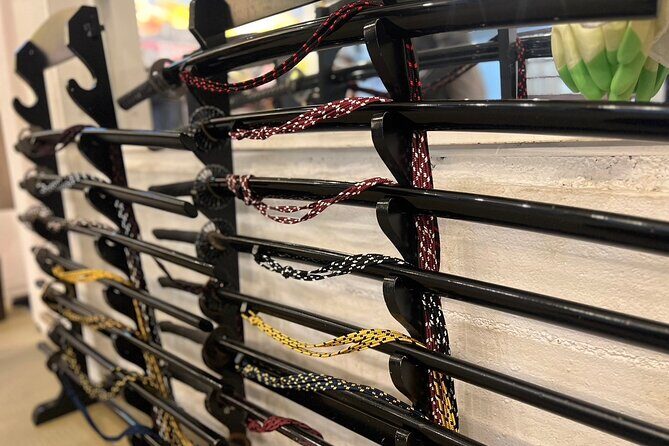
At $195.09 per person for about 3 hours, this isn’t a budget activity. But I think the price is more reasonable when you factor in what you’re actually getting.
You’re paying for:
- Small group size (maximum of 3 travelers)
- A real dojo setting with local students
- Instruction in iai and practice in kenjutsu
- Observation of students cutting rolled tatami mats
- Observation of the master’s katana performance, including a two-katana sequence
This isn’t mass-market entertainment. It’s time with a headmaster and a training group. In that sense, the value is in the authenticity and the teaching structure, not in flashy extras.
Also, the session is 3 hours long, which gives the dojo enough time to walk you through fundamentals rather than squeezing everything into a rushed demo.
Small Group Means You’ll Learn Faster (and Wait Less)
The tour caps at 3 travelers. That’s a big deal for this kind of class because sword arts aren’t something you can learn passively for long.
With a tiny group, you’re more likely to get attention during practice. You can ask questions at appropriate moments, and you won’t be competing for the instructor’s focus in a crowded room.
And because this is limited, planning ahead helps. It’s stated that it’s typically booked around 29 days in advance on average. If you care about booking your Kyoto training on a specific date, don’t leave it to the last minute.
Getting There: The Meeting Point and How It Fits Into Kyoto
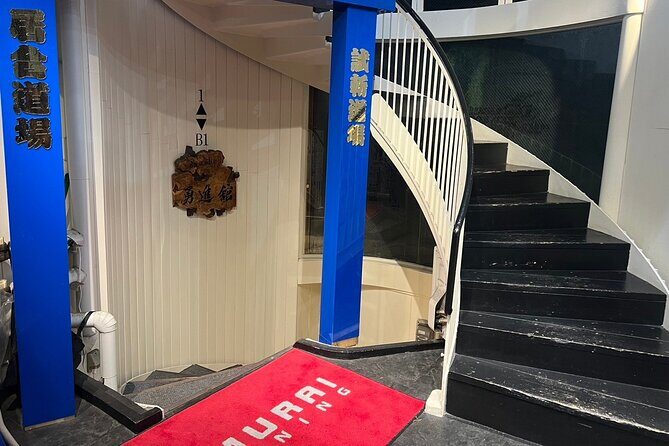
Your meeting point is listed as 452-4 Matsugaechō, Nakagyo Ward, Kyoto, 604-8034, Japan. The experience also notes it’s near public transportation, which is helpful because Kyoto can be time-consuming if you misjudge your transit.
This matters because your session is about 3 hours. You want to arrive rested and ready, not stressed from a rushed train connection. If you’re pairing this with temple stops, I’d schedule it as the anchor activity for that half-day.
Also, the session ends back at the meeting point, so you’re not stuck navigating a new neighborhood after training. That’s a small comfort, but it matters when you’re traveling.
Practical Tips to Make the Most of Your 3 Hours
Here’s how to set yourself up for a smooth session.
First, accept the rule set. No video recording. Dojo etiquette matters. Observing without paying isn’t permitted, so don’t assume there’s a public viewing option. This is a training space, not a general attraction.
Second, plan for training gear. You’ll dress in dōgi, obi, and hakama. Wear comfortable clothes to start, and expect that your hands and posture may feel different once you’re in uniform.
Third, think about physical readiness. The experience calls for moderate physical fitness. That’s your cue to move comfortably and stay patient with learning new body positions.
Finally, bring the basics for travel logistics. You’ll have a mobile ticket, and confirmation is received within 48 hours of booking, subject to availability. Free cancellation is offered up to 24 hours in advance, which is useful if your Kyoto schedule changes.
Who Should Book This Katana Training in Kyoto
This experience is best for people who want a real dojo feel. If you’re the type who likes learning how things are taught, not just watching performances, you’ll likely enjoy it.
It also suits you if you have some prior interest in martial arts or sword arts. One of the highlighted themes from a strong review is that it works especially well if you already have martial arts experience, even if your katana experience is limited.
I’d also recommend it if you want a break from Kyoto’s standard itinerary. This adds a different kind of culture: discipline, technique, and training structure.
If you’re looking for a carefree, take-a-few-photos-and-leave attraction, this may feel too rule-based and skill-focused. And if you specifically want to do test cutting yourself, this isn’t designed to deliver that.
Should You Book Train Katana With Real Dojo Students in Kyoto?
Book it if you care about authenticity, small group instruction, and seeing how katana arts are practiced in a real dojo. The mix of iai learning, kenjutsu practice, and observation of tatami cutting plus the master’s two-katana performance is a strong package for serious beginners and martial arts fans.
Consider skipping if your main goal is personal cutting with a real sword or if you want a casual, tourist-friendly format with lots of filming. This is training first.
If you want one simple decision rule: choose this if you’re ready to act like a student for a few hours, even if you’re new.
FAQ
How long does the katana training session last?
The experience runs for approximately 3 hours.
Where is the meeting point in Kyoto?
The meeting point is 452-4 Matsugaechō, Nakagyo Ward, Kyoto, 604-8034, Japan. The activity ends back at the meeting point.
What do I do during the 3 hours?
You’ll dress in samurai training gear (dōgi, obi, hakama), learn iai (katana drawing) techniques, practice kenjutsu (katana fighting) techniques, and watch the students and the master perform, including cutting rolled tatami mats. Test cutting with a real katana is not offered.
Is video recording allowed during the experience?
No. Video recording is not allowed.
What is the minimum age to participate?
Participants must be 12 years old or older.
Is there a limit on group size?
Yes. The experience has a maximum of 3 travelers.