REVIEW · KYOTO
The right way to know Kyoto
Book on Viator →Operated by Kyoto Daily Tours · Bookable on Viator
Kyoto gets easier when someone else plans. This private walking tour helps you dodge the stress of getting lost, with hotel pickup options and a guide who ties each stop to Japanese culture and history.
I love how the day hits the Kyoto classics with smart flow: Fushimi Inari-taisha first, then bamboo, then Kinkaku-ji and Ginkaku-ji. I also like that your guide can keep the experience personal; I’ve seen guides like Paco and Tom adjust pace, answer questions, and steer groups toward spots that feel less crowded.
The one catch is time. In about 6 hours, you’ll want to decide up front whether you’re there for quick highlights or for long, slow lingering—because some sites can feel like they move fast once you start walking and transferring between stops.
In This Review
- Key things to know before you go
- A Kyoto Day Built Around Walking, Not Guessing
- Price and Value: $371.41 for Up to 6 People
- Meeting at Kyoto Station and How the Timing Works
- What’s Included (and What Isn’t) So You Can Budget Cleanly
- Stop-by-Stop: How the Route Feels on the Ground
- Stop 1: Fushimi Inari-taisha and the Torii-Gate Walk
- Stop 2: Bamboo Forest Trail as a Reset (45 minutes)
- Stop 3: Kinkaku-ji Temple (Golden Pavilion) and the Main Temple Views
- Stop 4: Ginkaku-ji Temple (Silver Pavilion) and Wabi-Sabi Style Calm
- Private Guides Change the Experience More Than the Attractions
- Crowds, Pace, and the Realistic Walking Plan
- Who This Tour Is Best For
- Who Should Skip (or Pair It With More Time)
- Should You Book This Private Kyoto Walking Tour?
- FAQ
- How long is the tour?
- How many people are in a group?
- Is hotel pickup included?
- Where do we meet for the tour?
- What stops are included in the itinerary?
- Are entrance tickets included?
- Is transportation included?
- Do I get a mobile ticket?
- Is there free cancellation?
Key things to know before you go
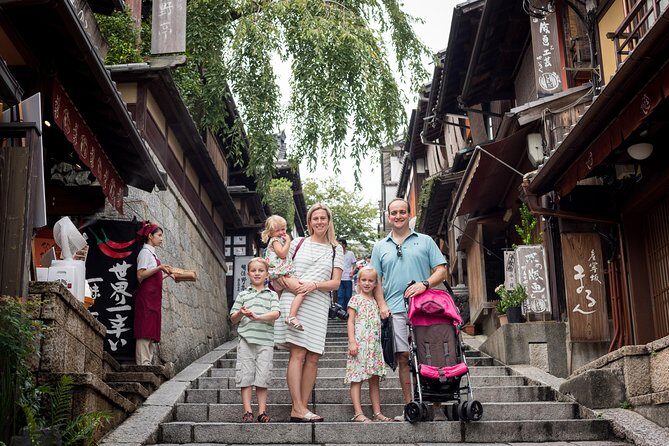
- Private group (up to 6) means you’re not sharing the day with strangers
- Hotel-area pickup is available, plus a mobile ticket for less hassle
- Free highlights built in: Fushimi Inari and the bamboo trail have no admission ticket listed
- Two paid temples later: Kinkaku-ji and Ginkaku-ji entrances are not included
- Transportation isn’t included, so you’ll likely use trains/buses (and you’ll pay fares)
- The day is active: you should expect a lot of walking and being on your feet
A Kyoto Day Built Around Walking, Not Guessing
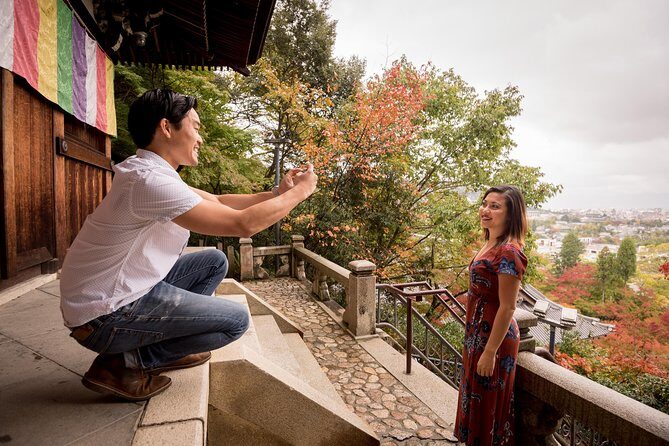
This tour is built for people who want Kyoto to make sense fast. You get an expert guide leading a walking plan that focuses on the city’s most important cultural landmarks, without you wrestling with routes, timing, and crowd patterns.
The private format matters more than it sounds. With up to 6 people, your guide can slow down when your legs need a break, speed up when you’re raring to go, and answer the questions you actually came for. In past groups, guides like Adrian have taken people beyond the obvious path—like swapping in a bamboo stop when the day called for a slower, calmer change of pace.
Just keep your expectations matched to the schedule: you’re seeing major highlights, but not everything. If you’re the type who wants a full afternoon at one temple garden, consider pairing this with another half-day on your own.
You can also read our reviews of more tours and experiences in Kyoto.



Price and Value: $371.41 for Up to 6 People

The price is $371.41 per group (up to 6). That’s not a per-person bargain if you’re traveling solo, but it can be a strong value when you split it.
Here’s the simple math:
- For 6 people: about $62 per person for the guide-led day
- For 4 people: about $93 per person
- For 2 people: about $186 per person
What you’re paying for isn’t just someone to point at buildings. You’re buying time back, plus interpretation. Instead of wandering through torii gates and gardens without context, you get someone who can explain what you’re looking at and how to read the experience like a local—whether that’s understanding how shrine and temple spaces work or learning what to notice in temple architecture and garden design.
Also, because some entrances are free (more on that below), you’re not paying for every single stop. That reduces the “surprise add-ons” feeling.
Meeting at Kyoto Station and How the Timing Works
You meet at Kyoto Station, near Higashishiokoji Kamadonocho, Shimogyo Ward (Kyoto 600-8216). The experience ends back at the meeting point, so you’re not forced into a one-way logistics headache.
The tour runs within 9:00 AM to 3:00 PM (Monday through Sunday). Since you’re operating in a daytime window and moving between major sites, you’ll want to plan your day around that start time rather than trying to squeeze it between other long activities.
A detail I appreciate: the tour uses a mobile ticket, so you don’t end up hunting for paper confirmation when you’re already navigating Japanese signage, transit, and crowds.
What’s Included (and What Isn’t) So You Can Budget Cleanly

Included:
- Expert guide
Not included:
- Entrance tickets
- Transportation
- Meals
This matters because two of the big-name stops have admissions listed as not included. You’ll likely pay temple entrance fees directly on the day.
The good news is that the itinerary has a couple of free-entry components:
- Fushimi Inari-taisha Shrine: admission ticket listed as free
- Bamboo forest trail: admission ticket listed as free
So your wallet pain is more predictable: you’re mostly budgeting for the Golden and Silver Pavilion entrances later.
And transportation being not included doesn’t mean you’re stuck. It means you should expect to pay train/bus fares during transfers. That also means your guide’s job is practical: helping you move efficiently and not waste time at stations.
If your plan is to use public transit, you’ll be glad you have someone handling the route logic. In real group experiences, guides have helped people navigate systems smoothly, which can be a confidence booster when trains are packed and you’re trying to keep track of exits.
Stop-by-Stop: How the Route Feels on the Ground





Stop 1: Fushimi Inari-taisha and the Torii-Gate Walk
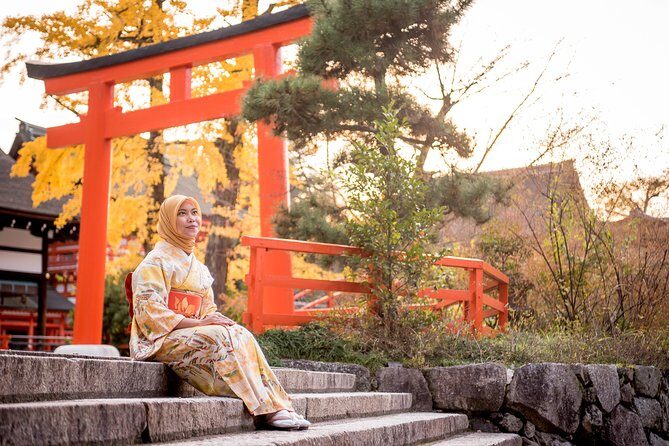
Your first stop is Fushimi Inari-taisha Shrine (about 1 hour, ticket listed as free). This is where Kyoto shows you its instantly recognizable side: the long walk under orange torii gates.
What makes this stop work on a guided route is that you don’t just see a photo background. Your guide can point out what you’re walking through and how shrines function in everyday religious practice. It also helps you decide how far up the path you want to go before you turn around—because this place is bigger than people expect.
A practical mindset shift: treat this like a journey, not a checklist. If you rush to the top too fast, you’ll spend the rest of the day tired and under-appreciating the next sites. With a private guide, you can set a pace that fits your group.
Stop 2: Bamboo Forest Trail as a Reset (45 minutes)
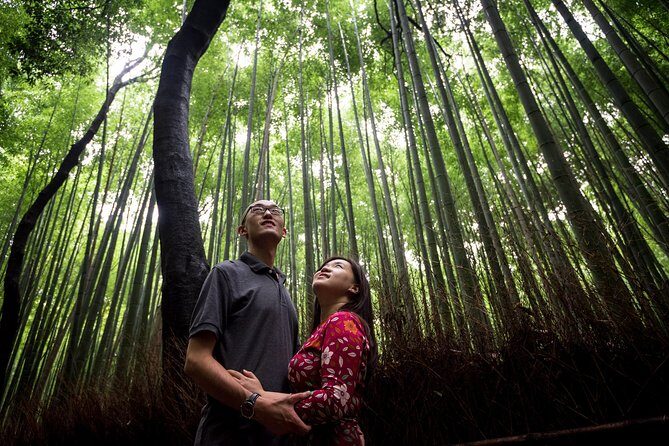
Next is the Bamboo Forest Trail (about 45 minutes, ticket listed as free). Expect a scenic bamboo grove and a noticeable change in mood compared to the shrine area.
This stop is short by design. In a tightly packed day, bamboo works best as a reset: walk slowly enough to notice the feel and spacing of the grove, take the photos you want, and then keep moving. If you try to turn it into a half-day, you’ll run out of time later at the temples that usually need the most attention.
In past experiences, guides like Adrian have taken people to bamboo areas when they were looking for something away from the busiest streets. That’s one of the benefits of having a guide who can read the vibe of your group and the day.
Stop 3: Kinkaku-ji Temple (Golden Pavilion) and the Main Temple Views
Then you head to Kinkakuji Temple, the famous Golden Pavilion (about 1 hour, entrance ticket not included).
This is the stop where you’ll feel the difference between seeing a famous site online and seeing it in person. The viewing areas and garden approaches are part of the experience, so don’t just sprint toward the postcard angle. A guide can help you understand what to notice—like how the structure sits in relation to the surrounding grounds.
The big consideration here is time. One hour sounds generous until you’re standing in the flow of sight lines and you decide you want a couple of different angles. If you’re sensitive to crowding or you prefer calm pacing, tell your guide early so they can manage how you experience the pavilion.
Stop 4: Ginkaku-ji Temple (Silver Pavilion) and Wabi-Sabi Style Calm
Finally, you visit Ginkakuji Temple, known as the Silver Pavilion (about 1 hour, entrance ticket not included). This stop is often where people exhale.
The appeal here is the serene Zen atmosphere and the wabi-sabi beauty of the place—thinking about the charm of imperfection, weathering, and quiet details in gardens. Where Kinkaku-ji can feel more dramatic, Ginkaku-ji tends to reward slower looking.
If you’re a detail person, you’ll likely enjoy this ending. If you’re feeling rushed, this is also where having a guide helps, because your time won’t be wasted wandering without context.
Private Guides Change the Experience More Than the Attractions
The itinerary is strong on paper, but what makes it special is the human factor. Many guides in this company’s pool are known for adjusting the day to the group’s interests.
For example:
- Paco has been described as emailing ahead to ask what you want to see
- Adrian has taken groups toward quieter areas (including bamboo) when the moment called for it
- Peter has guided people away from the most crowded Instagram routes
- Tom has paced the day well for different abilities, including when someone in the group needed a workable rhythm
- Jose David and Laura have adapted the plan based on what the group cared about most
You’ll feel that in small ways: the explanation you actually need at the exact moment you’re standing there, the timing decisions that reduce standing in the wrong place, and the way your guide keeps your group moving without turning it into a factory line.
Crowds, Pace, and the Realistic Walking Plan
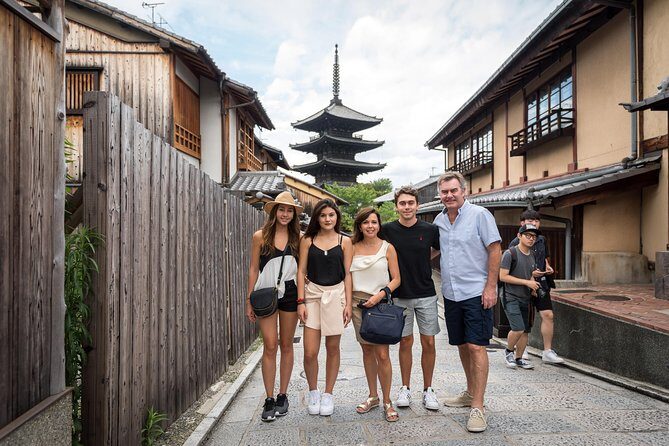
This is a walking tour, and you should plan your body for it. In one group experience, someone mentioned walking close to 28,000 steps and using public transport. Even if your pace is different, the message is clear: you’re not doing a slow stroll.
Public transportation can get crowded, so expect that reality. The good part is that with a guide, you’re less likely to waste time getting turned around at stations, choosing the wrong line, or standing at the wrong platform entrance.
Two things you should do before you go:
- Wear shoes that can handle long periods on your feet
- Decide what pace you want so you can tell your guide at the start
If the weather turns rainy, you’ll still be walking through temple and shrine areas. One past experience included a rainy day, and the group emphasis stayed on making the day workable, not canceling the fun.
Who This Tour Is Best For
This tour is a great fit if:
- You want Kyoto highlights in a short window and don’t want to build the route yourself
- You care about cultural meaning, not just sightseeing photos
- You’re traveling with family members who benefit from flexibility (different ages, different walking tolerance)
- You want your questions answered on the spot
It’s also a smart move for a first day in Kyoto. Your brain needs a map, and a guide gives you that faster than self-guided wandering.
Who Should Skip (or Pair It With More Time)
Skip this if you:
- Want zero walking and minimal transit time
- Plan to spend long hours inside each temple complex without moving along the itinerary
- Are traveling at a very relaxed speed where a 6-hour structure feels too tight
If you love slow temple life, consider doing this as your overview day, then return on your own for a second pass at your favorite stop.
Should You Book This Private Kyoto Walking Tour?
I’d book it if you want a guided loop that handles route logic and interpretation, while still giving you freedom to adjust the day to your group. The private format is where the value shows up most, especially at $371.41 per group up to 6.
I’d hesitate if your top priority is deep time at one or two sites. The tour is designed to cover multiple major highlights in about 6 hours, which means you’ll likely feel the schedule rather than luxuriate in it.
If you’re on the fence, a simple rule helps: if you’d rather trade a little independence for confidence and context, this tour makes sense. If you’re the type who enjoys figuring it out yourself and you already know Kyoto’s rhythm, you might prefer a self-guided day.
FAQ
How long is the tour?
The tour runs for about 6 hours.
How many people are in a group?
It’s a private tour/activity, with a group size of up to 6 people.
Is hotel pickup included?
Pickup is offered.
Where do we meet for the tour?
The start meeting point is Kyoto Station (Higashishiokoji Kamadonocho, Shimogyo Ward, Kyoto, 600-8216, Japan). The tour ends back at the meeting point.
What stops are included in the itinerary?
The tour includes Fushimi Inari-taisha Shrine, the Bamboo Forest Trail, Kinkakuji Temple (Golden Pavilion), and Ginkakuji Temple (Silver Pavilion).
Are entrance tickets included?
No. Entrance tickets are not included. Fushimi Inari-taisha Shrine and the Bamboo Forest Trail list admission as free, while Kinkakuji Temple and Ginkakuji Temple do not.
Is transportation included?
No. Transportation is not included.
Do I get a mobile ticket?
Yes, the tour includes a mobile ticket.
Is there free cancellation?
Yes. You can cancel for a full refund if you cancel up to 24 hours in advance of the experience start time.