REVIEW · KYOTO
Kyoto Cultural IKEBANA Experience@SEKKA FLOWERS
Book on Viator →Operated by Japanese flower arrangements · Bookable on Viator
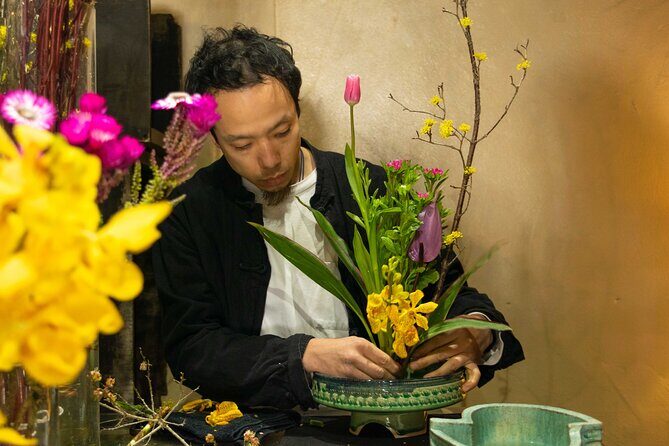
Kyoto can feel loud and fast, so it’s refreshing to slow down with ikebana. This hands-on workshop takes place in a renovated traditional townhouse near Kinkaku-ji and Daitoku-ji, where you’ll learn the look and logic of Japanese flower arrangement while working with seasonal flowers and branches in a calm, focused setting.
What I like most is the room itself and the way the lesson is framed: you’re not just making something pretty, you’re learning to respect the materials’ natural state through wabi-sabi. You also get guidance from instructors like Taro-san and Chiaki-san, who make it clear there’s no wrong way to express your composition.
One thing to consider: the whole experience is about 40 minutes, so it’s best if you’re comfortable leaving with your first draft and trusting the process, rather than expecting a long, slow craft session.
In This Review
- Key Things I’d Bet You’ll Care About
- A Quiet Break From Kyoto’s Crowds: Ikebana in a 100-Year-Old Townhouse
- Your 40 Minutes With Classical Ikebana and Wabi-Sabi
- Inside the Tokonoma: Making It Look Like It Belongs
- What You Get for $65.15: Value Beyond the Price Tag
- Where the Workshop Starts: Finding the Shop Near Kinkaku-ji and Daitoku-ji
- How the Class Feels: Beginner-Friendly, Hands-On, and Actually Calm
- Who Should Book This Ikebana Workshop (And Who Might Not)
- Should You Book Kyoto Cultural Ikebana Experience@SEKKA FLOWERS?
- FAQ
- How long is the ikebana experience?
- Where is the meeting point?
- How much does it cost?
- Is it beginner-friendly?
- What is included in the experience?
- Is there a group size limit?
- Does the shop use a traditional setting?
- Is the ticket mobile?
- Is cancellation free?
- Can I bring a service animal?
Key Things I’d Bet You’ll Care About
- Small group (max 6): more personal coaching, less waiting around
- Classical forms + wabi-sabi: structure, but still room for your taste
- Tokonoma moment: your arrangement is shown in a traditional alcove style setting
- Beginner-friendly: you’re guided step-by-step, not tested
- Possible delivery to your accommodation: you can travel lighter with a finished piece
A Quiet Break From Kyoto’s Crowds: Ikebana in a 100-Year-Old Townhouse
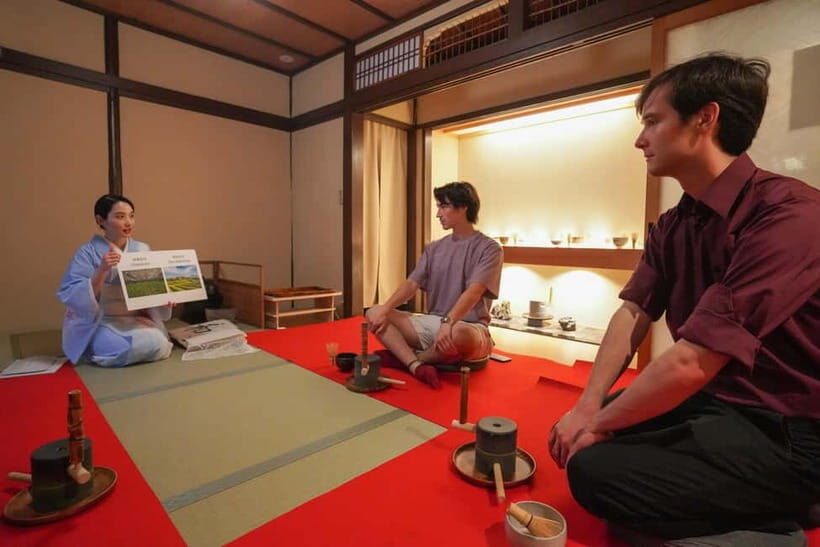
I like experiences that feel connected to place, not staged for tourists. Here, that starts with the setting: the workshop takes place in a renovated traditional townhouse in Kyoto that’s about 100 years old. Even before you touch the flowers, you’re in the right mood. The atmosphere is calm, with a traditional feel that makes the whole practice click faster.
This location also helps you build a smarter Kyoto day. You’re near major temple areas (Kinkaku-ji and Daitoku-ji are both nearby), so the timing can work whether you’re doing temples in the morning or building a quieter afternoon after the crowds. If your Kyoto plan includes a lot of walking and photo stops, this is a nice counterbalance.
The other “place” detail I value: the workshop happens in a flower shop space inside that traditional townhouse. That matters because ikebana isn’t only about the final photo. It’s about learning how people in Japan think about flowers—seasonal, imperfect, alive—not just arranging stems like a hobby craft.
You can also read our reviews of more tours and experiences in Kyoto.



Your 40 Minutes With Classical Ikebana and Wabi-Sabi
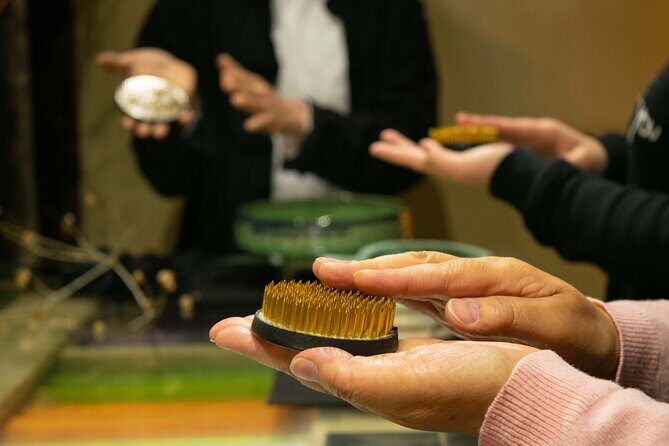
The class is designed for real beginners. You won’t be thrown into complicated theory and left to guess. You’ll get a guided session that explains the history and art of ikebana, then helps you apply those ideas directly as you work.
A key part of the approach here is respect for natural form. The workshop is based on classical ikebana forms, but the coaching centers on letting the flowers and branches show what they already want to do. That might sound abstract, but it becomes practical the moment you start shaping your arrangement. Instead of forcing everything into a single “perfect” look, you’re encouraged to make choices that feel aligned with the materials in front of you.
Then there’s the wabi-sabi element. The lesson includes experiencing a wabi-sabi style mindset with your instructor—basically, learning to appreciate simplicity, quiet character, and the beauty of what’s real (including small imperfections). In a place like Kyoto, that concept lands fast. And in a short workshop, it gives you a clear lens so you’re not overthinking every stem.
In the reviews, Taro-san and Chiaki-san come up as welcoming and informative, and that tone matters. In a craft class, nervousness can ruin the fun. Here, the instruction style is reassuring: you’re encouraged rather than corrected harshly. The result is that even first-timers can leave with something they feel comfortable calling their own.
Inside the Tokonoma: Making It Look Like It Belongs
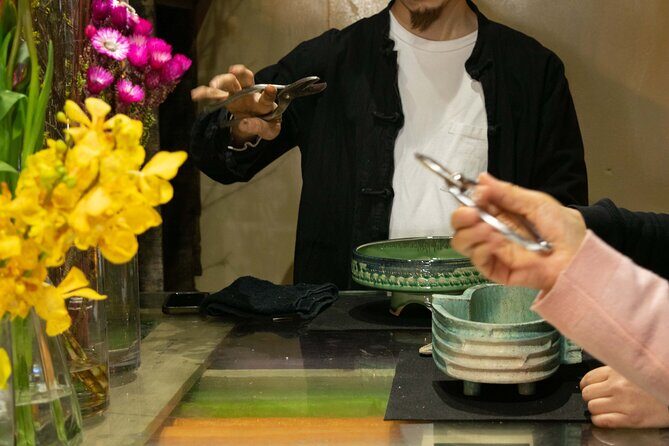
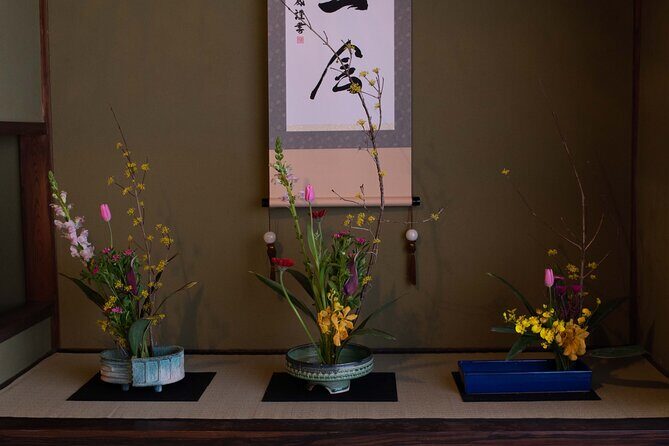
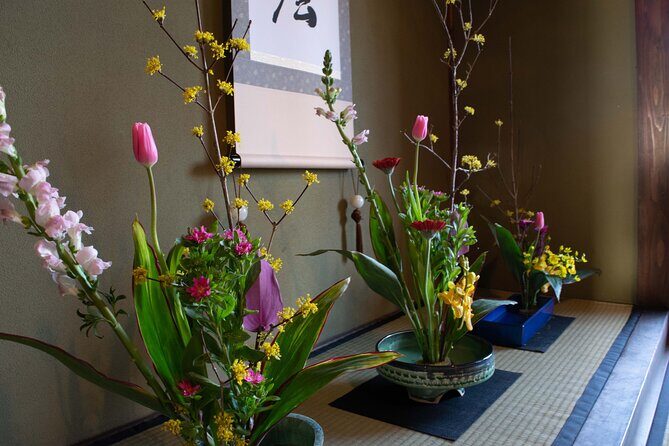
One of the most satisfying parts is what happens after you arrange. Your finished work is displayed in a tokonoma, which is a traditional alcove in a Japanese room. That isn’t a minor detail. It’s part of the whole point of ikebana.
A tokonoma presentation changes how you understand your arrangement. It’s no longer “a desk decoration” or “a souvenir you made.” It’s framed like art meant to be looked at with intention. You’re not just producing a product—you’re learning a Japanese way of presenting nature.
If you’re the type who likes to slow down and observe, you’ll probably enjoy the atmosphere here. The workshop isn’t described as a loud, performance-heavy class. It’s more like a guided craft moment where you get to feel the aesthetic logic: line, space, and balance created from living material.
Also, since your class happens in a traditional room setting, the tokonoma display feels authentic rather than added on. That helps you internalize what you’re doing, so you’re more likely to remember the principles after you leave.
What You Get for $65.15: Value Beyond the Price Tag
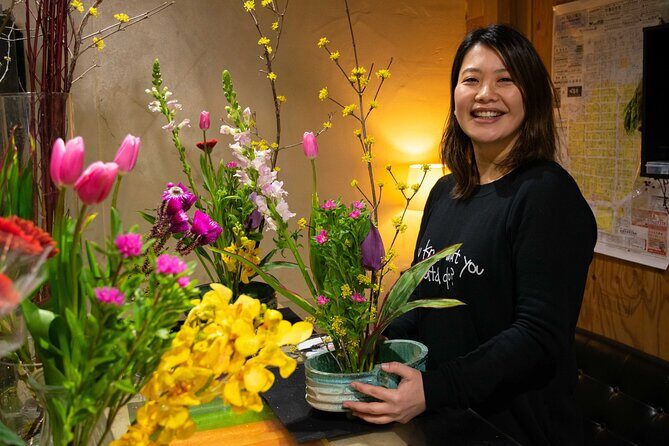
At $65.15 per person for about 40 minutes, you might wonder if it’s “worth it” compared to another Kyoto activity. Here’s my take on the value: the price buys instruction, materials, and a finished piece you can take home (or have placed somewhere meaningful).
You’re paying for three things that are hard to replicate on your own:
1) Guidance that reduces guesswork
Even beginners get help with the logic of arrangement, not just a vague tutorial. That coaching is what turns ikebana from a confusing bundle of rules into a usable creative method.
2) A setting that reinforces the lesson
The renovated townhouse and the tokonoma presentation aren’t decoration. They’re part of teaching you how ikebana is meant to be seen.
3) The chance to keep the result
The reviews mention that the flowers can be delivered to your accommodation afterward. That’s a big practical advantage. Kyoto travel often means tight schedules, lots of walking, and limited room in your bag. If your arrangement can be delivered, you can enjoy the rest of your day without guarding fragile stems like a dragon protecting treasure.
So yes, it’s not the cheapest thing on a Kyoto list. But for a short, guided, culturally grounded workshop with a thoughtful presentation—and help with handling the finished piece—the value is strong.
Where the Workshop Starts: Finding the Shop Near Kinkaku-ji and Daitoku-ji
The meeting point is at 44-4 Murasakino Kamimonzenchō, Kita Ward, Kyoto, 603-8217, Japan. It’s also described as near public transportation, which is important in Kyoto. You’ll generally want to avoid chaining everything into one long walking trek.
If you’re doing temples around this area, this location can fit naturally. Kinkaku-ji and Daitoku-ji are both nearby, so you can plan a route where you don’t waste time crossing the city. Since you’re only in the class for around 40 minutes, being able to reach the shop without stress makes a difference.
Also note the group size: it’s limited to a maximum of 6 travelers. That small number helps the workshop stay calm and supports one-on-one attention. You’re not sharing the instructor’s time with a crowd.





How the Class Feels: Beginner-Friendly, Hands-On, and Actually Calm
The best craft workshops don’t just teach technique; they also control the emotional temperature. The reviews point to a peaceful lesson, with instructors who welcome you and encourage you to try without worrying about mistakes. That’s the style you want, because ikebana isn’t about producing identical results. It’s about shaping what you have, respecting it, and expressing it with intention.
What you can expect from the flow:
- You’ll learn about ikebana’s art and background.
- You’ll then create your own arrangement guided by instructors.
- Your composition is connected to classical forms.
- You’ll use wabi-sabi thinking to appreciate natural character.
- Your finished work is shown in a tokonoma setting.
- The experience ends back at the meeting point.
It’s a compact schedule, but it covers the essentials: context, making, and a proper display moment.
And if you’re traveling with family, this is the kind of activity that can work. One review mentions a wife and kids loving the class. That doesn’t mean every child will want 40 minutes of focus, but it suggests the workshop can be friendly to different ages as long as everyone is open to a calm, structured activity.
Who Should Book This Ikebana Workshop (And Who Might Not)
This experience fits you best if:
- You want a hands-on cultural activity that teaches principles, not just a craft step
- You enjoy quiet moments and careful looking
- You’re interested in traditional Japanese aesthetics like wabi-sabi
- You like the idea of your work being shown in a tokonoma
You might want to consider something else if:
- You prefer long multi-hour classes where you can practice repeatedly
- You want a highly social, party-style activity
- You’re hoping for a lesson that’s heavily focused on photography or temple sightseeing
One more practical note: if you’re the type who likes bringing home something fragile, delivery can help a lot. The reviews highlight that they can deliver your arrangement to your accommodation afterward, which is a comfort in a city full of walking and transfers.
Should You Book Kyoto Cultural Ikebana Experience@SEKKA FLOWERS?
I think you should book this workshop if you want Kyoto beyond temples and crowds. It’s short, culturally grounded, and designed for beginners. The townhouse setting, tokonoma display, and the wabi-sabi framing make it feel like more than a quick souvenir craft.
Book it especially if you:
- have a day planned with lots of sightseeing and want one calmer stop
- like the idea of learning classical forms while still being guided to make personal choices
- want an easy way to bring something beautiful home without dealing with bulky or fragile transport
If you’ve got limited time, the 40 minutes works. If you’re curious about ikebana but intimidated by the rules, this is the kind of class that helps you relax and start making. And if delivery is available for you, it can turn a stressful “how do I carry this” problem into a non-issue.
FAQ
How long is the ikebana experience?
The workshop lasts about 40 minutes.
Where is the meeting point?
The meeting point is at 44-4 Murasakino Kamimonzenchō, Kita Ward, Kyoto, 603-8217, Japan. The activity ends back at the meeting point.
How much does it cost?
It costs $65.15 per person.
Is it beginner-friendly?
Yes. The workshop welcomes beginners.
What is included in the experience?
You’ll learn about the history and art of ikebana and create your own arrangement with guidance. Your finished work is displayed in a tokonoma in a traditional Japanese room.
Is there a group size limit?
Yes. The maximum group size is 6 travelers.
Does the shop use a traditional setting?
Yes. The class takes place in a renovated traditional townhouse, about 100 years old.
Is the ticket mobile?
Yes. The experience uses a mobile ticket.
Is cancellation free?
Cancellation is free up to 24 hours in advance for a full refund.
Can I bring a service animal?
Service animals are allowed.