REVIEW · IMPERIAL PALACE TOURS
Nijo Castle and Imperial Palace Visit with Guide
Book on Viator →Operated by WaRaiDo Guide Networks · Bookable on Viator
Kyoto gets personal with the right guide. This 2.5-hour visit connects the Tokugawa Shogunate era to the Imperial Palace world in a way most self-guided stops just can’t. I love how an English guide (often reported as Mia or Choko) turns buildings into stories you can actually picture, not just dates. I also love the value: entrance fees and public transport costs are wrapped into the price, so you’re not juggling tickets while trying to learn. One thing to plan for: there’s enough walking that comfortable shoes matter.
The pace is tight but not rushed. You’ll get focused time at each site with small-group dynamics (the castle portion is described as under 8 guests, and the overall cap is 11), which usually means you can ask questions without shouting. Plus, you can choose a morning or afternoon slot, so you can build it around your Kyoto rhythm.
You’ll meet in front of the main gate at Nijō Castle, then finish in front of Imperial Palace in Kyoto Gyoen National Garden. A mobile ticket is part of the deal, and the whole plan is designed around public transit—meaning you spend your energy on the sights, not logistics.
In This Review
- Key highlights that make this tour worth it
- Price and timing: what $79.18 really covers
- Where you start at Nijo Castle (and where you’ll finish)
- Nijō Castle: seeing the Shogun era with an actual guide in the room
- The guided hour at Nijo: benefits and a small trade-off
- The transfer to Kyoto Imperial Palace: included transit makes it easy
- Kyoto Imperial Palace: from Shogun rule to the emperor’s world
- What makes the guide quality stand out (Mia and Choko vibes)
- Comfort, pace, and practical tips for your day
- Who this tour is best for
- Should you book Nijo Castle and Kyoto Imperial Palace with a guide?
- FAQ
- How long is the tour?
- What’s included in the price?
- Where do I meet the guide?
- Where does the tour end?
- Is there a morning or afternoon option?
- Can I cancel for a full refund?
Key highlights that make this tour worth it
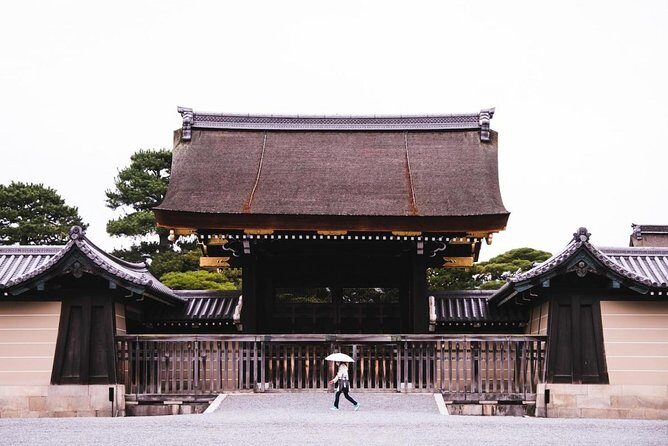
- Two major Kyoto power centers in one outing: Nijo Castle plus Kyoto Imperial Palace
- English guiding with story context: guides use explanations and visuals, not just a script
- Good small-group size: typically under 8 at the castle, with a maximum of 11 overall
- Tickets and public transport included: you focus on the visit, not the admin
- Flexible timing: morning or afternoon tour options to match your schedule
- A guide who handles questions well: lots of guests call out Q&A and helpful answers
Price and timing: what $79.18 really covers
At $79.18 per person for about 2 hours 30 minutes, you’re paying for more than check-the-box sightseeing. You’re also paying for the big stuff people forget when they plan alone: admission tickets and the guided public transport transfer between the two sites.
For me, that’s the value math. Nijo Castle and Kyoto Imperial Palace aren’t quick stops, and the walking + transit time adds up. With this tour, you get a structured flow and a guide who can point out what to look for while you’re there—so you’re not trying to figure it out mid-walk.
You’ll also want to match the timing to your energy. A 2.5-hour format is ideal if you want depth without losing half a day. It’s less ideal if you like slow, long lingering sessions with zero schedule.
You can also read our reviews of more guided tours in Kyoto


Where you start at Nijo Castle (and where you’ll finish)
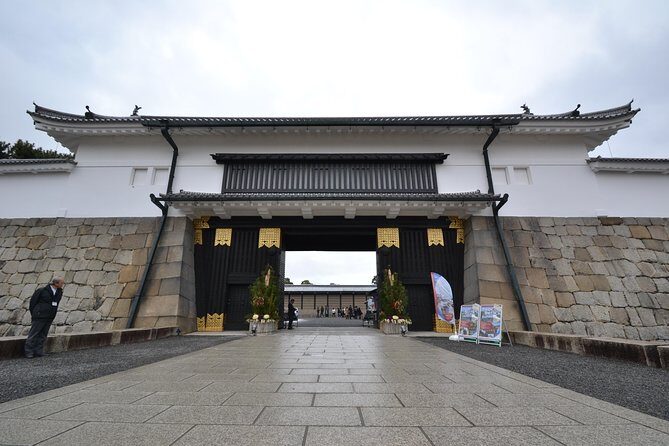
The meeting point is simple: in front of Nijō Castle at 541 Nijōjōchō, Nakagyo Ward, Kyoto. You’ll find the guide at the huge white main gate, which is a nice touch—Kyoto can be confusing even for seasoned visitors, and this keeps the start calm.
The tour ends in front of Imperial Palace. That means you don’t have to backtrack or negotiate with transit when you’re already tired. You’ll finish at Kyoto Gyoen National Garden, 3 Kyōtogyoen, Kamigyo Ward, Kyoto.
One practical note: because there’s no hotel pickup or drop-off, plan to arrive a little early. It’s easier to settle in, use the restroom, and be ready to start than to rush.
Nijō Castle: seeing the Shogun era with an actual guide in the room
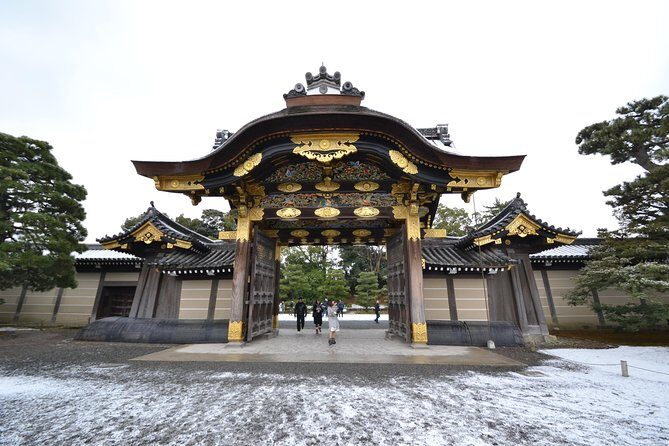
Your first stop is Nijo Castle, with guided time that lasts about an hour. This is where the guide can do real work for you. A lot of people see the castle as famous architecture. Your guide helps you see it as a system of power—how the Shogun era operated and why certain things were designed the way they were.
Guests consistently highlight the guide’s ability to explain symbolism and the functioning of Shogun meetings, plus the context behind what you’re looking at. Some guides also use visual aids, which can be a lifesaver when you’re trying to connect details inside large historic spaces.
And yes, the guide matters. Many past groups specifically call out Mia (spelled as Mia, Mie, or Miya in different writeups) for being warm, funny, and clear—sharing enough history to deepen your visit without turning it into a lecture. A few guests mention humor and a “this makes sense” feeling, especially when the guide answers specific questions you bring along.
What to watch for: focus on what the guide points out, not just what you think looks pretty. Nijo Castle rewards attention—especially when someone helps you connect the dots.
The guided hour at Nijo: benefits and a small trade-off
You’re getting a guided hour inside the castle experience, not a quick exterior pass. That matters because a lot of the story is tied to how the space functions and what the design communicates. One review explicitly notes that touring the interior was amazing, and that’s consistent with why guided time is so valuable here.
The small trade-off is time pressure. About one hour means your guide will prioritize the most meaningful sections, and you won’t have infinite free roaming. If you love architectural deep reading, you might want to return later on your own for a slower second look.
For most people, though, this is exactly right: structured, focused, and leaving you with questions instead of confusion.
The transfer to Kyoto Imperial Palace: included transit makes it easy
After Nijo Castle, you’ll transfer to Kyoto Imperial Palace using public transportation, with your guide. The tour fee covers entry and transportation costs, so you don’t have to stop for ticket figuring.
This is one of those underrated benefits. Kyoto transit is doable, but mixing trains/buses with history reading is a lot. Having the guide handle the route means your brain stays on the subject—how the story shifts from Shogun rule toward the imperial world.
Also, finishing near Kyoto Gyoen National Garden keeps the day feeling coherent. You’re not bouncing all over town at the end of your visit.






Kyoto Imperial Palace: from Shogun rule to the emperor’s world
Your second guided stop is Kyoto Imperial Palace, again for about one hour. The guide’s explanations here tend to focus on how power changes over time—especially the transition toward Emperor Meiji’s era, and how the imperial family line and descendants fit into the bigger picture.
Guests also call out the palace grounds as stunning and note that the guide balances respect for the site with stories that make the era understandable. In particular, people mention a good mix: history presented with a light tone, but without losing accuracy.
You might also get time for a garden area adjacent to the palace experience. One writeup mentions a lovely garden next to one of the sites, which fits the way Kyoto palaces often “hold” a calm, scenic pause amid cultural context.
Possible consideration: access can be affected by events. One guest reported Imperial Palace being closed due to an event. That’s not something you can plan around with certainty, but it’s a good reminder to keep expectations flexible—especially for sites tied to official schedules.
What makes the guide quality stand out (Mia and Choko vibes)
When guests rave about this tour, it’s rarely about the buildings alone. It’s about the guide’s delivery. Mia (also written as Mie or Miya) shows up repeatedly in the feedback, described as warm, funny, and exceptionally good at answering questions. Choko is also mentioned as friendly and knowledgeable, with clear English and strong explanations.
The consistent pattern: guides don’t just list facts. They give cultural and historical context, and they do it in a way that feels approachable. Several comments mention that the guides explain nuance you would likely miss on your own, and that they use visuals to make complex ideas easier to hold.
If you’re the type of traveler who likes to ask why something is the way it is, you’ll probably feel happy here. This tour seems built for interaction, not passive listening.
Comfort, pace, and practical tips for your day
You’ll want comfortable shoes. Even though the overall timeline is just 2.5 hours, both Nijo Castle and the Imperial Palace experience involve walking across historic grounds. One guest specifically called out that you should ensure comfortable shoes because there’s quite a bit of walking.
Bring a light layer. Kyoto weather can shift, and historic sites often mean you’re standing around waiting for the group to move. If rain shows up, your guide will adapt the flow, but you’ll still be moving.
Also, come ready with questions. If you’re thinking about the Shogun era, the emperor’s role, or the symbolism behind what you’re seeing, write down two or three questions on your phone before you meet. The guide’s strength is turning your curiosity into answers you can remember.
Who this tour is best for
This tour fits you if you want three things at once:
- Context, not just sightseeing
- Value, meaning tickets and transit are handled
- A calm group size, where it’s easier to connect with the guide
It’s especially good for first-time Kyoto visitors who don’t want to spend a day assembling logistics and then guessing what they’re looking at. If you’re a TV-and-history fan (Shogun-style curiosity came up in the feedback), you’ll likely love how the guide “puts names and systems” behind the scenes.
If you’re a total architecture purist who needs hours of free roaming, this may feel a bit structured. But if you want a smart, story-driven overview in a single outing, it’s a strong match.
Should you book Nijo Castle and Kyoto Imperial Palace with a guide?
I’d book it if:
- You want both Nijo Castle and Kyoto Imperial Palace in one efficient morning/afternoon.
- You’d rather pay a fair price than spend time buying tickets and sorting transit.
- You care about the why behind design and power, and you like learning with a live guide.
I’d hesitate only if:
- You prefer unscheduled wandering and long time at a single site.
- Your trip is so tight that you can’t absorb a possible schedule hiccup (like rare closures tied to events).
For most people, this tour is a good deal because it saves you effort and adds real meaning. A strong guide makes the Shogun era and imperial transitions feel understandable, and the included transit keeps the day smooth. If you want Kyoto’s big power-story in a compact format, this is one of the cleaner ways to do it.
FAQ
How long is the tour?
The tour runs for approximately 2 hours 30 minutes.
What’s included in the price?
The price includes a professional English-speaking guide, entrance fees, and public transportation during the tour.
Where do I meet the guide?
You meet in front of Nijō Castle at 541 Nijōjōchō, Nakagyo Ward, Kyoto, at the huge white main gate.
Where does the tour end?
The tour ends in front of Imperial Palace at Kyoto Gyoen National Garden.
Is there a morning or afternoon option?
Yes. You can choose between a morning or afternoon tour time slot.
Can I cancel for a full refund?
Yes. Free cancellation is available up to 24 hours in advance for a full refund, and the experience requires good weather. Confirmation is subject to availability (received within 48 hours).