REVIEW · ARASHIYAMA TOURS
Guided Photoshoot of Fushimi Inari Shrine and Secret Bamboo Grove
Book on Viator →Operated by A Professional Guided Photo Shoot in Beautiful Kyoto! · Bookable on Viator
Red torii photos meet secret bamboo calm. This guided Fushimi Inari and bamboo grove session is interesting because you’re not just walking around for selfies—you’re getting photo direction in a tight route that balances iconic sights with quieter corners. I like the private, exclusive booking (solo or couples) and the way Hugh guides you for both posed shots and natural, candid moments, from the fox-lined entrance to the red-gate walkway. One thing to think about: the experience needs good weather, so you should be ready for a date change or refund if conditions don’t cooperate.
You’ll also get practical extras that make the photos look more styled without slowing you down. On request, you can use vintage Japanese fans and umbrellas, which helps if you want a Kyoto feel beyond the shrine walls. If you want maximum flexibility for editing, you should know RAW files cost extra (and they’re not included in the standard package).
In This Review
- Key highlights worth planning for
- Red torii and bamboo in one tight, useful hour
- Meet-up to first shots: torii, gold accents, and fox statues
- The secret bamboo grove stop: quieter photos without the extra travel
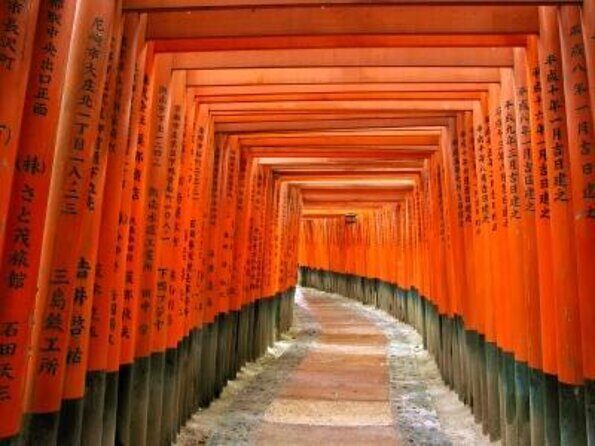
- Walking through the main shrine: using the torii tunnel effect
- The posing style: direction without stiff, forced photos
- Your photo haul: edited JPEGs, fast delivery, and optional RAW
- Style extras: fans and umbrellas that fit the Kyoto feel
- Value check: does $98.81 make sense for you?
- Timing and weather: plan like the shrine matters
- Who this photoshoot suits best
- Should you book this Fushimi Inari and bamboo grove photoshoot?
- FAQ
- Where do we meet for the Fushimi Inari shrine photoshoot?
- How long does the photoshoot last?
- Is this a private photoshoot or shared?
- What photos do I receive afterward, and how fast?
- Are the photos delivered as JPEG or RAW?
- Is there an option to use fans or umbrellas during the shoot?
- Does the price include kimono rental?
- How do I get the ticket?
- What happens if weather is bad?
Key highlights worth planning for
- Private booking: only your group, so you’re not rushed or squeezed by strangers
- Two big photo vibes in one route: torii gates and shrine details, then a quieter bamboo grove stop
- Guidance that covers posing and candids: Hugh helps you stand, move, and look natural
- A clear photo deliverable: you receive professionally edited JPEGs by Google Drive
- Optional styling props: vintage fans and umbrellas on request
- Weather-dependent experience: planned for good conditions, with backup support if it fails
Red torii and bamboo in one tight, useful hour
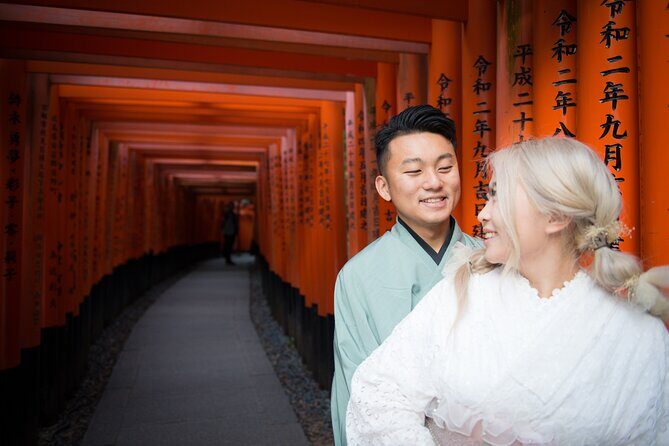
Kyoto’s Fushimi Inari is one of those places where you can spend all day and still feel you didn’t get the photos you wanted. This session fixes that problem by focusing on a short, guided route that hits the most photogenic shrine cues and then switches tone to the bamboo grove for a calmer set of images.
The session is about 60 minutes and runs as a private shoot. You meet at Fushimi-Inari Station (the tour says JR or Keihan Fushimi Inari Station as your choice), and you end back at the meeting point. It’s designed for people who want strong results without turning the day into a full marathon.
Price-wise, it’s $98.81 per person, which isn’t “budget backpacker” pricing. But in a city where professional portrait time is expensive, you’re paying for a focused plan, photo direction, and editing—not just a walk through scenery. If your goal is photos you’ll actually use on announcements, gifts, or yearly updates, this is the kind of service that can make sense.
You can also read our reviews of more guided tours in Kyoto

Meet-up to first shots: torii, gold accents, and fox statues
You start at Fushimi-Inari Station and head toward the main shrine. The goal at the beginning is quick wins: establishing shots that make your gallery feel complete, not random.
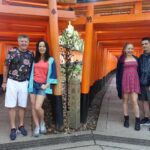
In the entrance area, you’ll get photos featuring:
- Red and gold shrine details
- Iconic fox statues
- A mix of posed portraits and more natural moments
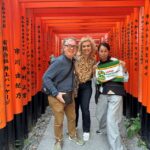
This matters because at Fushimi Inari, the background is so strong that bad framing can make photos look flat. With guidance, you can place your body and camera angle so the torii rhythm leads the eye—especially along the red gates where repetition can turn into visual confusion if you just aim and click.
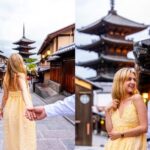
Hugh also provides the kind of direction that helps even if you don’t know what to do with your hands. The session includes guidance for poses, plus a habit of capturing candid moments while you’re walking and interacting. That’s the difference between photos that look like a tourist checklist and photos that look like you were really there.
The secret bamboo grove stop: quieter photos without the extra travel
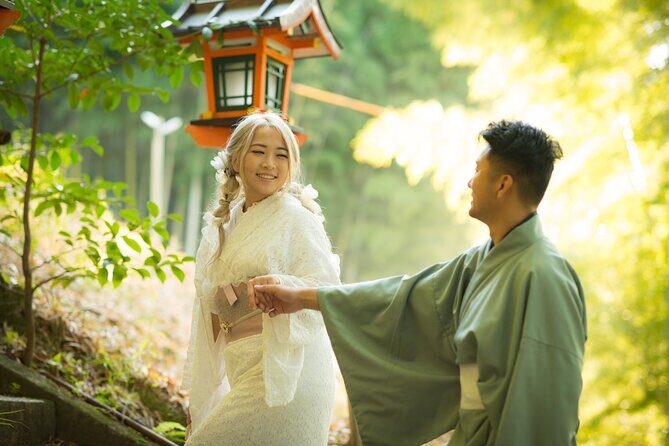
After the initial shrine shots, you walk to the secret bamboo grove and a hidden area. The standout here is the contrast. Fushimi Inari gives you color, structure, and crowds. Bamboo gives you vertical rhythm, softer atmosphere, and that peaceful feeling that’s hard to fake with a normal phone shot.
The bamboo portion is described as:
- Small, peaceful, and beautiful
- A place for photos you’d otherwise struggle to get due to crowds
You’ll likely see photo opportunities with bamboo, lanterns, and red torii gates mixed into the bamboo setting. That combo is a big deal for your final gallery because you end up with variety:
- Torii portraits that scream Kyoto
- Bamboo images that feel calmer and more private
If you’re trying to avoid long waits around the busiest parts of the shrine, this stop is a practical strategy. It gives your photos a second mood without you needing to add another half-day of transit around Kyoto.
Walking through the main shrine: using the torii tunnel effect

The final section focuses on the famous red torii gates. This is where you can get the most iconic images—but it’s also where timing matters. The tour is designed to move you through the route so you’re shooting during the best moments possible, rather than spending the entire hour stuck in the densest areas.
You’ll capture shots with:
- The torii gates behind you in layers
- The shrine architecture and surrounding details
- Photos for solo, couples, or families, depending on your booking
One practical benefit of having a guide-photographer: you’re not constantly stopping yourself to “figure out where to stand.” Instead, you follow direction and keep moving, so you get more usable images within the hour. And if you’re traveling with someone who hates posing, the candid moments help. You can still get the shot while not feeling like the whole trip is a photo shoot.
The posing style: direction without stiff, forced photos
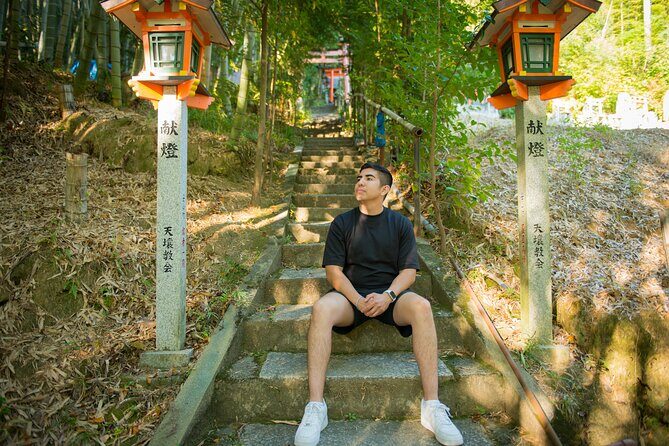
This kind of photoshoot lives or dies on how the photographer handles people. Here, Hugh’s approach is clearly people-friendly: he’s described as patient, communicative, and willing to adapt if you’re running late.
In a real shrine setting, being flexible is key. A small shift in position can matter because the background is busy and the torii lines are vertical. Hugh guides you through poses and also captures natural moments as you move. That mix is what you want if you plan to look back at these photos years from now and still feel like they match your personality.
If you want specific themes—like a honeymoon vibe, a pregnancy announcement, family photos, or simple romantic portraits—you can bring that intention. The session is built to handle that, and it doesn’t sound like you need to come in with a detailed shot list.
You can also read our reviews of more photography tours in Kyoto



Your photo haul: edited JPEGs, fast delivery, and optional RAW
Here’s the deliverable that matters most for most people: the finished images.
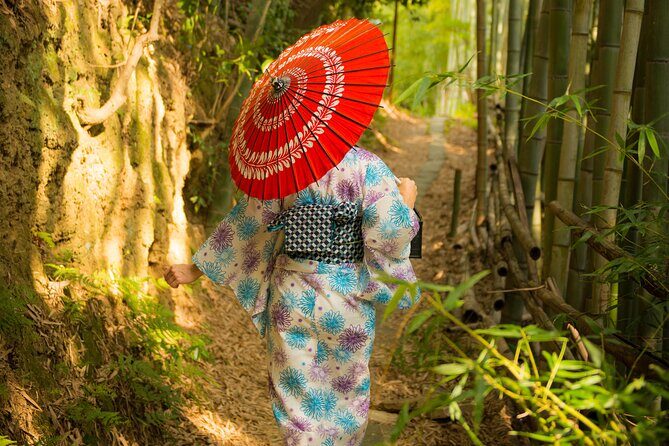
You receive professionally taken and edited photos delivered via Google Drive 1–3 days later. The exact count depends on whether you book solo versus couples/groups:
- Solo shoots include 50 or more edited photos
- Couples/groups receive about 60+ or around 70 edited shots, depending on the package details
All images are provided as JPEGs in the standard offering. If you want RAW files for extra editing freedom, RAW is available for an additional 5000 yen.
If you care about turnaround time, this is one of the strongest parts of the offering. Many people wait a week or more to see results after a trip day. Getting your photos within a couple of days means you can actually use them while the memory is still fresh.
Style extras: fans and umbrellas that fit the Kyoto feel
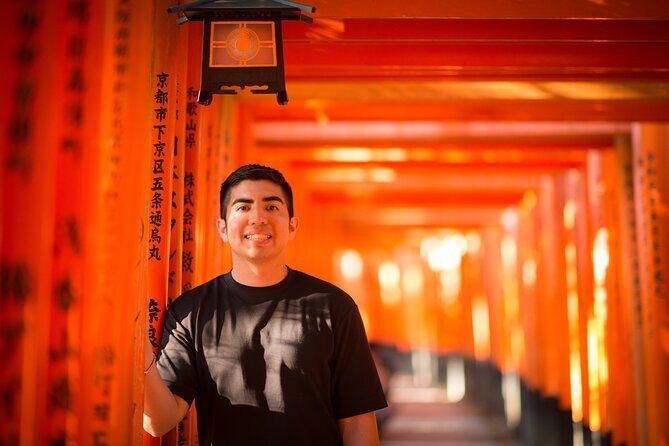
The tour includes styling help in a low-effort way. On request, you can use beautiful vintage Japanese fans and umbrellas. That’s useful because it gives you a prop that looks authentic in photos without needing a full costume setup.
It also helps with composition. A fan or umbrella can frame your face, add layers, and create movement. Even if you’re not an experienced model, the prop gives your body something natural to do.
If you’re unsure whether you’ll feel comfortable with props, ask before the shoot starts. The tour wording indicates these are available upon request, so you can decide early rather than during the most crowded parts.
Value check: does $98.81 make sense for you?
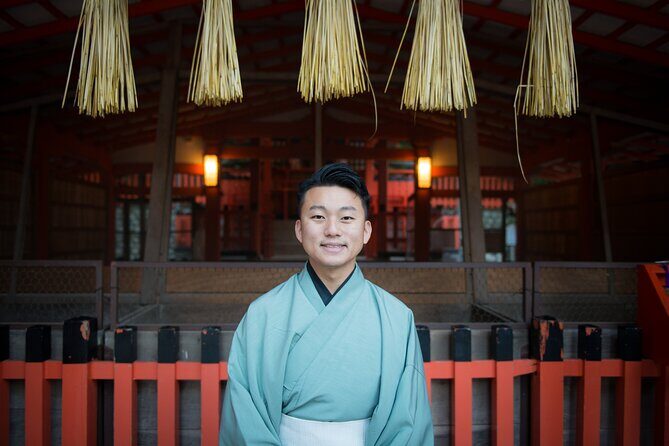
Let’s talk value in plain terms.
You’re paying for:
- A private session (not shared)
- A guided route through Fushimi Inari plus the bamboo grove
- Pose coaching and candid capture
- Professional editing and a structured set of deliverables
- Photo delivery via Google Drive in 1–3 days
If you booked a random “photo walk” with a friend or used only a phone, you’d still get plenty of shrine images—but you’d probably lose a lot of time figuring out angles and you’d risk inconsistent results. A professional photographer fixes that.
Where it may not be the best fit:
- If your only goal is a couple of casual snaps and you’re happy with phone photos
- If you’re extremely price-sensitive and want to spend money elsewhere
If you’re doing something special—honeymoon, family portraits, pregnancy announcement, or just want a gallery that looks intentional—then the price is easier to justify.
Also, the listing notes that bookings are commonly made about 24 days in advance on average. If you have a tight itinerary, don’t wait.
Timing and weather: plan like the shrine matters
This experience requires good weather. That’s not a cute detail; it affects the whole shoot. If it’s canceled due to poor weather, you’re offered a different date or a full refund.
So when you book, think about your Kyoto schedule:
- Pick dates when you can realistically shift if needed
- Avoid scheduling this as your one-and-only rain plan
- If you’re in Kyoto just for a few days, consider having backup flexibility
There’s also an advantage in going at a time the photographer can help you dodge the worst crowds. The tour is built around moving through key areas and using less crowded spots, including the bamboo grove stop and hidden areas.
Who this photoshoot suits best
This shoot is a strong fit for:
- Couples who want Kyoto romance with a mix of iconic and calmer scenes
- Solo travelers who want their presence in the photo without awkward self-timer problems
- Families who want guided posing so kids and group members don’t drift into blurry messes
- Anyone making an announcement, like a pregnancy update, who needs images that feel personal but well framed
If you’re hoping for an all-day activity, this isn’t it. It’s a focused one-hour photo session. But if you want high-impact images without sacrificing your whole day, it’s exactly the right length.
Should you book this Fushimi Inari and bamboo grove photoshoot?
If your priority is photos that look like you hired a pro—and not just like you visited a famous shrine—then yes, you should strongly consider booking. The combination of Fushimi Inari red torii and the secret bamboo grove gives you variety in one outing, and the session is built around guided posing plus candid moments. Add in the fast 1–3 day delivery and the option for vintage fans/umbrellas, and it becomes a practical way to turn a famous stop into a personal photo story.
One final thought: if you’re the type who hates waiting, this works because it’s scheduled time, and it ends where you started. You get structure, not wandering.
FAQ
Where do we meet for the Fushimi Inari shrine photoshoot?
You meet at Fushimi-Inari Station, with the start point flexible to either JR or Keihan Fushimi Inari Stations. The session also ends back at the meeting point.
How long does the photoshoot last?
It’s approximately 1 hour.
Is this a private photoshoot or shared?
It’s private. Only your group participates.
What photos do I receive afterward, and how fast?
You receive professionally edited photos via Google Drive, sent 1–3 days later. You’ll get 50+ edited photos for solo shoots and about 70 for couples/groups (the exact count can vary by package details).
Are the photos delivered as JPEG or RAW?
The standard delivery is edited JPEG files. RAW files are available for an extra 5000 yen.
Is there an option to use fans or umbrellas during the shoot?
Yes. Beautiful vintage Japanese fans and umbrellas are available on request during the session.
Does the price include kimono rental?
No. Kimono rental is not included.
How do I get the ticket?
You use a mobile ticket.
What happens if weather is bad?
This experience requires good weather. If it’s canceled due to poor weather, you’ll be offered a different date or a full refund.