REVIEW · GEISHA & MAIKO TOURS
Kyoto: Maiko Makeover and Photoshoot Experience
Book on GetYourGuide →Operated by Maiko Transformation Studio Shiki・Rental Kimono Shiki Sakura · Bookable on GetYourGuide
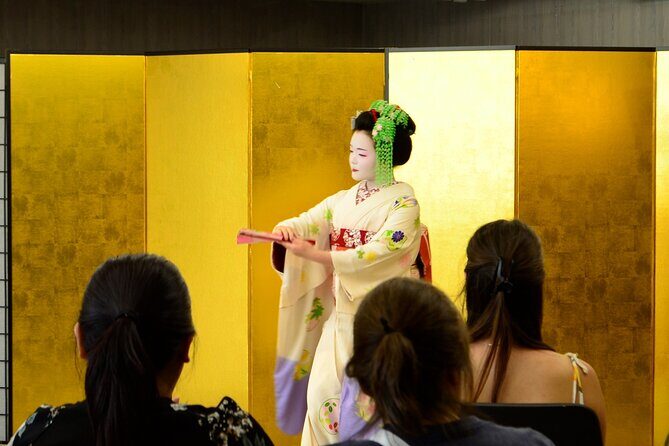
Turning into a Kyoto maiko is surprisingly organized here. You’ll choose a kimono from 100 options, get professional hair and makeup, and then step into a Japanese-room studio set for a coached photo session.
What I like most is the combo of costume craft and photo results: you get 3 printed photos plus a DATA folder with your full set from the shoot. One more big win: the studio keeps the pace moving (about 2 to 2.5 hours total), so you’re not stuck waiting around in costume.
The main drawback to consider is practical, not cultural: the rules say men can’t participate, and the location can be tricky to spot on foot.
In This Review
- Quick Hits Before You Go
- What Happens in the 150 Minutes (and what it’s like)
- Choosing From 100 Kimonos in Kyoto (and how to make the decision fast)
- Maiko vs. makeup styles: white makeup, false lashes, and wig options
- The Japanese-room photo session: poses, pacing, and the photo kit
- 10 minutes of self-photography: use it like a pro
- Optional strolling in Gion-style streets: when it’s worth it
- Meeting point and finding the studio entrance near Kiyomizu-michi
- Who this experience suits (and who should skip it)
- Price and value: is $140 actually fair?
- Small-group attention: what max 4 participants changes
- Practical tips before you wear a kimono in Kyoto
- Should you book the Maiko Transformation Studio Shiki experience?
- FAQ
- How long is the Kyoto Maiko makeover and photo shoot?
- Where do I meet for the experience?
- How much does it cost?
- Is this a small group activity?
- Can I skip the white makeup?
- Do I have to wear false eyelashes or a wig?
- How many photos do I get?
- Is there outdoor photography included?
- Can I add a strolling option?
- Who can participate?
Quick Hits Before You Go
- Pick your favorite kimono from a selection of 100 (the choice is part of the fun).
- White makeup is optional, so you can tone down the most traditional look if you prefer.
- DATA with all images comes with your photo shoot, so you’re not limited to just prints.
- 10 minutes of self-photography near the end helps you capture your own angles.
- Small group size, limited to 4 participants, keeps the hands-on help feeling personal.
- Optional 30-minute or 60-minute strolling is your chance to wear everything beyond the studio.
What Happens in the 150 Minutes (and what it’s like)
This is a studio transformation that moves step by step, like a well-run backstage process. You’ll spend roughly 2 to 2.5 hours on-site, including dressing, makeup, hair, and the photo session in a Japanese room.
For me, the value is that the time is spent where it counts. Instead of paying for a vague “cultural show,” you’re paying for the actual inputs that create great photos: fit, styling, and camera-ready coaching.
You can also choose to add strolling after photos (either 30 minutes or 60 minutes). That option matters if you want more than just a studio portrait set.
You can also read our reviews of more photography tours in Kyoto
Choosing From 100 Kimonos in Kyoto (and how to make the decision fast)
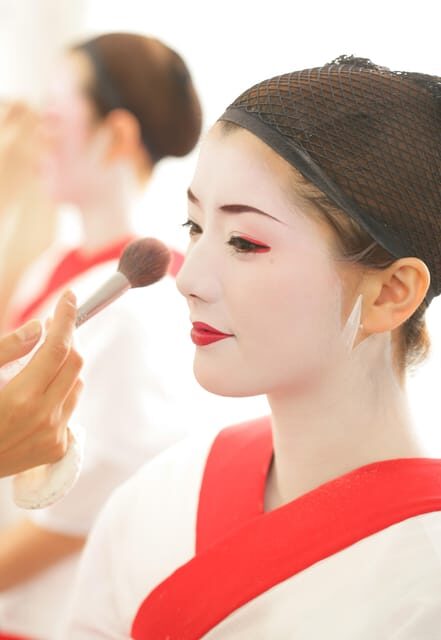
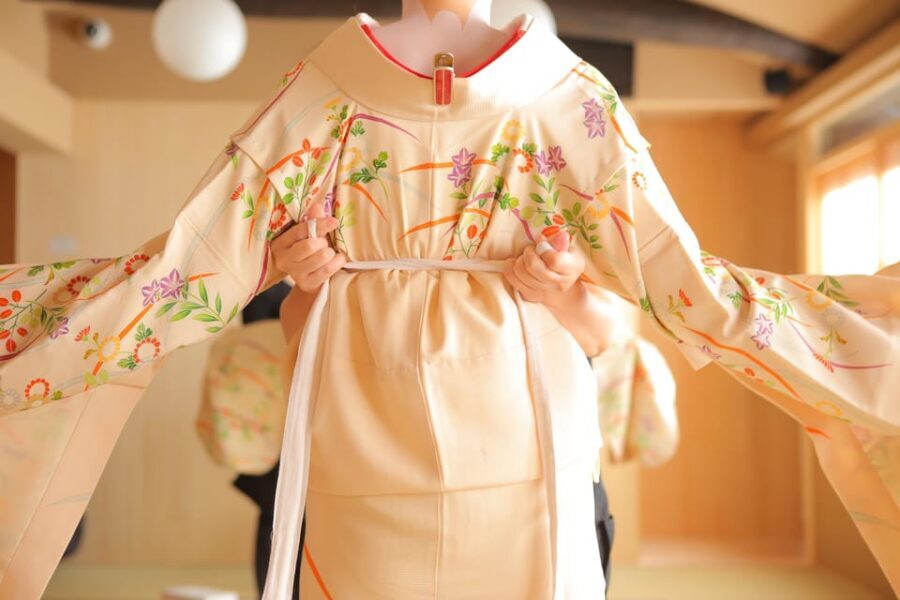
The kimono selection is the big moment, and you’ll get help choosing. You’re told you can pick your favorite 1 kimono from a selection of 100, which is a lot of variety for one session.
Here’s the practical way to approach it: decide based on what you want in your photos. If you’re wearing heavier makeup and a more dramatic wig option, go for a kimono that doesn’t overwhelm your face. If you’re aiming for softer makeup, look for bold patterns on the sleeves or collar—those details show up well in the studio lighting.
This is also where I’d set expectations. This isn’t “shop and browse all day.” You’ll pick quickly, get dressed, and then the team handles the rest.
Maiko vs. makeup styles: white makeup, false lashes, and wig options
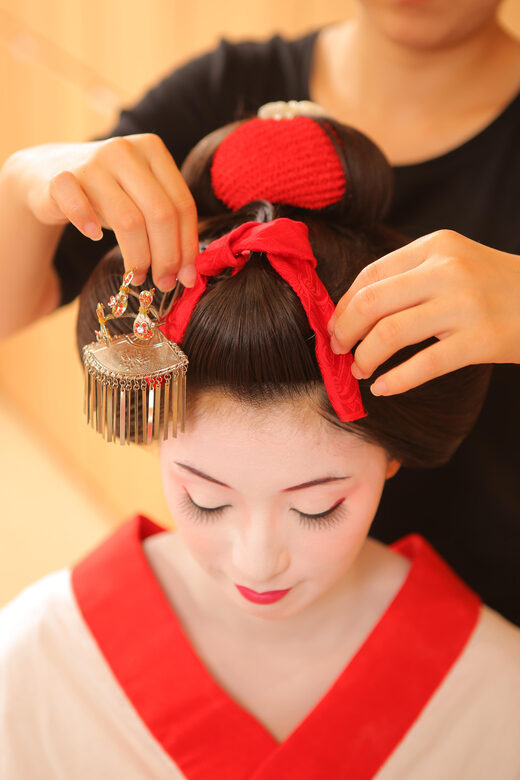
Your makeup and finishing touches are customizable, and that’s a big reason the experience works for different tastes.
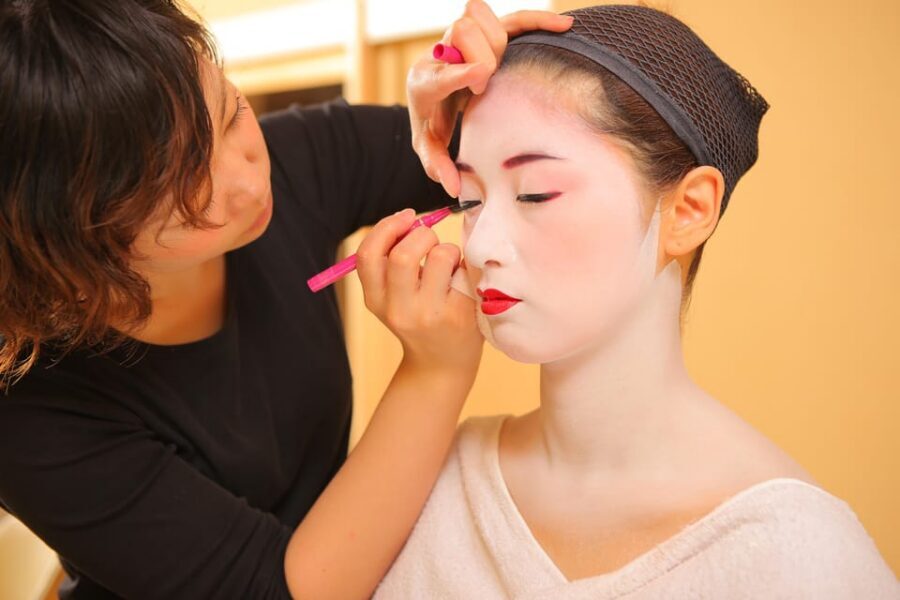
White makeup is listed as optional. If you don’t like the stark traditional look, you can skip it and still get the rest of the styling. False eyelashes are also optional, and you can let the makeup staff know if you want them or not.
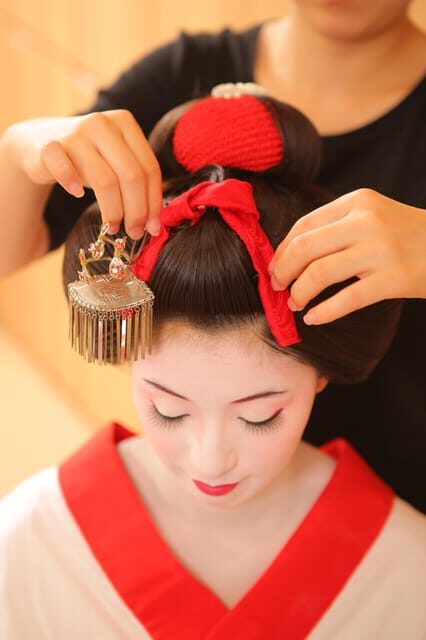
You’ll also choose about your hair presentation. The plan includes a natural wig or no wig option, and you can mention what you prefer to the make-up staff. One common tip from people who’ve done this style is to treat the wig decision as a “photo goal” choice: do you want the full maiko silhouette and finish, or something lighter and more natural-looking?
For skincare comfort, I like that the process is described as gentle and professional in the feedback I saw. One review even highlighted cleanup support if you do go with the maiko-style makeup (face cleanser and hair products provided). That matters because you don’t want to worry about washing off thick makeup right after.
The Japanese-room photo session: poses, pacing, and the photo kit
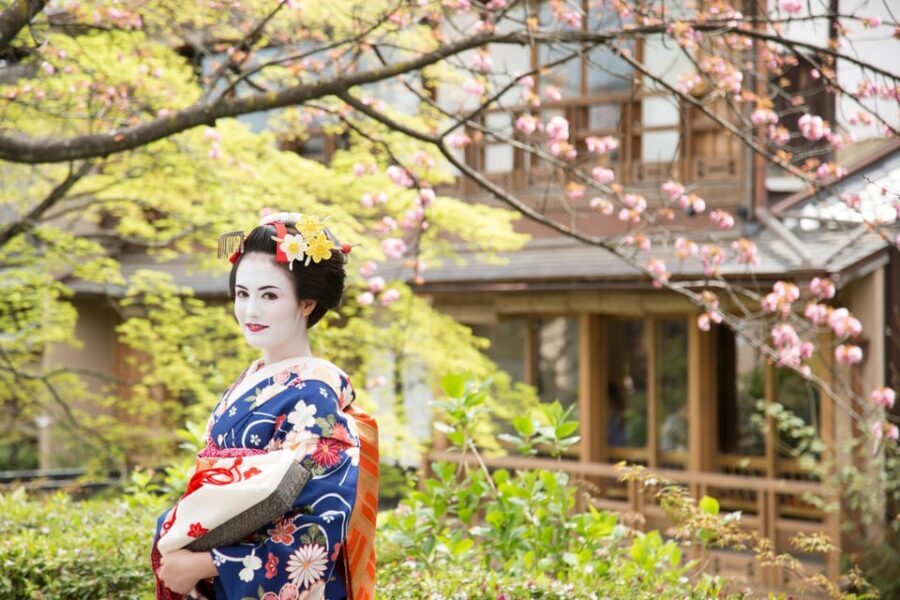
The heart of the session is the photography in a Japanese room set. The photographers will help with posing and direction, and they’ll select the best pictures for you.
This is one of those rare experiences where the “photo coaching” is part of the product, not an afterthought. People noted that the photographer explains poses clearly, and that two staff members assist with getting the angles right. If you’re camera-shy, that’s a real advantage.
You’ll also get a photo kit with both physical and digital elements:
- 3 printed photos
- DATA with all your pictures from the shoot
A standout detail I’d take seriously: one person described fine-tuning such as wrinkle reduction. That’s not something you should assume for every photo, but it does suggest the photographer looks for small improvements that make you feel more confident in your pictures.
Also note this limitation: outdoor photography isn’t included. The session is built for a controlled studio look, and the quality comes from lighting, styling, and consistent direction.
10 minutes of self-photography: use it like a pro
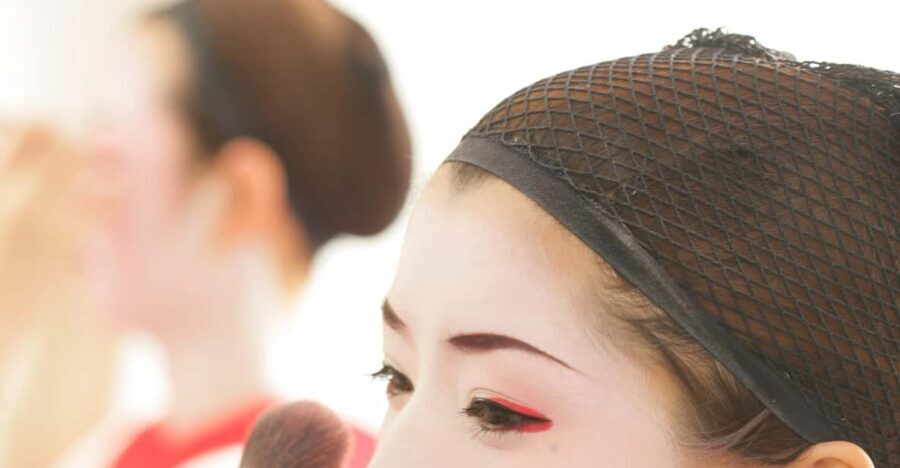
After your main shoot, you’ll have 10 minutes for self-photography. This is your chance to relax a bit and capture your own angles without waiting for the photographer to reset lighting and poses.
Here’s how I’d use the time:
- Take a few close-ups first (face, hairstyle, makeup finish).
- Then switch to full-length or 3/4 shots to show the kimono patterns.
- Use your kimono sleeves and collar as “natural frames.” Small movements look good, and staff will already have styled you for photos.
Since the rules say no outdoor photography is included, you’re probably working inside the studio space for this part. That’s still great for getting consistent results across your set.






Optional strolling in Gion-style streets: when it’s worth it
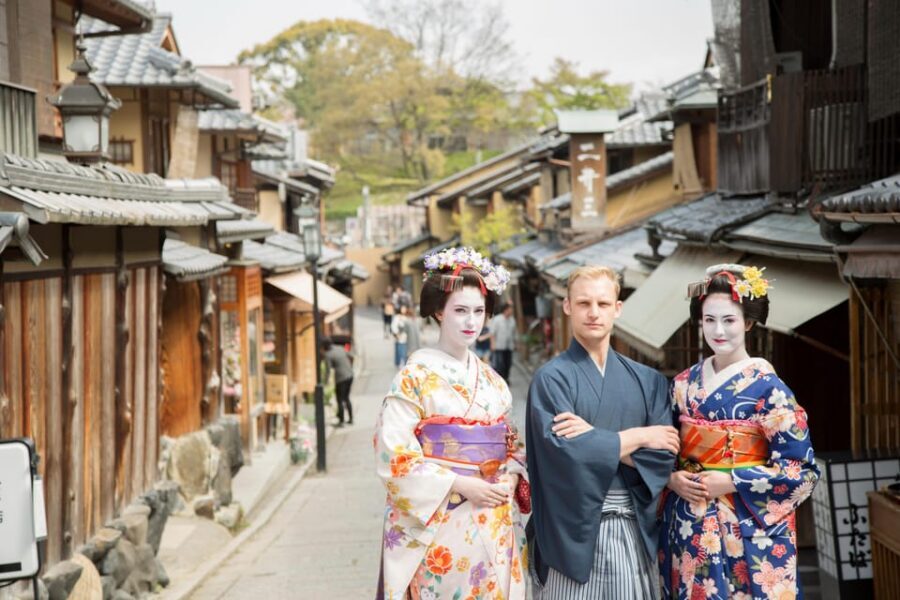
If you add the strolling option, you’ll get 30 minutes or 60 minutes of extra time walking in your kimono. People who chose the stroll described the moment of stepping into Kyoto streets dressed like a maiko as a highlight, mostly because it turns photos into a lived memory.
This option is most worth it if:
- You want more than the studio look.
- You plan to explore nearby areas after the session.
- You like the idea of strangers reacting positively to your costume (while still staying within the experience rules).
If you prefer a low-effort plan, skip strolling. The base session already gives you strong studio results without adding logistics.
Meeting point and finding the studio entrance near Kiyomizu-michi
Getting to the meeting point is straightforward on paper, but it can be annoying in real life if you don’t read the small clues.
You’ll take a city bus and get off at Kiyomizu-michi, then walk about 10 minutes to the store. One practical warning from feedback: the entrance can be hard to find because it’s in a hidden doorway area, behind a wooden gate, and it can blend into the streetscape.
So, do this: have the map pin open before you exit the bus stop. If you’re unsure, stop early and ask for directions rather than wandering with time ticking away.
Another practical note: one review called out steep stairs. If you’re dealing with mobility limitations or just want an easy walk-in, wear supportive shoes and plan your pace.
Who this experience suits (and who should skip it)
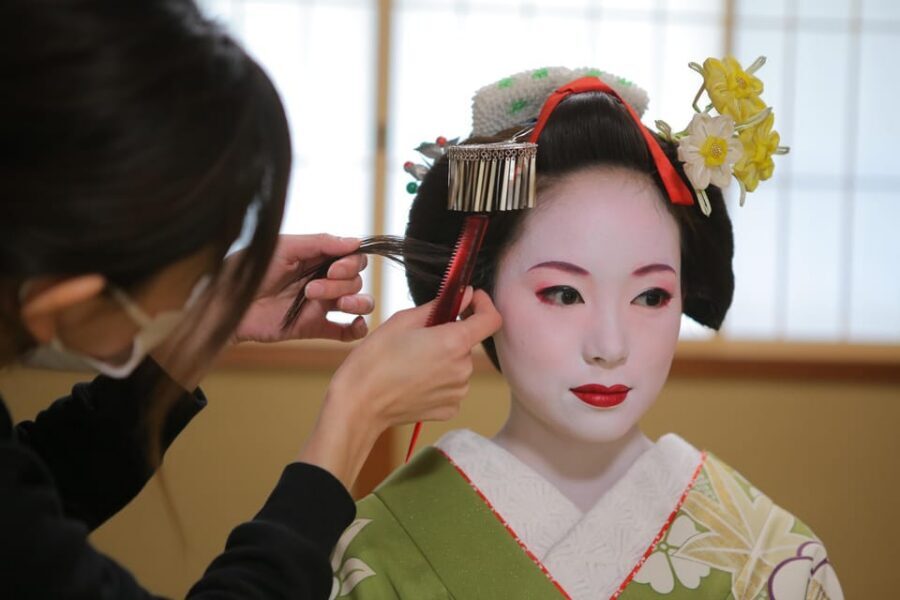
This is built for people who want a full transformation and a finished photo set, not just a short cultural activity.
It’s a great fit if you:
- Love dressing up and want a lot of costume variety (100 kimono choices).
- Care about photos and want professional guidance.
- Want both prints and digital files (DATA).
It’s not suitable if:
- You’re pregnant (explicitly listed).
- You have skin diseases, you’re intoxicated, or you don’t meet the participation rules.
- You’re a man (explicitly stated that men can’t partake).
Children under 5 are also listed as not suitable. There’s also a separate child maiko shoot plan with differences in printed photos and wardrobe options, but the key point is that the regular experience isn’t for very young kids.
Price and value: is $140 actually fair?
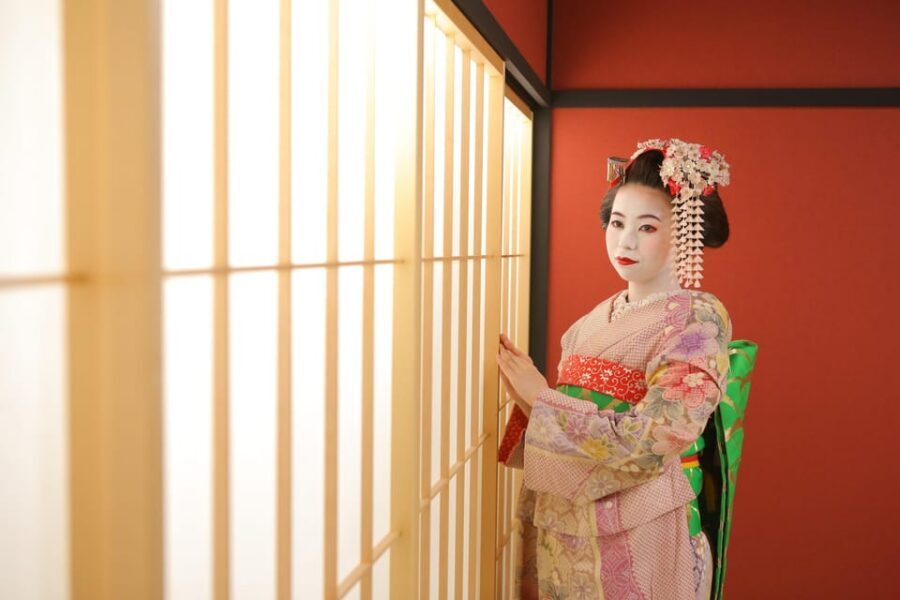
At $140 per person for about 150 minutes, this isn’t a budget activity. But it’s not overpriced just because it’s trendy. You’re paying for multiple professional services bundled together:
- Make-up and hair work (including wig and lash options)
- Kimono dressing from a large selection
- A studio photography session with direction
- Physical prints (3) plus a DATA folder with all images
- Plus 10 minutes for self-shot photos
For value, think in terms of outputs. You’re not only buying “an outfit.” You’re buying the styling and the photo production that makes the outfit look good on camera. If you’ve ever tried to DIY kimono dressing and photo styling, you know how quickly that becomes stressful and time-consuming.
The best “value” scenario is when you want a polished souvenir you’ll actually use later. The DATA means you can share, reorder prints, or keep a high-quality digital record without waiting for a slow photo upload process.
The main value risk is if you’re only looking for quick photos and don’t care about the transformation. In that case, strolling might feel like extra cost unless you truly want the street moment.
Small-group attention: what max 4 participants changes
This is limited to 4 participants, which is a quiet but important detail. In practice, it means you get more focused help during dressing and makeup, and the schedule stays tight enough for everyone to finish on time.
That also affects comfort. You’re not fighting for space while others go through steps. Staff can adjust things like wig placement and makeup finishing with less rushing.
If you’re the type who wants guidance without feeling watched, the small group size helps. Several notes in the feedback emphasized friendliness and professionalism, and that usually correlates with staff having enough time to treat each person’s look properly.
Practical tips before you wear a kimono in Kyoto
Bring comfortable clothes and socks. It sounds basic, but your prep affects your comfort level when you’re getting dressed and moved through each step.
Also, keep your expectations realistic:
- No outdoor photography is included in the main experience.
- You’ll have studio time for photos, then possibly optional strolling if you add it.
- If you want the traditional maiko makeup look, you can choose it. If you don’t, you can opt out of the white makeup.
Lastly, remember the experience rules: alcohol isn’t allowed in the vehicle (if one is used), and there are participation restrictions for health or intoxication reasons. It’s about safety and keeping the process respectful.
Should you book the Maiko Transformation Studio Shiki experience?
Book it if you want a clear, high-output transformation: costume styling from a large kimono selection, professional hair and makeup, and a photo result that includes both prints and full DATA. The small group size and the coached photo session are the parts that make it feel more “made for photos” than “just for fun.”
Skip it if you’re trying to do this cheaply, or if you’re hoping for an outdoor photo tour as part of the core experience. The studio rules keep the photography controlled, and outdoor shots come mainly through optional strolling.
If you value a Kyoto souvenir you can actually look at later—on your phone and on printed paper—this is the kind of activity that tends to pay off.
FAQ
How long is the Kyoto Maiko makeover and photo shoot?
The experience lasts about 150 minutes (around 2 to 2.5 hours).
Where do I meet for the experience?
You get off at the Kiyomizu-michi bus stop, then walk about 10 minutes to the store.
How much does it cost?
It’s $140 per person.
Is this a small group activity?
Yes. It’s limited to a small group of up to 4 participants.
Can I skip the white makeup?
Yes. The white makeup is optional, and you do not have to wear it if you don’t like it.
Do I have to wear false eyelashes or a wig?
No. False eyelashes and the wig are optional. You can tell the makeup staff if you prefer no lashes or no wig.
How many photos do I get?
You receive 3 printed photos and DATA with all the pictures from the shoot. A child maiko shoot plan is listed with 4 printed photos.
Is there outdoor photography included?
Outdoor photography is not included.
Can I add a strolling option?
Yes. You can add optional strolling for 30 minutes or 60 minutes.
Who can participate?
Men cannot partake in this experience. It’s not suitable for pregnant women, children under 5, people with skin diseases, or anyone who is intoxicated.