REVIEW · WALKING TOURS
Kyoto Philosophy Walk with Philosopher (Private/6.5 hour)
Book on Viator →Operated by Hiroki · Bookable on Viator
Kyoto, but with questions in your pocket. This Kyoto Philosophy Walk is a private 6.5-hour stroll where you look at temples and shrines, but also ask why people believed what they believed. You’ll walk the Philosopher’s Path area with a guide trained as a philosophy researcher, not just a fact-teller.
I really like the way Hiroki ties big religious ideas to very specific places. You don’t just hear terms like Pure Land or Shintoism and move on. You get a practical frame for what you’re looking at, and that makes the whole day feel smarter and more personal.
One thing to plan for: there’s a two-story stop with stairs, and several temple entrances cost extra in cash. If you’re sensitive to walking or stairs, bring comfortable shoes and expect a slower pace than a photo-only route.
In This Review
- Key highlights worth your time
- Kyoto Philosophy Walk: a thinking person’s temple tour
- Timing, meeting point, and how much walking to expect
- Price and value: what $230 covers (and what it doesn’t)
- Stop-by-stop: Higashi Hongan-ji to Konchi-in, with philosophy in your ears
- Stop 1: Higashi Hongan-ji Temple (Pure Land ideas) — ~30 minutes, free
- Stop 2: Yoshida Shrine (What Shintoism means) — ~30 minutes, free
- Stop 3: Ginkakuji (Zen and the simple idea) — ~45 minutes, paid entry
- Stop 4: The Philosopher’s Walk / Philosopher’s Path (Japanese thought meets Western philosophy) — ~1 hour, free
- Stop 5: Nanzenji Suirokaku Aqueduct (protection and care for surroundings) — ~15 minutes, free
- Stop 6: Sanmon Gate (enlightenment as a three-step process) — ~15 minutes, paid entry
- Stop 7: Konchi-in (what an authentic Zen garden looks like) — ~30 minutes, paid entry
- What the dialogue feels like in practice (not just theory)
- Temple etiquette and practical comfort tips (so you can focus)
- Who this Kyoto philosophy walk is best for
- Should you book the Kyoto Philosophy Walk with Hiroki?
- FAQ
- How long is the Kyoto Philosophy Walk with Philosopher?
- Is this tour private?
- Where do I meet the guide, and what time does it start?
- Are temple entrance fees included?
- Do I need to bring cash?
- How much walking is there?
- Is lunch included?
Key highlights worth your time
- Question-driven stops at Higashi Hongan-ji, Yoshida Shrine, and Ginkakuji that turn sightseeing into thinking
- Hiroki’s philosophy-research training, with dialogue that compares Japanese ideas to Western philosophy
- A full Philosopher’s Path segment where the questions focus on how Japanese philosophers approached Western thought
- A mix of Zen and Shinto through the route, so you’re not stuck in one religion all day
- Temple logistics you can handle: mostly free admission sights, plus a known cash amount for paid entries
Kyoto Philosophy Walk: a thinking person’s temple tour
Most Kyoto tours optimize for photos. This one optimizes for meaning.
You start the day by stepping into Kyoto’s religious world, but the guide keeps pulling you back to the same theme: what do these beliefs do for people? How do ideas shape daily life, manners, choices, and even the way a garden is arranged?
This is a private tour, so the pace and direction can fit you. If you like asking questions, you’ll have room to do it. If you prefer listening, you’ll still be guided through a clear set of philosophical prompts at each stop.
You can also read our reviews of more walking tours in Kyoto


Timing, meeting point, and how much walking to expect
The tour runs about 6 hours 30 minutes, starting at 9:00 am. It meets at Bus Ticket Centre / Information Centre, address 902 Higashishiokōjichō, Shimogyo Ward, Kyoto, 600-8216. The day ends back at the same meeting point.
Walking is about one mile on paths tied to the sights. You’ll also spend time on backstreets between places and on public transportation as needed. About one hour is set aside for lunch, and the remaining time is for temples, shrine visits, and movement.
One practical heads-up: the itinerary includes a two-story building that has only stairs. Plan for that when you choose footwear and pace yourself.
Price and value: what $230 covers (and what it doesn’t)
The price is $230 per person for the private guiding portion. That’s the “you pay for the brain” part: Hiroki’s licensed guidance plus his philosophy research background.
What’s not included is where planning matters. You’ll pay entrance fees for some temple buildings (for flexibility), with a suggested cash amount of ¥1,600 per person. You’ll also budget ¥750 per person for public transportation. Lunch is on you.
So is it good value? I think it can be, if you’re the type of traveler who wants context, not just captions. You’re paying for an interpretation of what you see, and that kind of guided thinking is hard to DIY when you don’t read the religious background. If you’re only here for the postcard hits, you might feel the cost is higher than it needs to be.
Stop-by-stop: Higashi Hongan-ji to Konchi-in, with philosophy in your ears
Here’s the rhythm of the route: each place comes with a specific “question focus,” and you connect that focus to what you’re actually seeing. Some stops are free admission, while others require paid entry.
Stop 1: Higashi Hongan-ji Temple (Pure Land ideas) — ~30 minutes, free
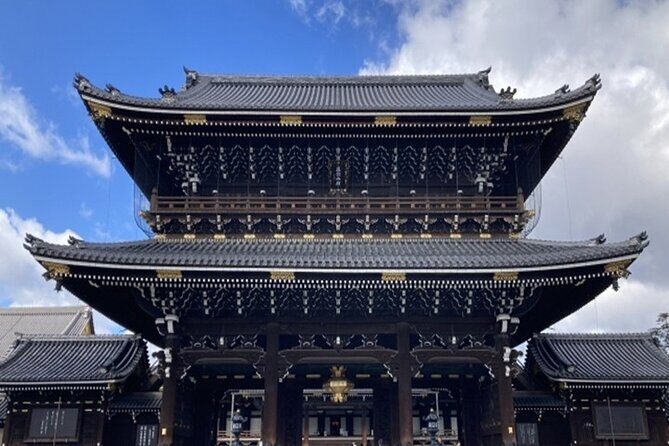
Higashi Hongan-ji is a strong starting point for Japan’s Buddhist landscape of ideas. Your focus question is What is the Pure Land, one of the most significant ideas in Japanese Buddhism?
Pure Land concepts can be abstract until you place them beside real religious practice and architecture. This stop gives you a foundation that makes later Zen-related ideas easier to follow. It’s also a low-stress way to begin since admission here is listed as free.
You can also read our reviews of more private tours in Kyoto


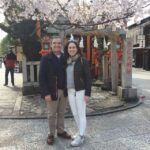
Stop 2: Yoshida Shrine (What Shintoism means) — ~30 minutes, free
Next is Yoshida Shrine, where you’ll tackle What is Shintoism?
The route frames Shintoism with a “pantheism” style of idea—how people can see the spirit of the world in nature and presence. Yoshida Shrine is also noted as one of Kyoto’s oldest shrines and, historically, connected to government support in some form.
This stop matters because it prevents your brain from treating Japanese religion as one blended blob. You’ll have a clearer sense that Buddhism and Shinto are both present in daily life, and they can feel different in tone and purpose.
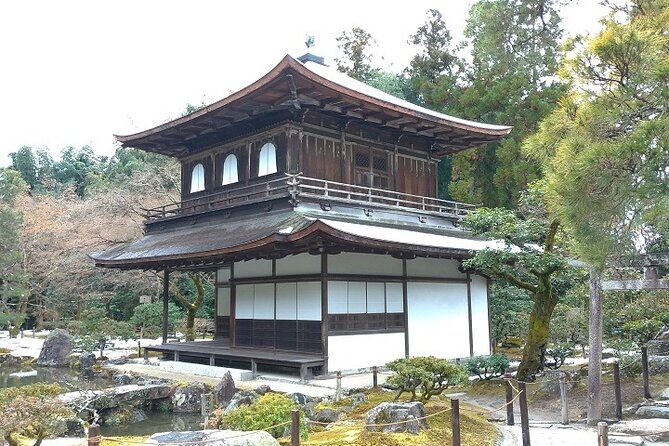
Stop 3: Ginkakuji (Zen and the simple idea) — ~45 minutes, paid entry
Then you reach Ginkakuji, a Zen temple and a Kyoto cultural heritage site. Your guiding question is a simple one: What is a background of Japanese simple is the best philosophy?
Even if you already know Ginkakuji from photos, the tour’s angle changes the experience. The guide points your attention toward restraint and form—how “less” can be intentional, not empty. Admission here is listed as not included, so plan on adding it to your cash budget if it applies to your entry.
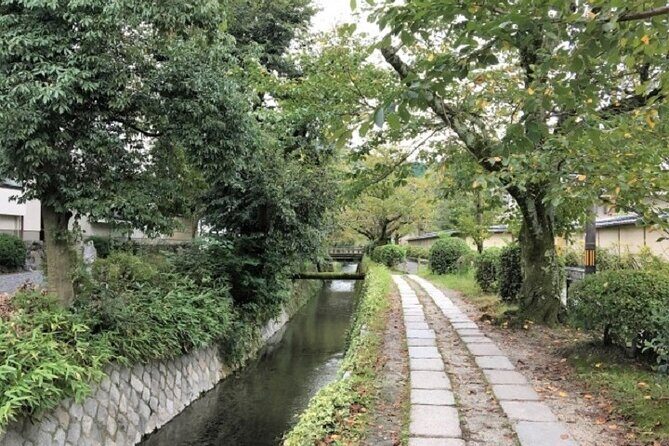
Stop 4: The Philosopher’s Walk / Philosopher’s Path (Japanese thought meets Western philosophy) — ~1 hour, free
This is the centerpiece segment. You’ll spend about one hour on the Philosopher’s Walk area, with the guiding question focused on how Japanese philosophers tackled with the Western tradition of philosophy.
This stop is where the tour stops being a religious tour and becomes a philosophy tour in real life. You’ll see how modern Japanese thinkers navigated Western ideas instead of simply rejecting or copying them. It’s a good moment to slow down, look at people and surroundings, and let the conversation settle into your own thoughts.
Admission is listed as free here, which helps keep the flow smooth.
Stop 5: Nanzenji Suirokaku Aqueduct (protection and care for surroundings) — ~15 minutes, free
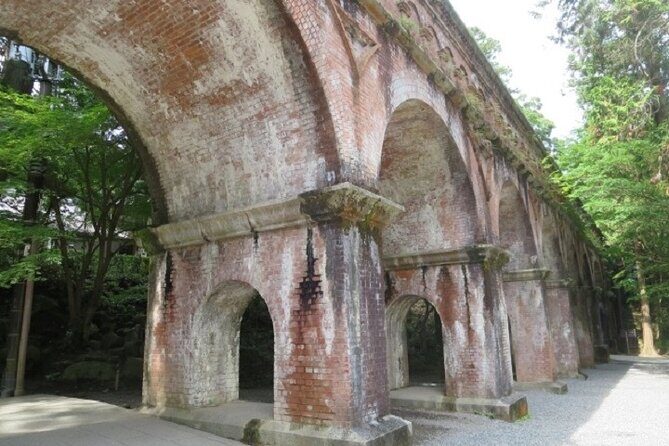
Next is Nanzenji Suirokaku, a Western-style brick aqueduct located inside a temple setting. Your prompt is about the ideal landscape protection, but keep your mental focus on the idea behind it: how to preserve space and meaning, not just scenery.
This quick stop is valuable because it shows how “old” Kyoto isn’t frozen. There are layers—some Western-influenced—existing within temple grounds. You’ll get a different kind of appreciation for how Japan has adapted and negotiated change over time.
Stop 6: Sanmon Gate (enlightenment as a three-step process) — ~15 minutes, paid entry
At the Sanmon Gate, you’ll focus on the theory of enlightenment in Buddhism. The guide highlights the name meaning, a gate representing three steps to liberation, and notes it’s a two-story high structure.
Why this matters: enlightenment often gets discussed like it’s a single event. Framing it as steps gives the day a sense of progression. Even though this stop is short, it’s one of the most concept-forward moments on the route.
Admission here is listed as not included, so it may be part of the cash you bring.
Stop 7: Konchi-in (what an authentic Zen garden looks like) — ~30 minutes, paid entry
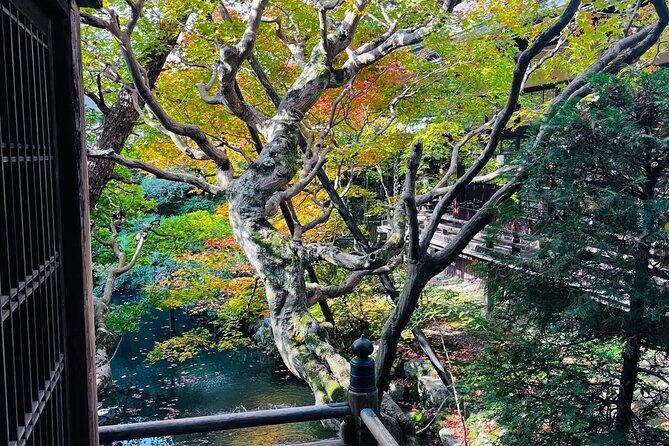
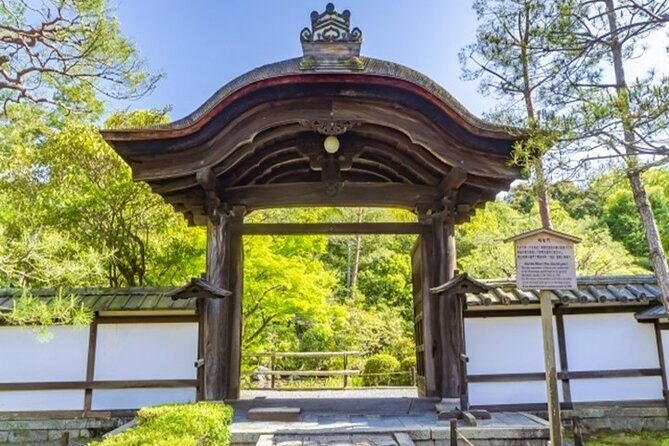
Finally, you visit Konchi-in for a look at an authentic Zen garden. Your focus question is What does an authentic Zen garden look like?
Konchi-in is described as famous mainly among history-geek Japanese, which tells you something important: this place may not be the most famous on a casual itinerary, but it’s the kind of stop that rewards attention. You’ll be guided to see the garden as an expression of ideas, not just a pretty background.
Admission is listed as not included, and this end-of-day stop is a great place to carry your earlier philosophical questions forward.
What the dialogue feels like in practice (not just theory)
The best part of this tour is how it uses conversation as a tool. Instead of a lecture, you get guided discussion tied to what you’re standing in front of.
You’ll likely notice that the guide doesn’t treat Zen, Shintoism, and Buddhist enlightenment as separate trivia piles. The questions keep pressing you toward how ideas connect: belief systems, symbols, and daily life in Kyoto.
In the reviews, people praise the philosophical portion and the guide’s knowledge, but what matters for you is the effect. This kind of dialogue can change how you walk through temples afterward. You’ll leave with a mental checklist: not just what something is, but what it’s trying to help people do.
If you enjoy talk-back guidance—asking why something matters, comparing viewpoints, or connecting it to your own work—this tour fits that style well.
Temple etiquette and practical comfort tips (so you can focus)
Plan for a day with a mix of outdoor walking and indoor entries. Here’s what I’d do to stay comfortable:
- Wear comfortable shoes. You’re walking about one mile, plus stairs at at least one two-story stop.
- Bring cash for temple entrance fees. The suggested amount is ¥1,600 per person.
- Budget time for lunch on your own. About one hour is allotted, so you’re not rushed, but you should still plan where you want to eat.
- Expect some time on public transportation. The suggested cost is ¥750 per person.
Also, keep your “visitor mode” respectful. Kyoto temples and shrines are still places of practice, not theme parks. When the guide pauses to talk through a concept, it helps to quiet down and look.
Who this Kyoto philosophy walk is best for
This tour makes the most sense if you fall into one of these buckets:
- You want Kyoto to feel like a thinking experience, not just a photo sprint.
- You like religious and philosophical context, especially Zen Buddhism and Japanese spiritual traditions more broadly.
- You enjoy structured conversation and want your day to include questions and dialogue, not just explanations.
If you’re traveling with kids or you hate walking and stairs, this might still work depending on the group, but you’ll want to go in with eyes open about the two-story stair stop and the paid-entry temples.
Should you book the Kyoto Philosophy Walk with Hiroki?
Book it if you’re tired of tours that treat Kyoto like a checklist. This route gives you a way to understand what you’re seeing, using philosophy questions that actually connect to the sites.
Skip it or consider a different style if you only want easy landmark time and minimal talking. Even though the places are beautiful, the core value here is the mental payoff—guided thought, not just sightseeing.
One more smart decision tip: if you want the guide’s full attention, go early in the day (you start at 9:00 am) and come rested. When you’re mentally fresh, the philosophy questions land better.
FAQ
How long is the Kyoto Philosophy Walk with Philosopher?
It runs about 6 hours 30 minutes.
Is this tour private?
Yes. It’s a private tour/activity with only your group participating.
Where do I meet the guide, and what time does it start?
The meeting point is Bus Ticket Centre / Information Centre, 902 Higashishiokōjichō, Shimogyo Ward, Kyoto, 600-8216, Japan. The start time is 9:00 am, and it ends back at the meeting point.
Are temple entrance fees included?
Entrance fees are not included. The tour suggests preparing cash of ¥1,600 per person for temple entrances.
Do I need to bring cash?
Yes. The tour notes that you should prepare cash for entrance fees (¥1,600 per person).
How much walking is there?
The route includes walking on the path for about one mile, plus time for backstreet walking around spots and public transportation.
Is lunch included?
No. Lunch and all food and beverages are at your expense, and there’s about one hour allotted for lunch during the tour.