REVIEW · 1-DAY TOURS
Kyoto UNESCO World Heritage Sites 1d Tour from Osaka/Kyoto
Book on GetYourGuide →Operated by VIP Japan Tour · Bookable on GetYourGuide
Gold leaf and 1,001 statues in one day. This Kyoto UNESCO tour is interesting because it strings together Kinkaku-ji’s gold-and-reflection moment with the quiet drama of Arashiyama’s bamboo forest and bridge views. I especially like how the stops feel different from each other, instead of doing four temples that all blur together in your photos.
One thing to consider: the day runs about 9–10 hours and the van doesn’t wait. If you’re the type who needs a slow start, you’ll want to be early and ready when the schedule moves.
Key things I’d pay attention to
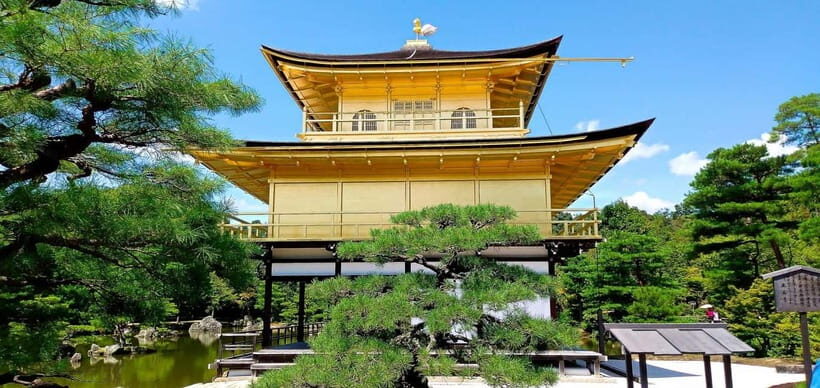
- Kinkaku-ji Mirror Pond views: you’ll see why people pause and stare instead of rushing on.
- Arashiyama bamboo + Togetsukyo Bridge: bamboo first, then that wide river-and-mountains look.
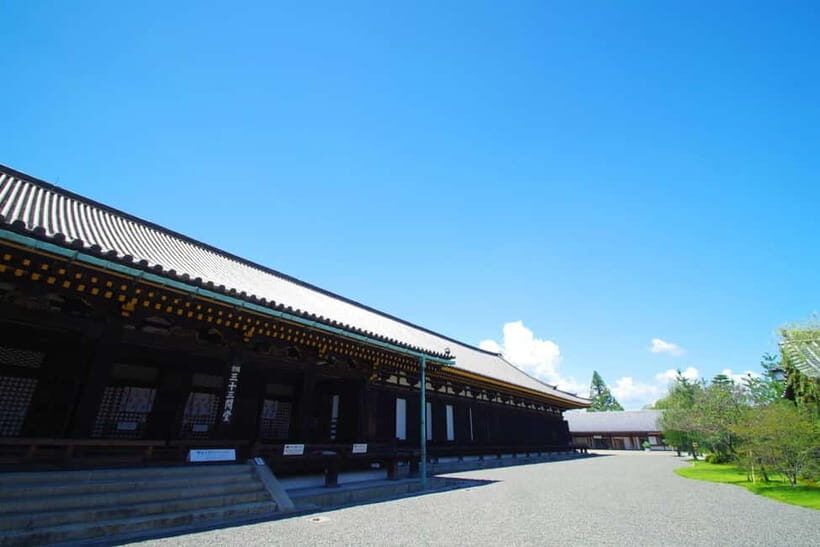
- Sanjusangendo scale: 1,001 golden Kannon statues in Japan’s longest historic wooden hall.
- Kiyomizudera’s nail-less stage: plus skyline framing from the hill.
- Lunch choice matters: Kobe beef is optional, but it can be the perfect reset before the afternoon temples.
In This Review
- Why This Kyoto UNESCO Day Works So Well
- Kinkaku-ji and the Mirror Pond: Golden Pavilion First
- Arashiyama Bamboo Grove and Togetsukyo Bridge in One Flow
- Kimono Forest, Tenryuji, and the Break That Keeps You Moving
- Sanjusangendo: 1,001 Golden Kannon Statues Without Feeling Lost
- Kiyomizudera and the Nail-less Stage: Views, Pagoda, and Otowa Water
- Kobe Beef Lunch and Kyoto Street Shopping That Doesn’t Feel Like a Trap
- The Real-World Logistics: Meeting Points, Group Size, and Timing
- Who This Tour Is Best For
- Should You Book This Kyoto UNESCO 1-Day Tour?
- FAQ
- How long is the Kyoto UNESCO World Heritage Sites 1d Tour?
- Where are the starting points for this tour?
- What languages does the guide speak?
- Is lunch included?
- Are admission tickets included for all the temples?
- How long do we spend at each major site?
- Is this tour suitable for kids?
- What happens if there’s bad weather or heavy traffic?
- Do they wait if I’m late?
- Can I cancel for a full refund?
Why This Kyoto UNESCO Day Works So Well
Kyoto can feel like a choose-your-own-adventure city: you could spend weeks here and still not see everything. This tour helps you focus on four UNESCO World Heritage sites plus a few high-payoff extras, all in one managed day.
The value isn’t only that you get big names like Kinkaku-ji and Kiyomizudera. It’s that the route creates contrast: gold temple elegance, forest calm, a mind-bending statue hall, then a hilltop temple with wide views. That mix is what keeps a long day from turning into one long queue-and-photo loop.
And yes, it’s a long sit in a van, but you’re also not wrestling with transit timing. An air-conditioned vehicle and a guide in English or Chinese lowers the stress level when your day is moving fast.
Kinkaku-ji and the Mirror Pond: Golden Pavilion First
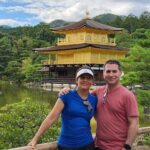
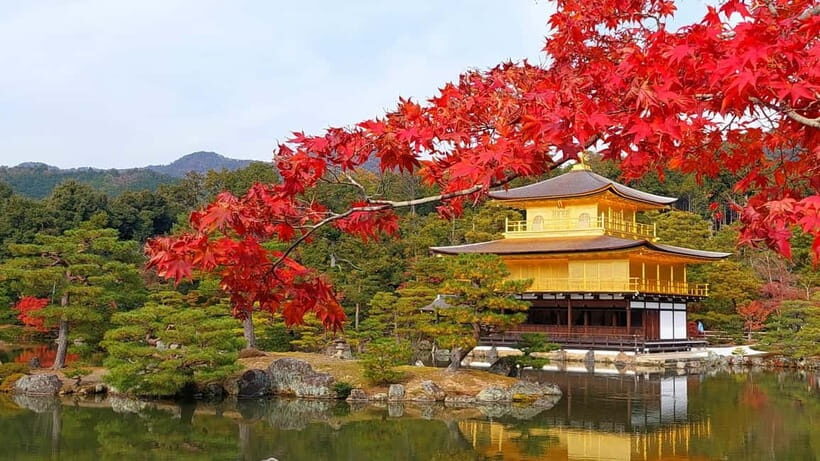
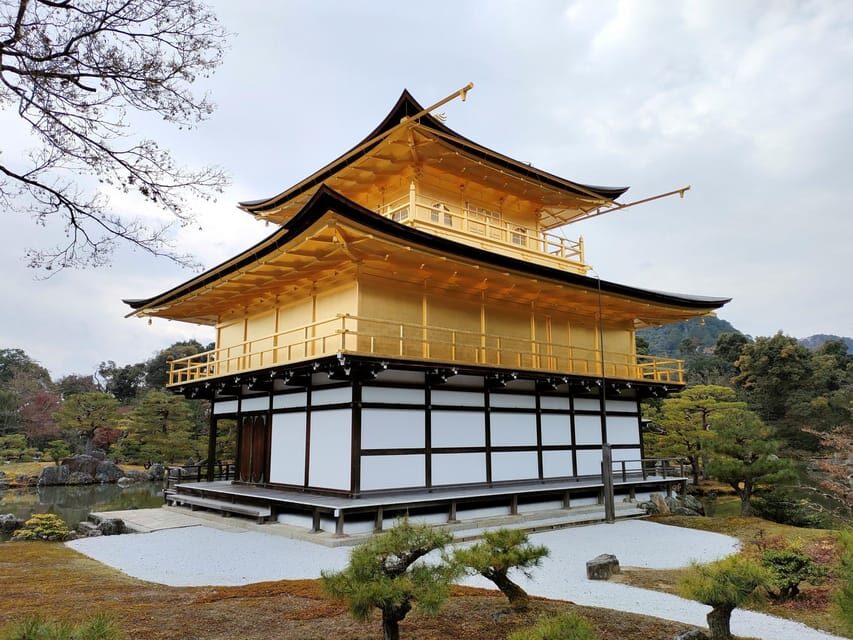
Kinkaku-ji is the kind of place where your brain goes quiet for a second. You’ll get around 40 minutes here, which is short, but it’s enough time to do the core experience: look at the temple up close, then catch its reflection in the Mirror Pond.
A couple details make this stop worth your time. The top floors are covered in shimmering gold leaf, and that shine changes as clouds pass and the light shifts. When you line up the viewpoint with the pond, the temple doesn’t just look pretty—it looks balanced, like it’s part of the water instead of sitting on top of it.
If your guide is the talkative kind (I’ve heard about a guide named Kaytu who was very knowledgeable about history), you can also pick up the story of how this Zen temple became such a symbol of prestige and aesthetics in the 14th century. Even without a deep dive, the place teaches you the lesson: in Japan, presentation is part of spirituality.
Quick tip: Move a step left or right at the pond view. Small angle changes can make the reflection look dramatically different.
You can also read our reviews of more historical tours in Kyoto
Arashiyama Bamboo Grove and Togetsukyo Bridge in One Flow
After the gold, the day shifts west to Arashiyama, where the vibe changes from polished temple elegance to natural stillness. You’ll have plenty of time here—several hours including photo stops, walking time, and free time—so you can take it at your pace without feeling like you’ll miss the entire forest.
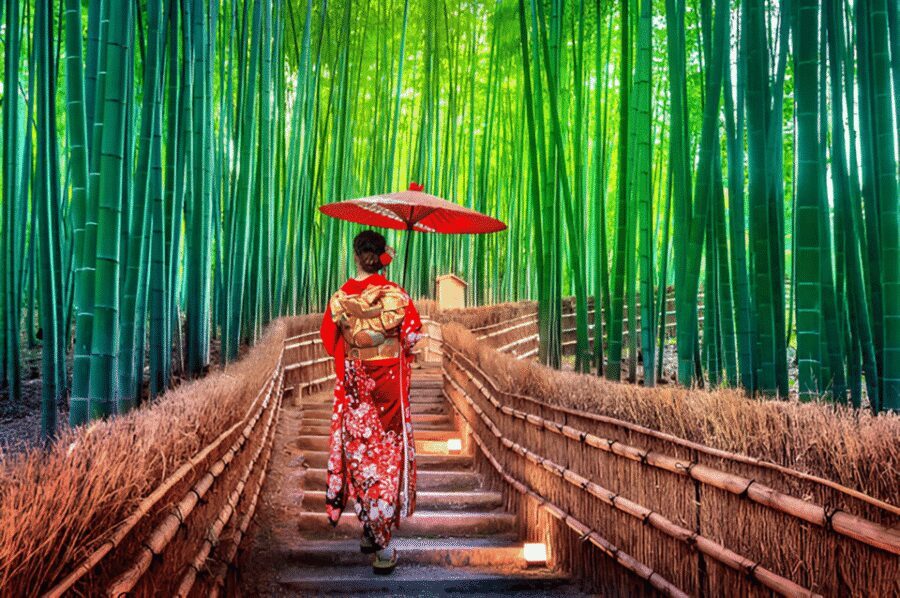
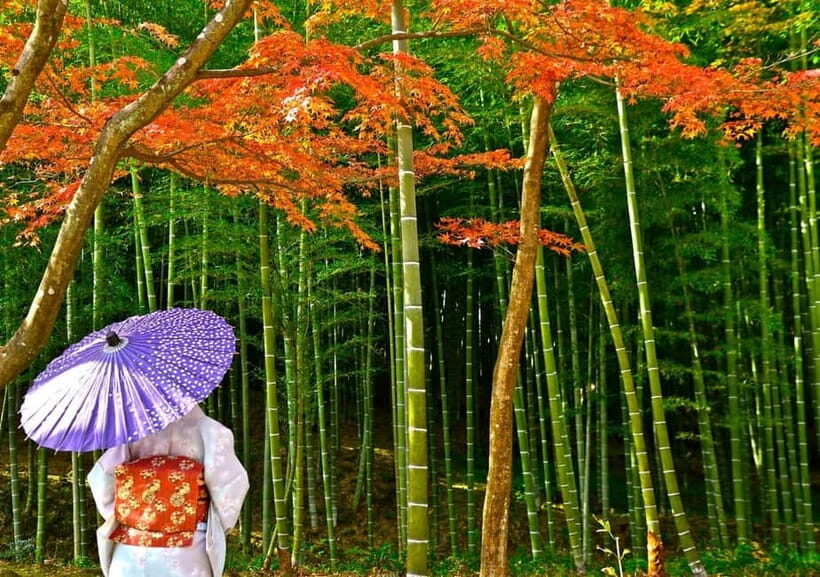
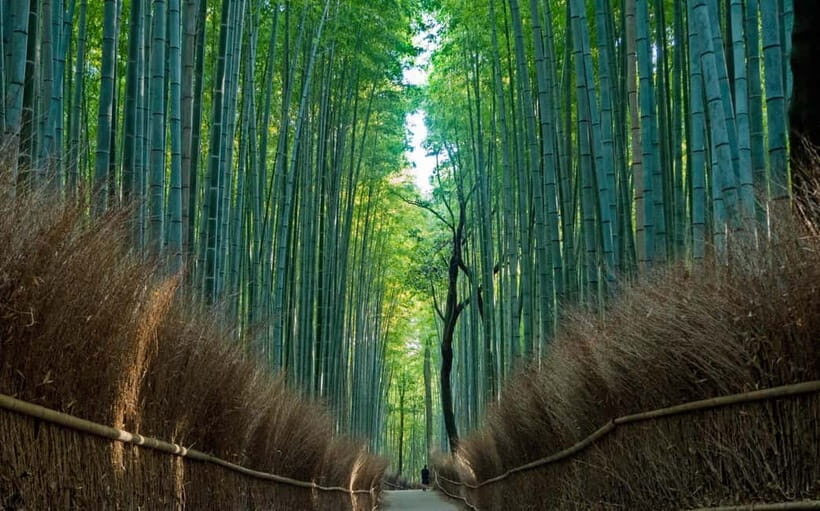
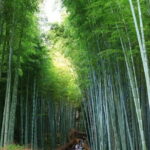
The Bamboo Grove is the signature moment. Tall stalks form a kind of natural corridor where sunlight filters down and the soundscape changes as you walk. It’s not about speed here. Slow down. Let your eyes adjust. In that quiet spacing between shoots, the forest feels less like a photo spot and more like a place to breathe.
Then it’s time for Togetsukyo Bridge, the Moon Crossing Bridge. It gives you a wide overlook: mountains in the background, and the Katsura River reflecting shapes below. The bridge works as a visual reset after bamboo—suddenly you’re looking outward instead of up.
One practical note: you can hit some crowd flow here depending on the time of day. Having guide-led timing and a scheduled structure helps, because you’re not stuck guessing when to go.
Kimono Forest, Tenryuji, and the Break That Keeps You Moving
This part of the day feels like it balances “must-see” with “Kyoto flavor.” You’ll make a photo stop and have some time around the Kimono Forest area, then you’ll visit Tenryuji Temple with time to wander.
Kimono Forest is mostly about the visual set-up—perfect for photos, and a quick stop compared to the big temples. If you love taking portraits or you’re collecting atmospheric backgrounds for your photos, it’s worth it. If you’re not into staged photo corners, treat it like a quick walk-through and save your full attention for Tenryuji.
Tenryuji Temple helps anchor the day in real temple atmosphere. You’ll get free time to explore at your own speed and keep your senses awake before heading into the more intense stop later (Sanjusangendo). This is the segment that makes the tour feel less like a checklist and more like a day.
Sanjusangendo: 1,001 Golden Kannon Statues Without Feeling Lost
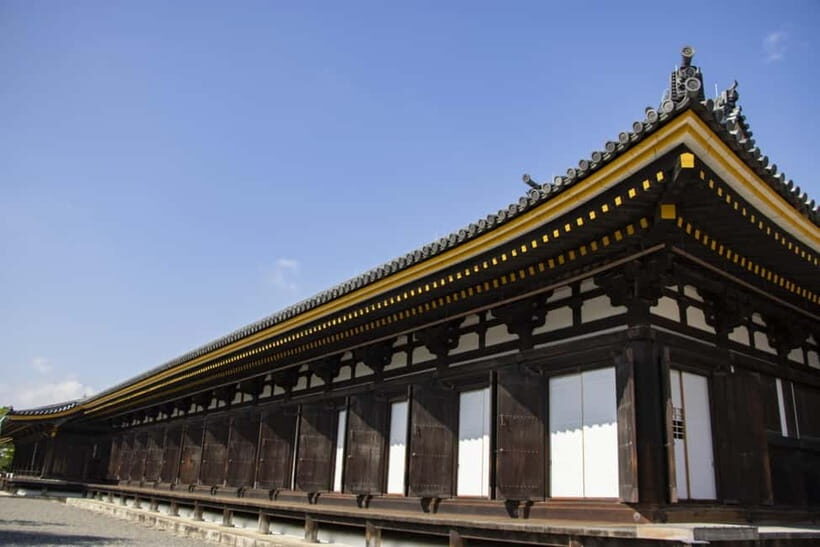
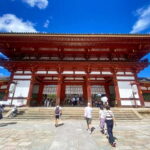
Sanjusangendo is the kind of place that makes your eyes work overtime. You’ll have about 40 minutes here, and with good reason: standing in a hall packed with 1,001 life-sized Kannon statues is not a quick browse.
Japan’s longest historic sanjusangen-do is famous for its long, wooden interior hall, and the sheer scale is the story. The statues are golden and life-sized, and they’re arranged in a way that creates a steady, almost echo-like feeling. Even if you don’t know every detail, your brain starts categorizing faces and poses—and that’s the point.
There’s also a popular legend that among the thousand faces, you may find one that looks like a person you love. Whether you believe it or not, it’s a fun way to interact with the room. You stop looking for the biggest statue and start looking for what catches you.
Practical tip: Don’t stand in the doorway and rush inward. Give yourself a few minutes to settle, then move slowly along the lines of statues so you’re not overwhelmed by trying to take it all in at once.
Kiyomizudera and the Nail-less Stage: Views, Pagoda, and Otowa Water
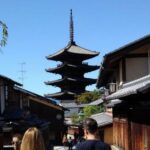
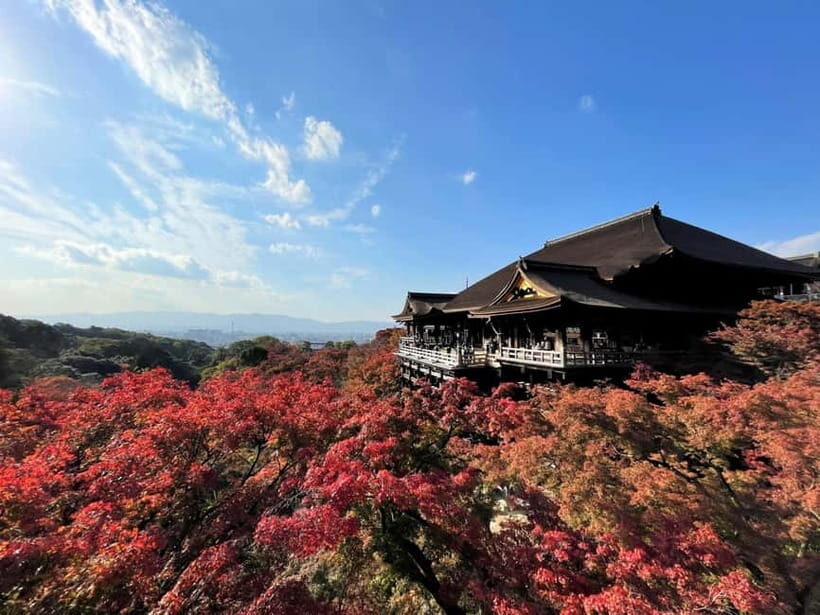
Kiyomizudera is your big finale temple, and it’s a strong one. You’ll spend about 80 minutes here plus an additional stop for Koyasunoto Pagoda. The centerpiece is the famous wooden stage built without a single nail, and it’s hard not to stare at the structure once you’re on site.
The stage matters because it’s not only architecture—it’s a viewpoint platform. From there, you get the chance to see the Kyoto skyline framed by the temple grounds. The time of year affects what you notice most, but even without special foliage, the sense of height and distance gives you that classic Kyoto feeling: old stone, old wood, and modern city far below.
Before leaving, you may be able to visit the Otowa Waterfall area, where people come for the sacred water associated with health, longevity, and success. Even if you treat it as a cultural ritual instead of something to chase for outcomes, it’s a meaningful way to end the day’s temple run.
One more reason I like this stop: after the tight, repeating pattern of Sanjusangendo, Kiyomizudera gives you open space, wider sight lines, and a place to stand back and reset.
You can also read our reviews of more tours and experiences in Kyoto


Kobe Beef Lunch and Kyoto Street Shopping That Doesn’t Feel Like a Trap
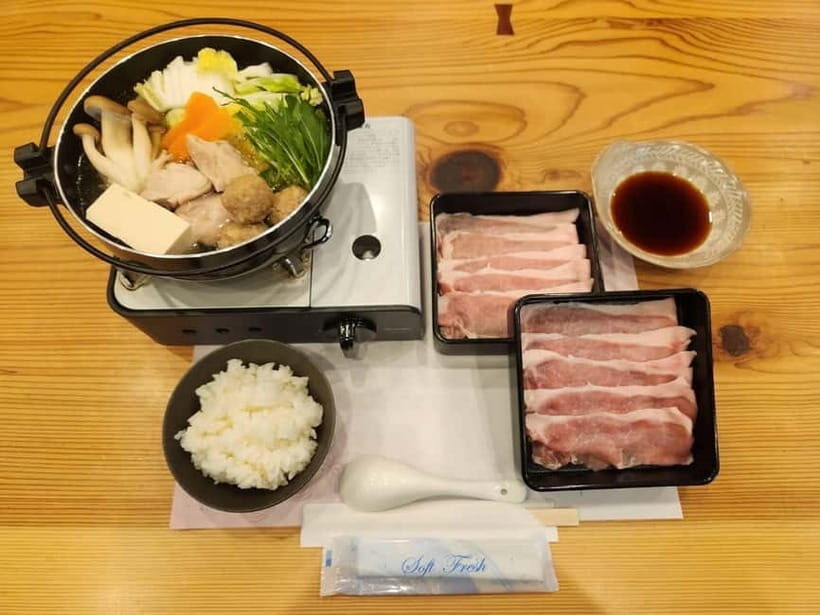
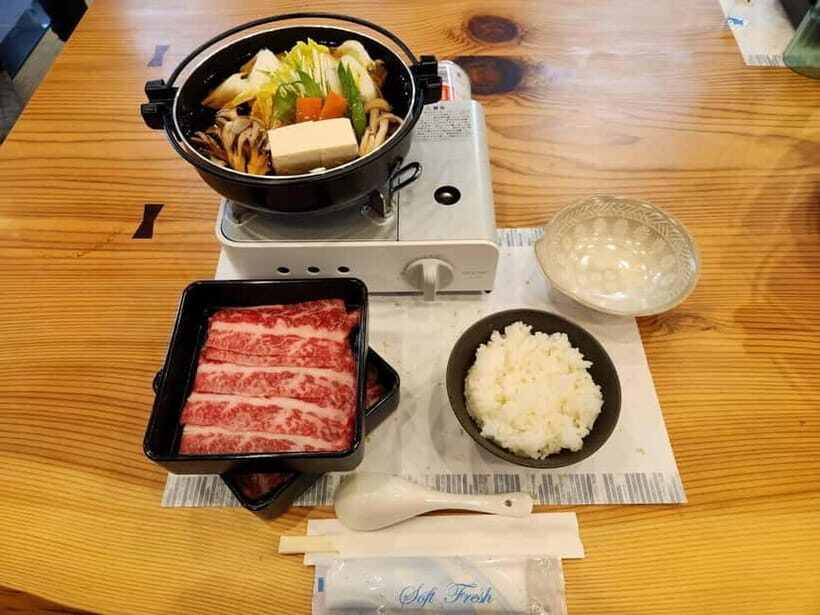
Food days are easier when the tour has a plan. Lunch is included only if you choose the option, and the optional upgrade is A5-ranked Kobe Beef—world famous for its marbling and melt-in-your-mouth texture.
If you pick it, think of the meal as your schedule insurance. After the afternoon temple climb and statue time, you’ll be glad you had something substantial and celebratory. The tour frames it as a luxury experience, and in Japan, that kind of high-grade wagyu lunch is one of the simplest ways to treat yourself without needing extra planning.
After Kiyomizudera, you’ll also get time at Ninenzaka and Sannenzaka—two of Kyoto’s most well-known walking-and-shopping streets. This is where you can slow down and pick up small souvenirs, snacks, or gifts that actually feel like Kyoto. I like this placement because it turns the end of the day into something lighter, instead of finishing with only temples and walking fatigue.
Quick tip: If you’re sensitive to crowds, use your free time strategically—step into the side lanes for less crush, then return to the main street for landmark photos.
The Real-World Logistics: Meeting Points, Group Size, and Timing
The big practical question: will this tour feel smooth or frantic? The answer depends mostly on your punctuality and your expectations about a packed day.
You’ll start from one of two pickup locations: VIPヴィラなんば or 京都VIPラウンジ, and you’ll return to one of those same drop-off spots. Plan to arrive about 10 minutes early. If you show up late or at the wrong location, the tour operator says refunds may not apply, and they don’t accommodate delays.
The tour runs about 9–10 hours and departs regardless of weather or traffic unless you’re notified otherwise. On days with severe traffic (especially around holidays), some planned attractions may be reduced with no refund.
Group size is described as small group, and you’ll travel in an air-conditioned vehicle. Also note that depending on participants, both English- and Chinese-speaking guests may share the same bus. That’s normal, and it’s one reason a guide matters—your questions still get handled, but the pace stays group-friendly rather than customized.
Language support is English or Chinese, so if you want your questions answered in detail, you’ll get more out of this day by asking right after a stop starts rather than while people are bottlenecked at the entrances.
Who This Tour Is Best For
This is a great fit if you want a high-impact Kyoto day without planning headaches. It’s especially good for:
- First-timers who want major UNESCO hits in one shot
- People who like temple architecture and cultural storytelling (and appreciate guided context)
- Food lovers who might splurge on lunch with Kobe Beef
- Anyone who prefers a structured route over picking stops one-by-one on trains and buses
It’s not the best match if you hate crowds, need lots of quiet time alone, or you’re the type who wants to linger 2–3 hours per site. This day is full, and the schedule keeps moving.
Should You Book This Kyoto UNESCO 1-Day Tour?
I think it’s a solid booking if you want four standout UNESCO sites handled for you and you’re okay with a long day. Kinkaku-ji’s gold-and-reflection, Sanjusangendo’s 1,001 Kannon, and Kiyomizudera’s nail-less stage are all strong “centerpiece” experiences that justify the time.
If you’re on the fence, decide using one question: do you want structure, or do you want freedom? If structure sounds good—plus optional A5 Kobe Beef—this tour is easy to recommend. If you’d rather go at your own speed, build your own route, and add extra time to fewer sites, you may prefer a self-guided day.
Either way, bring comfortable shoes. Your feet will do most of the work, and Kyoto rewards that effort.
FAQ
How long is the Kyoto UNESCO World Heritage Sites 1d Tour?
The duration is approximately 9 to 10 hours, depending on traffic conditions.
Where are the starting points for this tour?
Pickup and drop-off options include VIPヴィラなんば and 京都VIPラウンジ. Meeting points can vary by the option booked.
What languages does the guide speak?
The guide provides support in English and Chinese.
Is lunch included?
Lunch is included only if you select the lunch option. There’s an optional Kobe Beef lunch.
Are admission tickets included for all the temples?
The tickets included are for Kinkakuji Temple and Sanjusangendo Temple. Other sites may have separate entry depending on conditions, so it’s best to plan for that.
How long do we spend at each major site?
Time varies by stop, but key visits include about 40 minutes at Kinkaku-ji and about 40 minutes at Sanjusangendo, plus about 80 minutes at Kiyomizudera.
Is this tour suitable for kids?
Infants under 3 years old are free of charge without a seat. If you need a seat for an infant, you should book with a children’s price.
What happens if there’s bad weather or heavy traffic?
The tour will depart regardless of weather or traffic conditions unless you’re notified otherwise by the local operator. In severe traffic, some planned attractions may be reduced, with no refund.
Do they wait if I’m late?
No. The operator states they don’t accommodate delays or wait for any reason.
Can I cancel for a full refund?
Yes, the tour offers free cancellation up to 24 hours in advance for a full refund.