REVIEW · KYOTO
Ancient Katana Training in Kyoto with Local Students
Book on Viator →Operated by Let's ask Shogo · Bookable on Viator
Kyoto teaches real katana discipline, no gimmicks. I like that this isn’t a themed sword photo stop; it’s training with the Asayama Ichiden Ryū Hyōhō Kyoto branch alongside actual students. I also like that instruction comes from Shogo sensei, with support in both English and Japanese so you can actually follow what’s happening.
The main consideration: this is a genuine class, not a beginner spectacle. As a general rule, they don’t accept people with no prior budo experience, so you’ll want to check in first if you’re new (or if you only know the basics from videos).
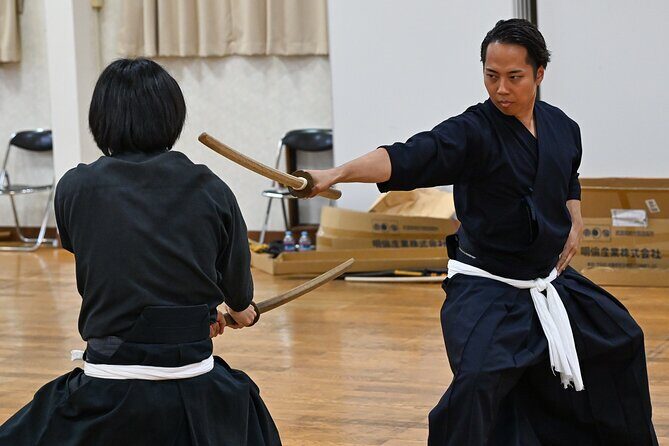
You’ll do about three hours starting at 6:30 pm in Honmachi (Higashiyama Ward), and the group is small—maximum four people—so you’re not just standing around waiting. Expect training using bokutō (wooden swords) plus dojo etiquette, not just swing-and-smile sword handling.
In This Review
- Key Things You’ll Notice Right Away
- A 400-Year-Old Kobudo Tradition in Kyoto
- Who This Class Fits (and Who Should Email First)
- The 6:30 pm Flow: Reihō, Iaijutsu, and Kenjutsu
- Bokutō Training: Wooden Swords, Real Discipline
- Shogo Sensei and the Teaching Style You’ll Appreciate
- Beyond Katana: The Wider Weapon System in the Tradition
- Value: What You’re Really Paying for (Not Just a Price Tag)
- Where You Meet and How to Plan Your Kyoto Evening
- Who Should Book This Katana Training Class
- FAQ
- FAQ
- How long is the Ancient Katana Training in Kyoto?
- Where do we meet for the training?
- What time does the class start?
- What group size should I expect?
- Do I need prior budo experience?
- Do I need to bring my own sword?
- Is there free cancellation?
- Is there a fitness requirement?
Key Things You’ll Notice Right Away
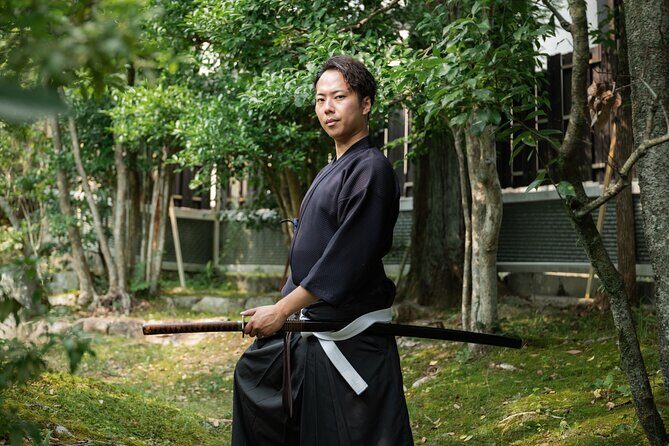
- Real koryu-style training with dojo etiquette (Reihō), not a demo
- Iaijutsu (quick-draw) and Kenjutsu (swordsmanship) with bokutō
- Small group size: up to 4 people
- Shogo sensei teaches in both English and Japanese
- A broader martial system beyond the katana: staff, sickle, chain, and more
- General rule: prior budo experience is expected
A 400-Year-Old Kobudo Tradition in Kyoto
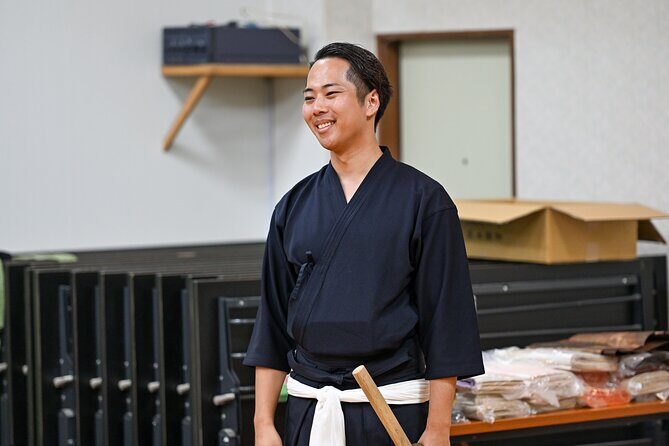
This class comes from a Kyoto branch of Asayama Ichiden Ryū Hyōhō, a kobudo tradition with a proud 400-year line. That matters because you’re not learning a modern, simplified show-version of sword skills. You’re joining a system that’s meant to be practiced seriously—historically tied to when samurai wore armor and real fighting mattered.
In plain terms, the dojo training emphasizes how you move, how you control timing, and how you conduct yourself while learning. That’s why the class begins with Reihō etiquette. It’s not extra fluff. In Japanese sword arts, the way you enter, handle the training tools, and respond to instruction is part of the discipline.
And since this is practiced by local students, you get a sense of how the art lives day-to-day. It feels more like stepping into a real routine than touring a museum.
You can also read our reviews of more tours and experiences in Kyoto.


Who This Class Fits (and Who Should Email First)
This is the part I’d read twice before booking.
They state that it’s not a tourist activity, and as a general rule they do not accept participants with no prior budo experience. That doesn’t mean you can’t try. It means you should contact them for a consultation if you’re very eager and you don’t have that background yet.
So who’s a good match?
- You’ve done some budo before (even if it’s not sword-focused).
- You’re comfortable taking correction and repeating basics.
- You want authentic practice rather than a guided performance.
Who should think carefully?
- If your goal is mostly photos, dramatic “samurai moments,” or first-time sword handling with zero dojo experience, this may feel too serious—or too strict for your expectations.
- If you’re physically very limited, plan around the note that it requires a moderate physical fitness level.
A small group helps a lot here. Maximum four people means the instructor can watch closely, but it also means they’re less likely to spend the session only on supervision for total beginners.
The 6:30 pm Flow: Reihō, Iaijutsu, and Kenjutsu
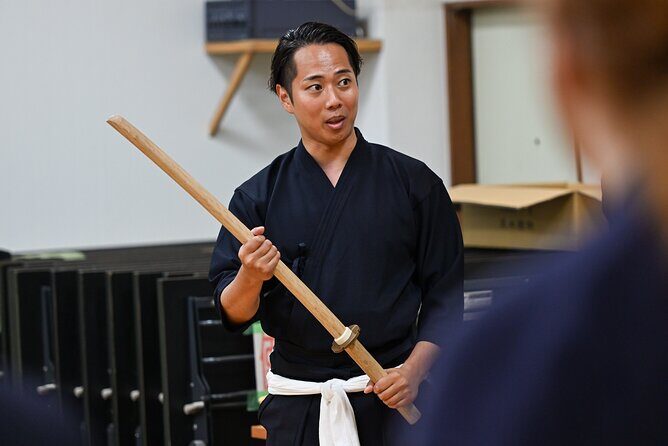
You meet at 7-chōme-27-1 Honmachi, Higashiyama Ward, Kyoto, starting at 6:30 pm. It runs about three hours, and it ends back at the same meeting point.
Within the session, you practice three core areas:
Reihō (dojo etiquette):
You’re trained to conduct yourself properly in a classical budo setting. Expect focus on how you listen, respond, and handle the training sword in a way that shows respect to the practice environment.
Iaijutsu (quick-draw katana techniques):
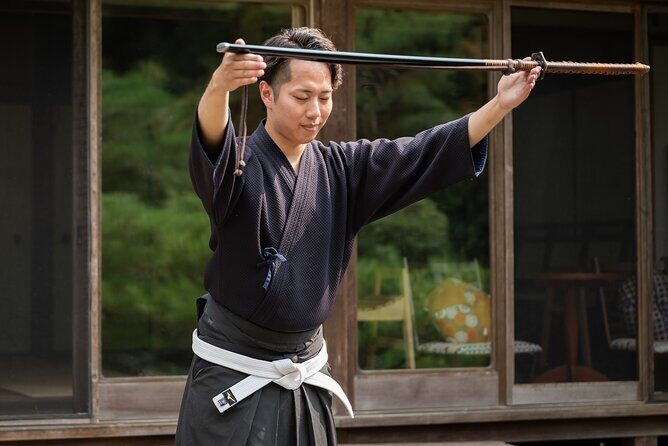
Iaijutsu is about more than swinging a sword. It’s about the relationship between stillness and action—timing your draw so the movement makes sense as a single controlled sequence. In a class like this, you’re usually guided to understand form, posture, and the mechanics of starting and finishing in a disciplined way.
Kenjutsu (Japanese swordsmanship):
Kenjutsu adds the sword skills that happen after drawing—how you move the weapon, how you engage, and how technique stays consistent under instruction. The goal isn’t speed for speed’s sake. It’s clean structure, repeated until the movement feels less like an idea and more like muscle memory.
One practical point: since it’s not a tourist demo, you’ll likely be asked to repeat things and get corrections. If you came hoping for a single highlight moment, you may be surprised. If you came to learn, you’ll probably love the pacing.
Bokutō Training: Wooden Swords, Real Discipline
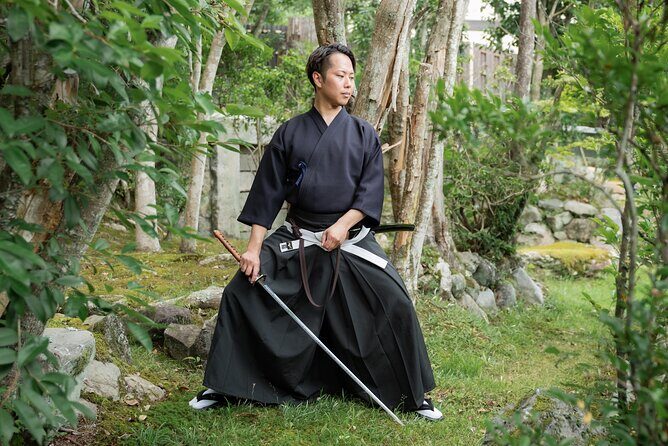
The class uses bokutō (wooden katana). That sounds less intense than steel, but that’s exactly why it works for learning. Wooden swords let you focus on timing, distance, and body alignment without turning every correction into a safety issue.
Bokutō training also tends to reveal what matters in the art:
- If your posture is off, it shows immediately.
- If your draw timing is sloppy, it feels sloppy.
- If your footwork isn’t grounded, the technique won’t settle.
If you’re worried about bringing gear, you’ll be glad you’re not forced into buying or hauling a sword. The training is set up for bokutō use, and instruction is designed to make it workable even if you didn’t bring your own.
Shogo Sensei and the Teaching Style You’ll Appreciate
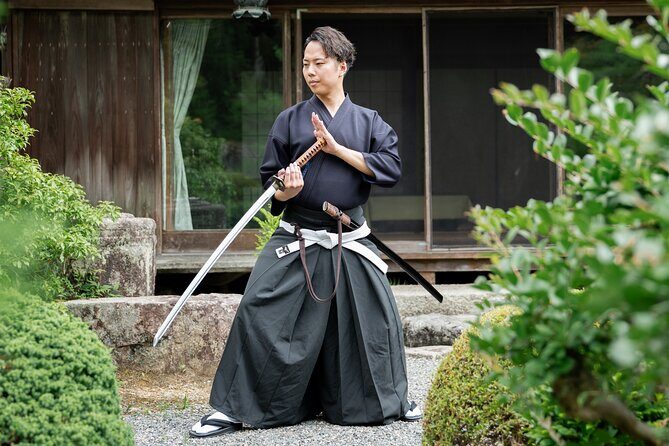
Shogo sensei is a major reason people recommend this class. The standout detail is that he’s able to instruct in both English and Japanese, which makes a huge difference in a dojo setting. When you’re learning something as technical as iaijutsu and kenjutsu, you don’t want “sort of explained” directions. You want clear cues.
The teaching also seems to be careful about pacing. Multiple people describe the instruction as well paced and directed, with explanations that you can follow even when the movement isn’t perfect yet. In a small group of up to four, that kind of feedback matters.
Another thing: the dojo atmosphere is described as welcoming, even for people who may feel out of place in a formal martial environment. If you’re a foreign student or you’re used to casual, Western-style classes, that kind of guidance can make the experience feel less intimidating and more focused on learning.
Beyond Katana: The Wider Weapon System in the Tradition
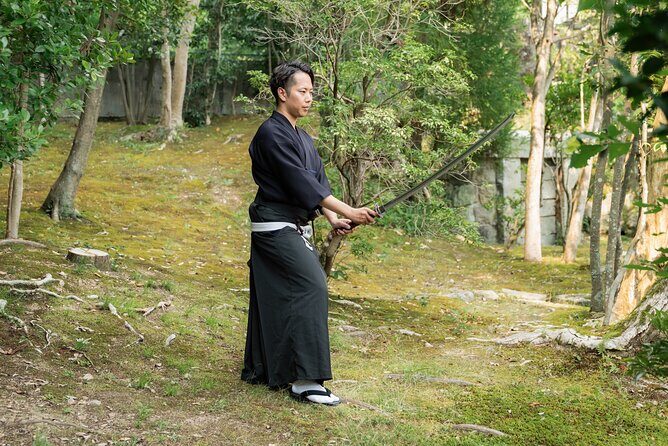
Even though your session emphasizes iaijutsu and kenjutsu, the tradition isn’t only about the sword. Asayama Ichiden Ryū Hyōhō is described as a comprehensive martial system that also includes:
- kama-jutsu (sickle techniques)
- bōjutsu (staff)
- jōjutsu (short staff)
- tanbōjutsu (short stick)
- kusarifundōjutsu (chain and weight)
- shurikenjutsu (throwing darts)
You might not train all of those weapons in the three-hour session. But knowing the tradition is broader helps you understand why the dojo teaches so much structure. It’s not one-off sword tricks. It’s a system with principles that travel across weapons.
For you, that’s useful in two ways:
- If you catch yourself thinking this is just “katanas only,” you’ll leave with a more accurate picture.
- If you’re the type who wants to keep learning after your first class, you’ll have a clearer map of where the tradition goes next.
Value: What You’re Really Paying for (Not Just a Price Tag)
It costs $45.61 per person for about three hours. That’s not low in the way a big group bus tour is, but it’s also not expensive for what you’re actually getting.
Here’s why the value makes sense:
- You’re training with actual students and a real classical tradition, not watching someone perform a set routine.
- The group size is capped at four, which tends to mean more attention and less standing around.
- Shogo sensei’s bilingual instruction reduces the usual “language barrier tax” that can ruin technical classes.
- You train with bokutō, and the setup is designed for real practice rather than casual sightseeing.
Booking tends to happen about 18 days in advance on average, which hints at limited availability. If you’re set on doing it while in Kyoto, don’t wait until the last minute.
One more subtle value point: the cost buys discipline. You’re trading the time you’d spend on casual attractions for something you can feel in your body—posture, timing, and control.
Where You Meet and How to Plan Your Kyoto Evening
You start at 6:30 pm at 7-chōme-27-1 Honmachi, Higashiyama Ward, Kyoto (and you return there at the end). The meeting point is described as near public transportation, which is helpful because Kyoto evenings can get unpredictable if you’re relying on long walks in the dark.
A few practical planning tips that keep things smooth:
- Give yourself buffer time. A 6:30 pm start means you don’t want to sprint at the last second.
- Wear clothing you can move in. This is moderate physical activity, and dojo movements are easier when you’re not fighting stiff fabric.
- Keep your bag simple. You’ll be in a training space, so you want your personal items organized and not in the way.
This is the kind of activity where arriving calm helps. If you show up already stressed from getting lost, you’ll feel it in the first etiquette moments.
Who Should Book This Katana Training Class
Book it if you want:
- a genuine kobudo dojo class in Kyoto
- instruction focused on iaijutsu and kenjutsu, not just posing with a sword
- a small group format where corrections are possible
- bilingual coaching from Shogo sensei, so you’re learning the technique, not guessing
Don’t book it if:
- you’re truly starting from zero and you haven’t done any budo before, and you don’t want the consultation step
- you want something relaxed and casual
- your main goal is sightseeing theatrics
Also keep your expectations realistic. This is training. That means repetition, correction, and paying attention. If you like learning by doing, you’re in the right place.
FAQ
FAQ
How long is the Ancient Katana Training in Kyoto?
The session lasts about 3 hours.
Where do we meet for the training?
You meet at 7-chōme-27-1 Honmachi, Higashiyama Ward, Kyoto, 605-0981, Japan.
What time does the class start?
The start time is 6:30 pm.
What group size should I expect?
The activity has a maximum of 4 travelers.
Do I need prior budo experience?
As a general rule, participants with no prior budo experience are not accepted. You can contact them for a consultation if you’re very eager to join.
Do I need to bring my own sword?
The training uses bokutō (wooden katana). One of the key points shared is that Shogo can provide a sword if you don’t bring one.
Is there free cancellation?
Yes, free cancellation is available. You can cancel up to 24 hours before the experience start time for a full refund.
Is there a fitness requirement?
They note that travelers should have a moderate physical fitness level.
Should you book? If you want a real Kyoto dojo experience tied to a 400-year tradition and you’re ready for focused training, this is an excellent fit. If you’re brand new to budo, don’t assume it will work without checking first—send that consultation request, then you’ll know whether the class is right for your level.