REVIEW · KYOTO
Kyoto: The Path Less Traveled (Private)
Book on Viator →Operated by An Design · Bookable on Viator
Kyoto gets quieter when you go off-script. This private 8-hour route takes you through serene Zen gardens, high-ranking shrines, and the wow-factor golden Buddha temple without being trapped in the usual crowds.
I love the way this tour trades the top-photo list for calmer, more intimate spaces—like Konchi-in and Tenjuan Garden—where you can actually slow down. I also like the guide’s approach with Andrew, using simple, clear explanations that connect what you see (architecture, paintings, statues) to how Kyoto thinks.
One thing to plan for: you’ll need extra cash for lunch, local transport, and admission tickets, and depending on pace you may not hit every stop.
In This Review
- Key things to know before you book
- Why this Kyoto private route feels different
- Price and logistics: what $690 really means
- Your day timeline: a calm plan that still moves
- Konchi-in: architecture, gardens, statuary, and quiet paintings
- Tenjuan Garden: a fairy-tale forest feeling in one visit
- Heian Shrine: the garden behind the shrine
- Chishaku-in: a hardly-visited garden plus sliding-door paintings
- Sanjusangendo Temple: the 1,001 golden Buddhas moment
- Toyokuni Shrine: samurai dedication and Japan’s largest bell
- Kawai Kanjiro Memorial Museum: wabi-sabi in a home, not a stage
- How the guide keeps it worth your time
- Who should book this Kyoto Path Less Traveled tour
- Should you book?
- FAQ
- How large is the group for this private tour?
- How long is the Kyoto Path Less Traveled private tour?
- What is included in the tour price?
- What extra cash do I need to bring?
- Where do we meet, and where does the tour end?
- What time does the tour start?
- Is there a mobile ticket?
- Can I cancel and get a full refund?
- What happens if the weather is bad or you can’t visit every stop?
Key things to know before you book
- Private group up to 4: you set the tone, and the day is flexible to your pace.
- A mix of quiet gardens and big visual hits: Zen calm (Konchi-in, Tenjuan) plus Sanjusangendo’s 1,001 golden Buddhas.
- Cash on the day: lunch (1,500 yen), transportation (1,000 yen), and admission tickets (3,500 yen total for 5 sites).
- Mobile ticket: you handle the logistics smoothly once you’re set up.
- Route may change: if time runs tight, you’ll help decide which sites get cut.
- Good-weather sensitive: the tour requires decent conditions, with an alternate date or refund if weather cancels it.
Why this Kyoto private route feels different
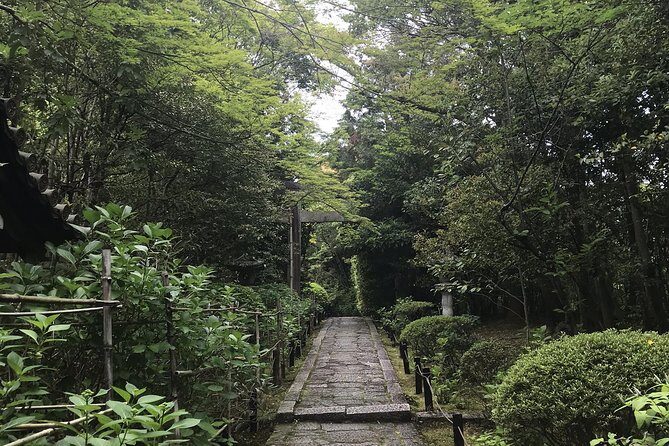
Kyoto can feel like a theme park if you only chase the busiest landmarks. This tour is built as a counterweight. You’re not just moving from one famous gate to another. You’re spending real time in quiet temple gardens and lesser-visited spaces where you can hear your own footsteps.
I like that the schedule is coherent: gardens first, then shrines, then a temple moment that hits hard (Sanjusangendo). The craft museum at the end adds another kind of calm—wabi-sabi design you can see in everyday life, not just in theory.
It’s also private in the practical way that matters. No packing in with strangers. No standing at the edge while someone else blocks your view. With a small group and a dedicated guide, you can ask questions and take breaks without feeling like you’re slowing everyone down.
You can also read our reviews of more private tours in Kyoto


Price and logistics: what $690 really means
The price is $690 per group (up to 4) for about 8 hours, and it’s booked about 80 days in advance on average. That last part matters: if you know your dates, don’t wait until the last minute.
Here’s the value math. If you’re a full group of four, you’re paying about $172 per person for guide time and the itinerary support. If you’re a couple, it’s closer to $345 per person. It’s still not a bargain like a public bus tour, but it’s also not priced like a luxury limo day. You’re paying for access to a calmer route, smaller-group pacing, and guide attention.
Now the cash layer—because Kyoto still runs on it. You’re required to bring:
- 1,500 yen cash for lunch
- 1,000 yen cash for transportation
- 3,500 yen cash for admission tickets (listed as ticket fee for 5 sites)
Admission isn’t included at each stop, so plan to have that money ready. If a site gets dropped due to time, you might not need the full admissions total—still, it’s safest to carry the stated amount and let the guide handle the math on the day.
Your day timeline: a calm plan that still moves
This is an 8-hour day with a 9:00 am start. You’ll begin at Keage Sta. (Higashikomonozacho) in Higashiyama Ward and finish at the Kawai Kanji Memorial House area, about a 5-minute walk to Umamchi Bus Stop.
A big practical point: with temple and shrine visits, the pace isn’t just about walking. It’s about waiting for quieter moments, stepping aside for views, and taking time to look at details. If weather is good, the day usually flows. If it’s tight, the guide can adjust and you’ll decide what gets cut.
If you hate rigid schedules, this is the good kind of structured. You still have a route, but you’re not trapped by it.
Konchi-in: architecture, gardens, statuary, and quiet paintings
Konchi-in is your first taste of Kyoto without the crowd pressure. The highlight here is range: high-level architecture, gardens, statuary, and paintings, all in a tranquil setting far from the masses.
Why this stop works early in the day: the morning energy is calmer. You also get oriented to Kyoto’s “read the space” style—how sightlines, walls, and garden placement guide your eyes.
What to watch for:
- How the garden and architecture frame each other, so you feel inside the scene rather than just looking at it.
- The way statuary and paintings create pauses, so you naturally slow down.
Possible drawback: Konchi-in is listed at about an hour, and in Kyoto, an hour can either fly or feel perfect depending on how much you like detail. If you’re more into big sights than quiet ones, you might want to make sure you spend your time on the aspects you enjoy most (paintings vs. garden views vs. statuary).
Tenjuan Garden: a fairy-tale forest feeling in one visit
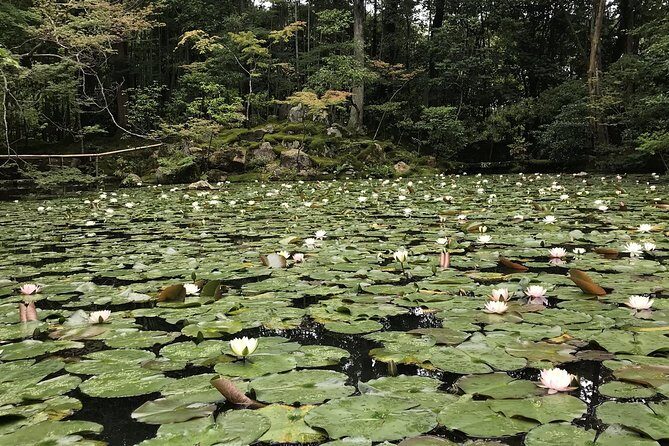
Next is Tenjuan Garden, where you spend time in two gardens. One of them gives the sensation of suddenly stepping into a forest and finding a fairy-tale world.
This is one of those descriptions that actually sounds like marketing—until you remember Kyoto gardens are designed to create controlled surprises. The “sudden” shift is the point. You’re not just walking in a garden; you’re transitioning into a mood.
How I’d approach this stop: take your photos sparingly and let your eyes adjust. Garden design often looks best when you’re not constantly hunting for the perfect angle.
Time note: one hour is listed. If you’re the type who wants to linger, you’ll want to ask the guide about the best order of viewing so you don’t rush the moment that matters most to you.






Heian Shrine: the garden behind the shrine
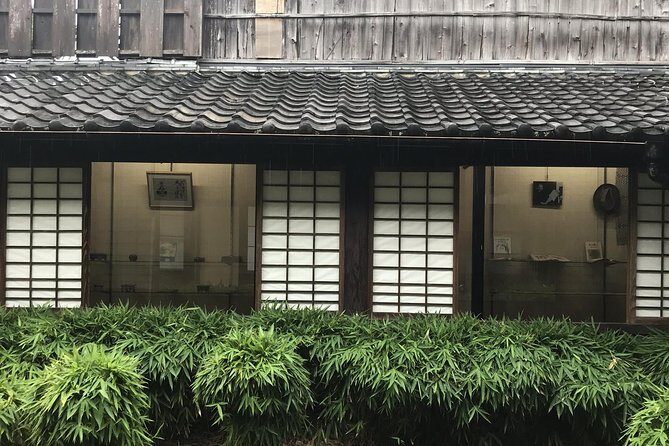
Heian Shrine is described as a popular tourist site, but the standout here is what most people skip: the garden behind the shrine. The tour gives you time to walk through one of the most picturesque gardens in all of Kyoto.
That detail is the whole value of this experience. You’re using the famous location as a doorway, then moving into the quieter, more rewarding space.
What you’ll likely enjoy:
- A calmer walk that still feels special because the garden layout does the work for you.
- Time to notice how the garden changes with your position—because garden depth is usually a viewpoint game.
Small consideration: if you arrive with high expectations for crowd-level calm right away, remember the approach area can be busy. The payoff is once you’re inside the garden zone.
Chishaku-in: a hardly-visited garden plus sliding-door paintings
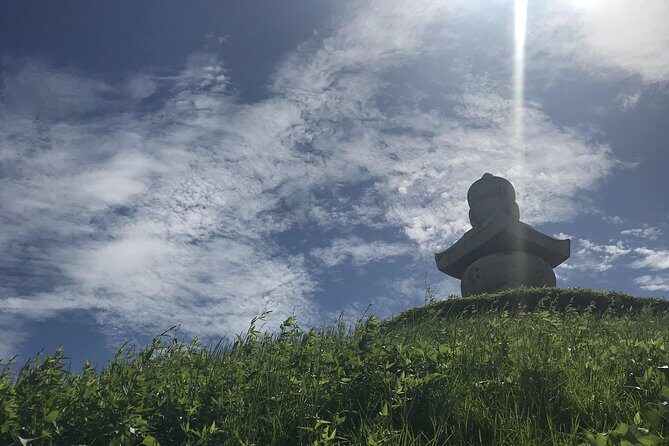
Chishaku-in is all about less visited plus art. You’ll see a hardly-visited garden that can transport your mind, and you’ll also see sliding door paintings by one of Japan’s most heralded painters.
This is a great mid-day stop because it mixes sensory calm (garden) with visual intensity (paintings). Even if you don’t know the painter’s name, you can still appreciate the craftsmanship and the way the paintings shape how the space feels.
Drawback to consider: the paintings stop can be the part where your enjoyment depends on your curiosity about Japanese visual design. If you love it, you’ll be glad you came here instead of skipping straight to the biggest temple name.
Sanjusangendo Temple: the 1,001 golden Buddhas moment
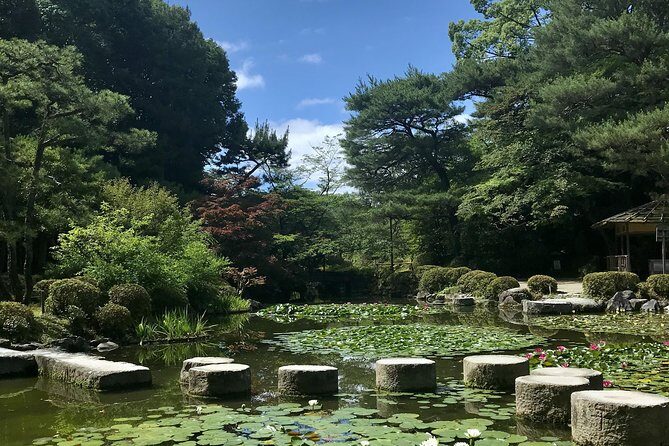
Then comes the big one: Sanjusangendo Temple, described as one of the oldest structures in Kyoto and home to 1,001 golden Buddha.
If you want a clear “memory hook” for the day, this is it. Kyoto does calm well, but it also does spectacle. This temple is a perfect end-of-chapter for the garden route because it flips you from quiet pacing to sheer visual focus.
Practical way to enjoy it:
- Slow down enough to register the repetition, not just the headline number.
- Look for how your eye moves across the space. With scenes like this, your brain starts pattern-matching, and that’s when it becomes more than a photo stop.
Time: it’s listed as one hour. If you’re the type who can stare at details for a long time, you may wish you had more. Still, for an 8-hour day that also includes shrines and a museum, an hour is a reasonable balance.
Toyokuni Shrine: samurai dedication and Japan’s largest bell
Toyokuni Shrine is short—about 20 minutes—but it’s packed with a specific kind of wow. It’s a shrine dedicated to a pivotal samurai in Japan’s history, and on the grounds you’ll see the largest bell in Japan.
This stop works like a breather. After Sanjusangendo, you get a fast hit of another subject—history through a shrine setting—without losing the rhythm of the day.
What to expect:
- A focused visit where you’ll look, absorb, and move on.
- A shift from temple hall intensity to shrine ground atmosphere.
Consideration: because it’s brief, it’s best for people who like “small stop, strong payoff” rather than long reflective time.
Kawai Kanjiro Memorial Museum: wabi-sabi in a home, not a stage
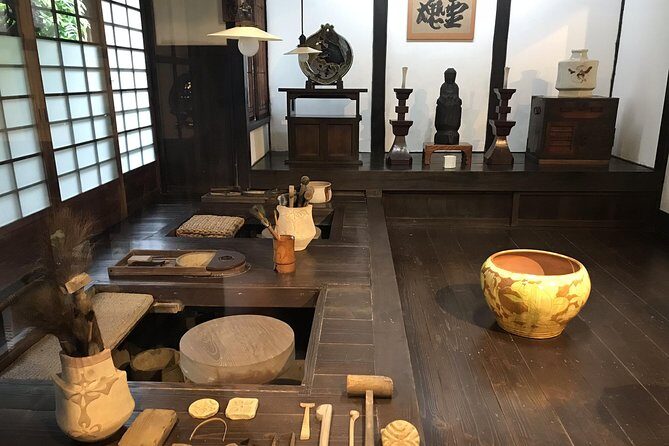
Your final stop is Kawai Kanjiro Memorial Museum, housed in the converted home of a noted 20th century master potter. The design and living space reflect wabi-sabi, and the tour notes that it will feel unlike any other place you visit in Kyoto.
This is where the day becomes more personal. You’re no longer only learning about religion and gardens. You’re learning how a craft tradition shapes daily life: materials, textures, irregularities, and calm functionality.
Why I like ending here: it’s a natural landing pad after a packed day of temples. A museum in a home setting often feels quieter, more human, and less like you’re scanning for the next landmark.
Time note: one hour is listed. If you love ceramics or slow design, you’ll likely want more. But it’s a strong finish for an 8-hour itinerary.
How the guide keeps it worth your time
This tour includes guide service, and the reviews you’ll find for Andrew’s work point to the same theme: the explanations make the spaces click. I don’t mean big speeches. I mean practical, grounded guidance on what you’re looking at and why it matters.
When a tour works, you feel like you’re not just touring. You’re learning a way of noticing. That’s especially important in Kyoto, where a garden wall, a painted panel, or a layout choice can carry as much meaning as a famous building.
Also, the route is designed with real-time pacing in mind. The note says that depending on pace, you might not be able to visit every site on the route. If that happens, you’ll determine what gets eliminated. That’s a rare touch of control. It prevents the day from turning into a frantic sprint.
Who should book this Kyoto Path Less Traveled tour
Book it if you want:
- Private, small-group pacing in Kyoto’s quieter corners
- A day that balances calm gardens with one major temple spectacle
- A guide-led experience where art, space, and meaning are explained in plain terms
Skip it if:
- You only care about the most famous Kyoto headline sites and don’t want a route that may drop some stops to protect time and pace
- You don’t want to handle extra cash for lunch, transport, and admissions
This tour is ideal for people who have visited Kyoto before and still want to feel surprised without forcing it. It’s also a strong first-timer choice if you’re the kind who gets more out of gardens and details than big crowds.
Should you book?
I think it’s worth booking if you want Kyoto to feel like Kyoto—not a checklist. The standout value is the blend: quieter garden temples, a focused shrine stop, the Sanjusangendo golden Buddha wow moment, and a craft museum ending that keeps the day gentle.
The main reason to pause is budget + cash planning. With lunch, transport, and admission extras, you’ll spend more than the base price. Also, the day can shorten if pacing or conditions require it, and you’ll help decide what gets cut.
If that sounds fair to you, and you like calm, artful places, this private route is the kind of Kyoto day you’ll keep thinking about long after you leave the gardens.
FAQ
How large is the group for this private tour?
It’s a private tour for your group, with pricing set for up to 4 people.
How long is the Kyoto Path Less Traveled private tour?
The duration is listed as about 8 hours.
What is included in the tour price?
The included item is guide service.
What extra cash do I need to bring?
You need cash for lunch (1,500 yen), transportation (1,000 yen), and admission fees totaling 3,500 yen per person for 5 sites.
Where do we meet, and where does the tour end?
The tour starts at Keage Sta. Higashikomonozacho, Higashiyama Ward, Kyoto, and ends outside Kawai Kanji Memorial House. It’s about a 5-minute walk to Umamchi Bus Stop.
What time does the tour start?
The start time is 9:00 am.
Is there a mobile ticket?
Yes, the tour includes a mobile ticket.
Can I cancel and get a full refund?
Yes. You can cancel up to 24 hours in advance for a full refund. If you cancel less than 24 hours before the start time, you won’t receive a refund.
What happens if the weather is bad or you can’t visit every stop?
The experience requires good weather. If it’s canceled due to poor weather, you’ll be offered a different date or a full refund. Also, depending on pace, you may not visit every site, and you’ll determine which sites are eliminated.