REVIEW · KIYOMIZU TOURS
Kyoto Tea Ceremony & Kiyomizu-dera Temple Walking Tour
Book on Viator →Operated by MagicalTrip Inc. · Bookable on Viator
Kiyomizu-dera hits hard, even before the matcha. I like that this tour pairs a UNESCO temple visit with a slow, peaceful tea ceremony, so you’re not just sprinting between sights. I also really appreciate the way the guide can connect what you see to everyday Kyoto beliefs and rituals, including Shinto and Buddhist ideas shared by guides like Hide. The main thing to consider is simple: it’s a walking tour on slopes, and Kyoto summer can be hot and humid, so bring water and a hat.
This is a map-light way to do Kiyomizu-dera, starting at the Yasaka Shrine area and moving through the famous old-street approach. You get photos along the way, a visit to the Otowa waterfall with its three-stream tradition, and time to see the view from the wooden stage.
Plan for a relaxed 3 hours with a small group (max 6), a mobile ticket, and a little food: snacks plus matcha. One more practical note: the tour can’t guarantee allergy-free meals, since food comes from kitchens outside the tour operator.
In This Review
- Key points at a glance
- Meeting at Yasaka Shrine: finding the start and setting expectations
- Kiyomizuzaka streets and Yasakakoshindo: classic Kyoto lanes with stops that matter
- Kiyomizu-dera and the wooden stage: the view is the reward
- Otowa Waterfall: how the three streams and good luck tradition works
- Passing Kiyomizu-zaka and Sannenzaka/Ninenzaka: the walk has stories
- Tea ceremony and matcha: the calm break in the middle of Kyoto
- Group size, pace, and photo time on a 3-hour route
- Price and value: what $109.39 really buys you
- Practical tips so you don’t suffer on the slopes
- Should you book this Kyoto tea ceremony and Kiyomizu-dera walk?
- FAQ
- How long is the Kyoto Tea Ceremony & Kiyomizu-dera Temple walking tour?
- Where is the meeting point, and what time does the tour start?
- What is the group size limit?
- What is included in the price?
- Do I need to bring my own snacks or drinks?
- Are children allowed on this tour?
- Is the food allergy-friendly?
- Is it possible to cancel for a refund?
Key points at a glance
- Kiyomizu-dera UNESCO plus Otowa Waterfall good-luck tradition, all in one morning block
- Small group (max 6) so you’re not lost in a crowd on the slopes
- Tea ceremony + matcha experience built into the walking route, not tacked on later
- Stroll the old streets of Kiyomizuzaka and pass Sannenzaka/Ninenzaka for the classic Kyoto feel
- Guides can bring the sites to life, including temple formalities and belief connections (for example, Hide-style explanations)
Meeting at Yasaka Shrine: finding the start and setting expectations
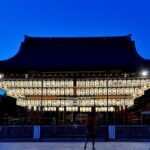
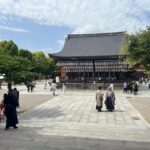
The tour starts at Yasaka Jinja Nishiromon Gate (Western Tower Gate) at 9:00 am. If you’ve ever arrived in Kyoto and tried to “just find the group,” you’ll know how easy it is to miss a meeting point when streets twist and signage gets busy. This one helps because you’re anchored at a very specific gate, and it’s near public transportation.
I like the early start because Kiyomizu-dera’s approach streets can get crowded later. Meeting at Yasaka Shrine also puts you in the right mindset: you’re already in Higashiyama’s temple-and-tradition zone before you even start the main walk.
If you’re picky about comfort, plan your outfit like you’re doing a gentle hike. Even if the pace is easy, the path includes slopes, steps, and sightseeing stops. Wear shoes you’d wear for walking all morning, not just museum floors.
You can also read our reviews of more walking tours in Kyoto
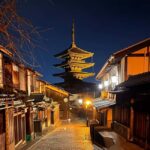
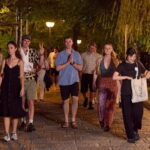
Kiyomizuzaka streets and Yasakakoshindo: classic Kyoto lanes with stops that matter
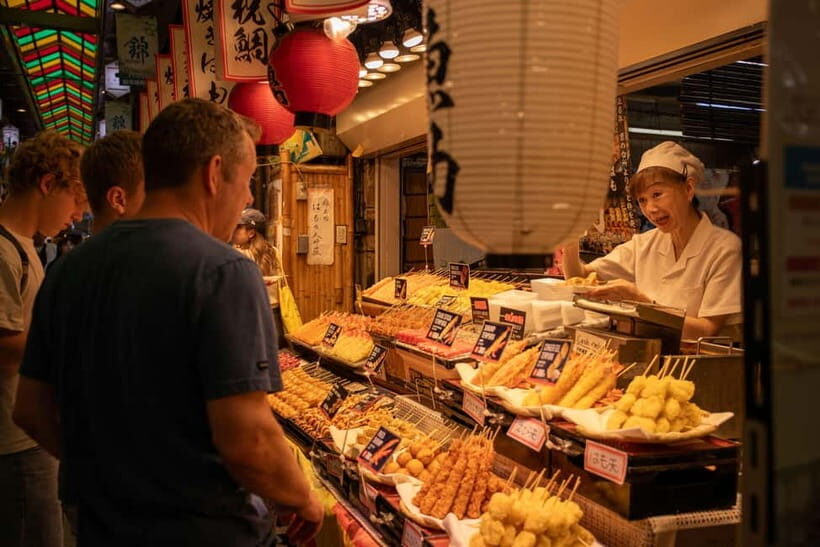
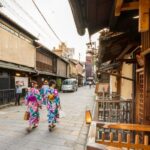
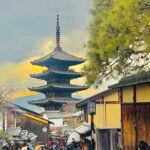
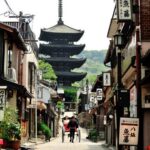
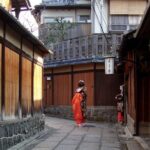
Once you’re moving, the tour focuses on Kiyomizuzaka, the cluster of streets that gives Kyoto its storybook look. This isn’t just photo time. You’re guided through the old-teashop atmosphere, with traditional sweets shops and sundried-food shops lining the route as you head toward the temple area.
Along the way, you’ll also visit Yasakakoshindo, described as one of the more colorful temple stops connected to the walk up. The point of this section is orientation: you learn what you’re looking at, then you get to keep your eyes open while you wander. It’s a smart way to handle Kyoto’s “where do I go next?” problem without studying a map.
The lighting can be nice for pictures here, and the tour includes photo stops, so you don’t have to guess where the best angles are. Still, be realistic: if you want the emptiest photos, you’ll appreciate being there earlier with the group.
Kiyomizu-dera and the wooden stage: the view is the reward
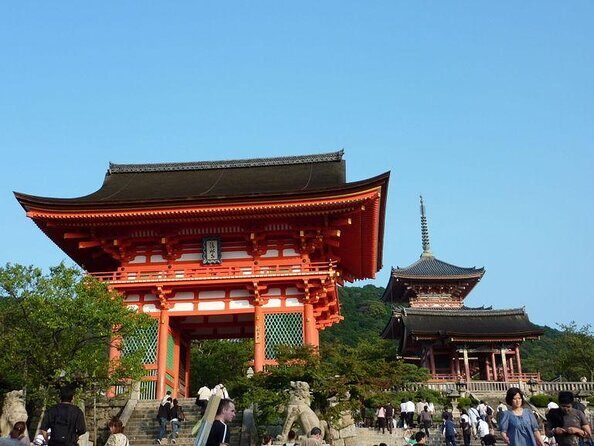
Now comes the star. Kiyomizu-dera is one of Japan’s most famous temples, built about 1,200 years ago on the site associated with Otowa Waterfall. The name connects to the pure water idea, and the tour makes sure you don’t treat it like a single “look at the temple” stop. You’ll be guided through what to notice once you reach the main viewing area.
One of the highlights is the time on the wooden stage, about 13 meters above the ground. From there, you get a view framed by the temple grounds, with cherry and maple trees and Kyoto’s cityscape stretching out in the distance. Even if you’ve seen photos, being there in person is different. You can feel the scale of the approach and why this place became a must-see.
This is also where the guide’s explanations pay off. When someone can connect temple layout and worship customs to what you’re seeing in real time, the visit becomes more than sightseeing.
Otowa Waterfall: how the three streams and good luck tradition works
Right at Kiyomizu-dera, you’ll visit Otowa Waterfall, a site tied to the worship tradition there. The water is divided into three separate streams, and the ritual is done using a cup attached to a long pole. You choose one stream and drink from it as part of the good-luck idea.
You don’t need to memorize everything beforehand. The guide helps you understand the purpose of the ritual so you can participate in a respectful way without feeling lost.
I like that the tour includes this rather than leaving it as a “try it if you find it” add-on. Otowa Waterfall is easy to overlook if you’re only focused on the dramatic viewpoint, but it’s one of the places that turns Kiyomizu-dera from scenery into experience.
If you have any dietary or medical limitations around drinking water from public sites, use common sense and follow your comfort level.
Passing Kiyomizu-zaka and Sannenzaka/Ninenzaka: the walk has stories
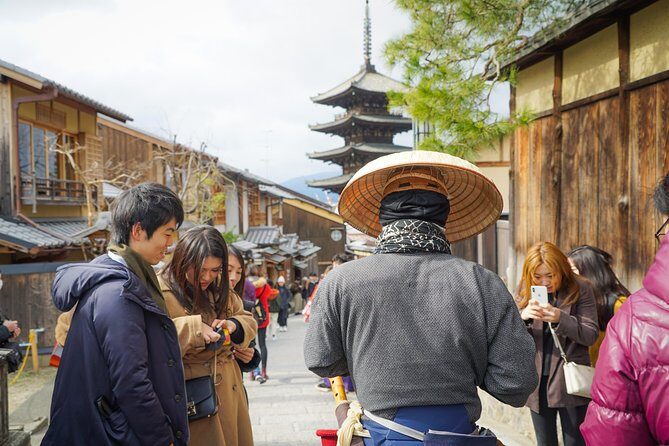
After the main temple time, you’ll continue along Kiyomizu-zaka near Kiyomizu-dera. This is a 1-km pilgrimage route with a gentle slope, connecting with souvenir areas further down and up toward the temple. You’ll pass shopfronts that sell Kyoto staples like pickles and yatsuhashi, and there’s even mention of a Kiyomizu doll store near the temple gate.
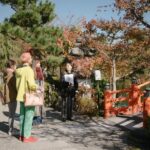
The second big street section is Sannenzaka and Ninenzaka. These slopes are historic—legend says the name Sannenzaka relates to the year 808 (Daido 3rd year), though there are different theories. The famous story is the warning legend: if you fall down on Sannenzaka, you’ll die within three years (or your life span gets shortened by three years). It’s an urban legend that became widely believed in the mid-Edo period, and the basic takeaway is to watch your step.
This kind of storytelling matters. It makes you slow down on the sidewalk instead of marching forward on autopilot. And since this tour is timed and guided, you don’t feel like you’re just browsing shops—you’re learning why the street exists and why it’s famous.

Tea ceremony and matcha: the calm break in the middle of Kyoto
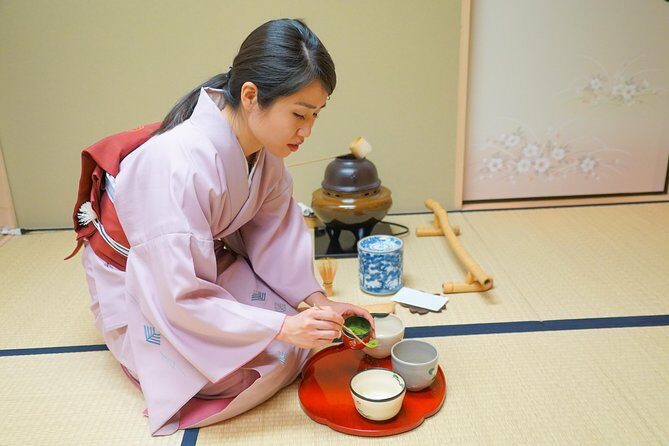
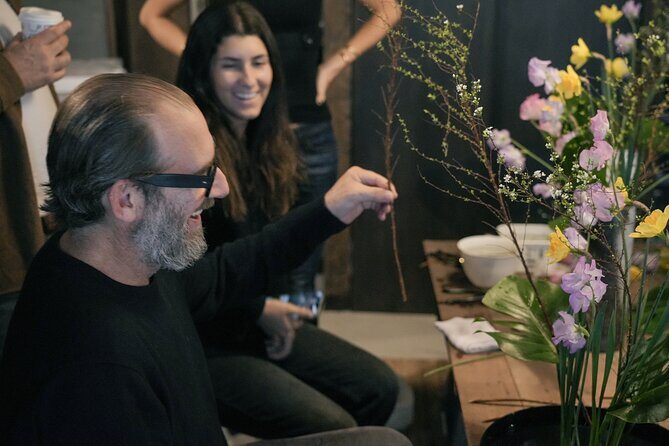
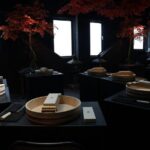
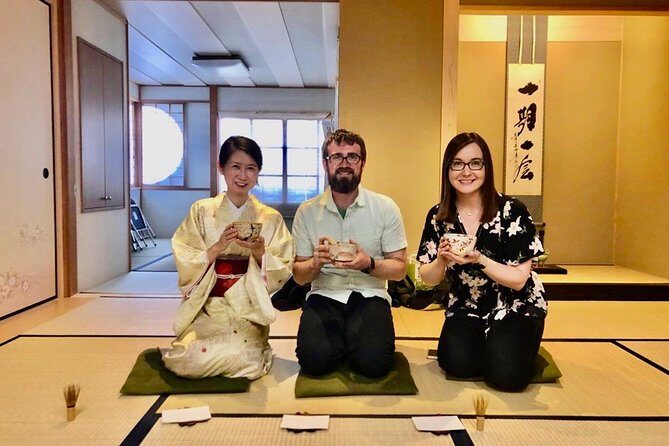
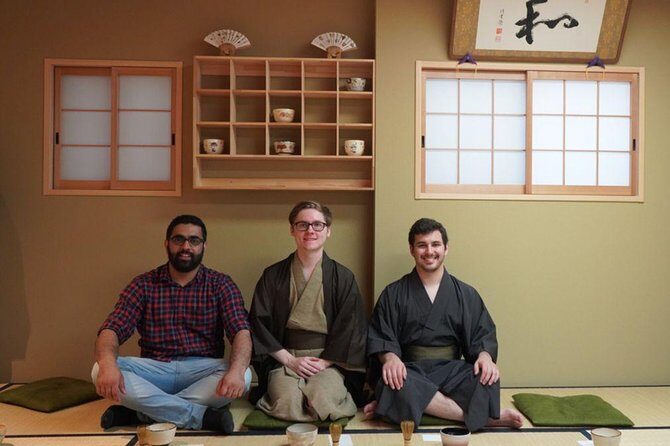
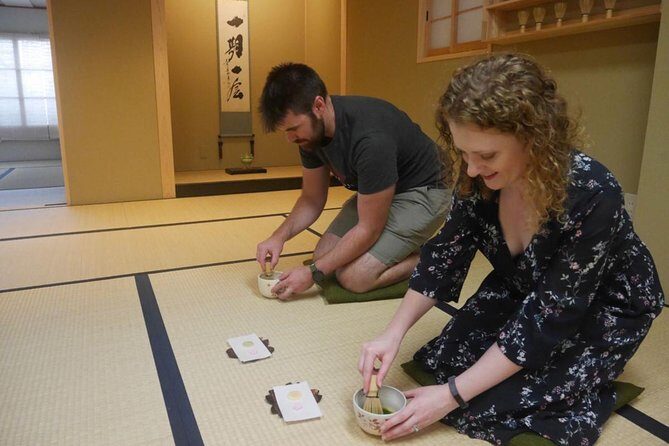
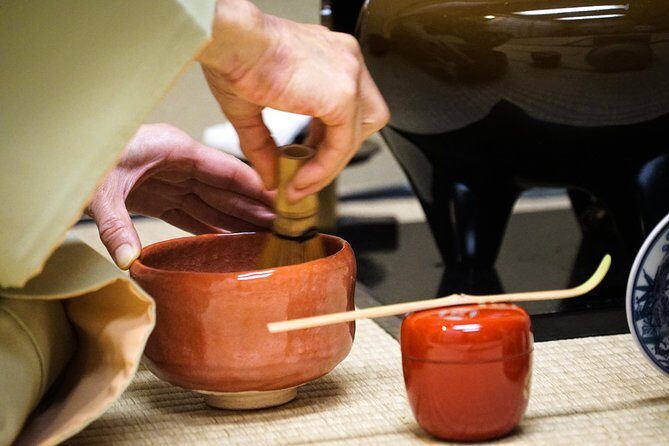
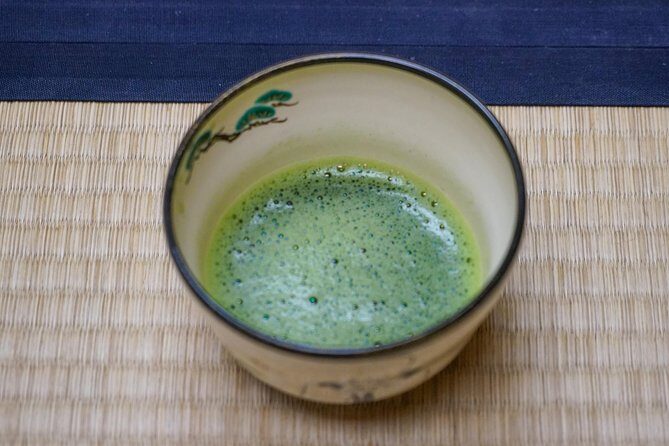
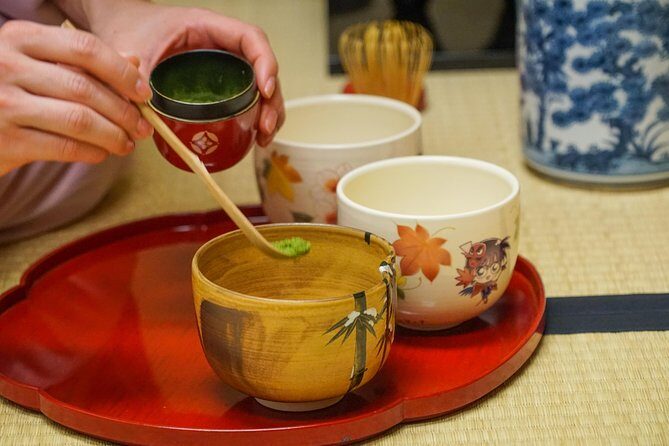
This tour includes a traditional tea ceremony experience plus matcha (green tea) and snacks. It’s built into the flow after temple sightseeing, which I think is smart. The tea part gives you a reset from walking, crowds, and the constant street motion outside.
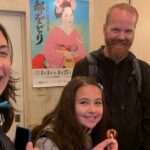
The ceremony itself is usually where you learn more than the drink. You’ll see formalities and how the experience is meant to be handled. In one example, the tea ceremony host Haruki was described as sweet and entertaining, helping the group relax into the ritual instead of treating it like a quick performance.
So what should you expect? A seated, guided tea experience where you get to participate, ask questions, and take the moment seriously without needing prior knowledge. The snacks and matcha also help you stay comfortable during the rest of the walk.
Two practical notes:
- Drinks beyond matcha aren’t included, so if you get thirsty, you’ll likely buy something separately.
- Food isn’t guaranteed allergy-free, since snacks can come from kitchens outside the tour operator. If you have serious allergies, you’ll need to plan carefully and ask questions at booking.
Group size, pace, and photo time on a 3-hour route
This is a maximum of 6 travelers, so the pace stays manageable and questions don’t get pushed aside. You also avoid the worst parts of large tour groups in Kyoto—blocked sidewalks, long lines at viewpoints, and the constant feeling you’re being dragged along.
The tour duration is about 3 hours, which is a good length for jet lag, a first day, or a half-day slot between bigger plans. You get enough time to see the big hits (Kiyomizu-dera, Otowa Waterfall, old streets) without turning the day into a full-on endurance event.
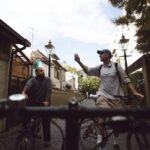
Photo support is included, which is a big deal in Kyoto’s steep areas. You can focus on where you’re standing and let the guide help with timing. You’ll also have some picture opportunities during the walk, including at a photogenic spot early on.
A tiny caution: because it’s not a long tour, you should arrive ready to go at 9:00 am. If you lose time hunting for the start gate, you’ll feel it in the schedule.
Price and value: what $109.39 really buys you
At $109.39 per person for roughly 3 hours, the value comes from combining four things that are often priced separately in Kyoto:
- Kiyomizu-dera entrance fee
- Tea ceremony experience
- Snacks and matcha
- A Kyoto local guide for walking orientation and explanations
If you tried to replicate this on your own, you’d spend time researching the route, paying for admission, and booking a tea ceremony separately. Here, the tour compresses decision-making into one straightforward morning.
You’re also paying for guidance in the “how to behave” parts of temple and ceremony culture—those details matter, and they’re hard to learn from a phone app in the middle of a crowd. The guide can also point out what to look for as you move through Kiyomizuzaka and Sannenzaka.
So the best way to judge the price: it’s not only sightseeing. It’s sightseeing plus a structured cultural stop, handled for you.
Practical tips so you don’t suffer on the slopes
Kyoto in warm months is no joke. The tour specifically recommends water and a hat due to heat and humidity. I’d add one more thing: plan for sun protection, since the streets and temple approach don’t always offer shade when you want it.
Shoes matter here. You’ll be walking, passing slopes, and moving through areas with steps. Comfortable footwear keeps the fun portion of the day from turning into ankle management.
Food-wise: you’ll get snacks and matcha, but there’s no promise of allergy-free options. If you’re sensitive, treat this as “ask first” territory. The tour notes that substitutions might not be possible at certain stops, though they try to compensate at different points in the tour.
Finally, confirm the meeting point on a map before you head out. Start at Yasaka Jinja Nishiromon Gate, not “somewhere near Gion.” Kyoto streets can look close on screen and feel far in reality at street level.
Should you book this Kyoto tea ceremony and Kiyomizu-dera walk?
Book it if you want a guided, efficient first look at Higashiyama and you care about experiencing temple culture instead of just collecting photos. This is also a great choice if you like a calm break built into the itinerary, since the tea ceremony adds a slow, respectful pause after the walking.
Skip it or reconsider if:
- You need guaranteed allergy-friendly food options.
- You struggle with slopes and want a more level route.
- You’re arriving late or don’t like being tied to a specific 9:00 am start.
If you’re flexible, this tour gives you a solid hit list—Kiyomizu-dera, Otowa Waterfall, iconic streets like Kiyomizuzaka and Sannenzaka, and a tea ceremony with matcha—without turning the day into a solo navigation project.
FAQ
How long is the Kyoto Tea Ceremony & Kiyomizu-dera Temple walking tour?
The tour lasts about 3 hours.
Where is the meeting point, and what time does the tour start?
You meet at Yasaka Jinja Nishiromon Gate (Western Tower Gate) at 9:00 am. The activity ends back at the meeting point.
What is the group size limit?
This is a small-group activity with a maximum of 6 travelers.
What is included in the price?
Included are Kiyomizu-dera Temple entrance fee, the tea ceremony experience, snacks (a few food samplings), photos during the tour, 3 hours with a Kyoto local guide, and matcha (green tea).
Do I need to bring my own snacks or drinks?
Additional food and drinks are not included. Matcha and snacks are included as part of the tour.
Are children allowed on this tour?
Children under 6 years old are not allowed.
Is the food allergy-friendly?
The tour states it can’t guarantee allergy-free or cater to dietary restrictions because the food is prepared in kitchens that do not belong to the operator. Substitutions may not be possible at every stop.
Is it possible to cancel for a refund?
Yes. You can cancel for a full refund up to 24 hours in advance of the experience start time.