REVIEW · FOOD
Kyoto: Replica food making experience
Book on GetYourGuide →Operated by JEUGIA Corporation · Bookable on GetYourGuide
You make fake food in Kyoto, for real. This hands-on workshop teaches Japan’s restaurant food-sample culture, and you’ll leave with a beautifully packaged replica food souvenir. I loved how interactive it is, especially pouring melted wax to form tempura textures. I also like that the final model comes home in supermarket-style packaging. Only drawback: it’s for display, not dinner.
The experience runs as a small group (up to 4 people), so the instructor can watch your hands, explain clearly in English or Japanese, and help you get a better result. You’ll be working with hot water and wax, so it’s worth dressing with that in mind.
In This Review
- Key things you’ll notice in the Kyoto food-sample workshop
- Where you’ll craft Kyoto’s replica food near Sanjo Meiten-gai
- The core workshop: making lifelike shrimp and pumpkin tempura replicas
- Getting the optional lettuce replica right (if you choose the add-on)
- Dress for wax and hot water: what to expect during the 1-hour session
- Finish and take-home: packaging that looks like the real supermarket thing
- Price and value: is $22 worth it for Kyoto?
- How to plug this into your Kyoto day plan
- Who this replica food making class is best for
- Should you book Kyoto replica food making?
- FAQ
- What foods will I make in the Kyoto replica food experience?
- How long is the workshop?
- Is the replica food edible?
- Is it suitable for children?
- What languages are available?
- Where do I meet for the experience?
Key things you’ll notice in the Kyoto food-sample workshop
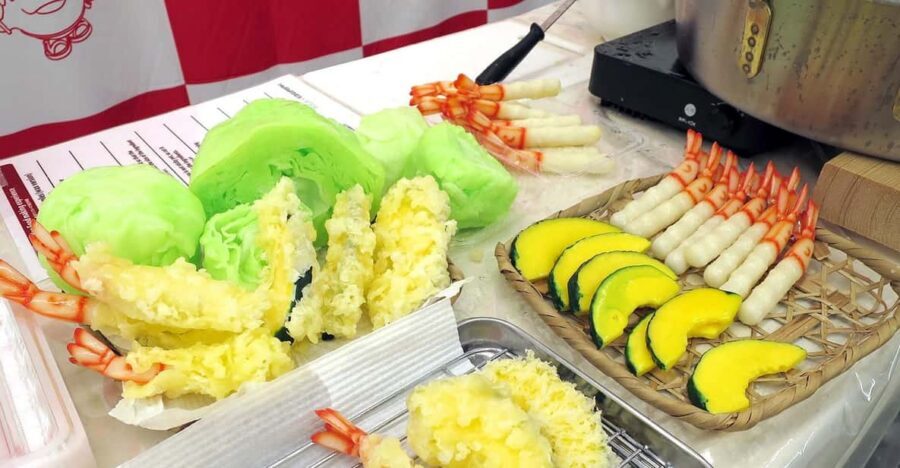
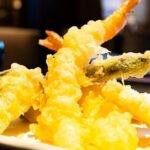
- Shrimp and pumpkin tempura replicas, made using melted wax and realistic batter-style wrapping
- A take-home model packaged like the items you see in Japanese shops and supermarkets
- Small group size (up to 4), which makes it easier to get guidance when your wax won’t cooperate
- Optional lettuce replica if you want a second type of display food
- A tight 1-hour schedule, built for learning the full process without feeling rushed
Where you’ll craft Kyoto’s replica food near Sanjo Meiten-gai
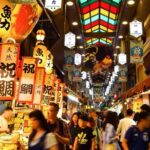
Finding the place is half the fun. Your meeting point is diagonally across from Kani Douraku, the one with the big crab signboard. In this area, you’re basically in the middle of Kyoto snack-land: small streets, lots of shops, and easy access to places you can eat after your workshop.
What I like about this location for a day plan is the timing. One hour at the workshop is enough to give you a real activity, but you’re not losing a full chunk of your sightseeing day. And because it’s near food spots (including a nearby tempura restaurant), the whole experience naturally tees you up for dinner right after.
A practical note: arrive at your reserved time. They want to explain how to make the dish all at once, so slipping in late can mean you miss the flow of the steps.
You can also read our reviews of more food & drink experiences in Kyoto
The core workshop: making lifelike shrimp and pumpkin tempura replicas
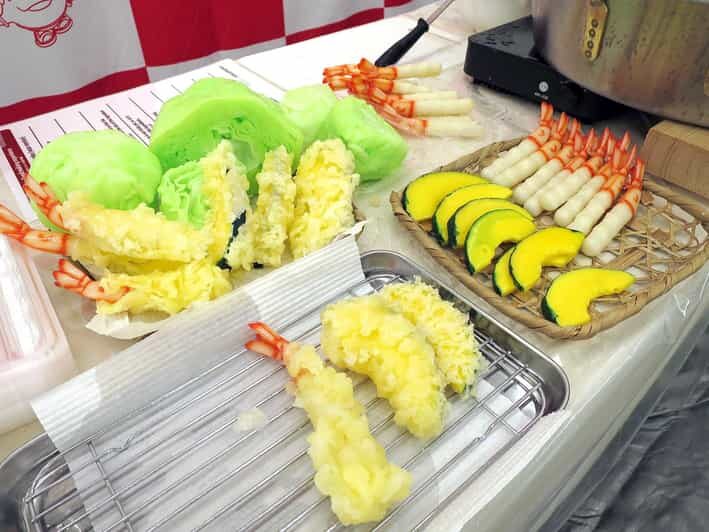
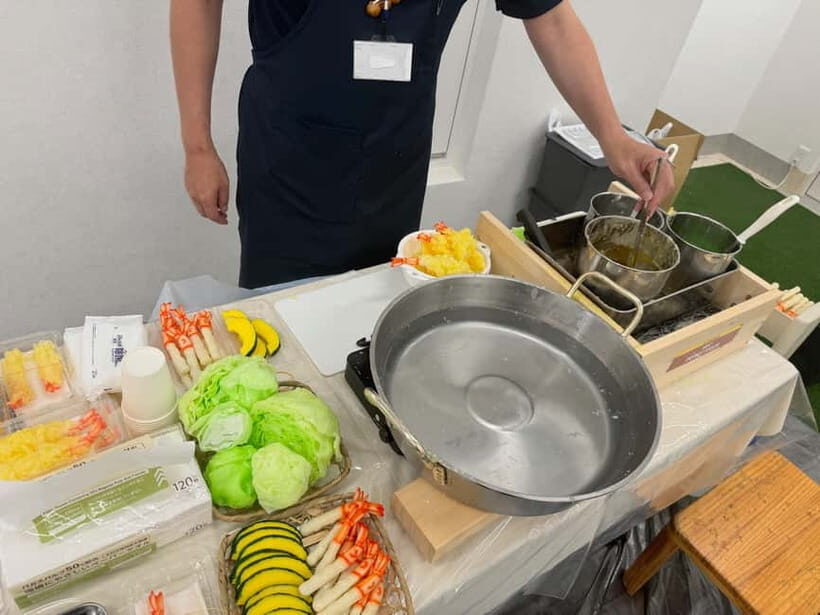
This is a hands-on class where you make a display food item that looks like it belongs on the front of a Japanese restaurant. You’ll start by creating the shapes using melted wax, then you’ll wrap the pieces with a batter-like look.
Here’s the process, in the order you’ll experience it:
1) Melted wax shaping (the base texture)
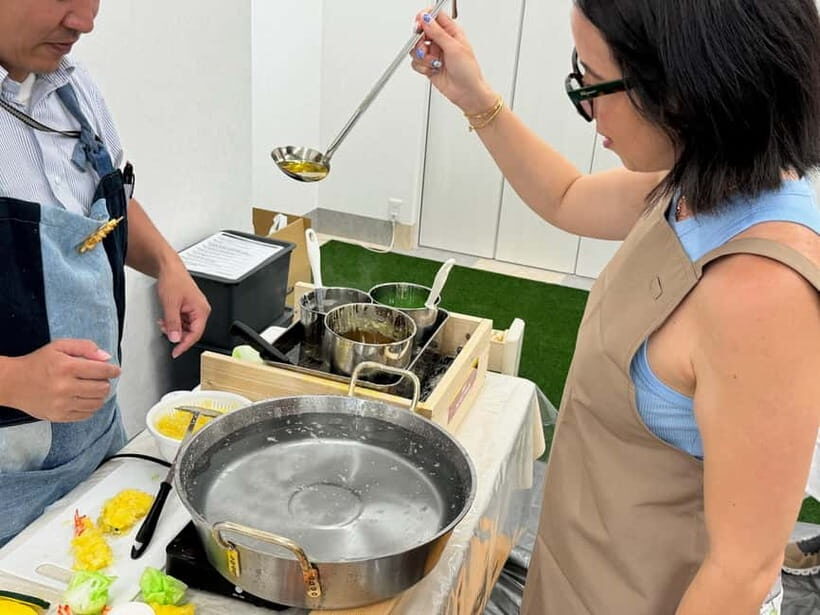
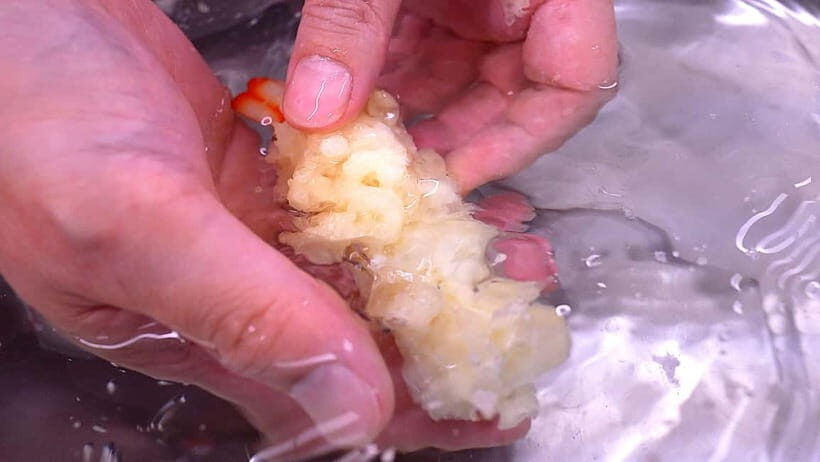
You’ll pour melted wax into hot water, then shape it before it hardens. This part matters because it sets the overall form and texture of your food sample. If the wax cools too quickly or your shaping is off, it can be harder to fix later—so listen closely when your instructor explains the timing.
2) Wrapping with a realistic-looking batter
Once you’ve got your wax shapes, you wrap the shrimp and pumpkin in a batter-style layer that’s designed to look like tempura. This is where things get satisfying fast: you go from plain shapes to something that looks like a fried, crisp-coated piece of food behind restaurant glass.
3) Learning the “how” behind the look
This class isn’t just craft time. It’s also a window into Japan’s replica sample culture—the lifelike models you see outside eateries. You’ll get a clearer sense of why these displays matter: they’re a visual menu that helps people choose quickly, even from the sidewalk.
What I found especially appealing is that you’re not just copying a picture. You’re using the traditional method: wax + shaping + coating. It’s tactile, a little challenging, and that challenge is part of why the final result feels earned.
Getting the optional lettuce replica right (if you choose the add-on)
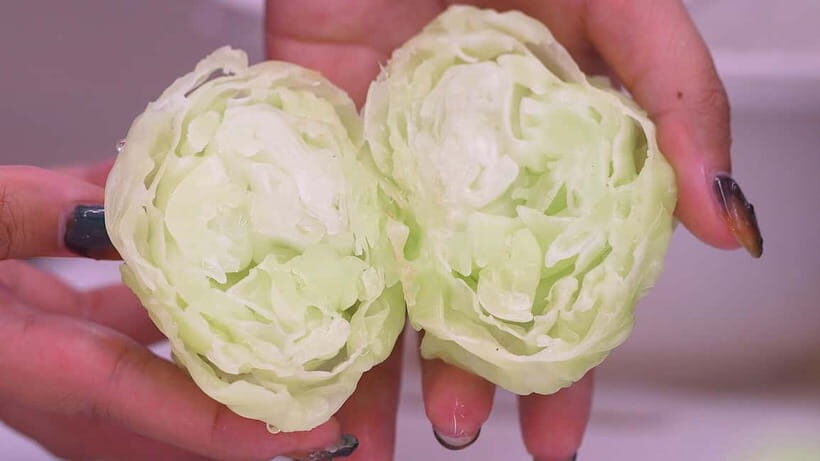
You can also choose to make a lettuce replica. That gives your take-home souvenir a bit more variety than a single bowl-style item.
Why this is a smart option: once you’ve mastered the workflow for wax shaping and wrapping, a second food type helps you practice what’s similar and what’s different. You’ll likely see how different shapes and textures need different handling, even if the overall steps feel related.
If you’re the kind of person who likes having something on your shelf that looks interesting from multiple angles, lettuce is a nice contrast to tempura’s fried, bumpy look.
Dress for wax and hot water: what to expect during the 1-hour session
The workshop is scheduled for 1 hour, with the instructor explaining everything so you can complete the full dish-making process in one go. In practice, the session can feel like it runs at a steady pace rather than “lecture first, craft later.”
Here’s what to expect as you move through it:
- You’ll get guidance at the right moments, not just at the start.
- You’ll be working with hot water and wax, so the environment is “hands-on first,” with instruction built around the physical steps.
- You may want to take photos as you go, since the whole point is seeing how your food sample turns from wax to something that looks restaurant-ready. (They also encourage you to document the experience.)
What you should do ahead of time:
- Wear something you’re comfortable getting a little messy in.
- If you have a favorite light-colored shirt, consider not wearing it. Wax is part of the craft.
- You may be offered aprons or chef-style jackets, but your safest move is just dressing like you’re doing a craft class.
Not suitable for very young kids: it’s not recommended for children under 6, and they may ask for parental assistance for children.
Finish and take-home: packaging that looks like the real supermarket thing
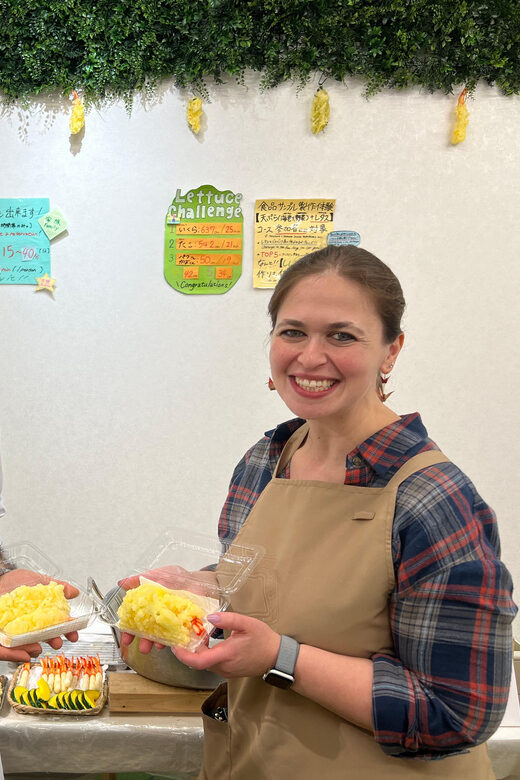
Your finished replica food doesn’t just come loose in a bag. You take it home packaged like real items you’d see in a shop.
That packaging detail is more than cute branding. It protects your souvenir and makes it look like an actual product you could have bought. It also helps with the “story” of the souvenir when you bring it back. You’re not just bringing a craft project—you’re bringing a piece of Japan’s outside-restaurant culture in a form you can display.
And yes, it’s very easy to forget how convincing it looks. The important part: replicas are for display only and shouldn’t be served at the dinner table by mistake. Treat it like a model, not edible food.
You can also read our reviews of more tours and experiences in Kyoto

Price and value: is $22 worth it for Kyoto?
At $22 per person for about an hour, this can be a surprisingly good value—especially if you like doing one hands-on activity per trip day.
Here’s why the price works:
- You get a complete workshop with all materials included.
- You don’t end with a generic keepsake. You leave with a realistic-looking replica food item you made yourself.
- The small group format matters. Up to 4 people means more attention and fewer “figure it out yourself” moments.
The only real cost to consider isn’t money. It’s time and interest. If you want only sightseeing, passive experiences, or strictly food you can eat, then a wax workshop isn’t the right trade. But if you enjoy making things with your hands, this is one of those Kyoto experiences that feels genuinely different from what most cities offer.
How to plug this into your Kyoto day plan
You can treat this as a “break” between sightseeing blocks. The location near the shopping arcade area is convenient for two reasons.
1) You can eat afterward without backtracking.
You’ll be near places that scratch the tempura craving right after you make tempura replicas.
2) You can combine it with street wandering.
Shopping arcades and nearby sights are easy to do before or after you craft your food sample. One hour is short enough that you won’t feel trapped in a single neighborhood.
A simple approach:
- Morning: do a few sights, then keep your workshop time later in the day
- Workshop: make your replica and take a break from walking
- After: grab a real meal nearby and enjoy the contrast between fake-but-real-looking food and the real thing
Who this replica food making class is best for
This workshop fits best if you:
- Want a hands-on Kyoto activity you won’t find the same way at home
- Like interactive crafts and don’t mind a little technique challenge
- Want a memorable, visual souvenir with cultural meaning
It’s also a nice choice for couples and families, as long as kids are old enough for the hot wax component and can follow along with support.
If you’re traveling solo and want something social but not crowded, the small group setup is a good match. If you’re traveling with picky eaters who won’t always like trying new foods, making a replica gives everyone a shared focus.
Should you book Kyoto replica food making?
Book this if you want a Kyoto souvenir with a story and a method you can explain later. It’s one hour, it’s small-group friendly, you get materials and a take-home replica, and it teaches the logic behind Japan’s food display culture in a way that feels practical, not performative.
Skip it if you’re mainly chasing edible tastings, or if working with wax and hot water sounds like a hassle you don’t want. Also consider packing: you’ll want space for the packaged replica, so travel light if you can.
If you’re already planning a day around food and neighborhood strolling in central Kyoto, this is one of those activities that turns into a highlight because you make something real with your own hands.
FAQ
What foods will I make in the Kyoto replica food experience?
You’ll make shrimp and pumpkin tempura replicas using melted wax and a batter-style wrap. There’s also an option to make a lettuce replica.
How long is the workshop?
The experience is scheduled for 1 hour.
Is the replica food edible?
No. These replicas are for display only and should not be served at the dinner table by mistake.
Is it suitable for children?
It’s not suitable for children under 6. For children, parental assistance may be requested.
What languages are available?
The instructor speaks English and Japanese.
Where do I meet for the experience?
You’ll meet diagonally across from Kani Douraku, which has a large crab signboard.