REVIEW · FUSHIMI INARI TOURS
Kyoto: Fushimi Inari Shrine Walking Tour
Book on Viator →Operated by Traveling Kyoto · Bookable on Viator
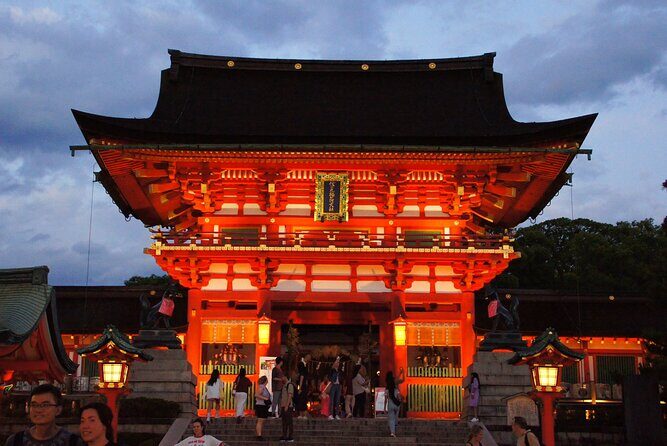
Fushimi Inari hits differently at night. This Kyoto guided walking tour focuses on what you’re seeing at Fushimi Inari-taisha—especially the torii gates and the Inari worship behind them—while keeping the whole experience moving at a relaxed pace for a 2-hour visit.
I like that the admission is included, so you’re not juggling ticket lines while you’re excited to get started. I also like the small-group feel (up to 10 people), because you don’t end up drifting behind the crowd or losing your place.
One thing to think about: this is a hike up mountain trails. Even though it’s only about 2 hours, you’ll want comfortable shoes, and you should expect some climb.
In This Review
- Key things I’d watch for on this Fushimi Inari walking tour
- Why the 6:00 pm timing works for Fushimi Inari
- Meeting at the Daily Yamazaki and getting oriented fast
- Entering Fushimi Inari-taisha: more than torii gate photos
- The spiritual meaning of Inari and the fox statues you’ll see
- Walking the scenic trails and finding viewpoints for reflection
- Crowd management and pacing: why small groups matter here
- Included entry, the English guide, and what the price is really covering
- What you should wear and plan for (practical tips)
- Who this tour is best for
- Should you book Kyoto: Fushimi Inari Shrine Walking Tour?
- FAQ
- What time does the Kyoto Fushimi Inari walking tour start?
- How many people are in the group?
- What’s included in the tour price?
- Is admission included or do I need to buy a ticket?
- Where is the meeting point?
- Do I need a physical ticket?
- Is food provided during the tour?
- What should I budget for tips?
- Can I cancel if my plans change?
Key things I’d watch for on this Fushimi Inari walking tour
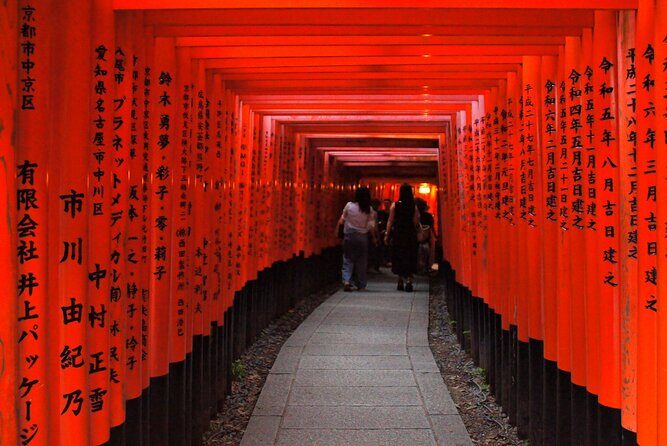
- Meaning behind the torii gates so they stop feeling like just a photo backdrop
- Included entry that helps you save time and start walking sooner
- Small-group pacing (max 10) to keep the guide’s attention where you need it
- Evening timing at 6:00 pm that can make the shrine feel calmer than mid-day
- Panoramic viewpoints reached via scenic trails, not just the main corridor
Why the 6:00 pm timing works for Fushimi Inari
This tour starts at 6:00 pm, which is a smart choice for most people. Fushimi Inari is famous, so it can feel packed at peak hours. Going in the early evening often helps the shrine feel more like a living place and less like a nonstop conveyor belt of selfies.
It also gives you a nice rhythm: you’re not spending your whole evening commuting and searching for the right turn. You meet at a clear local landmark (a Daily Yamazaki at the shrine area), then you head straight into the walking route with a guide. The whole tour stays around a 2-hour time window, which makes it easier to plan the rest of your Kyoto night.
And because this is a walking tour (not a sit-down intro), you get something that many fast shrine visits miss. You learn the why as you move through the space, instead of trying to cram it all into a quick read afterward. When you understand what to look for, the gates and statues start to make sense in your head as well as in your photos.
You can also read our reviews of more walking tours in Kyoto



Meeting at the Daily Yamazaki and getting oriented fast
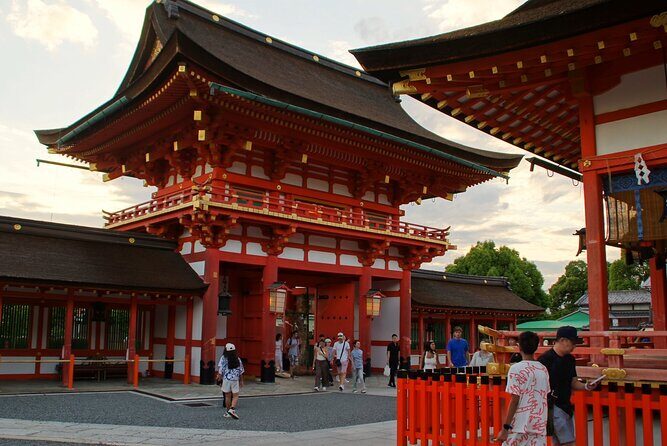
Your meeting point is practical and easy to spot: Daily Yamazaki Fushimi Inari Shrine, address at 93 Fukakusa Inarionmaechō, Fushimi Ward, Kyoto. The tour runs daily, and you’ll return to the same meeting area at the end.
This matters more than it sounds. Fushimi Inari’s entrances and approaches can feel confusing if you’re arriving on your own. You can end up walking a lot just to find where the route starts. Here, someone else handles the navigation and keeps you on the right path.
You’ll also use a mobile ticket, which is convenient if you’re already juggling transit apps and restaurant reservations. And since the meeting point is described as near public transportation, you can usually build this into your Kyoto plan without major detours.
The tour is listed for most travelers, and the overall flow is straightforward: meet, walk with an English-speaking guide, learn as you go, then return. If you’re traveling solo, this is especially helpful because it reduces the mental load. You can focus on the shrine instead of logistics.
Entering Fushimi Inari-taisha: more than torii gate photos
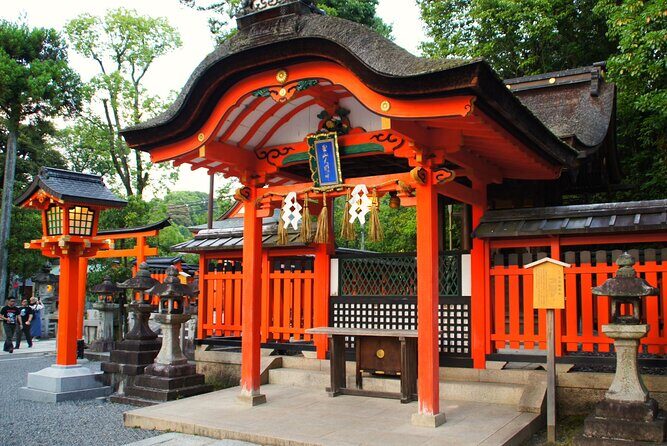
Fushimi Inari-taisha is one of the most recognizable places in Japan: thousands of torii gates, lined up in long orange-red corridors. On the surface, it looks like a dramatic photo walk.
What makes this tour worthwhile is that it treats the shrine as a spiritual site with a system of meaning. Your guide helps you understand Inari, the fox deity closely connected to the shrine. You’ll also learn how the shrine’s layout, gates, and smaller details relate to worship practices.
When you know what to look for, the experience changes. Instead of seeing torii as only a visual pattern, you start noticing the symbolism and how people move through the space with intention. The guide’s historical and cultural insights give you a framework, so the shrine feels less like an attraction and more like a place where people have practiced rituals for a long time.
This is also where pacing matters. The tour is short—about 2 hours—so you’ll spend your limited time on the parts that matter for understanding and viewpoints, rather than wandering aimlessly in busy corridors.
The spiritual meaning of Inari and the fox statues you’ll see
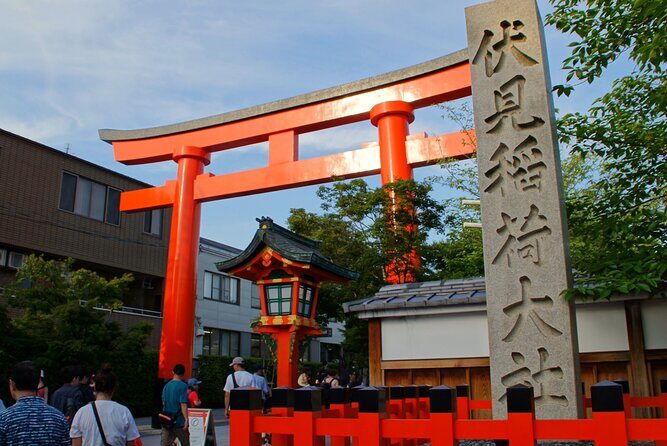
If you’re curious about why there are so many fox elements here, this is the part you’ll appreciate most. Fushimi Inari is famous for fox imagery, and it’s not just decorative. The tour’s focus is on explaining the connections between Inari worship and the objects and practices you notice around the shrine.
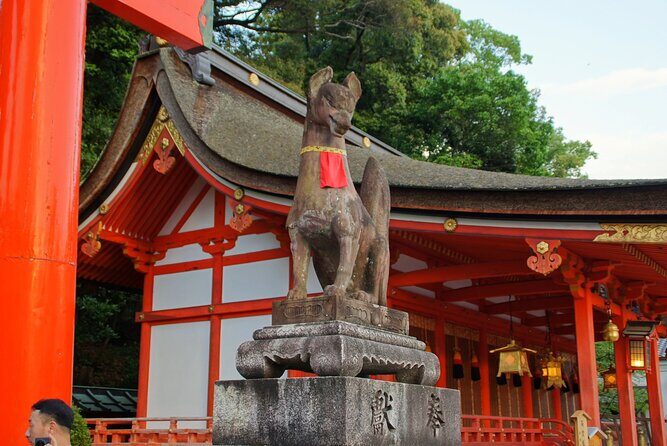
As you walk, you’ll likely see fox statues and other small shrine features. The guide helps connect those details to the broader story—what people believe, why particular elements matter, and how the shrine’s spiritual identity shows up in everyday visitor experiences.
This is exactly the kind of context that turns a scenic walk into something memorable. You don’t just pass by statues; you understand why they’re placed where they are and what they represent. That makes the whole route feel more purposeful, and your photos end up with a different meaning because you’re not guessing.
One more practical benefit: the guide can point out what’s most important to notice in the moment. In a crowd, it’s easy to miss smaller things. In a small group, you get more chances to ask questions and get straight answers without feeling rushed.
Walking the scenic trails and finding viewpoints for reflection
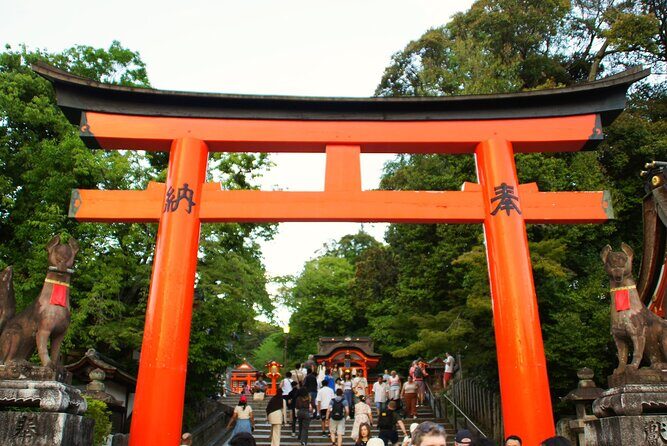
After you understand the basics near the shrine area, the tour moves along scenic trails that lead upward for panoramic views. This is the physical highlight: you’re not just staying at ground level, and you’re not stuck in one tight line.
The trails also help you feel the place in a different way. Part of what makes Fushimi Inari special is that it shifts from busy entrances into a quieter, more forested mountain setting. The guided route helps you spend time where the vibe changes—when the sound drops, the view opens up, and you can actually breathe for a moment.
The best part is that the tour doesn’t treat this climb as a chore. It’s framed as part of the shrine experience: walking upward becomes tied to the spiritual rhythm of the site. You’ll also have built-in pauses for reflection and photo opportunities, instead of trying to invent them while managing your own route.
If you’re planning your day around photos, this part can save you. Without context, many visitors focus only on the most crowded gate corridors. With a guide, you’re more likely to reach quiet spots and viewpoints that show the shrine’s scale without fighting the densest crowds.






Crowd management and pacing: why small groups matter here
Fushimi Inari can be packed, and even at 6:00 pm you should expect people. What you want is a plan for moving through that crowd without losing your place or your momentum.
This tour keeps the group small—no more than 10 travelers—so the guide can adjust pacing. That shows up in two ways: you get enough space to hear explanations, and you get more control over when you stop. It’s much easier to listen when your group isn’t stretched across a long line.
The tour is also designed with timing in mind. The route includes areas and moments that help you avoid the heaviest congestion, so you spend more time actually seeing and learning rather than shuffling forward at walking speed. That’s a subtle but real value. Waiting in a crowd is exhausting, and it steals time from the parts you came for.
For photos, the pacing helps too. Instead of “stop here, move on” constantly, you’re more likely to get time at the spots that matter. That makes the walk feel thoughtful, not rushed.
Included entry, the English guide, and what the price is really covering
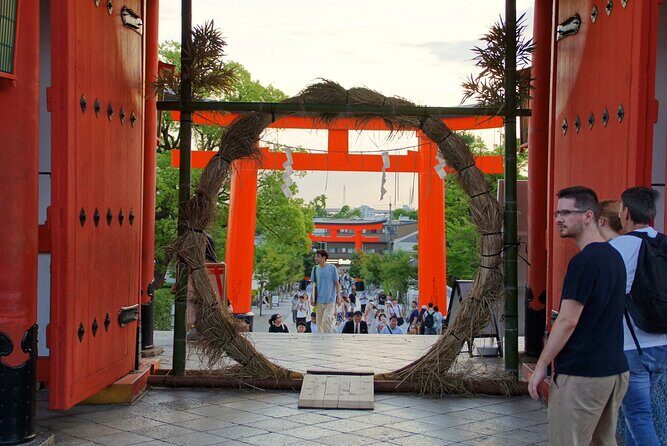
At $39.64 per person, you’re paying for more than just a walk. The price includes:
- an English-speaking guide
- entry/admission to Fushimi Inari-taisha
- historical and cultural insights connected to the district and the shrine
That combination is what makes this feel like good value. If you go alone, you’ll still pay for entry and you’ll likely spend time figuring out what you’re looking at. With the guide, your money buys both time and context.
Two hours is also key. You’re not paying for a full day tour to cover one highlight. You can pair this with other Kyoto neighborhoods later without burning your schedule. And because the tour is designed to be focused on Fushimi Inari specifically, you’re getting targeted learning instead of generic background.
What’s not included is also important for budgeting. Food and drinks aren’t part of the tour, and tips are optional. So plan to handle a snack or water on your own before or after—especially since it’s a hike up trails.
What you should wear and plan for (practical tips)
This tour includes walking and climbing. The route ascends mountain trails, so it’s not the kind of “easy stroll” you might assume from the fact that it’s only 2 hours.
I recommend you come with:
- Comfortable walking shoes with grip
- A light layer, since evenings can feel cooler depending on the season
- Water, because you’ll want it during the climb
If you’re sensitive to crowds, the evening start helps, but it’s still a top attraction. The small-group structure is the best strategy here: you get guidance on where to focus and how to keep moving.
Also, if you like asking questions, this is a good format. A small group means you can usually get your curiosity answered on the spot, especially about symbolism in gates and fox-related details.
Who this tour is best for
This tour fits best if you want Fushimi Inari to feel like more than a bucket-list stop.
You’ll probably love it if:
- You want to understand the shrine’s meaning, not just take photos
- You prefer a guide to handle route decisions
- You like short, focused experiences that don’t eat your whole day
- You’re visiting as a couple or solo and want an easy plan with a small group
It’s also a solid choice if you’re the type who enjoys learning rituals and cultural context while you’re standing right in front of the real thing. The tour’s emphasis on what you see—especially fox-related symbolism and the significance of shrine elements—helps you connect the dots as you walk.
If you prefer totally free roaming with no structure, this might feel a little guided. But even then, the included entry and the meaning behind the gates can be worth it.
Should you book Kyoto: Fushimi Inari Shrine Walking Tour?
Book it if you want the best mix of time, context, and manageable crowds. The tour’s small-group size, English-speaking guide, and included admission are a strong package for $39.64, especially because Fushimi Inari is one of those places where understanding changes everything.
Skip it (or consider a lighter option) if you don’t want any uphill walking. The experience includes a climb and scenic trails, so comfort matters.
If you’re trying to decide what to do in Kyoto on a schedule that’s already full, this tour is a smart way to spend a couple of hours at a top site with less stress and more meaning.
FAQ
What time does the Kyoto Fushimi Inari walking tour start?
The tour starts at 6:00 pm and runs for about 2 hours (approx.).
How many people are in the group?
This activity has a maximum of 10 travelers, so it stays small.
What’s included in the tour price?
The price includes an English-speaking guide, historical insights, and entry/admission to Fushimi Inari-taisha.
Is admission included or do I need to buy a ticket?
Admission is included. Entry to Fushimi Inari-taisha Shrine is part of the tour.
Where is the meeting point?
You’ll meet at Daily Yamazaki Fushimi Inari Shrine, 93 Fukakusa Inarionmaechō, Fushimi Ward, Kyoto, 612-0881, Japan. The tour ends back at the same meeting point.
Do I need a physical ticket?
No. It uses a mobile ticket.
Is food provided during the tour?
No. Food and drinks are not included.
What should I budget for tips?
Tips are optional (they’re not included in the price).
Can I cancel if my plans change?
Yes, there’s free cancellation. You can cancel up to 24 hours in advance for a full refund. If you cancel less than 24 hours before the start time, you won’t get a refund.