REVIEW · DINING EXPERIENCES
Kyoto: Lunch or Dinner with Maiko
Book on GetYourGuide →Operated by B.B.Advisors Inc. AN KYOTO · Bookable on GetYourGuide
A maiko experience in Kyoto feels close and personal. You get a Maiko show paired with Kyoto-style food, plus time to ask questions and even play simple games. It’s cultural, but also very human.
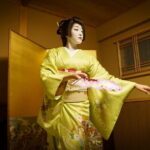
What I like most is the chance to watch elegant dance moments right in front of you and the built-in photo time that puts you at arm’s length, not across a stage. The program also builds in a Q&A so you’re not just watching—you’re learning how this tradition works in daily life.
One thing to consider: the venue isn’t an ochaya (traditional teahouse-style house). It’s in a building, and there’s no elevator—so plan for stairs. Also, the food experience can feel more “traditional and light on presentation” than “restaurant wow.”
In This Review
- Key things to know before you go
- Kyoto Maiko lunch or dinner: what this experience really is
- The 90-minute flow: tea demo, dinner, Q&A, photos, and dances
- Tea ceremony demo: why it sets the tone
- What you’ll eat: Kyoto flavors with dashi and Shidashi culture
- Maiko dance and the game: the part most people remember
- Photo beside Maiko and the Senjyafuda charm
- Venue reality check: building setting, stairs, and the atmosphere question
- Price and value: what your $63 actually buys
- Who this Kyoto Maiko lunch or dinner suits best
- Quick decision guide: should you book?
- FAQ
- Where is the meeting point?
- How long is the Kyoto Maiko lunch or dinner?
- What’s included in the price?
- Is the tea ceremony making option included?
- How much are the seating upgrades?
- Do children get charged?
- Is there elevator access?
- Is there free cancellation?
- What language is used, and is English translation available?
Key things to know before you go
- Up-close Maiko access with a Q&A, a photo beside her, and a lucky charm gift
- Two traditional dances that reflect seasons, love stories, or everyday life
- Tea ceremony moments (demo included, making tea is optional)
- Kyoto-style dinner from a long-established restaurant, with dashi-based flavors
- Interactive hospitality game where volunteers may join
- Maiko or Geiko may appear, depending on the situation
Kyoto Maiko lunch or dinner: what this experience really is
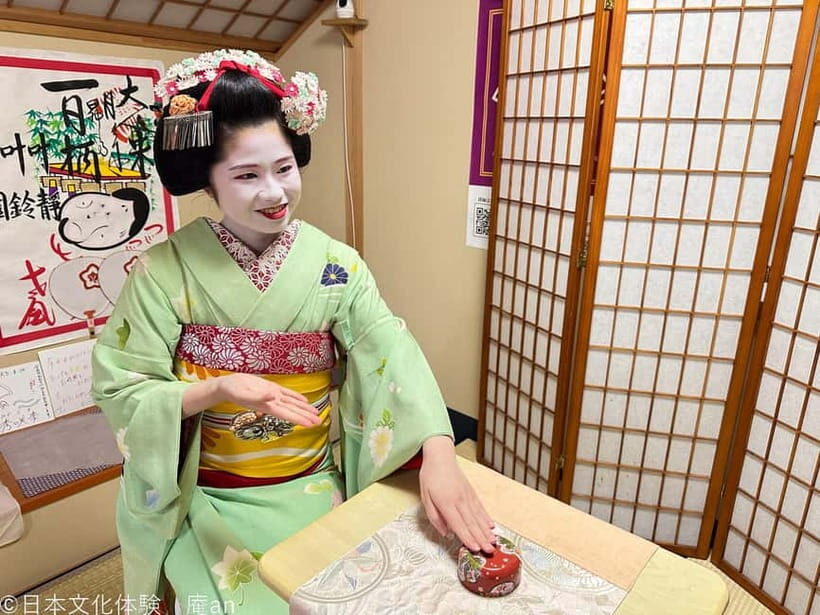
This is a 90-minute Kyoto program built around one idea: you’re not only there to watch traditional performance. You’re there to meet a working performer (Maiko), understand her role in the tradition, and then experience that tradition through movement, etiquette, and food.
You’ll notice right away that the schedule is structured like a sequence of “small chapters.” There’s tea etiquette first, then dinner, then a talk/Q&A, then the most photogenic part, and finally the dance performance and a friendly game. That flow matters because it keeps the experience from feeling like one long show.
If you love Kyoto for the details—kimono beauty, refined gestures, how hospitality is done—this is a strong match. If you’re expecting a cinematic, set-dressed ochaya interior, temper that expectation. The program is more focused on direct access than on theater production.
You can also read our reviews of more tours and experiences in Kyoto

The 90-minute flow: tea demo, dinner, Q&A, photos, and dances
Here’s how the timing works, in plain order:
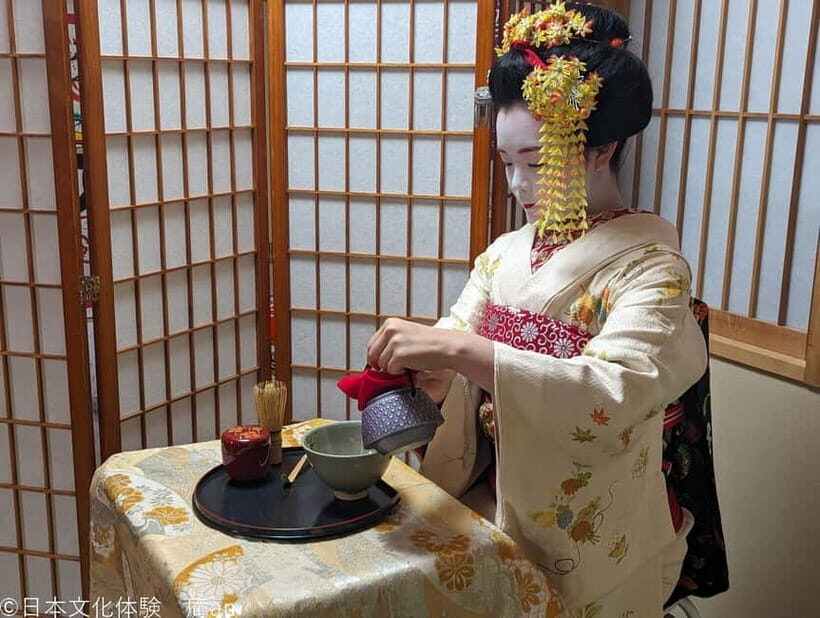
First, you start with a tea ceremony demonstration by the Maiko. The emphasis is on graceful movement and etiquette. If you want to do more than watch, there’s an optional making-tea add-on (extra cost), but even without it, the demo helps you “read” the rest of the performance differently—like you’re learning the body language behind the culture.
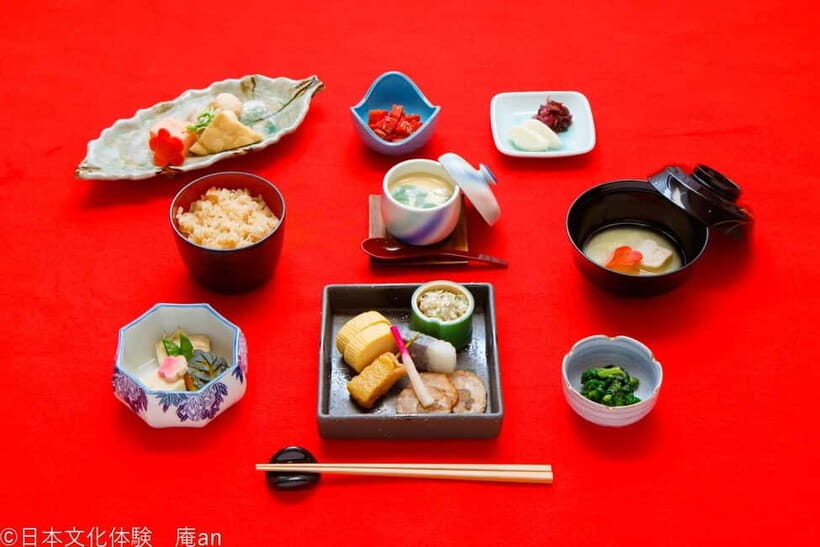
Next comes the traditional Kyoto dinner prepared by a long-established restaurant. This is the part that turns the event into a true lunch-or-dinner experience, not just a cultural show plus snacks.
After dinner, you get a Q&A session. This is the highlight for many people because it shifts the experience from observation to conversation. You’ll have a chance to ask questions directly and learn about the Maiko world—especially what her day-to-day is like in this continuing tradition.
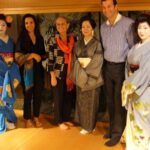
Then comes the photo opportunity. You take a commemorative photo right beside the Maiko. After that, she presents you with a lucky charm called a Senjyafuda. It’s small, but it’s the kind of Kyoto souvenir that feels earned rather than bought.
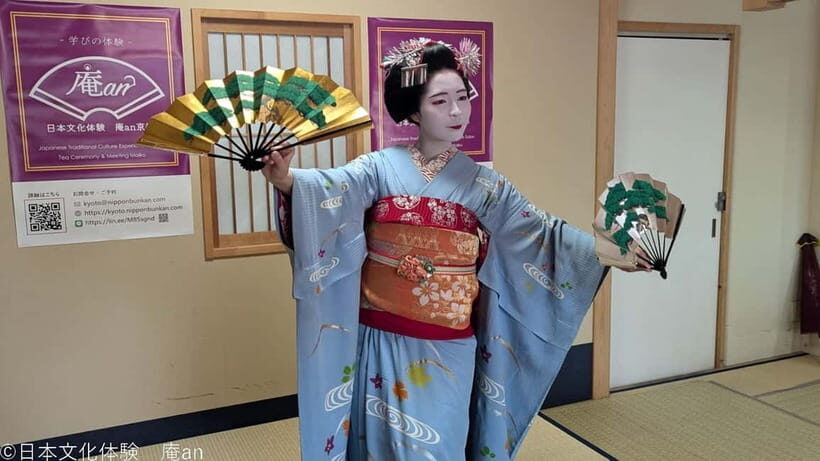
After the photo and gift, you watch the dance performance: two elegant dances that express seasonal themes, love stories, or everyday life. The pacing is designed so you stay attentive—there’s no filler time.
Finally, there’s an interactive game with the Maiko. You may see volunteers join, but watching is part of the fun too. It’s a hospitality moment: friendly, light, and meant to create shared energy in the room.
At the 75-minute mark, the Maiko leaves the room. Then you have a short chatting time until you reach the 90-minute end.
Tea ceremony demo: why it sets the tone
Even if tea isn’t your main reason for coming, the tea ceremony demo plays a practical role. It signals the style of the entire experience: slow, deliberate movements; respectful etiquette; and a focus on precision rather than loud spectacle.
You also get a clear option structure. Tea-making can be added if you want hands-on involvement. Otherwise you’re watching and learning the choreography-like nature of tea etiquette, which helps when the schedule later moves into dance performances.
If you’re traveling with someone who thinks they’re not a “tea person,” this is still worth it. The tea portion is short, visual, and directly connected to the Maiko presence.
What you’ll eat: Kyoto flavors with dashi and Shidashi culture
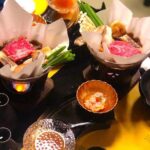
The meal is traditional Kyoto cuisine, and dashi (soup stock) plays a major role. That matters because dashi is a Kyoto foundation flavor: it’s deep, comforting, and not overly heavy. Expect a dinner that feels Kyoto-forward rather than Western-style hearty.
The program also references “Shidashi,” a traditional delivery ordering style in Kyoto. That gives you a clue about how the restaurant service may feel: practical, straightforward, and rooted in local custom rather than plated showmanship.
Now the honest note: the meal reviews can be mixed. Some people describe the food as typical but not strongly flavored or presented. Others feel disappointed with quality and atmosphere around the meal service. So if food is your top priority, go in with an open mind and treat the meal as part of the cultural access package—not as the main event you’re judging by fine dining standards.
Maiko dance and the game: the part most people remember
The dance performance is built around two pieces, designed to show different moods and themes. You’re looking for elegance in motion: controlled arms, refined posture, and storytelling through gesture. Even if you don’t know the background, the body language is easy to read once you’ve just watched the tea demo.
The interactive game adds something important: it turns the Maiko from a performer into a host. It’s not just clapping and sitting politely. You might be invited to join, or you can cheer and watch, depending on how the host runs the game that day.
One review detail that stands out from the overall feedback: people who liked the show tended to love the combination of dance and games. If you’re the type who wants participation and personality, this program aims right at that.
There’s also the possibility that Geiko may appear instead of Maiko, depending on the situation. So don’t get locked into a guaranteed face. Think of this as a Kyoto traditional performer experience, with a chance that the performer lineup shifts.
You can also read our reviews of more tours and experiences in Kyoto




Photo beside Maiko and the Senjyafuda charm
This is one of those experiences where the value is very concrete. You get the photo right beside the Maiko—close enough that it feels personal, not distant.
After the photo, the Senjyafuda lucky charm is presented as a gift. That turns the photo moment into a keepsake moment. It’s also the kind of souvenir that makes sense for Kyoto: small, meaningful, tied to the interaction you just had.
If you’re worried about whether it’ll feel awkward, it usually doesn’t. The program’s whole rhythm leads you toward that moment, then immediately gives you something to commemorate it properly.
Venue reality check: building setting, stairs, and the atmosphere question
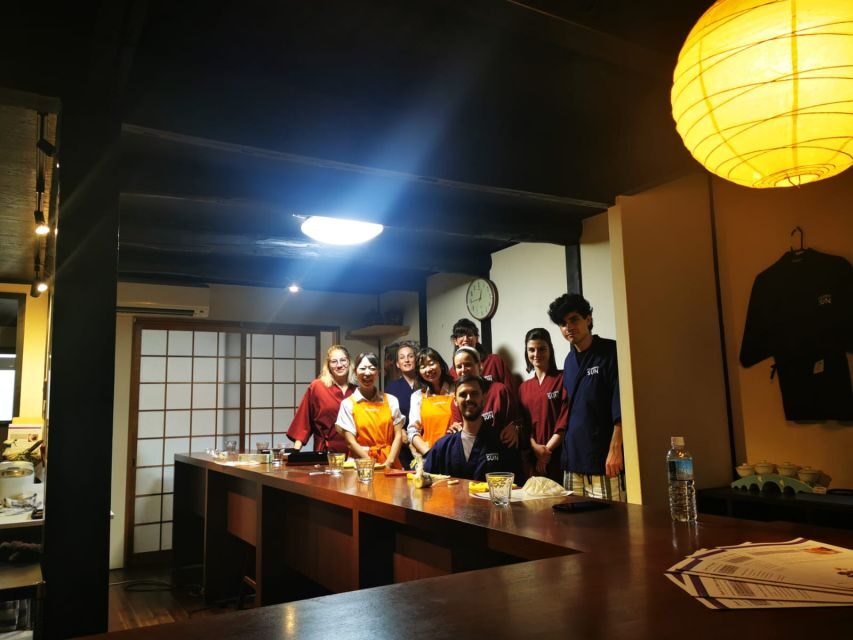
This isn’t held in an ochaya-style house. It’s located in a building, and the program description notes that you’ll be taking stairs since there’s no elevator.
That matters for two reasons:
1) If you have mobility issues, this could be a dealbreaker.
2) The “building setting” can affect the feel of the experience—especially lighting, decor, and how intimate the room feels.
Some feedback has pointed to a lack of room decor and a more utilitarian feel. One review described the meal setup as being in a basement-like space with minimal atmosphere. Another noted mixing different group activities at the same time, like tea prep alongside dining.
So I’d frame it like this: the performance and interaction are the main show. If you want a fully styled venue as part of the fantasy, you may find the setting less charming than you expected.
Price and value: what your $63 actually buys
At about $63 per person (based on the price you provided), you’re paying for far more than a meal. You’re buying access to a Maiko-led sequence: tea ceremony demonstration, traditional dinner, Q&A, photo beside the performer, a Senjyafuda charm, two dances, and an interactive game—all packed into 90 minutes.
That’s why the value depends on your priorities.
- If you want the performer time, the Q&A, and the chance to see dance up close, it’s strong value because those elements are hard to recreate on your own.
- If you mainly want a best-in-class dinner, you might feel the price leans more toward cultural access than toward food quality and plating.
The optional add-ons also help shape value:
- Tea ceremony experience add-on: 1,600 JPY
- SS seat (first row): 3,300 JPY
- S2 seat (second row): 2,200 JPY
- S3 seat (third row): 1,100 JPY
If you’re seat-sensitive for photos and viewing, that matters. If you’re mostly there for interaction and conversation, you may not need the highest tier seating.
Who this Kyoto Maiko lunch or dinner suits best
You’ll be happiest with this program if:
- You want real performer access, not just a ticketed show
- You enjoy etiquette moments like tea, even if briefly
- You like structured cultural entertainment with a bit of play
- You want a Kyoto souvenir that comes from an interaction (Senjyafuda)
It may feel less satisfying if:
- You’re expecting an ochaya setting and a fully traditional indoor look
- You judge experiences mainly by dining quality and presentation
- Stairs are a problem for you
It can also be a good fit for couples and solo travelers who want guided context and direct Q&A time without having to chase it across Kyoto.
Quick decision guide: should you book?
I’d book this if your top goal is meeting a Maiko and seeing dances up close, with a Q&A and photo time built in. The combination of tea etiquette, dance, and interactive hospitality makes it feel like a Kyoto experience you can’t easily DIY.
I’d think twice if you care deeply about restaurant atmosphere and expect high-end dining plating. The room setup and meal portion can feel more functional than luxurious, and that’s where reviews have been the most mixed.
If you do book, come with flexible expectations about the venue and focus your energy on the performer access. That’s where the program pays off most.
FAQ
Where is the meeting point?
It’s about a 1-minute walk from Exit 1 of Subway Karasuma Line Gojo Station. The store entrance faces Gojo-dori.
How long is the Kyoto Maiko lunch or dinner?
The program runs for 90 minutes total, with the Maiko leaving the room at around 75 minutes and a short chatting time after that.
What’s included in the price?
Dinner with Maiko is included, along with the tea ceremony demonstration, Q&A, photo beside the Maiko, a Senjyafuda lucky charm, two dance performances, and a game with the Maiko.
Is the tea ceremony making option included?
No. Tea ceremony making is an optional add-on for an extra 1,600 JPY.
How much are the seating upgrades?
SS seat (first row) is 3,300 JPY, S2 seat (second row) is 2,200 JPY, and S3 seat (third row) is 1,100 JPY.
Do children get charged?
Children under 2 years old are free if no seat or meal is needed. If they need a seat or meal, the same fee as one person applies.
Is there elevator access?
No. There is no elevator in the building, and you’ll need to take stairs to reach each venue.
Is there free cancellation?
Yes. You can cancel up to 8 days in advance for a full refund.
What language is used, and is English translation available?
The instructor is Japanese. English translation is provided as much as possible, and you can contact them if you want to add it.