REVIEW · CYCLING TOURS
Discover Kyoto by Bike Full Day Tour
Book on Viator →Operated by Jaime · Bookable on Viator
Kyoto is best when you move slowly. This full-day bike ride strings together big-name sites and calmer backstreets, so the day feels both historic and easy. What I like most is the e-bike help for longer distances, and the small-group / private feel where your guide can slow down for questions and photos.
You get a smooth mix of UNESCO temples and places buses miss: the Toji pagoda, Nishi Honganji courtyard, Nanzen-ji’s brick aqueduct, then the quieter shrine side of town before you hit Ginkaku-ji and Gion. The main thing to consider is the effort: you should be ready to ride about 32 kilometers and maneuver safely on narrow paths for several hours.
In This Review
- Key highlights you’ll actually feel
- Why this Kyoto bike route feels like the real city
- E-bike help, 32 km riding, and narrow-path safety
- Meeting point and timing: what your morning looks like
- Toji’s five-story pagoda sets the tone
- Umekoji Park and Ryukoku University: the day’s softer edges
- Nishi Honganji and Heian Shrine: spiritual scale in two different styles
- Kamo River cycling and the quiet geisha-side alleys
- Nanzen-ji’s Sanmon gate and the red brick aqueduct
- Lake Biwa Canal story stop: Biwa Aqueduct Museum
- Philosopher’s Path and Honen-in: a calmer Kyoto pocket
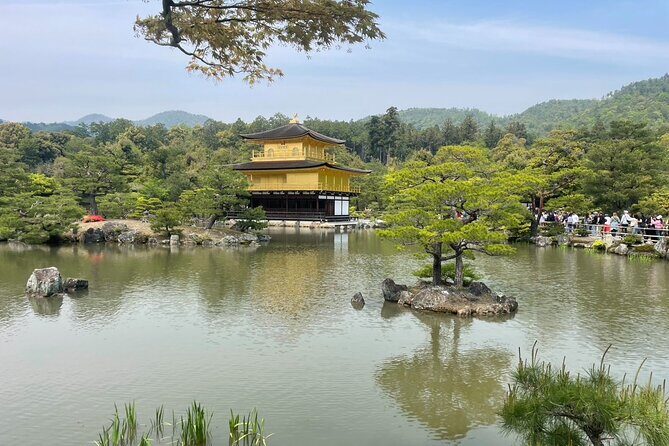
- Ginkaku-ji Silver Pavilion: the payoff at the right time
- Lunch planning: what’s included and what you’ll need to handle
- Value and price: is $128.48 worth it?
- Weather, expectations, and who this tour suits best
- Should you book this Kyoto bike day?
- FAQ
- How long is the Kyoto by Bike full day tour?
- What does the tour cost, and does it include the e-bike?
- Do I need to bring lunch money?
- How fit do I need to be for this tour?
- Where do I meet the group, and what time does it start?
- What happens if the weather is bad?
Key highlights you’ll actually feel
- E-bike support on a long day so you can enjoy Kyoto, not just survive it
- Toji and Nishi Honganji: UNESCO sites with standout architecture and roomy temple grounds
- Nanzen-ji’s Sanmon gate and brick aqueduct: a dramatic Zen-temple stop you can see from close up
- Kamo River cycling: a locals’ break that breaks up the crowds
- Honen-in’s quiet hillside temple feel: a calmer pause before Ginkaku-ji
- Jaime’s guiding style: friendly, clear explanations, plus a full day that flows at a relaxed pace
Why this Kyoto bike route feels like the real city
This tour is built around a simple idea: Kyoto looks different when you ride. From the moment you start near Toji, the route favors temple courtyards, river paths, and side alleys instead of turning you into a passenger on a bus schedule. You’ll pass major landmarks like the Silver Pavilion area, but you’ll also work in the quieter stretches that make Kyoto feel livable.
I also like that the day isn’t just a list of stops. The rhythm matters. You get short guided walks where it counts, photo pauses where light and angles help, and cycling legs where you can just watch daily life roll by. The route mixes big sights with “how do locals actually move around?” moments, like gliding along the Kamo River.
And yes, crowds show up at the obvious places. But because so much of your time is spent riding through less hectic lanes, the packed spots feel more manageable than they would on a nonstop walking plan.
You can also read our reviews of more cycling tours in Kyoto
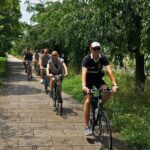

E-bike help, 32 km riding, and narrow-path safety
This is a bike tour with a real distance goal. The info says you should be fit enough to ride roughly 32 kilometers and handle safe riding on narrow paths. That doesn’t mean you need to be a cyclist. It does mean you should feel comfortable turning, braking, and steering when the streets get tight.
The good news is that the bikes are e-bikes, with help that makes hills and longer stretches far less punishing. You still pedal and you still steer, but you’re not fighting the bike the whole time. Think of it as using electricity to keep your energy for seeing Kyoto, not for exhausting yourself.
If you’re someone who prefers a fully paved, wide-lane route and you get stressed in traffic, you might find parts of this day demanding. On the other hand, if you’re traveling with moderate stamina and you’re okay going slow, this tour is a great way to cover ground without feeling rushed.
Meeting point and timing: what your morning looks like
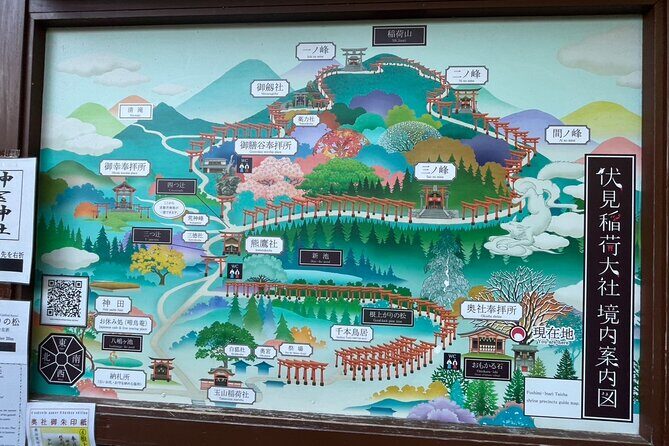
You start at 7-Eleven at 44-1 Higashikujō Kamitonodachō in Minami Ward, with a 9:00 am departure. The activity ends back at the same meeting point. The meeting spot being near public transportation is a helpful detail if you want a low-stress start.
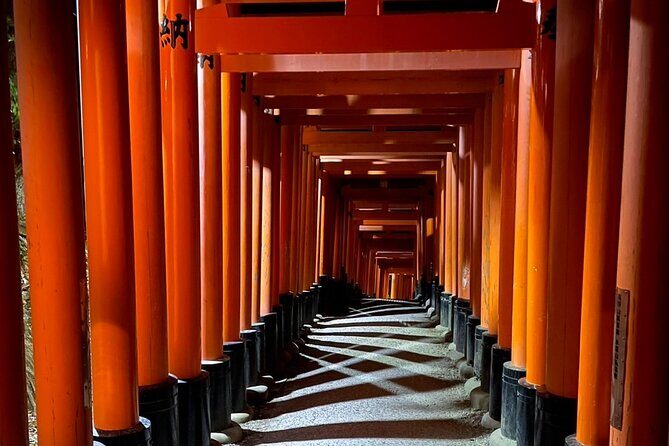
Because this is a full day, the timing matters. You’ll get moving early enough to see places before they peak, then spread out your sightseeing so you’re not sprinting between far-flung neighborhoods. I like that because Kyoto can swallow your day if you plan poorly. This route gives you a structure you can actually relax into.
Toji’s five-story pagoda sets the tone
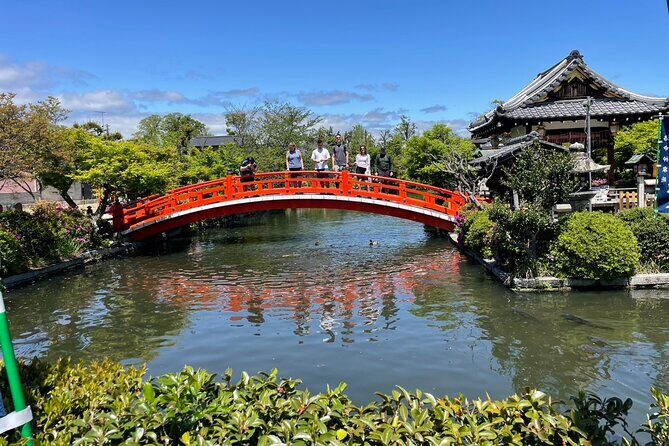
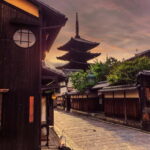
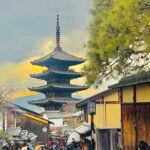
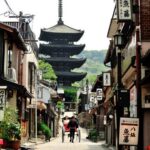
The tour begins at Toji, a UNESCO World Heritage Site known for its five-story pagoda, which is described as the tallest wooden tower in Japan. Even if you’ve seen photos, seeing it in person changes the scale. The temple grounds also give you a calm start—peaceful, open, and good for getting your bearings before you start cycling.
You get about 15 minutes here, with an admission ticket noted as free. That’s enough time to do a short stroll, notice the architecture, and take the classic photos without turning the start of your day into a marathon.
This is a smart first stop because it’s both iconic and grounding. You learn the setting, you get that UNESCO wow moment early, and then you roll into the city’s rhythm on two wheels.
Umekoji Park and Ryukoku University: the day’s softer edges
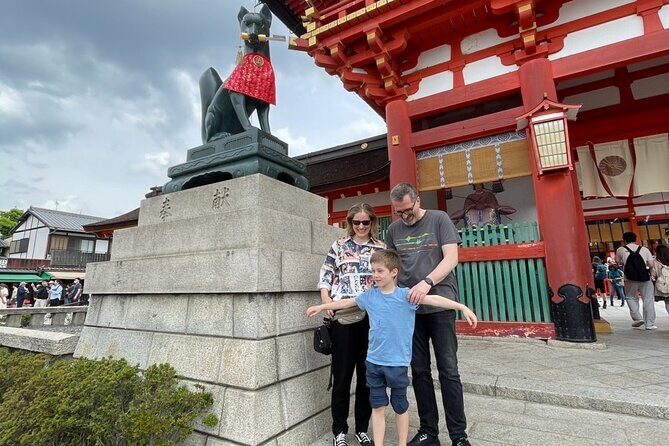
After the Toji area, the itinerary shifts toward something more local and less postcard. You pass through Umekoji Park, where the feel changes from city stress to green space. The description highlights seasonal flowers, shady trees, and a serene pond. Even as a quick stop, it works like a reset button—great if you’re the kind of traveler who likes a breather between big sights.
Next you ride by Ryukoku University Omiya Campus for about 10 minutes. It’s one of Kyoto’s oldest private universities, tied to the Nishi Hongwanji sect of Buddhism. The value here isn’t that it’s a must-see landmark on most first-timers’ lists. The value is that it lets you glimpse modern daily life right alongside the sacred sites.
That mix is exactly what makes this tour feel like Kyoto instead of a theme park of temples.
You can also read our reviews of more tours and experiences in Kyoto
Nishi Honganji and Heian Shrine: spiritual scale in two different styles
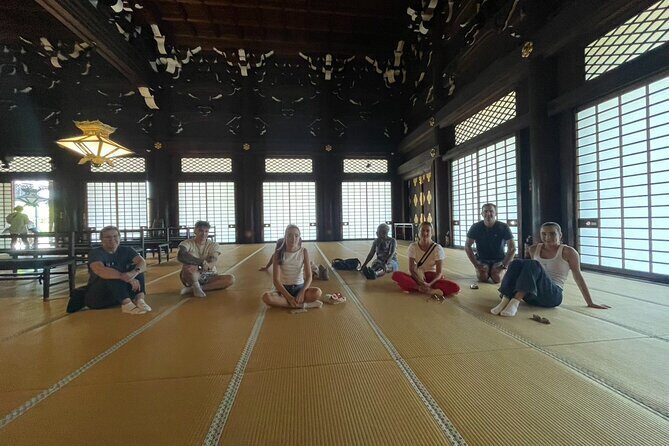
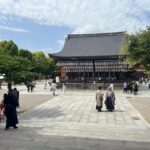
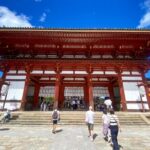
At Nishi Honganji, you spend about 30 minutes. This is a major Jodo Shinshu Buddhism temple and another UNESCO site, noted for exquisite wooden architecture and historical significance. You get a guided walk through the vast courtyard, with the guide explaining its influence and importance. Even with limited time, it’s the kind of place that makes you slow down. The scale of the grounds changes how you look at the buildings.
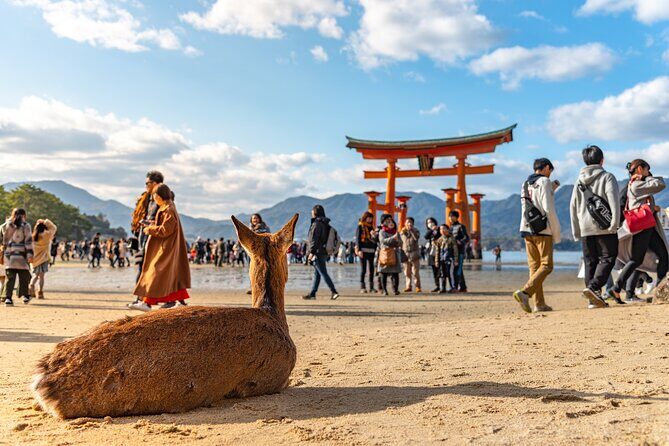
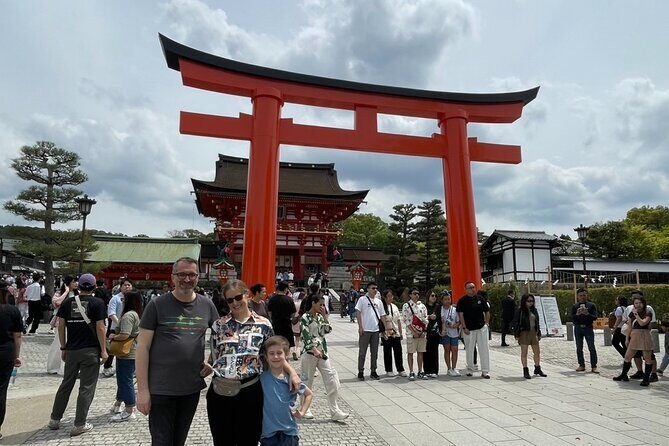
Then comes Heian Shrine for about 10 minutes. This shrine was built in 1895 to mark Kyoto’s 1,100th anniversary. The vermilion gate and buildings are modeled after the ancient Imperial Palace. There’s also mention of one of Japan’s largest torii nearby, which makes the area feel grand even when you’re only there briefly.
Both of these stops reward quick visits because they’re visually strong. Nishi Honganji gives you atmosphere and architecture. Heian Shrine gives you symmetry and a clear sense of how Kyoto imagined its imperial past.
Kamo River cycling and the quiet geisha-side alleys
Midday is where the tour earns its points for feeling different. You cycle along the Kamo River, described as a favorite place for locals to relax and jog and enjoy nature. This is one of those stretches where you’re moving but not rushing—perfect for photo opportunities without the constant stop-start of walking tours.
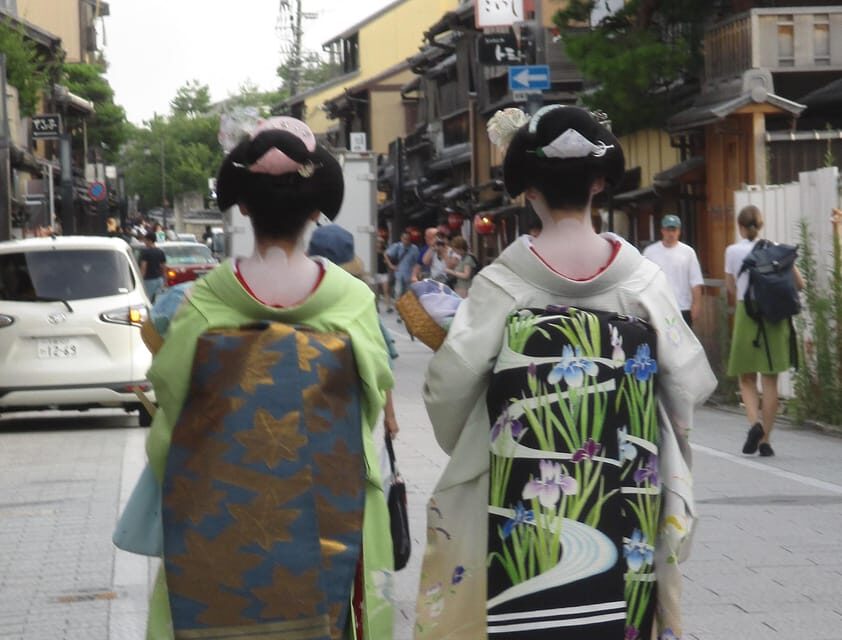
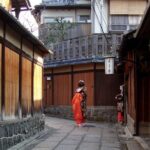
After that, you head toward a lesser-known geisha district near Gion. The highlight here is the quiet ride through beautiful alleys where traditions of old Kyoto are still visible. This is a smart move because Gion can be packed. By touching the edges and smaller lanes, you get a calmer taste of the culture.
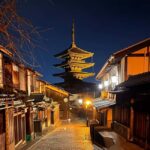
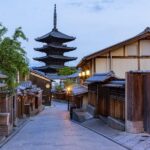
Finally, you reach Gion itself for about 15 minutes. The tour focuses on traditional machiya houses and explains geiko and maiko culture while you ride through lantern-lit lanes. If you only have time for one look at Gion, it’s usually this kind of lane-level experience that makes it feel real.
Nanzen-ji’s Sanmon gate and the red brick aqueduct
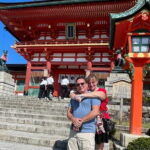
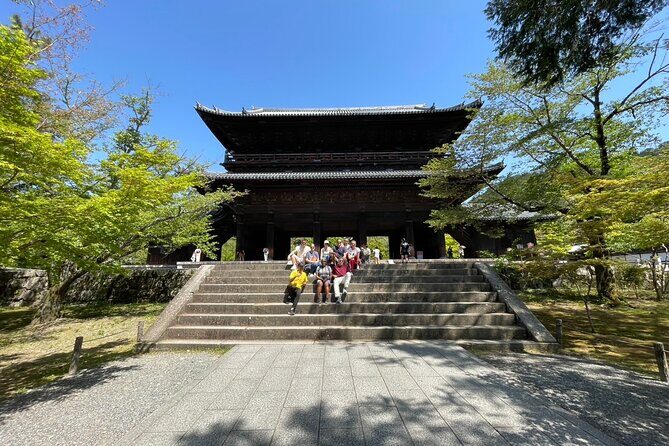
Nanzen-ji is a big Zen temple stop and you get about 25 minutes there. It’s described as one of the most important Zen temples, founded in the 13th century. The standout features are the massive wooden Sanmon gate, peaceful Zen gardens, and the red brick aqueduct that runs right through the temple grounds.
This combination is what makes Nanzen-ji feel cinematic. You’re seeing architecture, temple life, and infrastructure in one place. If you like stopping for photos, this is one of the best spots because there are multiple visual “layers” close together: gate lines, garden views, and the aqueduct structure.
Even if you’re not a Zen-garden expert, your eyes do the work. The sheer size and the weird-but-wonderful aqueduct crossing make it memorable long after the names fade.
Lake Biwa Canal story stop: Biwa Aqueduct Museum
Between the temple heavyweights, you get a short educational break at the Biwa Aqueduct Museum near the Lake Biwa Canal. The tour notes that the museum tells the story of the engineering project from the 1890s, which brought water and electricity and helped new life in Kyoto after the city’s changes in that era.
This stop is about context. It answers a question you might not think to ask while looking at old buildings: how did Kyoto keep modernizing without losing its sacred identity? Even with only 10 minutes, it adds meaning to what you’ll see later—especially the aqueduct theme at Nanzen-ji.
It’s also a good break from cycling, so your energy stays up for the afternoon sights.
Philosopher’s Path and Honen-in: a calmer Kyoto pocket
After Nanzen-ji, the ride shifts toward the walking atmosphere. You reach the Philosopher’s Path, described as a stone walkway following a canal lined with cherry trees. It’s named after Kyoto University professor Nishida Kitaro, who used to walk and meditate while thinking about his ideas. The description also notes spring cherry blossoms, though the path is still worth seeing outside peak season for the canal-and-stone feel.
Then comes Honen-in for about 20 minutes. This is a quiet temple tucked into the hills, founded in the 1600s to honor the Buddhist priest Honen, connected with the Pure Land sect. The tour highlights the mossy gate and white sand patterns.
This is where the day gets noticeably softer. You’re moving from main-sight Kyoto into a pocket that feels slower and more private. If you’ve been walking temples nonstop, Honen-in is the kind of place that gives your brain a break. You’re not just ticking boxes—you’re letting the setting do something.
Ginkaku-ji Silver Pavilion: the payoff at the right time
Your next big landmark is Ginkaku-ji, the Silver Pavilion, for about 25 minutes with admission included. The key detail here is that it’s called the Silver Pavilion, but it was never actually covered in silver. That single fact makes it more interesting because it’s a reminder that legends often simplify what’s actually happening on the ground.
You get a walk around the area, guided enough to help you notice what matters without forcing a speed-walk. This is one of those stops where timing matters for photos and for crowds. Because the tour sequence builds in earlier stops and river time, you arrive ready rather than cooked.
This is also where you’ll feel the contrast of the day. Before Ginkaku-ji, you had quieter temple and path moments. After Ginkaku-ji, you can take in Gion with the understanding that Kyoto isn’t only one style of beauty.
Lunch planning: what’s included and what you’ll need to handle
Lunch is not included. That’s the main practical planning point for most people. The good news is that because this is a guided route with cycling legs, you can often find a simple meal without turning it into a separate hunt.
In at least one recent experience, the lunch was described as great, which tells me the day is set up so food doesn’t get forgotten. Still, you’ll want to plan like an independent traveler: bring water, consider a light snack, and be ready to buy lunch once you’re in the middle of town.
If you’re picky about timing, mention it to your guide early. The pace is described as relaxed, but it’s still a full-day plan, so you shouldn’t expect endless lunch detours.
Value and price: is $128.48 worth it?
At $128.48 per person for a roughly 7 to 8 hour e-bike tour, this isn’t a bargain-basement deal. But it also isn’t just bike rental plus a map. You’re paying for a planned route, time-saving access to multiple neighborhoods, and a guide who handles the flow so you’re not guessing where to go next.
The best value parts are:
- Coverage: iconic sites plus smaller Kyoto lanes in one day
- Effort reduction: e-bikes help you ride farther without fatigue taking over
- Guiding: Jaime’s explanations help you understand what you’re seeing without turning it into a lecture
- Sight balance: short stays where you need photos, and longer stops where atmosphere matters
If your goal is to see a lot and still feel like Kyoto is unfolding naturally, the price makes sense. If you prefer self-guided biking and you’re already confident navigating Kyoto streets, you could spend less. But you’d lose that built-in pacing and the route intelligence that keeps this day feeling smooth.
Weather, expectations, and who this tour suits best
The tour requires good weather. If conditions are poor, you’re offered another date or a full refund. That matters because cycling on narrow paths in bad weather can be unpleasant, even with e-bikes.
Also, this is a private tour/activity, meaning only your group participates. That’s great if you want a more personal experience and less waiting around.
Who I’d say this fits best:
- You want a full-day Kyoto hit without doing everything by foot
- You’re comfortable riding and steering on tighter streets
- You want both famous sights and calmer, less obvious areas
Who might feel challenged:
- Anyone with limited ability to ride 32 km
- Anyone who gets nervous on narrow lanes even at slow speeds
Should you book this Kyoto bike day?
I’d book it if your dream Kyoto day looks like this: start with a big UNESCO moment, take quiet breaks that feel local, cycle the Kamo River, and still have time to enjoy Ginkaku-ji and Gion without your feet giving up. With e-bikes and a friendly guide named Jaime, the day has a good chance of feeling fun instead of exhausting.
Just be honest about one thing: you are riding for a long time. If you can handle that, you’ll get a Kyoto experience that’s faster than walking, calmer than bus touring, and personal enough to feel like you understood the city, not just visited it.
FAQ
How long is the Kyoto by Bike full day tour?
It runs about 7 to 8 hours.
What does the tour cost, and does it include the e-bike?
The price is $128.48 per person, and it includes use of an e-bike.
Do I need to bring lunch money?
Lunch is not included, so you’ll want to plan to buy lunch during the day.
How fit do I need to be for this tour?
You should have moderate physical fitness and be able to ride about 32 kilometers and maneuver safely on narrow paths.
Where do I meet the group, and what time does it start?
The meeting point is a 7-Eleven at 44-1 Higashikujō Kamitonodachō, Minami Ward, Kyoto, and the start time is 9:00 am. The tour ends back at the meeting point.
What happens if the weather is bad?
The experience requires good weather. If it’s canceled due to poor weather, you’ll be offered a different date or a full refund.