REVIEW · KYOTO CRAFT WORKSHOPS
Kyoto: Local Home Visit and Japanese Calligraphy Class
Book on GetYourGuide →Operated by Kangetsu Kyoto · Bookable on GetYourGuide
A brush in your hand, and Kyoto slows down. This Japanese calligraphy class pairs lessons with a chance to visit a local home near Nijo Castle, so you get art instruction and real conversation in the same hour.
What I like most is the clear focus on kanji brush movements—you learn how to control stroke order and shape instead of just copying a sample. I also love that you finish with a piece you’ll actually want to keep: your own calligraphy on washi paper, often with your name added in Japanese.
One consideration: it’s a 1-hour session, so you won’t become an expert, and if you’re late the class time can be shortened (or they may not run it if you arrive more than 15 minutes late).
In This Review
- Why This Kyoto Calligraphy Class Feels Different Than a Standard Workshop
- Nijo Castle Area Meeting Point: Find It Fast and Don’t Rush
- Your First Hour Plan: Welcome, Stroke Basics, and Your Own Kanji
- The instruction method that works for beginners
- Choosing the kanji that fits you
- Adding your name in Japanese
- A calm, almost meditative rhythm
- The Teacher’s Role: Patient Coaching From Aya (and Her Team)
- The Local Home Visit: Conversation and a Real Kyoto Setting
- What You Actually Make: A Washi Souvenir You’ll Want to Display
- Price and Value: $66 for Materials, Coaching, and a Finished Keepsake
- Who This Kyoto Calligraphy Class Suits Best
- Practical Rules That Keep the Class Smooth
- Should You Book This Kyoto Experience?
- FAQ
- What is the duration of the Kyoto local home visit and Japanese calligraphy class?
- How much does the calligraphy class cost?
- What’s included in the class?
- Where is the meeting point relative to Nijo Castle?
- What should I bring for the class?
- What language is the instruction in?
- Is this a private group?
- Is the class wheelchair accessible?
- Is there an age limit?
Why This Kyoto Calligraphy Class Feels Different Than a Standard Workshop
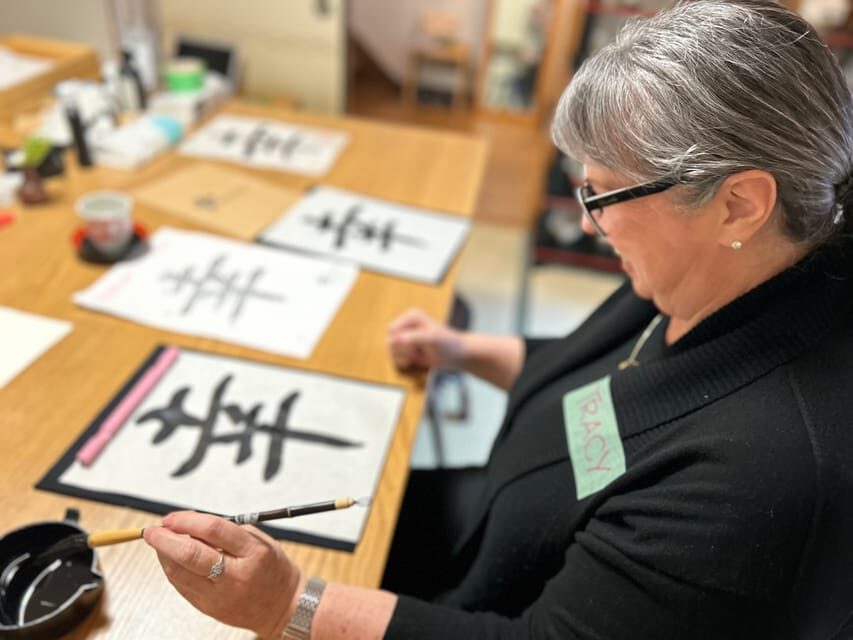
A lot of calligraphy experiences teach you the motions. This one also teaches you the setting—where you do it and why it matters.
You meet near Nijo Castle (about 200 meters west), in an area where local life is right there, not staged for tourists. Even if you’re not fluent in Japanese, the home visit element helps you feel like you’re stepping into someone’s everyday space. That matters because calligraphy isn’t just technique. It’s attention, calm, and a kind of patience that fits naturally into a home setting.
The class itself centers on correct brushwork: how to hold the brush, how to move with intention, and how to shape kanji so it looks right instead of merely readable. Reviews repeatedly point out that the instruction feels supportive and practical—especially when you’re starting from scratch.
And then there’s the souvenir part. You don’t leave with a “nice try” sheet you throw away. You leave with a finished calligraphy piece on proper Japanese paper (washi) that you can bring home and display.
Nijo Castle Area Meeting Point: Find It Fast and Don’t Rush
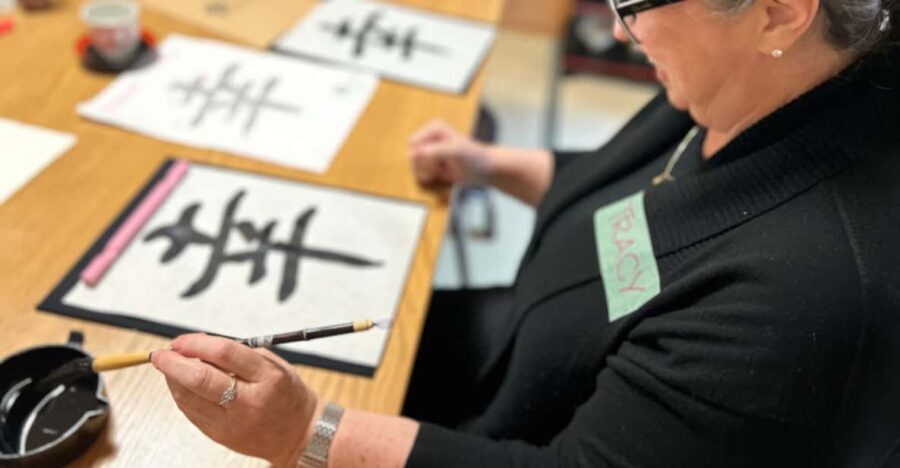
The location is very close to Nijo Castle, which is handy if you’re already planning to visit that UNESCO site. The meeting point is on the north side of Ebisugawa Street, just west of Nishinotoin Street. On the south side across the street, you’ll see the Lions Mansion building.
Because Kyoto has multiple places with similar names, the best move is to enter the venue name in your map app rather than just relying on an address. If you’re taking a taxi, give the driver the phone number (they provide guidance for this) so you don’t get dropped at the wrong look-alike location.
Timing is important here. They ask you to arrive about 5 minutes before the start time, and there isn’t room to wait if you arrive too early. If you’re late, your lesson time can shrink accordingly, and the class can’t run if you arrive late by more than 15 minutes.
If you want this experience to feel relaxed, treat it like a “show up on time” kind of class. You’ll get more out of it.
You can also read our reviews of more tours and experiences in Kyoto

Your First Hour Plan: Welcome, Stroke Basics, and Your Own Kanji
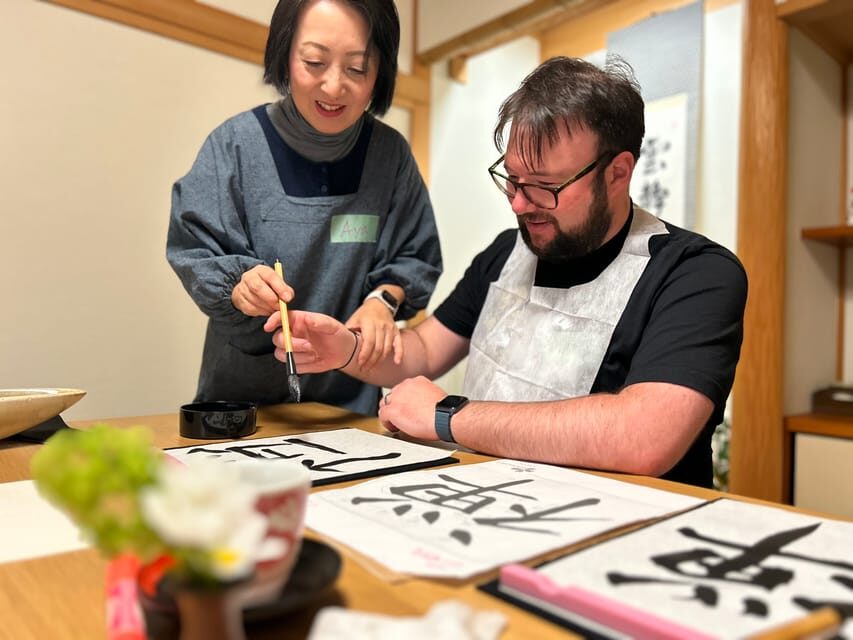
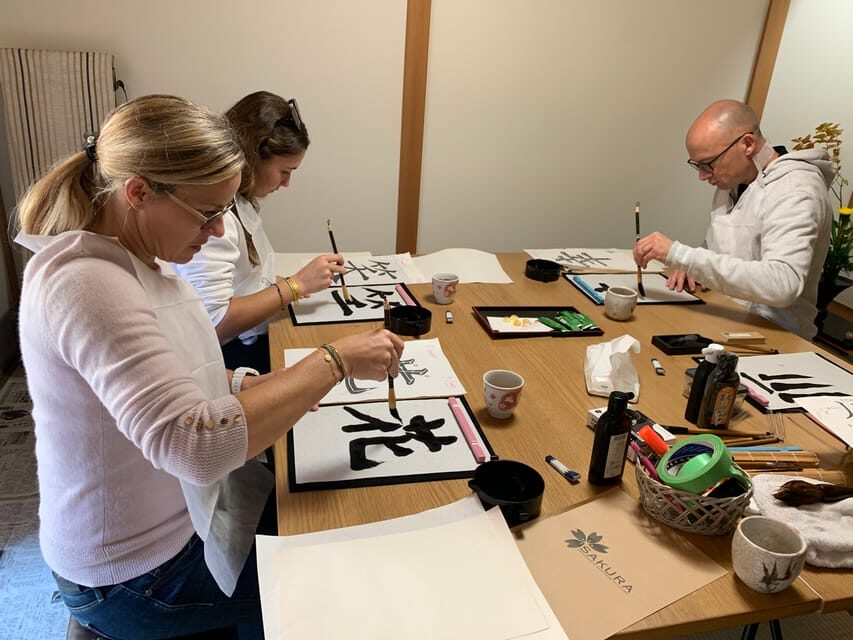
This is a 1-hour private group class (private group is a big deal for first-timers, because the teacher can adjust in the moment). You’ll be working with rented calligraphy tools, ink, and washi paper—so you’re not hunting for supplies before you go.
The instruction method that works for beginners
The teaching style is built around strokes: the correct movement of the brush matters as much as the final character. You’ll learn the basics needed to write attractive kanji, including how to guide the brush across the paper with control.
One thing I appreciate from the reviews is that the teacher doesn’t just demonstrate and move on. People describe getting practical help as they try the characters themselves. You can feel that the goal isn’t perfection—it’s giving you the tools to improve while staying calm and focused.
Choosing the kanji that fits you
You’ll have a chance to pick a kanji character that feels meaningful to you. The class information suggests meanings like love, peace, strength, or wisdom, so you’re not only copying shapes—you’re choosing something with personal energy.
This is a smart approach for short lessons. In one hour, meaning beats memorizing. When the character connects to you, you pay more attention to how the strokes form.
Adding your name in Japanese
Another highlight is the chance to include your name in Japanese. That turns your souvenir from a generic character into something personal. It also helps you see how calligraphy can be both structured and expressive—because the strokes still follow rules, but your choices shape the result.




A calm, almost meditative rhythm
Many people comment on the relaxing effect of the practice. That makes sense: calligraphy asks you to slow down your hand movements and your mind at the same time. The brushstroke becomes a physical way to focus.
Even if you’re chatty at the start, you’ll probably notice your pace changing once the paper is in front of you.
The Teacher’s Role: Patient Coaching From Aya (and Her Team)
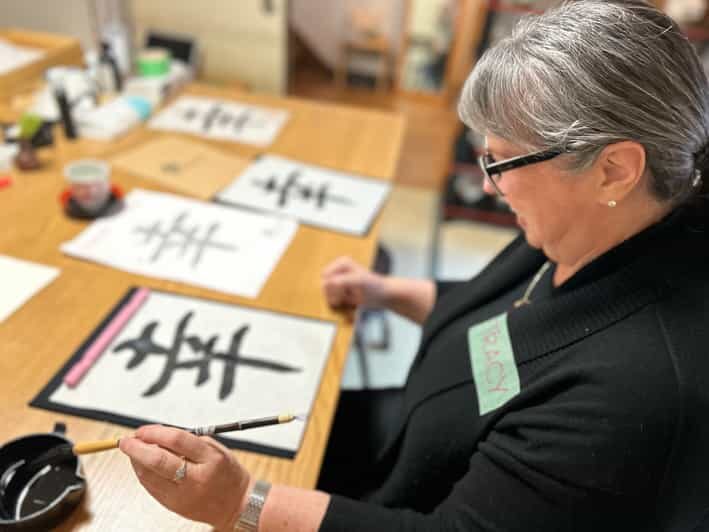
Several reviews mention the instructor by name: Aya. People describe her as warm, patient, and skilled, with clear explanations of both technique and context.
Aya is presented not only as an instructor but as a master who can explain how she learned calligraphy herself and what the practice means. Reviews also reference an assistant who helps during the writing, and even mention photos and video being taken by the instructor husband.
That matters because calligraphy can feel intimidating at first. Having someone who can translate technique into something you can physically do makes the experience far easier to enjoy. It also helps you avoid the common beginner problem: writing quickly to finish, which is the exact opposite of what calligraphy needs.
If you want a class where questions actually get answered, this one seems built for that.
The Local Home Visit: Conversation and a Real Kyoto Setting
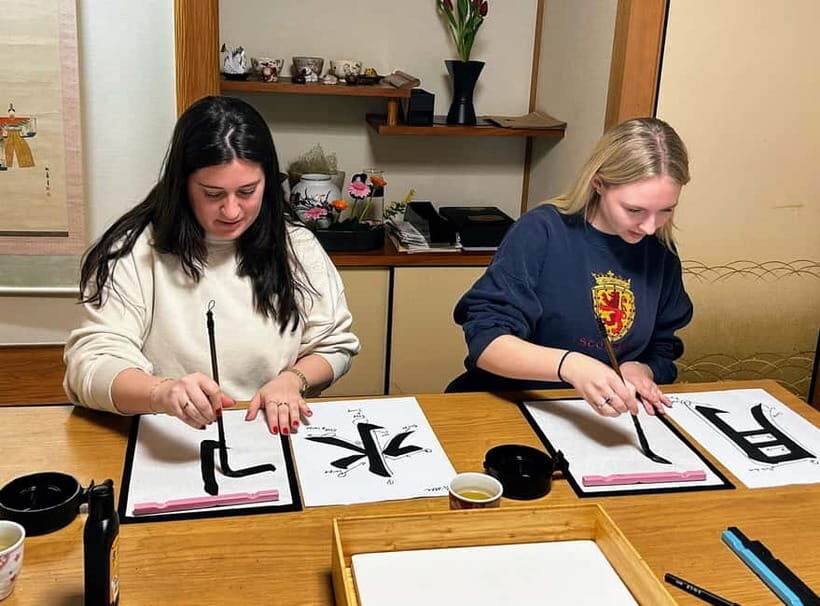
This experience is not just “sit down, write, leave.” The option to visit a local home near Nijo Castle is a big part of why the class feels special.
In reviews, people describe having conversations with the hosts and feeling welcomed in a home environment. One review even notes it as a relaxing and fun way to escape Kyoto’s summer heat for an hour.
You should think of this home visit as part of the experience’s atmosphere, not a museum-style tour. It’s more about being present with real people and letting your cultural experience come through normal human interaction—how you’re greeted, how you share what you’re writing, and what you ask about the art.
And because it’s a private group, you’re less likely to feel like you’re on a stage with strangers watching every move.
What You Actually Make: A Washi Souvenir You’ll Want to Display
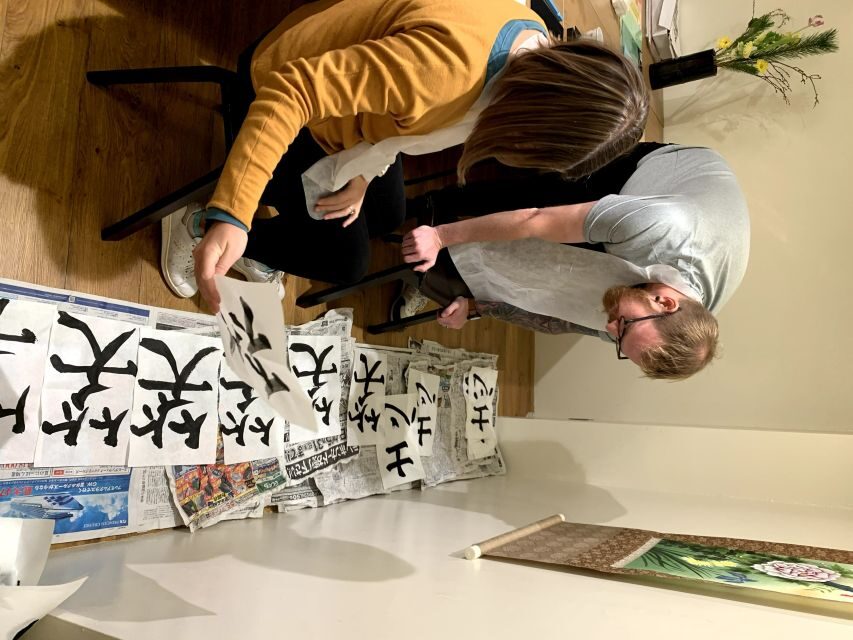
The included materials are a major value point. You get:
- calligraphy tools rental
- ink
- Japanese paper (washi)
- instruction and explanations about Japanese calligraphy
So at the end, you’re not left with a lesson and nothing to show for it. You’ll walk away with something you made yourself, which is rare in quick “cultural” activities.
Your final piece typically includes your chosen kanji, and many participants also add their name in Japanese. That combination is why the keepsake works. It’s personal, visually satisfying, and tied to what you learned during the class.
Practical tip: if you plan to bring it back home, handle it gently when you’re done. Washed paper art can be delicate, and you’ll want it looking crisp for framing or display.
Price and Value: $66 for Materials, Coaching, and a Finished Keepsake
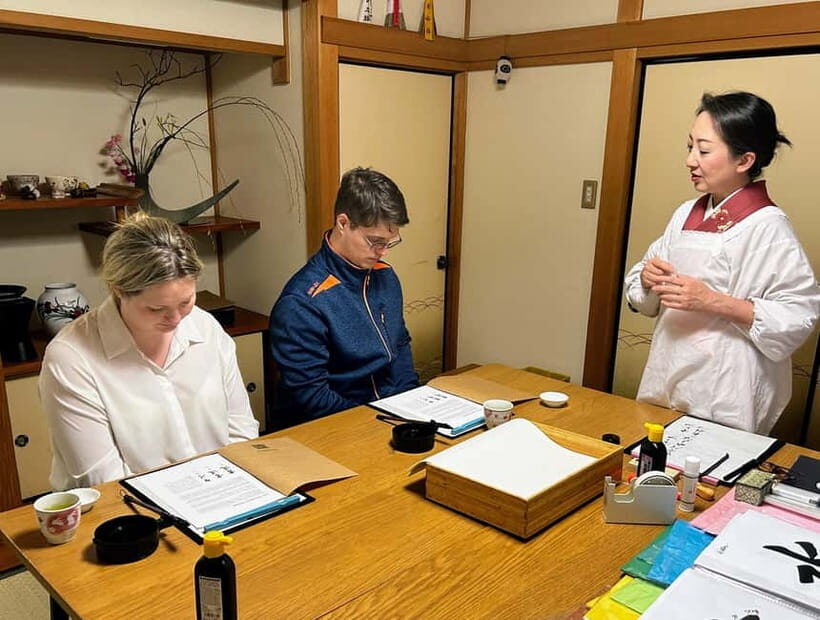
At $66 per person for a 1-hour private group experience, the question isn’t whether it’s cheap. It’s whether you feel you got something real.
Here’s why it’s good value based on what’s included and how the class runs:
- You’re paying for hands-on coaching, not a lecture.
- You get all materials: tools, ink, and washi paper.
- You leave with a finished souvenir you can actually use as decor.
- Private group instruction tends to reduce wasted time, especially for beginners.
If you’ve ever done a craft activity where you buy supplies separately or leave with a half-finished sheet, this avoids that problem. You don’t have to come prepared with anything besides socks.
Is it “worth it” if you only care about a quick photo? Probably not. But if you want a calm, skill-based cultural experience with a tangible result, it’s a solid deal.
Who This Kyoto Calligraphy Class Suits Best
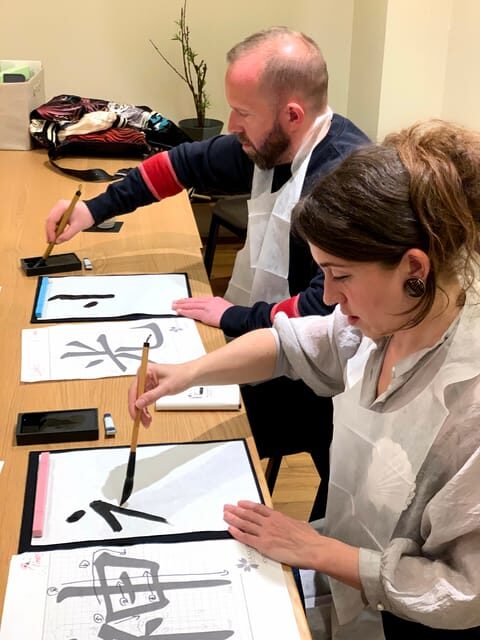
This works especially well if:
- you want a structured art lesson without needing prior experience
- you like calm activities with clear instruction and feedback
- you want a souvenir with personal meaning, not just a postcard
- you’re in Kyoto near Nijo Castle and want something cultural beyond temples
It also seems like a great honeymoon or couple activity, because the class can turn into a shared “we made this” memory—something people mention with enthusiasm in the reviews.
What doesn’t fit as well:
- children under 13 (it’s listed as not suitable for them)
- anyone who’s uncomfortable with quiet focus or needs a very fast, high-energy experience
- people who arrive late often—timing matters here
Practical Rules That Keep the Class Smooth
Small rules, big payoff: they protect the classroom experience and keep everyone comfortable.
You should know:
- Bring socks. Bare feet are not acceptable, and shoes can’t be worn indoors.
- No smoking, no vaping, and no alcohol or drugs.
- Avoid strong fragrances.
- Arrive about 5 minutes early, and don’t arrive too early because there’s no waiting space.
- If you’re late by more than 15 minutes, the class can’t run.
Also, language support is listed as English and Japanese, which helps a lot when you’re learning techniques that are mostly visual and physical.
And if you use a wheelchair, the class is listed as wheelchair accessible.
Should You Book This Kyoto Experience?
Yes—if you want a short, high-quality cultural skill with an actual finished souvenir, book it. The blend of kanji stroke instruction, a personal choice of character, and a home setting near Nijo Castle makes it feel more grounded than a typical “class only” workshop.
Skip it only if you need something ultra-flexible on timing or if you’re looking for a casual walk-through with no concentration. This is a focused hour. It rewards you when you show up ready to slow down and write carefully.
If you’re comfortable following simple indoor rules (socks, no shoes, no strong scents) and you’d like a memorable Kyoto keepsake, this is a very good match.
FAQ
What is the duration of the Kyoto local home visit and Japanese calligraphy class?
The experience lasts 1 hour.
How much does the calligraphy class cost?
It costs $66 per person.
What’s included in the class?
You get instructions and explanations, calligraphy tools rental, ink, and Japanese paper (washi).
Where is the meeting point relative to Nijo Castle?
The location is about 200 meters west of Nijo Castle, on the north side of Ebisugawa Street, just west of Nishinotoin Street.
What should I bring for the class?
Bring socks. Bare feet are not acceptable, and shoes can’t be worn indoors. Socks can be available to purchase if you forget yours.
What language is the instruction in?
The instructor offers English and Japanese.
Is this a private group?
Yes, it’s listed as a private group.
Is the class wheelchair accessible?
Yes, it’s listed as wheelchair accessible.
Is there an age limit?
The activity is not suitable for children under 13 years.