REVIEW · KINKAKUJI (GOLDEN PAVILION) TOURS
Kyoto: Kinkaku-ji Temple & Serene Garden Guided Tour with Tickets
Book on Viator →Operated by Japan Wonder Travel · Bookable on Viator
Gold on water, then a monk’s chant.
This 3-hour guided tour pairs two UNESCO temples with very different moods: the dazzling Kinkaku-ji and the quieter, imperial-feeling Ninnaji. You’ll also get a rare chance to step inside a sacred hall and hear a real chanting session.
I especially like the small group size (max 7), which keeps things conversational and makes it easier to ask questions. And I love that the visit isn’t just sightseeing; you’re led through temple spaces with context, including a Main Hall experience led by a monk plus time for Q&A.
One thing to consider: the Ninnaji portion can shift due to temple circumstances, so timing and which areas you enter may vary slightly.
In This Review
- Key highlights at a glance
- Kinkaku-ji and the Golden Pavilion: what you’re really looking at
- A practical note on timing at Kinkaku-ji
- Ninnaji Temple: why the mood changes (and how your guide explains it)
- What “behind-the-scenes” feels like here
- The monk-led chanting and Q&A: what makes it memorable
- Inside the Sutra Hall: the rotating sutra shelf ritual
- Final stop at the Imperial Residence: calm, not chaos
- The route in plain terms: how the 3 hours work
- Small group size (max 7): why it matters more than you think
- Price and value: is $48.86 a fair deal?
- Who this tour suits best
- Should you book this Kinkaku-ji + Ninnaji guided tour?
- FAQ
- What temples do I visit on this tour?
- How long is the tour?
- Are admission tickets included?
- Do I need a paper ticket?
- How many people are in the group?
- Where does the tour start?
- Where does the tour end?
- Is the tour near public transportation?
- What happens in Ninnaji Temple?
- Can the Ninnaji part of the itinerary change?
- What is the cancellation policy?
Key highlights at a glance
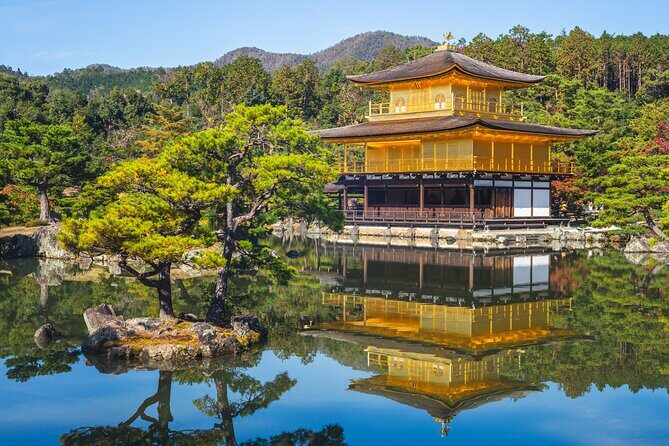
- Golden Pavilion (Kinkaku-ji) with gold-leaf views and the reflected pond setting
- Rare access at Ninnaji: entry to the Main Hall (Kondo Hall) for a monk-led chanting session
- Sutra Hall ritual: you can see and interact with the rotating sutra shelf
- Q&A with the monk plus a memorable photo with the monk before the final stop
- Tight timing (about 3 hours) that still covers two major UNESCO sites
Kinkaku-ji and the Golden Pavilion: what you’re really looking at
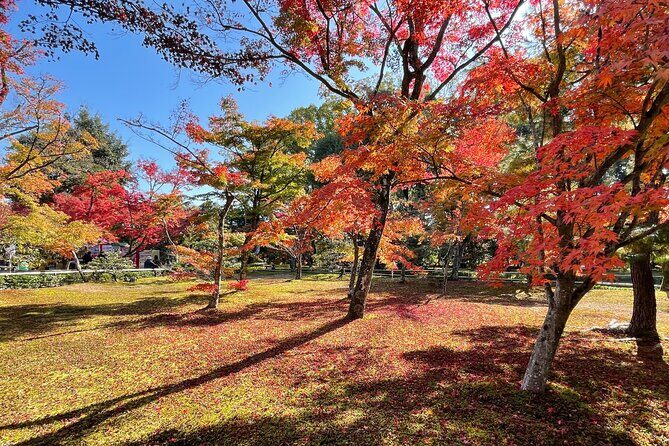
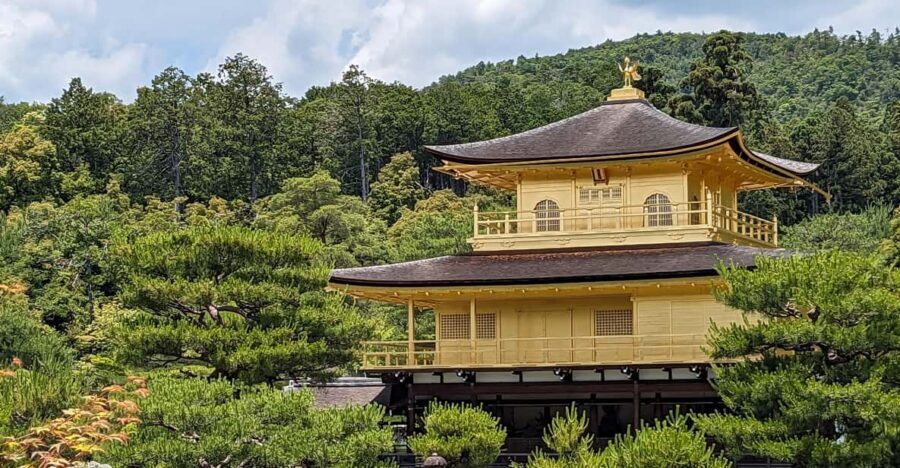
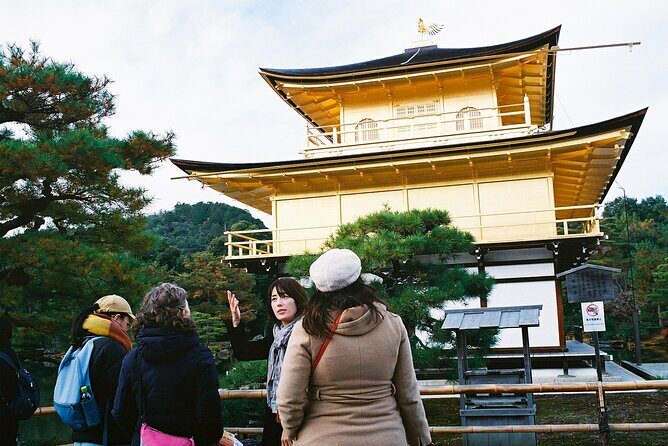
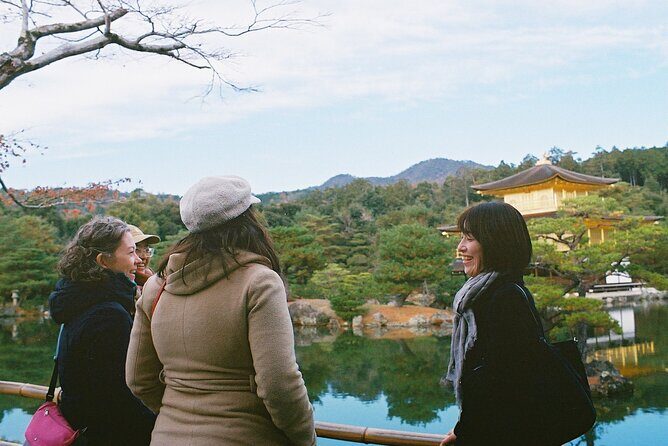
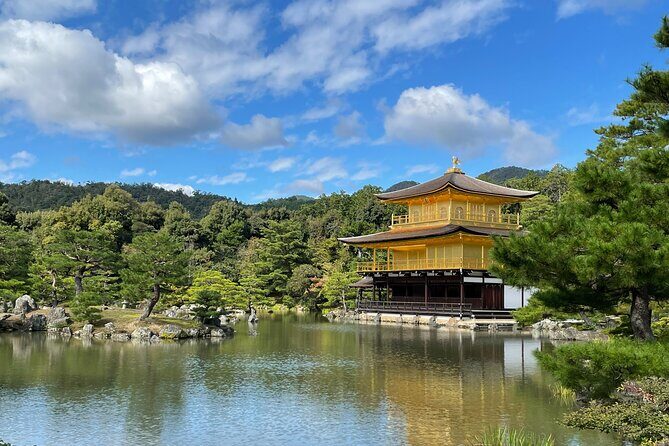
Kinkaku-ji, the Golden Pavilion, hits you fast. Even if you’ve seen pictures, the gold leaf and the calm pond reflections create a very specific mood: part power, part serenity, all wrapped into one view.
What makes it more than a pretty facade is the backstory your guide connects to the spaces you’re standing in. The temple began as a retirement villa for Shogun Ashikaga Yoshimitsu and later became a Zen Buddhist temple. That shift matters, because you’ll notice how the architecture and layout are meant to guide attention, not just impress you.
You’ll visit areas tied to the temple’s key structures and traditions, including Shariden, the Karamon Gate, Rikushu-no-taki, Anmintaku, Hakujanotsuka, the Yukatei Teahouse, and Fudo Hall. Your guide’s job is to connect those names to what you’re seeing right there—so you’re not just collecting labels.
If you care about photos, this is the stop where you’ll likely spend your attention. Focus on the edges of the pavilion and the reflection patterns in the water. And if you want fewer crowd headaches, treat this like a “watch first, shoot second” moment.
You can also read our reviews of more tours and experiences in Kyoto

A practical note on timing at Kinkaku-ji
You get about 1 hour here. That’s enough to take in the pavilion, hear the meaning behind the spaces, and still move at a comfortable pace. If you tend to linger, keep your pace steady once you’re inside—this tour is designed to fit Ninnaji right after.
Ninnaji Temple: why the mood changes (and how your guide explains it)
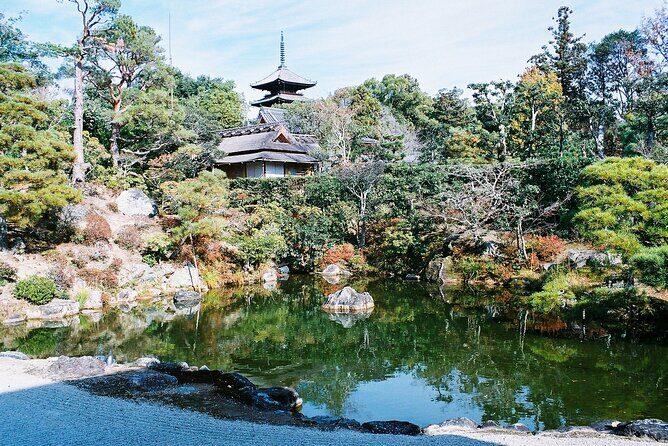
Then you shift from gold-and-water drama to something quieter and more grounded: Ninnaji Temple. Founded in 888 by Emperor Uda, Ninnaji sits in a long imperial line. It’s also a UNESCO site, known for its gardens and the famous five-story pagoda and Omuro cherry trees.
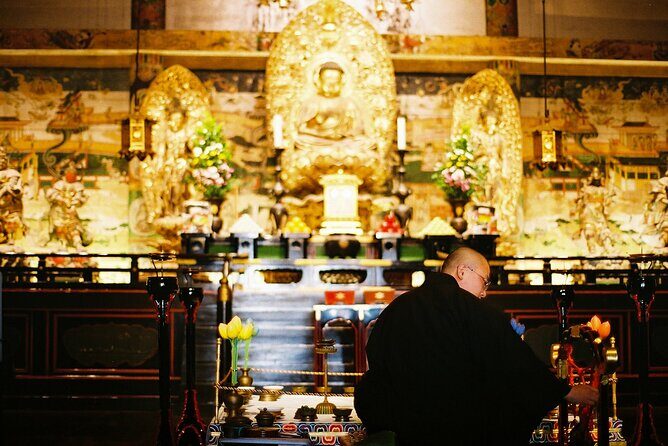
This is also the place where the tour earns its “more than a standard visit” reputation. You get a Main Hall experience that’s described as rarely opened, and it includes a sacred chanting session led by a monk. That’s the difference between looking at Buddhism and hearing it in action—your guide sets the tone before anything begins.
Expect a more reflective pace than at Kinkaku-ji. Your guide will likely explain how Ninnaji connects to Shingon Buddhism as the head of the Omuro school, and how temple spaces function during rituals. Even if you don’t know a single Buddhist term today, you’ll walk away understanding the logic of the ceremony.
What “behind-the-scenes” feels like here
The key isn’t backstage access for the sake of bragging. It’s that you’re in spaces where people come to practice. That changes your posture. You stand differently. You listen differently. And you ask better questions.
The monk-led chanting and Q&A: what makes it memorable
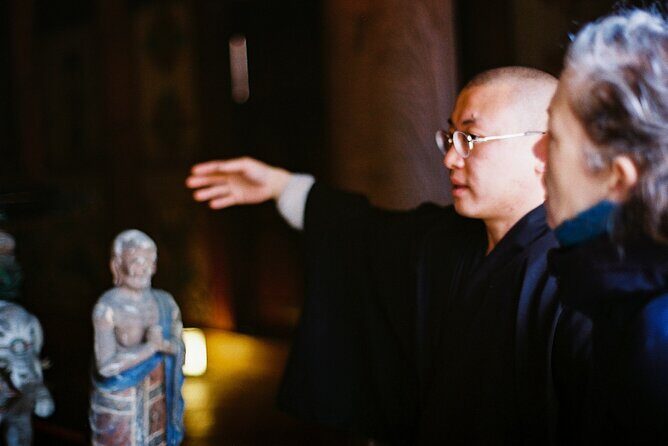
One of the most praised parts of this experience is the monk interaction. In the Main Hall, you’ll hear a sacred chanting session led by a monk, and then you’ll have Q&A time. The format matters because it turns a temple visit into two-way learning.
And yes, you’ll have a photo opportunity: the tour includes capturing a memorable photo with the monk before the final, calmer stop.
When Q&A is done well, it’s not about trivia. It’s about how you’re supposed to understand what you saw—like why chanting is done, what the ritual environment supports, and how temple life fits into daily practice.
If you’re the type who normally stands back at temples and just watches, this is where you’ll feel more included. Bring curiosity, keep your questions respectful, and you’ll get more out of it than you expect.
You can also read our reviews of more guided tours in Kyoto


Inside the Sutra Hall: the rotating sutra shelf ritual
After the chanting moment, the tour continues into the Sutra Hall, where you’ll see and interact with the rotating sutra shelf. That’s a small detail on paper, but it gives you a direct feel for temple ritual.
This kind of action-based moment helps your brain connect religion to lived practice. Instead of hearing that sutras matter, you’re doing the physical gesture tied to the tradition.
Your guide’s explanations are important here. Without context, you’d just be turning something at random. With context, the motion becomes a clue to meaning—how ritual repetition, objects, and intention work together in daily Buddhist practice.
Final stop at the Imperial Residence: calm, not chaos
The tour wraps with a visit to the elegant Imperial Residence area in the same temple complex. The point isn’t history-by-textbook. It’s atmosphere: a quieter space where imperial Kyoto’s elegance shows up in built form and garden stillness.
This ending also helps you process what you experienced earlier. You go from gold-leaf spectacle to chanting and ritual action. Then you land somewhere gentle, where you can slow down and take in the overall character of Kyoto’s sacred spaces.
If you want a good photo here, aim for light and angles rather than trying to “capture everything.” A calm closing moment is how you end with the right memory, not just more images.
The route in plain terms: how the 3 hours work
This is a 3-hour tour with tickets included, and it’s paced to cover two UNESCO sites without turning into a sprint.
- Stop 1: Kinkaku-ji (about 1 hour)
You’ll see the main structures associated with the Golden Pavilion and key areas like Shariden and Fudo Hall.
- Stop 2: Ninnaji (about 1 hour 45 minutes)
You’ll spend time inside the temple’s special areas, including the Main Hall chanting session and the Sutra Hall ritual.
Between stops, the tour setup is designed to keep you moving smoothly. One practical detail from past experiences is that the transfer to Ninnaji can be handled by taxi, which helps when you only have a short time window and you don’t want to spend your energy figuring out trains.
Small group size (max 7): why it matters more than you think
With a maximum of 7 travelers, you’re not stuck watching from the back. That matters at temples because your questions aren’t “one more voice.” They can actually shape what your guide explains next.
It also helps with crowd control. Kinkaku-ji and Ninnaji can get busy at certain hours. A smaller group stays easier to manage, and your guide can adjust pace depending on what the temple spaces allow at that moment.
And if you’re traveling alone, that group size still keeps the experience feeling personal rather than anonymous.
Price and value: is $48.86 a fair deal?
At $48.86 per person for about 3 hours, this sits in the “good value if you care about context” range. The ticket cost is included for both sites, so you’re not paying extra just to get inside.
The real value is what you can’t DIY easily:
- A monk-led chanting session with Q&A
- Rare access to a Main Hall space
- A ritual element at the Sutra Hall (not just walking by)
If your goal is only to see the Golden Pavilion and then move on, you might decide to go independently. But if you want meaning, explanations, and a more respectful look at how temple life works, this price starts to make sense quickly.
For me, the bargain is simple: you’re paying to convert “sightseeing time” into “understanding time.”
Who this tour suits best
I think this fits especially well if you:
- Want two UNESCO sites in one hit but don’t want to feel rushed
- Prefer guided context over reading plaques only
- Like cultural experiences where you can ask questions (not just listen)
- Enjoy small-group tours where the guide can slow down for meaning
If you’re traveling with someone who gets bored by “history talk,” the good news is that the experience isn’t only lecture. Chanting, ritual action, and the monk photo make it feel human, not academic.
If you’re someone who hates any scheduled pace, you may find the timing tight at two major locations. But the group size helps.
Should you book this Kinkaku-ji + Ninnaji guided tour?
I’d book it if you want a Kyoto temple day that goes past the postcard. The combo of Kinkaku-ji’s gold-leaf spectacle and Ninnaji’s monk-led ceremony is a smart contrast, and the visit includes moments that are hard to replicate on your own—especially the Main Hall chanting and Q&A.
I’d skip it if your top priority is maximizing free time for wandering, shopping, or long independent photo stops. This tour is designed to cover a specific set of temple experiences in a short window, so you trade flexibility for guidance and rare access.
FAQ
What temples do I visit on this tour?
You visit Kinkaku-ji Temple (Golden Pavilion) and Ninnaji Temple.
How long is the tour?
The tour lasts about 3 hours.
Are admission tickets included?
Yes. Admission tickets are included for both Kinkaku-ji and Ninnaji.
Do I need a paper ticket?
No. You receive a mobile ticket.
How many people are in the group?
The tour has a maximum group size of 7 travelers.
Where does the tour start?
It starts at Yamazaki-an, 25 Kinugasa Babachō, Kita Ward, Kyoto, 603-8362, Japan.
Where does the tour end?
It ends at Ninnaji Temple, 33 Omuroōuchi, Ukyo Ward, Kyoto, 616-8092, Japan.
Is the tour near public transportation?
Yes, it is near public transportation.
What happens in Ninnaji Temple?
You step inside the rarely opened Main Hall for a sacred chanting session led by a monk, you can join a Q&A, and you also visit the Sutra Hall to see and interact with the rotating sutra shelf. The tour also includes a photo with the monk before visiting the Imperial Residence.
Can the Ninnaji part of the itinerary change?
Yes. Details at Ninnaji may be subject to change due to temple circumstances.
What is the cancellation policy?
You can cancel for free up to 24 hours in advance for a full refund.