REVIEW · HOP-ON HOP-OFF TOURS
Kyoto: Hop-on Hop-off Sightseeing Bus Ticket
Book on GetYourGuide →Operated by Myojo bus Co. · Bookable on GetYourGuide
Kyoto can feel like a giant maze of temples and neighborhoods. This bus turns it into an easy route: open-top double-decker views plus hop-on hop-off freedom with a clear lineup of major sights. I particularly like how the stops drop you near UNESCO-level highlights, and how the pre-recorded audio keeps you moving without guesswork. The main trade-off is simple: it’s open-top, so bright sun and long waits between buses can slow your pace.
You’ll ride past Kyoto’s big names, including Nijo Castle, Kinkakuji (Golden Pavilion), and Kiyomizu-dera, with audio in seven languages. The staff is a standout in the feedback, with riders praising guides such as Lauren, Casey, and Miyuki for being helpful and friendly. Still, don’t expect the audio to replace a guidebook or a deep lecture—some riders note the narration can feel brief as announcements kick in.
If you want one practical day that saves you time on public transport and helps you choose what deserves a longer stop, this is a solid pick. Just be ready for crowds at popular temples and for the fact that not everything looks great from the bus window.
In This Review
- Key things I’d plan around
- How the Kyoto hop-on hop-off bus keeps your day flexible
- Price and what $27 really buys you
- Starting point at Kyoto Station (and why it matters)
- Kyoto Station to Nishihonganji: an easy warm-up zone
- Shijo Karasuma to Nishiki Market: classic Kyoto shopping energy
- Nijo-jo Castle: stepping into power and structure
- Kitano-tenmangu and Kamishichiken: a calmer Kyoto lane
- Kinkakuji (Golden Pavilion) and the cash reality
- Daitokuji: the pause between famous temple icons
- Kyoto Imperial Palace (Doshisha University): grand but less frantic
- Ginkakuji (Silver Pavilion) and the art of not rushing
- Heian-jingu and Okazaki Park: space to breathe
- Gion (Kotowa-Kyoto Yasaka): Kyoto at street level
- Gojozaka and Kiyomizu-dera: stairs, viewpoints, and iconic angles
- Sanjusangendo and Kyoto National Museum: culture with fewer time pressures
- On-bus reality check: open-top sun, audio limits, and timing
- Who should buy the 1-day vs 2-day ticket?
- Final decision: should you book this Kyoto hop-on hop-off bus?
- FAQ
- How long is the Kyoto hop-on hop-off ticket valid?
- Where do I board the bus at Kyoto Station?
- Do I need to print anything, or can I use a mobile voucher?
- What languages are available for the audio commentary?
- Is Wi-Fi available on board?
- Is the bus open top, and what should I do in the rain?
- Are attraction entrance fees included?
- What items are not allowed on the bus?
- Do children need a ticket?
Key things I’d plan around
- Hop on at any stop using your mobile voucher, so you control the pace
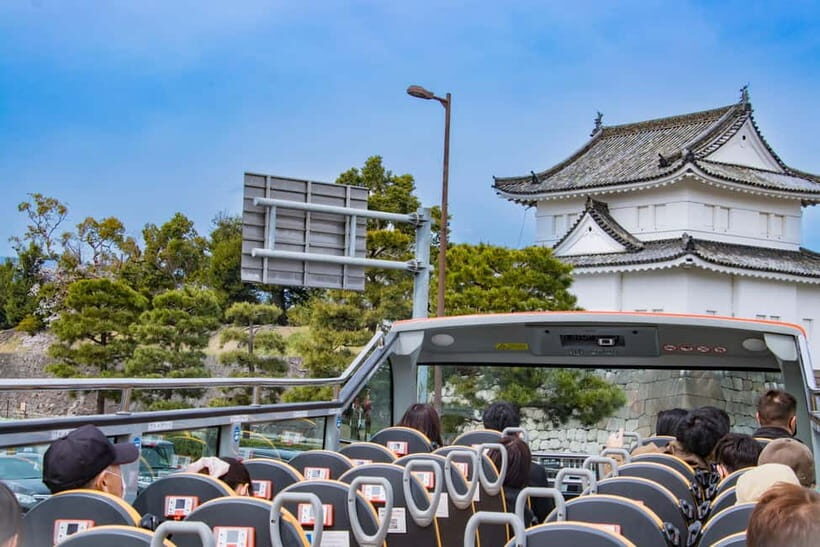
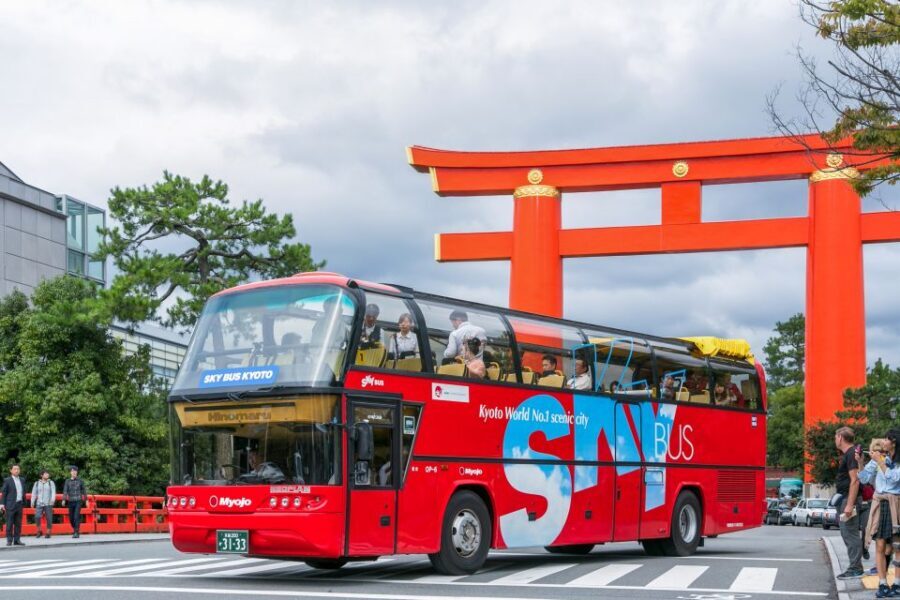
- Open-top panoramic sightseeing, with real sunlight and a bus-world view
- Seven-language audio that works as a walk-and-learn companion
- A stop lineup built for first-timers, including Gion and both Kinkakuji and Ginkakuji areas
- Unlimited rides for your ticket’s valid day count, so you can loop and reset
- Weather reality: buses can be disrupted in severe storms, and umbrellas aren’t allowed onboard
How the Kyoto hop-on hop-off bus keeps your day flexible
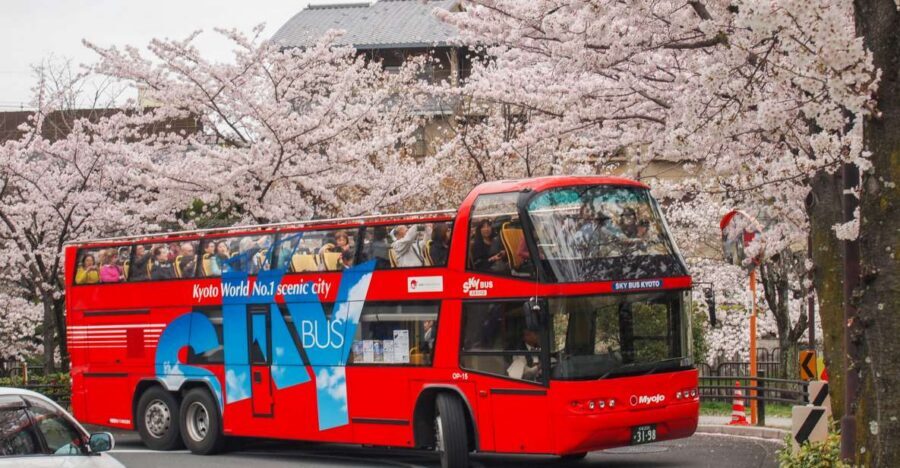
Kyoto’s charm is also its trap: sites are spread out, and transit can get confusing fast. This ticket gives you a do-it-yourself city pass with a big advantage: you can board at any listed stop and get off when something catches your eye. Then you wait for the next bus, ride again, and keep moving without re-planning everything from scratch.
I like the “choose your own length of stay” approach because Kyoto rewards slow moments. At some stops you’ll want 15 minutes to orient yourself; at others you’ll want an hour (or longer) to wander and photograph properly.
One thing to keep in mind: the route is designed for sightseeing, not for instant door-to-door. You’ll still do some walking from the stop to the best viewpoints, but the stops are placed to make that walking reasonable.
You can also read our reviews of more tours and experiences in Kyoto


Price and what $27 really buys you
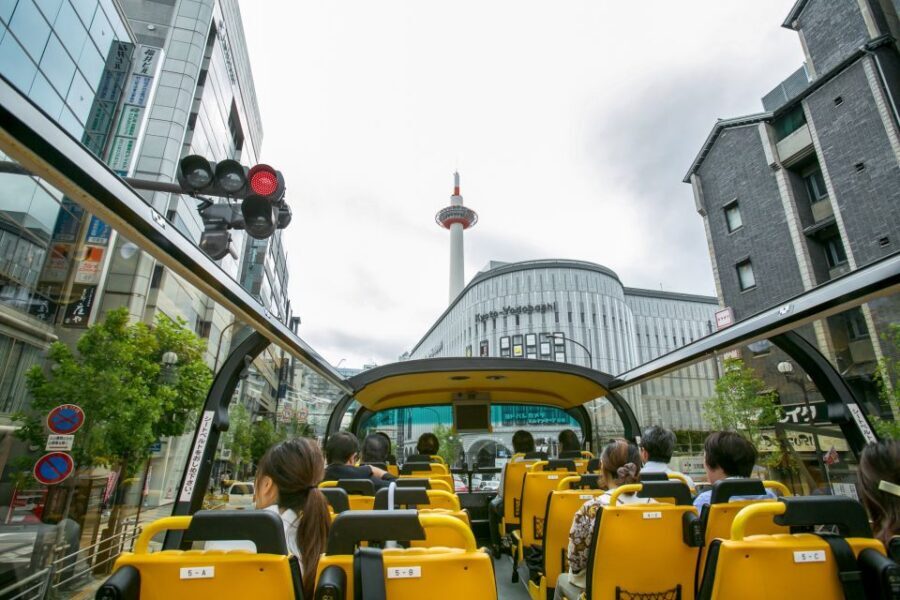
At around $27 per person for a 1–2 day ticket option, the value is less about saving money on entrance fees (those aren’t included) and more about saving energy on logistics. In Kyoto, the cost of taxis and the time cost of figuring out bus/train transfers can add up quickly—especially if you’re bouncing between the east and west temple zones.
What you do get for the price is practical: unlimited rides during your ticket’s validity and onboard audio commentary in seven languages. That turns your day into a guided overview plus free time, without the pressure of staying on a tight group schedule.
The biggest “cost” is time management. If you buy a 1-day ticket and try to sprint through every major stop, you’ll feel rushed. A 2-day ticket tends to fit Kyoto better because it lets you repeat areas after crowds thin out.
Also note: Wi‑Fi on board is temporarily suspended. So plan on using your phone for maps and reminders, not for onboard internet.
Starting point at Kyoto Station (and why it matters)
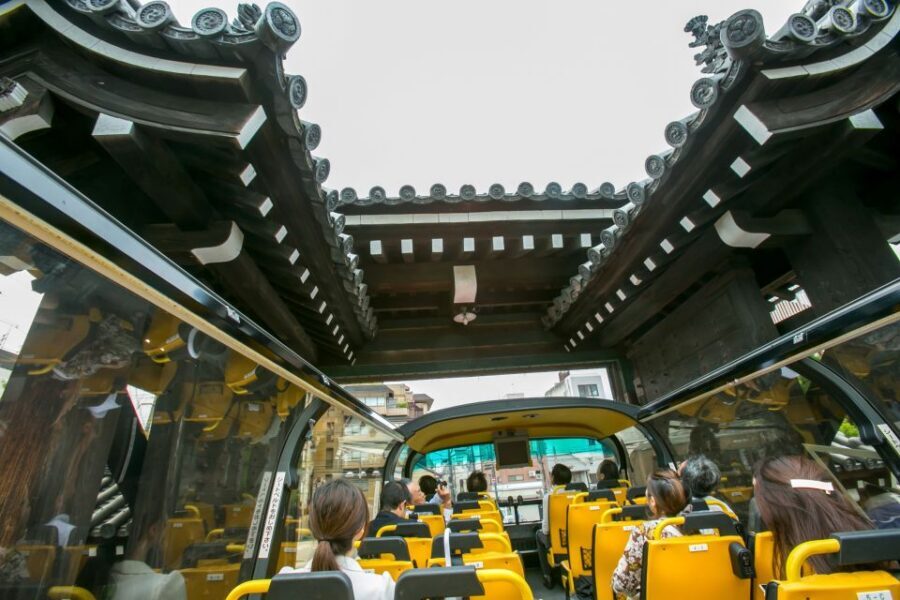
Kyoto Station is the easiest place to begin because it’s the transportation hub for almost everything else. The bus stop is in front of the Isetan department store, and you’ll want the north central exit to find it quickly.
This matters because first-time Kyoto visitors often lose time just locating the right stop. Once you’re on, you can use that first stretch to get your bearings and decide where you want to hop off for real exploration.
If you’re visiting on a busy day, expect more people at Kyoto Station and at the first popular drop-offs. The good news: the buses run as a true hop-on hop-off system, so you’re not stuck waiting for one specific departure to start seeing the sights.
Kyoto Station to Nishihonganji: an easy warm-up zone
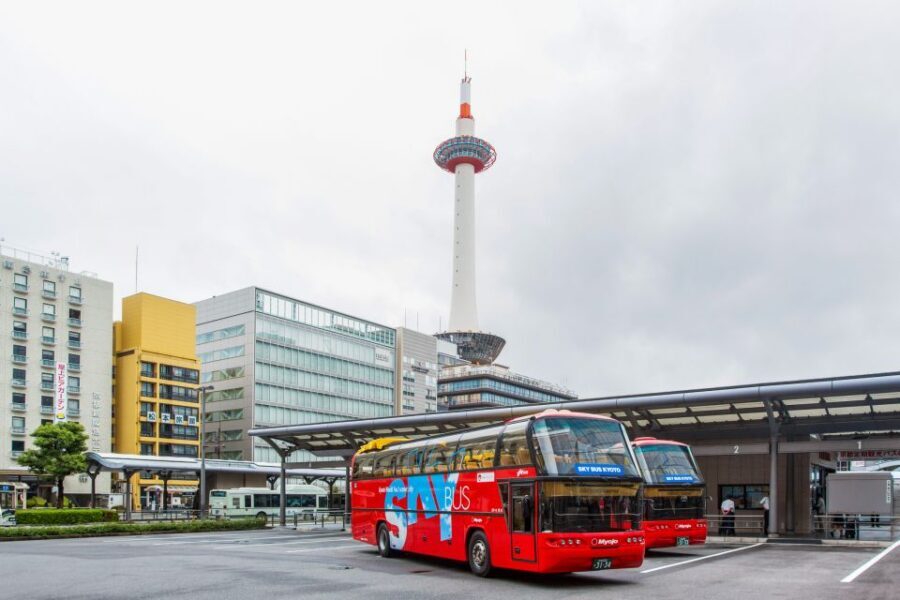
After Kyoto Station, the route moves to Nishihonganji (Kyoto Tokyu Hotel). This stop is a gentle starter because you’re still close to the station area and you can ease into the day without jumping straight into the busiest temple crowds.
It’s a smart early get-off if you want a quick look around and a break from nonstop transit. You’ll also get a feel for how Kyoto’s neighborhoods change as you move toward the temple regions.
Practical note: from the bus, you’ll sometimes get only partial views of landmarks. Don’t count on the bus ride alone for your best photos—use it to position yourself, then step off for the real sightlines.
Shijo Karasuma to Nishiki Market: classic Kyoto shopping energy
Next up is Shijo Karasuma / Nishiki-ichiba Market, one of the most useful stops on the list. This is where you can pair sightseeing with food browsing and local snack hunting, because Nishiki is known for street-level activity.
Even if you’re not a heavy shopper, this area works well as a mid-route reset. It’s also a good place to plan your next moves: you’ll see how long you’ll want to spend on the market streets before heading toward castles and pavilion temples.
The drawback here is crowd density. Kyoto can get packed around central markets, so if you care about comfort, get off earlier in the day and plan to return later only if you’re still feeling energetic.






Nijo-jo Castle: stepping into power and structure
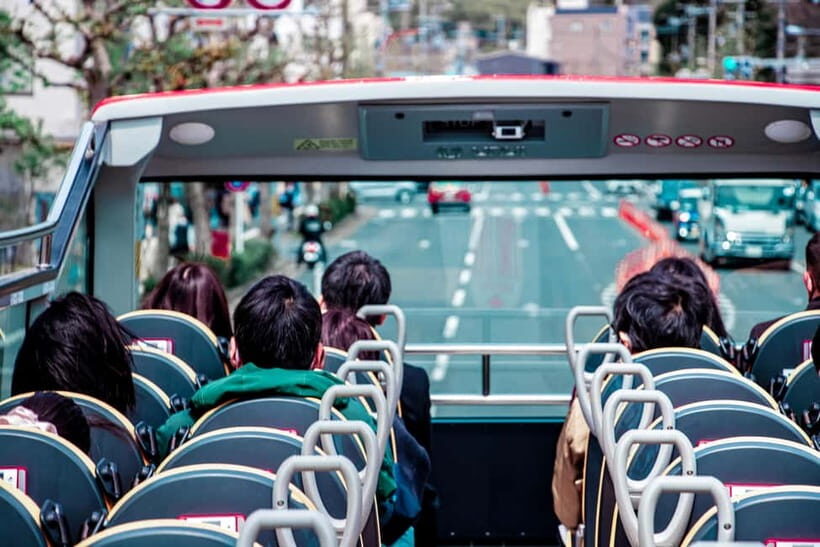
The bus stop at Nijo-jo Castle (Nijo Castle) is a big one for first-timers because it connects Kyoto’s historical image to a place you can actually walk through. This is a UNESCO World Heritage site on the route, which helps you build a day that covers Kyoto’s headline attractions efficiently.
Nijo Castle tends to work best when you don’t try to rush. If you’re serious about photos and pacing, treat this like your “main stop” and give it enough time to do it justice.
Also, plan your walking after you get off. Even when the bus stop is close, the best views and routes within the site aren’t always right at the door. Build in a buffer so you don’t feel squeezed.
Kitano-tenmangu and Kamishichiken: a calmer Kyoto lane
Then you’ll reach Kitano-tenmangu Shrine / Kamishichiken. This is a nice contrast to some of the most famous pavilion-and-steps neighborhoods. It feels like you’re moving into a different rhythm: more traditional, often less like a photo factory.
If you want a temple visit that doesn’t feel identical to the next one on the route, this stop helps balance your day. It’s also a useful “breather” before the big-ticket pavilion hits.
One real-life tip: as your day stacks up, your legs will start negotiating. That’s a good reason to hop off here for a shorter, more focused visit rather than trying to exhaust every stop in one round.
Kinkakuji (Golden Pavilion) and the cash reality
Next is Kinkakuji Temple (Golden Pavilion)—one of the most recognizable Kyoto sights. The bus positioning is excellent for getting there without transit stress, and it’s a UNESCO World Heritage site on the route.
Here’s a practical detail that can save frustration: Kinkakuji only accepts cash, and there’s no ATM on the premises (so plan ahead). If your wallet is light, you’ll want to handle money earlier while you’re still near central Kyoto.
As for the experience itself, the stop works best when you arrive ready to move through crowds. When Kyoto gets busy, the enjoyment comes from pacing yourself and focusing on your viewpoint—not trying to outrun everyone else.
Daitokuji: the pause between famous temple icons
After Kinkakuji, the route stops at Daitokuji Temple. This stop is valuable because it breaks up the day from “one mega-famous site after another.” Even if Daitokuji isn’t the first name on every itinerary, it gives you variety in how temples feel and how you walk through the grounds.
I like this kind of placement because it helps you avoid the mental burnout of only seeing the largest, most photographed places.
The main drawback is that it’s easier to undervalue it if you’ve already used most of your energy on Kinkakuji. So when you hop off at Daitokuji, take it slow and let it be its own moment.
Kyoto Imperial Palace (Doshisha University): grand but less frantic
The bus includes a stop for Kyoto Imperial Palace (Doshisha University). This is a smart choice if you want Kyoto history that feels more open and structured, rather than a dense network of small lanes.
Imperial sites can be a great mid-day option because crowds often behave differently than they do around the most iconic photo spots. It also gives your day a change of pace: more walking space, more atmosphere, less jostling.
From a planning standpoint, it’s also a good buffer stop before you head deeper toward the east-side pavilion areas.
Ginkakuji (Silver Pavilion) and the art of not rushing
The route continues to Ginkakuji Temple (Silver Pavilion). If Kinkakuji is the loud icon, Ginkakuji is often the one people enjoy more slowly. The stop on this hop-on hop-off route makes it easy to include even if you didn’t plan it perfectly at first.
My best advice: don’t turn this into a photo sprint. Take time for viewpoints that let you see the grounds’ layout rather than only the pavilion. Kyoto rewards that approach because the best moments often show up after you’ve walked a bit.
If you’re traveling with limited time, Ginkakuji is still doable in one solid block. If you have a 2-day pass, this is a great candidate for a return visit at a different time of day.
Heian-jingu and Okazaki Park: space to breathe
Next is Heian-jingu Shrine / Okazaki Park. This stop is useful for two reasons. First, it adds another major shrine to the list. Second, it’s tied to Okazaki Park, which gives you room to slow down and take a breath between temple clusters.
This is where your day becomes more “Kyoto strolling” and less “Kyoto checklist.” If you’re the type who likes to step aside for a quiet moment, this is the stop to build around.
Keep your expectations realistic: the bus gets you close, but the best time in parks and shrine grounds comes from walking. Wear shoes that can handle a few hours of moving.
Gion (Kotowa-Kyoto Yasaka): Kyoto at street level
The route includes Gion (Kotowa-Kyoto Yasaka), which is one of the most atmospheric areas in Kyoto. This is where the city feels like it belongs to stories: traditional streets, heritage vibes, and people out late even when the day is long.
From a practical standpoint, this is also one of the best “choose your own time” stops. If you’re doing a 1-day ticket, get off here only if you still have energy to wander. If you’ve got a 2-day ticket, consider making Gion your evening plan because the atmosphere changes as daylight fades.
One caution: like all famous Kyoto zones, it can be packed. Plan to enjoy the neighborhood, not just hunt for one perfect photo spot.
Gojozaka and Kiyomizu-dera: stairs, viewpoints, and iconic angles
Then the bus stops at Gojozaka (Kiyomizu-dera Temple / Gion). This stop is a gateway to one of Kyoto’s most famous temple settings, and it’s included for good reason: Kiyomizu-dera is the kind of sight that makes you stop walking.
You’ll want time here. The steps and viewpoints take energy, and if you hop off too late in the day, you may feel rushed at the exact moment you’d want to linger.
Also, the bus stop area can be busy. It helps to be ready to move with the flow rather than trying to stand still and wait for a clear moment. Patience pays off.
Sanjusangendo and Kyoto National Museum: culture with fewer time pressures
Finally, you’ll reach Sanjusangendo / Kyoto National Museum (Hyatt Regency Kyoto). This is a strong end stop for people who like a mix of temple atmosphere and museum time. It’s also a good choice for a second day when you want cultural variety without repeating the same pavilion scenes.
If you’re museum-inclined, this can stretch your day in a way that doesn’t rely only on walking temple grounds in the heat or crowds. Even if you skip the museum, Sanjusangendo’s setting still fits well as a “classic Kyoto” closer.
This last stretch often feels better when you’ve paced yourself through the earlier stops. If your day has been too intense, the best experience here will be the one where you don’t try to do everything.
On-bus reality check: open-top sun, audio limits, and timing
Let’s talk about the stuff that actually affects your comfort.
This bus is open-top, so you’ll be in direct sunlight. That’s part of the charm—panoramic views—but it’s also why you’ll want a hat and sunscreen. On hot or bright days, plan for shade breaks on your hops off.
Rain is different. Raincoats are provided in wet weather, but umbrellas are not allowed, so you’ll want to pack accordingly. Some riders also report a partially covered top-deck area, which can help when the sky turns ugly.
The onboard audio is pre-recorded in English, French, Japanese, Korean, Chinese, Spanish, and German. That’s great for independence. Still, a couple of riders note the narration can cut off mid-sentence as announcements trigger, and the music may be louder than the voice on some days. Use audio as an orientation tool, not as your only source of meaning.
Timing is generally smooth based on the feedback, with many people saying buses are on time. One consistent caution: some riders mention longer gaps during certain morning hours. If you’re connecting this with a hard reservation elsewhere, build buffer time rather than assuming perfect pacing.
Photo note: a few riders say not much is visible from some stops during the ride, so don’t plan on getting postcard photos from inside the moving bus. The value is positioning and access, not unlimited views from the window.
Who should buy the 1-day vs 2-day ticket?
A 1-day ticket makes the most sense if you want a fast orientation tour and you’re okay picking only a few major stops to go deep on. If your list is short—think Golden Pavilion, Gion, and one or two others—this can work.
A 2-day ticket is the better match for most people because Kyoto doesn’t sit still. You can do one “overview” day to learn the geography, then use day two to linger where you actually care. This lines up with the way riders describe the value of using the first day to decide what deserves more time.
You’ll enjoy this most if you:
- want to minimize transit stress between temple districts
- like hop-on flexibility more than fixed tour schedules
- are comfortable with walking and the reality of crowds
If you hate queues and you want a detailed, story-rich guide for every single site, you might find that the audio plus your own reading fills in less than a live guide would. The bus is about momentum and access, not a full-length lecture at every stop.
Final decision: should you book this Kyoto hop-on hop-off bus?
I’d book it if your goal is simple: hit Kyoto’s headline sights with less planning, then decide on the ground where to slow down. At about $27, you’re paying for route convenience, unlimited rides during your validity window, and audio that keeps you oriented without needing to decode transit.
I wouldn’t book it as a standalone plan if you’re expecting nonstop shade, perfect window views, or a detailed history lesson for every stop. The open-top reality and audio limits are real factors.
If you’re flexible, pack for sun/rain, bring cash for Kinkakuji, and use the bus as your map-on-wheels, this is a very practical way to see Kyoto efficiently.
FAQ
How long is the Kyoto hop-on hop-off ticket valid?
You can choose a 1-day or 2-day ticket option, and it’s valid for 1–2 days depending on what you select.
Where do I board the bus at Kyoto Station?
Use the north central exit of Kyoto Station. You’ll find the sightseeing bus stop directly in front of the Isetan department store.
Do I need to print anything, or can I use a mobile voucher?
You can board by showing your mobile voucher.
What languages are available for the audio commentary?
The audio guide is available in English, French, Japanese, Korean, Chinese, Spanish, and German.
Is Wi-Fi available on board?
Wi-Fi is listed as temporarily suspended.
Is the bus open top, and what should I do in the rain?
The bus has an open top, so you’ll be in direct sunlight. Raincoats are provided in wet weather, but umbrellas are not allowed on the bus.
Are attraction entrance fees included?
No. Entrance fees to attractions are not included.
What items are not allowed on the bus?
Smoking, selfie sticks, food in the vehicle, umbrellas, and alcoholic drinks are not allowed.
Do children need a ticket?
Children aged 0–5 do not need a ticket if they sit on the lap of an adult passenger with a ticket (1 child per passenger with ticket).