REVIEW · CONCERTS
Traditional Concert in Public bath near Kyoto Station
Book on Viator →Operated by Gen · Bookable on Viator
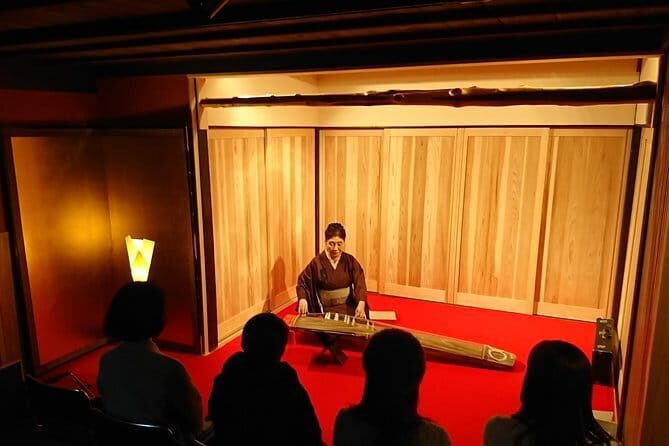
A concert inside a former bathhouse changes everything. This traditional show happens in a carefully renovated sento (public bathhouse) where the old tile and high ceilings help the koto and shamisen sound crisp and clear. I love how the venue turns music into something physical, and I also love the acoustics—you don’t need earplugs or guesswork to enjoy the details.
The one thing to keep in mind: the program shifts with the season and the performers, and the whole experience lasts about 1 hour, so you may not hear a specific piece you hoped for.
In This Review
- Key Points You Should Know Before You Go
- Why Kyoto Station’s Kujo-yu Bathhouse Makes the Music Feel Different
- The Renovated Sento: The Room Is Part of the Show
- What You’ll Hear: Koto and Shamisen, Plus Seasonal Program Variety
- Stop 1 at コワーケーションスペース九条湯 (Kujo-yu): The Experience in One Hour
- Price and Value: Is $32.52 Worth It?
- Best Ways to Slot It Into Your Kyoto Day Near the Station
- Who Should Book This Concert, and Who Might Skip It
- Should You Book This Traditional Concert in a Public Bathhouse?
- FAQ
- Where does the concert take place?
- How long is the concert?
- How much does it cost?
- What instruments will I hear?
- Is the ticket mobile?
- What is included in the price?
- Is coffee or tea included?
- Is it easy to get there using public transportation?
- What is the cancellation policy?
Key Points You Should Know Before You Go
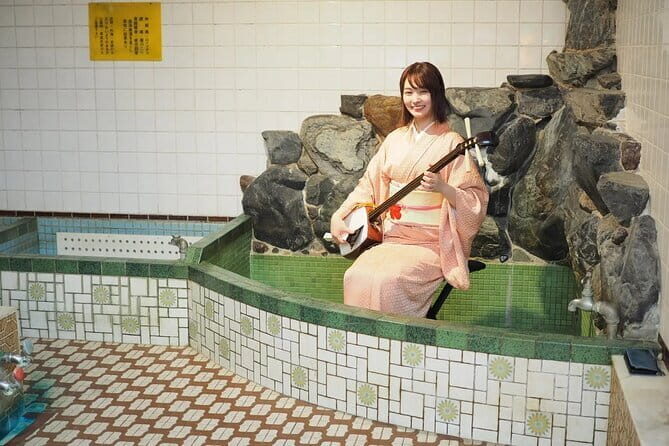
- Sento setting near Kyoto Station: a former public bathhouse repurposed into a concert space.
- Great sound from original architecture: tiled walls and high ceilings are doing real work for the music.
- Koto and shamisen focus: the show centers on traditional Japanese instruments, not a mixed lineup.
- Seasonal repertoire changes: expect classical Japanese favorites plus contemporary arrangements and original works.
- Simple ticketing: you get a mobile ticket, and the concert ticket is included.
- Good value for a 1-hour cultural stop: at about $32.52, you’re paying for the venue and the performance together.
Why Kyoto Station’s Kujo-yu Bathhouse Makes the Music Feel Different
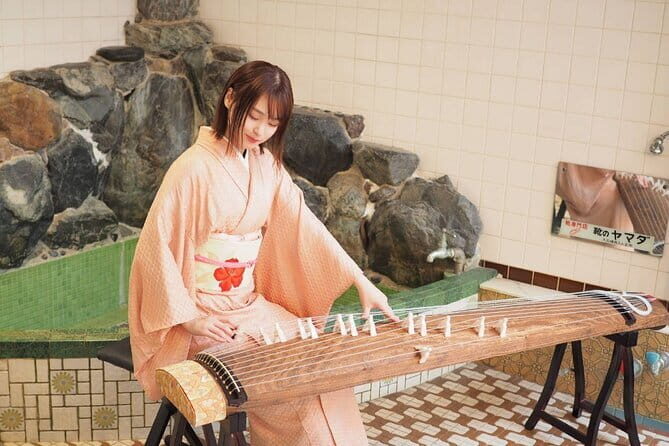
Most Kyoto concerts happen in temples, halls, or theaters. This one takes place in a renovated sento, specifically コワーケーションスペース九条湯 (Kujo-yu), close to Kyoto Station. That matters because the room itself was built for sound—people were gathering there for decades, and the structure was designed around long, echo-friendly spaces.
Here’s what you’ll notice right away: the tone of the koto plucks with a clean edge, and the shamisen’s notes carry without turning harsh. It’s not just that the acoustics are good. It’s that the sound seems to bounce off the old tiled surfaces and ceiling height in a way that feels natural, like the music belongs to the building.
I also like the practical side. If your Kyoto day is already centered around the station area, this becomes an easy cultural add-on. You’re not crossing town for a single hour. You’re walking into something that feels local and quietly special, which is exactly what you want when your schedule is tight.
You can also read our reviews of more tours and experiences in Kyoto
The Renovated Sento: The Room Is Part of the Show
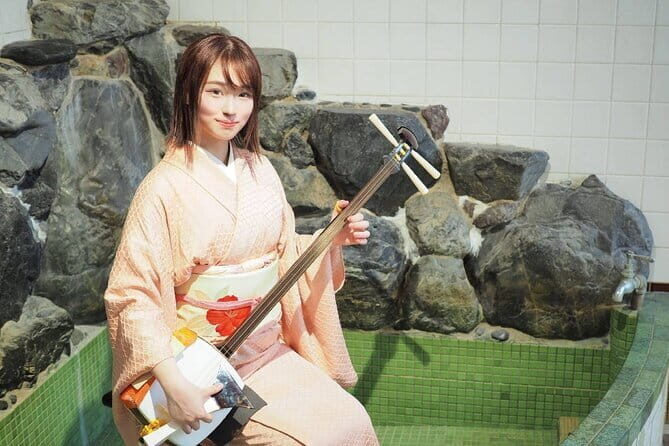
Sento architecture isn’t subtle. It’s bright, hard-surfaced, and built for wide rooms. Those tiled walls and high ceilings that once held daily bathhouse life now act like a sound amplifier, helping traditional instruments show their nuance.
This is where you get one of the biggest advantages of this experience: you can hear the details. Koto music lives in small shifts—how long a note rings, how the pattern lands, and how the texture changes from one passage to the next. Shamisen lines have their own character, and the sound carries in a way that still feels controlled rather than muddy.
The vibe is also different from a typical concert hall. You’re not sitting in a big, neutral box. You’re surrounded by a space that has been cared for and reimagined, which gives the performance an atmosphere you won’t get with your standard ticket. Think of it like seeing traditional music in a context that actually fits it.
One more practical thought: because this is a one-hour event, you’re not committing to a long evening of waiting. It’s performance-first, which is a nice change when you’ve already spent hours walking and riding transit.
What You’ll Hear: Koto and Shamisen, Plus Seasonal Program Variety
The heart of the show is traditional Japanese music performed with koto and shamisen. The program isn’t always the same. It changes with the season and the performers, so each concert feels like its own little snapshot of what’s being played and arranged right now.
Based on the information you have, the repertoire tends to cover several styles:
- Classical Japanese masterpieces
- Contemporary arrangements
- Original compositions
That mix is a smart way to bring first-timers in without making them feel lost. If you only know the idea of Japanese instruments, classics give you a clear starting point. Contemporary and original works then show that traditional instruments are not stuck in the past—they’re still being written for, arranged, and performed now.
If you’re a music nerd (or just curious), this is also a great chance to listen for contrasts. On koto, pay attention to how phrasing changes between older and newer pieces. On shamisen, listen for how the rhythm and bite of the instrument interacts with the room’s echo. The building helps you catch those differences.
If you’re hoping for a specific song or piece, the seasonal variation is your only real uncertainty. Otherwise, the instrument focus is consistent, which keeps expectations clear.
Stop 1 at コワーケーションスペース九条湯 (Kujo-yu): The Experience in One Hour
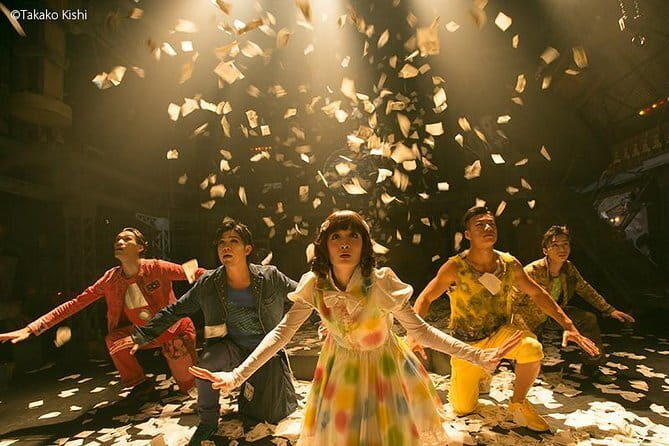
Your visit centers on one stop: コワーケーションスペース九条湯 (Kujo-yu). This is where you’ll attend the concert in the renovated sento setting near Kyoto Station. In other words, you’re not hopping between multiple venues during the show. The building and the performers are the whole point.
Here’s what to expect once you arrive: you’ll enter a historic bathhouse space that’s been reworked into a concert room, and you’ll listen as the music fills the high-ceilinged interior. The setting helps the sound move through the space, so it feels connected to the architecture rather than treated like background noise.
A useful mental trick: don’t just treat it as entertainment. Treat it like a listening experience. Sit comfortably, keep your phone away unless you’re using it for the mobile ticket, and let the sound patterns land. With koto and shamisen, the difference between a note you hear once and a note you actually follow is huge.
Also, note what’s not included. There’s no mention of tea or coffee being part of the ticket. If you like a warm drink before a show, plan to grab it nearby. Since the concert runs about an hour, you don’t want to spend the first part of your listening time searching for refreshments.
Price and Value: Is $32.52 Worth It?
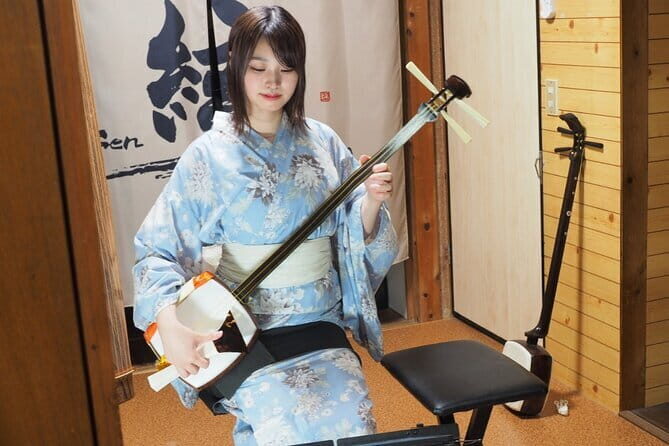
At $32.52 per person, this concert isn’t trying to undercut bigger, multi-instrument performances. You’re paying for a few specific things at once:
- a one-of-a-kind venue (a renovated former sento),
- a focused performance with traditional instruments (koto and shamisen),
- and a program that can include classics, contemporary arrangements, and original works.
That combination is where the value comes from. You’re not only buying music. You’re buying the chance to hear that music in an acoustically meaningful historic space that’s been cared for and reused.
Duration matters too. At around 1 hour, you get a strong cultural hit without sacrificing your whole day. For many itineraries, that makes the price feel easier to justify than longer shows that turn into time-consuming evening commitments.
If you’re someone who likes authentic, Japan-specific experiences that don’t require heavy planning, this fits well. It’s also booked in advance pretty regularly (the average booking window is about 32 days), so securing a spot when you’re already in planning mode is wise.


Best Ways to Slot It Into Your Kyoto Day Near the Station
This concert’s location is a big practical advantage: it’s near public transportation, and it’s close enough to Kyoto Station that it can fit into a day without making you haul across town.
Here’s how I’d plan it for a smoother trip:
- Build it into your schedule when you’re already near the station area.
- Treat it as a short, focused cultural stop after your main sightseeing push.
- Keep the meal plan simple. Since coffee or tea isn’t included, you’ll want food timing that doesn’t steal attention from listening.
Because it’s about an hour, it also works well on days when you don’t want another long walking loop. You can see Kyoto, then close the day with something quiet but memorable.
One more detail: you’ll receive confirmation at booking time, and the ticket is mobile, so you’ll want your phone charged. Nothing ruins a calm cultural moment faster than a dead battery and a frantic search for Wi-Fi.
Who Should Book This Concert, and Who Might Skip It

This is a strong match if you want:
- Traditional Japanese music with koto and shamisen
- A setting that feels genuinely different from a standard venue
- A short time commitment around an hour
- A chance to hear variety across classics, contemporary arrangements, and original pieces
It can also be a good choice if you enjoy architecture and want to see how a space shapes sound. The sento renovation isn’t decoration. It’s part of the listening.
I’d be a little more cautious if you:
- have a must-hear specific piece and need certainty (the repertoire changes by season and performers),
- hate any event where you’re not in control of the exact program details,
- or want included refreshments (tea/coffee are not included).
For most people, though, the fact that it’s described as suitable for most participants is reassuring.
Should You Book This Traditional Concert in a Public Bathhouse?
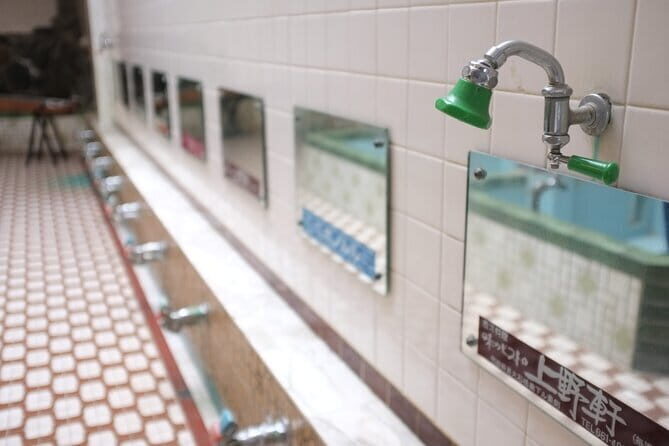
If you like the idea of hearing koto and shamisen in a room designed with tile, high ceilings, and bathhouse proportions, I think you’ll appreciate this a lot. The top ratings you’re seeing (5 out of 5 across the small set of past bookings) make sense: people love the unusual venue, and they love how the sound works in that space.
Book it when:
- you want one memorable Kyoto cultural stop near Kyoto Station,
- you value authentic listening experiences over big theatrical spectacle,
- and you’re okay with the program changing by season.
Don’t book it if:
- you need a guaranteed specific song,
- or you require tea/coffee to make a short outing feel complete.
Overall, for the price and the one-hour format, it’s a very practical way to add real Japanese music—and a genuinely different room—to your Kyoto itinerary.
FAQ
Where does the concert take place?
The concert is held at コワーケーションスペース九条湯 (Kujo-yu) in Kyoto, near Kyoto Station.
How long is the concert?
The duration is about 1 hour.
How much does it cost?
It costs $32.52 per person.
What instruments will I hear?
The concert features traditional Japanese instruments, including koto and shamisen.
Is the ticket mobile?
Yes. The ticket is a mobile ticket.
What is included in the price?
Your admission ticket for the concert is included.
Is coffee or tea included?
No, coffee and/or tea are not included.
Is it easy to get there using public transportation?
Yes. It’s noted as being near public transportation.
What is the cancellation policy?
You can cancel for a full refund up to 24 hours before the experience’s start time. If you cancel less than 24 hours before, the amount paid will not be refunded.