REVIEW · 3-HOUR EXPERIENCES
Kyoto Imperial Palace & Nijo Castle Guided Walking Tour – 3 Hours
Book on Viator →Operated by TripGuru · Bookable on Viator
Two palaces, one smooth walk through power. This 3-hour guided route strings together Nijo Castle and the Kyoto Imperial Palace, so you see Kyoto’s political drama in two different eras without bouncing around on your own. I like the small-group setup (max nine) because it keeps questions and photos from turning into chaos. I also like that admission fees are included, which means less ticket-wrangling and more time looking closely at rooms, gardens, and details. One drawback to plan for: the two sites are not right beside each other, so you’ll spend part of the tour moving between them.
Think of this as “history you can walk through.” At Nijo, you’ll focus on shogun-era design meant to signal authority; at the Imperial Palace, you shift to court life and ceremonial space. If your schedule is tight or you hate walking in heat, build in a bit of buffer for the transfer time between the two stops.
In This Review
- The Big Idea: Why These Two Kyoto Landmarks Fit Together
- Meeting at Nijojo-mae: Small Group, Clear Start, Easy Momentum
- Nijo Castle: Shogun-Era Design That Feels Like Stagecraft
- Kyoto Imperial Palace: Court Residence, Gardens, and Ceremony
- The Walking Time and the Transfer Problem You Should Actually Plan For
- How the Guide Makes or Breaks This Tour
- Tickets Included: Why That Simple Detail Improves Your Day
- Price and Value: Is $55 Worth It for 3 Hours?
- Who This Tour Suits Best (And Who Might Want Another Plan)
- Should You Book This Kyoto Imperial Palace & Nijo Castle Tour?
- FAQ
- How long is the Kyoto Imperial Palace & Nijo Castle guided walking tour?
- Where does the tour start and end?
- What sites are included?
- Are entrance fees included?
- Is the tour guide English-speaking?
- How big is the group?
- Is hotel pickup or drop-off included?
- Are meals included?
- Is there a mobile ticket?
- Can I get a full refund if I cancel?
The Big Idea: Why These Two Kyoto Landmarks Fit Together
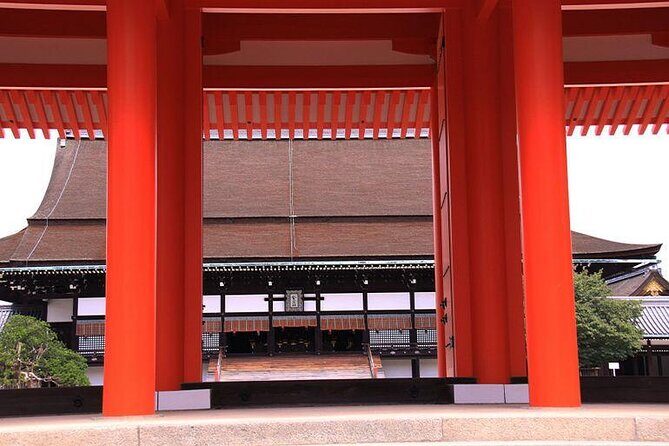
Nijo Castle and the Kyoto Imperial Palace feel like two chapters of the same story. Nijo shows you power exercised through the architecture and performance of rule—things you can see in corridors, gateways, and interior layouts. The Imperial Palace helps you understand what that power looked like from the other side of the political fence: the residence of Japan’s imperial family, with emphasis on ceremony, setting, and formal spaces.
Doing them back-to-back is the key. You leave Nijo with the “how authority was staged” picture in your head, then the palace gives you the “how authority was lived with” angle. The result is a more complete mental map than trying to tackle both alone, on different days, with different vibes.
Meeting at Nijojo-mae: Small Group, Clear Start, Easy Momentum
The tour starts at Nijojo-mae Station and ends at Imadegawa Station, so you can plan your onward transit without guessing. The group is capped at nine people, which is a big deal in Kyoto. It’s the difference between hearing your guide clearly and blending into a crowd.
You’ll also get an English-speaking guide and a walking pace designed for a 3-hour overall visit. Many guide-led tours can feel like a speedrun; this one aims for a steady rhythm—enough time to stop, look, and take photos without constantly sprinting to the next photo spot.
You can also read our reviews of more walking tours in Kyoto



Nijo Castle: Shogun-Era Design That Feels Like Stagecraft
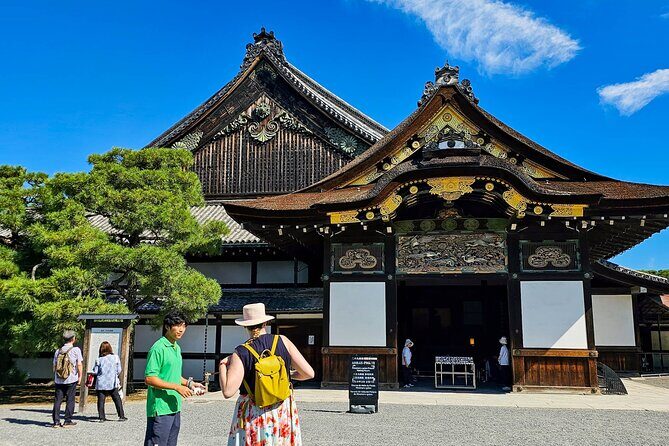
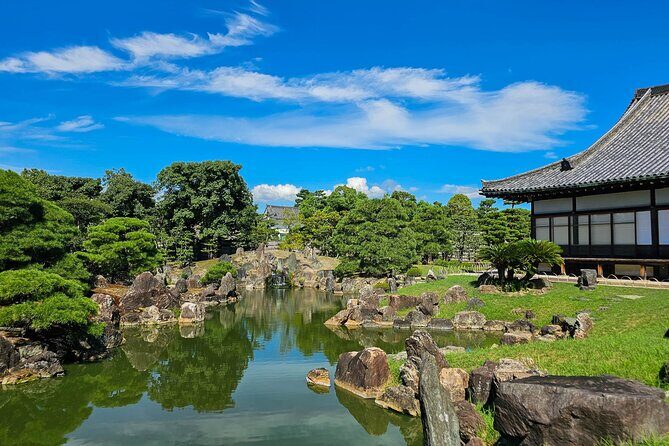
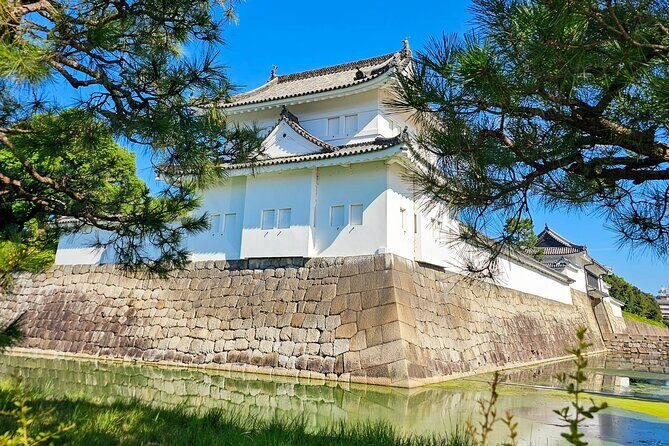
Your first stop is Nijo Castle, with about 1 hour 30 minutes and admission included. This is a place where architecture is part of the message. When you look at Nijo, you’re not just seeing pretty buildings and gardens. You’re seeing how leadership wanted to be perceived—through scale, layout, and the way spaces guide your movement.
What I’d focus on during your visit:
- Interior details and room-to-room flow. The castle isn’t just walls. It’s a sequence. Walk slowly enough to notice how you’re directed through spaces.
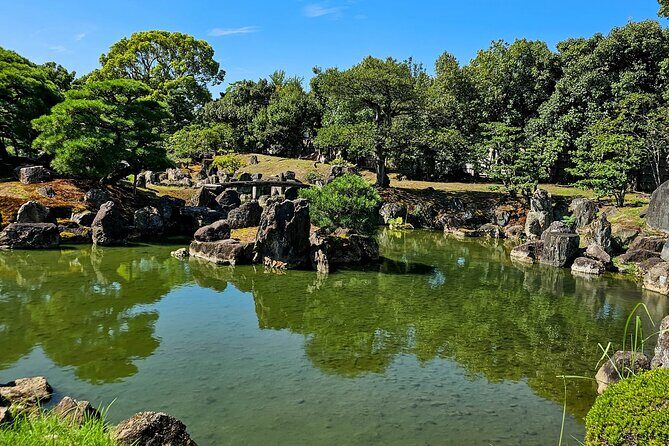
- Garden views. Even if you’re not a garden person, the grounds help you “read” the site. They break up the formality and give you places to pause and photograph.
- Shogun symbolism and cultural meaning. Several guides on this tour are praised specifically for explaining what the designs were meant to communicate, not just reciting dates.
If the guide is the kind who’s comfortable answering questions, this is where the tour can jump from informative to memorable. One review noted a guide who explained cultural symbolism and historical significance in a way that made it easy to ask follow-ups. Another highlighted a guide being honest when unsure rather than guessing, which I always respect.
And yes, in hot weather, you can hope for real-world adjustments. A review called out frequent breaks for water and air conditioning stops—exactly the kind of practical care that keeps you enjoying the castle instead of counting minutes.
Kyoto Imperial Palace: Court Residence, Gardens, and Ceremony
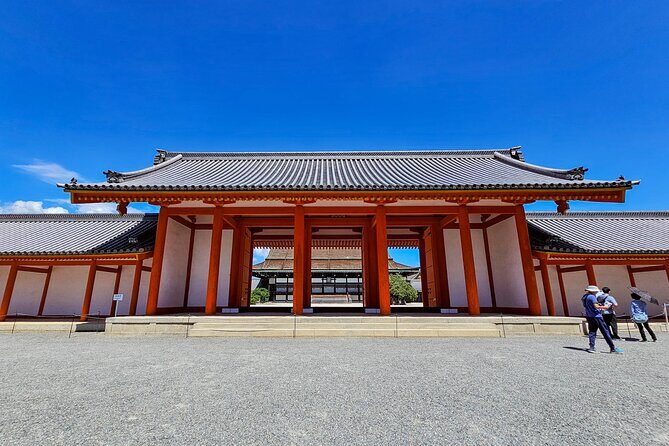
Next up is the Kyoto Imperial Palace, again with about 1 hour 30 minutes and admission included. This stop shifts the tone. Instead of shogun “authority staged,” you’re looking at an imperial setting designed around ceremony, order, and a formal way of moving through space.
What you’ll likely spend your time on:
- The palace structure and key spaces your guide helps you interpret.
- Gardens and exterior views, which matter here because the court environment is as much about setting as it is about rooms.
- How the palace functioned as a residence for the imperial family over centuries.
Guides on this route are frequently praised for tying architecture to meaning—especially explanations of why certain spaces look and feel the way they do. If you want a clean orientation in a palace that can feel overwhelming on your own, this guided stop is where you’ll feel it most.
Also pay attention to photography time. Multiple reviews mention guides giving enough time for photos at good spots rather than forcing a constant “move, move, move” pace. If you care about capturing the right angles, that timing matters.
The Walking Time and the Transfer Problem You Should Actually Plan For
Here’s the practical piece: the two sites aren’t adjacent. Even when the tour is 3 hours long, a portion goes to moving between them and dealing with real Kyoto spacing.
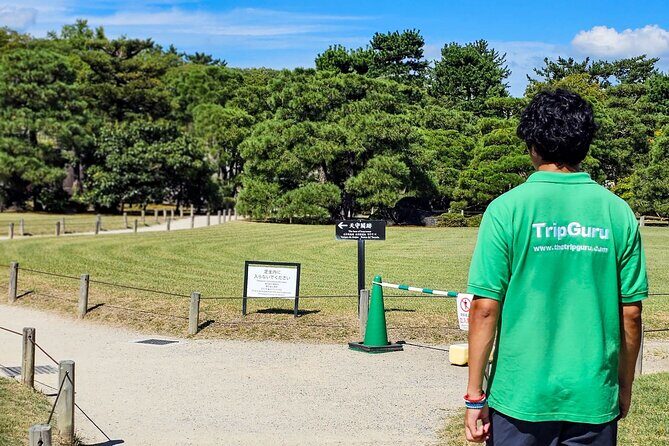
Some groups will spend a chunk of time walking between the stops (one caution in feedback said it can take around 30 minutes depending on how you move). Others may use public transportation or cabs depending on the day and logistics. Either way, you should go in with the mindset that the “history part” is time-boxed, and the transfer part is real.
My advice:
- Wear shoes you can walk in for a while. Not just museum slippers.
- Bring water, especially in summer. One review specifically mentioned guides finding breaks for water and air conditioning.
- If your day is tightly scheduled, don’t book another major timed activity immediately right after the tour ends at Imadegawa Station. Add buffer time.
There’s also a rare downside worth acknowledging: one unhappy experience described the group being split and ending up spending a lot of time waiting and struggling to locate the group during the transfer. That’s not the norm based on the strong overall ratings, but it’s a reminder to stay alert and keep your itinerary details handy on your phone (screenshots of the meeting point and end station help).
How the Guide Makes or Breaks This Tour
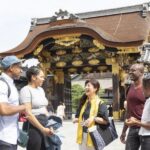
This tour lives or dies by the guide’s ability to connect what you see to what it meant. The best guides don’t just point; they translate.
The most praised guides in the feedback include names like Jasmine, Vincent, Taku, Atsushi, Raphael, Cecilia, Kata, and Alex. The common thread across these mentions: clear explanations, good English, and the patience to handle questions—kids included. One review even called out a guide’s voice volume and tone helping a hard-of-hearing mother without steamrolling the group.
A few guide traits you can look for as signs you’re in good hands:
- They explain architecture and symbolism (not just facts).
- They answer questions naturally, instead of sticking rigidly to a script.
- They’re flexible on hot days—slowing down, adding breaks, and keeping the mood calm.
- They help with next steps, like making sure people know how to get on after the tour.
You’ll also see praise for photo moments. More than once, guides were described as offering help taking family photos at the sites. If you want images that look intentional rather than “caught while running,” that matters.
You can also read our reviews of more guided tours in Kyoto




Tickets Included: Why That Simple Detail Improves Your Day
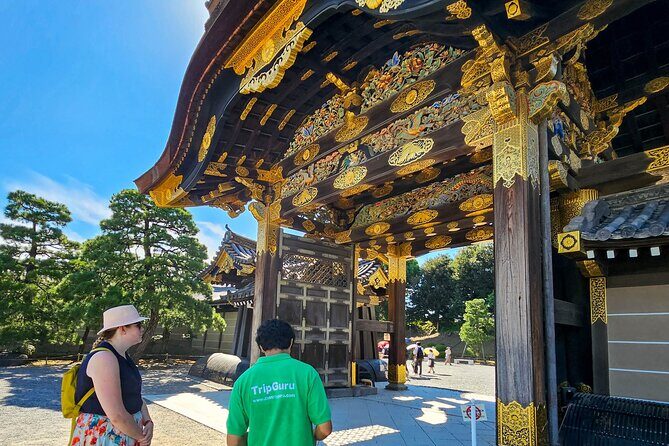
This tour includes entrance fees for both Nijo Castle and the Kyoto Imperial Palace. That’s not just a cost saver. It smooths your experience.
When tickets are handled as part of the tour, you avoid the common solo-tour headache: figuring out the right line, the right counter, the right timing, and the right ticket rules while you’re already tired from transit. Instead, you get in, settle, and let the guide help you notice what matters.
The added benefit: because you’re not spending your precious visit time at ticket desks, you’re more likely to hit the best parts of each site at a comfortable pace.
Price and Value: Is $55 Worth It for 3 Hours?
At $55 per person for roughly 3 hours, this is positioned as a value historical walk: two major destinations, admission included, and an English-speaking guide. You’re paying for two things that are hard to replicate easily on your own:
- Interpretation. Kyoto’s palaces and castles can look beautiful but still feel confusing unless someone helps you read the choices behind the design.
- Time efficiency. Doing both sites in a single outing (and having the tour end at Imadegawa Station) is a practical way to cover a lot without turning your day into logistics.
If you were to go solo, you’d still pay admission and you’d still need to plan route timing, entrances, and what to prioritize. The tour’s value is that it compresses the planning work into your guide’s guidance—so you spend your energy on seeing.
One caution: if you strongly prefer ultra-slow, deep exploration with lots of independent wandering, the time limits might feel tight. But if you want a strong orientation and a smooth path between big sites, $55 for this setup is a fair deal.
Who This Tour Suits Best (And Who Might Want Another Plan)
This guided walk is a strong fit if:
- You want Kyoto Imperial Palace + Nijo Castle without planning two separate days.
- You like getting the meaning behind architecture, gardens, and ceremonial space.
- You appreciate a small group (max nine) where you can actually ask questions.
- You’re in the mood for a paced outing that still leaves time to photograph.
It may be less ideal if:
- You dislike tours that keep you moving on a schedule. One criticism said the guide seemed focused on finishing on time. If you’re the type who wants to linger for long stretches, know you may need to manage your expectations.
- You have extremely tight connections and no buffer time. Since the stops require transfer time, you’ll want some slack after the tour ends at Imadegawa Station.
Should You Book This Kyoto Imperial Palace & Nijo Castle Tour?
Yes, I’d book it if you want a practical, guided way to understand Kyoto’s power story—shogun rule at Nijo, then imperial residence at the palace—without drowning in planning.
Skip it or choose a different format only if you know you hate scheduled pacing, or you’re going to be stressed by the transfer time between sites. For most people, this is a smart way to get into the details without turning your afternoon into a map-reading exercise.
FAQ
How long is the Kyoto Imperial Palace & Nijo Castle guided walking tour?
The tour lasts about 3 hours.
Where does the tour start and end?
It starts at Nijojo-mae Station and ends at Imadegawa Station.
What sites are included?
You visit Nijo Castle first, then the Kyoto Imperial Palace.
Are entrance fees included?
Yes. Entrance fees for both stops are included.
Is the tour guide English-speaking?
Yes, the tour includes an English-speaking tour guide.
How big is the group?
The maximum group size is nine travelers.
Is hotel pickup or drop-off included?
No. Hotel pickup and drop-off are not included.
Are meals included?
No. Meals and other drinks are not included.
Is there a mobile ticket?
Yes. A mobile ticket is part of the tour features.
Can I get a full refund if I cancel?
You can cancel up to 24 hours in advance of the experience for a full refund. Cancellation within 24 hours is not refunded.