REVIEW · TEA CEREMONY EXPERIENCES
Elegant Tea Ceremony While Wearing Kimono Experience in Kyoto
Book on Viator →Operated by H.I.S.Co., Ltd. · Bookable on Viator
Kyoto hands you matcha, not a textbook. At Nishiki Orizuruya, you get dressed in a kimono and step into a guided tea experience a minute from Nishiki Market.
I especially love the hands-on matcha part: you watch the flow, then you make your own cup with a bamboo whisk.
One thing to note: the ceremony is more practice-led than lecture-heavy, so if you crave deep background on every step, you might want to ask questions.
In This Review
- Key highlights worth circling
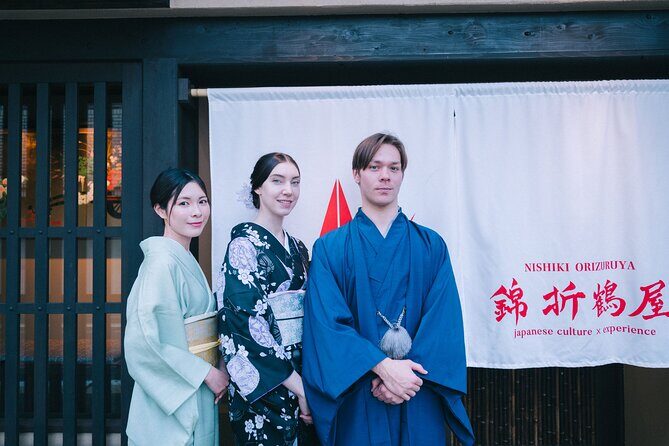
- Entering Nishiki Orizuruya in a Kyoto Kimono
- What you do first: dressing, hair styling, and getting ready
- The 90-minute matcha ritual: what the tea ceremony really teaches
- Wagashi, matcha, and that moment your cup comes out right
- Choosing your add-on: calligraphy keepsake or gold leaf plate
- Option 1: Tea ceremony plus calligraphy
- Option 2: Tea ceremony plus gold leaf
- The Nishiki Market walking version: tea plus Kyoto street food energy
- Price and value: is $50.58 per person fair?
- Logistics that matter: time, crowding, and staying comfortable
- Who should book this Kyoto kimono tea experience?
- Should you book it? My take
- FAQ
- Where is the meeting point for this experience?
- How long does the experience take?
- Do I get kimono rental included?
- Is there an English guide?
- How close is the location to public transportation?
- Should I arrive early?
- What happens during the tea ceremony part?
- What extra activities can I choose after the tea ceremony?
- Is there a limit on group size?
- Can children join?
- What if there’s severe weather?
- Is there any cancellation flexibility?
Key highlights worth circling
- Kimono rental in Kyoto, with free hair styling for women
- English-guided tea ceremony led by a tea master
- You whisk your own matcha and taste seasonal wagashi
- Pick a keepsake option: calligraphy (kanji) or gold leaf on a small plate
- Small group size (max 10) for a calmer pace
- Comfort support, including a chair option if floor seating is hard for you
Entering Nishiki Orizuruya in a Kyoto Kimono
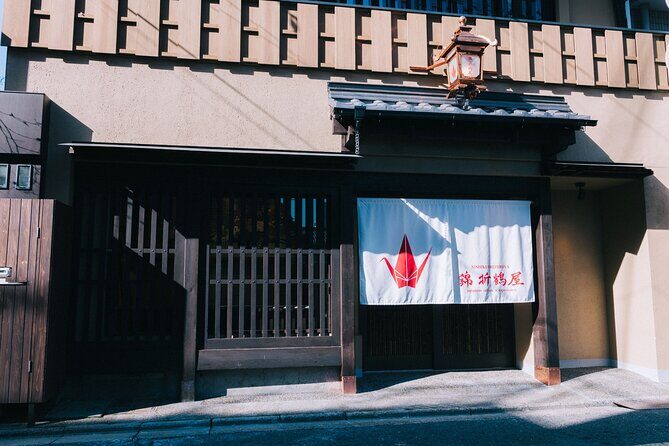
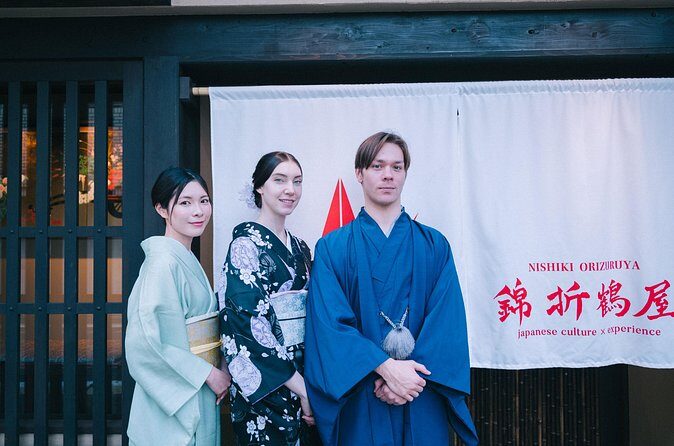
This is one of those Kyoto moments that feels simple on paper, but very real once you’re there. You meet at Nishiki Orizuruya, just a short walk from Nishiki Market, and the first big step is changing into a kimono.
The staff are set up for the full makeover. Women get free hair styling, and everyone gets help with fitting and presentation. It matters because a good kimono day is part clothing, part confidence. If you’ve ever worried about wearing something traditional when you’re not “a kimono person,” this format removes the stress.
And yes, you’ll want to plan for photos. Between the dressing time and the ceremony space, there are multiple chances to capture the moment while everything is still new and crisp.
You can also read our reviews of more tours and experiences in Kyoto.


What you do first: dressing, hair styling, and getting ready
Before any tea happens, the emphasis is on getting you comfortably into the look and rhythm of a tea house. You can typically browse kimonos and accessories before dressing. Many people love this part because it turns the experience into a personal choice, not just a costume change.
A couple practical notes that make a difference:
- Time starts when you arrive. Plan to get there at least 10 minutes early so you’re not rushed during dressing.
- Seating can be an issue for some bodies. One helpful detail: they can provide a chair if floor sitting isn’t comfortable for you.
If you have allergies, it’s also worth knowing the sweets and tea were handled with care for at least some participants, including accommodations. I’d still mention any food restrictions when you check in so they can steer you correctly.
The 90-minute matcha ritual: what the tea ceremony really teaches
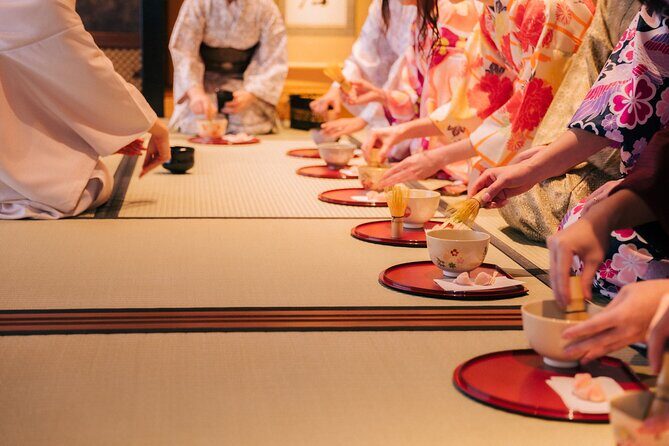
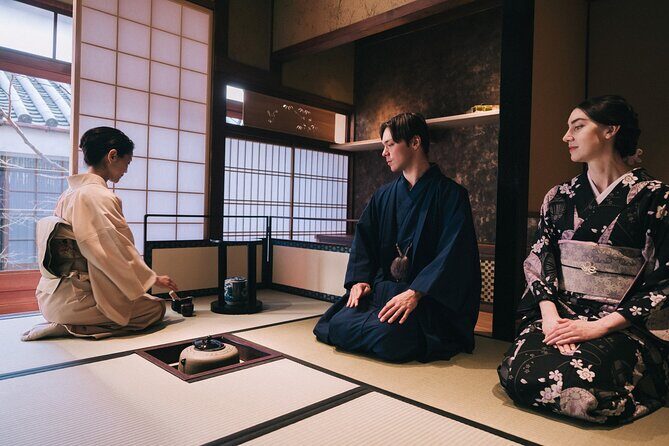
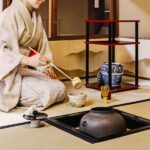
The heart of this experience is a formal Japanese tea ceremony in a peaceful tea room. It’s led by a professional tea master, and you get guidance in English throughout.
Here’s what the ceremony actually feels like, step by step:
- You watch a demonstration of how the tools move and how the tea is handled.
- Then you do the important part yourself: preparing your own matcha using a bamboo whisk.
- You taste it, properly. And it’s not just matcha-and-bye-bye. You also pair it with seasonal wagashi (traditional sweets).
One standout detail that makes the sweets feel more special is the mention of wagashi from a 100-year-old confectionery. That adds a “Kyoto craft” layer beyond the novelty of matcha.
Is it hands-on and calm? Yes. Is it a long history class? Not really. One guest noted there wasn’t a lot of explanation about the meaning behind every step. That doesn’t make it bad, but it does shape expectations. If you want the cultural story, you may need to ask your guide follow-up questions during the session.
Wagashi, matcha, and that moment your cup comes out right
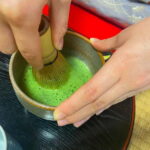
There’s a small thrill in seeing the tea master’s movements, then getting your own turn. Matcha isn’t complicated, but it’s picky. Water temp, whisk technique, and attention to texture all matter.
When you taste your cup, you’re not just “drinking tea.” You’re practicing how a tea house expects you to slow down: observe first, then enjoy. It’s a short reset from the noise of Kyoto sightseeing.
And if you’re wondering whether you’ll like matcha, this is a good first test. You’ll get to experience it in a traditional pairing with wagashi, so it feels balanced rather than like a random green drink.
Choosing your add-on: calligraphy keepsake or gold leaf plate
After the tea ceremony, you choose one of the hands-on cultural add-ons. This is where the experience becomes more than a performance and turns into a take-home memory.


Option 1: Tea ceremony plus calligraphy
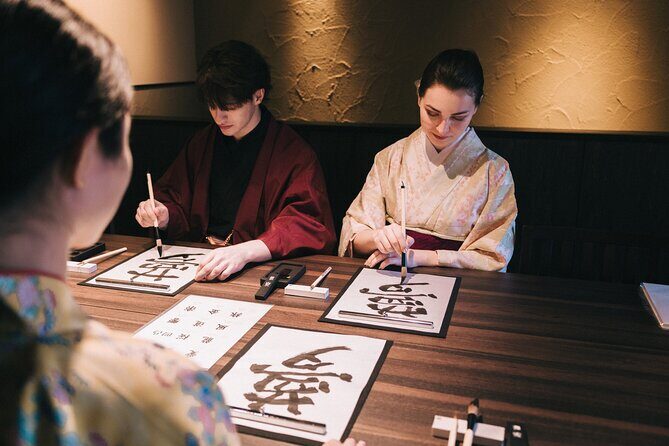
If you pick the calligraphy path, you learn to use a brush and ink to create your own keepsake on washi paper. You’ll write your favorite kanji, which is a thoughtful touch: you aren’t copying a random sample. You’re making something personal.
Calligraphy also has a built-in Zen effect. You’re focused on pressure, stroke direction, and pacing. The goal isn’t artistic perfection. The goal is participation, and you’ll leave with an actual object that makes the day real long after you’re back in your hotel.
Option 2: Tea ceremony plus gold leaf
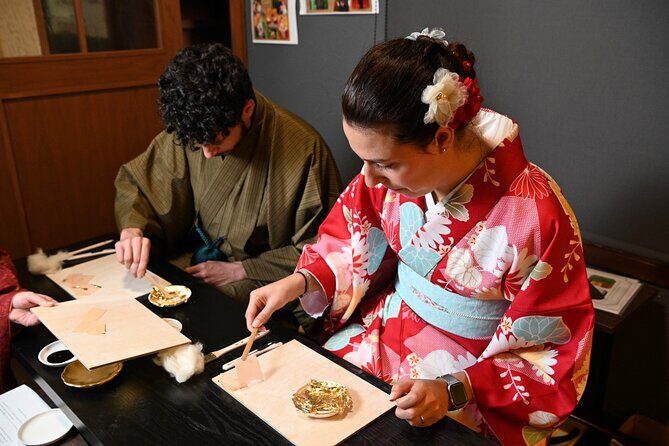
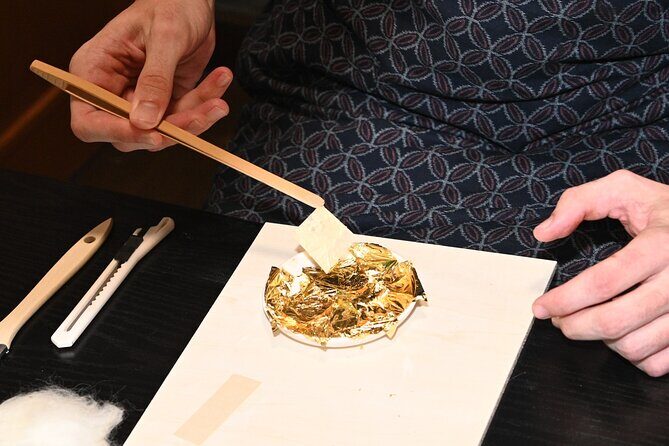
For something more tactile and shiny, you can do the gold leaf workshop. After the ceremony, you decorate a small plate using high-purity gold leaf. You’ll take home what you make, so you have a souvenir that isn’t just a photo.
Gold leaf projects tend to move quickly because the material is delicate. That means it’s fun, a little challenging, and satisfying once you see your plate filled with detail.
The Nishiki Market walking version: tea plus Kyoto street food energy
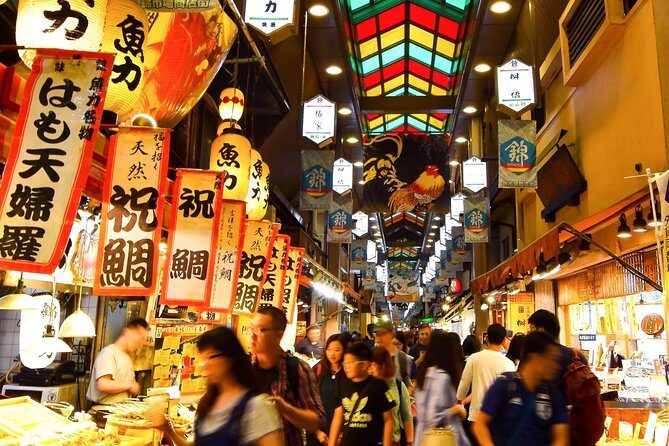
If you choose the longer format (around 150 minutes), you add a Nishiki Market walking tour led in English. This part changes the mood from quiet tea room to lively Kyoto street life.
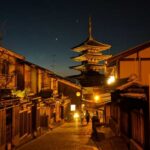
Nishiki Market is often described as a food-focused area, and this tour keeps the focus where it should be: you’ll discover Kyoto’s food culture, plus shrines and historic shops in the nearby lanes.
The big value here is local context. You’re not just walking past stalls. You’re being guided on what you’re looking at and why it matters, which helps you decide what to try and where to spend your time afterward.
In short: if you want your day to include both calm tradition and the energy of market Kyoto, this is the better match.
Price and value: is $50.58 per person fair?
At $50.58 per person, this is not a budget-only activity, but it’s also not priced like an ultra-luxury private ritual. You’re paying for several things that add up quickly in Kyoto:
- Kimono rental (plus free hair styling for women)
- A guided, English-led tea ceremony
- Access to hands-on craft time: matcha preparation, and then either calligraphy or gold leaf
- A small group size (max 10), which helps the day feel smooth
Where the value really lands is that you’re getting both performance and participation. Many tea experiences are mostly watching. Here, you make the matcha. And then you make a keepsake, not just a ticket and a couple photos.
That said, it’s worth aligning your expectations with the ceremony’s style. If you’re hoping for a deep lecture about tea history, the session may feel more practical than academic. For most people, that’s a plus.
Logistics that matter: time, crowding, and staying comfortable
Kyoto can be crowded, and this activity can be crowded on weekends, holidays, and special events. That doesn’t automatically ruin it, but it can affect how relaxed the dressing and waiting feels.
Here’s how to set yourself up:
- Arrive early (at least 10 minutes). Dressing runs on schedule.
- If you’re doing a market walk version, give yourself room in your afternoon. You’ll likely want time to explore on your own afterward.
- Bring patience if the area is busy. The venue itself is designed to funnel guests smoothly, but the street outside can be a different story.
Comfort tips based on what people found useful:
- If you have trouble sitting on the floor, ask about a chair option.
- Plan for photos. The day is structured around picture moments, and it’s easier when you’re not trying to squeeze it in between steps.
One more practical note: you’re responsible for your own belongings. Keep valuables secure and light. You don’t want to spend your tea time thinking about your phone.
Who should book this Kyoto kimono tea experience?
This works best if you want a Kyoto day that feels real, not just scenic. I’d point you here if:
- You want to try matcha the right way and actually whisk it yourself
- You want a kimono day without planning the hassle
- You enjoy hands-on culture: writing kanji or applying gold leaf
- You like small group settings and an English guide
It also makes sense for celebrations. One guest used it for a sister’s 30th birthday, and it fit the occasion well because the whole experience is designed around presentation, photos, and a personal keepsake.
A fair heads-up if you’re traveling as a group with mixed interests: kimonos can be more exciting for women than for men, based on how some people felt about choice variety. Still, men can participate fully, and the ceremony itself is the same.
Should you book it? My take
If your goal is a genuine Kyoto tradition experience with real participation, I think this is a strong yes.
Choose the 90-minute version if you want the ceremony focus and don’t need extra craft time beyond matcha and sweets.
Choose calligraphy or gold leaf if you want a souvenir you made, not just something you bought.
Choose the Nishiki Market walking add-on if you want your day to connect tea culture to Kyoto’s food and shopping streets right away.
My only caution is expectation-setting: treat it as a calm, guided ritual with hands-on practice, not as a long history lecture. If that sounds good to you, you’ll likely leave with a lighter head and a keepsake that still makes you smile.
FAQ
Where is the meeting point for this experience?
You’ll meet at Nishiki Orizuruya, 452 Jūmonjichō, Nakagyo Ward, Kyoto, 604-8121, Japan.
How long does the experience take?
The time is about 2 hours 30 minutes in the main format, with longer options around 130 minutes or 150 minutes depending on the add-on you choose.
Do I get kimono rental included?
Yes. All options include kimono rental, and women receive free hair styling.
Is there an English guide?
Yes. The experience is guided in English.
How close is the location to public transportation?
The meeting point is near public transportation.
Should I arrive early?
Yes. Arrive at least 10 minutes before your scheduled reservation time.
What happens during the tea ceremony part?
You’ll learn Japanese tea in the tea room, watch a demonstration, then prepare your own matcha using a bamboo whisk. You’ll also enjoy seasonal wagashi with the tea.
What extra activities can I choose after the tea ceremony?
You can choose calligraphy (writing your favorite kanji) or a gold leaf workshop (decorating a small plate). There is also an option that includes a Nishiki Market walking tour.
Is there a limit on group size?
Yes. The experience has a maximum of 10 travelers.
Can children join?
Children aged 5 and above may join, and there is no child discount.
What if there’s severe weather?
If the tour is canceled due to severe weather or natural disasters, you’ll receive a full refund.
Is there any cancellation flexibility?
This experience is non-refundable and cannot be changed for any reason.
If you tell me which option you’re leaning toward (tea only, calligraphy, gold leaf, or Nishiki Market walk), I can help you pick the smartest length for your schedule.