REVIEW · FUSHIMI INARI TOURS
Kyoto Guided Walking Tour: Secret Zen Garden and Fushimi Inari
Book on Viator →Operated by Japan Wonder Travel · Bookable on Viator
A Kyoto morning with a map you don’t have to study. This guided walk strings together Zen temple quiet and Fushimi Inari scenery so you can skip the guesswork and move from stop to stop with a guide keeping you on track. You’ll also get a gentler intro to Zen ideas like stillness and attention, not just sightseeing.
I love how the group stays small (up to 8), so you can actually keep up without feeling rushed. I also like the pacing—there’s a moderate amount of walking uphill, but you can spend time where it matters, like the Zen garden and the viewpoint breaks.
One thing to plan for: it’s not a sit-down tour. You’ll do a mix of walking and some hiking-style uphill stretches, so comfortable shoes are not optional, even if it’s only about four hours.
In This Review
- Key Things to Know Before You Go
- Kyoto Guided Walking Tour: A smart way to cover Zen and Fushimi Inari in half a day
- Meeting points and route rhythm: start easy, end right at Fushimi Inari
- Gaun-kyo Bridge: your first scenic pay-off before the temples
- Komyo-in Temple: the Zen garden stop that feels like a secret pause
- Araki Shrine: a meaningful stop for love, relationships, and well-being
- Fushimi Inari’s Yotsuji viewpoint: a break before the torii tunnel
- Kumataka Shrine: quiet energy away from the main torii flow
- Okusha Worship Center of Fushimi Inari: stamps, charms, and ofuda
- Senbon Torii gates and Fushimi Inari Taisha Honden: finish with the main sanctuary
- How hard is it, really? Shoes, uphill walking, and your best strategy
- Price check: what $78.83 buys you in Kyoto time and stress
- The guides: what makes the experience feel easy
- Should you book this Kyoto guided walking tour?
- FAQ
- How long is the Kyoto Guided Walking Tour?
- How much does the tour cost?
- Where does the tour start and end?
- What time does the tour begin?
- Is the group small?
- Is it okay for me if I’m not very athletic?
- What should I wear?
- Does the tour run in the rain?
- Do I get a ticket on my phone?
- What can I see at Fushimi Inari on this tour?
Key Things to Know Before You Go
- Small-group flow (max 8) means fewer bottlenecks at temples and more time for your questions
- Zen garden focus at Komyo-in gives you the calmer Kyoto feel many people miss
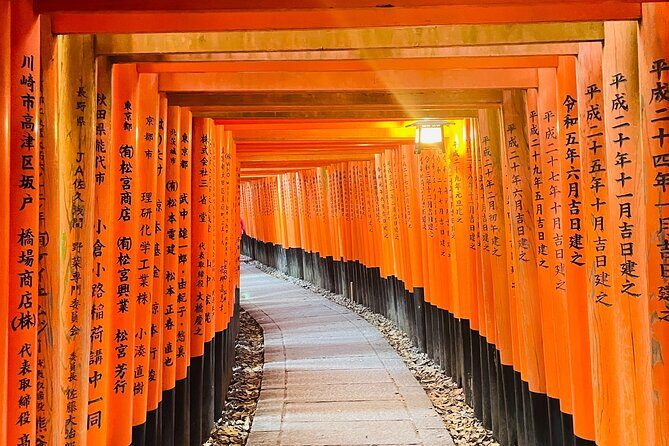
- Fushimi Inari with breathing room, including a break at Yotsuji and quieter side shrines
- Practical religious stops like Araki Shrine and the Okusha Worship Center for ofuda, omamori, and goshuin
- View breaks built in, including Gaun-kyo Bridge and multiple outlooks along the way
- Rain or shine with a mobile ticket setup, so you’re not stuck scrambling
Kyoto Guided Walking Tour: A smart way to cover Zen and Fushimi Inari in half a day
This is the kind of Kyoto plan that saves you mental energy. Instead of piecing together routes and timing temple entries, you follow a set path built around famous highlights and quieter spiritual stops. The result is a morning that feels efficient but not frantic.
You’re also getting a Zen angle that goes beyond architecture photos. Expect your guide to connect what you’re seeing to Zen practice—things like meditation posture, calm attention, and the idea that a garden can function like a quiet lesson.
And yes, you’ll still get the big Kyoto moment: Fushimi Inari’s Senbon Torii tunnel. The key difference is that the tour is designed to give you breaks and side paths so you can enjoy it without spending the whole time squeezed into the crowd flow.
You can also read our reviews of more walking tours in Kyoto



Meeting points and route rhythm: start easy, end right at Fushimi Inari
You start at FamilyMart Nakai Tofukuji, near Tofukuji area, and you finish at the Outer Oratory at Fushimi Inari. That end point is useful because once you’re done, you’re already where most people want to be next for snacks, stamps, and the rest of the day’s wandering.
The tour runs about 4 hours, starting at 9:00 am. That early start matters in Kyoto. It helps you hit key sights before the day fully ramps up, especially around temple areas and Inari approaches.
Group size is capped at 8 travelers, which keeps the pace more human. If you’ve ever been stuck behind a slow group in a line you didn’t choose, you’ll appreciate this setup.
Gaun-kyo Bridge: your first scenic pay-off before the temples
Right off the bat, you’ll stop at Gaun-kyo Bridge. It’s a wooden bridge spanning a lush valley, with a view that connects you visually to nearby scenery—especially the look toward Tsutenkyo Bridge and the maple area below.
This stop works well as a warm-up for the day. You get a real Kyoto panorama before you transition into more spiritual sites that ask for quieter attention. Even if you just take a few minutes to look around, you’ll feel like the day has started in the right key: slower, watchful, and not yet information-heavy.
The time here is short (about 5 minutes), and admission is free. So think of it as a quick inhale of the setting before the Zen and shrine work starts.
Komyo-in Temple: the Zen garden stop that feels like a secret pause
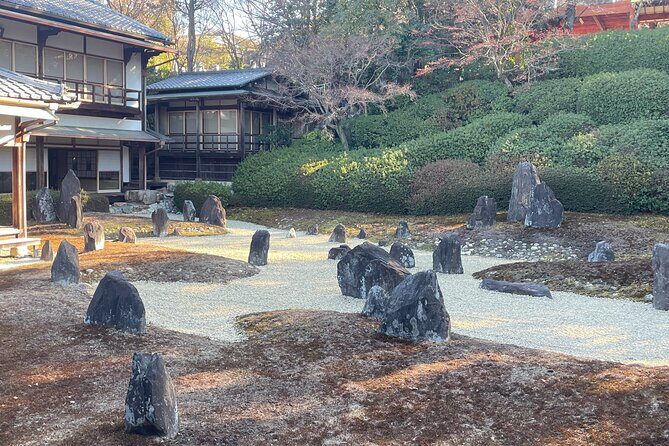
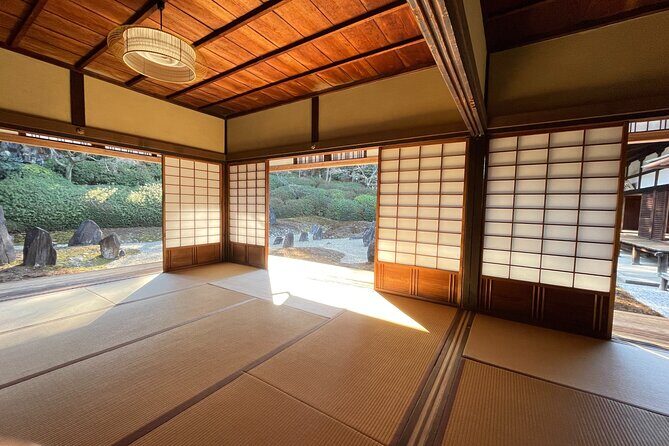
Next is Komyo-in Temple, and this is one of the reasons the tour feels different from a standard shrine hop. Komyo-in is known for a Zen garden and a calm atmosphere, and it’s positioned as a sub-temple that many visitors don’t linger long enough to find.
You’ll get around 25 minutes here, and the admission is included. That time window is long enough to do more than snap photos. You can sit, watch how the garden framing pulls your eyes, and take in why Zen spaces often feel intentionally simple—so your mind slows down to match.
This is also where the tour’s Zen messaging becomes practical. You’re not just hearing about meditation as an idea. You’re standing in a setting built for contemplation, which makes the concepts stick better.
Tip for your photos: the garden is a scene, not a single postcard. Walk slowly, pick one angle, then move to another after a minute. You’ll start noticing how the space changes with your position.
Araki Shrine: a meaningful stop for love, relationships, and well-being
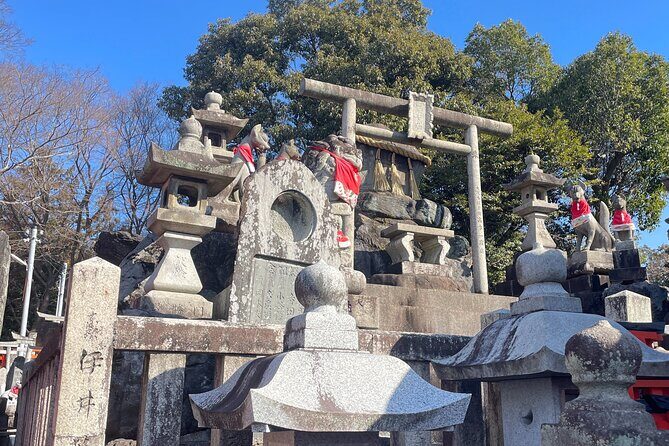
Then you’ll reach Araki Shrine, a quick but emotionally specific stop. Many people come here to pray for love, strong relationships, and general well-being, which makes the atmosphere more personal than purely historical sightseeing.
You’ll spend about 10 minutes. That’s plenty time to understand the setting and take part in the rituals you want—without feeling like you’re being rushed through a sacred moment.
If you’re going as a couple, this can be a sweet part of the morning. If you’re solo, it still works because it’s about intention—making your visit feel purposeful, not just scenic.
You can also read our reviews of more guided tours in Kyoto





Fushimi Inari’s Yotsuji viewpoint: a break before the torii tunnel
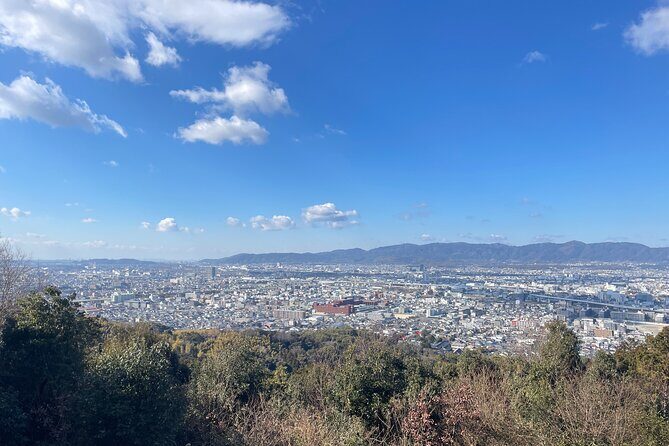
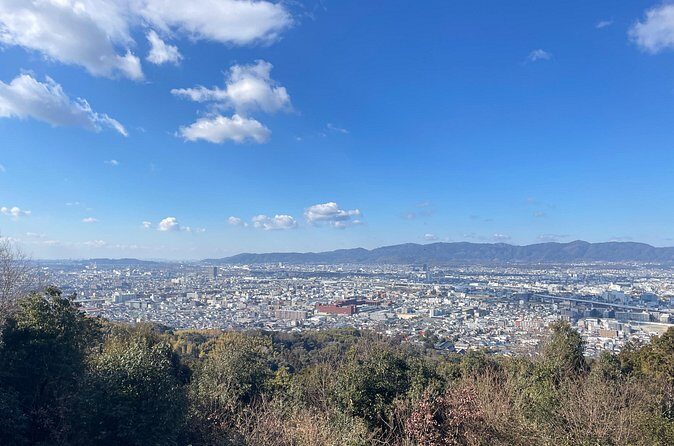
Now the tour shifts into Fushimi Inari territory with a stop at Fushimi Inari Yotsuji (Four-Way Crossroad). This is described as a must-visit viewpoint along the Fushimi Inari trail, with a chance to admire a scenic panorama.
You’ll spend about 20 minutes, and it’s free. This is smart timing. It gives you a breather while you’re still fresh, before the torii gate walking ramps up.
The Yotsuji stop also helps you understand what you’re about to enter. Senbon Torii feels like a tunnel of red gates, but it’s more than that. The route and viewpoints teach you how to look—forward, down into the trail, and back toward where you’ve come from.
Kumataka Shrine: quiet energy away from the main torii flow
After the viewpoint, the tour brings you to Kumataka Shrine, positioned as a secluded and mystical site with strong spiritual energy. This is another “slow down” moment.
You’ll get around 15 minutes, free. And this stop is valuable because it interrupts the big-tunnel sensation of Senbon Torii. It’s the kind of place where the world feels smaller, even if you’re still in a famous Kyoto area.
If you prefer your Inari experience less like a photo sprint, this is a big plus. You’re not stuck only with the main corridor of gates—you’re also seeing where pilgrims slow down to reflect.
Okusha Worship Center of Fushimi Inari: stamps, charms, and ofuda
One of the most practical stops on the tour is Okusha Worship Center of Fushimi Inari Shrine (also noted as Nosatsusho). This is where you can pick up sacred items like ofuda (amulets) and omamori (charms), and also get goshuin stamps.
You’ll spend about 10 minutes. Admission here is free, and the payoff is real if you want the classic Kyoto keepsake. A goshuin stamp isn’t just a sticker—it’s tied to the shrine visit itself, and it’s one of the best ways to mark time in Japan without collecting random souvenirs.
Practical tip: if you want goshuin, bring whatever you use for it (a goshuincho book). If you don’t have one, you’ll need to handle that on-site, so plan for the possibility of small delays while you sort it out.
This is also the “spiritual heart” part of Fushimi Inari in the tour’s framing. After walking through big sights, it grounds you in why people come.
Senbon Torii gates and Fushimi Inari Taisha Honden: finish with the main sanctuary
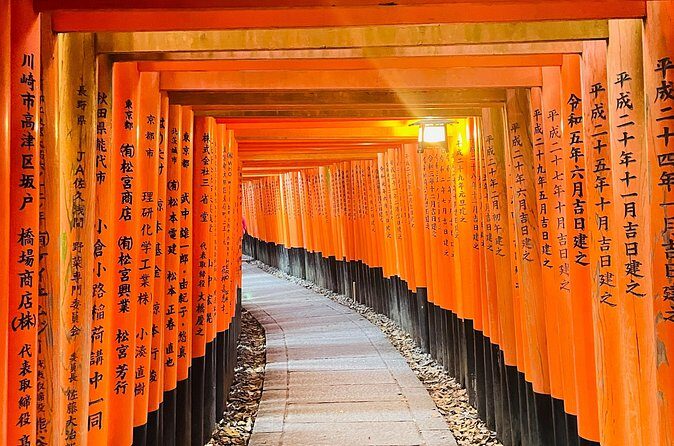
From here, you’ll experience the iconic part of Fushimi Inari: the Senbon Torii (Thousand Torii Gates) pathway. The tour describes the gates as a vivid vermillion tunnel that leads onward, creating that unmistakable Kyoto-in-just-one-experience feeling.
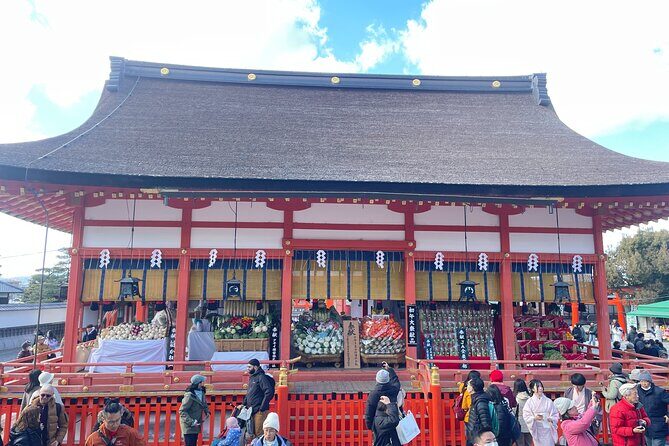
Then you’ll reach Fushimi Inari Taisha Honden (Sanctuary), the main shrine. You’ll spend about 10 minutes there. While the torii and fox statuary grab most people’s attention, the Hon-den is the quieter worship space that lets you feel what’s at the center of the complex.
This pairing—torii tunnel first, main sanctuary next—works because it matches how many pilgrims experience the site: you move through the symbolic path, then arrive at the core place for worship.
How hard is it, really? Shoes, uphill walking, and your best strategy
This tour calls for moderate physical fitness. You’ll do moderate walking and some hiking-style uphill. Nothing in the description screams extreme, but you should still be honest with yourself about your stamina.
Wear comfortable walking shoes with good grip. Kyoto stone and steps can feel slick or uneven, and you’ll be glad you chose shoes built for a long day.
My strategy: keep your pace steady and use the listed stops as checkpoints. Don’t try to “power through” between temples. The tour’s rhythm is designed around those pauses, and you’ll enjoy the views more if you’re not huffing through them.
Price check: what $78.83 buys you in Kyoto time and stress
At $78.83 per person, you’re paying for more than someone walking next to you. You’re buying a planned route that avoids “figure it out yourself” hours, plus a guide who helps you not get lost among temple paths and side areas.
Four hours isn’t a full day, but it covers a lot of ground: Gaun-kyo Bridge, Komyo-in, Araki Shrine, Yotsuji, Kumataka Shrine, Okusha Worship Center, plus the torii tunnel and the Hon-den. If you tried to replicate this without guidance, you’d likely spend time researching routes, checking where to enter, and re-planning when something is harder to find than you expected.
Group size also boosts value. With up to 8 people, you get more flexibility than the big-bus style tours. The reviews also highlight guide flexibility with how much time you spend, which matters because Kyoto is a place where slowing down is part of the experience.
The guides: what makes the experience feel easy
Different guides rotate through, but you can look for the traits that show up in feedback. Guides like Kenta, Mika, and Naomi get praised for explaining things clearly in English and for shaping the route in a way that keeps the walk manageable.
One of the standout themes: guides help you move at the group’s comfort level. That sounds small, but it changes the whole day. If you can set your pace on uphill stretches and still hear the story behind each stop, you’ll leave with the kind of context that makes Kyoto photos feel like memories, not just images.
Should you book this Kyoto guided walking tour?
Book it if you want a smart half-day plan that combines Zen calm with Fushimi Inari’s big iconic scenes, without turning it into a maze. It’s a strong fit for first-timers who want structure and for anyone who wants to see the more quiet corners of the Fushimi Inari experience—like Kumataka Shrine and the viewpoint at Yotsuji.
Pass or consider a lighter alternative if you dislike walking uphill for about four hours, or if you’re the type who wants to fully wander on your own schedule without any set stops. This tour is for people who enjoy following a good route and letting a guide handle the tricky parts.
If you’re planning your first Kyoto week, this is also a great “anchor morning.” It helps you get your bearings fast, then you can build the rest of your days around your favorite neighborhoods.
FAQ
How long is the Kyoto Guided Walking Tour?
It lasts about 4 hours (approx.).
How much does the tour cost?
The price is $78.83 per person.
Where does the tour start and end?
It starts at FamilyMart Nakai Tofukuji (12-chōme-232 Honmachi, Higashiyama Ward) and ends at the Outer Oratory at Fushimi Inari Shrine (58 Fukakusa Yabunouchichō, Fushimi Ward).
What time does the tour begin?
The start time is 9:00 am.
Is the group small?
Yes. The tour has a maximum group size of 8.
Is it okay for me if I’m not very athletic?
The tour requires moderate physical fitness, with a moderate amount of walking and hiking involved, including uphill sections.
What should I wear?
Wear comfortable walking shoes because the route includes uphill walking and temple paths.
Does the tour run in the rain?
Yes. The tour takes place rain or shine.
Do I get a ticket on my phone?
Yes. It includes a mobile ticket.
What can I see at Fushimi Inari on this tour?
You’ll visit the Senbon Torii gates pathway, the Yotsuji viewpoint area, the Okusha Worship Center for items like ofuda, omamori, and goshuin, and also the main sanctuary (Fushimi Inari Taisha Honden).