REVIEW · FOOD
Kyoto: Gion & Pontocho Food Tour with 13 Dishes
Book on Viator →Operated by Travel Japan Together · Bookable on Viator
Gion at night feels like a movie set. This tour pairs real Kyoto streets with up to 13 tastings and a guide who handles the language so you can just enjoy. I like that it stays small-group (max 10), so you’re not stuck waiting around for a slow straggler. I also like the mix of culture and food, including a stop at Yasaka Shrine before you start sampling your way through the evening.
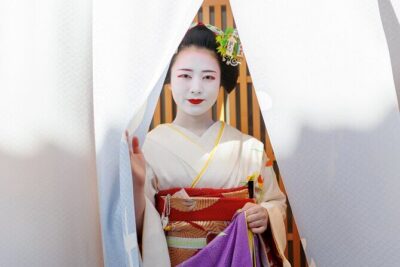
One thing to consider: you’re in a geisha district, but it’s still 7:00 pm walking—not a guarantee of seeing geisha up close.
In This Review
- Key things to know before you go
- Why this 7:00 pm Gion and Pontocho tour is a smart plan
- Yasaka Shrine: the free “warm-up” stop in Gion
- Walking Gion with a guide instead of guessing your way
- Pontocho at night: narrow alleys and food-focused energy
- The tasting portion: up to 13 dishes you can actually name
- Drinks: included, but don’t plan on over-ordering
- Pacing and group size: why max 10 feels different
- Meeting points and the “don’t be late” rule for night tours
- Price and value: what you’re really paying for
- Who this tour suits best (and who might want a different plan)
- Should you book this Kyoto Gion and Pontocho food tour?
- FAQ
- What’s the tour duration?
- How much does the Kyoto Gion and Pontocho Food Tour cost?
- What time does the tour start, and where does it end?
- Where do I meet the guide?
- How big is the group?
- What’s included in the food and drink?
- Is extra alcohol included?
- Does the tour include any shrine visit?
- Do I need to worry about language barriers?
- Is the ticket digital?
Key things to know before you go
- Small-group format (max 10): easier pace, more chances to ask questions.
- Guide handles language: you get translations and context so ordering and understanding are simpler.
- Yasaka Shrine on the route: a free shrine stop adds meaning to the night walk.
- Two-drink included tastings: alcohol or non-alcohol choices are part of the package.
- Up to 13 dishes across 2 stops: you sample far more than a typical snack crawl.
- End near Kyoto-Kawaramachi Station: easy to continue exploring afterward.
Why this 7:00 pm Gion and Pontocho tour is a smart plan
Kyoto evenings have a rhythm. Streets cool down, alleyway lights kick on, and small places feel like they’re actually open for visitors instead of just passing traffic. This tour is built for that timing: it starts at 7:00 pm and runs about 3 hours, with a walking pace that fits shrine viewing plus food stops without feeling rushed.
The big win is that you’re not just eating; you’re also learning how the districts work. The route touches Gion and Pontocho, then mixes in shrine time at Yasaka Shrine. That makes the food feel grounded. Instead of treating Kyoto like a checklist, you’re moving through the neighborhoods that shaped the dining culture in the first place.
Another practical plus: the tour is designed for people who don’t want to fight menus and misunderstandings. The guide translates and keeps you on track, which matters a lot when you’re hungry and it’s dark and you’re tired from earlier sightseeing.
Finally, value-wise, you’re paying for a bundle: tastings (up to 13 dishes) plus 2 drinks, guided walking, and support at food stops. You’d spend time (and money) trying to assemble that on your own across multiple places.
You can also read our reviews of more food & drink experiences in Kyoto
Yasaka Shrine: the free “warm-up” stop in Gion
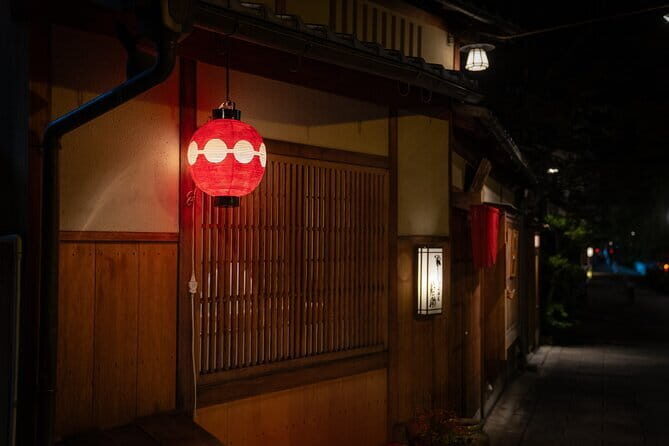
The tour begins with Yasaka Shrine, one of the best-known Shinto shrines in Kyoto’s Gion area. You get about 30 minutes there, and the admission ticket is free. This is a nice warm-up because it sets the tone for the evening. It also gives you a break from the idea that this is only about eating.
What you can expect is classic shrine atmosphere: the area is known for its red main gate and lantern-lit pathways. Even if you’re not a deep shrine person, the stop works because it’s short, orderly, and photogenic at night.
Practical tip: bring a little patience. Shrine grounds can feel busy when people are arriving and leaving. But the time window is designed so you’re not stuck there too long before your first bites.
Walking Gion with a guide instead of guessing your way
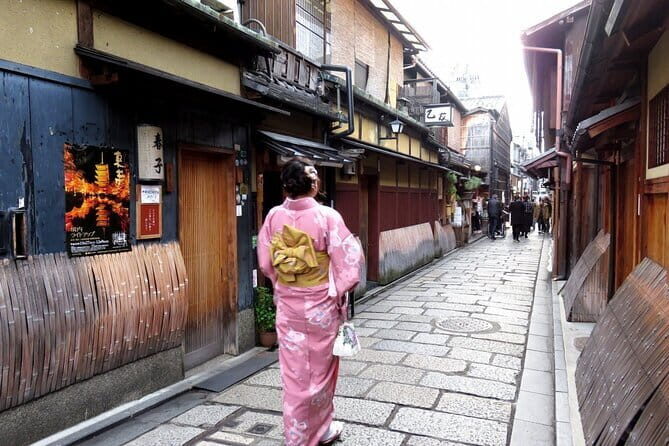
After Yasaka Shrine, the tour moves into Gion, Kyoto’s famous geisha district. You’ll spend about 1 hour here, strolling streets associated with traditional machiya houses and teahouses. A guide matters in Gion because the streets look straightforward until you realize how much is hidden in plain sight: side lanes, narrow crossings, and the way the neighborhood changes block to block.
This is also where you get real cultural context. In guides’ descriptions, you’ll often hear about how food culture and tradition connect to neighborhood life. One helpful bonus from past guides: suggestions for practical sightseeing timing, like when places are quieter, and even tips related to what to buy—matcha is a common example.
About geisha expectations: it’s wise to keep it realistic. It’s a night walk at 7:00 pm, and you might not see geisha at street level. That doesn’t make the walk less worthwhile. Gion is still a great district to experience for the architecture, streetscape, and atmosphere, even if you’re not photographing a person in costume.
Pontocho at night: narrow alleys and food-focused energy
Then you shift to Pontocho, usually the more “food-and-nightlife” part of the evening. You’ll get about 1 hour here. Pontocho sits between the Kamogawa River and Kiyamachi Street, and it’s known for narrow lanes lined with traditional machiya houses.
Pontocho is where the tour’s concept clicks. This neighborhood is built for lingering. You’re not just walking through streets; you’re walking toward meal energy: doorways, signs, the feeling that people are settling in for an evening.
A small caution: because it’s a nightlife district at night, the sidewalks can feel busy near entrances to eateries. Your guide’s job is to move your group efficiently and help you notice the right places. With a small max group size (10), it tends to feel smoother than a big bus of people trying to stand at the same corner.
The tasting portion: up to 13 dishes you can actually name
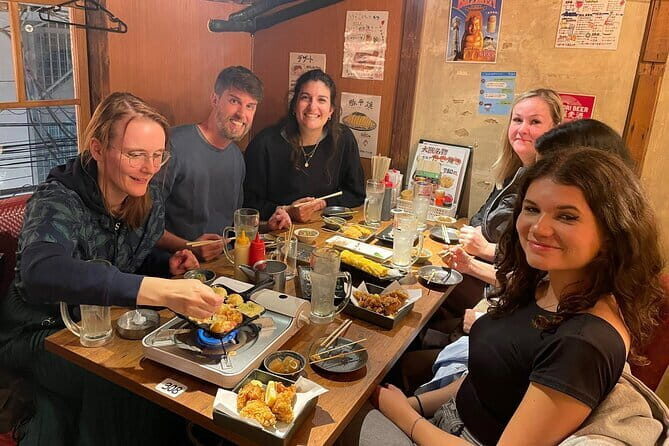
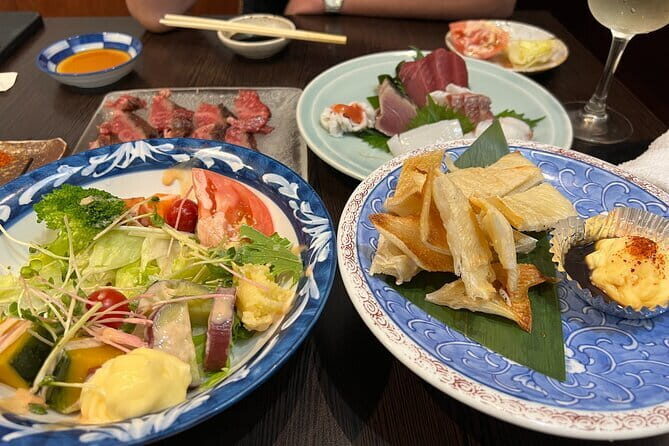
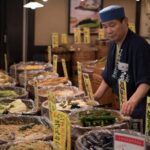
This tour’s headline is the food. You get food at 1 restaurant and 1 izakaya, with up to 13 dishes total, plus two drinks (alcoholic or non-alcoholic).
The best part about having a set tasting list is variety. You don’t just get one “signature snack.” You rotate through different styles and textures, which is how you learn Japanese food faster.
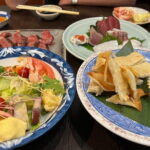
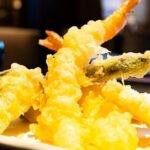
From the details shared in feedback, here are examples of what’s included in the tasting lineup:
- Crispy tempura: a crunch-and-lightness starter that’s hard to mess up.
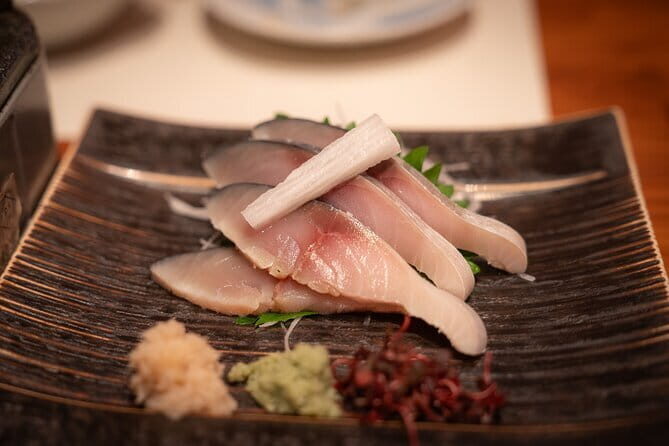
- Fresh sashimi: a clean, simple seafood hit that shows up as part of the variety.
- Classic Japanese fried chicken: a comfort-food style bite that balances the lighter dishes.
- Tofu dishes: including tofu-based bites that help you round out the protein mix.
The tour also leans into traditional “set menu” style dining. That’s useful if you’re a first-timer. You’re tasting multiple items without needing to read complicated ordering choices on the fly.
What I find smart about the format: the tour includes structured tasting stops, so your night isn’t dependent on you finding the right place at the right moment. In Kyoto, that kind of timing can get tricky.
You can also read our reviews of more tours and experiences in Kyoto

Drinks: included, but don’t plan on over-ordering
You’re included for two drinks—alcoholic or non-alcoholic. Extra drinks aren’t included, so if you’re a bigger drinker, you’ll want to plan for additional cost. If you’re drinking lightly or just want one beer/sake-style experience and something non-alcoholic, the package is nicely matched to typical meal pacing.
Pacing and group size: why max 10 feels different
This is one of those tours where the small details matter. The group size is up to 10 travelers, and the route is designed to fit that. When you’re eating at multiple places, groups that are too large can slow everything down: longer lines, more coordination, and slower service.
In practice, a smaller group tends to mean:
- less time standing around,
- more room to ask questions,
- and a guide who can actually keep track of the whole group.
Past guides linked to this experience include names like Kohtaro, Yuna, Meiko, Moto, and Takuma. Each guide has different strengths, but the consistent theme is that they’re friendly, engaged, and willing to share explanations—food, neighborhood history, and even language-related curiosities.
If you like asking why something is prepared a certain way, this kind of format helps.
Meeting points and the “don’t be late” rule for night tours
The meeting point is at FamilyMart, 300 Gionmachi Kitagawa, Higashiyama Ward, Kyoto. The tour ends near Kyoto-Kawaramachi Station at the end point listed by Otabichō area.
Start time is 7:00 pm, so you want to arrive early enough to orient yourself. Night tours are less forgiving: streets look different after dark, and you’ll need a minute to find the group without stressing.
Good news: it’s described as near public transportation, and you get a mobile ticket, which usually cuts down on waiting.
Price and value: what you’re really paying for
At $105.71 per person, this isn’t a cheap “grab a few bites” tour. But it’s also not priced like a single fancy meal. You’re buying a bundle of three things:
1) Guided walking through two of Kyoto’s most identity-heavy districts (Gion and Pontocho).
2) Cultural stop value at Yasaka Shrine with free admission.
3) A structured tasting setup with up to 13 dishes across two places, plus two drinks.
If you tried to replicate it on your own, you’d still face the hard parts this tour solves: finding the right combination of eateries, timing your night, and understanding what you’re eating without help. That’s why the price can feel fair. You’re paying for smooth access and an easier path into the food scene.
Also, you’re spending about 3 hours. For a short evening, that’s a solid amount of food and context packed into one outing.
Who this tour suits best (and who might want a different plan)
This tour is a great fit if you:
- want an easy way to eat your way through Kyoto without menu stress,
- like guided walking and want district context, not just restaurant stops,
- are new to Japanese food and want variety covered for you,
- appreciate small-group pacing.
It’s also a smart choice if you’re curious about things like matcha suggestions and when to see popular spots quieter. The guides’ extras (like that kind of practical advice) are a real part of why people rate this so highly.
You might want to skip it if:
- you already know exactly where you want to eat and don’t want a set tasting plan,
- you plan to drink a lot beyond the two included beverages,
- or you’re only interested in shrine time and aren’t motivated by food.
Should you book this Kyoto Gion and Pontocho food tour?
If your goal is a smooth Kyoto evening with food you can actually name and less worry about language, I’d say this is an easy yes—especially with a small max group size and the structured tasting format. The Yasaka Shrine opener gives the walk meaning, and Pontocho’s energy matches the dining focus.
My “book it” checklist:
- You’re hungry for a real variety meal, not just a snack.
- You want help translating and ordering.
- You’re happy walking for a few hours at night.
If those check out, you’ll likely leave with a better sense of where to go next in Kyoto—and more confidence ordering food on your own.
FAQ
What’s the tour duration?
The tour runs for about 3 hours (approximately).
How much does the Kyoto Gion and Pontocho Food Tour cost?
It costs $105.71 per person.
What time does the tour start, and where does it end?
It starts at 7:00 pm. It ends near Kyoto-Kawaramachi Station.
Where do I meet the guide?
The meeting point is FamilyMart, 300 Gionmachi Kitagawa, Higashiyama Ward, Kyoto.
How big is the group?
This tour has a maximum of 10 travelers.
What’s included in the food and drink?
Food is included at 1 restaurant and 1 izakaya, up to 13 dishes total, and two drinks (alcoholic or non-alcoholic).
Is extra alcohol included?
Extra drinks beyond the two included drinks are not included.
Does the tour include any shrine visit?
Yes. You visit Yasaka Shrine for about 30 minutes, and the admission ticket is free.
Do I need to worry about language barriers?
The tour is designed to reduce language barriers by having a local guide who can translate and help you during the experience.
Is the ticket digital?
Yes, it uses a mobile ticket. Confirmation is received at the time of booking.