REVIEW · ARASHIYAMA TOURS
Kyoto/Osaka: Nara, Fushimi Inari Taisha, Arashiyama Bus Tour
Book on GetYourGuide →Operated by Japan Visionary Tour · Bookable on GetYourGuide
One word: motion. This Kyoto and Osaka day trip strings together three of Japan’s most photographed stops—Nara Park deer, Fushimi Inari’s torii gates, and Arashiyama’s bamboo—then gives you just enough time to enjoy them without spending the day on trains. It’s a fast, focused route across Honshu that works especially well if this is your first time in the Kyoto–Osaka area.
I especially like the way it balances famous sights with small moments. In Nara, you actually get to feed the deer using shika senbei, and it’s one of those sights that stays charming even when the crowds show up. In Arashiyama, the bamboo forest walk feels peaceful, and the extra stops give you more than one kind of atmosphere—shrines, a UNESCO temple, a historic bridge view, and quick photo-friendly art.
One drawback to consider: it’s a long day (about 9 to 10 hours), and most stops are timed. If you want to linger for hours in one place, this format may feel a bit rushed. Also, the walking involved means it’s not a good fit if you have mobility limitations.
In This Review
- Key highlights at a glance
- Why this Nara and Kyoto day trip works so well
- Pickup in Osaka or Kyoto: easy start, clear rhythm
- Nara Park deer feeding: fun, fast, and worth the noise
- What I like about Nara on this tour
- A consideration
- Fushimi Inari Taisha: thousands of torii and a prosperity mission
- The best way to use your time
- Arashiyama in one day: bamboo calm plus multiple “flavors” of Kyoto
- Bamboo Forest: short walk, big atmosphere
- Nonomiya Shrine: love and academic blessings
- Tenryu-ji Temple (UNESCO), with an extra fee
- Togetsukyo Bridge: classic views and old-Japan vibes
- Kimono Forest, foot bath, and where you can go off-plan
- Kimono Forest: 600 pillars for easy pictures
- Arashiyama foot bath: recharge time
- Food is on you
- Time, pace, and what to watch for
- What you should bring for comfort
- Price and value: what $52 covers (and what it doesn’t)
- Who this tour suits best (and who should skip it)
- Should you book this Kyoto/Osaka Nara and Arashiyama day trip?
- FAQ
- How long is the tour?
- What does the tour cost and what’s included?
- Where are the pickup and drop-off locations?
- What stops are included during the day?
- Is Tenryu-ji Temple included?
- What should I bring?
- Are there any age or health notes I should know?
- Is this tour suitable for wheelchair users or mobility impairments?
Key highlights at a glance
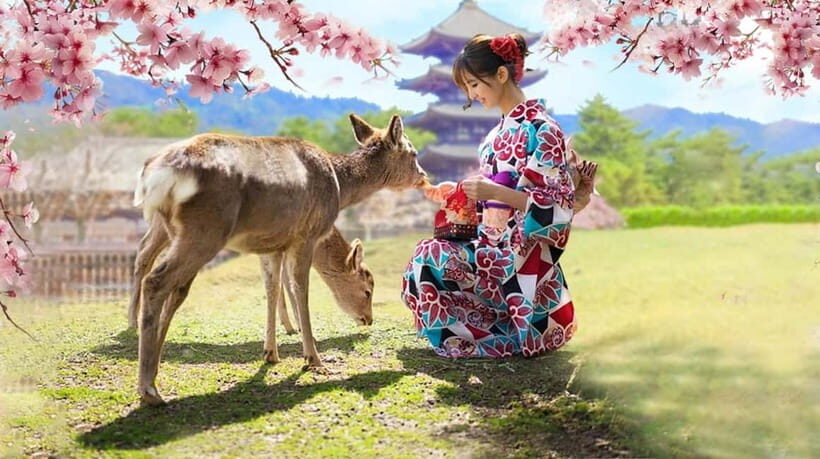
- Nara Park deer feeding with shika senbei: a hands-on, fun cultural moment (and yes, they really come close)
- Fushimi Inari’s thousand-plus torii gates: a prosperity shrine experience that’s easy to photograph and easy to get lost in
- Arashiyama bamboo forest calm: a short walk that feels like a reset button
- Nonomiya Shrine’s love and academic blessings: includes the rare Kuroki Torii (unpainted gate)
- Tenryu-ji UNESCO gardens (extra fee): Sogenchi Garden views that many people travel specifically to see
- Kimono Forest photo stop plus Arashiyama foot bath: quick, playful breaks when you need them
Why this Nara and Kyoto day trip works so well
If you only have one day (or one good daylight window) in the Kyoto–Osaka orbit, this route makes sense. You’re covering Nara Park, Fushimi Inari Taisha, and Arashiyama in a single outing, which saves you from juggling train transfers and timetable math.
The bigger value is that the day is structured around “arrive, orient, enjoy, move.” An English-speaking guide keeps everyone together and gives you clear pointers for what to look for at each stop. People going on tours like this tend to like that the day doesn’t feel random—you get context at the right time, not after you’ve walked past the important bits.
Still, you’re not “touring everything endlessly.” You’re doing curated time blocks. That’s the trade. You’ll get highlights and photo stops, and you’ll also have to decide what you want to prioritize with the time you have.
You can also read our reviews of more tours and experiences in Kyoto.



Pickup in Osaka or Kyoto: easy start, clear rhythm
Your day begins with pickup from one of two spots:
- Harimaya Nippombashi 1-chome
- Kyoto Station Hachijo Entrance Square Sunken Garden
Departures are timed in a way that lets the group hit Nara first. The itinerary notes:
- 8:00 AM depart from Osaka
- 9:00 AM depart from Kyoto
Two practical tips that matter here:
- Be at the meeting point 10 to 15 minutes early. The bus departs right on time.
- Bring an umbrella and water. The plan can shift with weather and traffic, and you’ll feel better if you’re prepared for sudden changes.
Guides have been praised for keeping instructions calm and organized, and for coordinating departures efficiently with the group staying accounted for at each stop.
Nara Park deer feeding: fun, fast, and worth the noise
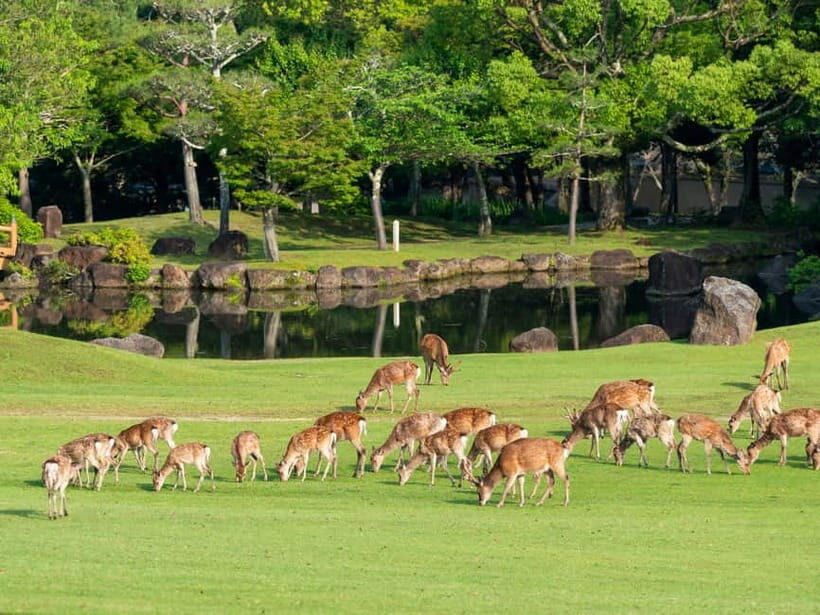
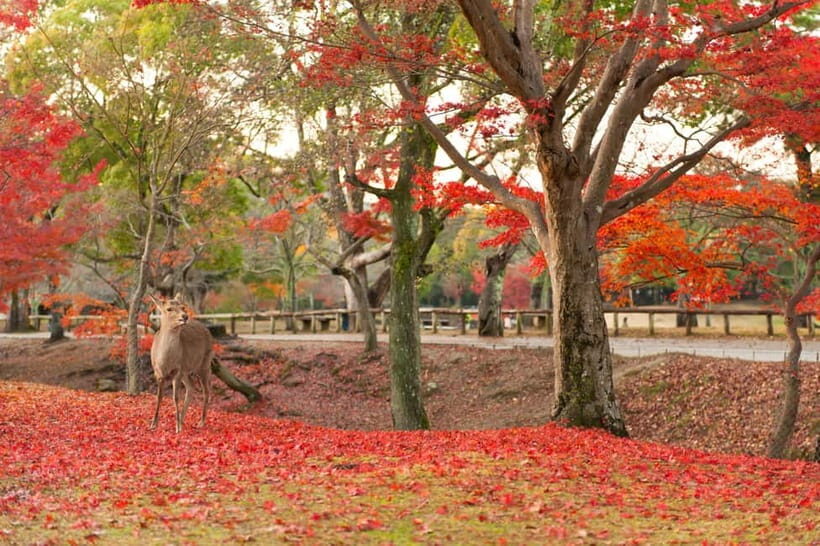
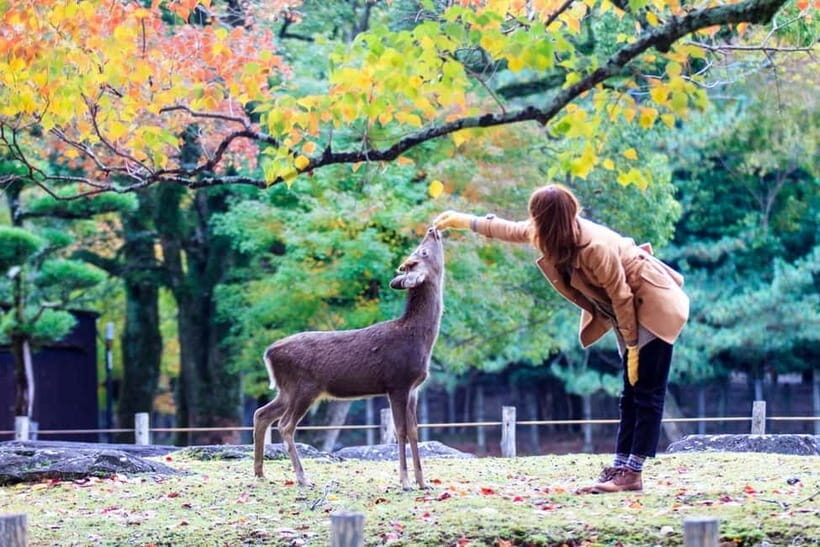
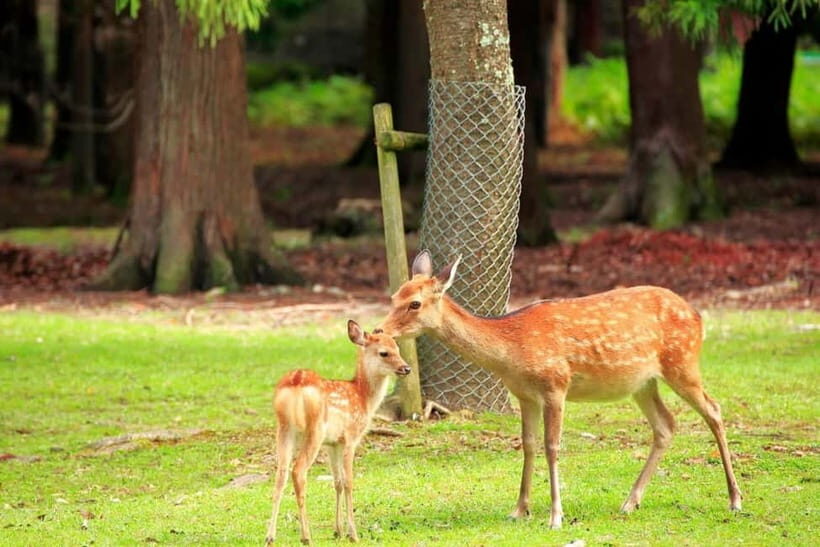
Nara Park is basically its own world. Over 1,000 deer roam freely, and they’re presented as divine messengers. What you’ll actually do is feed them shika senbei (deer crackers) during your about 1-hour block.
This is one of those experiences where the charm comes from being hands-on. You’re not just watching animals from a distance. You’re sharing space with them, which can feel a bit intense at first—then gets genuinely funny and sweet. The key is to stay relaxed and follow the guide’s direction so you don’t accidentally startle anyone (deer included).
What I like about Nara on this tour
- It’s built in, not optional. You’re scheduled for it, so you don’t lose half a day trying to figure out logistics.
- It’s a perfect first stop. The morning timing tends to feel energetic but manageable.
A consideration
Nara can get crowded, and deer can get bold if people react fast. If you’re nervous around animals, treat the feeding as a “watch first, then try” moment. Wear comfortable shoes because you’ll be moving around the park.




Fushimi Inari Taisha: thousands of torii and a prosperity mission
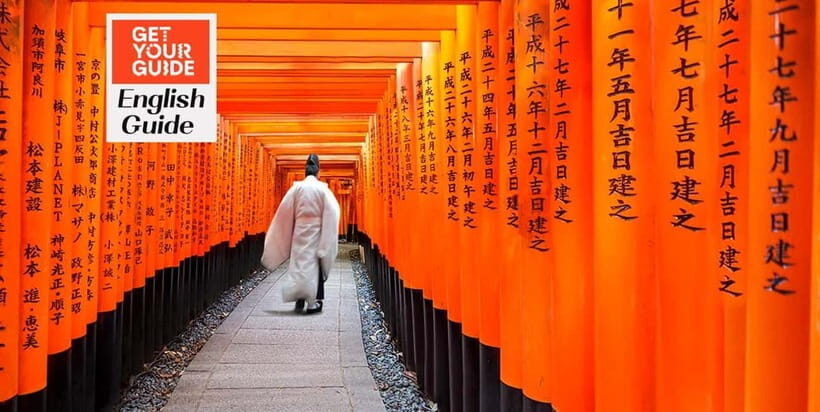
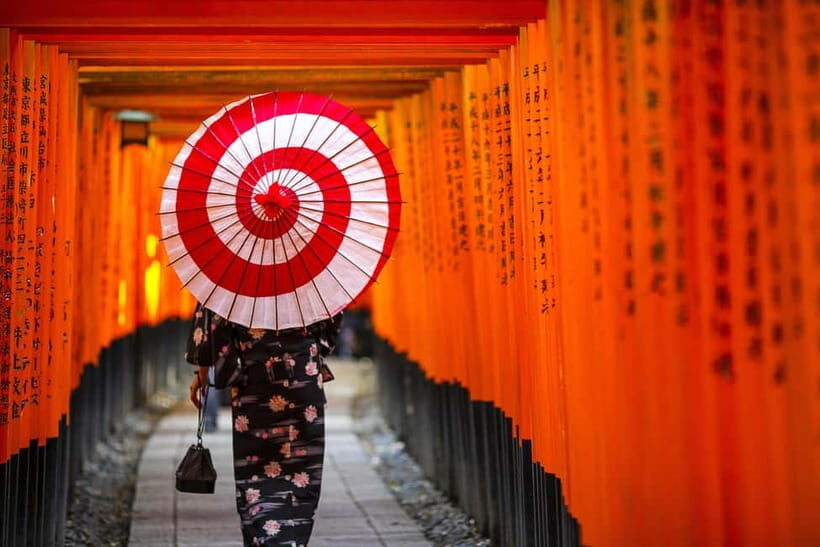
Next is Fushimi Inari Taisha, where the main attraction is the vermilion torii gates. You’re there for about 70 minutes, which is usually enough time to see the most famous sections and still choose how far up you want to go.
Here’s what makes this stop feel different from a typical shrine visit:
- The torii gates create a tunnel-like path that changes your mood as you walk deeper.
- The shrine is dedicated to the god of prosperity, so the energy is about hope and improvement—jobs, success, and steady growth.
Two details that make the place feel extra “real”:
- The gates are famous enough to have shown up in pop culture, including Memoirs of a Geisha and Detective Conan.
- Because so many gates line the mountain path, you can frame your photos in multiple directions and still feel like you’re seeing something new.
The best way to use your time
You’ll want to pace yourself early. The first section of torii is where people get the classic shot, but the later sections can feel calmer and more atmospheric. Since your time is limited, set a personal goal: see the signature view, then decide how far you want to go before heading back to the bus.
Arashiyama in one day: bamboo calm plus multiple “flavors” of Kyoto
Arashiyama is where the day turns from “iconic must-see” into “slow your brain down.” You get about 2.5 hours total in the Arashiyama area, with free time and guided orientation mixed in.
Bamboo Forest: short walk, big atmosphere
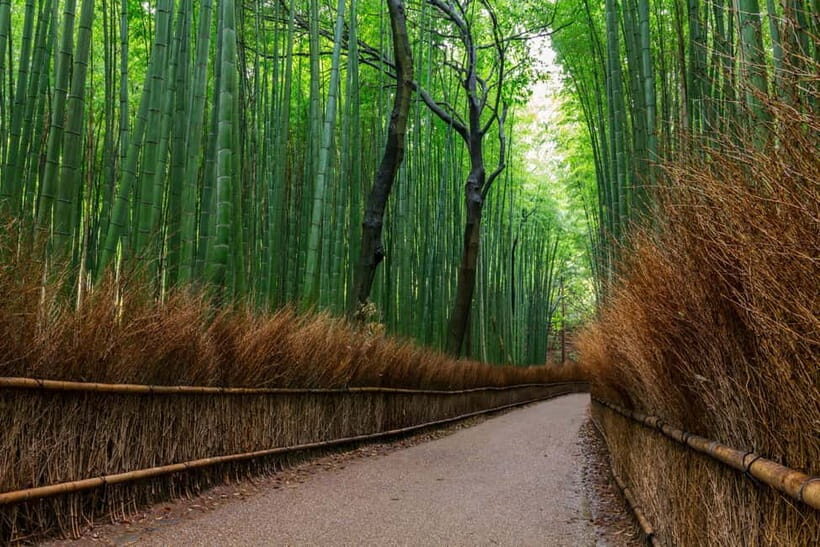
The Arashiyama Bamboo Forest portion is scheduled as a quick photo-and-walk stop. Even if it’s brief, the effect is real: light filters between tall stalks, and the walk feels quieter than the streets around it.
This is also where having a guide helps. You’ll know where to walk and what to aim for so you don’t end up spending your limited time drifting toward the wrong entrances or spending too long in the busiest spots.
Nonomiya Shrine: love and academic blessings
You also stop at Nonomiya Shrine, tied to the Heian Period (over 1,000 years old). It’s known for love and academic blessings, and it includes the Kuroki Torii (unpainted gate) located quietly within the bamboo area.
This is a good contrast stop. Bamboo is your wide calming scene; Nonomiya is a smaller, more focused moment. It’s the kind of stop that helps the day feel layered instead of just “three big photos.”
Tenryu-ji Temple (UNESCO), with an extra fee
Tenryu-ji Temple is listed as extra fee, but it’s also a major reason many people go to Arashiyama. It’s UNESCO World Heritage, and it’s known for the Sogenchi Garden, famous for borrowed scenery and seasonal color.
The practical value of including Tenryu-ji on a day trip is that you can opt in. If you’re garden-focused, you can spend energy here. If you just want the scenery stroll vibe and don’t want the extra ticketing time, you can stay with the rest of the plan.
Togetsukyo Bridge: classic views and old-Japan vibes
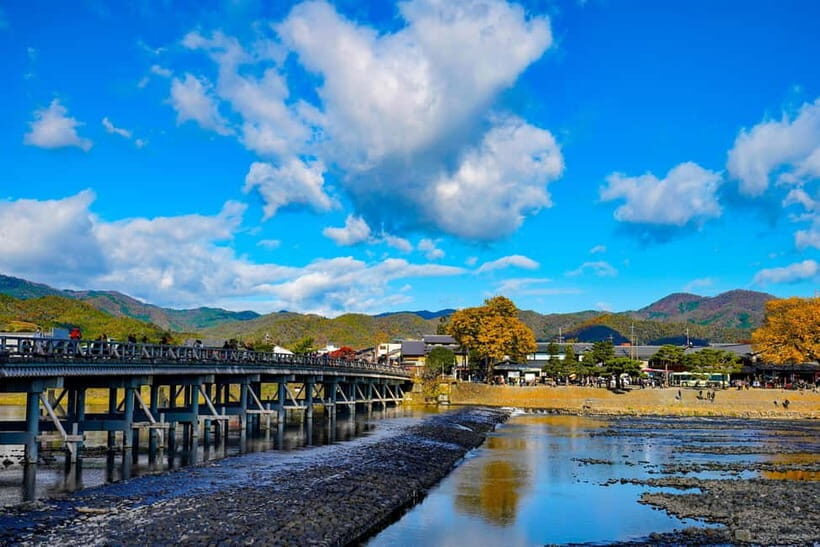
You’ll also get time at Togetsukyo Bridge for a short sightseeing and walk. From here, you see wide Arashiyama views. It’s also a place where you’ll notice the “texture” of the area—pedestrians, rickshaws passing through the scene, and that sense of a town that still moves like it has for a while.
Kimono Forest, foot bath, and where you can go off-plan
One reason this tour feels fun (not just efficient) is that Arashiyama has built-in photo opportunities and easy breaks.
Kimono Forest: 600 pillars for easy pictures
There’s a Kimono Forest stop—about 15 minutes—with an art installation made of 600 colorful pillars featuring Kyoto Kyo-Yuzen textile patterns. If you like quick, colorful shots without planning, this is the kind of stop that delivers.
Short timing here is a feature, not a bug. You get the picture moments and then you can shift back into exploring, rather than getting stuck in one spot too long.
Arashiyama foot bath: recharge time
Another thoughtful stop is the Arashiyama Station foot bath, included as free time. After hours of walking, your feet will thank you. It also gives you a pause in the schedule, so your energy doesn’t drain to zero right before the ride back.
Food is on you
Food and beverage are not included, so you’ll want a quick plan:
- Use Arashiyama free time to snack and browse
- Don’t wait until you’re starving, because the day can move fast
The area is known for local street food and restaurants, and there’s even a Rilakkuma Tea House photo stop if that’s your kind of thing. (Even if it’s not, it’s useful as a landmark when you’re meeting back up.)
Time, pace, and what to watch for
This is a “see a lot, decide fast” day. Your scheduled time blocks look like this:
- Nara Park: about 1 hour
- Fushimi Inari: about 70 minutes
- Arashiyama: about 2.5 hours total area time, plus short sub-stops like bamboo, Nonomiya, bridge, and Kimono Forest
The good news: the tour is designed so you can enjoy each place without sprinting. Many participants like the fact that it covers major sites without feeling wildly rushed.
The caution: you won’t have unlimited hours in each location. If you want a deep, slow temple-by-temple day, this might feel like a sampler.
What you should bring for comfort
- Comfortable shoes (non-negotiable here)
- Umbrella
- Water
- Comfortable clothes
Also, smoking isn’t allowed, so you can plan your breaks around that.
Price and value: what $52 covers (and what it doesn’t)
At $52 per person for about 9 to 10 hours, this is priced like an efficient “transport + guide” package.
Included:
- English-speaking tour guide
- Air-conditioned vehicle
- Taxes, parking fees, gas fees, handling charges
Not included:
- Food and beverage
- Additional personal expenses
So what are you really paying for? You’re paying for:
- A guided route that connects three major regions in one day
- Air-conditioned bus comfort and a driver handling logistics
- Fewer mistakes on your end (meeting points, regrouping, timing, and knowing where to go)
If you’d otherwise spend time figuring out transit between Osaka, Kyoto, Nara, and Arashiyama, the structure here often feels like money well spent. If you’re traveling as a couple or small group, group value tends to be even better because the guide and bus costs get spread out.
Who this tour suits best (and who should skip it)
This tour fits best if you:
- Want big-name Kyoto and Nara highlights in one day
- Like a guide who helps you interpret what you’re seeing while keeping departures on schedule
- Prefer guided pacing over navigating trains all day
You might want to skip it if:
- You need very limited walking (the tour is not suitable for wheelchair users and people with mobility impairments)
- You strongly prefer to spend long stretches in a single place
- You’ll feel stressed by timed segments
There’s also a note that pregnant guests and guests aged 70 and above are asked to sign a travel waiver upon arrival, so consider that when planning your comfort and mobility.
Should you book this Kyoto/Osaka Nara and Arashiyama day trip?
I’d book it if you’re here for first-time highlights and you don’t want to spend your only full day building your own route. The mix is smart: deer feeding in Nara, prosperity torii at Fushimi Inari, and then Arashiyama’s bamboo calm plus multiple stops that keep variety high.
I wouldn’t book it if you’re the type who wants to linger, wander without deadlines, or you need an accessible route. In that case, you’ll probably enjoy doing a slower, self-guided plan instead.
If you do book, go in with one mindset: treat this as a greatest-hits day. Bring comfy shoes, keep expectations realistic about time at each site, and use the free time in Arashiyama to snack, photo, and reset.
FAQ
How long is the tour?
It runs about 9 to 10 hours.
What does the tour cost and what’s included?
The price is $52 per person. Included are an English-speaking guide, an air-conditioned vehicle, and all taxes/parking/gas/handling. Food and beverage are not included.
Where are the pickup and drop-off locations?
Pickup and drop-off can be either Harimaya Nippombashi 1-chome or Kyoto Station Hachijo Entrance Square Sunken Garden. Your reservation asks you to choose your drop-off point (Osaka or Kyoto).
What stops are included during the day?
You’ll visit Nara Park, Fushimi Inari Taisha, and Arashiyama areas including the bamboo forest, Nonomiya Shrine, Tenryu-ji (extra fee), Togetsukyo Bridge, and Kimono Forest. There’s also free time at Arashiyama Station foot bath.
Is Tenryu-ji Temple included?
Tenryu-ji Temple is listed as extra fee, so you may need to pay separately if you want to enter.
What should I bring?
Bring comfortable shoes, an umbrella, water, and comfortable clothes.
Are there any age or health notes I should know?
Pregnant guests and guests aged 70 and above are requested to sign a travel waiver upon arrival.
Is this tour suitable for wheelchair users or mobility impairments?
No. It’s not suitable for people with mobility impairments or wheelchair users.