REVIEW · DESSERT TOURS
Japanese Traditional Sweets making with Tatedashi Matcha
Book on GetYourGuide →Operated by B.B.Advisors Inc. AN KYOTO · Bookable on GetYourGuide
A sweet start to your Kyoto day is shaping Nerikiri by hand. In this 65-minute session, you’ll learn how to form two seasonal Japanese sweets and then finish with tatedashi matcha. The big draw for me is the real-ingredient approach, including Kyoto-made white/red bean paste from long-established shops.
What I especially like is that you make two different sweets (so it’s not just one cookie-cutter shape) and you can actually eat what you make on the spot. You’re also guided in a way that turns the final plate into something you’d be happy to photograph.
One possible consideration: classes can feel busy, so if you really dislike crowds, choose a less popular time slot and expect a hands-on room with multiple participants.
In This Review
- Key highlights you’ll care about
- Why Nerikiri plus Kyoto bean paste is the real point of this class
- Getting there fast: Gojo Station, one minute on foot, stairs inside
- The 65-minute flow: from intro sweets to your matcha finish
- Flower-shaped Nerikiri: a hands-on start that builds confidence
- Kinton Nerikiri: the second sweet that makes the time feel worth it
- Tatedashi matcha and eating your own sweets right away
- Price and value: about $14 for two sweets plus matcha
- Language, group comfort, and who should book this
- Small tips that make a difference on the day
- Should you book Japanese Traditional Sweets with Tatedashi Matcha?
- FAQ
- How long is the Japanese Traditional Sweets class with tatedashi matcha?
- What sweets will I make during the class?
- Is tatedashi matcha included?
- Where is the meeting point?
- What is the price?
- Are there any extra fees besides the class price?
- What language support is available?
Key highlights you’ll care about
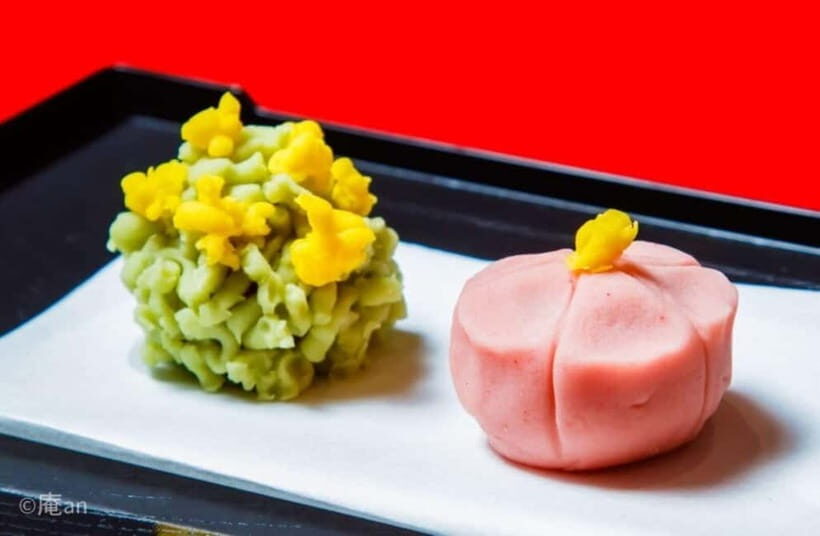
- Two seasonal Nerikiri sweets made by you, then eaten on the spot
- Kyoto long-established bean paste (white and red) used in the sweets
- Tatedashi matcha served at the end, paired with your creations
- Flower-shaped Nerikiri plus a second style called Kinton Nerikiri
- Close to Gojo Station (Exit 1), with an easy one-minute walk
Why Nerikiri plus Kyoto bean paste is the real point of this class
Nerikiri isn’t just “cute dessert craft.” It’s a way of shaping sweet paste into seasonal forms, often meant to match what you’re seeing in Japan right now—weather, holidays, and local taste trends. In this class, that seasonal idea stays front and center because you’ll make two sweets that are specifically matched to the time of year.
The ingredient detail matters more than people expect. The bean paste used here comes as white/red bean paste produced by Kyoto’s long-established shops. That’s the sort of clue that tells you the class isn’t using “whatever paste is cheapest.” It’s built around flavor and texture, not just the act of pressing dough into shapes.
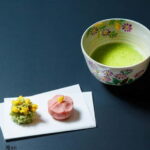
Then there’s the tatedashi matcha. “Tatedashi” is a serving style meant to bring the matcha together at the end of the experience, after you’ve worked your way from shaping to plating. For you, that means the class finishes like a mini-meal: sweets first, then matcha you can drink while you slow down and actually enjoy what you made.
You can also read our reviews of more tours and experiences in Kyoto
Getting there fast: Gojo Station, one minute on foot, stairs inside
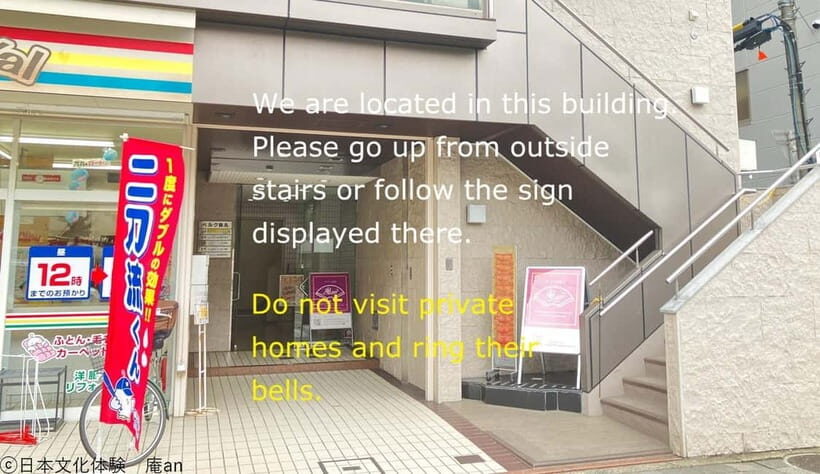
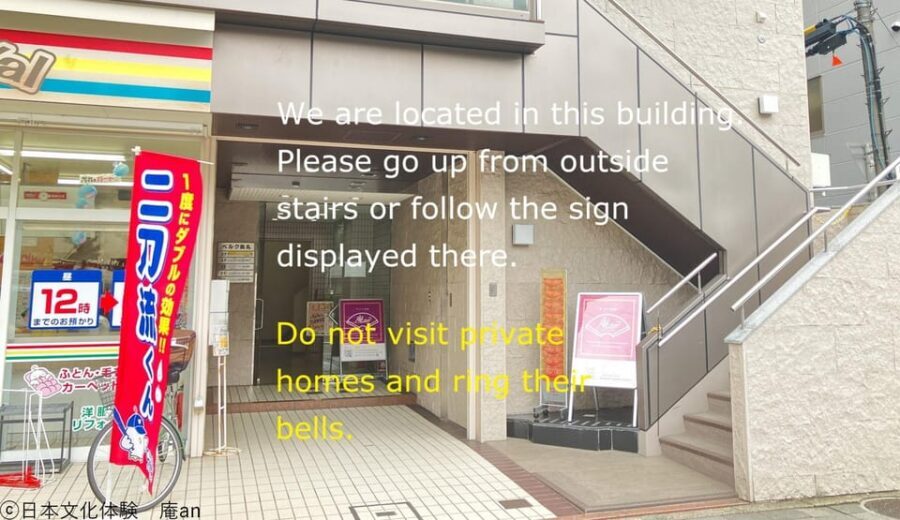
Your meeting point is simple: it’s a one-minute walk from Exit 1 of Subway Karasuma Line Gojo Station. The store entrance faces Gojo-dori, so you shouldn’t need to hunt around side streets for long.
Do plan around the building layout. Even though the venue is wheelchair accessible, there’s no elevator, and you’ll need stairs to reach each venue. If you’re traveling with mobility needs, go in expecting to use the stairs and confirm what your specific route will be like before you arrive.
Also, timing matters. The experience doesn’t hold for late arrivals. If you want this to feel calm instead of rushed, give yourself a small buffer so you can walk in, settle down, and start when the session begins.
The 65-minute flow: from intro sweets to your matcha finish
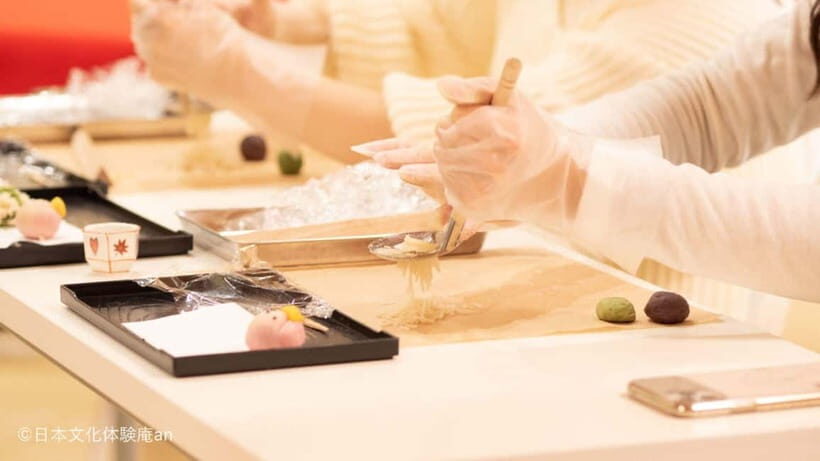
This class runs for about 65 minutes, and the structure is friendly even if your Japanese is basic. Here’s how the flow typically breaks down, and what each part is really about:
Start and short explanation
You begin with an intro to traditional Japanese sweets and how Nerikiri works as a seasonal art form. This is the moment where you learn the basic idea: texture, shaping, and why the look is part of the flavor experience.
Flower-shaped Nerikiri making
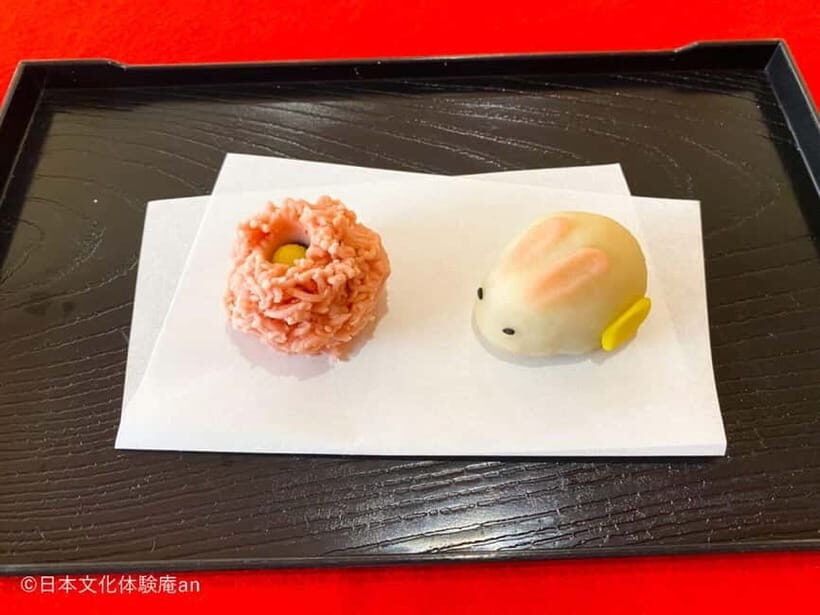
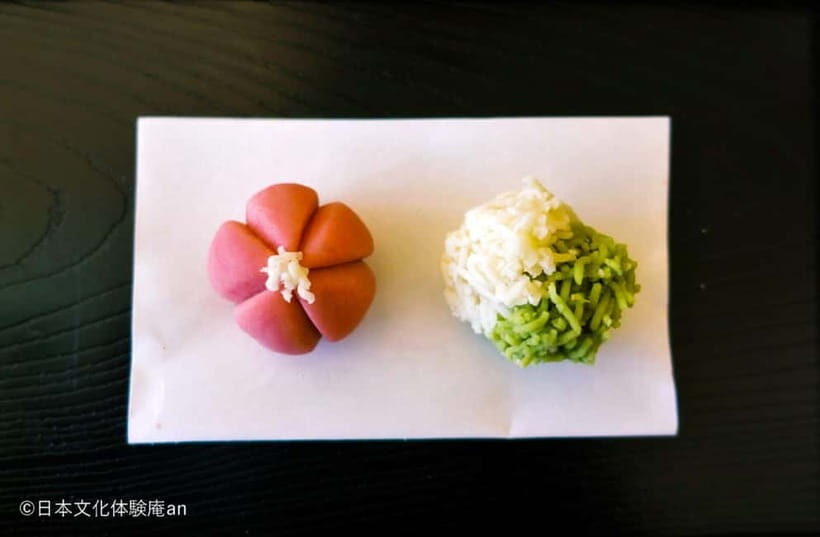
Next, you’ll make your first sweet: a flower-shaped Nerikiri. This is usually the “practice round.” The goal isn’t perfection. It’s learning how to handle the paste, shape it cleanly, and end up with something that looks like the example.
Kinton Nerikiri making
Then you move to the second sweet: Kinton Nerikiri. This step is where you use what you learned in the first half and apply it to a different style. If the first one feels like a warm-up, the second one feels like the “I can do this” moment.
Picture time and final wrap-up
You get picture time, then the session ends around the mid-50-minute mark. For you, this is a nice pacing detail: you get a moment to document your work before everything shifts to tasting.
Tatedashi matcha + eating/drinking
Finally, you’re served tatedashi matcha, and you eat your sweets on the spot. This is one of the best parts of the experience because you don’t need to pack up your dessert and hope it survives the day.
Flower-shaped Nerikiri: a hands-on start that builds confidence
The first sweet is flower-shaped Nerikiri, and I like that choice for beginners. A flower design gives you multiple edges and curves to manage, without being so complicated that you feel lost. It’s a good way to learn the “feel” of Nerikiri paste.
What you’ll likely notice as you work is how quickly the craft becomes tactile and calming. Your hands do the thinking. That’s why this type of class can work well even when your language skills are limited: the instructor can demonstrate, you can copy, and the results come from your touch.
You also have a built-in motivation: the class encourages you to finish a complete sweet and have it ready to eat. That changes the vibe from craft-project to real dessert.
One practical note: because this is a hands-on session, you’ll want to keep your sleeves and long hair under control. Nothing fancy is required, but it helps you avoid sticky frustration.
Kinton Nerikiri: the second sweet that makes the time feel worth it
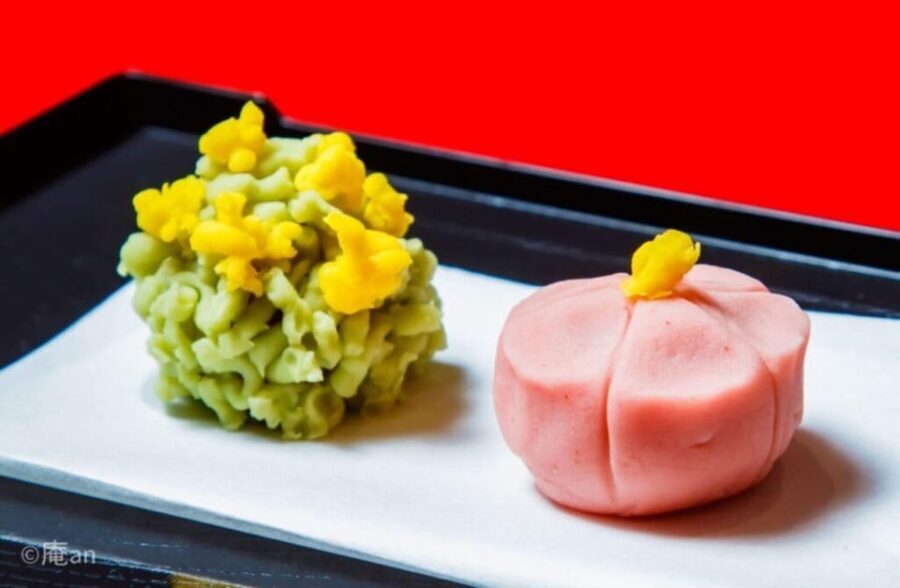
The second sweet is called Kinton Nerikiri, and you make it after the flower shape. That “two different sweets” setup is part of the value here. You’re not spending 65 minutes making just one thing.
Kinton Nerikiri acts like your chance to show improvement. The paste handling and shaping principles are still the same, but the final look is different enough that you feel like you learned something new—not just repeated the same steps.
This second stage is also where seasonal meaning becomes more visible in the final results. The class tells you your sweets match the season, so your finished pair of desserts feels like a snapshot of that particular time of year in Japan. For me, that’s the kind of souvenir that actually earns its place.






Tatedashi matcha and eating your own sweets right away
After your sweets are shaped and photographed, the experience pivots to tasting. You’ll receive tatedashi matcha, and you get to eat the sweets on the spot.
This matters because Nerikiri texture is part of the experience. If you take it away, you can run into timing issues—dessert quality changing during transport or while you’re walking around. Eating it immediately helps you get the full effect of both flavor and texture.
Matcha after working with sweet paste also makes sense in a “reset” way. Your mouth gets a balancing drink, so the sweetness doesn’t feel one-note. It’s a nice ending, especially if you’ve been snacking all day on the go.
If you want to bring something home, there’s a sweets take-out box for 100 JPY. That’s extra, but it gives you flexibility if you want a small carryover gift.
Price and value: about $14 for two sweets plus matcha
The class is priced around $14 per person for a 65-minute experience. At this price point, the value comes from three things:
- You make two finished sweets, not one.
- You use bean paste from Kyoto’s long-established shops, which signals real ingredient sourcing.
- You get tatedashi matcha at the end, plus the sweets are eaten on the spot.
Extras do exist. A sweets take-out box costs 100 JPY, and an experience completion certificate is 300 JPY. If you’re the kind of traveler who likes proof-of-participation, the certificate is optional. If you’re not, you can skip it and spend the energy on enjoying the taste.
One more value angle: it’s structured so that even solo travelers can jump in comfortably. The class is described as being suitable for both solo and group participation, and the experience stays focused on creating something tangible.
Language, group comfort, and who should book this
The instructor is Japanese, and English translation is provided as much as possible. That’s a practical detail for you: you don’t need fluent Japanese to participate, but you should be ready to rely on gestures and demonstrations.
The class is also wheelchair accessible, but remember the stairs. If accessibility is a concern, plan with that in mind so there are no surprises inside the building.
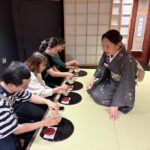
Now, about group size. Some people find the class can feel like it has a lot of participants. If you prefer quiet, low-traffic rooms, pick your timing carefully. If you’re okay with a lively group setting, you’ll likely find it fun because the activity itself is engaging and shared.
This class tends to suit:
- People who like food crafts and want to make something real (not just watch)
- Couples and friends who want a hands-on Kyoto memory
- Solo travelers looking for an activity that doesn’t require perfect language skills
- Families with kids who enjoy tactile activities
There’s also one practical reality: if you’re expecting a super detailed lecture about ingredients and methods, you might feel it’s more basic and hands-on. If your goal is mainly to shape Nerikiri and eat it, you’ll probably enjoy it more.
Small tips that make a difference on the day
A few simple moves can help your session feel smoother:
- Arrive early enough to settle in. The experience won’t be able to accommodate delays.
- Keep your sleeves and hair secure. Sticky paste is part of the fun, but you don’t want it on you for the whole day.
- Plan to take a photo before you eat. The class includes picture time, which is great because you’ll want your flower and Kinton designs visible while they look freshest.
- Decide whether you want take-out. If you’re carrying a busy day of sightseeing, eating on the spot is the simplest option.
- If you want extra English support, contact the organizer ahead of time to request it, since translation is provided as much as possible by default.
And quick note on timing during the day: the operation hours are 10:00 to 17:00. If you book after 17:00, it gets processed next day.
Should you book Japanese Traditional Sweets with Tatedashi Matcha?
If you want a Kyoto activity that combines seasonal Japanese sweets, real ingredients, and an easy, short format, this is a strong pick. The best part for you is the full arc: learn the basics, make two Nerikiri sweets, photograph your work, then eat it with tatedashi matcha while it’s still at its best.
I’d book it if:
- You enjoy hands-on craft where the outcome is edible.
- You like Kyoto food culture beyond just tasting.
- You want a class that’s only about an hour, so it fits tight travel schedules.
I’d think twice if:
- You need a very quiet, low-crowd environment.
- You’re looking for deep technical instruction about what’s inside the paste and why every step is done.
If you fall into the first group, you’ll likely leave with something better than a screenshot: a plate of sweets you made yourself.
FAQ
How long is the Japanese Traditional Sweets class with tatedashi matcha?
The experience lasts about 65 minutes.
What sweets will I make during the class?
You will make two Japanese traditional sweets called Nerikiri, including a flower-shaped Nerikiri and Kinton Nerikiri.
Is tatedashi matcha included?
Yes. Tatedashi matcha is provided at the end, along with time to eat and drink.
Where is the meeting point?
It’s about a one-minute walk from Exit 1 of Subway Karasuma Line Gojo Station. The store entrance faces Gojo-dori.
What is the price?
The price is listed as $14 per person.
Are there any extra fees besides the class price?
A sweets take-out box is 100 JPY, and an experience completion certificate costs 300 JPY.
What language support is available?
The instructor is Japanese. English translation is provided as much as possible, and you can contact the organizer if you’d like to add it.