REVIEW · KYOTO
Shamisen Experience in Kyoto 【Private】
Book on Viator →Operated by Shamisen Dojo · Bookable on Viator
Learning Kyoto music beats another photo stop.
This private shamisen lesson turns a quiet room into a working mini-music studio, where Jack-san (a professional player and teacher) guides you from first notes to playing a traditional song. You get the lesson in English, plus a tea break and a hands-on jam session using traditional scales.
I really like that this is truly beginner-friendly. Within the 1.5 hours, you’re taught the basics you actually need—tuning, posture, and how to handle the instrument—then you get to play along instead of just watching.
One thing to think about: this isn’t a sightseeing add-on. If you want a lot of walking around and checking off temples, you’ll need to pair this with another activity, because the time is focused on learning and practicing.
In This Review
- Key points you’ll care about
- Why This Kyoto Shamisen Lesson Feels Like Real Music
- Meet Jack-san at Murasakino, Kita Ward, and Get Set Up Fast
- Beginner Basics in English, Plus a Tea Break That Slows Things Down
- The Highlight: Jam Session Practice on Traditional Scales
- Small Details That Make the Instrument Easier to Play
- What You’re Paying For: Private Attention That Saves Your Time
- Scheduling Tips for a Smooth Kyoto Day
- Who Should Book This (And Who Might Skip It)
- Should You Book This Private Shamisen Lesson?
- FAQ
- Is this lesson private?
- Do I need any shamisen experience?
- Is the lesson taught in English?
- How long is the shamisen experience?
- Is there a tea break?
- Can left-handed players participate?
- What’s the meeting point?
Key points you’ll care about

- Private, one-on-one instruction so you can ask questions and get instant corrections
- English lessons with a teacher who can explain techniques clearly
- Tea break included, with relaxed conversation during the lesson
- Jam session with traditional scales, where you play melodies with guidance
- Left-handed shamisen available, so most players can feel comfortable
- A souvenir gift so the experience lasts beyond the lesson
Why This Kyoto Shamisen Lesson Feels Like Real Music
Kyoto has plenty of culture on display. This is different because it’s culture you do with your hands. In 1.5 hours, you’re not just learning facts about a three-string instrument—you’re making sound and building muscle memory.
What makes it work is the structure. You’ll start with the fundamentals, then you’ll move into the fun part: playing melodies and joining a jam with traditional scales under the teacher’s supervision.
You can also read our reviews of more private tours in Kyoto


Meet Jack-san at Murasakino, Kita Ward, and Get Set Up Fast
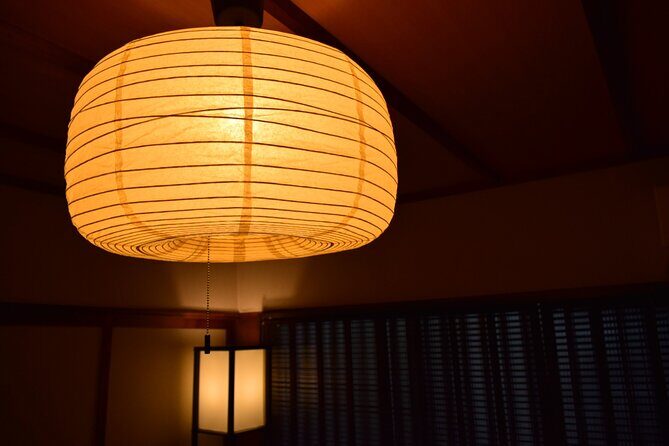
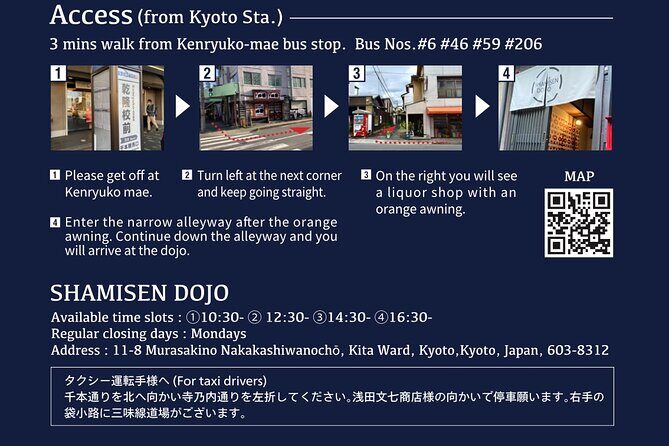
Your experience starts and ends at the same meeting point in Murasakino Nakakashiwanocho, Kita Ward, Kyoto (603-8312). It’s near public transportation, which matters because you don’t want this kind of activity trapped behind complicated routing.
Since it’s private, you don’t share the room with a crowd. That usually translates to less waiting and more direct attention, which is huge for something hands-on like tuning and technique.
Once you arrive, you’ll get oriented and set up with the shamisen. From there, the lesson flows naturally—basic posture, how to sit, and how to handle the instrument—before you’re asked to do anything ambitious.
Beginner Basics in English, Plus a Tea Break That Slows Things Down
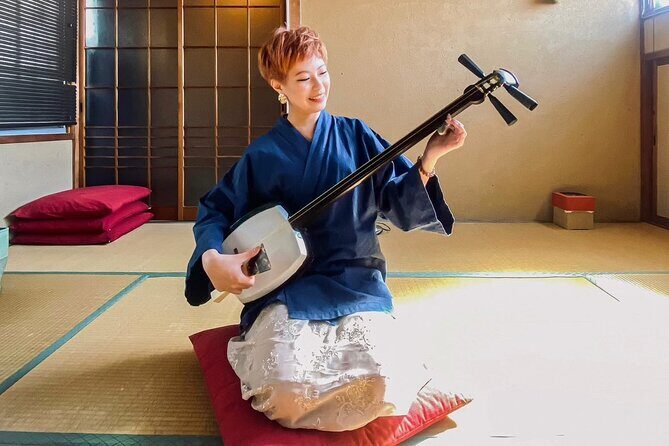
The lesson is taught in English, and that’s a big deal if you’re new to Japanese instruments. Clear explanations reduce the guesswork. And guesswork is where people get frustrated fast.
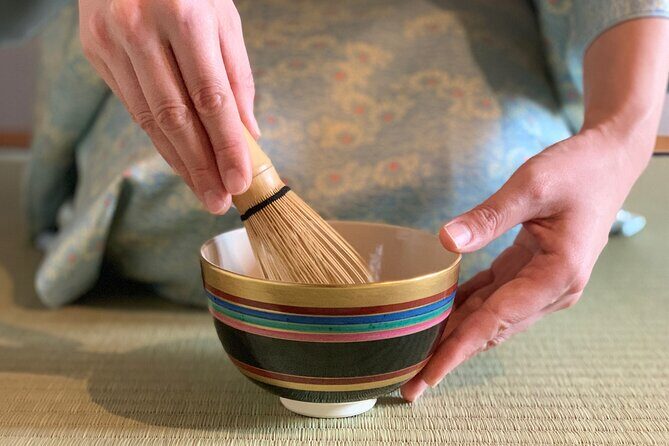
The lesson also includes a Japanese tea break. It’s not a gimmick—it gives you a breather and time to chat in a relaxed way with the owner, who’s also a professional shamisen player. If you’re doing a packed Kyoto day, this built-in pause can be a welcome reset.
Early on, you’ll focus on things that make playing possible at all: how to tune, how to sit properly, and how to hold your position so the sound comes out clean. Even if you have some musical background, these small technique fixes can change how your instrument feels under your fingers.
The Highlight: Jam Session Practice on Traditional Scales
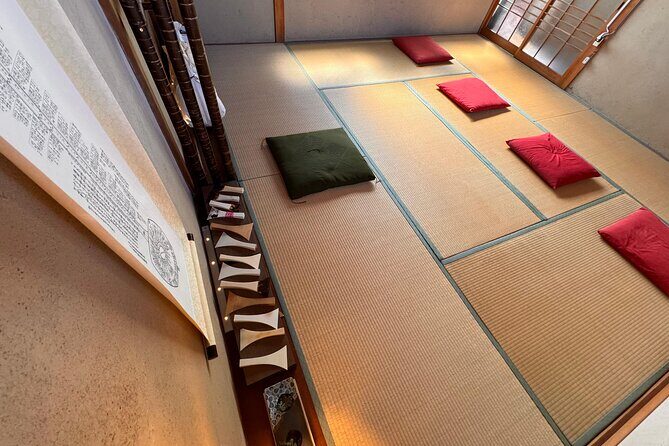
The best part is the jam session. Instead of stopping after learning one short pattern, you’ll be encouraged to play freely using traditional Japanese scales. Jack-san accompanies you and guides you, so you’re not left guessing.
This is where you start to understand how shamisen music moves. You learn that it’s not only about correct notes—it’s also about feel, timing, and expression. The lesson nudges you toward that quickly, which is why it’s memorable even when you’re a total beginner.
You’ll also learn a traditional Japanese song. Getting to a real song (not just a demo) is what makes the lesson feel like progress you can hear, not just instructions you can forget.
Small Details That Make the Instrument Easier to Play
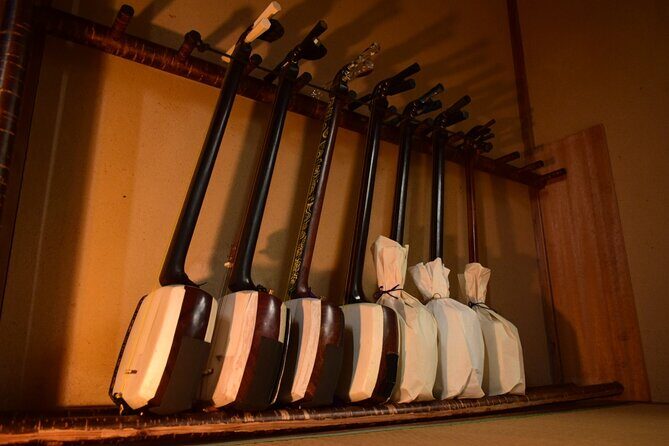
One of the practical strengths of this experience is how adaptable it is. There’s a lefty shamisen available, which means left-handed players don’t have to awkwardly force themselves into a right-handed setup.
Technique instruction also stays grounded in real playing needs. You’ll get help with posture and seating, not just hand position. Those may sound like minor details, but they affect control and comfort the moment you start tuning and plucking.
The lesson also builds confidence in stages. If you’re worried you won’t be able to do it, the pacing helps. You get corrections as you go, and you’re encouraged to try melodies so you’re actively participating instead of passively listening.




What You’re Paying For: Private Attention That Saves Your Time
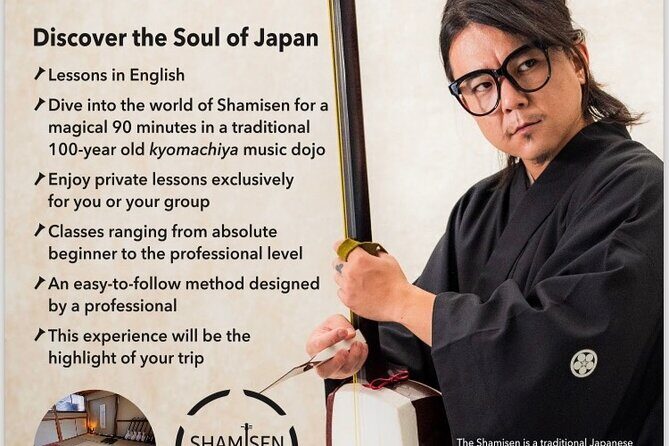
At $99.10 per person for about 1 hour 30 minutes, this isn’t the cheapest activity in Kyoto. But for a private music lesson, the value comes from direct coaching and the chance to actually play.
If you’ve ever tried group classes, you know the problem: one teacher, several people, not enough time for personal corrections. Here, you’re the focus. That matters most at the beginning, when small mistakes multiply quickly—especially with tuning and posture.
You also get a souvenir gift included, which is a nice touch. It gives you something tangible to remember the lesson, and it works well if you like bringing home more than just photos.
Lastly, the “private” format makes scheduling simpler. You don’t need to worry about syncing with other students’ learning pace. You get your own timeline, which is great if your Kyoto day is already carefully planned.
Scheduling Tips for a Smooth Kyoto Day
This is a short, focused experience. That makes it easier to place between busier activities. If your schedule is packed, I’d treat it as a calm anchor: hands-on, but not exhausting in the same way as heavy walking.
Because your activity ends back at the meeting point, you can plan an easy transition afterward. It also helps that the location is near public transport, so you’re not relying on a long taxi hop at a specific time.
Your ticket is mobile, which usually means less friction on arrival. Still, I’d keep your booking confirmation accessible on your phone so check-in is painless.
Who Should Book This (And Who Might Skip It)
This lesson is ideal if you want a hands-on Kyoto experience that’s more than a performance. If you love music, Japanese culture, or you simply enjoy learning new skills, you’ll likely have a great time.
It’s also a strong pick if you’re traveling with “I don’t do lessons” people. The private format and tea break lower the pressure, and the jam session keeps it lively instead of overly academic.
Skip it only if you’re expecting a sightseeing tour. You won’t be crisscrossing Kyoto. You’ll be in a teaching space learning an instrument, which is the whole point.
Should You Book This Private Shamisen Lesson?
If you want a Kyoto memory that doesn’t fade after a few temple photos, this is a smart booking. You get English instruction, personal feedback, a jam session, and a chance to play a traditional song within a short window.
Book it if you like interactive experiences and you’re curious about how Japanese music is built note by note. Don’t book it if you need more sightseeing time, because the value here is the lesson itself.
FAQ
Is this lesson private?
Yes. This is a private tour/activity, so only your group participates.
Do I need any shamisen experience?
No experience is required. The program is designed to be beginner-friendly.
Is the lesson taught in English?
Yes. The lesson is taught in English.
How long is the shamisen experience?
It’s about 1 hour 30 minutes.
Is there a tea break?
Yes. The lesson includes a Japanese tea break.
Can left-handed players participate?
Yes. A lefty shamisen is available.
What’s the meeting point?
The experience starts at Murasakino Nakakashiwanocho, Kita Ward, Kyoto, 603-8312, Japan, and it ends back at the meeting point. Confirmation is received at booking.