REVIEW · ARASHIYAMA TOURS
Kyoto Arashiyama Walking Tour: Bamboo, Monkeys, Gardens & Secrets
Book on Viator →Operated by Japanify Tours · Bookable on Viator
Arashiyama goes from postcard-perfect to surprisingly complex. This small-group Kyoto walk mixes the famous bamboo scene with quieter temples, a peaceful garden, and the famous hilltop monkey park, with a guide to keep the day moving and the crowds down. You’ll get more than a checklist—you’ll understand what you’re seeing as you go.
I love the built-in flow: you start near Saga-Arashiyama Station, then work your way through shrines and gardens before the heavier climb up to the monkey park. I also like that admission is included for the big stops, so you’re not hunting tickets or confusing your way around Arashiyama’s many lanes.
One drawback to plan for: the monkey park part includes a 20–25 minute hike that’s described as a bit steep, so if hills make you uncomfortable, this is the moment to decide how hard you want to push.
In This Review
- Quick hits before you lace up
- Why Arashiyama needs a plan
- Getting oriented at Saga-Arashiyama Station (and avoiding the wrong station)
- Nonomiya Shrine: the small stop that adds meaning
- Okōchi Sansō Garden: calm after the bamboo buzz
- The Bamboo Forest Trail: more than one photo spot
- Tenryu-ji Garden: a UNESCO stop that’s worth the time
- Togetsukyo Bridge and river views: the quick visual payoff
- Monkey Park Iwatayama: the hike, the payoff, and how to handle it
- Lunch break strategy and what not to stress
- Price and value for a 5–6 hour Arashiyama day
- Walking pace, weather, and what to wear
- Should you book this Kyoto Arashiyama walking tour?
- FAQ
- How long is the Arashiyama walking tour?
- Where do I meet the tour?
- Where does the tour end?
- What’s included in the price?
- Is lunch included?
- Do I need to pay for admission tickets at each stop?
- How hard is the monkey park hike?
- How big is the group?
- Is the tour available in languages other than English?
- Is recording or live streaming allowed?
- What if I’m traveling alone?
- What’s the cancellation policy?
Quick hits before you lace up
- Small group size (max 12) keeps the pace human and helps your guide manage timing.
- Included admissions for the key temples/gardens means less friction and fewer ticket stops.
- Crowd-avoidant routing helps you see the bamboo and cultural sites without feeling stuck in a single bottleneck.
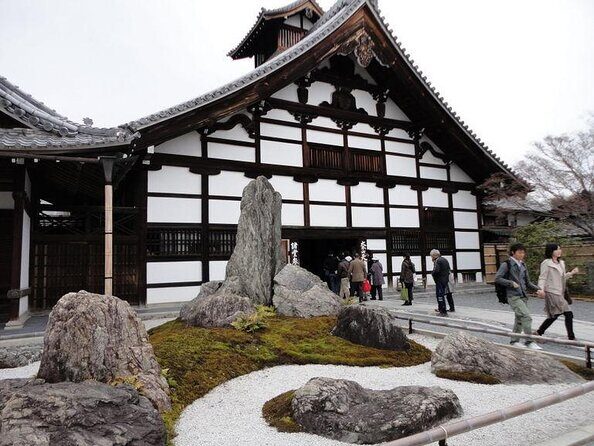
- Tenryu-ji Garden is a major UNESCO garden stop and a standout calmer moment.
- Monkey Park Iwatayama is the highlight with a real hill climb and animal time at the top.
- No recordings policy (including smart glasses) helps maintain a quiet, respectful visit.
Why Arashiyama needs a plan
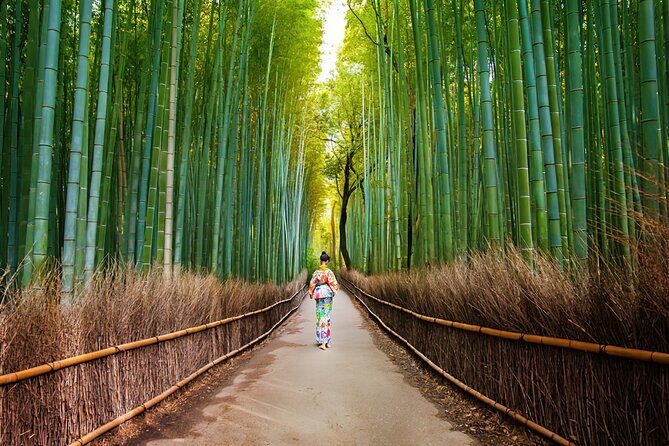
Arashiyama is one of those Kyoto areas where the scenery is real magic, but the logistics can be a mess. There are several “Arashiyama” stations and streets that people confuse, plus the bamboo grove and bridge area can get crowded fast. This tour is built for exactly that: you show up, meet your guide, and the route is handled for you.
The bigger value here is context. A bamboo grove is easy to photograph and still hard to understand. As you walk, your guide explains how Arashiyama became a cultural destination, what different shrines and temple spaces are meant to do, and why the gardens and paths are laid out the way they are. It turns a busy day into a story you can follow.
Also, this is not just a “take you to two photos and leave you.” The day includes multiple stops with different vibes: shrine calm, garden quiet, bamboo atmosphere, temple grounds, river views, and then the energetic monkey-park payoff. If you’re trying to get the most out of one Arashiyama afternoon, this style of route makes sense.
You can also read our reviews of more walking tours in Kyoto


Getting oriented at Saga-Arashiyama Station (and avoiding the wrong station)
You begin the experience at Saga-Arashiyama Station, which is a smart starting point because it keeps you connected to public transit right away. The early minutes also matter: you get a chance to check your bearings, meet your group, and settle into the walking pace before you step into the busiest parts of the district.
One practical note: Arashiyama names are confusing in Kyoto. Different station names with similar words can pull you off course. The tour’s structure helps you not get stuck wandering while everyone else already left. If you’re coming from central Kyoto, it’s worth double-checking that you’re headed to Saga-Arashiyama specifically.
The meeting approach also sets the tone. Your guide is there to keep you moving as a unit, but you’re not rushed in the first stretch. That matters because later you’ll have longer intervals—like the garden time and the monkey park hike—where it’s nice to know you won’t be sprinting to catch up.
Nonomiya Shrine: the small stop that adds meaning
The first “culture” stop is Nonomiya Shrine. It’s described as small, but it carries historical importance. Your guide explains its Shinto background and the traditional role it played in purification rituals for unmarried imperial princesses, before they served as priestesses at Ise.
Why does this matter? Because Arashiyama isn’t just a nature show. It’s a layered place where religion, ritual space, and seasonal aesthetics all overlap. When you understand why a shrine exists and what people historically did there, you’ll look at the grounds differently when you pass through other temple and garden areas later.
Time here is short—about 10 minutes—so don’t expect a long ceremonial experience. Instead, treat it as a quick “key” that helps unlock the rest of the day. It’s the kind of stop that adds depth without eating your schedule.
Okōchi Sansō Garden: calm after the bamboo buzz
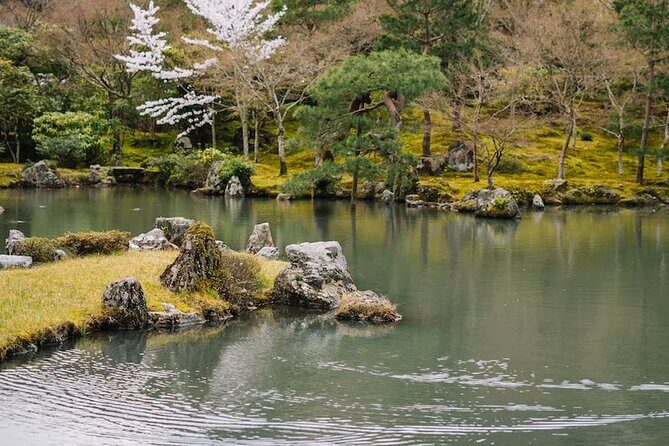
Next comes Okōchi Sansō Garden, a peaceful garden space at the end of the bamboo forest. The tour frames it as one of Kyoto’s most beautiful and quiet garden areas, and it also has a personal story: it was once the private villa of a famous Japanese actor.
This garden is a good contrast point. The bamboo grove is tall and dramatic—great for photos and airy sound. Okōchi Sansō slows everything down. You get time to look, sit if you want, and absorb how Japanese gardens guide your eyes with careful sightlines and seasonal structure.
The main “tradeoff” is pacing versus freedom. You’ll have about 30 minutes at the garden, which is enough for a good walk-through and a few slower moments, but not enough for people who like to linger for a full hour or more. Still, for a 5–6 hour day that also includes temple grounds and a monkey hike, this is a balanced amount of time.
The Bamboo Forest Trail: more than one photo spot
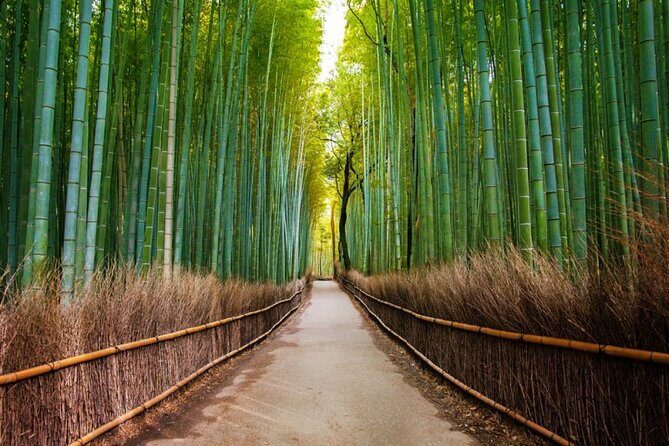
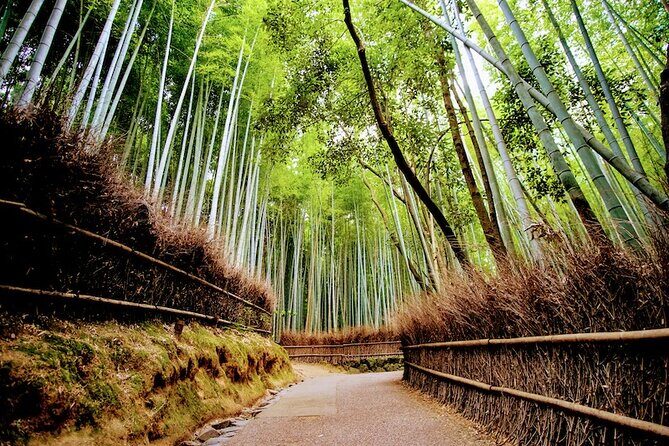
After you’re oriented and warmed up on cultural stops, you hit the Bamboo Forest Trail near the station area. The route is only described as a few minutes from the station, which is nice—this keeps you from burning time just getting to the grove.
Here’s the key: the bamboo grove experience isn’t only about towering stalks. The trail lets you hear how the grove feels as you walk, and your guide helps you identify the right areas to look, not just where the biggest crowds stop. This is where crowd-avoidance pays off. Arashiyama can feel like one long queue, but a guided route can spread you out enough to feel the space again.
You should still plan on photos. The bamboo atmosphere is what you’re here for. But I recommend doing it in two modes: first, get a few wide shots early (when your group is still fresh), then slow down and take “eye-level” moments as you go.
Admission for the bamboo forest trail area is included, so you’re not dealing with ticket counters mid-walk. That’s a small detail, but it keeps your energy up when the day gets active.




Tenryu-ji Garden: a UNESCO stop that’s worth the time
At Tenryu-ji, the tour moves from bamboo and garden edges into a full-on garden destination. Tenryu-ji’s garden is listed as a UNESCO World Heritage Site, and it’s described as among the best gardens in Japan. The allotted time is about 35 minutes, which is a healthy window for a guided walk plus your own looking time.
If you’re wondering why a garden needs a guide, think of this way: the “best” garden moments aren’t just random scenic angles. Japanese garden design often creates intentional viewing routes—paths, bridges, pond edges, and temple-proper sightlines that frame seasons and water. A guide helps you notice what you’d otherwise miss.
The possible drawback is simply that this is a popular site. Even with crowd-aware routing, it can still be active. The good news is that your guide’s timing helps you avoid the worst bottlenecks and get your viewing moments without feeling like you’re trapped in the same spot for too long.
Togetsukyo Bridge and river views: the quick visual payoff
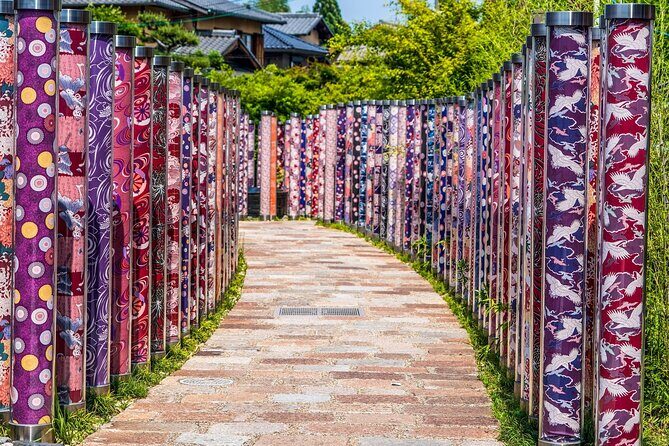
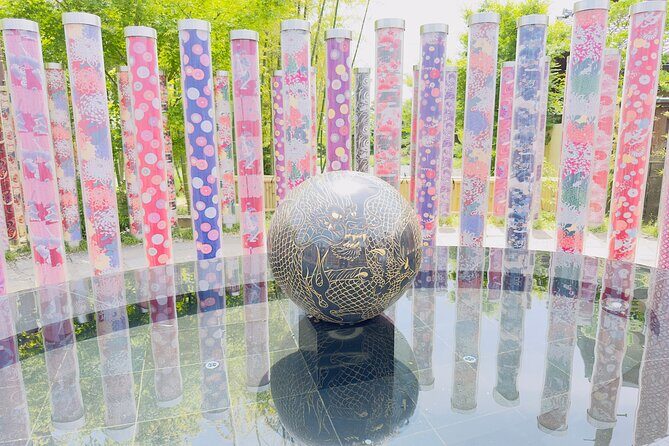
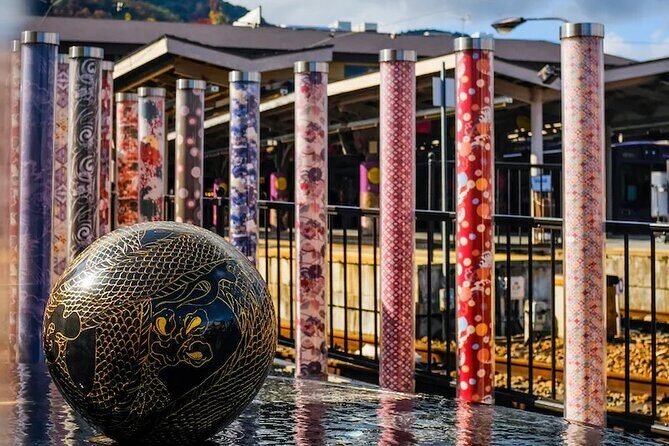
Next you reach Togetsukyo Bridge, Arashiyama’s most popular river-view attraction. The tour schedules about 15 minutes here, after a quick stop associated with the Kimono Forest photo area.
This is the day’s “reset” moment: you step out into open air and see the Hozu River and surrounding mountains from the bridge. It’s a classic Kyoto composition, and it helps break up the slower garden viewing before the monkey hike.
Because the bridge time is short, I’d treat it as an intentional pause rather than a long wander. If you try to do too many things at once—photos, snack stops, shopping—you might feel rushed when you’re supposed to move on. One reason guided routes work: they protect your time for the moments that actually change the shape of your day.
Monkey Park Iwatayama: the hike, the payoff, and how to handle it
Now for the big shift. From the bridge area, you hike up to Monkey Park Iwatayama. The tour is explicit that there’s a 20–25 minute hike, and the path is described as a bit steep. Once you reach the top, the payoff is the chance to interact with Japanese monkeys while overlooking Arashiyama.
This is where you should decide your comfort level in advance. If you can handle uphill walking, the experience is usually memorable for the simple reason that it’s hands-on nature. If you’re not confident on steep steps, you might still enjoy the views, but you’ll want to pace yourself from the start.
Also, remember the tour’s rule set: recording and live streaming aren’t allowed during the whole experience, and recording-capable smart glasses are not permitted. That helps keep the monkey area calm and respectful, and it also means you’ll rely on standard photos or simply watch.
The tour schedules about 1 hour at Monkey Park. That’s enough time to arrive, settle, watch monkey behavior, and take your own photos at a reasonable pace. It’s also long enough to feel like this isn’t just a quick stop on the way to something else—it’s a real highlight.
Lunch break strategy and what not to stress
There’s a quick lunch break in the Arashiyama area—about 35 minutes—and lunch itself is not included. This is a workable time slot for something simple: a quick set meal, noodles, or a bento-style bite that you can eat without turning lunch into a second full activity.
The smartest approach is to set expectations. You won’t have time for a long sit-down restaurant that requires waiting. Plan on eating soon after you find a place, then rejoin your group promptly. Your guide’s schedule matters here because the later portion is tied to the monkey hike and the day’s end timing.
If you’re picky about food, check what you like before you get hungry. Arashiyama has plenty of options, but popular spots can stretch your timeline when you’re trying to keep a group moving.
Price and value for a 5–6 hour Arashiyama day
At $65.57 per person, this tour lands in the “worth it for the hassle you avoid” category. The reason: key admissions are included—Bamboo Forest, Tenryu-ji Garden, Nonomiya Shrine, Okōchi Sansō Garden, and the monkey park admission—plus a bilingual guide and structured route management.
If you tried to assemble this yourself, the hidden costs would show up as time (finding entrances), stress (ticket lines), and decision fatigue (which path is best). For one afternoon in Kyoto, time is the real currency. A guided route that also handles pacing and crowd avoidance can easily be more valuable than it looks on paper.
Small group size also boosts value. Maximum 12 travelers means your guide can keep track of everyone and adjust movement if the area is crowded. That’s a practical difference, not a marketing line.
If you’re traveling as a pair, group discounts may apply. If you’re solo, you should pay attention to the requirement that at least 2 guests are needed for the tour to proceed.
Walking pace, weather, and what to wear
This is a walking tour, and it’s not a gentle stroll from start to finish. You’ll spend significant time walking between sites, and you’ll have that 20–25 minute steep hike up to the monkey park. People love the variety, but you should dress for movement.
I’d wear comfortable shoes with grip, especially because temple and shrine areas often have uneven paths. Also, Arashiyama weather can feel cooler than central Kyoto, and the guide-led route does get you outdoors a lot. Bring a light layer you can adjust as you move between shaded gardens and open bridge views.
One more practical point: the tour rules restrict recording and live streaming. That’s worth remembering so you don’t get surprised on the day. The policy is likely there to keep the experience respectful and smooth for everyone.
Should you book this Kyoto Arashiyama walking tour?
If your goal is a focused Arashiyama experience with bamboo, gardens, temples, and monkeys in one day, this is a strong pick. It’s especially good if you want help handling the district’s layout and you’d rather walk with someone who can explain what you’re seeing instead of guessing.
I’d think twice if steep climbs are a problem for you. The monkey park hike is the only major physical challenge, but it’s central to why this tour is special.
If you’re the type of traveler who likes one good day plan—then freedom afterward—this works well. The tour ends in the Arashiyama area near the monkey park zone, so you’re set up to keep exploring on your own or head back to Kyoto with less stress.
FAQ
How long is the Arashiyama walking tour?
It runs about 5 to 6 hours.
Where do I meet the tour?
You meet at the Saga-Arashiyama Station area.
Where does the tour end?
The tour ends at a convenient central spot in Arashiyama after the monkey park visit.
What’s included in the price?
The tour includes a bilingual guide, entry to the listed sites (bamboo, Nonomiya Shrine, Okōchi Sansō Garden, Tenryu-ji Garden, and Monkey Park Iwatayama), and visits to Togetsukyo Bridge.
Is lunch included?
No. There’s a quick lunch break (about 35 minutes), but lunch isn’t included.
Do I need to pay for admission tickets at each stop?
Admission for the places on the itinerary is included, so you generally shouldn’t need separate tickets for those stops.
How hard is the monkey park hike?
There’s a 20–25 minute hike to the monkey park hilltop, and the path is described as a bit steep.
How big is the group?
The tour has a maximum of 12 travelers.
Is the tour available in languages other than English?
Tours are English only. If you need a different language, you’re asked to request it before booking.
Is recording or live streaming allowed?
No. Recording and live streaming are not allowed during the whole tour, and recording-capable smart glasses are not permitted.
What if I’m traveling alone?
Solo travelers can book, but there’s a 2-guest minimum requirement. If only one guest is booked, the tour may be canceled with options for rescheduling or a full refund.
What’s the cancellation policy?
You can cancel for a full refund up to 24 hours before the experience starts.