REVIEW · EVENING EXPERIENCES
Kyoto: Fushimi Inari Taisha Night Tour with Guide
Book on GetYourGuide →Operated by DeepExperience, Inc. · Bookable on GetYourGuide
Night turns this shrine eerie and beautiful. On this 2-hour guided Fushimi Inari Taisha night tour, you’ll walk through the famous torii gates after dark, when the mood is quieter and the shadows feel dramatic. I especially like the glowing gate tunnel effect and the way your guide explains what you’re seeing so it feels more than just photos.
The main thing to consider is practical: the paths can be uneven, it’s a nighttime walk, and it’s not set up for mobility impairments. If you’re sensitive to cold or you don’t do well on uneven ground, you’ll want to plan accordingly and wear grippy shoes.
Key highlights to know
- Glowing torii gates at night with long shadows and a totally different feel than daytime
- Quiet forest paths where it’s easier to actually hear yourself think
- Guide-led history and meaning that turns landmarks into context
- City views from higher up, with Kyoto’s distant lights twinkling
- No-flash rule that keeps the shrine atmosphere respectful and peaceful
In This Review
- Why Fushimi Inari Taisha at night feels like a different world
- Meet at Daily Yamazaki Fushimi Inari Taisha-mae and start with clarity
- Walking the torii tunnel: glowing gates, long shadows, and real quiet
- Forest paths and cedar air: why the quiet matters
- Higher up views: Kyoto’s night lights from the shrine area
- Price and value: what $49 gets you in real-world terms
- Practical tips that keep the night walk pleasant
- How the guide changes the experience (and why you’ll probably chat)
- Who should book this Kyoto night tour
- Should you book this Fushimi Inari Taisha night tour?
- FAQ
- How long is the Fushimi Inari Taisha night tour?
- Where is the meeting point?
- Where does the tour end?
- Is the tour private or shared?
- What languages are available for the live guide?
- Do I need to bring a flashlight?
- Is flash photography allowed during the tour?
- Is transportation to and from Fushimi Inari included?
- Who might not be able to join?
- Can I cancel for a refund?
Why Fushimi Inari Taisha at night feels like a different world
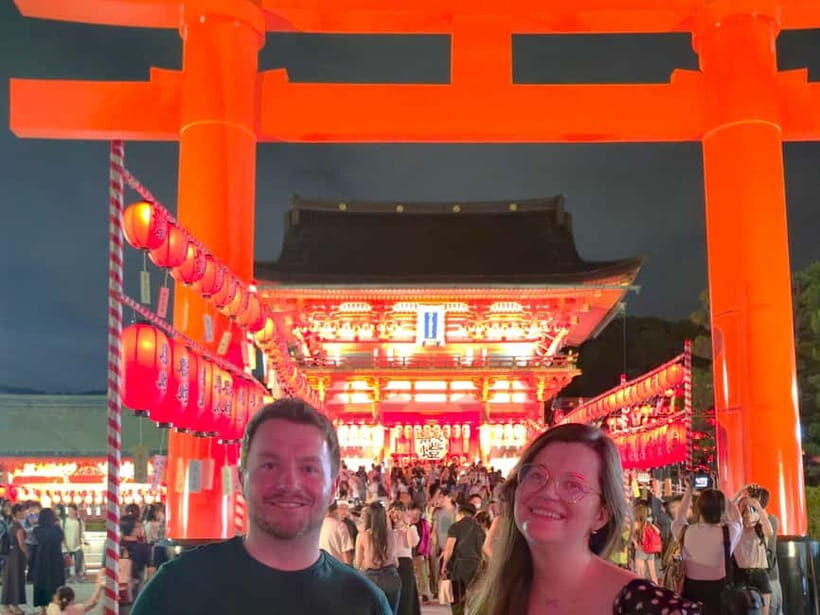
Fushimi Inari Taisha is one of those places you can photograph a thousand times and still not feel you’ve really experienced it. Daytime is bright, busy, and fast. At night, the place slows down.
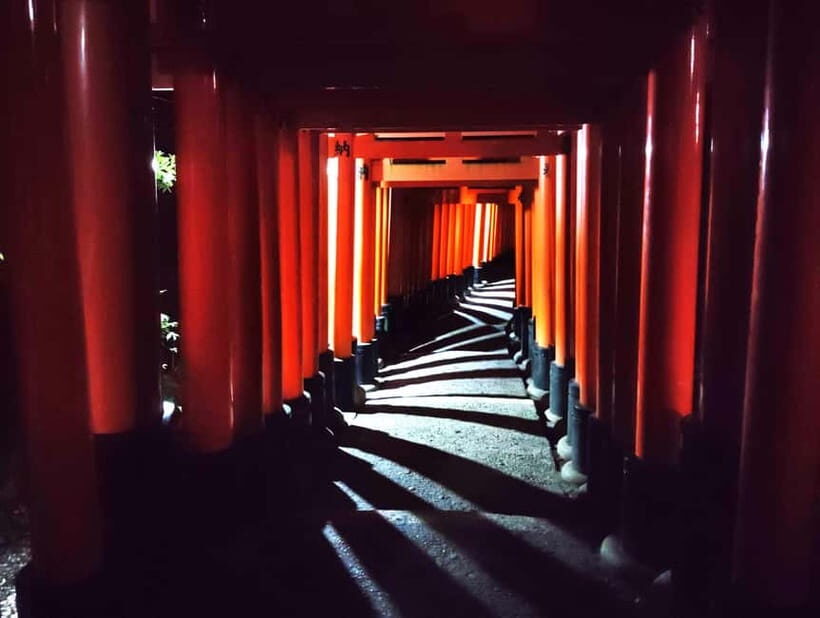
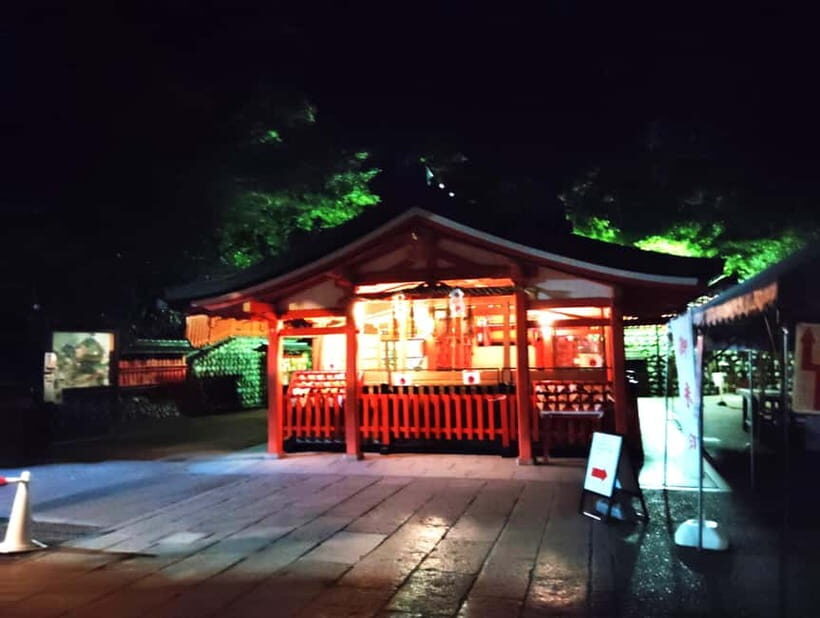
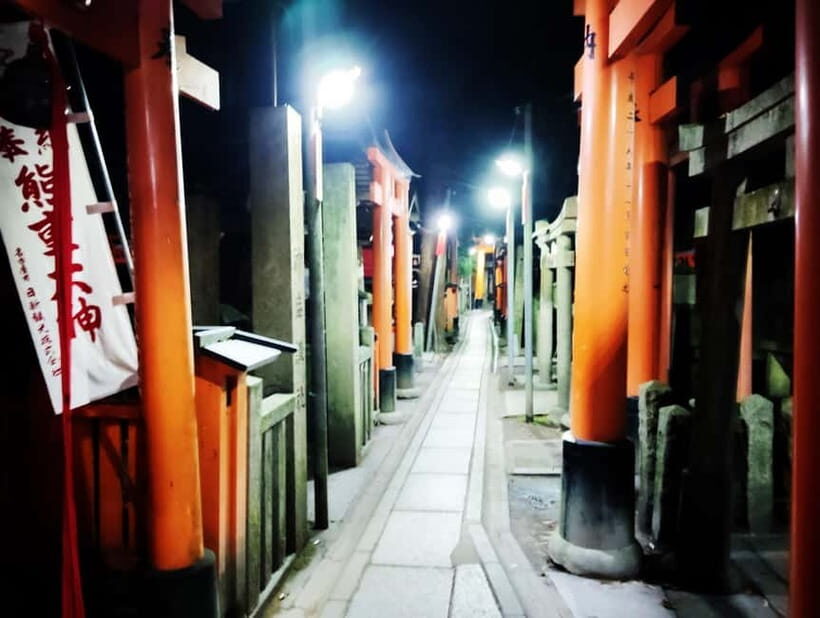
You’ll start the walk at the shrine area and gradually move through the torii gates and forest paths as the darkness thickens. The vermilion gates don’t just look pretty after sunset. They create a rhythm: gate, shadow, gate, shadow. That’s what changes the whole experience. The shrine stops feeling like a landmark and starts feeling like a threshold.
And because it’s guided, you don’t have to guess what you’re looking at. Your guide shares the shrine’s significance and history as you go, which helps you notice details you might otherwise miss. In the reviews I’ve seen, guides like Judah and Juraj are praised for being enthusiastic and informative, and even for chatting in a way that makes the walk feel personal rather than scripted.
Meet at Daily Yamazaki Fushimi Inari Taisha-mae and start with clarity
The tour meets in front of a Daily Yamazaki: デイリーヤマザキ 伏見稲荷大社前店. Your guide waits there holding a yellow sign panel that says DeepExperience. It’s a simple meeting point, which matters at night when it’s easy to waste time figuring things out.
From there, the tone is easy and focused. A good night walk needs two things: the route should make sense, and you should feel steady. Your guide’s job is both. They keep the group moving, but they also slow down when needed and explain what you’re seeing.
This is also where you’ll get a quick reality check for the conditions ahead. You’ll be on foot for about 2 hours, and the paths can be uneven. If you’re the kind of traveler who hates rushing, this is a good length. Long enough to feel like you went somewhere. Short enough that you’re not trapped in a full half-day commitment.
You can also read our reviews of more guided tours in Kyoto


Walking the torii tunnel: glowing gates, long shadows, and real quiet
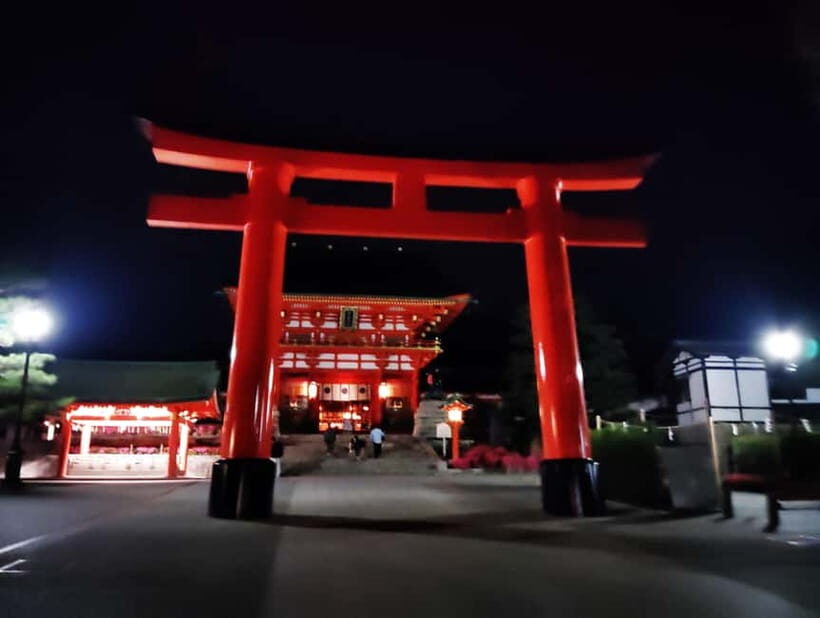
The headline here is simple: you walk the iconic torii gates at night. By day, those gates are everywhere in your field of view. At night, they become something else. Light catches the red structure, and the dark creates depth. You’ll feel like you’re walking through a corridor made of lanterns.
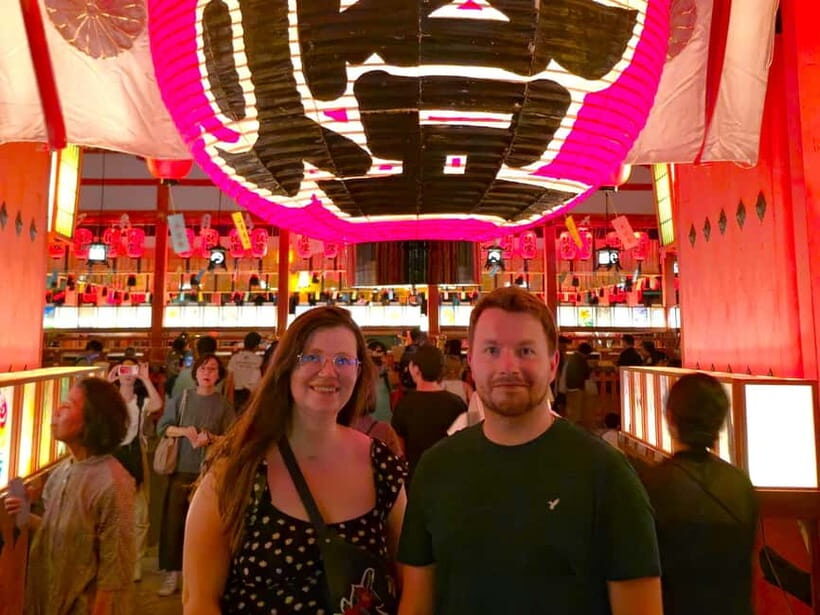
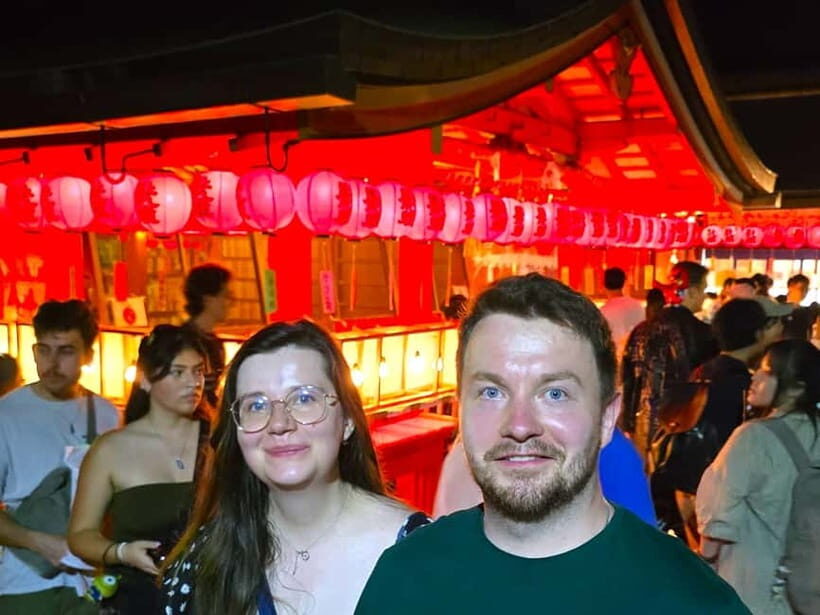
The tour emphasizes time in areas without crowds, which is huge for this shrine. When it’s crowded, you’re forced into photo timing and slow bottlenecks. When it’s quieter, you can keep a natural walking pace. That makes the whole place feel calmer and more “shrine-like,” not just sightseeing-like.
One nice detail: the experience is described as having a hush that settles in as you move along the forest paths. That doesn’t happen by accident. It’s the effect of leaving the busiest hours behind, and it’s exactly why night tours can be worth paying for. You’re buying time in a different atmosphere.
Forest paths and cedar air: why the quiet matters
Between torii clusters, you’ll spend time on forest paths. Even if you’ve seen pictures of Fushimi Inari, the forest section is what often feels most “Kyoto” in spirit. The plants and the walkway create a sense of separation from the city.
At night, the forest air feels different. You’ll notice the stillness more. You also get a better chance to look at the stone fox guardians and other shrine details without being pushed forward by the crowd flow.
This is where a guide pays off. A simple self-guided stroll can still be beautiful, but it’s easy to end up with only impressions: red gates, dark trees, cute foxes, end of story. With a guide, you get the significance behind what you’re seeing. Reviews highlight that guides are enthusiastic and accommodating, and that they’ll answer questions in a way that keeps things interesting. If you enjoy learning while you walk, this is one of the better formats in Kyoto.
If you’re hoping for the most spiritual-feeling version of Fushimi Inari, this is the part that usually does it. Not because it’s magical like a movie. Because the sensory experience is steadier when the crowd noise drops.
Higher up views: Kyoto’s night lights from the shrine area
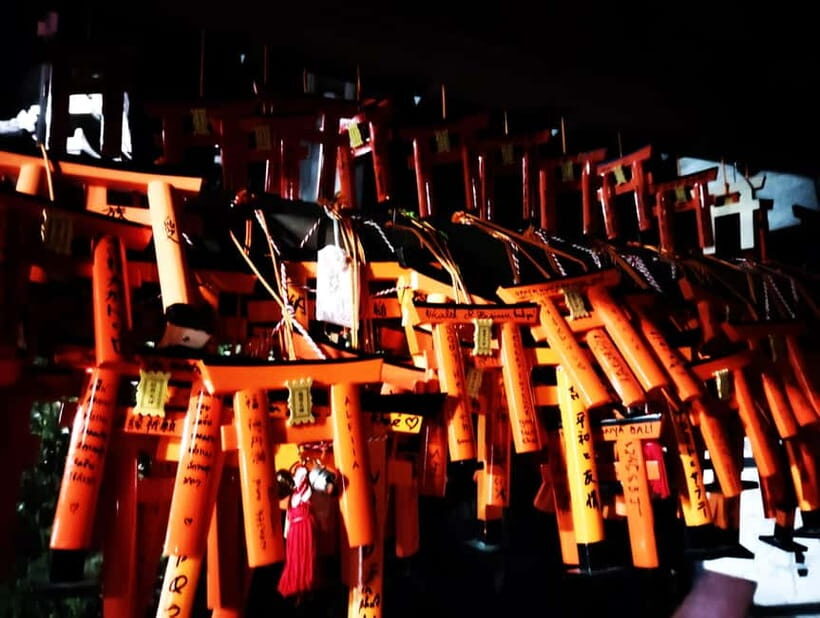
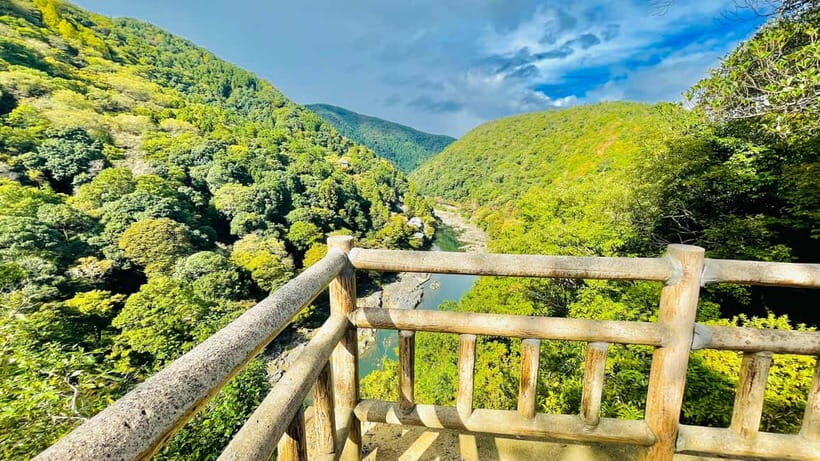
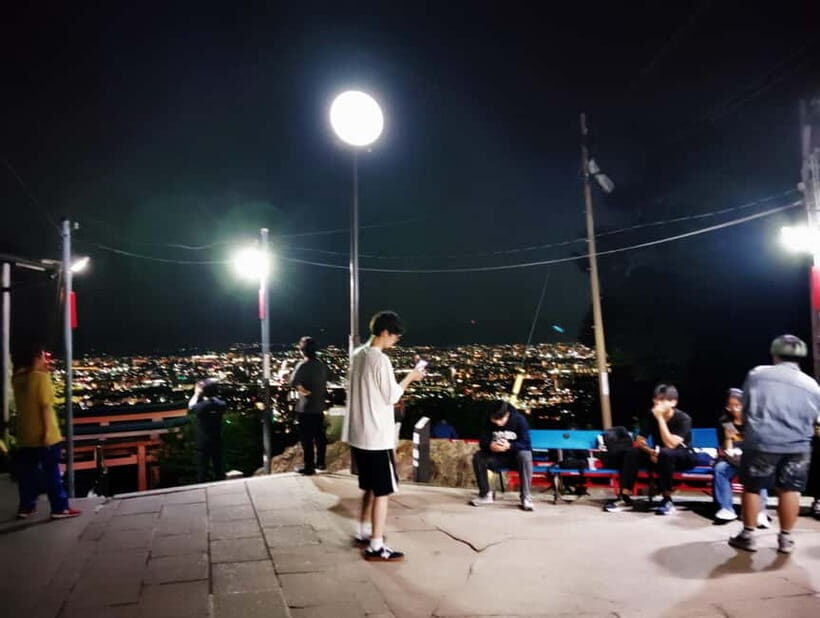
As you move up, you get the chance for views over Kyoto. The experience includes the feeling of Kyoto’s distant lights shimmering like scattered stars beneath your feet.
That matters, because Fushimi Inari isn’t only about torii gates stacked on a hillside. It’s also a place where the city surrounds the shrine complex. From higher points, you get a sense of how the shrine fits into the landscape and the wider night glow of Kyoto.
Practical note: night photos can be tricky. The tour includes a camera, but it also explicitly says flash photography is not allowed. That’s not just a rule. It helps preserve the quiet. It also means you’ll want to rely on ambient light, steady hand positions, or your camera’s night settings.
If you care about photos, this is where you’ll feel the trade-off. You won’t be using harsh flash to force the shot, so you’ll need to be patient and work with the light the shrine gives you.
Price and value: what $49 gets you in real-world terms
At $49 per person for about 2 hours, this is not a “grab a ticket and go” experience. You’re paying for three things that matter more at night than in daylight.
First, you’re paying for a guide. In the reviews, guides were repeatedly described as enthusiastic, informative, and accommodating to the group’s pace and requests. That matters because at night you don’t want to be guessing the route or stopping randomly in the wrong places.
Second, you’re paying for time in quieter areas. The tour includes access to spots without the daytime crowd crush. That’s the difference between rushing through torii gates and actually experiencing the space.
Third, you’re paying for structure. The tour starts at a clear meeting point and ends at 稲荷駅 (Inari Station). If you’ve ever tried to piece together the right nighttime flow around Kyoto’s most popular shrine, you know how easy it is to waste energy. Structure is value.
If you’re the type of traveler who loves history but hates long museum lectures, a guided night walk like this is a sweet spot. You move, you look, and you learn without killing your legs with a long trek.
You can also read our reviews of more evening experiences in Kyoto





Practical tips that keep the night walk pleasant
Here are the details that will help you enjoy the tour without friction.
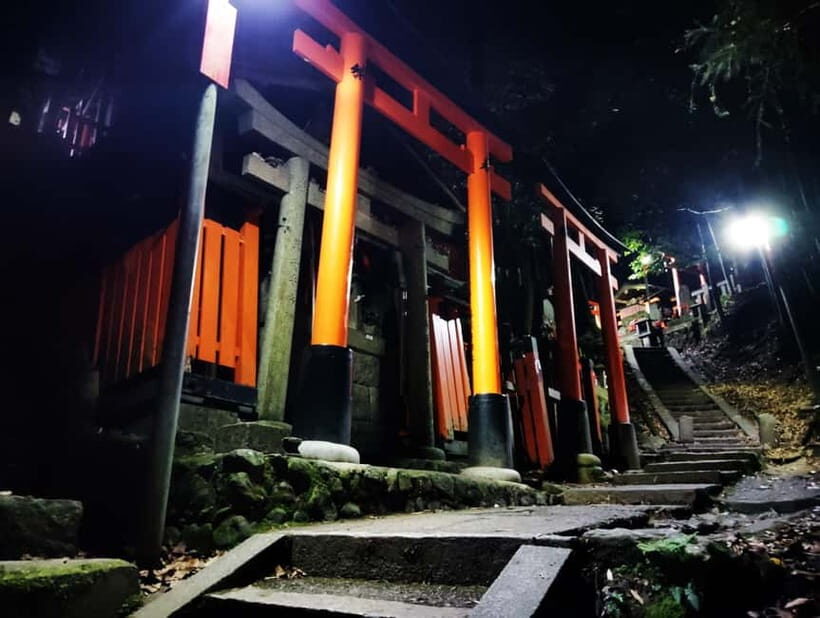
Wear grippy shoes. The route can be uneven, and it’s at night. Comfortable shoes are not optional here.
Dress for warmth. The tour takes place at night, and you should expect it to feel cooler. Wear weather-appropriate clothing so you can focus on the scenery instead of your discomfort.
Bring a camera, but plan for no-flash. Flash photography is not allowed. That means you’ll need to use low-light techniques your phone or camera can handle.
Consider bringing a flashlight. A flashlight is recommended. Use it responsibly so you’re not shining it everywhere. Think: help your own footing, not blind other people.
Also note the tour is not suitable for people with mobility impairments. That’s mainly about the uneven paths and general walking demands. If mobility is a concern, I’d choose a different format that’s designed for accessibility.
Finally, plan your schedule around the fact that transportation to and from the shrine is not included. You’re finishing at Inari Station, so you can connect onward from there.
How the guide changes the experience (and why you’ll probably chat)
A big theme in the reviews is guide style. One guest praised the guide for being enthusiastic, energetic, and accommodating. Another mentioned a guide who was very informative and patient, even when the group couldn’t do too much walking. There was also praise for being willing to answer questions and for friendly conversation across topics.
That’s the best sign for this kind of tour: it’s not only about walking through gates. It’s about how your guide helps you see.
In a place like Fushimi Inari, most of what you’ll remember is sensory: light, shadows, quiet, and the feeling of walking through a repeating pattern of gates. A good guide ties that sensory experience to meaning. You’ll walk past things and understand what they symbolize, why they’re there, and how the shrine fits into Japanese religious life.
And if your group is slower, the guide pacing can make a real difference. Night tours can feel more intense because it’s dark and you’re on unfamiliar paths. Patience from the guide turns “stress” into “experience.”
Who should book this Kyoto night tour
This tour is a strong match if you want any of the following:
- You’re willing to trade daytime crowds for quiet and calm
- You like guided walks where you learn as you go, instead of just following a route
- You care about the shrine’s meaning, not only the scenery
- You want a photographer-friendly lighting moment without flash
It’s also a good pick for travelers who are tired of being swept along by large tour groups. The quiet forest feel is part of the point, and the tour is designed to help you experience that.
Where it may not fit: if walking on uneven ground is a problem, or if you strongly dislike nighttime outings, you might want to choose a different timing or a more accessible activity.
Should you book this Fushimi Inari Taisha night tour?
If you’re visiting Kyoto and Fushimi Inari Taisha is on your must-see list, I’d lean toward booking this night version. The core reason is simple: the shrine changes character after dark. The glowing torii gates and the quieter forest paths create an atmosphere that’s hard to recreate on your own at the wrong time of day.
Book it if you want the best chance at a peaceful experience, you enjoy a guide explaining what matters, and you’re comfortable walking for about 2 hours on uneven ground.
Skip it or think carefully if mobility is an issue, if you’re not prepared for cooler night conditions, or if you need flash photography for your gear. Since flash is not allowed, this tour rewards travelers who are happy working with low light.
In short: this is a practical way to experience Fushimi Inari beyond the daytime photo stamp.
FAQ
How long is the Fushimi Inari Taisha night tour?
It lasts about 2 hours.
Where is the meeting point?
The tour meets in front of デイリーヤマザキ 伏見稲荷大社前店 (Daily Yamazaki Fushimi Inari Taisha-mae Store). The guide will be holding a yellow DeepExperience sign panel.
Where does the tour end?
The tour finishes at 稲荷駅 (Inari Station).
Is the tour private or shared?
It’s listed as a private group.
What languages are available for the live guide?
The live guide is available in English and Japanese.
Do I need to bring a flashlight?
A flashlight is recommended.
Is flash photography allowed during the tour?
No. Flash photography is not allowed.
Is transportation to and from Fushimi Inari included?
No. Transportation is not included.
Who might not be able to join?
The tour is not suitable for people with mobility impairments.
Can I cancel for a refund?
Yes. You can cancel up to 24 hours in advance for a full refund.