REVIEW · FOOD
Kyoto Food Tour of 10 Tastings with Wagyu, Mochi & More Surprises
Book on Viator →Operated by Secret Food Tours · Bookable on Viator
Kyoto in 3.5 hours, one bite at a time. This route links Karasuma Oike and Gion, mixing landmark strolls with 10 tastings like wagyu sushi and yuba tofu, plus sake and tea. I like that it is built for easy momentum: you start at a landmark Starbucks, and the food stops do the heavy lifting so you do not have to hunt for every tiny shop.
Two things I really like: the tour includes Kyoto standbys you might overlook on your own (yuba tofu, Kyoto-style okonomiyaki, and a matcha tasting), and the walking plan is designed so you also see Kyoto streets and river views along the way. One consideration: the menu leans into classic comfort-food bites (including fried items), and some people have said the guide’s explanations can be on the quieter side, so bring curiosity—and maybe a few questions.
In This Review
- Key points before you go (Karasuma Oike to Gion)
- Why this Kyoto route makes sense: Karasuma Oike to Minami Gion
- What you actually get: 10 tastings, wagyu sushi, mochi, sake, and matcha
- Stop 1: Starbucks Karasuma Oike meeting point and the orange-umbrella intro
- Stop 2 at Kyoto Tonkatsu Katsuda Shijo Kawaramachi: katsudon with a sweet twist
- Nishiki Market: a 400m walk of artisans, sake, yuba tofu, and fishcake flavors
- Gion streets plus Pontocho and the Kamo River views
- Gion okonomiyaki stop: a rest break with Kyoto-style savory pancake
- Kyoto tea ceremony energy at the matcha venue
- Drinks and the Kyoto flavor map: sake + draft beer
- Price and value check: why $142 can feel fair or not
- The guide factor: friendly pace, sometimes lighter explanations
- Who should book this Kyoto food tour (and who might skip it)
- Should you book this Kyoto food tour of 10 tastings?
- FAQ
- Where is the meeting point in Kyoto?
- How long is the tour, and is there much walking?
- What are some of the tastings you’ll try?
- What drinks are included?
- Can the tour accommodate dietary requirements?
- Where does the tour end?
- What happens if weather is poor?
Key points before you go (Karasuma Oike to Gion)
- Up to 10 people, small-group pace: Expect a laid-back walk that still keeps moving across a compact stretch of central Kyoto.
- 10 tastings with drinks, not just snacks: You get sake tastings, a glass of draft beer, and a Japanese tea tasting to close.
- Food + sights in one pass: You will walk through market lanes and end in Gion near Yasaka Shrine.
- Meetpoint is simple to spot: Starbucks across from Subway Karasuma Oike Station exit 5, with the guide in an orange umbrella.
- Wear comfy shoes: This is a 3.5-hour walking tour, not a sit-and-eat event.
Why this Kyoto route makes sense: Karasuma Oike to Minami Gion
The smartest part of this tour is its structure: you start in central Kyoto and finish in the Gion area, so your food stops and sightseeing stops are not fighting each other. The tour runs about 3 hours 30 minutes and follows a walk the whole way—so your best accessory is comfortable footwear.
You meet at Starbucks Coffee in the Sanjo Karasuma Building, with the guide positioned in front (across the street from exit 5 of Subway Karasuma Oike Station). The ending point is at the entrance to Minami Gion, close to Gion Shijo Station (Keihan Line), with Yasaka Shrine only a few steps away. That finish matters because it can help you plan the rest of your evening in a walkable, atmospheric area instead of crisscrossing the city.
You can also read our reviews of more food & drink experiences in Kyoto
What you actually get: 10 tastings, wagyu sushi, mochi, sake, and matcha
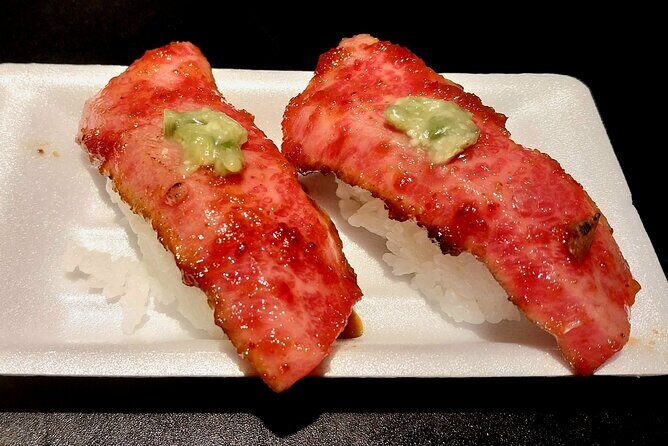
This is not priced like a light snack crawl. At $142 per person, you are paying for multiple tastings, several drinks, and guided pacing across a route that would take you longer to assemble on your own.
Here are the inclusions that shape the experience:
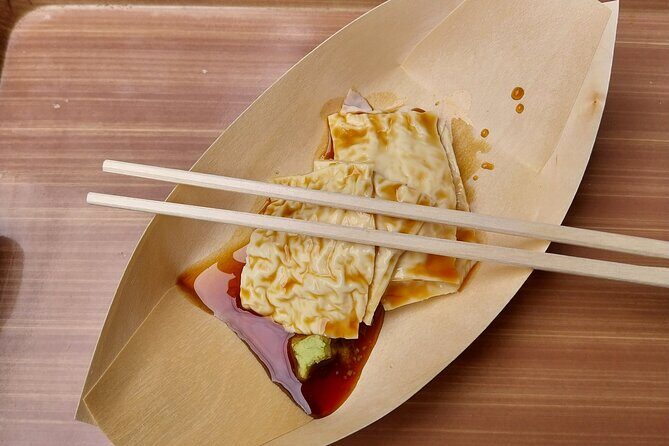
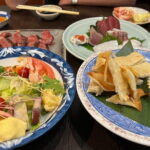
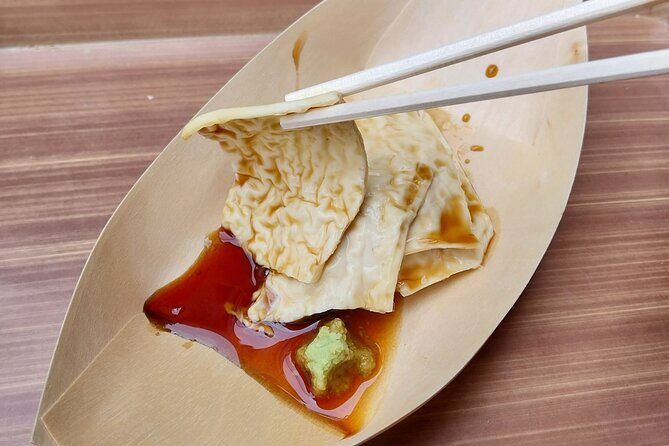
- Yuba tofu presentation and tasting, one of Kyoto’s signature foods
- Wagyu sushi (seared), plus other Kyoto-style meat dishes
- Katsudon with a sweet local twist
- Kyoto-style okonomiyaki
- Fresh fishcakes in different flavors
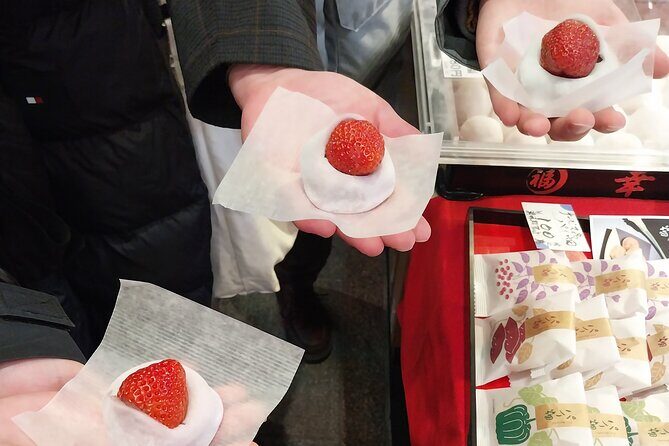
- Daifuku mochi with a seasonal fruit filling
- A glass of draft beer
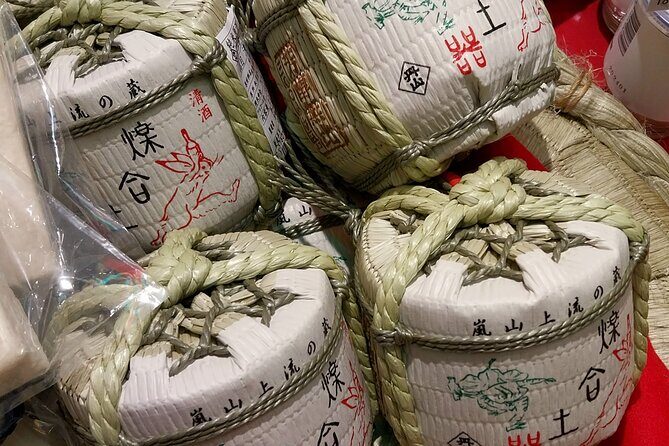
- Sake tasting from Kyoto (various sakes)
- Japanese tea tasting (hot or cold), with matcha as a highlight at the end
If you care about variety, you will like the mix: some bites are savory and hearty, and some are lighter or sweet. If you prefer only super-fresh, non-fried food, keep an eye on the fact that fried items (like katsu) appear early and okonomiyaki shows up mid-tour.
Stop 1: Starbucks Karasuma Oike meeting point and the orange-umbrella intro
Getting started is often the hardest part of a walking tour. Here, the meeting point is built for speed: Starbucks Coffee at the Sanjo Karasuma building. Look for the guide wearing an orange umbrella.
This first stop is about setting context—intro to the tour and where you’re heading next. It is also practical. If you show up a few minutes early, you can get your bearings quickly, then relax about finding the right group once the tour begins. A mobile ticket is included too, which helps reduce the admin stress once you’re in Kyoto.
Stop 2 at Kyoto Tonkatsu Katsuda Shijo Kawaramachi: katsudon with a sweet twist
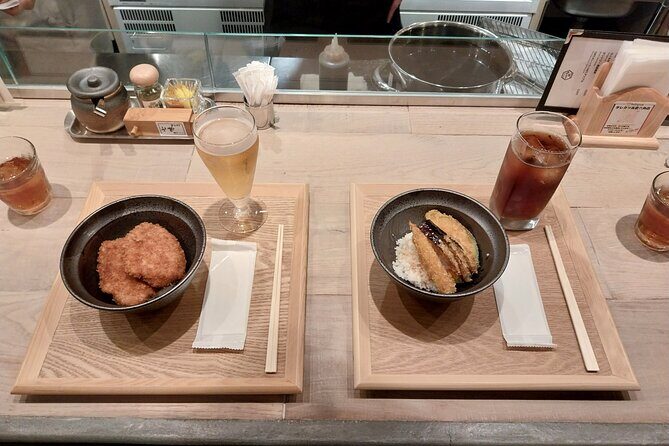
Your first proper food stop is at Kyoto Tonkatsu Katsuda Shijo Kawaramachi, built around a traditional Japanese dish with a local flavor twist. Expect a pork katsu-style bite that sets the tone—warm, filling, and very Kyoto-friendly when the weather turns cool.
From a value perspective, early stops matter because you are hungry after the walk and the transit to the meeting point. From a personal preference perspective, this is also where you learn whether you like the tour’s style: if you are not into fried foods, you will want to manage expectations right away.
Nishiki Market: a 400m walk of artisans, sake, yuba tofu, and fishcake flavors
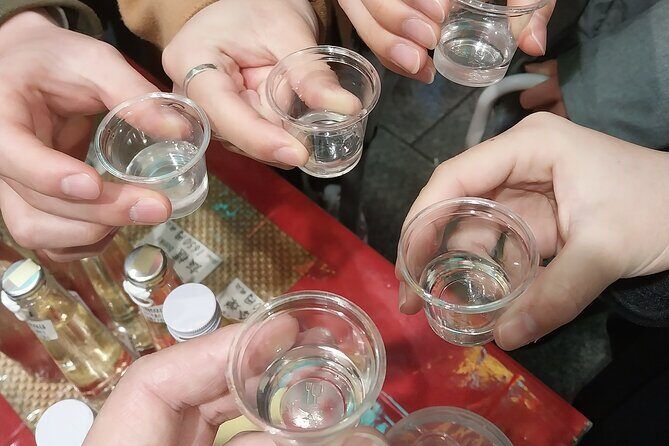
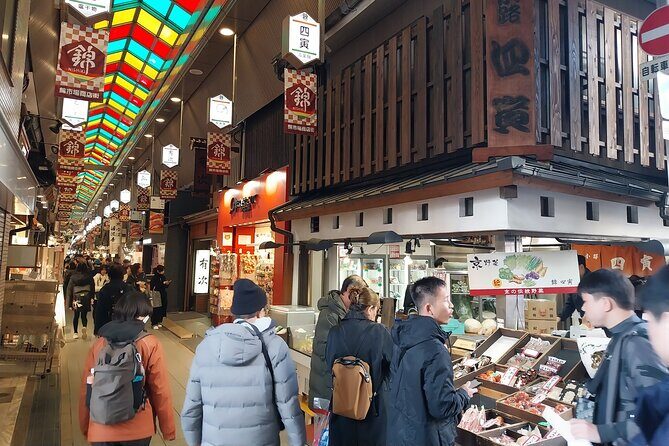
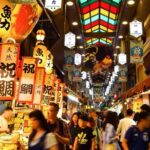
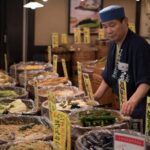
Next comes Nishiki Market, a famous stretch (about 400 meters) where you can learn a lot even in a short time. You are not just eating off a counter—you get a guided sense of local trades and the kind of craftsmanship behind market foods.
This stop is one of the most useful for first-timers because Nishiki teaches you how Kyoto eats. You will taste yuba tofu, sample sake, and try fresh fishcakes that come in different flavors. The mix is smart: yuba offers Kyoto identity, fishcakes show the market’s everyday range, and sake gives you a sense of pairing and mood.
A practical tip: the market can be busy, and tastes can be quick. If you want to remember what you liked, take a slow sip between bites and jot a note mentally—sweet vs savory, fishcake flavor direction, and whether the sake runs dry or fruity.
You can also read our reviews of more tours and experiences in Kyoto

Gion streets plus Pontocho and the Kamo River views
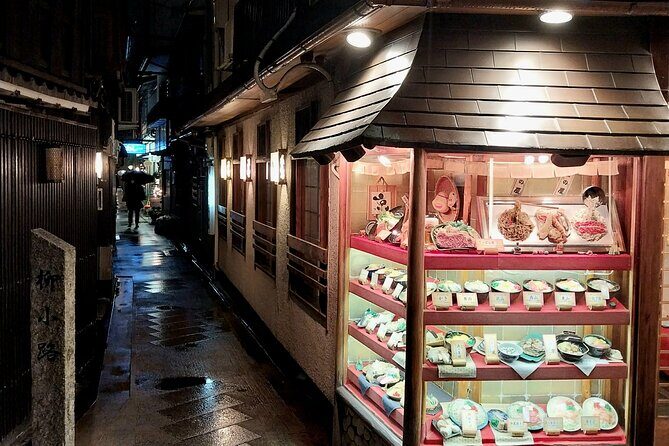
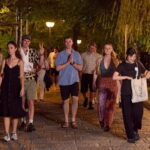
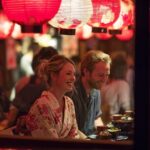
After the market, the tour shifts from food lanes to Kyoto scenery. You walk through the streets toward Gion, with views of Pontocho and the Kamo River along the way.
This is one of those moments where the tour stops being only about eating. You get a change of pace, plus the visual payoff of Kyoto’s old-street charm. The group remains small, so you are not getting separated into a chaotic pack. Still, keep your camera ready—this stretch is naturally photogenic.
If you like architecture and atmosphere but still want food to remain the focus, this is the balance point of the itinerary.
Gion okonomiyaki stop: a rest break with Kyoto-style savory pancake
Later in Gion, you get a well-deserved pause at a quaint restaurant for okonomiyaki made the Kyoto way. This stop is timed like a reset: after walking and sampling in the market, you sit down and focus on one dish.
Okonomiyaki is also a helpful choice for most people. It is filling, shareable, and straightforward to enjoy even if you are still deciding what flavors you like. The Kyoto twist is the reason this stop belongs on a guided tour: the style is not just a generic pancake—it is part of how locals season and build their comfort food.
If you are watching your fried-food intake, this is still likely to be on the heavier side compared with things like tea and mochi. But it is also the moment where the tour feels most like a meal instead of a sequence of bites.
Kyoto tea ceremony energy at the matcha venue
Your final stop leans into Kyoto’s tea culture. The tour frames Kyoto as the Japanese capital of tea ceremony, then brings you to a renowned matcha venue depending on the season.
You get a Japanese tea tasting—either hot or cold—with a selection. This is a smart ending because sweet and savory foods have a way of stacking up. Tea resets your palate and gives you something warm and calming (or refreshing if it is hot outside).
If you love matcha, this is the payoff moment. If you are not a matcha person, the tea tasting still gives you a chance to compare styles—plus it often helps you pick up tea flavors you can later order with confidence.
Drinks and the Kyoto flavor map: sake + draft beer
A big part of the tour’s value is that drinks are included in the tasting sequence. You get:
- a glass of draft beer
- a sake tasting of various Kyoto sakes
This matters because sake and beer help you understand why certain foods work in Kyoto. Fishcake can handle light, clean alcohol notes; yuba tofu can benefit from smoother pairings; okonomiyaki can take on bolder flavor profiles. Even if you do not become a sake expert, you can still leave with a practical sense of what you like.
One thing to plan: you are also walking for about 3.5 hours, so drink responsibly and pace yourself. The tour is structured, but your own pace is still what keeps the experience fun.
Price and value check: why $142 can feel fair or not
At $142, the question is not just how many items you get—it is how much you’d spend and how much effort you’d save.
You are getting:
- 10 tastings
- multiple drinks (beer, sake, tea)
- guidance through busy places like Nishiki Market
- a route that includes Gion and major street views
For many people, that feels fair because it converts Kyoto’s hardest part—figuring out what to try and where to go—into one organized plan.
That said, there are two reasons someone might feel it misses the mark. First, the food mix includes fried and hearty comfort items, which can make it feel heavy if you wanted more fresh or lighter bites. Second, the guide communication style can affect how informative the experience feels. If you crave deep meal history and very detailed descriptions, you may want to ask more questions yourself and not assume every stop comes with a long explanation.
The guide factor: friendly pace, sometimes lighter explanations
The guide drives the whole experience, and the best version of this tour is the one where you feel comfortable asking questions. Some guides are described as very friendly and enthusiastic, and others have been noted as quieter with English that may not be deeply detailed.
So here’s how to use that information. Go in expecting a laid-back walk, not a lecture. If you want specifics—like how yuba is prepared or what a particular sauce tastes like—ask right at the point you have the dish in front of you. That simple move usually turns a quiet tour into a memorable one, because your questions give the guide a clear target.
Also, because the tour is limited to a maximum of 10 people, you have more chance to interact than on larger buses and big groups.
Who should book this Kyoto food tour (and who might skip it)
This tour is a good fit if you:
- want Kyoto food tastings with a clear endpoint in Gion
- like market walking and tasting as your sightseeing method
- enjoy mix-and-match bites, including wagyu sushi, yuba tofu, and mochi
It may be less ideal if you:
- strongly avoid fried foods and want mostly fresh, lighter bites
- need very detailed narration at each stop and dislike quiet or brief explanations
- are traveling with very specific dietary requirements and have not contacted the operator in advance
If diet matters for you, plan ahead. The tour notes that you should contact them for dietary requirements so they can cater as best they can.
Should you book this Kyoto food tour of 10 tastings?
I think this is worth booking if you want an efficient Kyoto evening plan that combines food, drinks, and real neighborhood walking. The route is logical, the inclusions are strong, and the ending in Gion near Yasaka Shrine is a convenient way to keep your day going without extra transit.
Book it sooner rather than later if you can. This one is commonly reserved around 44 days in advance, so popular dates can disappear.
My final advice: wear comfy shoes, come hungry, and treat each stop like a mini tasting challenge. If you love Kyoto’s signature foods (yuba tofu, matcha, and the comfort of okonomiyaki), this tour hits the right notes.
FAQ
Where is the meeting point in Kyoto?
Meet at Starbucks Coffee – Kyoto Sanjo Karasuma Building in central Kyoto. The guide stands in front of the Starbucks across the street from Subway Karasuma Oike Station exit 5 and will be wearing an orange umbrella.
How long is the tour, and is there much walking?
The tour lasts about 3 hours 30 minutes and involves a fair amount of walking, so comfy shoes are recommended.
What are some of the tastings you’ll try?
Included tastings include yuba tofu, wagyu sushi, katsudon with a sweet local twist, Kyoto-style okonomiyaki, fresh fishcakes, and daifuku mochi with seasonal fruit filling. You also get draft beer, Kyoto sake tastings, and a Japanese tea tasting.
What drinks are included?
You’ll receive a glass of draft beer, a tasting of various Kyoto sakes, and a Japanese tea tasting that can be hot or cold.
Can the tour accommodate dietary requirements?
If you have dietary requirements, the tour says you should contact them in advance so they can cater for you as best as possible.
Where does the tour end?
The tour ends at the entrance of Minami Gion. The closest subway station is Gion Shijo Station on the Keihan Line, and Yasaka Shrine is a few steps away.
What happens if weather is poor?
The experience requires good weather. If it is canceled due to poor weather, you’ll be offered a different date or a full refund.