REVIEW · KYOTO
TAIKO, Japanese Drum Experience from Kyoto
Book on Viator →Operated by EE tour · Bookable on Viator
Kyoto plus taiko equals a hands-on cultural shortcut. I love that the class is built for first-timers, with step-by-step teaching and small-group access to the instructor. I also like the way you get more than drumming: hachimaki calligraphy, a live pro-style demonstration, and a final group rhythm. One thing to consider: the schedule is strict. If you’re late, you may not be able to join.
This is the kind of activity that turns Japanese culture from something you read about into something you can physically do. The session also scales to your fitness and skill level, so you’re not stuck doing the same moves no matter your body. You’ll leave with a photo moment in traditional costume, which is a nice bonus after all the arms-and-core work.
In This Review
- Key things to know before you go
- Getting to the studio from Kyoto Station: it’s part train, part cab
- Taiko history and hachimaki calligraphy: the cultural warm-up that’s actually fun
- The pro demonstration: watch for technique, not just volume
- Learning the basic taiko movements: step-by-step, scaled to you
- Playing a simple piece together: the moment you feel the rhythm click
- Value for money: why this price can make sense in Kyoto
- Who should book this taiko class in Kyoto?
- Quick tips so the day goes smoothly
- Should you book the Kyoto taiko experience?
- FAQ
- How long is the taiko experience in Kyoto?
- How much does it cost?
- Is previous experience required?
- What’s included in the tour?
- Do I write anything during the session?
- Where do we meet and how do we get to the studio?
- Are observers allowed, and is there an extra cost?
- What if I arrive late?
- Are children allowed?
- What happens if the weather is bad?
Key things to know before you go
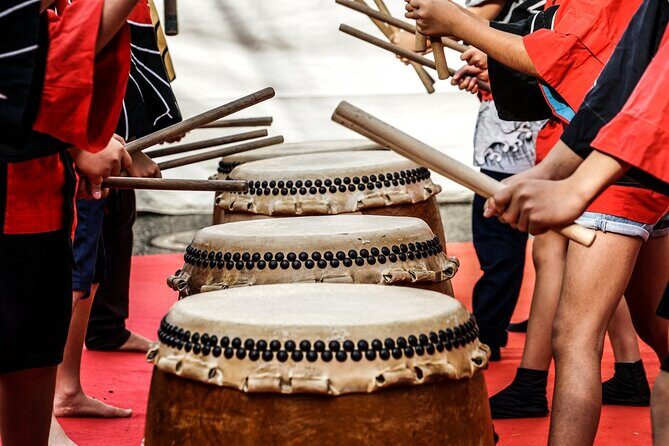
- No experience required: the teaching is adjusted for beginners and different fitness levels
- Small group, real coaching: max 15 travelers means you’re not lost in the crowd
- You do more than watch: history talk, hachimaki writing, then you play a simple piece
- English support is part of the plan: the guide helps throughout (many sessions feature Michiko-san as the English interpreter)
- The pro demonstration happens first: you’ll see taiko performance style before learning movements
- Be on time at Kyoto Station: you’ll need to be there 15 minutes early, and late arrivals can miss the class
Getting to the studio from Kyoto Station: it’s part train, part cab
The meeting point is Kyoto Station, near the central exit area (arrive early so you can find the exact spot fast). From there, you take a short JR train ride (about 12 minutes) to Takatsuki Station, then a quick cab transfer (about 10 minutes) to the studio.
Why I like this setup: it keeps the travel simple and predictable, so you’re not spending your whole morning stuck in transit. And because the activity includes the transport components (including a one-way JR ticket and studio transfers), you’re not juggling tickets right after a long travel day.
Two practical notes. First, Kyoto Station is big. If you get lost, ask staff for the central exit (not the Shinkansen central exit). Second, the operator explicitly can’t wait for latecomers due to train timing—so plan your route in advance and build in buffer time.
You can also read our reviews of more tours and experiences in Kyoto.


Taiko history and hachimaki calligraphy: the cultural warm-up that’s actually fun
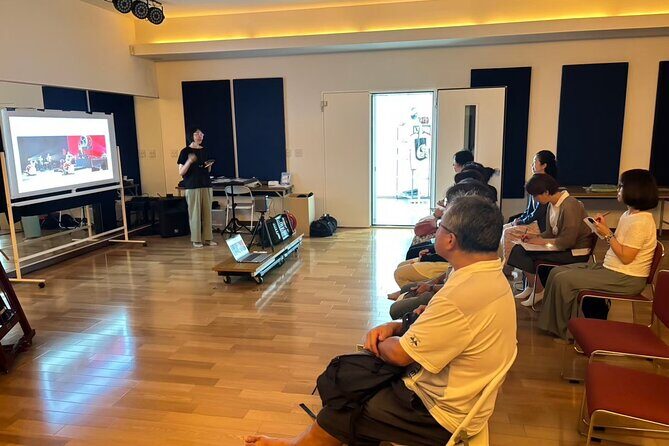
Before you touch a drum, you’ll get a brief explanation of taiko’s history and why drumming matters in Japanese culture. This matters more than you might think. Taiko isn’t just noise for beginners—it has a role in community, performance, and tradition, and you’ll understand what you’re doing while you do it.
Then comes the creative break: you try simple calligraphy on a hachimaki, the traditional headband people tie around the head. The class frames it as writing your wishes on the strip, so it’s not “art class for hours.” You’ll have something personal to wear later in the session and something to remember after.
What makes this part work well is pacing. The history is short, the calligraphy is quick, and then you’re back to action. It stops the experience from feeling like a lecture before the fun.
The pro demonstration: watch for technique, not just volume
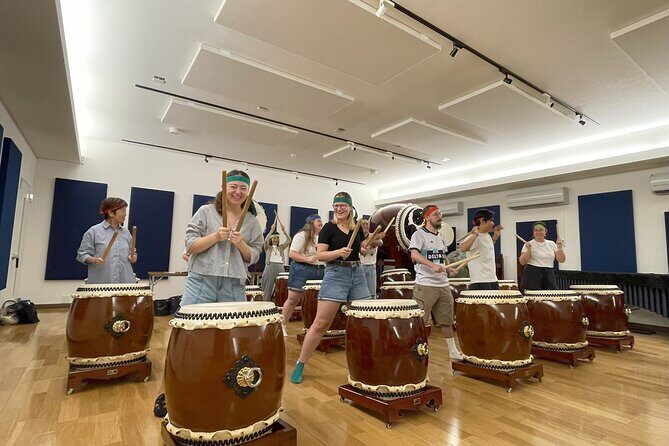
Next, you’ll watch a powerful taiko demonstration by a professional instructor. In many sessions, the pro is Aoi-san, and that live energy is a big reason people rate this experience so highly.
From a value standpoint, the order matters. You see the instrument, the stance, and the force behind each hit before you learn the movements. In other words, you’re not guessing what “correct” looks like.
One consideration: in at least one account, the demonstration used a setup where one live drummer performed alongside a video-recorded component. If you’re expecting a purely live ensemble sound, keep that in mind. Still, the demonstration is described as impressive and a helpful model for how the rhythms land.
Learning the basic taiko movements: step-by-step, scaled to you
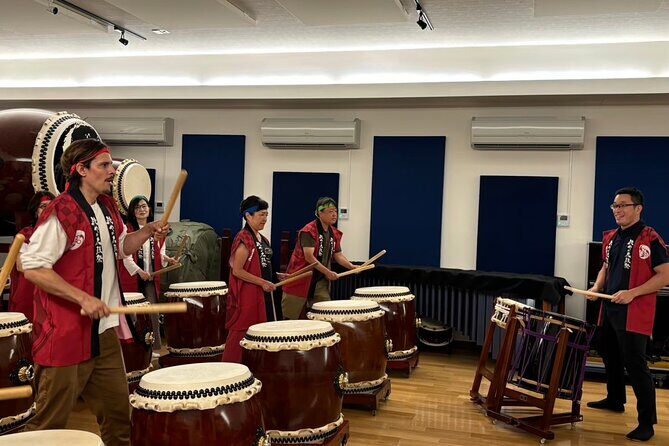
After the demo, the instructor teaches the basics: movements, timing, and technique. The key point is that instruction is tailored to your skill and fitness level. That makes a huge difference with taiko, because it uses big motions—legs, core, shoulders—and it can turn into real cardio if you’re moving with energy.
In reviews, the teaching style gets praised for being patient and encouraging. I also like that the class gives you a clear path: you learn the body mechanics first, then you apply them to rhythm rather than trying to figure it out on the fly.
If you want a practical expectation setting: you won’t be aiming for advanced performance. You’re training the fundamentals so you can join the group piece with confidence.
And yes, people mention that it can feel like a workout. So if you’re the type who thinks Japan will be all walking and no sweat, this is a nice change of pace.
Playing a simple piece together: the moment you feel the rhythm click
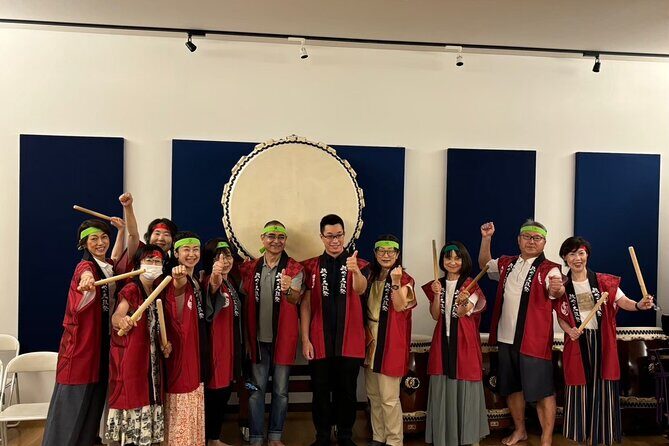
This is where the experience turns from learning to doing. After practicing basic techniques, you’ll play a simple piece of music with your fellow participants. The group element matters because taiko is a team rhythm instrument—timing and unity are part of the point.
In a small group of up to 15, you’re less likely to feel like you’re on display and more likely to actually follow along. That’s also why the coaching time feels more personal than typical “tour + demo” activities.
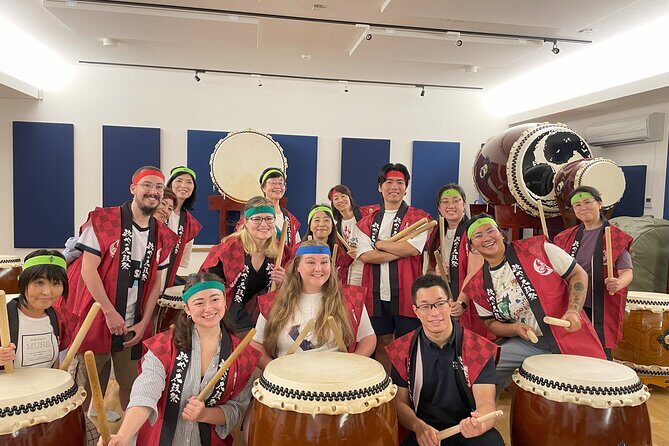
You’ll also get a commemorative photo at the end. The costume detail is part of the fun: you can wear a traditional happi and your hachimaki, then capture the moment as a souvenir of the class you actually took part in.




Value for money: why this price can make sense in Kyoto
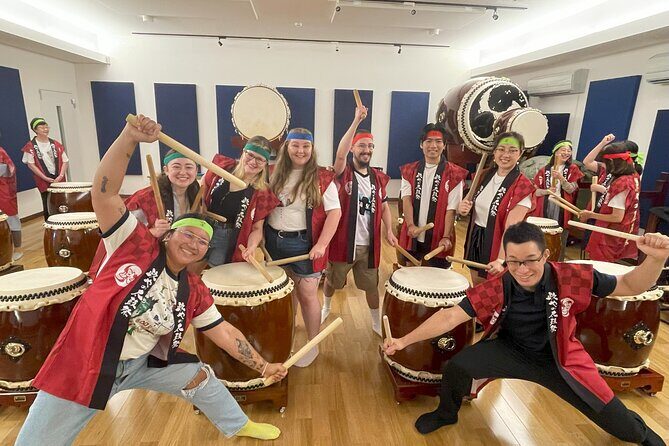
At about $115.62 per person, this sits in the “experience” range, not the “cheap add-on” range. So you should ask: what’s included that actually justifies it?
Here’s the practical checklist:
- a guide in English throughout the session
- a professional taiko instructor
- structured instruction for beginners
- a taiko demonstration
- hachimaki and calligraphy
- studio-based training (not a random street stop)
- transportation support from Kyoto Station (train + transfer)
- a commemorative photo in traditional costume
When you price it this way, it’s not just “watch drummers.” You’re paying for teaching time, an instrument setup, and organization that removes friction. That’s why people repeatedly call out how well-run it feels and how quickly you go from zero to playing something together.
One more value note: the activity includes language support. If you’ve ever been in cultural classes where you understand almost nothing, you know how that turns into disappointment fast. Here, English interpretation is clearly part of the model, with guides such as Michiko-san mentioned in many experiences.
Who should book this taiko class in Kyoto?
This experience is a strong fit if you:
- want something hands-on that goes beyond sightseeing
- are a beginner who still wants real instruction
- like music and rhythm even if you never played an instrument
- want a cultural activity that includes costume and a personal craft (the hachimaki writing)
It’s also a good pick if you’re traveling with someone who learns best by doing. The small-group size keeps the experience from feeling like a production line.
Who should think twice:
- You’re very sensitive to strict timing. The class depends on train schedules, and late arrivals may miss the session.
- You’re bringing a very young child. Participation isn’t allowed for children under 7.
Quick tips so the day goes smoothly
A few things that can make your experience feel effortless:
- Arrive 15 minutes early and plan for Kyoto Station navigation time.
- Wear comfortable clothing and shoes that let you move. This is drumming with body mechanics, not just sitting.
- If you’re going with someone who wants to observe only, understand there’s an extra observer fee of 9000 yen per person, paid in cash at the studio, and you should notify the operator so transport arrangements aren’t missed.
- If you like photos, know you’ll get a commemorative shot in traditional costume at the end—so don’t plan to rush out immediately after the final rhythm.
Should you book the Kyoto taiko experience?
If you want a Kyoto day that’s active, educational, and genuinely different from temples and food markets, I’d book this. The best reasons are simple: you learn the basics with patience, you play together (not just watch), and you get the extra cultural layers of history talk plus hachimaki calligraphy and costume photos.
The only real “don’t book” scenario is if you can’t handle schedule strictness. Because the transfers run on train timing, you need to be on time. If you can do that, you’ll get what most people come for: a beginner-friendly taiko lesson that ends with real sound you made yourself.
FAQ
How long is the taiko experience in Kyoto?
It lasts about 2 hours 30 minutes (approx.). The duration includes the experience and transfer time, and you can expect to return to Kyoto Station about 2.5 to 3 hours after the start time.
How much does it cost?
The price is $115.62 per person.
Is previous experience required?
No experience is required. The lesson is designed for all levels and is tailored to your skill and fitness level.
What’s included in the tour?
You’ll get Japanese taiko drumming instruction, a hachimaki headband for calligraphy, a guide in English, a taiko instructor, transport support (including a car to and from the studio), and a one-way ticket to JR Takatsuki Station. You also receive a commemorative photo in traditional costume.
Do I write anything during the session?
Yes. You can try simple calligraphy on a hachimaki, writing your wishes on the headband.
Where do we meet and how do we get to the studio?
You start at Kyoto Station (Higashishiokoji Kamadonocho, Shimogyo Ward). You take a train (about 12 minutes) to Takatsuki Station, then a short cab ride (about 10 minutes) to the studio.
Are observers allowed, and is there an extra cost?
Observers are allowed only if you notify the operator. If someone does not participate, the cost is 9000 yen per person. Payment is in cash (Japanese yen) at the drum studio on the day of the tour.
What if I arrive late?
You must arrive 15 minutes early. Due to train timing, the operator cannot wait for latecomers, and you may not be able to participate even if you call.
Are children allowed?
Children under 7 years old are not allowed to participate.
What happens if the weather is bad?
This experience requires good weather. If it’s canceled due to poor weather, you’ll be offered a different date or a full refund. Free cancellation is available up to 24 hours in advance.