REVIEW · MARKETS
Kyoto Flea Market Cultural Exchange with English Learners
Book on Viator →Operated by EB Tour · Bookable on Viator
Kyoto starts to make sense when you trade sightseeing for conversations.
This 90-minute to 2-hour Kyoto flea market cultural exchange is led by a local Kyoto resident who’s also learning English, so you’re not just looking at stalls—you’re talking about daily life and Japanese customs. You’ll also hunt antiques and small treasures around To-ji Temple’s Kobo-ichi and Kotto-ichi markets, with practical help for negotiating prices.
What I especially like is that the guide turns the markets into a two-way exchange: you get real conversation practice, and you get tips you can use while shopping. A second big win is the low cost for a private walking experience that combines market time with a calm walk through the temple grounds (in the listed free area).
One thing to consider: the tour runs on foot and uses public transportation, but public transport isn’t included, and the experience depends on good weather.
In This Review
- Key highlights you’ll care about
- Why the To-ji Temple markets feel different from a typical Kyoto tour
- Entering the Kobo-ichi and Kotto-ichi flea market world
- A practical note on what you should bring
- Chat practice with an English-learner guide: what you’ll actually talk about
- To-ji Temple grounds in the free area: calm time during the hunt
- What you should watch for during this part
- Price and value: how $13.01 makes sense for a private experience
- Logistics that affect your day: meeting point, walking, and timing
- Weather matters more than you think
- Who should book this Kyoto flea market cultural exchange
- Should you book it? My take on the decision
- FAQ
- How long is the Kyoto flea market cultural exchange?
- Where does the tour start and end?
- What time does the tour begin?
- Is this tour private or group-based?
- What markets are visited?
- Who guides the tour?
- Is public transportation included in the price?
- Is there an admission fee for the temple area?
- What happens if it’s canceled due to weather?
- Can I get a refund if I cancel for other reasons?
- Is confirmation provided after booking?
Key highlights you’ll care about
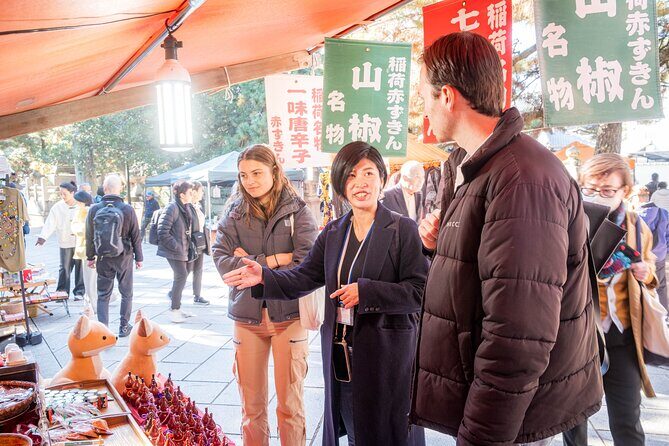
- English-learner local guide helps you chat about customs while you walk the market
- To-ji Temple flea markets focus on antiques, vintage items, and collectibles
- Haggling tips make price negotiations feel less awkward
- Private group experience means the conversation can fit your pace
- Short but focused 1.5–2 hours at one main area (great for tight schedules)
- Mobile ticket and group discounts can keep things simple and affordable
Why the To-ji Temple markets feel different from a typical Kyoto tour
Kyoto can be packed with temples, photos, and buses. This experience swaps that rhythm for something more human: a walk through flea-market-style shopping in a temple setting, guided by someone who genuinely wants to practice English.
You get two kinds of value at the same time. First, you’re shopping in a place where everyday people show up with everyday items—ceramics, vintage clothing, old toys, and collectible odds and ends. That means you’re less likely to feel like you’re staring at souvenirs made for tourists.
Second, you’re learning while you move. The guide is there to talk through Japanese customs and how people handle normal things like small talk, manners, and shopping etiquette. In practical terms, that kind of guidance helps you move from guesswork to confidence.
And because it’s a private group experience, the guide can slow down if you’re asking questions—or speed up if you’re mainly there to find bargains.
You can also read our reviews of more shopping tours in Kyoto

Entering the Kobo-ichi and Kotto-ichi flea market world
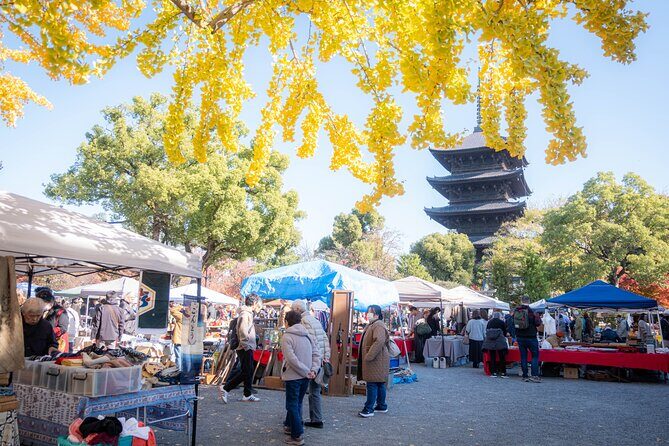
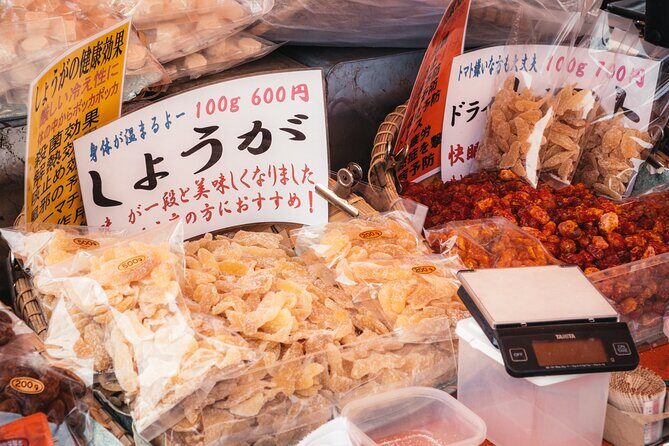
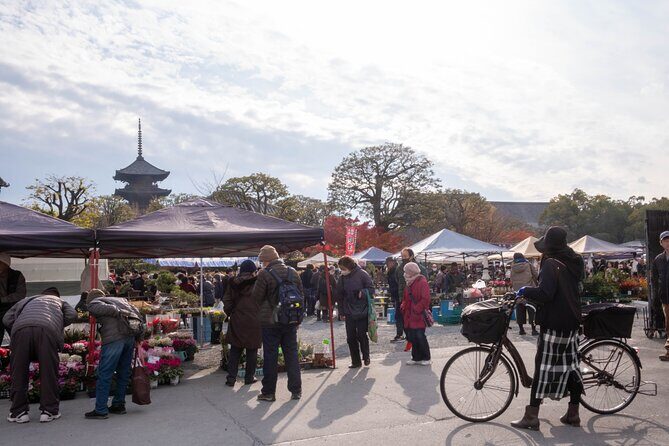
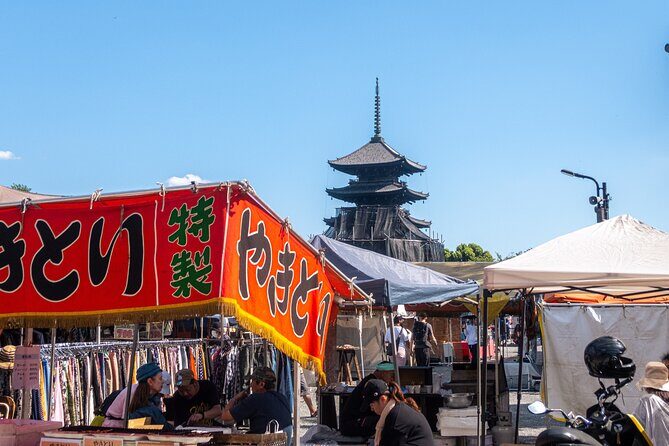
The centerpiece is the flea-market circuit at To-ji Temple, known for Kobo-ichi and Kotto-ichi. This is the part where your eyes do the work: stalls are set up for browsing, and you can spend time deciding what you like rather than racing to the next photo stop.
Here’s what to expect from the shopping vibe:
- You’ll see a mix of antique-leaning items and everyday secondhand finds.
- You’ll likely find things like antique ceramics, vintage clothing, old toys, and rare collectibles.
- The guide can help you interpret what you’re looking at and how to ask simple questions.
The real magic is the shopping practice. The guide offers haggling tips—not just theory, but how to do it politely and in a way that fits how people sell at market stalls. If you’ve ever felt unsure about pricing in Japan, this is the type of situation where small guidance can make a big difference.
One more detail that matters: your guide doesn’t just point. They engage. That’s why the flea market feels like a cultural exchange instead of a shopping errand.
A practical note on what you should bring
You’ll get the most out of this if you come ready to browse. Wear shoes you don’t mind walking in, and have a plan for payment. The tour price is low, but flea markets often reward patience—so you’ll want cash or a payment method you’re comfortable using while chatting.
Chat practice with an English-learner guide: what you’ll actually talk about
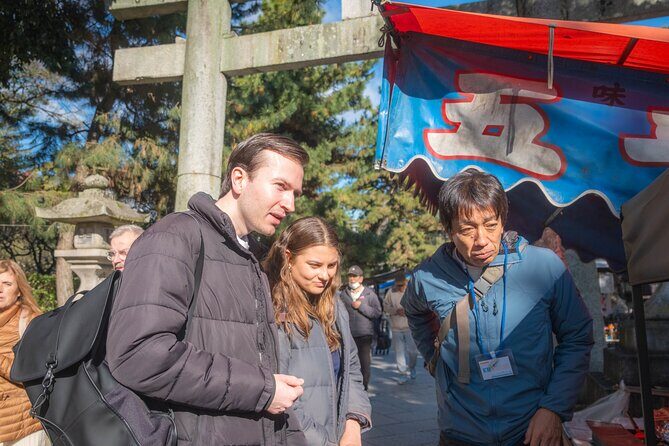
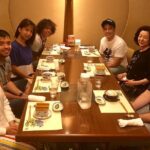
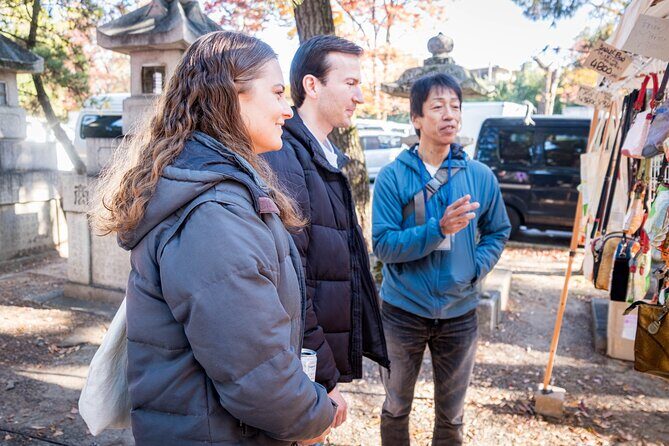
This is the tour’s personality. You’re walking with a local Kyoto resident who is also learning English, which makes the conversation feel friendly and reachable rather than like you’re being evaluated.
From the way the experience is described, the guide’s role includes:
- Practicing English with you through conversation
- Explaining Japanese customs as questions come up
- Sharing recommendations for things to look for and ways to understand what you’re seeing
What I find smart here is that the guide’s “lesson” style stays grounded. Instead of talking about Japan only in general terms, the conversation is tied to what’s in front of you—stalls, objects, buying, and everyday interactions.
The reviews point to a common payoff: guides who were fun to talk with and who helped with negotiation at places where it’s easy to feel stuck. Even if you aren’t planning to buy much, you’ll still learn how people communicate around shopping and culture.
If you’re a student of English (or just enjoy talking), this is exactly the kind of format that makes language practice feel natural.
To-ji Temple grounds in the free area: calm time during the hunt
After or alongside the market browsing, you get time to walk the beautiful temple grounds, in the listed free area. This is important because flea markets can be visually intense. A short stretch of open space helps you reset your eyes before you head back into browsing mode.
To-ji is also a landmark in Kyoto, so even if you’re not going deep into temple history during the walk, you still get a strong sense of place. The guide shares insights about the atmosphere and local context, which helps you understand why this location works for markets in the first place.
You can also read our reviews of more tours and experiences in Kyoto



What you should watch for during this part
You’ll get the most out of the temple time if you treat it like a pause, not a separate attraction you have to “complete.” Let the guide’s comments guide your questions. If something catches your eye, ask about it. That’s how the conversation exchange turns into real learning.
Price and value: how $13.01 makes sense for a private experience
At $13.01 per person, this tour lands in a rare category: low enough that you’re not stressed about squeezing value, but structured enough that you’re not left to figure it out alone.
A big part of the value is the private setup. Private doesn’t automatically mean a fancy production—it means you’re not stuck in a large group where conversation dies. With this format, your English practice has room, and the guide can adjust to your interests.
Also note what’s included: gratuities are listed as included. That matters in Japan, because it can remove one extra decision. You can focus on the experience instead of budgeting for tipping on top.
What’s not included is also clear: public transportation isn’t included. That affects value slightly, depending on where you start from. But since the tour area is clustered around To-ji Temple, you can keep transit costs reasonable by planning a smooth connection.
Finally, there’s a mobile ticket and group discounts mentioned. Even if you’re traveling solo, these details can make the booking simpler and help friends traveling with you get a better per-person deal.
Logistics that affect your day: meeting point, walking, and timing
The tour starts at 1:00 pm and runs about 1 hour 30 minutes to 2 hours. That length is ideal if you want something real without stealing a whole afternoon.
You’ll begin at:
- 544 Yamabushiyamachō, Nakagyo Ward, Kyoto, 604-8156, Japan
It ends at:
- To-ji Temple, 1 Kujōchō, Minami Ward, Kyoto, 601-8473, Japan
Because it’s a walking experience, your schedule matters. Build in a little buffer if you have another plan afterward, and give yourself time to get to the meeting point using public transit.
Weather matters more than you think
This experience requires good weather. That’s not a minor note—flea markets are outdoor browsing. If rain hits, your experience could be impacted. The good side: if it’s canceled due to poor weather, you’ll be offered a different date or a full refund.
Who should book this Kyoto flea market cultural exchange
This tour is a strong match if any of the following describe you:
- You want English conversation practice with local people, not just tourist chatter
- You like markets and antiques and want help understanding what you’re seeing
- You want a smaller, more personal activity instead of a big-group sightseeing grind
- You’re curious about Japanese customs in real situations like shopping and polite negotiation
If you’re mainly chasing must-see temple interiors and don’t care about shopping conversations, you might find the focus narrow. But if you like objects, browsing, and talking, you’ll probably feel like you’re seeing Kyoto the way residents experience it.
Should you book it? My take on the decision
Book it if you want Kyoto to feel less scripted. For the price, you’re getting a private walking experience, market browsing in a real temple area, and ongoing conversation support from an English-learner local guide. The negotiation guidance is also a real confidence booster if you like bargaining but want to do it respectfully.
Skip it (or reconsider) if your priority is specific paid temple halls you don’t want to miss, or if you’re traveling during uncertain weather and hate outdoor plans. Also remember public transportation isn’t included, so if you’re far from the meeting area, transit costs can add up.
If you’re flexible, this is one of those tours where the money goes into interaction, not just entry fees.
FAQ
How long is the Kyoto flea market cultural exchange?
The tour lasts about 1 hour 30 minutes to 2 hours.
Where does the tour start and end?
It starts at 544 Yamabushiyamachō, Nakagyo Ward, Kyoto, 604-8156, and ends at To-ji Temple, 1 Kujōchō, Minami Ward, Kyoto, 601-8473.
What time does the tour begin?
The start time is listed as 1:00 pm.
Is this tour private or group-based?
It is private, and only your group participates.
What markets are visited?
The tour includes the Kobo-ichi and Kotto-ichi flea markets at To-ji Temple.
Who guides the tour?
A local Kyoto resident who is also an English learner guides the experience.
Is public transportation included in the price?
No. Public transportation is not included.
Is there an admission fee for the temple area?
The itinerary notes admission ticket free, and the tour includes walking the temple grounds in the listed free area.
What happens if it’s canceled due to weather?
If it’s canceled due to poor weather, you’ll be offered a different date or a full refund.
Can I get a refund if I cancel for other reasons?
This experience is non-refundable and cannot be changed for any reason.
Is confirmation provided after booking?
Yes. Confirmation is received at the time of booking.
If you want, tell me your travel dates and what you like (antique ceramics, vintage clothing, toys, collectibles, or just the conversation), and I’ll suggest how to plan the rest of your afternoon around this.