REVIEW · WALKING TOURS
Kyoto Early Riser Golden One-Day Walking Tour
Book on Viator →Operated by KAMNAVI Tours · Bookable on Viator
Kyoto can feel like a to-do list. This private early-riser route turns it into a smooth day, hitting Fushimi Inari-taisha, Arashiyama, Ryoan-ji, Kinkakuji, and Nishiki Market with a guide who keeps the pace human.
I love the personal, flexible feel of a private tour. You’re not stuck in a crowd shuffle, and guides in past groups (like Sumiko Yoshikawa and Tomoko) are praised for being organized and tailoring the day to your interests, with time for questions and even breaks.
One thing to consider: this is a walking-heavy day. If you have knee or mobility issues, plan for uneven temple paths, and know the tour’s also described as weather-dependent, so rain can change the plan.
In This Review
- Key highlights
- Price and Extra Fees: What You Pay vs What You Budget
- Starting at Kyoto Station: Getting Set Up for an Easy Morning
- Stop 1: Fushimi Inari-taisha Torii Gates Without the Chaos
- Stop 2: Arashiyama Bamboo Forest Light Through the Grove
- Stop 3: Ryoan-ji Temple and the Rock Garden’s Zen Puzzle
- Stop 4: Kinkakuji Golden Pavilion Photos With a Smart Pace
- Stop 5: Nishiki Market on Foot for Snacks and Real Shopping
- Transportation and Timing: Using Public Transit Like a Pro
- What the Best Guides Do: From Sumiko to Keiko and Beyond
- Who Should Book This Kyoto Golden One-Day Walking Tour
- Should You Book This Kyoto Early Riser Golden One-Day Tour?
- FAQ
- What’s included in the Kyoto Early Riser Golden One-Day Walking Tour price?
- What extra fees should I plan for?
- How long is the tour and how is the time split?
- Is this tour private or do I join a group?
- Where do we meet, and where do we end?
- What happens if the weather is bad?
- Can I cancel for a refund?
Key highlights
- Private guide with real timing sense: you move between major sights without losing half the day to navigation.
- Golden Pavilion + Rock Garden combo: you get both the wow-factor and the quiet Zen contrast in one route.
- Fushimi Inari early gates: you get a best-shot start at one of Kyoto’s most famous walks.
- Arashiyama Bamboo Forest with breathing room: enough time to watch the light shift through the grove.
- Nishiki Market on foot with tasting time: you can snack and shop without guessing what’s worth it.
- Guide-level support for practical needs: multiple reviews call out rest stops, help in shops, and route adjustments when needed.
Price and Extra Fees: What You Pay vs What You Budget
The tour price is $119.30 per person, for an 8-hour private Kyoto walking tour with a professional guide. On value alone, the big win is that you’re buying problem-solving: route planning, site context, and keeping the day paced so you can actually enjoy each stop rather than just race through them.
But you should budget for extras. The tour details you provided list:
- Public transportation fare: ¥1,670 per person (not included)
- Ryoan-ji entrance fee: ¥1,100 per person (not included)
- Kinkakuji admission: not included (the specific fee isn’t listed in the info you gave)
- Meals: not included
That means your real total depends on those entries and what you eat. Still, this itinerary is packed with top-tier Kyoto icons, so the guided structure often makes the day feel “worth it” even with those add-ons.
Also note the tour includes a mobile ticket and mentions group discounts. For a private experience, that’s a nice bonus if you’re traveling with family or friends and want to keep costs predictable.
You can also read our reviews of more walking tours in Kyoto


Starting at Kyoto Station: Getting Set Up for an Easy Morning
The meeting point is Kyoto Station Building (901 Higashishiokōjichō, Shimogyo Ward). The tour ends back at the meeting point, which matters more than you’d think in Kyoto. Having your “home base” handled reduces stress on a day when you’re bouncing between distant neighborhoods.
The name includes Early Riser, and at least one review notes a start around 8:00 a.m. at the station. If your schedule allows an early start, that helps with two things: lighting for photos and the chance to step through some of Kyoto’s busiest areas before the crowds fully lock in.
Your guide’s role here is practical. They’re the one coordinating how you get from stop to stop on the ground (and on trains/buses as needed), so you’re spending your energy on the sights, not on figuring out transfers.
Stop 1: Fushimi Inari-taisha Torii Gates Without the Chaos
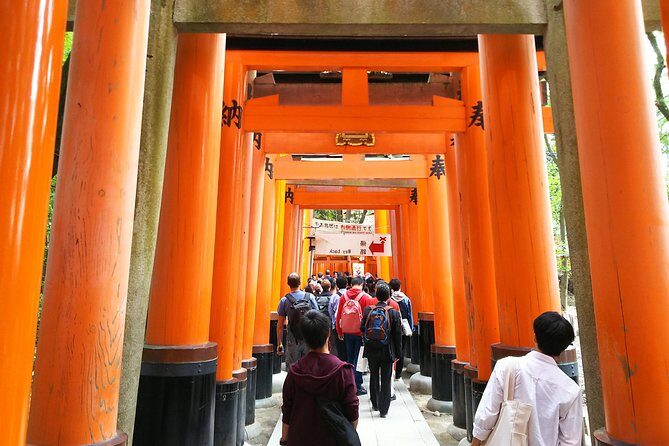
The day starts at Fushimi Inari-taisha Shrine, famous for its tunnel of thousands of vermilion torii gates. This isn’t just scenery. The sheer number of gates is part of the experience: you walk in layers, and the shrine feels like it’s unfolding one turn at a time.
Time on this stop is about 1 hour, and that’s realistic. If you try to do Inari too fast, you miss the moment-to-moment flow: views down the gate corridors, the rhythm of the steps, and the feeling of being surrounded by shrine architecture rather than looking at it from one fixed spot.
A guide also helps you “read” the place. Several reviews praise guides for history-and-culture context and for answering questions on the spot. If you’re wondering what you’re looking at (and why certain details matter), this is where a private guide pays off quickly.
Potential drawback: Inari can be busy, even with an early start. If you’re the type who gets stressed by crowds, talk with your guide about where to linger and where to move on.
Stop 2: Arashiyama Bamboo Forest Light Through the Grove
Next up is Arashiyama, with time at the bamboo forest area (about 1 hour 10 minutes). The famous part is the grove itself: bamboo stalks, shaded paths, and the soft shifting look of sunlight as it filters through.
What you gain from doing this with a guide is less about “finding” the bamboo (it’s popular) and more about pacing. You’ll want time to watch how the light changes rather than just snap one quick set of photos and sprint off. The extra minutes here can make a noticeable difference, especially in morning light.
A few reviews mention guides being mindful about breaks, even in challenging conditions like heat or rain. That matters in Arashiyama because it’s easy to get stuck walking longer than you planned if you’re trying to keep up with a crowd.
Small heads-up: expect some walking on paths that aren’t always flat. If you want smooth strolling with minimal stairs, this portion may feel more active than you expect.
Stop 3: Ryoan-ji Temple and the Rock Garden’s Zen Puzzle
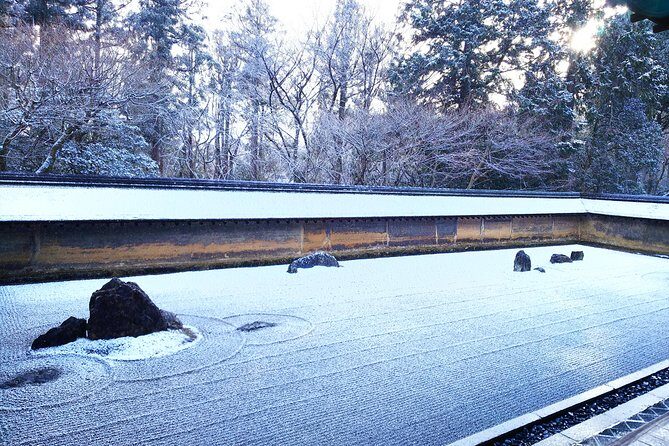
At Ryoan-ji Temple, you’ll see the UNESCO-listed Rock Garden. The time here is about 50 minutes, and the entrance fee is listed as ¥1,100 per person (not included).
Here’s the thing about the rock garden: it looks simple at first. Then your eyes start working harder. The garden’s power is in how it makes you notice relationships—placement, emptiness, and the way perspective changes what you think you’re seeing. A good guide can help you slow down and look correctly instead of rushing through it like a checklist item.
The tradeoff is that this stop is paid separately. If you want maximum value, the guide’s context is what helps you feel like that fee “returned value” rather than just being another ticket.
Practical tip: keep your expectations calibrated. The garden itself isn’t huge. You’ll likely do more actual walking and observing than you think, but the viewing area stays focused and calming.




Stop 4: Kinkakuji Golden Pavilion Photos With a Smart Pace
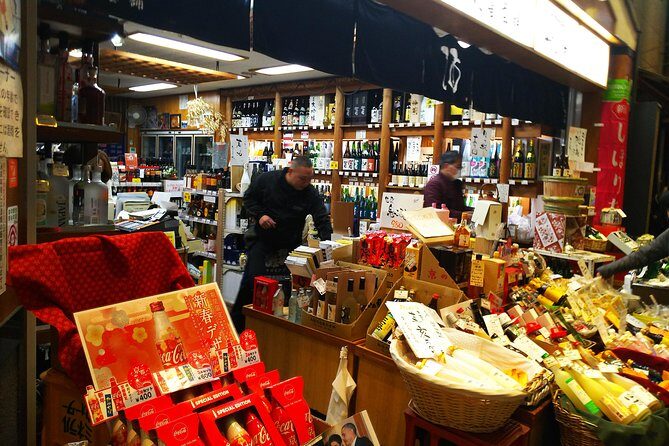
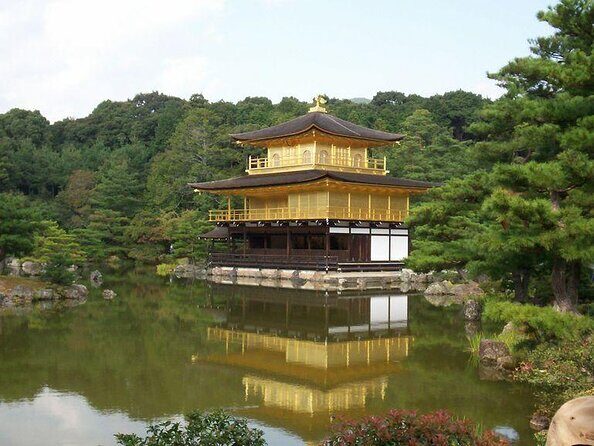
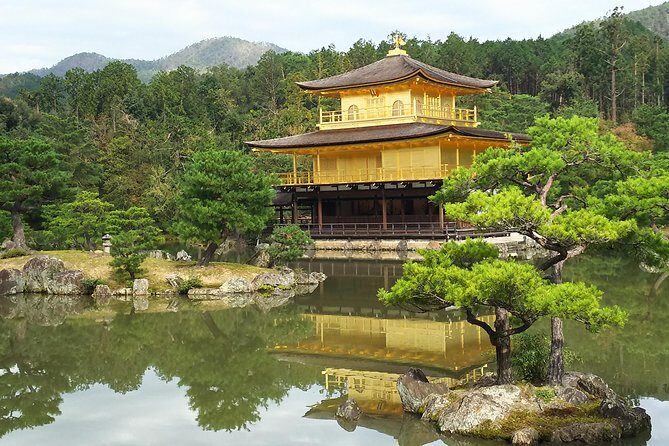
After Ryoan-ji, you’ll head to Kinkakuji Temple, also known as the Golden Pavilion. You get about 50 minutes here, and admission is noted as not included in the details you provided.
Yes, it’s crowded at peak times. But the reason to come is obvious: the pavilion’s gold finish and the reflections around it create a look that feels more dramatic in person than it does on a postcard.
The best way to enjoy Kinkakuji is to treat it as two experiences:
1) the pavilion itself
2) the surrounding grounds and viewpoints where reflections and angles change
A private guide helps you spend time at the right viewing spots rather than defaulting to the closest photo line. More than one review highlights guides who are organized and efficient with travel time, which is exactly what you want on a stop like this.
Photo consideration: if you care about pictures, bring your patience. Even on a good day, you’ll be working around other cameras and phones. Your guide can help you time your shots based on the flow.
Stop 5: Nishiki Market on Foot for Snacks and Real Shopping
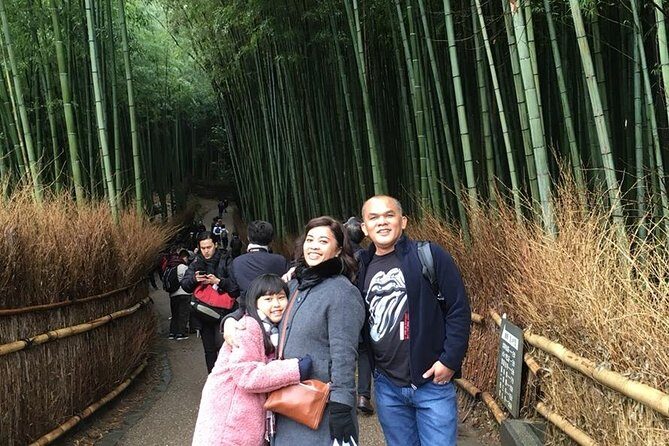
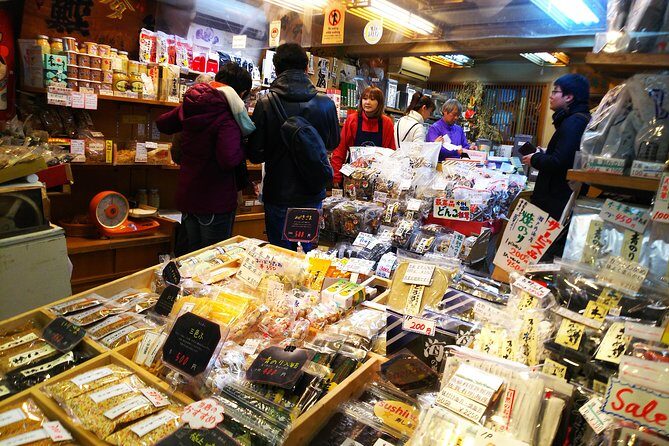
The day ends with a stroll through Nishiki Market Shopping District, about 40 minutes. This market is known for Kyoto food stalls and traditional snacks, with around a 390-meter stretch and plenty of small shops.
What I like about closing a tour here is that it shifts you from “temple brain” to “food brain.” Instead of one more quiet landmark, you get lively movement, smells, and quick tastes. The tour description says you can taste some around the market, and that’s often where private guides shine: they can point you toward what makes sense and what you might want to try without turning it into a chaotic shopping spree.
This stop can also be a money saver in disguise. If you’ve been thinking about what to bring home, a guide can help you shop with taste and practicality, not just hype.
Downside: 40 minutes passes fast in a market. If you’re a slow walker or you like lingering, ask your guide early if they can adjust the rhythm so Nishiki doesn’t turn into a sprint.
Transportation and Timing: Using Public Transit Like a Pro
This is not a private driver tour. The tour details point to public transportation fares as a separate cost, and the guide coordinates the day between sites.
That matters because Kyoto’s transit is part of the local experience, not a hassle to escape. In several reviews, guides are praised for making it feel natural—using subway and bus routes and handling transfers so you’re not standing around studying maps at each stop.
Also, the tour includes group discounts, and the private format means you’re not stuck waiting for strangers to get everyone aligned. If your group has kids, elders, or someone who needs a slower pace, a private guide can often adjust more easily than a set schedule in a group bus.
One more practical note: you’ll be moving through areas where walking paths can be uneven. If you want comfort, wear supportive shoes. If you want that extra “Kyoto walking” day without surprises, pack water and a light layer. (Summer heat and sudden rain can happen fast.)
What the Best Guides Do: From Sumiko to Keiko and Beyond
The single most praised part of this experience is the guide quality. Reviews repeatedly call out guides who are:
- organized from start to finish
- great at pacing
- attentive to breaks
- generous with tips and context
- willing to help with practical needs like translation during shopping
Names that show up in reviews include Sumiko Yoshikawa, Tomoko, Satomi, Keiko, Michiko, and Kazuo, plus others like Masa, Chie, Naoko, Yuka, and Hironori. The common thread isn’t just friendliness. It’s competence: your day runs on time, your questions get answered, and you’re not left guessing.
One review highlights that a guide arranged a sushi bar lunch and made sure the process was easy. Another calls out a guide acting as a kind of official photographer. And one review specifically praises rest stops and accommodations when someone had a knee injury.
So if you value more than facts—if you want someone to manage the human side of sightseeing—this tour style is a strong fit.
Who Should Book This Kyoto Golden One-Day Walking Tour
This tour is best for you if:
- it’s your first time in Kyoto and you want the big hitters in one day
- you like temple + neighborhood variety (Inari, Zen gardens, Golden Pavilion, then Nishiki)
- you’d rather pay for guidance than spend your day figuring out routes and entry details
- your group appreciates a private pace with room for questions
It may be less ideal if:
- you dislike walking or have mobility limits (the tour description flags moderate physical fitness and “quite a bit of walking”)
- you’re traveling with a tight schedule where delays would wreck your day
- you have zero interest in paying separate temple admissions like Ryoan-ji and whatever fee applies at Kinkakuji
If you do book, treat the day like an active sightseeing workout: comfortable shoes, water, and a flexible attitude.
Should You Book This Kyoto Early Riser Golden One-Day Tour?
If you want a day that covers Kyoto’s top icons with less stress than DIY, I think this is a strong choice. The itinerary hits the places most people line up to see anyway, but the private guide format is the difference-maker: you spend time looking, not figuring.
Just go in with eyes open about costs beyond the headline price, plus the walking. If you can handle that, you’ll likely come away with a “Kyoto done right” feeling—Inari’s gate tunnels, Arashiyama’s bamboo calm, Ryoan-ji’s Zen stillness, Kinkakuji’s golden spectacle, and Nishiki’s snacks that make the day end on a fun note.
FAQ
What’s included in the Kyoto Early Riser Golden One-Day Walking Tour price?
The tour includes a professional guide. Your tour data also mentions a mobile ticket. Meals, public transportation fares, and some temple admissions are not included.
What extra fees should I plan for?
Public transportation fare is listed as ¥1,670 per person. Ryoan-ji Temple has an entrance fee listed as ¥1,100 per person. Kinkakuji Temple admission is noted as not included, and meals are not included.
How long is the tour and how is the time split?
The tour duration is about 8 hours. The stops listed are: Fushimi Inari-taisha (1 hour), Arashiyama (1 hour 10 minutes), Ryoan-ji (50 minutes), Kinkakuji (50 minutes), and Nishiki Market (40 minutes), plus time for moving between locations.
Is this tour private or do I join a group?
This is a private tour/activity, meaning only your group participates.
Where do we meet, and where do we end?
You meet at Kyoto Station Building (901 Higashishiokōjichō, Shimogyo Ward, Kyoto). The experience ends back at the meeting point.
What happens if the weather is bad?
The tour requires good weather. If it’s canceled due to poor weather, you’ll be offered a different date or a full refund.
Can I cancel for a refund?
Yes. You can cancel up to 24 hours in advance for a full refund, and refunds are not available if you cancel less than 24 hours before the start time.