REVIEW · TEA CEREMONY EXPERIENCES
Kyoto Newly Opened Tea Ceremony – Sanjo Chasuian
Book on Viator →Operated by Sanjo Chasuian · Bookable on Viator
Knee-deep calm, served as matcha. This newly opened Kyoto session at Sanjo Chasuian turns a classic tea ritual into a hands-on lesson with step-by-step guidance from tea master Yuko. I like how the format stays intimate and practical, so you’re not just watching—you’re learning the rhythm.
My favorite part is the built-in chance to compare tea. You’ll taste one bowl made by the host, then whisk your own matcha for a second serving, plus you get traditional seasonal sweets tied to the season.
One thing to plan for: the room is quiet and the door gets locked once it starts. Entry is only allowed up to 5 minutes early, and even being 1 minute late can mean you can’t join, so build in extra time—and bring or wear socks since that’s required.
In This Review
- Key Things That Make This Kyoto Tea Ceremony Worth Your Hour
- Kyoto Matcha Calm at Sanjo Chasuian: What This Session Really Offers
- Finding the Tea Room Near Sanjo Chasuian (Without Getting Lost)
- Your 60 Minutes: From Nijiriguchi to Whisking Two Bowls
- The Hands-On Matcha Part: What You Learn That Actually Helps
- The Matcha Skills You Can Recreate at Home (Without Overthinking It)
- Seasonal Japanese Confectionary: Sweets That Belong With Tea
- Group Size, Comfort, and Etiquette (The Stuff That Affects Your Experience)
- Price and Value: Is $32.77 Worth It in Kyoto?
- Who Should Book This Kyoto Tea Ceremony (And Who Might Skip)
- Quick Practical Checklist Before You Go
- Should You Book This Sanjo Chasuian Tea Ceremony?
- FAQ
- How long is the Kyoto tea ceremony session?
- How many people are in the group?
- Do I make matcha myself?
- What is the nijiriguchi entrance?
- What should I wear or bring?
- Is it strict about arriving on time?
- What is the cancellation policy?
Key Things That Make This Kyoto Tea Ceremony Worth Your Hour
- Two bowls of matcha: one made for you, one made by you
- Nijiriguchi crawl-in entrance that sets the tone before you even sit down
- Small group (max 10) for clearer instruction and easier Q&A
- Seasonal Japanese sweets included from a Kyoto sweet shop with 100+ years of history
- Hands-on whisking: choose a bowl and follow the steps you’ll repeat at home
Kyoto Matcha Calm at Sanjo Chasuian: What This Session Really Offers
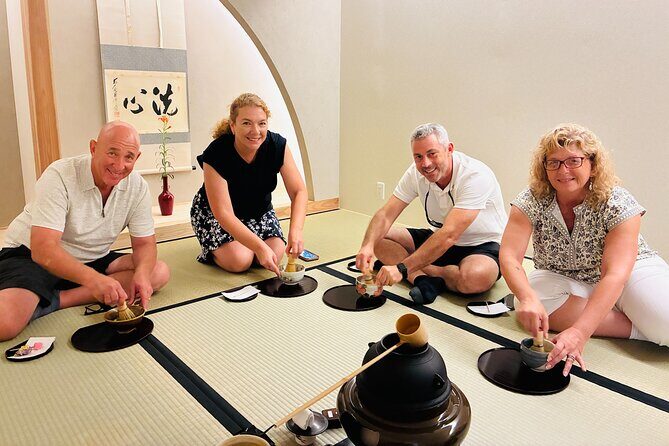
Kyoto tea ceremonies can feel a little intimidating on your first visit. This one does a smart thing: it keeps the ritual, but it also teaches you what to do and why. You’ll watch the host’s movements, then copy them, so the steps stop being mysterious and start making sense.
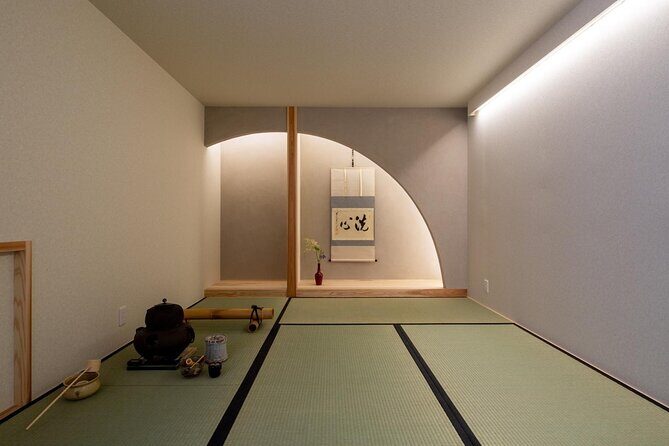
The session is designed around mindfulness in the details—the order of actions, the way utensils are handled, and the pacing of the whole experience. You’re in a serene, quiet tea room where the goal is focus, not performance.
It also helps that the host experience sounds very traveler-friendly. In past sessions, Yuko was praised for English that’s clear enough for questions, and for being patient if you want to understand the reasoning behind each step.
You can also read our reviews of more tours and experiences in Kyoto.



Finding the Tea Room Near Sanjo Chasuian (Without Getting Lost)
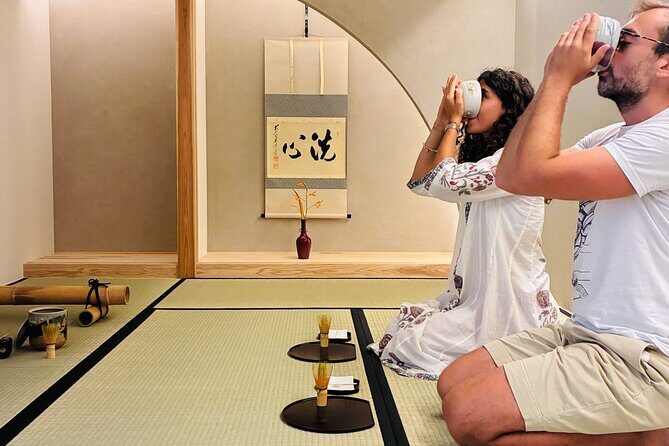
The meeting point is Tea Ceremony & Sake Tasting Kyoto – Sanjo Chasuian, 324-2 Sanjōchō, Nakagyo Ward, Kyoto, 604-8205, Japan. The good news: it’s near public transportation, so you won’t be tied to taxis.
Here’s the practical tip that can save time: Google Maps may route you down a smaller side street. Instead, stay on the main street and look for a green matcha ice cream cone in front—then you’ll get your bearings and find the entrance more smoothly.
Because you’re walking through a neighborhood, give yourself a little buffer. With Kyoto, you can expect detours, small stairways, and unexpected turns—especially if you’re trying to arrive right at the start.
Your 60 Minutes: From Nijiriguchi to Whisking Two Bowls
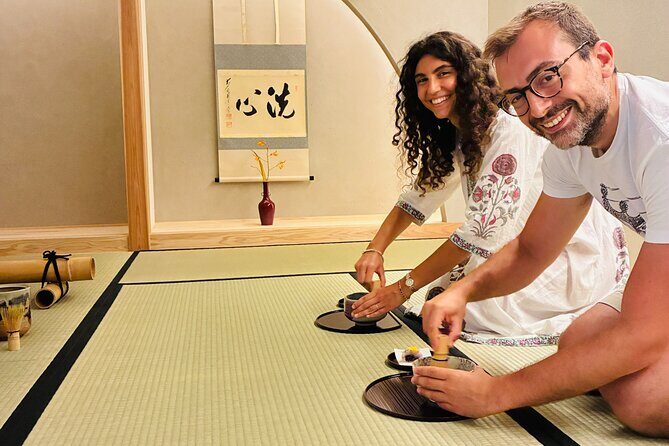
This experience runs about 1 hour. That’s a sweet spot. Long enough to learn the basic flow and taste properly, but not so long you feel like your day is swallowed.
You’ll enter through a nijiriguchi. It’s that crawl-in style entrance that forces you to slow down immediately. It’s not just theater; it’s the first physical reminder that the ceremony is about leaving the outside world behind and stepping into a calmer, smaller space.
Once you’re inside, you’ll begin in a structured way:
- you’ll observe the host’s technique
- you’ll get step-by-step explanations
- then you’ll move to your own bowl and whisk
A nice detail: chairs are available, so you’re not automatically committed to floor sitting. Still, plan that the atmosphere is traditionally quiet and that some parts of the room may involve floor seating depending on how you choose to relax.
The Hands-On Matcha Part: What You Learn That Actually Helps
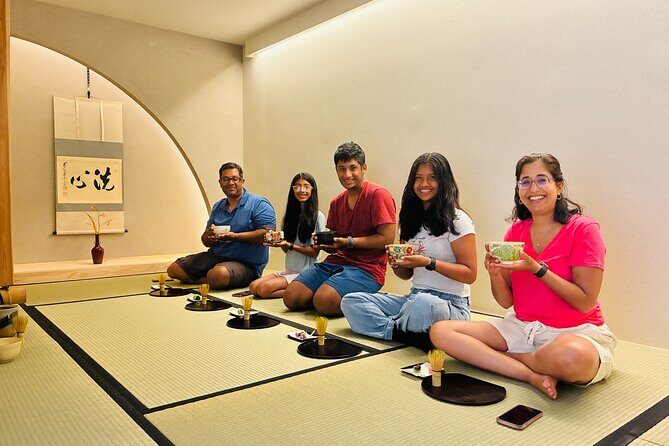
This isn’t just sip-and-smile. You’ll choose a tea bowl and whisk your matcha, using what you watch and what the host explains. That choice—getting to handle the bowl—matters because it makes the ritual feel doable.
The structure is built for beginners:
- you watch the host’s movements first
- you learn the sequence
- then you practice under guidance
- you taste what you made right away
And yes, you get to drink two bowls of matcha. One is prepared by the host. The second is yours—either solo or shared with a companion, depending on how the group setup works during your session.
That first bowl gives you a benchmark. After you’ve seen and tasted the professional matcha, your whisking becomes a real learning moment instead of a random action. You can compare texture and taste right away, which is exactly how you build confidence fast.
The Matcha Skills You Can Recreate at Home (Without Overthinking It)
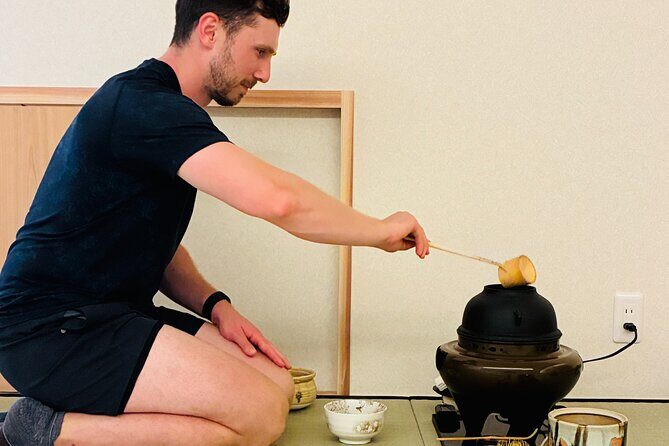
The point of a good tea lesson is not that you become a matcha robot overnight. It’s that you walk away with a clear mental model: what order to do things in, how to handle the utensils, and what you’re aiming for in the drink.
From this format, you should come away with practical understanding like:
- how the whisking fits the texture you’re going for
- what to pay attention to during the motions
- how the host uses small steps to keep the moment calm
If you’ve ever felt matcha is either too bitter or too foamy, a hands-on session helps you separate your assumptions from the method. Even when you’re using your own tools at home, the lesson you learned here gives you a starting point you can repeat.
Also, don’t overlook the Q&A angle. Yuko’s sessions have been described as warm and welcoming with time for questions. If you want to ask what matters most—taste, texture, or technique—this setup is the kind that supports it.





Seasonal Japanese Confectionary: Sweets That Belong With Tea
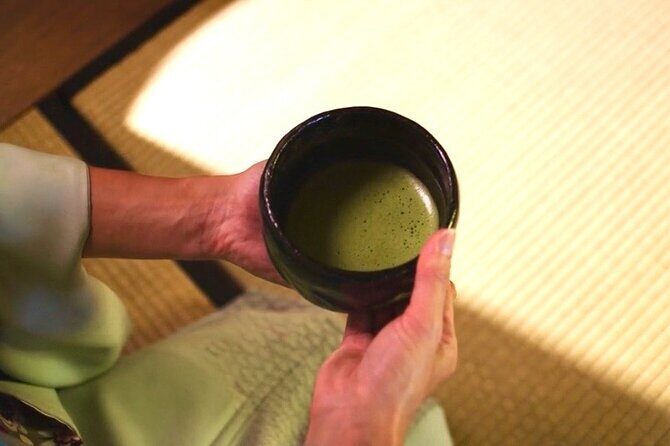
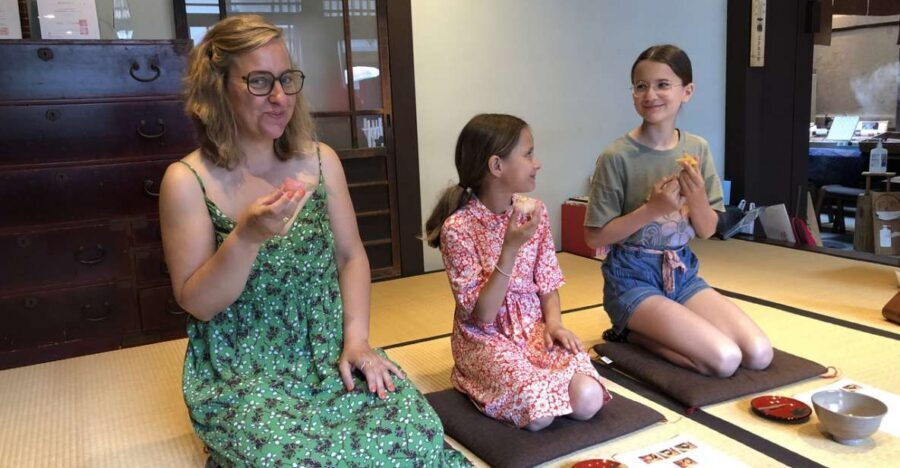
The included treat isn’t an afterthought. You’ll enjoy traditional seasonal Japanese confectionary from a Kyoto sweet shop with over 100 years of history.
In a tea ceremony context, sweets are more than dessert. They shift your palate before the matcha and match the season’s flavors. That’s why the sweets feel like part of the ritual instead of a random add-on.
The practical takeaway for you: don’t rush the sweets. Plan on eating them slowly between steps, so your matcha tastes balanced rather than harsh or overwhelming.
And if you’re the type who takes photos, this is a moment where you’ll want to pause. The sweets are described as beautiful, and you’ll likely want to look before you eat—just don’t let your camera time steal from the calm pace of the room.
Group Size, Comfort, and Etiquette (The Stuff That Affects Your Experience)
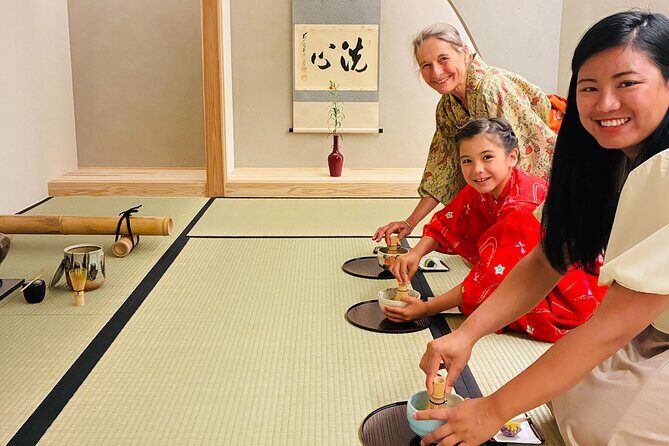
This is a maximum of 10 travelers. That small size is a real advantage. It keeps the mood intimate, and it makes it easier for the host to correct or guide you during whisking.
There’s also a clear etiquette rule set:
- the tea ceremony is conducted in a serene and quiet setting
- entry is allowed from 5 minutes before the start time
- once it begins, the door is locked
- even 1 minute late means you cannot join, and no refund is given
- you’re asked to bring or wear socks
That last point matters more than people think. In Japan, footwear rules can vary widely by venue, but here it’s explicit. If you forget socks, you could lose your spot—so pack a spare pair just in case.
Comfort-wise, chairs are available, but don’t assume it’s fully casual. Expect traditional posture choices and a quiet environment. If you know your body needs extra support, I’d choose a comfortable option early rather than waiting until you feel stiff.
Price and Value: Is $32.77 Worth It in Kyoto?
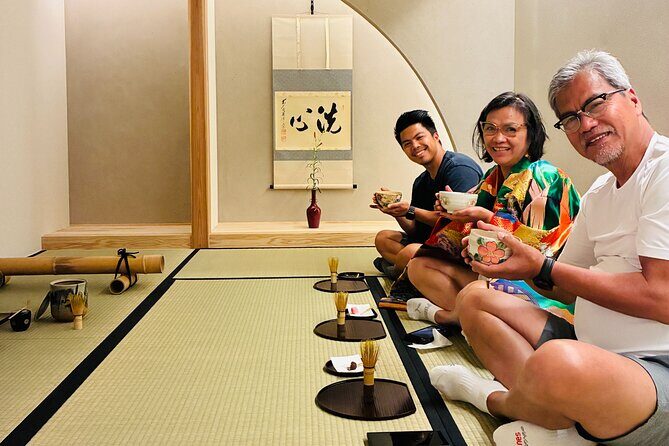
At $32.77 per person for about an hour, the value comes from what you get, not just the price tag.
Here’s the value math that makes sense:
- you get two cups of matcha (host-made plus yours)
- you get included seasonal sweets
- you get a step-by-step matcha lesson with hands-on practice
- you’re in a small group (max 10), which improves instruction
- the ceremony uses a signature entrance (nijiriguchi), which adds to the full experience
In Kyoto, you’ll find tea experiences that focus only on watching. You’ll also find others that are so hands-off that you leave curious but unconfident. This one sits in the best middle ground: enough structure to learn, enough participation to feel you did something.
Yes, it’s still a scheduled experience, so you’re giving up some flexibility. But if you want a meaningful break from temples and shopping streets, this is the kind of activity that pays off because you leave with a repeatable skill.
Who Should Book This Kyoto Tea Ceremony (And Who Might Skip)
This session is a strong match if you:
- are doing Kyoto for the first time and want one cultural “anchor” activity
- like hands-on learning instead of passive sightseeing
- want a calm reset during a busy day
- plan to try matcha for the first time or want to improve your technique
You might want to think twice if:
- you can’t reliably arrive on time (the door locking rule is strict)
- you don’t handle quiet, traditional spaces well
- you’re looking for something more theatrical or showy than instructional
The best part is that it fits both types of travelers: the food-and-culture crowd and the people who just need a peaceful hour with good guidance.
Quick Practical Checklist Before You Go
- Wear or bring socks (required)
- Plan arrival at least a bit before the 5-minute window
- Expect a calm room with traditional seating options (chairs are available)
- Bring curiosity for Q&A—Yuko’s sessions are set up for questions
- If you love shopping, note that matcha, tea bowls, and select items may be available for purchase
If you’re pairing this with other plans, consider scheduling it earlier in the day. Tea ceremonies feel best when you’re not rushing from one major stop to the next.
Should You Book This Sanjo Chasuian Tea Ceremony?
If your goal is a beginner-friendly Kyoto tea ceremony where you actually whisk matcha and taste two bowls, I’d book it. The combination of hands-on practice, a signature nijiriguchi entry, and seasonal sweets included makes this feel like real cultural education rather than a quick photo stop.
The only real reason to hesitate is the strict start-time rule. If you’re the kind of person who arrives late without meaning to, you’ll feel stressed here. If you can manage punctuality, this is the kind of hour you’ll remember long after the matcha is gone.
FAQ
How long is the Kyoto tea ceremony session?
It runs for about 1 hour.
How many people are in the group?
The group size is capped at a maximum of 10 travelers.
Do I make matcha myself?
Yes. You’ll whisk matcha yourself after watching the tea master, and you’ll also drink a second bowl made by you.
What is the nijiriguchi entrance?
It’s a crawl-in style entrance into the tea room that helps set the tone for the ceremony.
What should I wear or bring?
You’re asked to bring or wear socks. Chairs are available, and matcha and tea bowls may be available for purchase during the experience.
Is it strict about arriving on time?
Yes. Entry is allowed from 5 minutes before the start time, and once the session begins the door is locked. Even 1 minute late means you can’t join, and no refund is given.
What is the cancellation policy?
You can cancel for a full refund up to 24 hours before the experience’s start time. Within 24 hours, there’s no refund.