REVIEW · FUSHIMI INARI TOURS
Kyoto Early Bird English Tour: Fushimi Inari & Gion(Private opt)
Book on Viator →Operated by OTAKU hopper · Bookable on Viator
Kyoto before breakfast feels like a different planet. This early-bird Kyoto tour strings together Fushimi Inari and Gion with hilltop temple views and old-street wandering before the day thickens. I love how it mixes big-name landmarks with hands-on cultural context from a local English guide, and I like that you get professional photos timed for the best light. One thing to keep in mind: it is a walk-focused morning, and Kiyomizu-dera admission costs extra.
You’ll meet at Kyoto Station (Higashishiokoji Kamadonocho), use public transport for quick connections, and finish near Yasaka Shrine in the Gion area where you can keep going on your own. The tour also includes a mobile ticket and a private setup for your group, but you’ll want to show up on time because late arrivals can’t join.
In This Review
- Quick Hits Before You Go
- Why This Early-Bird Kyoto Route Works So Well
- Getting There: Kyoto Station Start and a Gion Finish
- Stop 1: Fushimi Inari and the Torii Gate Photo Problem
- Stop 2: Kiyomizu-dera Hilltop Views (Budget the Admission)
- Stop 3: Sannenzaka and Ninenzaka Old-Street Wandering
- Stop 4 and 5: Hokanji (Yasaka Pagoda) and Yasaka Koshin-Do
- Stop 6 and 7: Gion’s Old Streets and the Walk to Yasaka Shrine
- What You Really Get: English Guide, Photo Service, and Local Suggestions
- Price and Value: $99.10 Plus the Yen You’ll Pay On Site
- Timing, Walking, and Who This Fits Best
- Should You Book This Kyoto Early-Bird Tour?
- FAQ
- What’s included in the tour price?
- What isn’t included?
- How long is the Kyoto Early Bird tour?
- Where do we meet, and where does the tour end?
- Which sights does the tour cover?
- Is this a private tour?
- Is it a walking tour?
- How early should I arrive for the meeting point?
Quick Hits Before You Go
- Early start at Fushimi Inari means calmer gates and easier photo angles
- English-speaking local guide adds meaning to every stop, not just sightseeing
- Professional photo capture during the tour saves you from asking strangers
- Kiyomizu-dera costs extra (budget for the admission fee ahead of time)
- Private group format keeps the pace comfortable and question-friendly
Why This Early-Bird Kyoto Route Works So Well
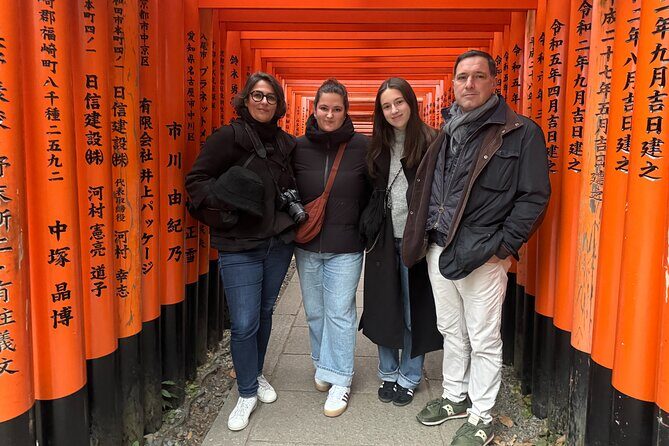
Kyoto’s top sights have one enemy: time. If you hit Fushimi Inari and Gion later in the day, you’ll spend more energy weaving through people than actually seeing details. This tour is built around the idea of going early, so you can slow down at the places that usually feel like a theme park.
The lineup also makes sense. You start with a shrine that’s visually iconic (those red torii gates), then you move to a temple that gives you a panoramic sense of the city, and then you transition into atmospheric historic streets and Gion. It’s a clean arc: sacred landmark, viewpoint, old neighborhoods, then the geisha district vibe.
What makes this tour feel especially practical is the rhythm. It is not just a checklist. You’ll have short blocks of time at each spot, enough to look closely, take photos, and still move onward. That matters in Kyoto, where travel between neighborhoods can eat your day.
And if you care about photos, this is one of the few Kyoto tours that treats photography like part of the experience rather than a side quest.
You can also read our reviews of more private tours in Kyoto
Getting There: Kyoto Station Start and a Gion Finish
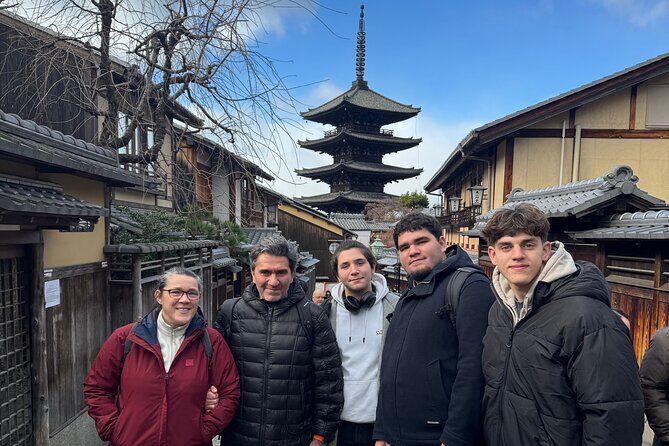
Most morning Kyoto plans stumble on logistics. This one doesn’t. You meet near Kyoto Station at Higashishiokoji Kamadonocho, which is a smart anchor point if you’re coming from anywhere around Kansai. From there, you’ll connect by public transport and then do plenty on foot.
The tour ends at Yasaka Shrine in the Gion area. That’s a big win because it drops you right where you might want to stroll next anyway. You won’t feel stuck back at a transit hub; you’ll finish in a neighborhood that’s meant for slow walking, tea breaks, and wandering.
Two practical notes for planning:
- Wear shoes you can move in. Even if the tour isn’t described as a hike, you’ll be on your feet in historic, uneven areas.
- Build a little buffer into your morning. The plan is short per stop, but Kyoto always has delays: lines, stairs, and photo moments.
Stop 1: Fushimi Inari and the Torii Gate Photo Problem

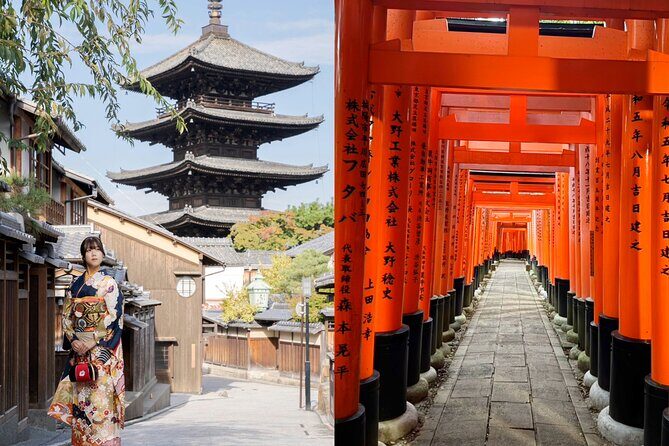
Fushimi Inari-taisha is one of those places where the first five minutes tell you why people come back. The thousands of vibrant red torii gates climb into the forest on Mount Inari, creating a repeating pattern that’s hard to photograph well when you’re standing in a crowd.
Going early helps for two reasons. First, the flow of visitors is calmer, so you can walk sections of the gate path without constant stop-and-go. Second, the lighting often looks better on morning walls and paths, especially when the sun is still low enough to avoid harsh glare.
This stop is also culturally meaningful. Inari is tied to rice and prosperity, so the shrine isn’t just a visual set piece. As you move through the gates, you’ll have your guide’s explanations to keep it from being only a red corridor.
Practical tips to make this stop work for you:
- Decide whether you want a quick loop or a deeper climb. You can always go back down, but you can’t undo lost time if you rush.
- Use the guide’s timing to frame your photos. If someone is taking pictures for you, you can focus on composition and let them handle the logistics.
Stop 2: Kiyomizu-dera Hilltop Views (Budget the Admission)
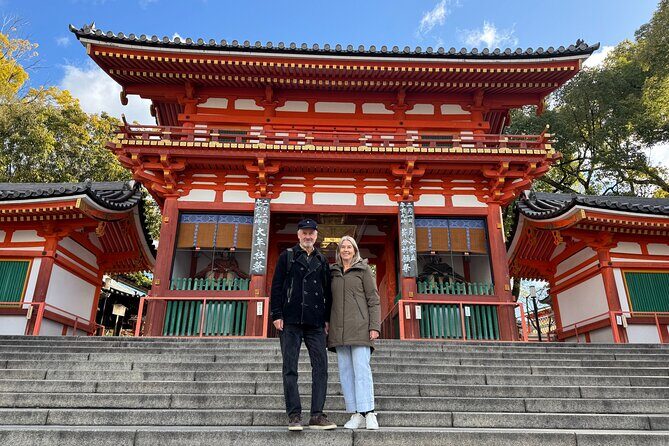
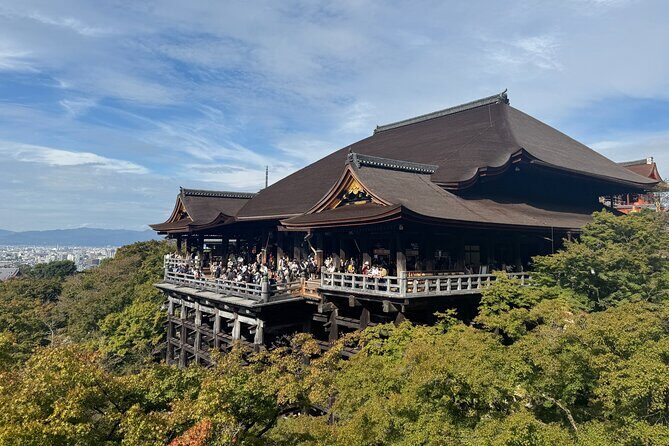
Next comes Kiyomizu-dera, one of Kyoto’s most visited temples, famous for the way it sits above the city with panoramic views. This is the stop where the city opens up. Even if you’ve seen photos, seeing the viewpoint in person hits different, because you can actually sense the scale of Kyoto’s neighborhoods.
This stop also has a clear practical catch: Kiyomizu-dera admission is not included. The cost is listed as ¥500 per person, so I recommend you budget it in advance so you don’t end up doing math at the ticket counter.
Give yourself permission to slow down here. Viewpoints tend to draw people to the same spots, and even early in the day you’ll want a moment where you’re not just snapping and moving. With an English guide, you also get context about what you’re looking at, which helps you make sense of the temple’s layout rather than just standing in awe.
Stop 3: Sannenzaka and Ninenzaka Old-Street Wandering
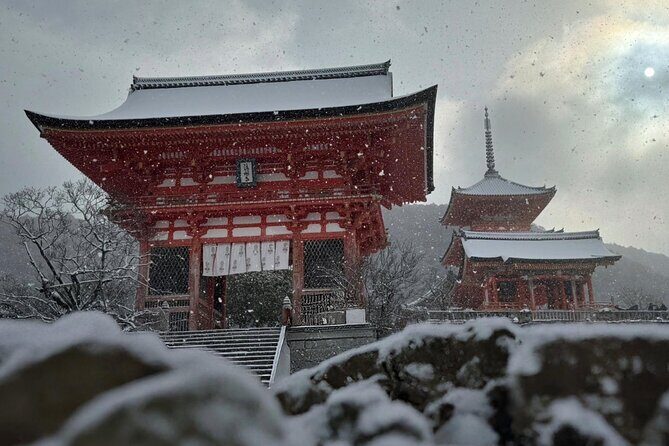
Sannenzaka and Ninenzaka are the type of streets that make Kyoto feel like Kyoto. These stone-paved lanes are lined with souvenir shops and restaurants inside historic wooden buildings, so you get a strong sense of old-town atmosphere even when you’re not looking for a specific museum.
This part of the tour is shorter, which is exactly right. You don’t need an hour to appreciate the look and feel. You need just enough time to:
- Walk both directions and notice how the street curves and tightens
- Peek into shops if you want small local goods
- Decide whether you want to snack here or save your appetite for later
A common mistake is trying to buy everything in one pass. If you’re shopping, treat this as a browsing stop. You’ll likely spot more than one item that would make sense later, once you’ve seen where the rest of the day lands.






Stop 4 and 5: Hokanji (Yasaka Pagoda) and Yasaka Koshin-Do
After the main temple and viewpoint energy, the tour shifts to places that reward attention.
At Yasaka Pagoda (Hokanji temple), you’ll see one of Japan’s older wooden structures. The standout detail here is the claim that it was built without using nails. Even if you don’t test that fact in person, the scale and age make it feel real in a way that modern structures don’t.
Then comes Yasaka Koshin-Do, a temple with colorful decorations. That matters because so many temples and shrines you’ll see in Kyoto lean toward quiet, subdued palettes. Here, the color is a feature, not an afterthought.
These two stops are brief, so you’ll want to do the quick checklist:
- Take one steady look at the whole structure
- Find a detail you can remember later (woodwork, decoration, symbol)
- Take one photo that includes your surroundings, not just the front
Short stops like this are also where an English guide pays off. Without context, these can feel like quick stops between bigger attractions. With context, they become part of Kyoto’s texture.
Stop 6 and 7: Gion’s Old Streets and the Walk to Yasaka Shrine
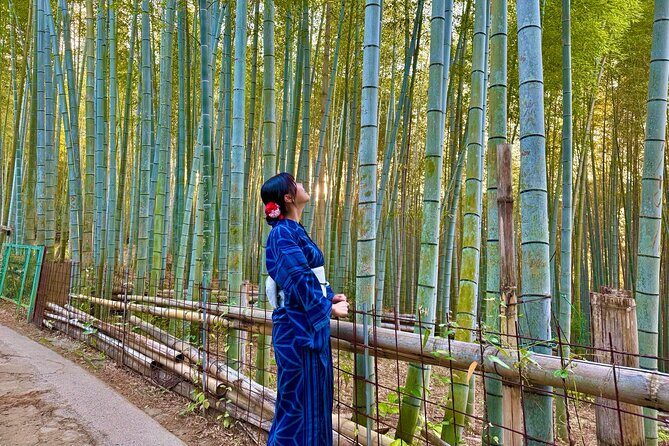
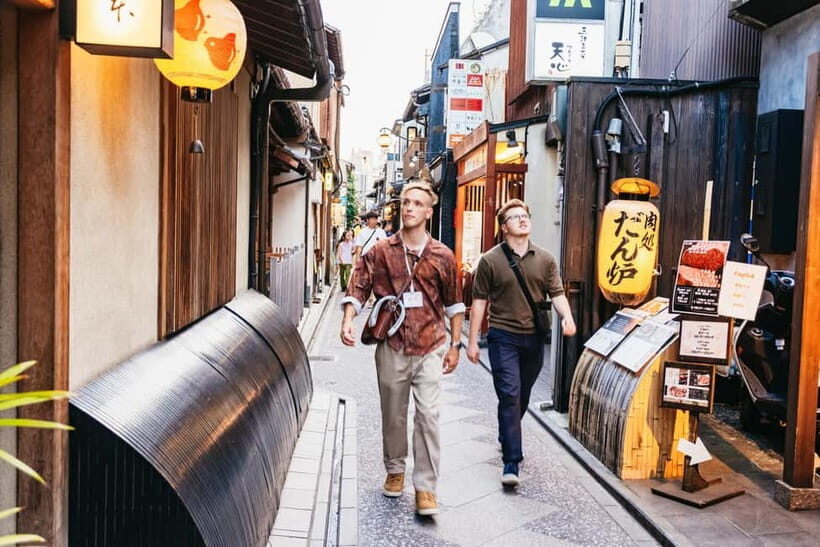
Then you get to Gion, Kyoto’s famous geisha district. This is where the architecture and street mood do most of the work. You’ll notice traditional machiya houses and teahouses, and you’ll walk preserved historic streets that make the district feel timeless.
This isn’t about seeing performers. It’s about understanding the setting. Gion’s charm is in its design and atmosphere, and you’ll walk through enough of it to feel the difference from the busier temple zones.
From there, the tour finishes at Yasaka Shrine. It’s described as the headquarters of related shrines across Japan, with connections to prosperity and protection. Ending here is convenient because the surrounding area is built for continued wandering. You can keep exploring Gion lanes, stop for a snack, or take a bus back toward wherever you’re staying.
What You Really Get: English Guide, Photo Service, and Local Suggestions
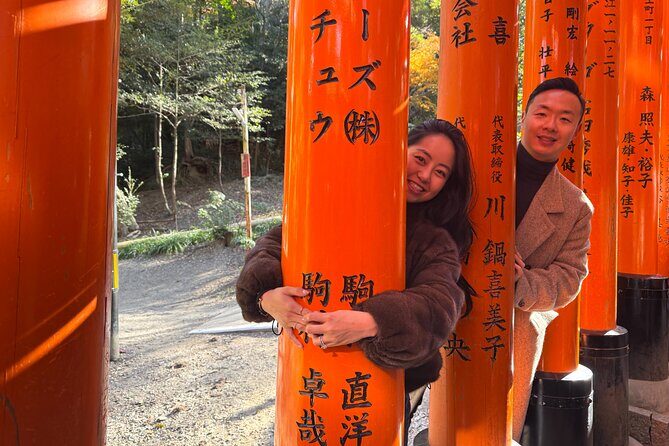
The headline features are easy to list: English-speaking guide, professional photos taken during the tour, and a private setup. The real value is how those pieces function together.
A local English guide turns monuments into understandable places. You’re not just looking at gates and halls; you’re learning why they matter and how to read the symbols you’re seeing. That changes how you remember Kyoto later, because you’ll connect scenes to meaning.
On the photo front, having someone take your pictures is a huge quality-of-life upgrade. Kyoto’s sights are popular, and you’ll likely notice that asking strangers to take photos can lead to awkward angles and missed moments. With a guide taking pictures, you spend less time negotiating camera positions and more time actually enjoying each stop.
The experience also tends to come with practical recommendations. In real-world feedback tied to this tour, guides like Ikki are praised for being friendly, patient, and strong at English, with helpful suggestions after the tour. If you get a guide like that, you’ll leave with ideas that fit your tastes, not generic postcard advice.
Price and Value: $99.10 Plus the Yen You’ll Pay On Site
At $99.10 per person, this tour prices itself as a guided highlights package. The big question is what you’re buying besides access to famous places.
Here’s what stands out for value:
- You’re covering multiple top sights in one morning without having to plan routes between neighborhoods.
- You’re getting an English guide to explain what you’re seeing.
- You’re getting professional photos as part of the experience.
- The tour includes a mobile ticket and a private group setup, which can be a cost-effective way to travel if you’re splitting the price with others.
Now the costs to plan for:
- Public transport is listed as ¥390 per person (not included).
- Kiyomizu-dera admission is ¥500 per person (not included).
So the best way to budget is to add those two on-site items to the base price. If you’re already spending time and money figuring out transit and ticketing on your own, the guided format becomes easier to justify.
One more value detail: this is “early bird” style. That means the tour is optimized for your time, not just your checklist. If you’d otherwise wake up late and fight crowds, paying for a morning plan can feel like a bargain.
Timing, Walking, and Who This Fits Best
This is designed as a walking experience, using public transportation and plenty of time on foot. That makes it ideal for people who like active mornings and don’t want to sit through Kyoto in a vehicle.
It’s also a good match for:
- First-time Kyoto visitors who want the biggest highlights with guidance
- Couples or families who prefer a private group pace
- Travelers who care about photos and want someone to handle the picture logistics
- Anyone who appreciates cultural context, not just photo stops
You might want to think twice if:
- You hate stairs or uneven walking (Kyoto’s shrine and temple areas can require it)
- Your schedule is extremely tight and you can’t handle small delays
- You’re trying to avoid any extra spending, since Kiyomizu-dera and transit are additional
Should You Book This Kyoto Early-Bird Tour?
I’d book this tour if you want a smart morning plan that hits Fushimi Inari, Kiyomizu-dera, and the historic streets around Gion without wasting time figuring out logistics. The biggest reasons are the early start, the English guide who gives context at each stop, and the professional photo capture.
I’d skip or consider alternatives if you’re traveling with mobility limits, hate walking, or refuse to pay add-on admission and transit. Also, if you’re the type who needs a lot of free time at each place, remember this tour keeps stops short and moves you onward.
If your goal is Kyoto highlights with less crowd stress and better photos, this is a strong way to spend your morning. And since the cancellation terms are free up to 24 hours in advance, you can book with confidence and adjust if plans change.
FAQ
What’s included in the tour price?
The tour includes an English-speaking local guide and professional photos taken during the tour. Mobile ticket access is also listed as a feature.
What isn’t included?
Public transportation fare is listed as ¥390 per person, and Kiyomizu-dera Temple admission is ¥500 per person. Food and drinks are also not included.
How long is the Kyoto Early Bird tour?
The duration is listed as about 4 to 5 hours.
Where do we meet, and where does the tour end?
You start at Kyoto Station (Higashishiokoji Kamadonocho, Shimogyo Ward). The tour ends at Yasaka Shrine in the Gion area (Gionmachi Kitagawa, Higashiyama Ward).
Which sights does the tour cover?
You’ll visit Fushimi Inari-taisha, Kiyomizu-dera Temple, Sannenzaka and Ninenzaka, Yasaka Pagoda (Hokanji temple), Yasaka Koshin-Do, Gion, and Yasaka Shrine.
Is this a private tour?
Yes. It’s described as a private tour/activity, with only your group participating.
Is it a walking tour?
Yes. It’s designed as a walking experience with public transportation connections and plenty of time on foot. A moderate physical fitness level is recommended.
How early should I arrive for the meeting point?
You should arrive on time. If you’re late for the meeting time, you won’t be able to join the tour and you won’t receive a refund.