REVIEW · ARASHIYAMA TOURS
Kyoto: Arashiyama Walking Tour – UNESCO World Heritage
Book on Viator →Operated by Local Guide Stars · Bookable on Viator
A bamboo grove that actually feels magical.
This short Arashiyama tour strings together two famous stops—Tenryu-ji (a UNESCO Zen temple and garden) and the bamboo grove—then adds a ticketed hike up to Monkey Park for macaques. It’s the kind of plan that keeps you moving without feeling rushed, especially if you like photos but also want real context for what you’re seeing.
I like that it’s tightly organized: you start at Tenryu-ji, get a guided look at the garden before the bamboo photos, and then you head to Monkey Park with admission handled. I also like the human touch—guides like Uta show up repeatedly in recent feedback for clear communication and friendly energy (one review even mentioned she shared shaved ice with the group).
One consideration: the Monkey Park portion involves a moderate climb, and the tour ends up at the park. So you’ll want to think about how you’ll get back down and where you want to go next after macaques time.
In This Review
- Key Points You’ll Care About
- The 90-Minute Plan That Works in Arashiyama
- Meeting Point Near Randenarashiyamaekikita (and How the Flow Feels)
- Tenryu-ji Temple: UNESCO Zen Gardens in the Calm Before the Bamboo
- Bamboo Grove Photo Time: How to Avoid the Usual Frustration
- Kawaii Shops and Matcha Sweets: Small Detours That Feel Local
- Arashiyama Bridge and the Walk Between Moments
- Monkey Park Iwatayama: Wild Macaques and a Light Climb
- Timing, Pace, and What Your Body Will Notice
- Price and Value: Why $52.33 Makes Sense Here
- Who Should Book This Arashiyama Walking Tour
- FAQ
- FAQ
- How long is the Kyoto Arashiyama Walking Tour?
- What’s included in the tour price?
- Are admission tickets included for both stops?
- Where does the tour start and end?
- Is the tour suitable for all fitness levels?
- Is hotel pickup included?
- Can I cancel for a refund?
- Should You Book This Tour?
Key Points You’ll Care About
- Tenryu-ji UNESCO focus first: you spend the most “quiet and meaningful” time here before the big photo moments.
- Small group (max 12): easier pacing, easier questions, and less chaos at photo stops.
- Monkey Park tickets included: you don’t waste time lining up, and the guide handles admissions.
- Guides like Uta are praised for communication: clear meeting info and thoughtful explanations come through.
- A gentle add-on stroll: you pass by character shops and local sweets/gift options without turning it into a shopping tour.
The 90-Minute Plan That Works in Arashiyama
Arashiyama is one of those Kyoto areas where crowds can show up fast, especially around the bamboo grove and the bridge. This tour is smart because it keeps the time window short—about 1 hour 30 minutes—so you can enjoy the highlights without turning your day into a waiting game. You also get a guide for the parts that are easy to miss on your own: how to read Tenryu-ji’s garden layout and why the bamboo grove is more than a pretty backdrop.
What you’re really buying is direction. You’ll walk a simple line: temple gardens → bamboo grove photo time → across the Arashiyama bridge area → Monkey Park. That rhythm helps your brain stay on track, rather than spending your limited Kyoto energy figuring out where to stand for the best shots.
You’ll also appreciate that it’s structured for photos. Bamboo groves are camera magnets, but if you wander in blind, you end up with the same angles everyone else gets. The guide pacing helps you hit the good moments without feeling like you’re in a race.
You can also read our reviews of more walking tours in Kyoto


Meeting Point Near Randenarashiyamaekikita (and How the Flow Feels)
The meeting point is at Concept Randenarashiyamaekikita Coin Parking Lot, near Sagatenryūji Tsukurimichichō in Ukyo Ward. The good news is that it’s described as near public transportation, so you’re not locked into a car-only plan. You’ll also get a mobile ticket, which is useful in Japan where you may be doing quick ticket scans and moving on immediately.
The tour timing is light and practical. You don’t have hotel pickup, so you’ll want to arrive on your own at the start location. Then you’ll move through the area in a group of up to 12. That group size is small enough that you’re not constantly bumping shoulders, which matters in Arashiyama where foot traffic can get squeezed.
At the end, you’ll be dismissed at Monkey Park Iwatayama. That’s a normal approach for walking tours in this area, but it means you should decide in advance what you want to do after. If you’re planning a later dinner somewhere in central Kyoto, you’ll likely want to map your return route before you climb.
Tenryu-ji Temple: UNESCO Zen Gardens in the Calm Before the Bamboo
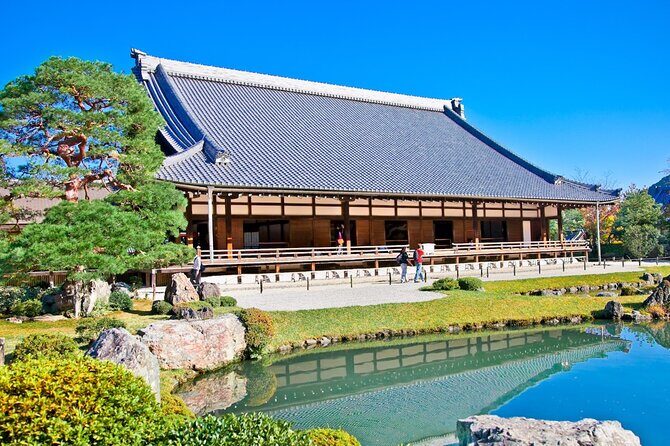
Your first stop is Tenryu-ji Temple, a UNESCO World Heritage Zen temple known for its Sogenchi Garden. This is the “slow down” part of the tour, and that matters. The temple gardens aren’t just decorative—they’re designed to connect with the surrounding natural scenery, so your timing and viewpoint make a difference.
What I like about starting here is that it gives context before the bamboo takes over. If you only see bamboo first, it can feel like you’re chasing scenery. With Tenryu-ji first, you understand the Japanese idea of placing human intention next to nature, and letting the view do the talking. The Sogenchi Garden is especially striking in cherry blossom and autumn leaf seasons, so if you’re visiting during those windows, your guide’s explanation will help you notice details faster.
The tour includes the entrance fee for Tenryu-ji, so you don’t have to worry about ticketing while you’re standing in a busy area. Expect about 50 minutes here—enough time to get the main viewpoints and still enjoy the calm atmosphere without feeling like you’re being rushed through.
Bamboo Grove Photo Time: How to Avoid the Usual Frustration
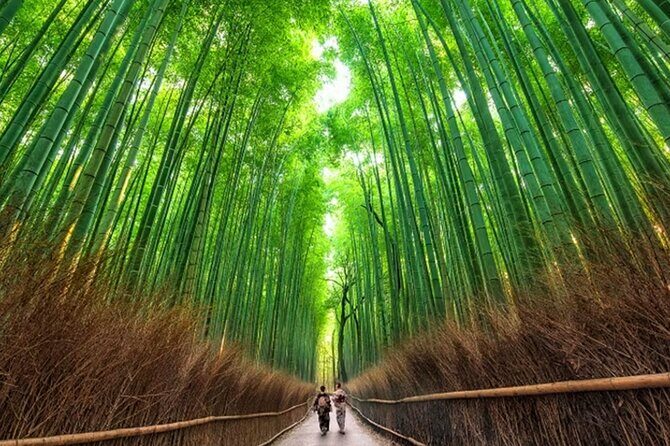
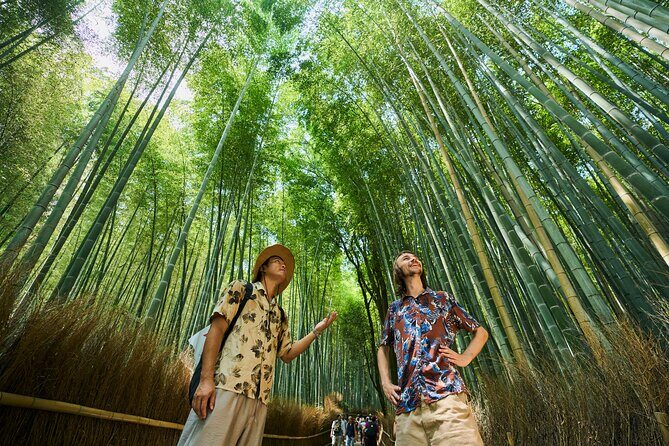
After Tenryu-ji, you head into the Bamboo Grove, one of Kyoto’s most iconic “everyone knows it” sights. The trick is that it can go two ways: either you get the shot you came for, or you spend the time squeezed behind other people thinking, why did I pick this moment?
A guided walk helps because it’s not just where you go—it’s when you stop. Bamboo is all about lines and repetition, so the best photos usually come from choosing your viewpoint carefully. Even if you use your phone, you’ll see the difference between random standing and positioning yourself for the bamboo rhythm.
This stop is also photogenic because the bamboo grove pairs well with the quieter garden mood you just had. You transition from stone-and-water serenity to tall green vertical drama. That contrast is part of why Arashiyama works as a day plan: it gives your eyes a change of pace.
Practical tip: bring a little patience. Even with a guide, you’ll share space. But you’ll move through faster than if you were solo, and you’ll get help with where to look so you don’t waste your limited photo time.
Kawaii Shops and Matcha Sweets: Small Detours That Feel Local
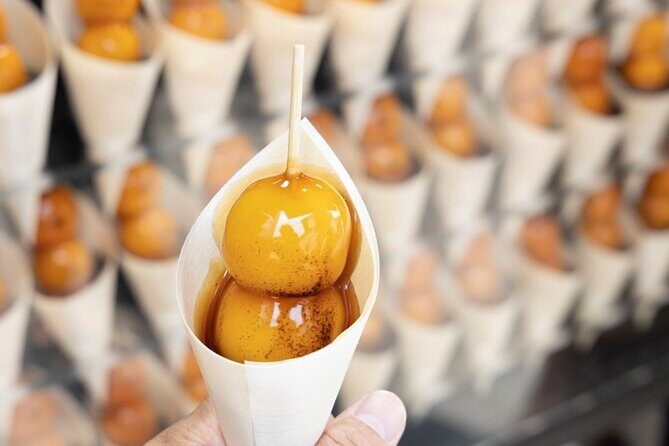
One of the nicest surprises in this tour flow is the built-in stroll past local shops and a sweets option. You’ll pass by character-style stores and local souvenir shops, including spots where you can pick up matcha sweets, wagashi, or bamboo-themed gifts.
This is where the tour earns its keep for people who hate “only sightseeing” days. Kyoto is packed with temples, but it’s also a place you taste and carry home small pieces of the culture. Even if you don’t buy much, it’s nice to window-shop and compare snack options in the area instead of hunting around later.
You won’t get a formal meal stop as part of the tour cost, though. That’s actually helpful if you want flexibility. You can treat the shop area like a menu preview and then decide if you want shaved ice, a sweet, or a packaged treat later.
If you do plan to buy something, keep an eye on your backpack space. Kyoto shopping bags can add up fast once you start with snacks and then move to souvenirs.
You can also read our reviews of more historical tours in Kyoto
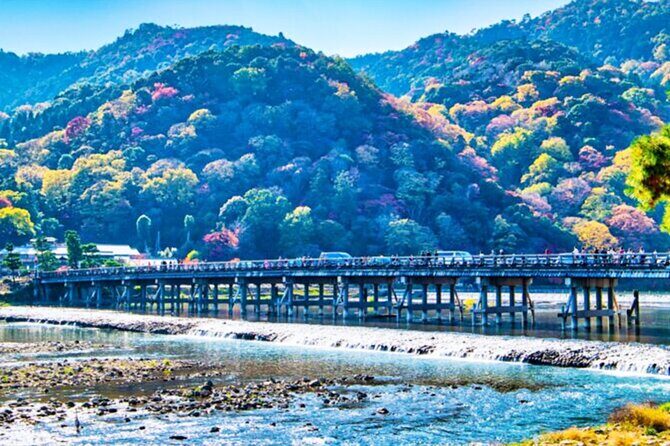
Arashiyama Bridge and the Walk Between Moments
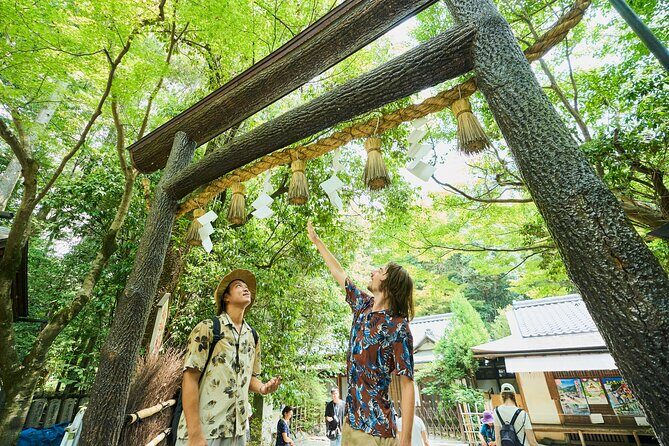
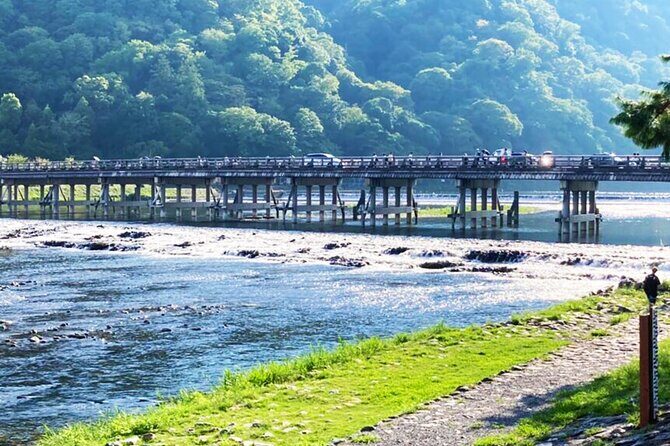
Between Tenryu-ji, the bamboo grove, and Monkey Park, you’ll cross the Arashiyama bridge area as part of the walk. It’s more than a scenic connector. This part of the route helps break up the day, giving you a visual reset and a chance to shake out your legs before the climb.
Bridges in Kyoto often act like “moving viewpoints.” You look out, you get perspective on the river area, and you see how the temple-and-bamboo scenes fit into the broader Arashiyama layout. That’s useful because it helps your brain map the area, so later when you wander on your own, you’ll feel less lost.
Also, the walk itself is part of the experience. You’re not stuck inside one attraction. You’re experiencing Arashiyama as a neighborhood—shops, street life, and the famous scenery flowing together.
Monkey Park Iwatayama: Wild Macaques and a Light Climb
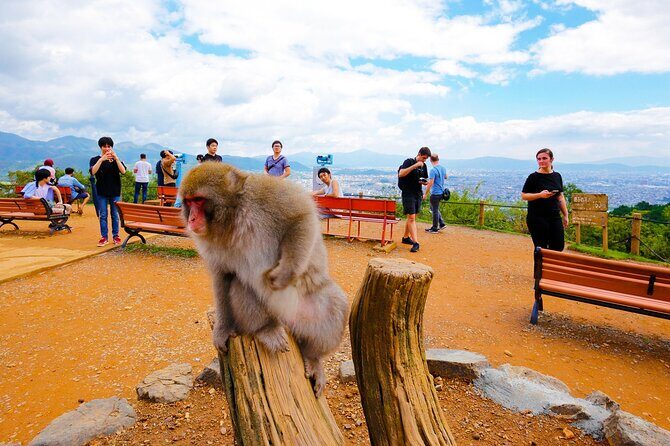
Next up is Monkey Park Iwatayama, where you’ll see wild Japanese macaques up close. The key word here is wild. You’re not in a zoo-style environment, so you’ll want to keep expectations grounded and focus on observing behavior rather than trying to control what they do.
This stop includes the entrance fee. Even better, you’ll have a guide who can purchase your ticket, which keeps things smooth at the start of the park. Then your time there is paced for you: you’ll spend about 30 minutes up at the park.
The park is described as a mountaintop experience with a light hiking component, and that fits the idea of moderate fitness. If you’re comfortable walking on uneven ground and climbing steps, you’ll likely be fine. If you’re dealing with mobility issues, you may want to plan a different style of outing.
The view is another big reason to go. You get a panoramic perspective of Kyoto from higher up, and it’s a great contrast to the bamboo grove’s vertical scenery. After the climb, it feels like you’ve “earned” the payoff.
Timing, Pace, and What Your Body Will Notice
A tour clock of about 1 hour 30 minutes sounds short, but the structure matters. Tenryu-ji gets the longer time slot, the bamboo grove is a focused photo walk, and Monkey Park gets the climb-and-view time. That means you won’t spend half the tour standing around.
Your body will notice the switch from temple paths to park steps. The Monkey Park portion is where you’ll feel it most. The good side: since the stop is only about 30 minutes, you’re not signing up for a long trek.
What I’d plan around is your footwear. Don’t wear stiff dress shoes and expect a comfortable time on steps. Comfortable walking shoes make the difference between enjoying the views and thinking about your feet the whole way.
Hydration helps too, especially if you’re visiting in warmer seasons. The tour doesn’t include meals, so you may also want to keep snacks or water in mind if you’re prone to getting hungry during active sightseeing.
Price and Value: Why $52.33 Makes Sense Here
At about $52.33 per person, this tour isn’t the cheapest way to do Arashiyama—but it also isn’t trying to be. The value is in the combination: a local guide plus entrance fees for both Tenryu-ji and Monkey Park. Many self-planned Arashiyama days end up spending a lot of your time figuring out tickets, directions, and the right order of stops.
Here, your guide handles key pieces. You get the admissions coverage, a structured route, and help with what to pay attention to at Tenryu-ji and the bamboo grove. That’s especially worth it if it’s your first time in Kyoto and you want fewer logistics headaches.
Also, small group size (max 12) keeps the experience feeling personal enough. You’re not just moving through a checklist—you’re getting explanations and a little guidance about how to see things.
Where the price might feel less attractive is if you’re the kind of traveler who wants to fully freestyle without any scheduled stops. If you’re okay with wandering, you may spend less on guide time. But if you want the highlights and the “right order,” this package can be a practical shortcut.
Who Should Book This Arashiyama Walking Tour
This tour is best for you if you like:
- UNESCO sites but don’t want a whole-day plan
- iconic Kyoto scenery like the bamboo grove, paired with real context
- a guided experience that still leaves room to explore on your own after
It’s also a good fit if you appreciate a guide who explains the little details. Multiple recent experiences mention Uta’s clear communication, friendly energy, and thoughtful conversation. One review even highlighted meeting communication in advance, which is a huge stress-saver when you’re navigating a specific meeting point.
You might want to consider a different option if:
- you hate climbing stairs or uneven paths (Monkey Park is the moderate part)
- you need your tour to end at a particular location other than the Monkey Park dismissal point
- you prefer long, unstructured free time over a timed walking route
FAQ
FAQ
How long is the Kyoto Arashiyama Walking Tour?
It’s about 1 hour 30 minutes.
What’s included in the tour price?
You get a local guide and the entrance fees for Tenryu-ji Temple and Monkey Park Iwatayama.
Are admission tickets included for both stops?
Yes. Entry to Tenryu-ji and entry to Monkey Park are included.
Where does the tour start and end?
It starts at Concept Randenarashiyamaekikita Coin Parking Lot (near 17番1 Sagatenryūji Tsukurimichichō, Ukyo Ward). It ends at Arashiyama Monkey Park Iwatayama.
Is the tour suitable for all fitness levels?
It’s listed as moderate fitness, since Monkey Park involves a light hike and climbing up to the mountaintop.
Is hotel pickup included?
No, hotel pickup and drop-off are not included.
Can I cancel for a refund?
Yes. You can cancel up to 24 hours in advance for a full refund.
Should You Book This Tour?
If you want a high-impact Arashiyama visit without getting stuck in ticket lines or wandering in the wrong order, I think this is a smart booking. The value is strongest because you’re not just buying a walk—you’re getting guided time at Tenryu-ji, included entry to two major attractions, and a smooth route that includes the bamboo grove and Monkey Park.
Book it if you like photos, appreciate UNESCO context, and you’re comfortable with a moderate climb. Skip it if your body hates stairs, or if you need an exact end location for your next activity.
.jpg)