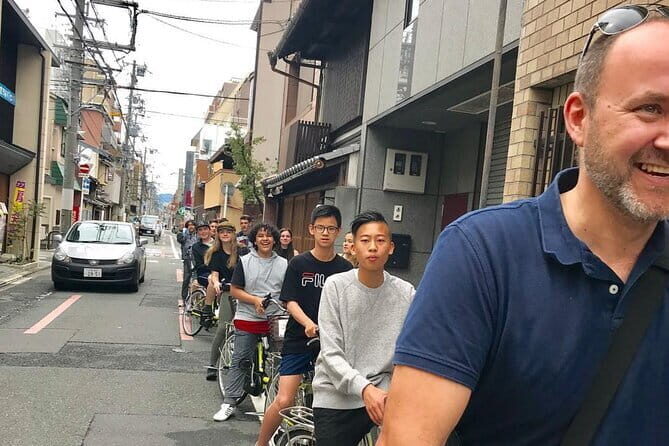
Kyoto changes fast when you get on two wheels. This tour pairs riverside biking with a Gion walk so you see both grand sights and calmer neighborhoods in one smooth afternoon. You’ll pedal through Kyoto’s everyday streets, then end with an on-foot look at the geiko and maiko world, with context that actually helps the places make sense.
I especially love how the ride builds in rhythm: calm start, a few meaningful stops, and a scenic return down the water. I also love that the walking part is not just photo time, it comes with a clear explanation of the geisha system as you move through the entertainment districts. The main drawback is straightforward: this isn’t for people who can’t ride a bike, and it’s not suitable for children under 9.
In This Review
- Key highlights you’ll feel on this Kyoto tour
- Getting oriented: Sanjo Ohashi meeting point and the ride flow
- Pedaling Kyoto’s water side: the riverside start and spring-water shrine
- Imperial Palace area: big walls, wide calm, and a different scale
- Zen temple stop: a pause that helps Kyoto’s mood click
- Past campuses and homes: seeing Kyoto beyond the main lanes
- Shimogamo Shrine (UNESCO): forest atmosphere and quiet focus
- The river junction and the lit-up return: when the bike ride turns magical
- Gion (or Pontocho) on foot: understanding the entertainment district
- Food and drinks: tea, Japanese sweets, and restaurant tips that fit your mood
- Bikes, electric options, and what you should pack
- Who this tour fits best (and who should skip it)
- Price and value: why $73 can make sense here
- Should you book this Kyoto bike and Gion stroll?
- FAQ
- How long is the tour?
- Where do we meet for the tour?
- Is a rental bike included?
- Is an electric bike available?
- What food and drinks are included?
- Is the tour rain or shine?
- What should I bring, and what can’t I bring?
Key highlights you’ll feel on this Kyoto tour
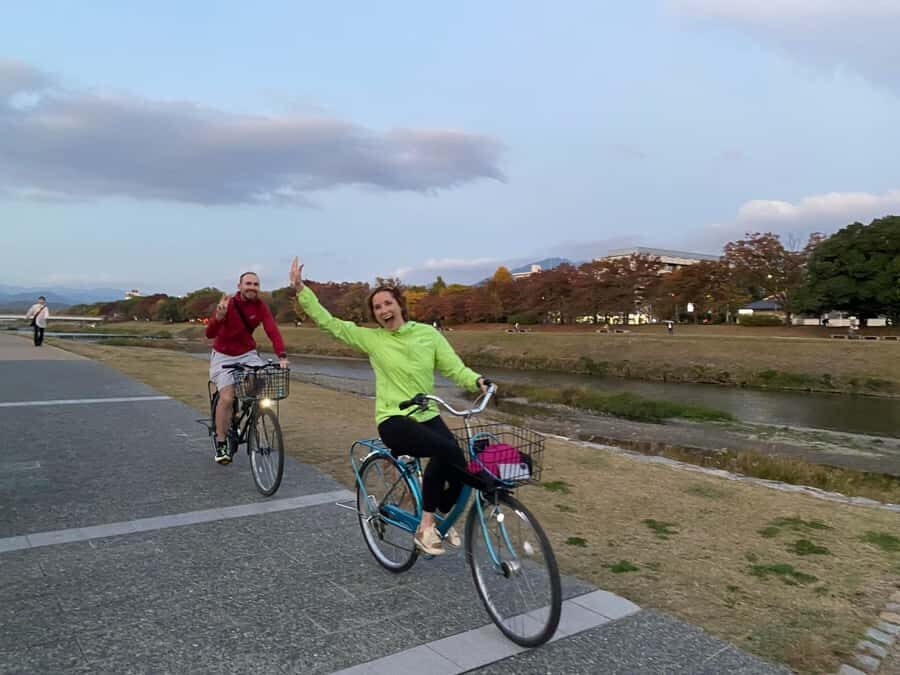
- Riverside ride, including a scenic lit-up return that’s easy on the eyes and the legs
- Shimogamo Shrine (UNESCO) with time for its forest feel and its striking buildings
- Imperial Palace area + Zen temple visits that balance big landmarks with quieter breaks
- Tea and Japanese sweets at a traditional snack shop during the bike portion
- Gion or Pontocho strolling with Geisha culture context, plus a chance to spot performers if timing lines up
- Family-friendly pacing when you have kids who can comfortably ride
Getting oriented: Sanjo Ohashi meeting point and the ride flow
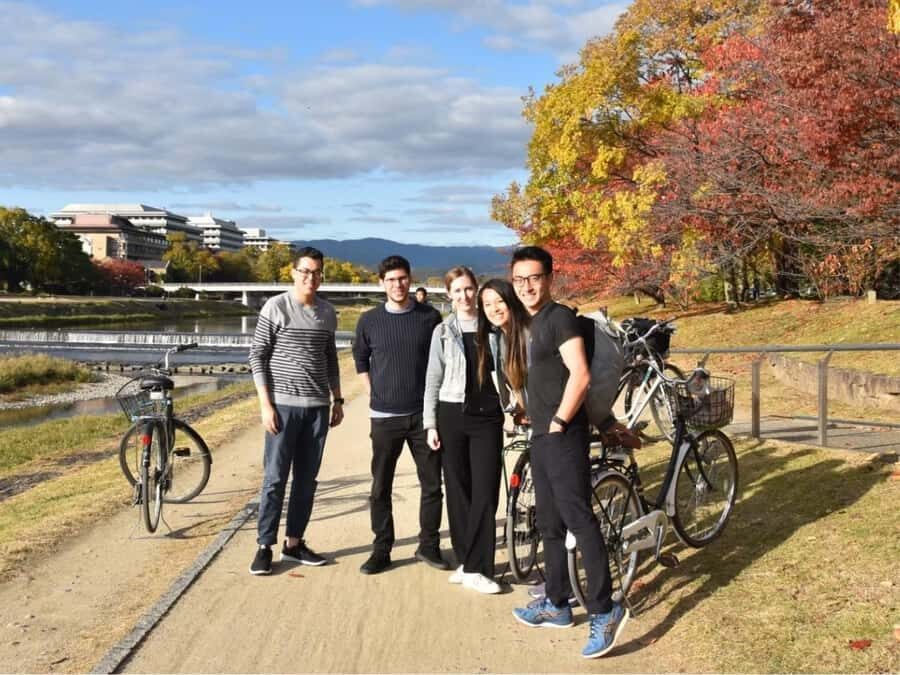
The tour starts at the kneeling man statue at the SouthEast corner of the Sanjo Ohashi intersection. If you arrive by subway, it’s quicker to exit to the surface first and then find the statue from there. The route is designed to come back to the same meeting point at the end, so you don’t have to worry about transportation puzzles after the ride.
Timing matters here. You’re looking at about 3.5 hours of biking, followed by a 30-minute town walk. That mix is a big part of the value: you cover distance efficiently on the bike, then slow down in Gion to absorb atmosphere on foot. If you like your Kyoto experiences organized but not rushed, this format works well.
Also note the rules so you don’t get surprised: no pets, no smoking, and no luggage or large bags. Plan to carry only what you need for the day (water, a camera, and a small layer).
You can also read our reviews of more cycling tours in Kyoto

Pedaling Kyoto’s water side: the riverside start and spring-water shrine
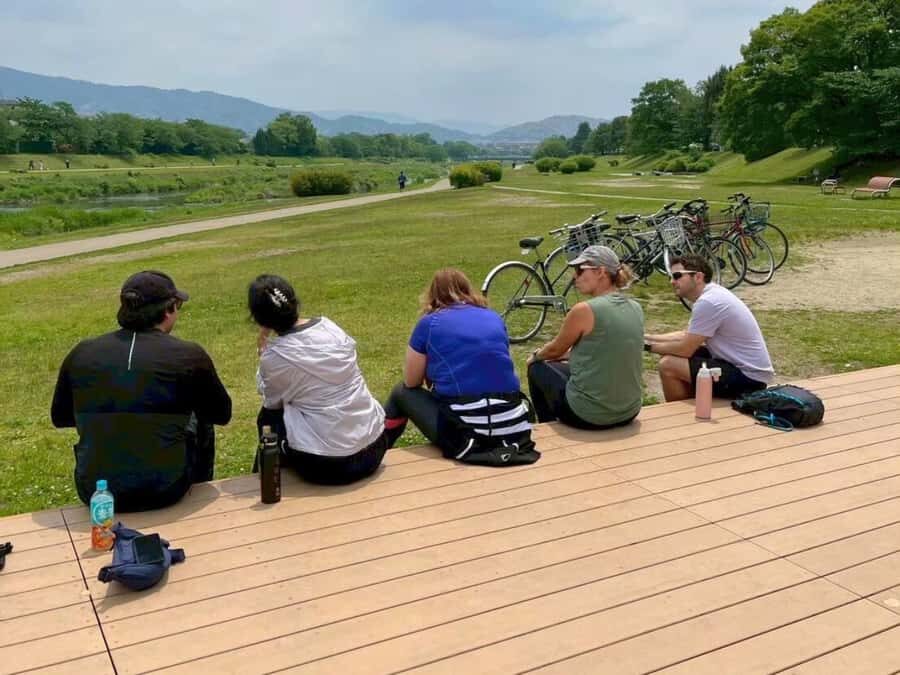
A good bike tour starts with an easy warm-up, and this one begins with a peaceful riverside road. That first stretch helps you get your bearings fast—especially if you’re not used to cycling in a city. You’ll feel the air and the motion without immediately climbing into a tougher route.
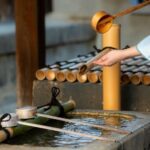
Soon after, you’ll stop at a hidden shrine where you can try pure natural spring water. Even if you’ve visited shrines before, this stop has a calm, local feeling that’s hard to replicate if you’re walking on your own. It’s also a nice pause after the initial ride so everyone resets—legs, cameras, and attention.
One practical point: the tour is rain or shine. If the weather turns, don’t assume you’ll just “move the same route.” The plan includes an alternative option on rainy days, with temple or shrine entrance fees covered when they’re used as the alternative.
Imperial Palace area: big walls, wide calm, and a different scale
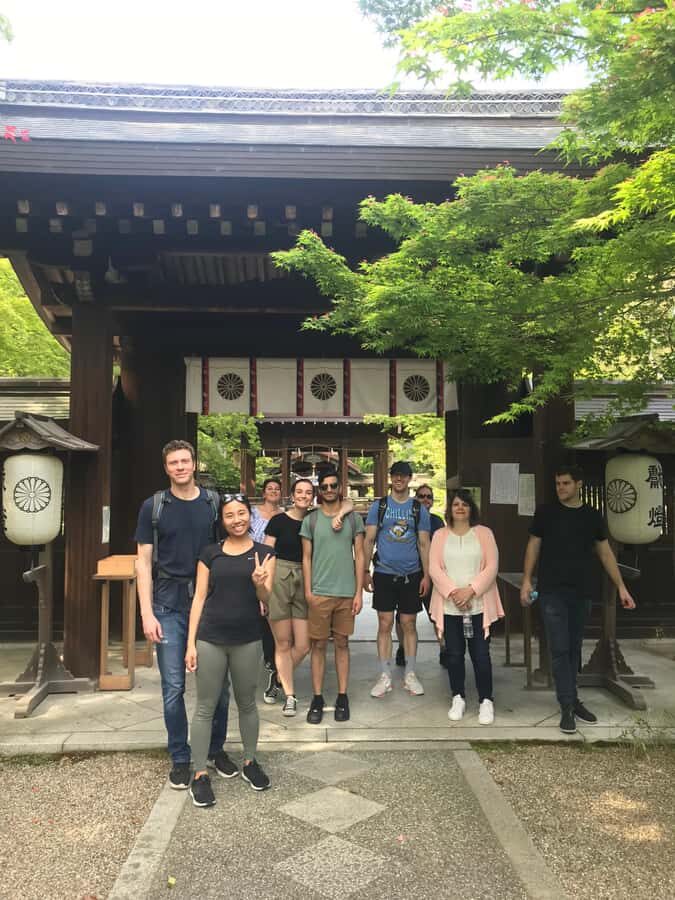
Next comes the Imperial Palace. This is one of those Kyoto landmarks where the scale hits you in a way photos don’t quite capture. From a bike tour perspective, it’s also a win because you can get to the area efficiently and arrive without spending extra time navigating traffic or guessing parking.
What I like about including a major site like this in the same half-day as quieter places is the contrast. You see the “official Kyoto” side first, but you’re not stuck there. The tour then keeps moving, so the day doesn’t become one long crowd scene.
A possible consideration: major landmark areas can feel more open and spread out. If your group has kids or you’re not comfortable riding for long stretches, the stop frequency and pacing become important. The experience is set up with frequent enough breaks to keep things from turning into just pedaling through places.
Zen temple stop: a pause that helps Kyoto’s mood click
After the palace area, the tour visits a famous Zen temple. Zen temples aren’t just about the buildings—they’re about the tone. When you arrive right after a riding segment, the shift to quieter space feels noticeable. You’re not only looking; you’re switching gears mentally.
If you like tours that explain what you’re seeing, this is part of the appeal. The guides focus on making the sites make sense as you move from one to the next, rather than treating each stop as a standalone postcard.
And if you’re traveling with kids, this kind of pause can help them reset too. Some guides are especially patient with children who need extra time to look around or ask questions. In particular, names like Mr. Go, Benjamin, Ko, and Claire have come up as guides who keep the mood easy and friendly.
Past campuses and homes: seeing Kyoto beyond the main lanes
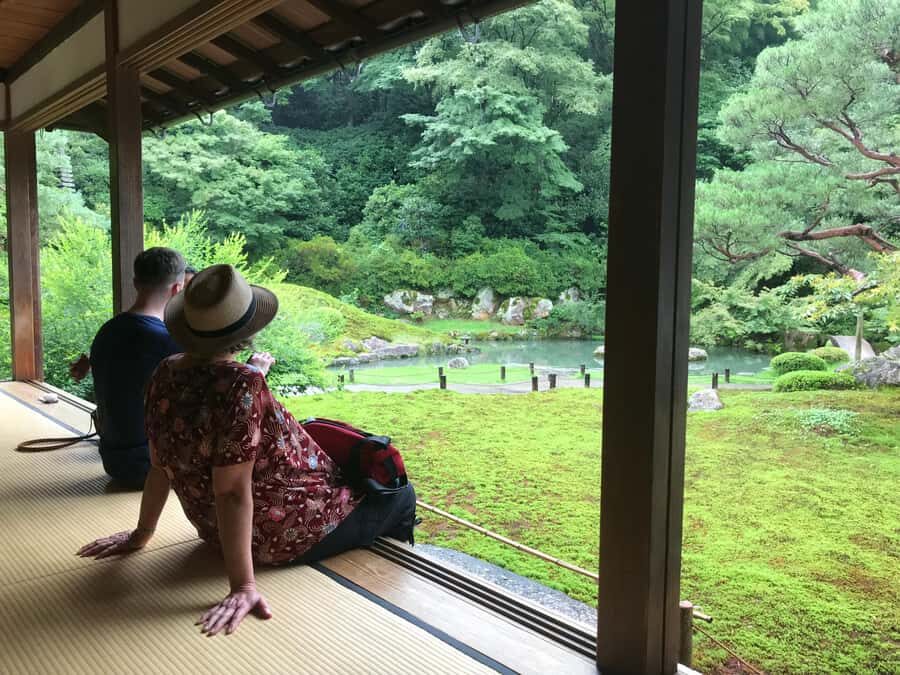
One of the smartest choices on this tour is that after the big highlights, you don’t just bounce back to tourist streets. You’ll pass by university campuses and peaceful residential areas. That matters because Kyoto isn’t only temples and crowds. It’s also daily life: classrooms, neighborhoods, and the in-between spaces that make the city feel lived-in.
Cycling through these stretches is a big part of the “why” behind doing this by bike. You get moving views without the stop-and-start frustration you can get when walking long distances. You also see the city at a human speed.
If you’re someone who wants less time in lines and more time getting the feel of a neighborhood, this section is a highlight. It also helps explain why the tour works well even when you’re a mixed group (different ages, different interests).
Shimogamo Shrine (UNESCO): forest atmosphere and quiet focus
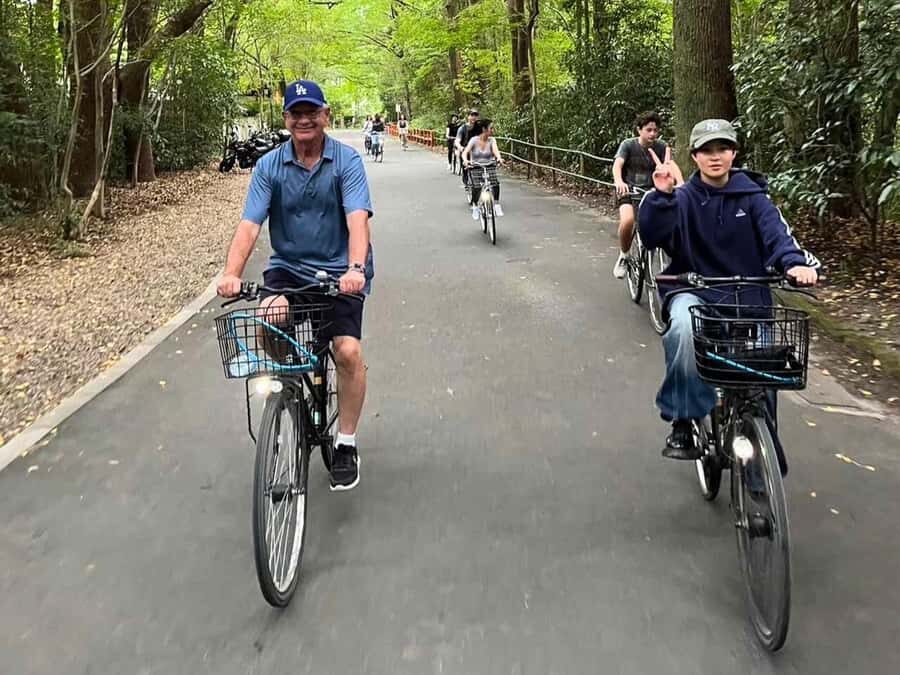
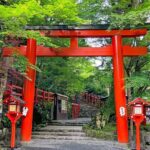
Then you reach Shimo-gamo Shrine, a UNESCO World Heritage site. This stop is all about atmosphere. You’ll get to enjoy its primitive forest feel and its beautiful buildings.
Here’s what I think makes this stop worth it on a bike tour: you’re not just visiting a set piece. You’re moving through Kyoto’s changing “worlds.” One moment you’re in city air; the next you’re in a more shaded, still-feeling environment that changes how the whole day feels.
From a practical angle, plan for a bit more walking once you arrive. Shrines and their surrounding grounds can feel like more than you expected, especially if you stop for photos. Still, this is the kind of place where time passes without you forcing it.
The river junction and the lit-up return: when the bike ride turns magical
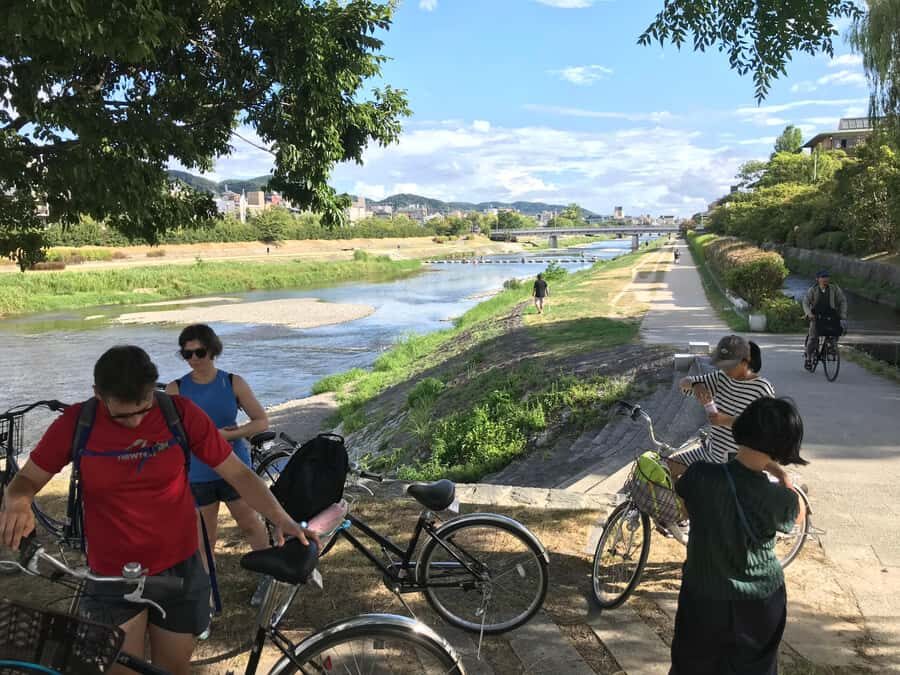
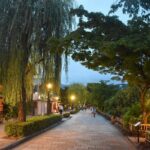
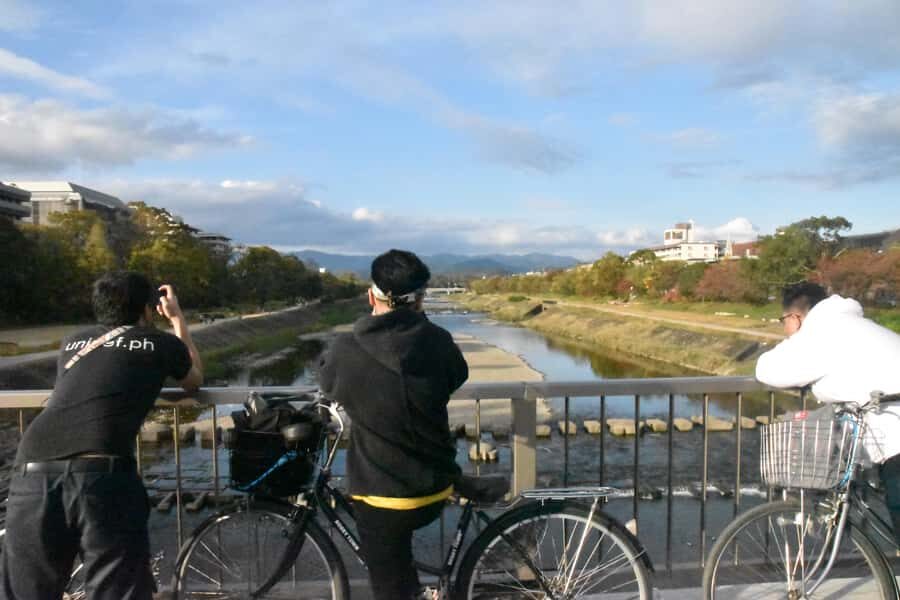
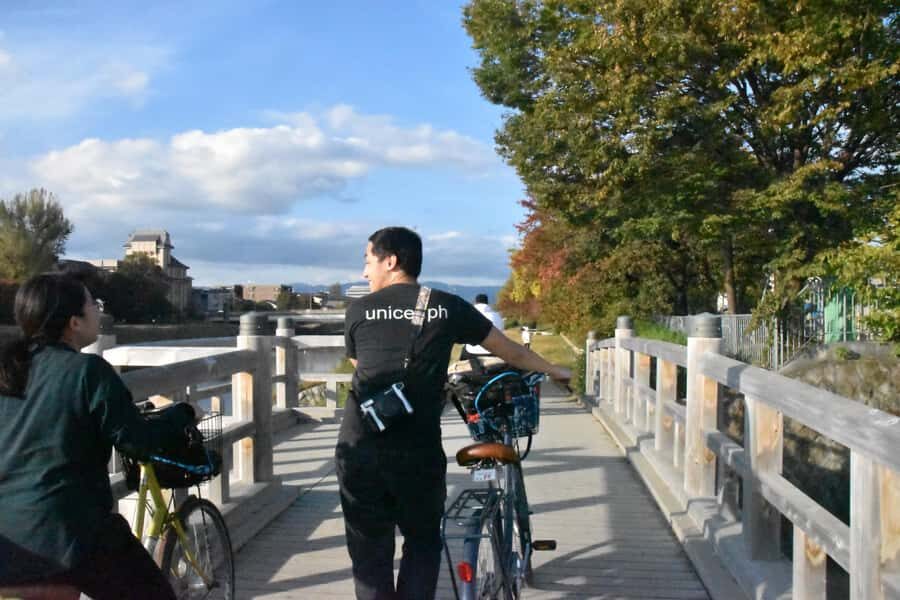
After Shimo-gamo, you’ll ride down to a unique river junction point and then follow a scenic, refreshing lighted-up riverside back.
This is where the bike tour pays off visually. If you try to do this kind of route by bus, you often end up with limited viewpoints. Cycling gives you a continuous experience of the water and the changing light. Even if you’re not someone who cares about night scenes, the return feels like a reward after the earlier site stops.
Another consideration: humidity and heat. Kyoto can feel sticky in warmer months, and biking adds physical effort. The good news is that the tour structure includes breaks and a pace that suits families better than you might expect for a half-day of cycling.
Gion (or Pontocho) on foot: understanding the entertainment district
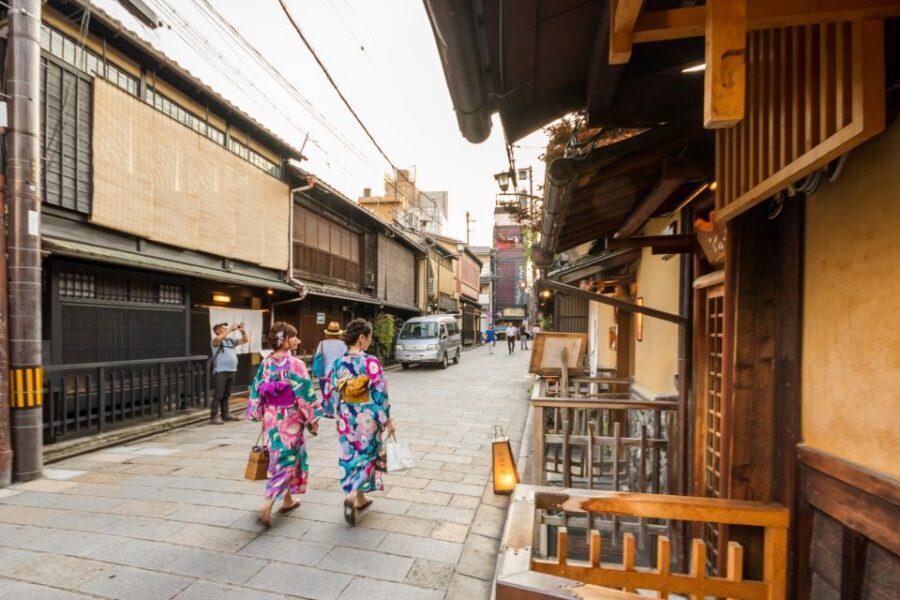
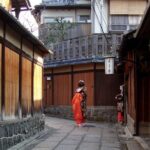
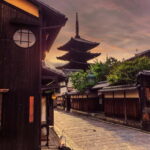
Once you park the bikes, you switch to a 30-minute leisurely stroll through Gion or Pontocho, Kyoto’s famous entertainment areas. This is where you slow down and look up.
You’ll visit the main Flower towns (the areas associated with geisha culture) and see the photogenic streets that people come to Kyoto for. But what makes this part more useful than a casual walk is the explanation you receive along the way: the unique culture and system of Geisha.
As you move, those explanations help your eyes work better. Instead of just seeing signs, streets, and wooden facades, you start to understand what the rhythms mean and why certain places feel the way they do.
And yes, there’s a chance you might spot a geisha performer if your timing lines up. Don’t count on it like it’s guaranteed, but it’s the kind of possibility that adds energy to the walk.
Food and drinks: tea, Japanese sweets, and restaurant tips that fit your mood
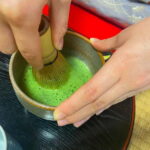
You’ll have Japanese sweet snacks and Japanese tea at a traditional snack shop during the bike portion. This is a simple inclusion, but it matters: you get a taste break without having to hunt for a place mid-tour.
Then during the walking part, the guide introduces good restaurants and bars based on your requests. That last bit is practical. Kyoto has plenty of choices, but a short “what would work for you tonight” suggestion can save time and prevent you from landing in the wrong kind of spot.
What I like about this approach is you can ask for what you want: casual, local, quick, sit-down, whatever your group prefers. The tour doesn’t push one style only.
Bikes, electric options, and what you should pack
The tour includes a rental bike. You’ll also need to be able to ride comfortably, since this is not a push-and-walk situation. If you want less effort, there is an option for an electric bike for an extra 1,000 yen, payable on the spot if you request it.
What to bring is refreshingly basic:
- Comfortable shoes
- Camera
- Water
- Weather-appropriate clothing
On a day that combines cycling and strolling, the shoes are the whole deal. You’ll want something that works well on uneven pavement and walking areas.
Who this tour fits best (and who should skip it)
This is a strong fit for families with kids who can ride bikes confidently. One parent shared that they brought kids aged 9 and 10 and the guide was patient and kind, which is exactly the sort of detail you care about when traveling with children.
It’s also a great fit if you want:
- a structured way to see Imperial Palace, Zen temple, and Shimogamo Shrine
- a riverside experience that feels different from standard sightseeing
- a short, guided walk through Gion/Pontocho with cultural context
It may not be a match if:
- your group includes someone who can’t comfortably ride a bicycle
- you’re traveling with pets or relying on luggage/large bags
- your main goal is only one or two big-ticket attractions with minimal movement
Price and value: why $73 can make sense here
At $73 per person, the price isn’t just for “someone guiding you around.” You’re getting:
- a rental bike
- Japanese sweets and tea
- entrance fees covered for the temple or shrine alternative if it rains
- an English-language guide who coordinates the ride and the walking portion
That adds up more than it seems at first glance. If you were to piece this together yourself—bike rental, snacks/tea, paid entrances (especially rainy-day alternatives), and a guide to interpret what you’re seeing—you’d likely spend comparable money with more hassle.
The electric bike option costs extra, but the standard bike is included, and the base plan is already designed for a half-day that moves efficiently.
Should you book this Kyoto bike and Gion stroll?
I’d book this if you want Kyoto to feel like a city you can move through, not just a checklist of stops. The combination of riverside cycling, a UNESCO shrine visit, and a guided Gion/Pontocho walk gives you variety without turning the day into a marathon.
Skip it if you or your group can’t ride a bike, or if your kids are under 9. Also, if you hate any kind of cycling in heat, consider the electric bike option so the ride stays comfortable.
If you’re deciding between “temples only” or “city walk only,” this one gives you both worlds in a single afternoon. That’s the real value.
FAQ
How long is the tour?
The tour includes 3.5 hours of biking and a 30-minute town walk.
Where do we meet for the tour?
Meet at the kneeling man statue at the SouthEast corner of the Sanjo Ohashi intersection. From the east end of Sanjo Ohashi Bridge, cross the street and find the statue.
Is a rental bike included?
Yes. The tour includes a rental bike.
Is an electric bike available?
Yes, but it costs extra. If you request an electric bike, there is an additional 1,000 yen fee you pay on the spot.
What food and drinks are included?
You’ll get Japanese sweet snacks and Japanese tea at a traditional snack shop during the tour.
Is the tour rain or shine?
Yes, the experience runs rain or shine. On rainy days, a temple or shrine entrance alternative may be used, and entrance fees for that alternative are included.
What should I bring, and what can’t I bring?
Bring comfortable shoes, a camera, water, and weather-appropriate clothing. Pets, smoking, and luggage or large bags are not allowed.