REVIEW · CYCLING TOURS
Discover Kyoto at Night by Bike
Book on Viator →Operated by Jaime · Bookable on Viator
Kyoto looks totally different after sunset. This night bike tour strings together lantern-lit sights, shrine stops, and old-street vibes in about 3 hours 45 minutes. I love that it’s built to help you skip the daytime crush without turning the evening into a frantic sprint.
Two big wins for you: you get a ride plus included entrance fees (so you’re not doing ticket math in the dark), and the scenery is the kind that feels made for night photos—torii gates, cobblestones, and classic alleys glowing under lamps. The only real caution: the route has several short stops, and if you’re the type who wants nonstop riding, this can feel more like stop-and-listen than a long pedal session.
In This Review
- Key Things to Know Before You Ride
- Price and What You’re Really Paying For
- The 5:00 pm Start: Why Dusk Is the Sweet Spot
- Small Group Size: Easier Turns, Better Attention
- Stop 1: Fushimi Inari-taisha After Sunset
- Stop 2: Miyakawa-cho Dori and the Lantern-Lit Street Mood
- Stop 3: Gion Streets, Hanamikoji Energy
- Stop 4: Yasui-Konpiragu and the Shrine-Quest Theme
- Stop 5: Hōkan-ji and the Yasaka Pagoda Photo Zone
- Stop 6: Ninenzaka for Classic Hillside Atmosphere
- The Higashiyama Park Moment: Cherries, Ponds, and Wooden Bridges
- Pacing: Riding vs Standing and Listening
- What the Guide Adds (and What to Expect From the Experience)
- Included Extras That Actually Help
- Who Should Book This Bike-At-Night Tour?
- Book It or Skip It? My Practical Recommendation
- FAQ
- What time does the Kyoto at Night by Bike tour start?
- How long is the tour?
- Where do I meet for the tour, and does it end nearby?
- How much does it cost?
- What’s included in the price?
- What happens if the weather is bad?
Key Things to Know Before You Ride
- 5:00 pm timing: You start at dusk, so sights are already switching into night mode.
- Up to 9 people: Small-group feel keeps it easier to move through tight streets.
- Bilingual guiding: Stories and local context are part of the experience, not an afterthought.
- Multiple shrine/old-street stops: Expect frequent getting on and off the bike.
- Weather-dependent: The tour needs good conditions to run smoothly.
- Bring bike comfort, not just enthusiasm: It’s best if you’re reasonably comfortable riding.
Price and What You’re Really Paying For
Kyoto at Night by Bike costs $80 per person for a 3 hours 45 minutes outing. At first glance, that sounds like a lot—until you look at what’s included and what’s avoided.
You’re getting:
- a bicycle,
- bottled water,
- all entrance fees,
- and a guide who helps connect the dots between the sites you pass.
That “all entrance fees” piece matters in Kyoto, where you can end up paying for entry again and again during a typical sightseeing route. On top of that, you’re riding after dark, when schedules, crowding, and lighting can turn a self-guided plan into a mess of walking detours.
One more practical detail: the tour ends back where it starts, so you’re not stuck figuring out a late-night transfer. The meeting point is a 7-Eleven at 44-1 Higashikujō Kamitonodachō in Minami Ward, and the start time is 5:00 pm. It’s also listed as near public transportation, which helps.
You can also read our reviews of more cycling tours in Kyoto


The 5:00 pm Start: Why Dusk Is the Sweet Spot
Starting at 5:00 pm is smart. You catch that in-between time when daylight fades but the street lights and lanterns are coming alive. If you’ve ever tried to see Kyoto at night on a self-guided schedule, you know the problem: too early and it looks like a normal day; too late and you’re tired, hungry, and fumbling for directions.
Here, the timing gives you a smoother experience:
- shrines start to glow,
- streets feel quieter than the daytime sightseeing circuit,
- and you still have enough evening light for photos before it turns fully dark.
You’ll also be cycling through different neighborhoods without having to hop buses or wrestle with trains late in the evening. The tour lists moderate physical fitness as the baseline, which usually means you’ll be doing steady movement for the session, plus short stops.
Small Group Size: Easier Turns, Better Attention
This tour caps at 9 travelers (and that matters more than you might think). In Kyoto’s tight older streets, bigger groups can turn into a slow-moving line that forces everyone to stop every few seconds.
With a small group, you tend to get:
- less crowding around the guide during explanations,
- easier bike handling in narrow areas,
- and more flexibility when the group needs a breather.
Also, the tour uses a mobile ticket, which is handy when your evening includes multiple entry points. Less wallet-fishing in the dark—always a good plan.
Stop 1: Fushimi Inari-taisha After Sunset
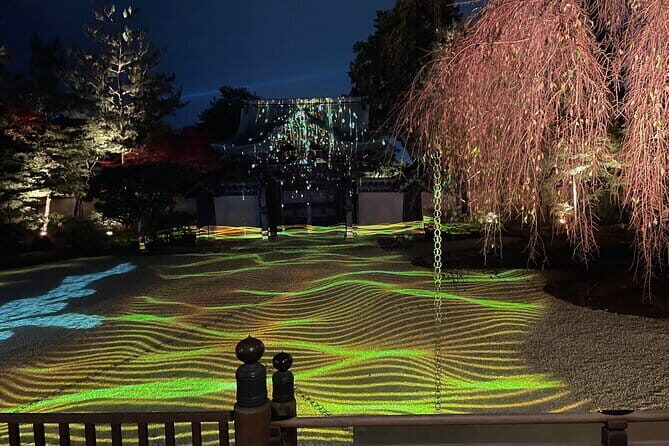
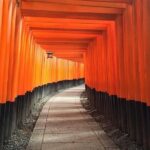
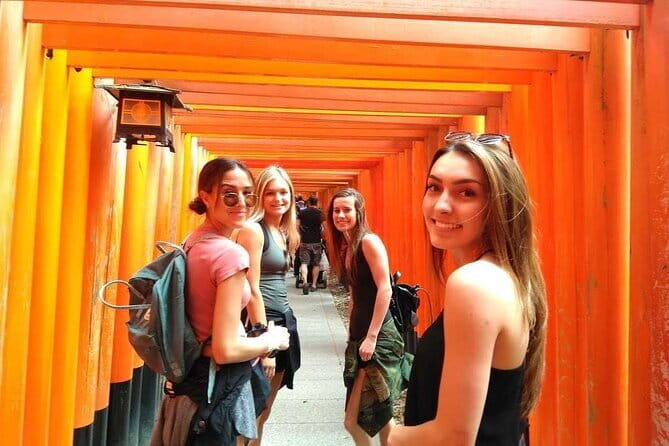
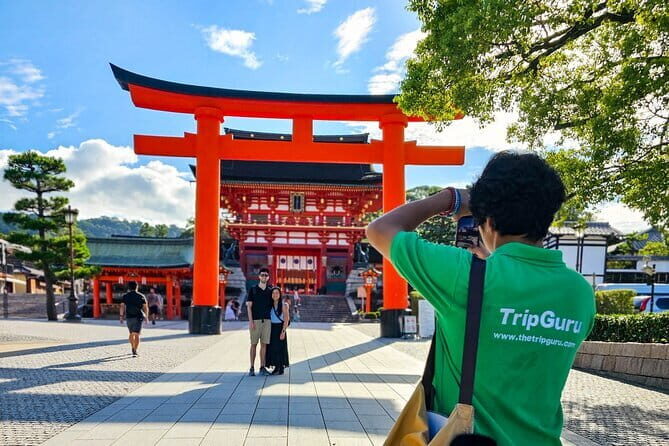
Your first stop is Fushimi Inari-taisha Shrine. This is the famous Shinto site covered in thousands of torii gates, and it’s usually packed in daylight. The tour gives you about 40 minutes here, with admission listed as free.
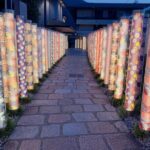
At night, the torii experience shifts. Daytime crowds can turn the gates into a checklist. At night, the atmosphere feels more like a slow walk through a corridor of lantern-light. You still get the core payoff—the torii rows—but with a calmer rhythm.
Practical takeaways:
- Wear shoes you’re happy walking in on uneven surfaces.
- Expect that even with a smaller crowd, Fushimi Inari remains a popular place.
- Take your photos without blocking the flow. Narrow lanes fill fast.
Stop 2: Miyakawa-cho Dori and the Lantern-Lit Street Mood
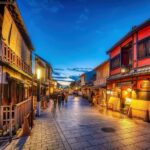
Next up is Miyakawa-cho Dori, about 15 minutes. This street sits just south of Gion and runs parallel to the Kamogawa River, and at night it becomes a lantern-lit, traditional-feeling corridor.
This stop works as a palate cleanser after Fushimi Inari. It’s not about one single monument. It’s about mood: the sense that Kyoto’s evening life is happening in the space between landmarks.
If you care about photography, this is a good moment to slow down and frame shots of lanterns and wooden façades rather than trying to sprint to the next place.
You can also read our reviews of more evening experiences in Kyoto


Stop 3: Gion Streets, Hanamikoji Energy

Then you roll into Gion, where the tour gives roughly 10 minutes. The description highlights Hanamikoji street and its historic tea houses (ochaya). Admission at this stop is listed as included, which suggests you’ll have access to the right viewing/entry areas without worrying about extra payments.
Gion at night is the part people imagine before they come: traditional streets, soft lighting, and a quieter feeling than the daytime “photo line” vibe. In a short time block, the guide can point out what you should notice—where the historical architecture shows up, and how the street layout makes the whole area feel theatrical after dark.
In short: this is a quick hit, not a long exploration. If you want a deeper dive into Gion on your own later, this tour gives you the lay of the land.
Stop 4: Yasui-Konpiragu and the Shrine-Quest Theme
After Gion, you visit Yasui-Konpiragu, about 10 minutes, with free admission. This is one of Kyoto’s unusual and interesting Shinto shrines, described around the idea of cutting ties with bad relationships or habits and forming strides toward new behavior.
That “why people come here” angle is part of what makes shrine stops more than picture-taking. It gives context for what you’re looking at—how a place becomes meaningful based on the prayers and intentions people bring.
For you, this stop can be a nice reset: you’re not just seeing famous buildings, you’re understanding how people use them in everyday belief.
Stop 5: Hōkan-ji and the Yasaka Pagoda Photo Zone
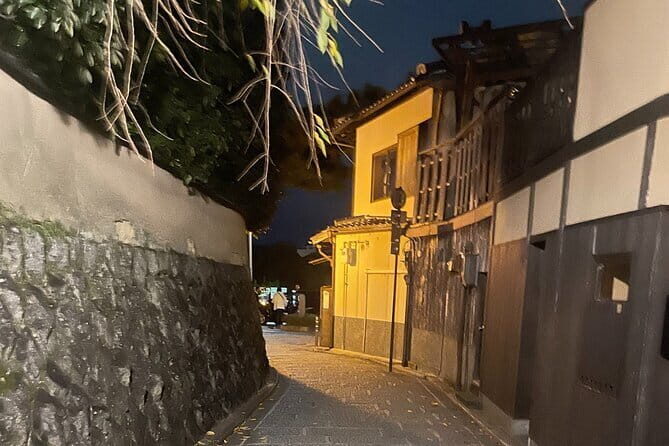
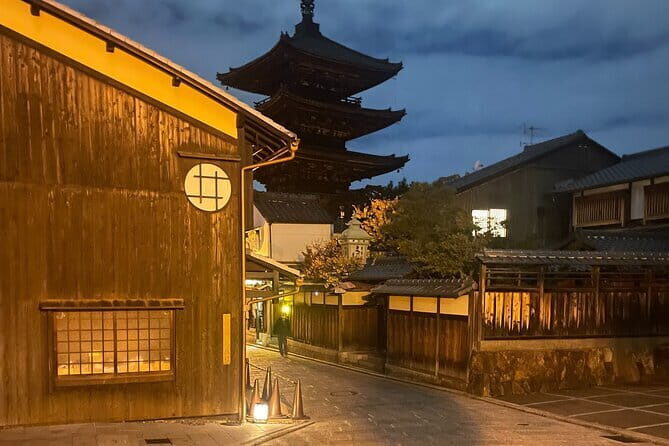
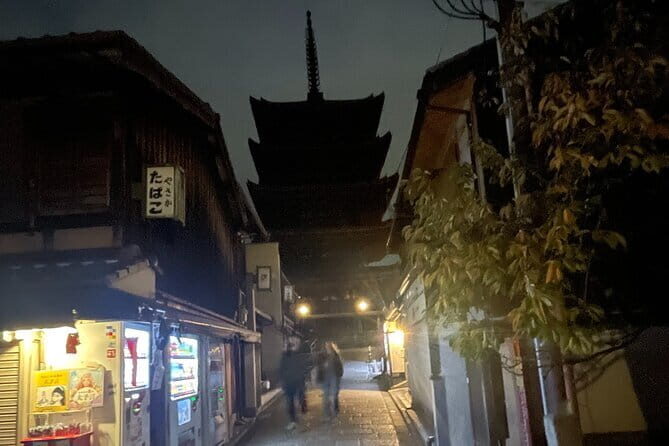
Next is Hōkan-ji (Yasaka Pagoda) with about 15 minutes. The area around it is described as one of Kyoto’s most photographed spots, and the pagoda sits among narrow cobblestoned streets lined with traditional machiya townhouses.
This stop is where the tour really earns the “night” part of the title. The lighting on the pagoda and the street feel—stone underfoot, old wooden façades, and a tall silhouette—turns this into a classic Kyoto evening photo setup.
A small caution: narrow streets can make it hard to step to the side and shoot without slowing everyone down. If photography matters to you, move your feet first, then lift your camera.
Stop 6: Ninenzaka for Classic Hillside Atmosphere
Your next area is Ninenzaka, about 15 minutes, again with free admission. It’s described as one of the most traditional areas in Japan and as one of the slopes that offers amazing views—especially at night.
Ninenzaka is ideal for gentle wandering because you’re not just looking forward. The slope means you get layered angles: buildings, street lines, and the sense that Kyoto climbs and curves.
This is also a good spot to slow down, catch your breath, and enjoy that “Kyoto evening” vibe without rushing.
The Higashiyama Park Moment: Cherries, Ponds, and Wooden Bridges
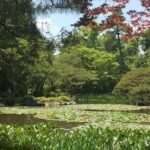
After Ninenzaka, the tour includes a final park stop described as the most famous park in Higashiyama, featuring cherry trees, ponds, and wooden bridges. (You’ll get the charm of a traditional park setting, designed for strolling and evening calm.)
This is a smart closing choice. The earlier stops are tighter and more structured. A park gives you breathing space after shrine-and-street clusters. It’s also where night photos can look less crowded, because parks tend to have a different kind of foot traffic than major shrine entrances.
Pacing: Riding vs Standing and Listening
Here’s the balanced truth: this is a bike tour with meaningful sightseeing stops, not a nonstop cycling session.
Some of that is baked in:
- you cycle short stretches,
- then you get on foot for explanations and viewing,
- then you remount.
That’s great if you enjoy understanding what you’re seeing. It can feel less great if you expected hours of steady riding with minimal talking.
So if your ideal evening is long, continuous pedal time, plan for a route that alternates movement with quiet moments. The best strategy is to use the downtime well: ask the guide a question, take in the lighting, and treat each stop like a mini chapter.
Also, one important note from the experience info: the tour’s bike comfort level is best for people with moderate to fairly proficient riding skills. If you’re a total beginner on a bicycle, you might want to pass or choose another option that’s more walking-based.
What the Guide Adds (and What to Expect From the Experience)
The tour is led by bilingual guides who focus on Kyoto’s history, culture, and traditions. Their job isn’t just to read facts. It’s to help you notice details: why a street feels the way it does, what a shrine’s purpose means, and how the neighborhoods fit into the larger Kyoto map.
In one example from a recent outing, Juan was singled out for how he kept the group feeling safe while riding. That kind of focus matters, especially when you’re sharing roads and narrow lanes with bikes and pedestrians in the evening.
You should also expect that the guide’s storytelling takes real time during stop points. That’s not a flaw if you like context. If you don’t, at least know what you’re signing up for: an evening tour with explanations, not a silent ride.
Included Extras That Actually Help
Two small inclusions make your night easier:
- Bottled water, which is underrated on active tours.
- All entrance fees, which removes friction when you’re tired and trying to keep your evening flowing.
Using the bicycle is also a key value point. In a city where public transport is easy in daylight, bike touring after dark adds freedom. You get motion without the stress of route planning.
And since the tour ends back at the meeting point, you don’t have to solve a late-night logistics puzzle.
Who Should Book This Bike-At-Night Tour?
This is a strong fit if you:
- want Kyoto at night without spending hours planning,
- enjoy short guided stopovers with photos built in,
- can handle getting on and off a bike multiple times,
- and are comfortable riding at least moderately.
It’s also appealing if you like the idea of escaping the biggest daytime crowds while still seeing major sites: Fushimi Inari, Gion, and the Yasaka Pagoda area.
If you’re traveling with someone who hates stopping and listening, talk it through beforehand. The pacing can be either perfect or frustrating depending on your preferred travel style.
Book It or Skip It? My Practical Recommendation
Book Kyoto at Night by Bike if you want a guided, photo-friendly evening that mixes motion with context. For $80, the math works out best when you value included entrance fees, bottled water, and a small-group night route that’s hard to replicate on your own without extra stress.
Skip this one if:
- you need nonstop riding with minimal talking,
- you’re not comfortable on a bicycle yet,
- or you’re traveling when weather looks iffy (the tour requires good conditions).
If you like Kyoto’s night atmosphere and can handle stop-and-stroll moments, this tour is a very smart way to spend your evening.
FAQ
What time does the Kyoto at Night by Bike tour start?
It starts at 5:00 pm.
How long is the tour?
The duration is about 3 hours 45 minutes.
Where do I meet for the tour, and does it end nearby?
You meet at 7-Eleven (44-1 Higashikujō Kamitonodachō, Minami Ward, Kyoto), and the tour ends back at the same meeting point.
How much does it cost?
It costs $80.00 per person.
What’s included in the price?
The tour includes all entrance fees, use of bicycle, and bottled water.
What happens if the weather is bad?
The tour requires good weather. If it’s canceled due to poor weather, you’ll be offered a different date or a full refund.