REVIEW · WORKSHOPS
Traditional Japanese Flower Styling Workshop – Ikebana in Kyoto
Book on Viator →Operated by Fooraku · Bookable on Viator
Kyoto, but make it practical and hands-on: you learn ikebana form and function.
I love that this workshop teaches you how to arrange flowers like Japanese aesthetics, not just how to copy one pretty picture. I also like the way the class is set up so you can do it later at home, even if you don’t have special vases or rare flowers.
One thing to consider: this is a short, focused 1 hour 45 minute session. If you want deep, long coaching for multiple arrangements, you’ll feel a bit “finished” when the session photo gets taken.
In This Review
- Why This Ikebana Workshop Works
- Key Highlights at a Glance
- Where You’ll Learn Ikebana in Kyoto (Sogetsu WEST)
- What I’d watch for before you go
- Meet Master Fooraku and Settle Into the Class
- The Ikebana Lesson: Philosophy, History, and the Quiet Rules
- The Best Part: Creating Your Own Arrangement (No Special Stuff Required)
- What style means here
- How the Workshop Uses the Studio’s Container Collection
- Photo Moment and the Post-Workshop Chat
- Value and Price: Is $104.24 Worth It?
- Practical Tips So You Get the Most From the Session
- Who Should Book This Ikebana Workshop
- Should You Book Sogetsu WEST Ikebana in Kyoto?
- FAQ
- How long is the Traditional Japanese Flower Styling Workshop in Kyoto?
- Where does the workshop meet?
- Is this activity private?
- Do I need special flowers or traditional Japanese vases?
- Can I recreate what I learn after returning home?
- Do I get photos or learning materials?
- Is cancellation free?
Why This Ikebana Workshop Works
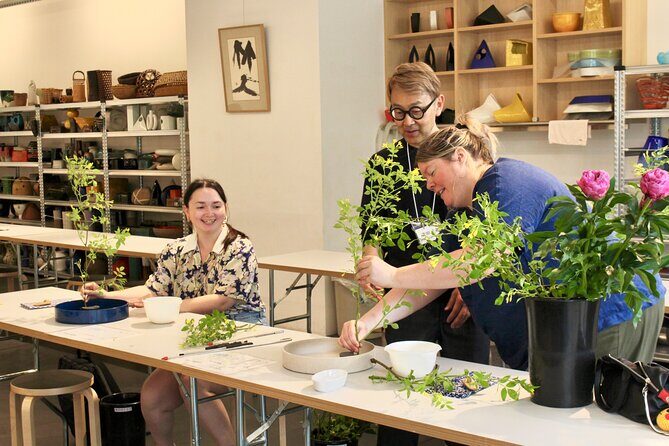
At Sogetsu WEST, the teacher brings structure and calm. You’re guided through the basics, then you make your own ikebana arrangement with help throughout, not after-the-fact corrections.
The best part is the payoff. You get techniques for keeping flowers fresh, plus explanations of ikebana’s history, philosophy, and secrets so you’re not just following steps—you’re understanding what you’re doing.
A small drawback: the workshop is private, which is great for attention, but it doesn’t stretch into a full “day of plants and wandering.” You’ll want to pair it with more Kyoto time afterward.
Key Highlights at a Glance
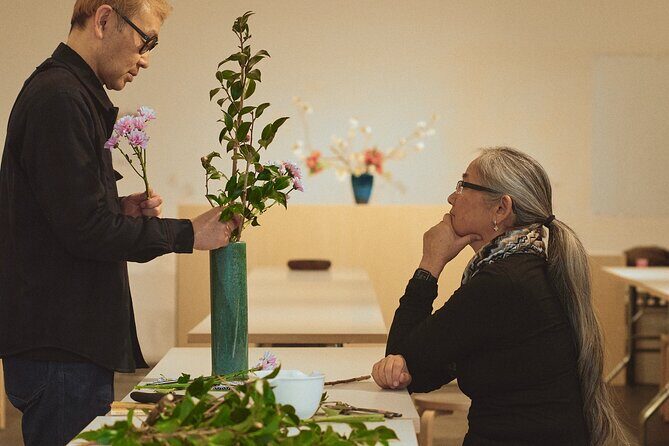
- Private, hands-on instruction with Master Fooraku’s guidance
- Hundreds of container options at Sogetsu WEST (300+ types of containers)
- Learn multiple ikebana styles you can recreate at home without special items
- Flower-freshness tips to help arrangements last longer
- You’ll leave with a photo of your finished creation
- Session slides by email available on request
You can also read our reviews of more tours and experiences in Kyoto

Where You’ll Learn Ikebana in Kyoto (Sogetsu WEST)
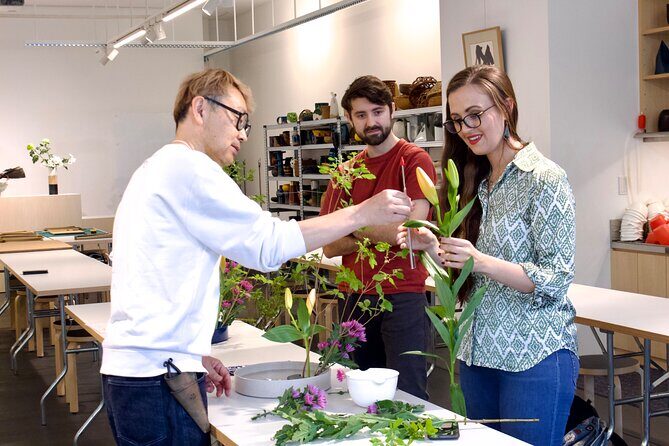
The session starts at Sogetsu WEST, located at 20-4 Sujakudōnokuchichō, Shimogyo Ward, Kyoto (600-8842). This matters because it’s not one of those “meet somewhere vague and good luck” setups. You know the exact place you’re aiming for, and it’s described as near public transportation, which helps if you’re also hopping around Kyoto that day.
Sogetsu WEST is known for its collection of over 300 types of flower containers, which gives you choices you probably won’t find in a standard craft shop. And those container options aren’t just decoration. In ikebana, the vessel and proportions influence the entire feel—height, balance, and the negative space around the flowers all matter.
If you like the idea of making something that looks simple but is actually carefully designed, this is the right kind of workshop. It’s less “DIY chaos,” more “controlled elegance.”
What I’d watch for before you go
Because the experience is about 1 hour 45 minutes, show up with a clear intention: you’re here to learn a method and create one arrangement. If you try to treat it like a long museum visit plus crafts, you’ll feel rushed at the end.
Also, read the room. The class is set up for conversation and learning, including post-session chatting, so being open to small cultural back-and-forth will make the experience better.
Meet Master Fooraku and Settle Into the Class
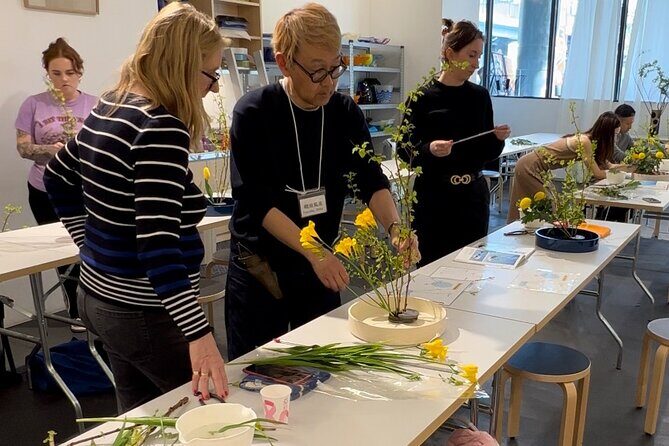
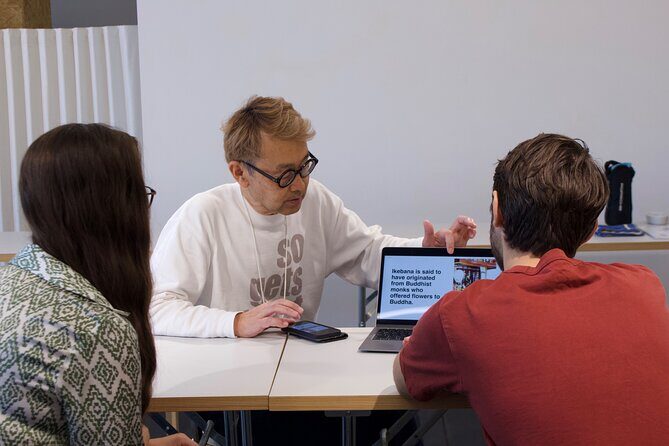
This is a private tour/activity, meaning only your group participates. That changes the dynamic in a big way. You can ask questions without waiting for someone else to catch up, and the teacher can tailor explanations to what you’re aiming for.
The instructor is Fooraku—and one review calls out Master Fooraku as someone who has studied ikebana for over 30 years, with good English. That’s a real advantage in Japan, where art terms can be tricky if you’re translating on the fly. It’s much easier to learn technique when the guidance is clear.
You’ll also get a gentle pace. The reviews highlight that the teaching feels relaxed, not stiff or performative. That matters if you’re someone who worries about doing things wrong. In ikebana, “right” isn’t about perfect symmetry—it’s about intention, balance, and how the arrangement breathes.
The Ikebana Lesson: Philosophy, History, and the Quiet Rules
Before you start arranging, you’ll learn the history, philosophy, and secrets of ikebana. That might sound like “intro lecture,” but in practice it gives you context for why the arrangement is built the way it is. When you understand the logic, your choices feel less random.
The workshop also focuses on the Japanese aesthetic sense and the joy of the changing seasons. That theme isn’t just poetic. It helps you frame what you’re doing: ikebana is often about expressing time—growth, weather shifts, and the life cycle of materials—using line, space, and form.
You’ll also learn practical techniques for keeping flowers fresh. This is a big deal for a workshop like this, because the finished arrangement is only as good as the freshness you can maintain after class. Flower arrangements can fade quickly if you don’t handle them right, and this class gives you methods to extend the life of what you create.



The Best Part: Creating Your Own Arrangement (No Special Stuff Required)
Here’s what makes this workshop unusually useful: it’s designed so you can create multiple ikebana styles even without special flowers or vases after you return home.
At Sogetsu WEST, you’re surrounded by container options—300+ types of containers—but the key message is empowerment. You’re not locked into “you must own Japanese ceramics and rare plant varieties.” Instead, you’re learning principles you can apply with ordinary materials.
That’s exactly what you want if you’re taking a class while traveling. A lot of art workshops leave you with a pretty souvenir and a half-remembered method. This one aims for something better: repeatability. You should come away with an approach you can use again next time you have stems from a market or a simple bouquet from home.
What style means here
The class teaches basic forms of ikebana and guides you through building your own masterpiece. Even if you don’t call it that in your head, you’re learning how to:
- arrange lines and height for structure
- use negative space for balance
- choose proportions that look intentional, not crowded
Your guidance during creation is hands-on, with the teacher there while you build. That reduces the common frustration of “I got it wrong but no one can see why.”
How the Workshop Uses the Studio’s Container Collection
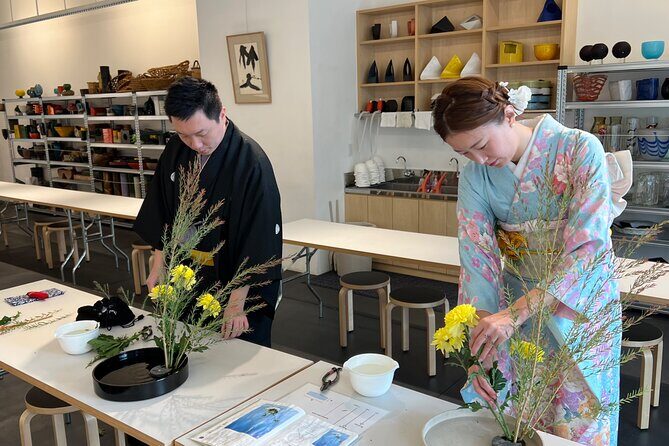
Sogetsu WEST’s 300+ container collection might sound like overkill, but it actually supports learning. Each container shapes the arrangement’s silhouette. Some containers encourage height and flow; others pull you toward steadier, grounded forms.
You’re not required to match a specific container style to “win.” Instead, you’re given options so you can experience how ikebana principles shift with the vessel. That helps you learn faster than if the workshop only provided one standard vase.
And because the workshop emphasizes making arrangements you can repeat later without special vases, the containers you see in the studio become teaching tools. You’re learning what works, not what you must own.
Photo Moment and the Post-Workshop Chat
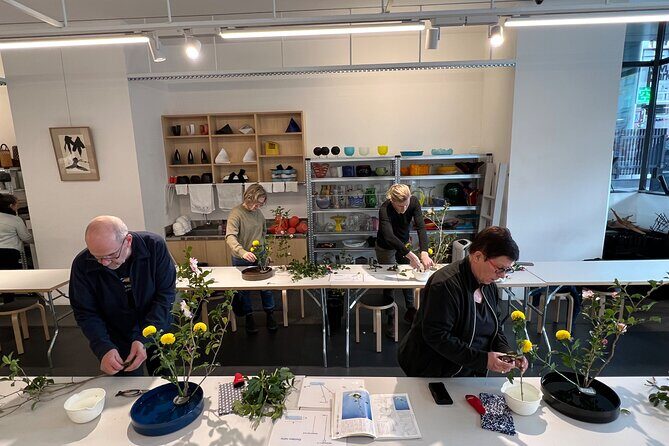
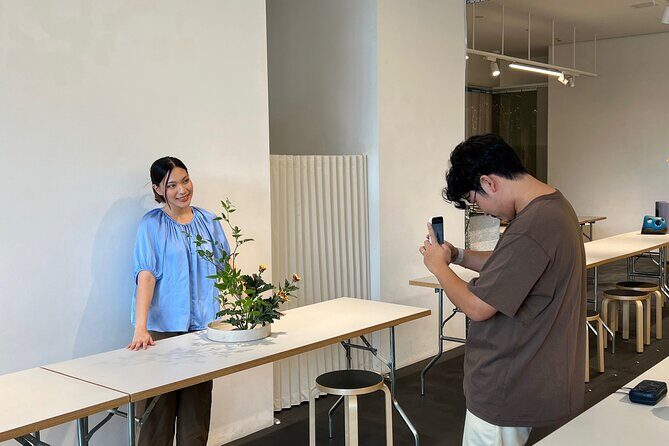
Once your arrangement is complete, you’ll take a picture to commemorate your creation. This is practical. You’ll remember what you made even if you later feel like you can’t perfectly recreate it.
Then there’s time to relax and chat. One of the reviews notes that the teacher shares extra things about Japanese culture, in a relaxed way. That matters because ikebana isn’t isolated from daily life in Japan. It’s a way of noticing form, seasonality, and how everyday objects hold meaning.
If you’re curious about Japanese food or culture, you can ask. The format invites questions and conversation, and it’s also open to learning about your background and country.
Value and Price: Is $104.24 Worth It?
At $104.24 per person for about 1 hour 45 minutes, you might wonder if it’s “just a craft.” Here’s how I’d judge the value based on what you get.
You’re paying for:
- private instruction (your group only)
- a teacher with 30+ years of study
- guidance on multiple styles and the “why,” not just steps
- technique support for flower freshness
- the promise that you can recreate ikebana at home without special containers
If you’ve ever taken a workshop where you leave with a nice object but no repeatable skill, this format feels different. It’s aiming to give you a usable mental model plus a technique you can apply again. That’s when art classes become more than a one-time souvenir.
Also, the container collection at the studio—300+ types—means you’re learning with variety rather than being limited to one setup. That increases the odds you’ll leave with an arrangement you genuinely like.
Practical Tips So You Get the Most From the Session
Keep these simple points in mind, and you’ll enjoy the class more:
- Plan your day with a follow-up buffer. The session ends back at the meeting point, so give yourself time afterward to roam Kyoto without rushing.
- Arrive ready to ask questions. The teacher is open to discussion, and that helps you leave with clearer takeaways.
- Focus on method over perfection. You’re learning principles you can repeat with new materials later.
- Take notes mentally on freshness tips. The techniques for keeping flowers fresh are the kind of knowledge that pays off after you get home.
Because the experience uses a mobile ticket and is near public transportation, you should be able to slot it into a sightseeing day without major stress.
Who Should Book This Ikebana Workshop
This workshop is a great fit if you:
- want a hands-on Japanese art class in Kyoto
- like learning the meaning behind what you’re making
- want something you can recreate at home without hunting for special vases
- enjoy calm, respectful instruction more than fast-paced “craft party” energy
It may be less ideal if you’re looking for a long multi-hour experience, or if you want a big lineup of different mini-activities. This is focused: you learn, you create, you photograph, you chat.
Should You Book Sogetsu WEST Ikebana in Kyoto?
I’d book it if you want a class that gives real take-home value. The combination of basics plus philosophy, the emphasis on recreating styles without special materials, and the practical flower-freshness tips makes it more than a one-time souvenir.
If you’re on the fence, ask yourself one question: do you want to learn ikebana principles you can use again? If yes, this is a strong match. If you only want a quick decorative activity, you might feel it’s more structured than you expected.
Either way, you’ll walk away with a finished arrangement, a photo, and a clearer understanding of why ikebana looks the way it does.
FAQ
How long is the Traditional Japanese Flower Styling Workshop in Kyoto?
The workshop lasts about 1 hour 45 minutes.
Where does the workshop meet?
The meeting point is Sogetsu WEST, 20-4 Sujakudōnokuchichō, Shimogyo Ward, Kyoto, 600-8842, Japan.
Is this activity private?
Yes. It’s a private tour/activity, so only your group will participate.
Do I need special flowers or traditional Japanese vases?
No. You’ll learn how to create ikebana styles without needing special tools, special flowers, or traditional Japanese containers.
Can I recreate what I learn after returning home?
That’s the goal. You’ll learn methods so you can make various ikebana styles even without special materials at home.
Do I get photos or learning materials?
You’ll take a picture during the session. You can also request session slides by email.
Is cancellation free?
Yes, you can cancel for a full refund if you cancel at least 24 hours before the experience starts.